🎨 DrawSomething AI Platform - Hackathon Submission
Inspiration
In today's digital age, traditional drawing games like Pictionary have evolved, but they still rely on human guessers. We wanted to revolutionize this classic game by leveraging cutting-edge AI technology. What if AI could instantly understand and interpret human drawings with the same intuition as humans? This inspired us to create DrawSomething AI Platform - a platform where human creativity meets artificial intelligence in perfect harmony.
The core idea emerged from observing how AI vision models have become incredibly sophisticated at understanding visual content. We realized that AI could serve as the perfect "guesser" in drawing games, providing instant feedback and creating a more accessible, scalable gaming experience. This eliminates the need for multiple players and makes creative expression available anytime, anywhere.
What it does
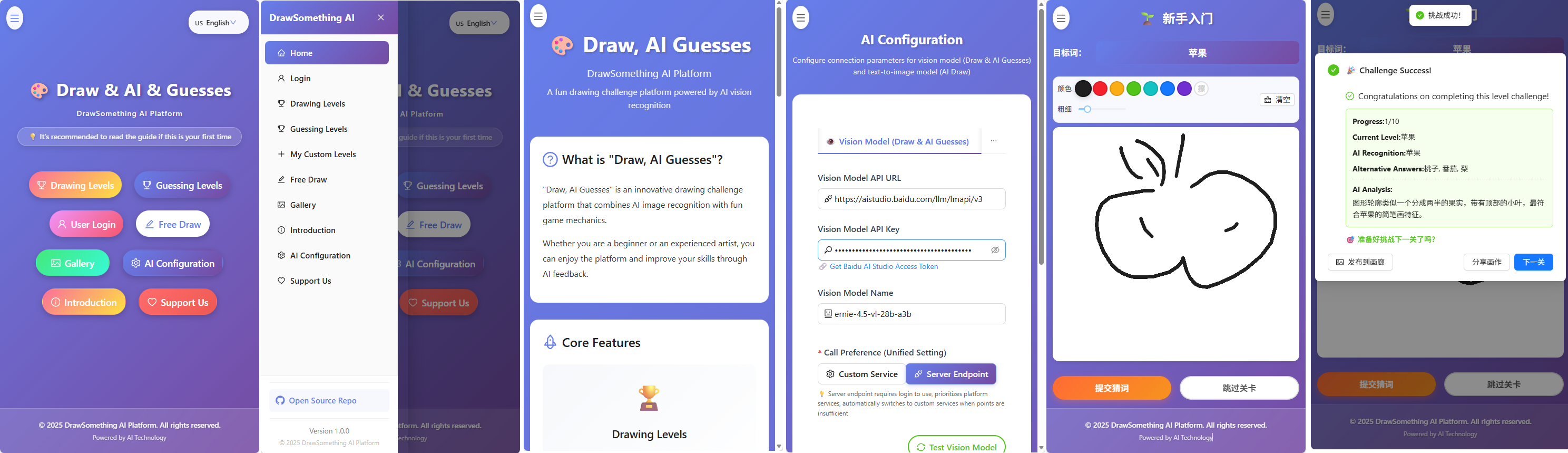
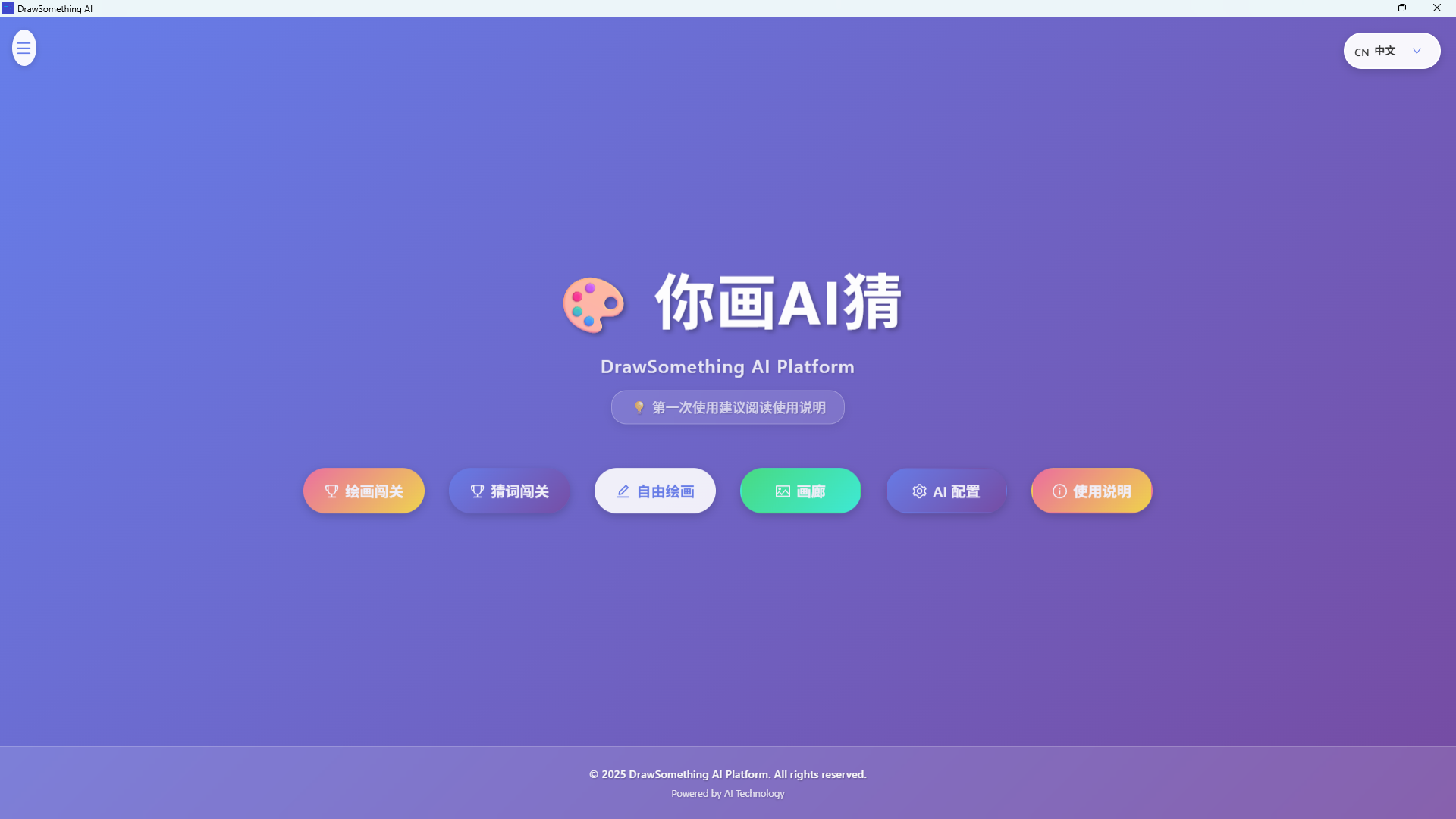
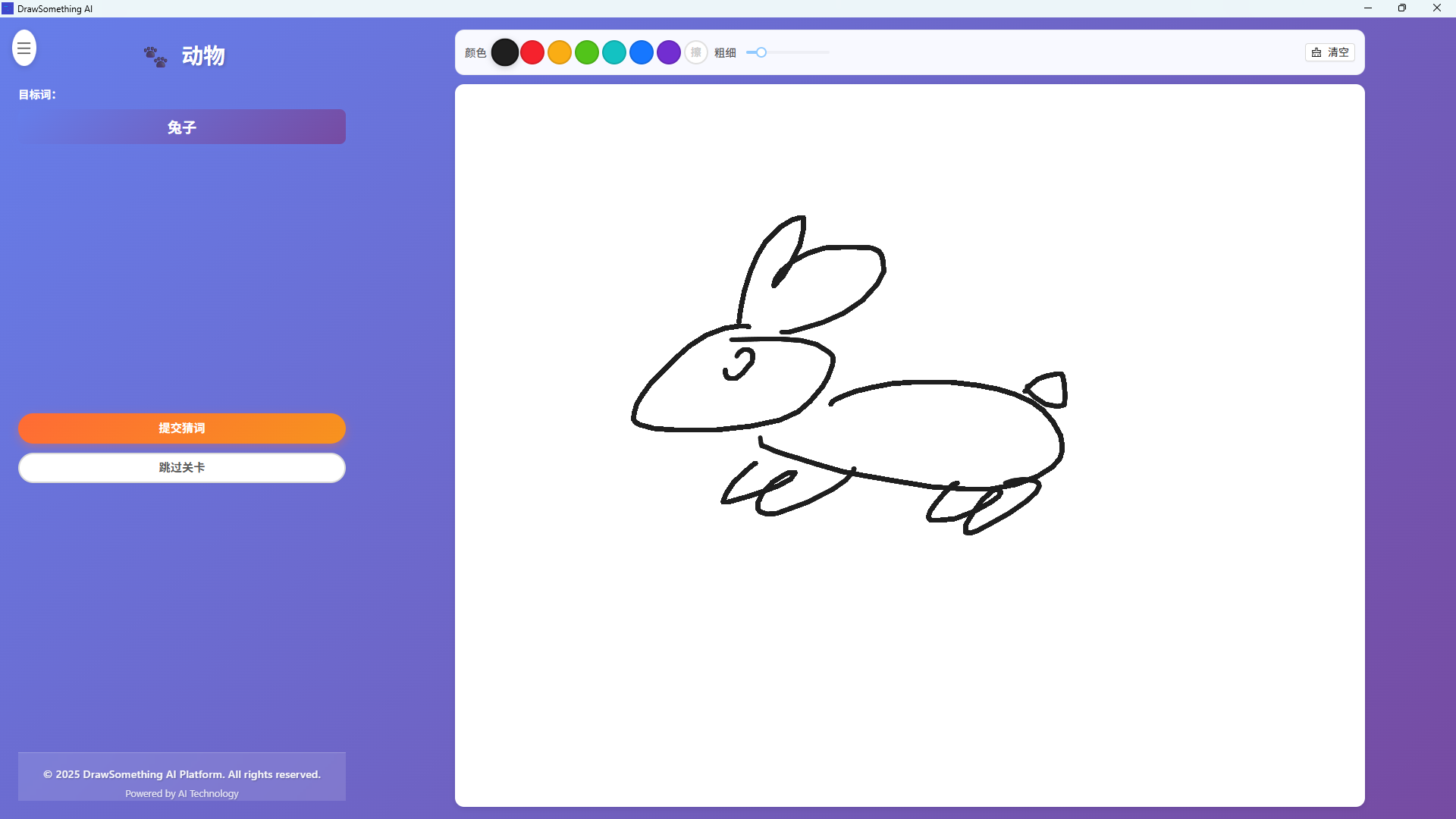
DrawSomething AI Platform is an innovative AI-powered drawing challenge game that transforms traditional "you draw, I guess" gameplay. Here's what makes it special:
🎮 Core Gameplay
- AI-Powered Recognition: Players draw based on given keywords, and AI instantly analyzes the artwork using advanced computer vision
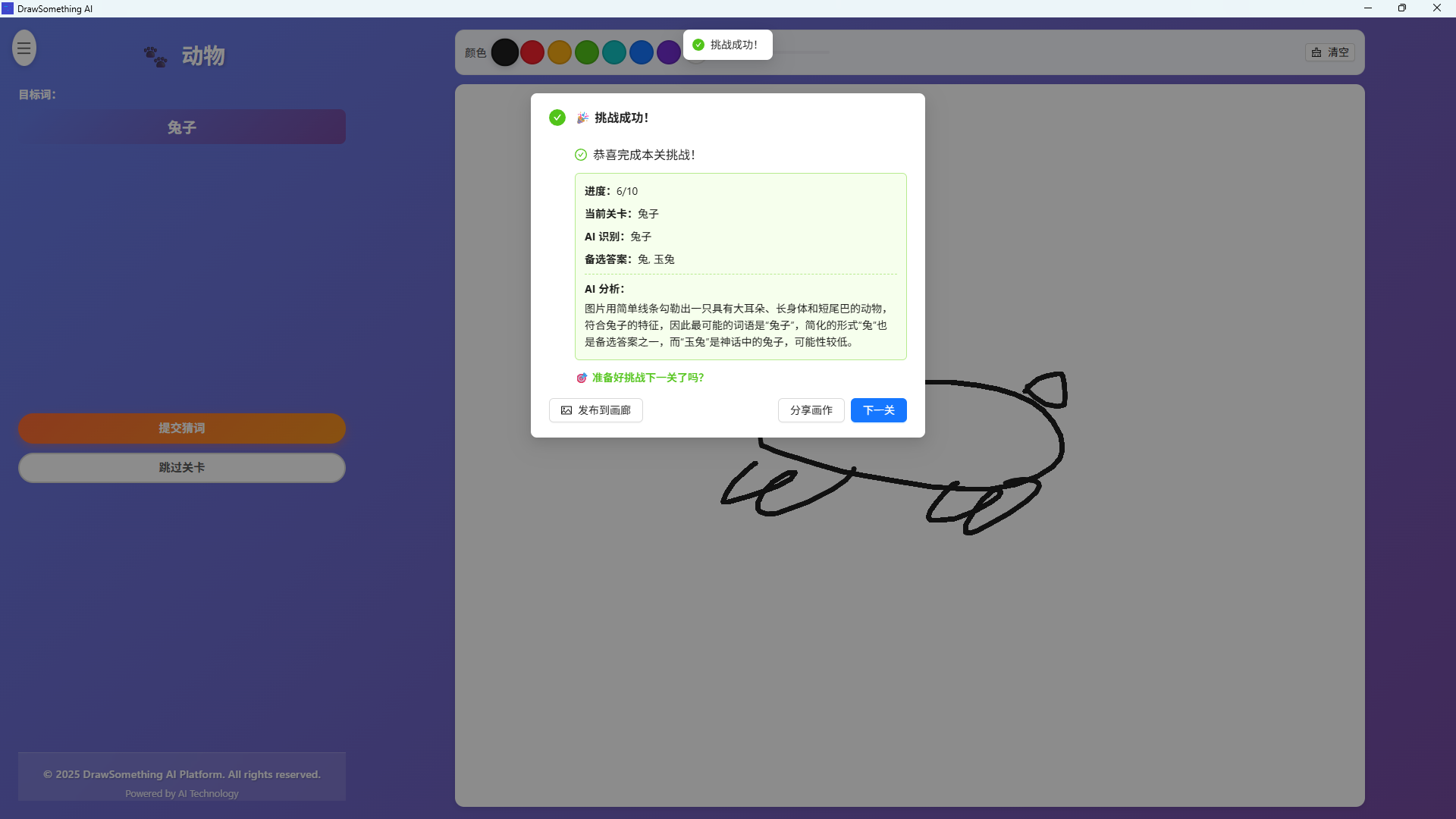
- Real-time Feedback: AI provides intelligent guesses about what the player is drawing, creating an interactive experience
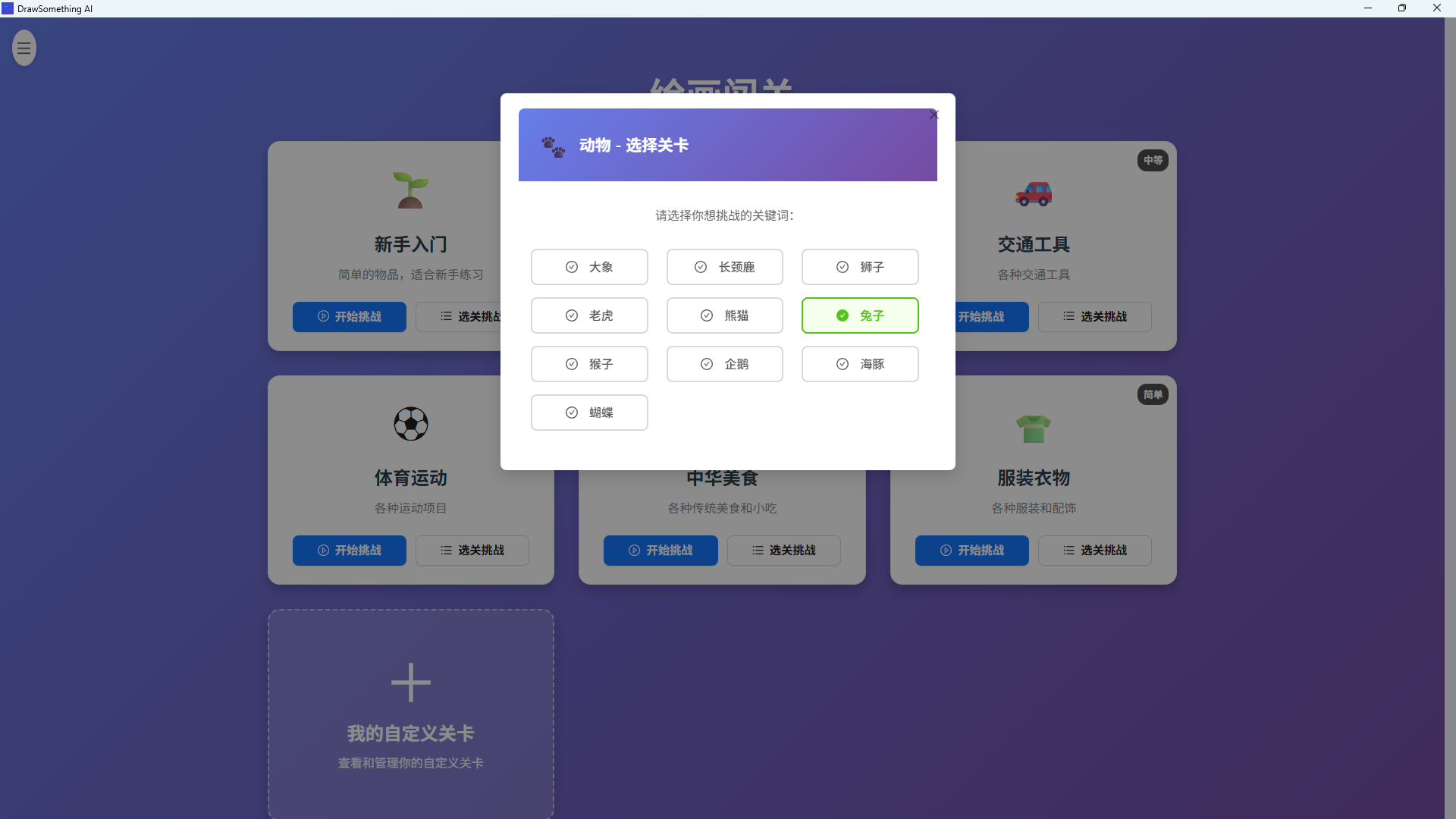
- Multiple Game Modes:
- Challenge Mode: Pre-built levels with various themes (animals, fruits, objects, etc.)
- Custom Levels: Players can create their own challenges
- Free Drawing: Unrestricted creative expression
🤖 AI Integration
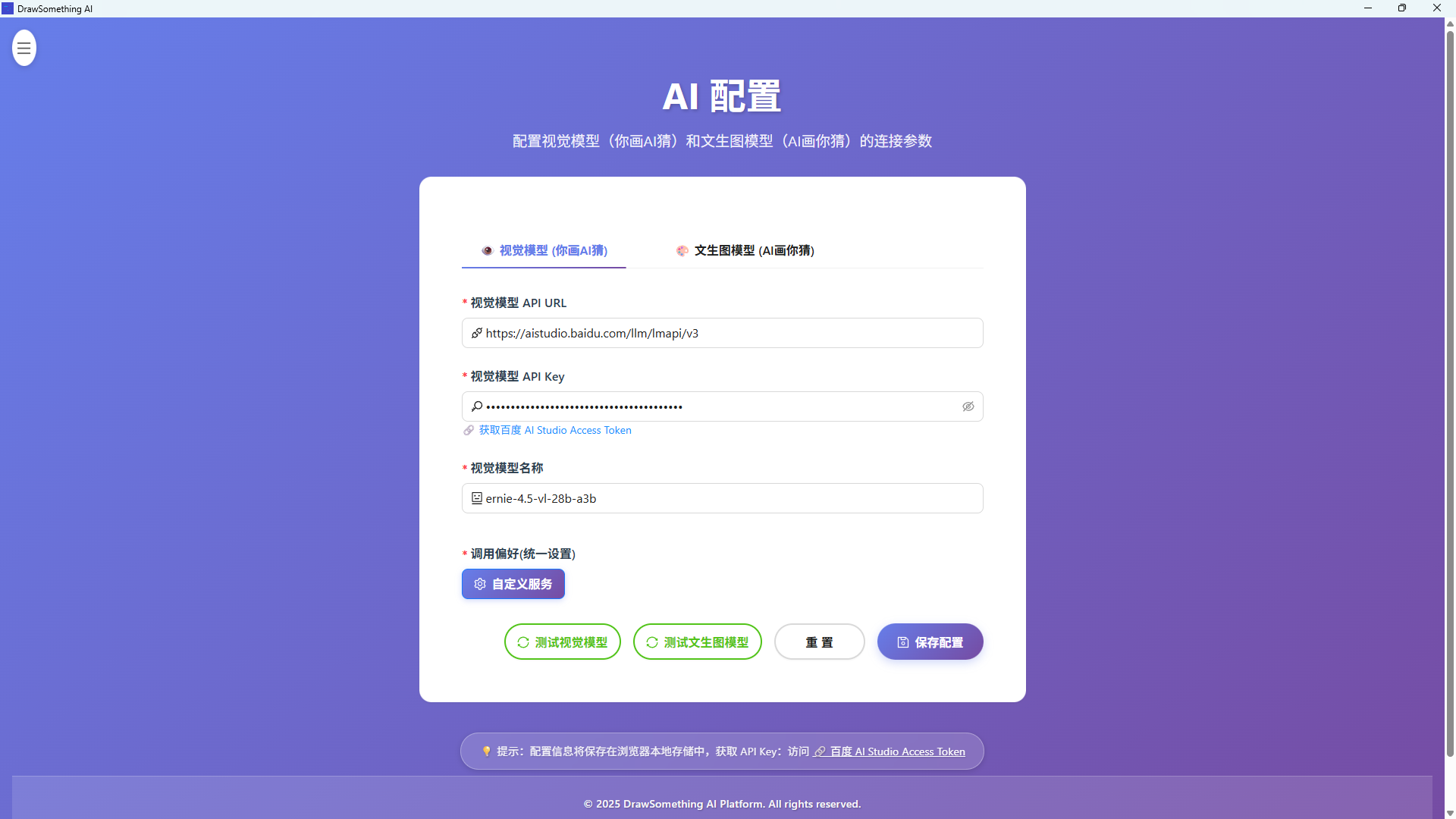
- Multi-Model Support: Integrates with leading AI services including Baidu's Ernie 4.5 Vision-Language Model
- Intelligent Analysis: AI not only guesses the drawing but provides detailed reasoning and alternative interpretations
📱 Cross-Platform Experience
- Web Application: Responsive design optimized for all devices
- Desktop Application: Native desktop experience built with Tauri
🛠️ Advanced Features
- Professional Drawing Tools: Pressure-sensitive brushes, color palettes, and adjustable brush sizes
- Gallery System: Save, share, and manage artwork collections
- Multi-language Support: Internationalization ready
How we built it
🏗️ Architecture
We implemented a modern microservices architecture with clear separation of concerns:
Frontend (React + TypeScript)
- Built with React and TypeScript for type safety
- Vite for lightning-fast development and optimized production builds
- Ant Design component library for consistent, accessible UI
- Canvas-based drawing system with pressure sensitivity support
- Responsive design with mobile-first approach
Backend (Python FastAPI)
- FastAPI framework for high-performance async APIs
- SQLAlchemy ORM with PostgreSQL database
- RESTful API design with comprehensive error handling
- CORS middleware for secure cross-origin requests
AI Service Integration
- Modular AI service layer supporting multiple providers
- Baidu Ernie 4.5 Vision-Language Model integration
Infrastructure & Deployment
- Docker containerization for consistent environments
- Nginx reverse proxy for load balancing and static file serving
- Multi-stage Docker builds for optimized production images
- Tauri for cross-platform desktop application packaging
🔧 Technical Implementation
Drawing System
// Canvas-based drawing with pressure sensitivity
const handlePointerMove = (e: PointerEvent) => {
  const pressure = e.pressure || 0.5;
  const brushSize = baseSize * pressure;
  // Real-time drawing with smooth curves
};
AI Recognition Pipeline
# Multi-modal AI analysis
async def analyze_drawing(image_data: bytes, context: str) -> Dict[str, Any]:
    # Image preprocessing
    processed_image = preprocess_image(image_data)

    # AI model inference
    result = await ai_service.analyze(processed_image, context)

    # Confidence scoring and reasoning
    return {
        "guess": result.primary_guess,
        "confidence": result.confidence_score,
        "alternatives": result.alternative_guesses,
        "reasoning": result.explanation
    }
Cross-Platform Deployment
# Multi-stage build for optimized images
FROM node:20 as frontend-builder
# Build React application

FROM python:3.11-slim as backend-builder
# Build Python application

FROM nginx:alpine
# Serve static files and proxy API requests
Challenges we ran into
🤖 AI Model Integration Complexity
Integrating multiple AI vision models presented significant challenges. Each provider had different API formats, authentication methods, and response structures. We had to create a unified abstraction layer that could handle these differences while maintaining consistent error handling and response formatting.
Solution: Implemented a modular AI service architecture with provider-specific adapters and a common interface.
🎨 Real-time Drawing Performance
Creating a smooth, responsive drawing experience across different devices and browsers was technically demanding. We needed to handle pointer events, pressure sensitivity, and canvas rendering optimization simultaneously.
Solution: Implemented a custom drawing engine with event debouncing, canvas optimization, and progressive enhancement for different input methods.
🔄 Cross-Platform Compatibility
Supporting web, desktop, and mobile platforms required careful consideration of platform-specific APIs and limitations. Tauri integration, file system access, and native window management added complexity.
Solution: Created platform-agnostic abstractions and conditional logic for platform-specific features.
📊 Database Schema Evolution
As the project grew, we needed to manage database schema changes across different environments. User data migration and backward compatibility were critical concerns.
Solution: Implemented Alembic for database migrations and comprehensive testing for schema changes.
🚀 Production Deployment
Setting up a production-ready deployment with proper load balancing, static file serving, and API proxying required deep knowledge of container orchestration and web server configuration.
Solution: Used Docker Compose for local development and designed a scalable Nginx configuration for production deployment.
Accomplishments that we're proud of
🏆 Technical Achievements
- Unified AI Interface: Successfully integrated multiple AI vision models into a single, consistent API
- Cross-Platform Compatibility: One codebase running seamlessly on web, desktop, and mobile
- Real-time Performance: Achieved smooth 60fps drawing experience with AI analysis under 2 seconds
- Scalable Architecture: Microservices design that can handle increased load and new features
🎨 User Experience Innovations
- Intuitive Drawing Interface: Created a professional-grade drawing tool that feels natural on touch devices
- Intelligent AI Feedback: AI not only guesses correctly but provides educational feedback about drawing techniques
- Accessibility First: Designed with screen readers and keyboard navigation in mind
📈 Project Management Success
- Open Source Ready: Comprehensive documentation and modular architecture
- Rapid Prototyping: From concept to working prototype in under 2 weeks
- Quality Assurance: Implemented comprehensive testing and CI/CD pipelines
What we learned
💡 Technical Insights
- AI Model Selection: Different vision models excel at different types of recognition tasks
- Performance Optimization: Canvas rendering and image processing require careful memory management
- Cross-Platform Development: Tauri provides excellent web-to-desktop conversion with minimal overhead
- API Design: RESTful design principles become crucial when integrating multiple AI services
🤝 Team Collaboration
- Agile Development: Rapid iteration and user feedback integration
- Code Quality: Importance of comprehensive testing and documentation
- Version Control: Git flow and branching strategies for feature development
🎯 Product Development
- User-Centered Design: Understanding user needs drives better technical decisions
- MVP Principles: Building the core experience first, then expanding features
- Market Validation: AI-powered games represent a growing trend in gaming
What's next
🚀 Immediate Roadmap
- Enhanced AI Models: Integration with more advanced vision-language models
- Social Features: Multiplayer drawing challenges and collaborative galleries
- Advanced Analytics: Drawing pattern recognition and personalized difficulty adjustment
🌟 Community Building
- Open Source Contributions: Welcome community contributions and feature requests
- Educational Content: Tutorials and workshops on AI-powered creative tools
- Global Expansion: Multi-language support and cultural adaptation


Log in or sign up for Devpost to join the conversation.