-
-
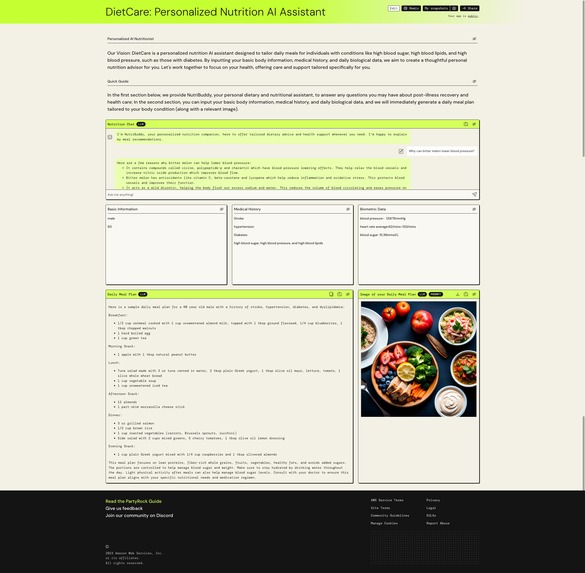
Entire View of DietCare
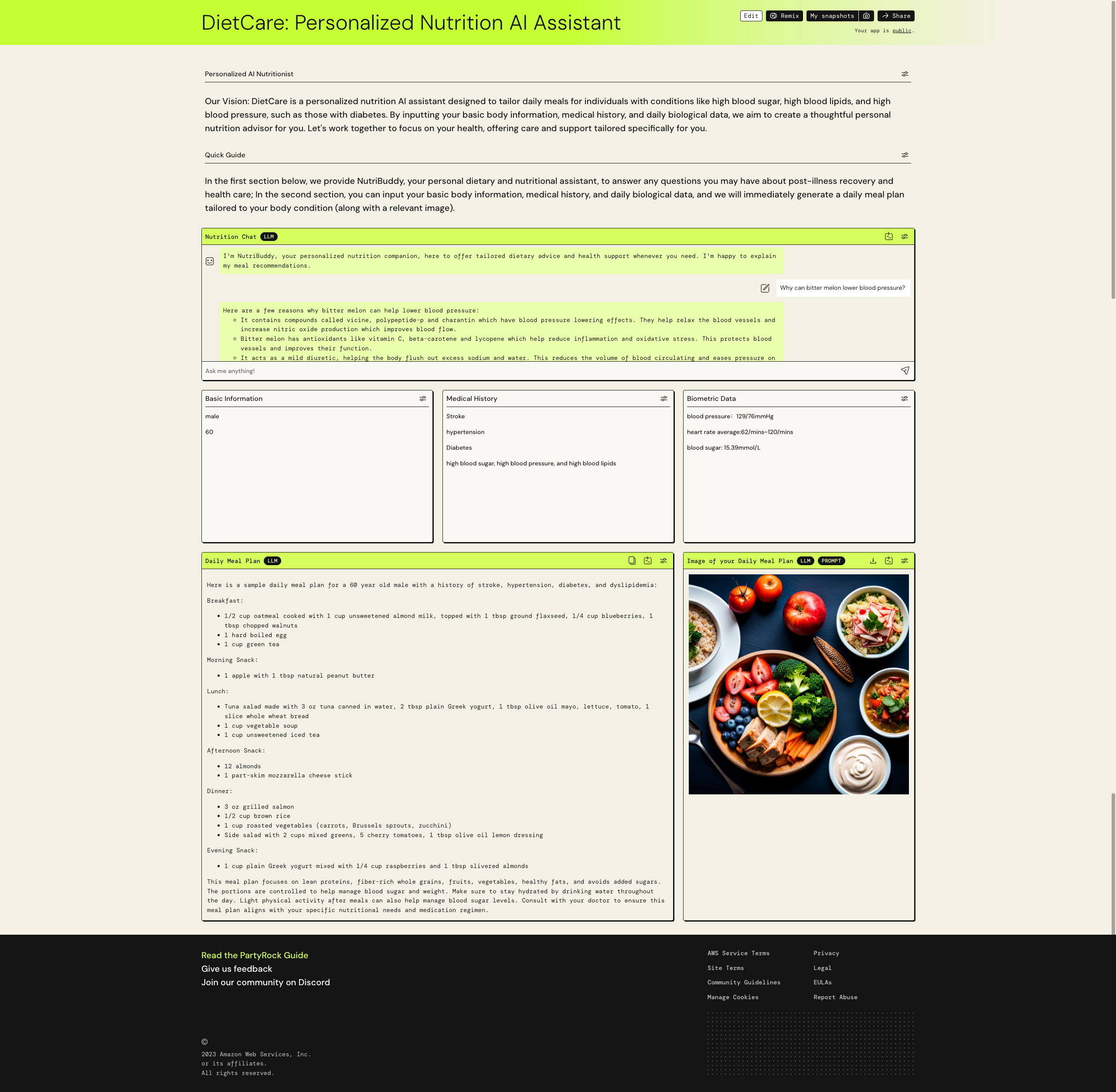
Inspiration
At the end of last year, my father suffered a stroke and was hospitalized. Seeing my mother deeply distressed over determining his daily nutritional needs inspired me to develop a solution to alleviate this burden. Thus, I conceived the idea of developing a personalized nutrition AI application. When conducting market research, I discovered the widespread prevalence of diseases such as high cholesterol, hypertension, and diabetes among the elderly, which is a common issue in our society. My application aims to empower caregivers by providing them with customized dietary advice to support the recovery and overall health management of their loved ones. This journey was not only driven by the strong need to help my family but also inspired by many others facing similar life challenges, including myself.
What it does
As people age, they may encounter various health issues, some of which may require post-operative recovery. Therefore, for the families of patients, devising suitable diets and subsequent nutritional plans tailored to different conditions can become quite challenging. Hospital doctors typically offer generic dietary recommendations applicable to all, rather than personalized dietary plans for each individual. Additionally, the cost of hiring a private nutritionist can be prohibitive. Hence, DietCare serves as a personalized nutritionist, allowing users to input their unique data such as basic physical information, medical history, and physiological indicators like blood pressure, blood oxygen saturation, and heart rate fluctuations. These physiological indicators can be synchronized through smart wearable devices linked to the app, enabling the generation of personalized daily meal plans and snack suggestions.
How we built it
For this competition, I used the PartyRock platform to develop my dietcare AI application from scratch. This platform is very user-friendly and easy to get started with. I directly developed the demo of my dietcare AI application on the platform.
Challenges we ran into
From a hardware technology perspective, firstly, there are some differences in the readiness of users for household wearable devices and medical-grade devices, and improving the accuracy of data is a worthy consideration. Secondly, although current wearable devices can simultaneously receive users' blood pressure, blood oxygen saturation, and heart rate data, real-time electrocardiograms have not yet been integrated with existing wearable devices and are detected by separate devices. From a software technology perspective, developing this application independently posed a significant challenge for me, including learning and improving my technical skills. From the customer's perspective, getting people aged 50 or older accustomed to using this smart device is also a major challenge.
Accomplishments that we're proud of
I feel proud to have taken the first step towards becoming an independent developer, understanding the difficulties and challenges faced in independent development. Programming is a meaningful endeavor; it allows me to practically help people solve everyday problems while improving their efficiency and saving time for more meaningful pursuits.
What we learned
I began learning Java for backend development and JavaScript, HTML/CSS for frontend development. I also started learning to develop applications using Java in Android Studio while simultaneously learning about AWS and obtaining some AWS certifications. I hold myself to a standard of lifelong learning, and when I learned about the AI competition hosted by AWS, I was excited to participate.
What's next for DietCare: Personalized Nutrition AI Assistant
For the subsequent mobile app, I plan to develop an iOS version first. My idea is that the application seamlessly integrates with wearable devices to monitor key health indicators such as blood sugar levels, blood pressure, and blood oxygen saturation. If feasible, wearable devices that can also detect electrocardiograms would make the data analysis more precise. By analyzing this data along with user-inputted medical history and dietary preferences, AI generates personalized daily meal plans. This innovative approach transforms the traditional role of nutritionists by providing a virtual personalized nutrition coach accessible anytime, anywhere. Another reason is that the price of a private nutritionist is high, and not everyone can afford it. Having a virtual personal nutrition assistant that can be accessed anytime, anywhere would make people's lives more convenient and healthy. Secondly, to ensure widespread adoption, especially among elderly users, the application's interface emphasizes simplicity and ease of use. Integration with smart home devices also allows users to interact via voice commands, catering to those less familiar with technology. Additionally, the app offers a filtering feature that allows users to choose between content from authoritative medical institutions or community-driven content to meet different user preferences.
Built With
- partyrock.aws

Log in or sign up for Devpost to join the conversation.