-
didit
-
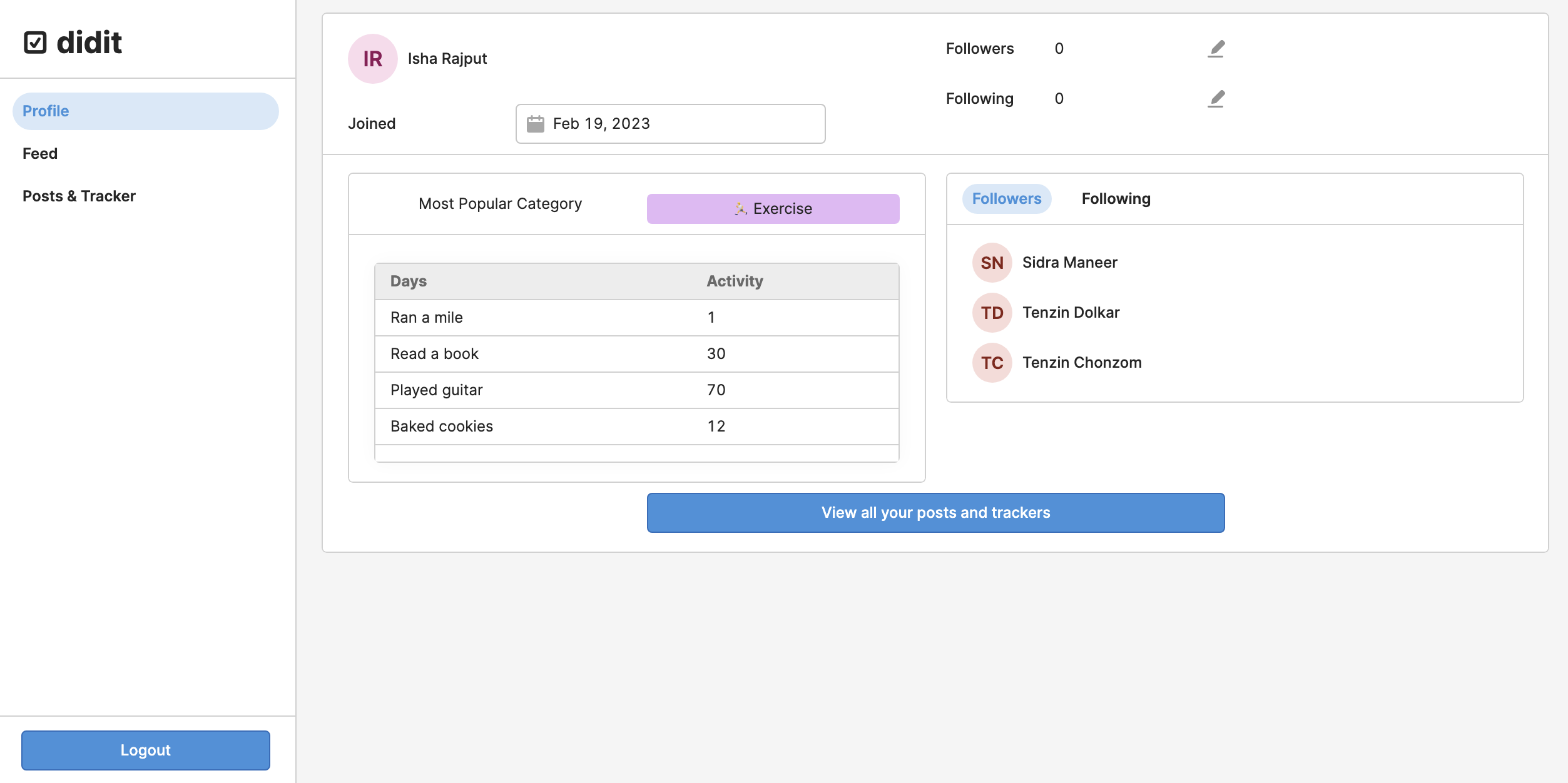
didit profile
-
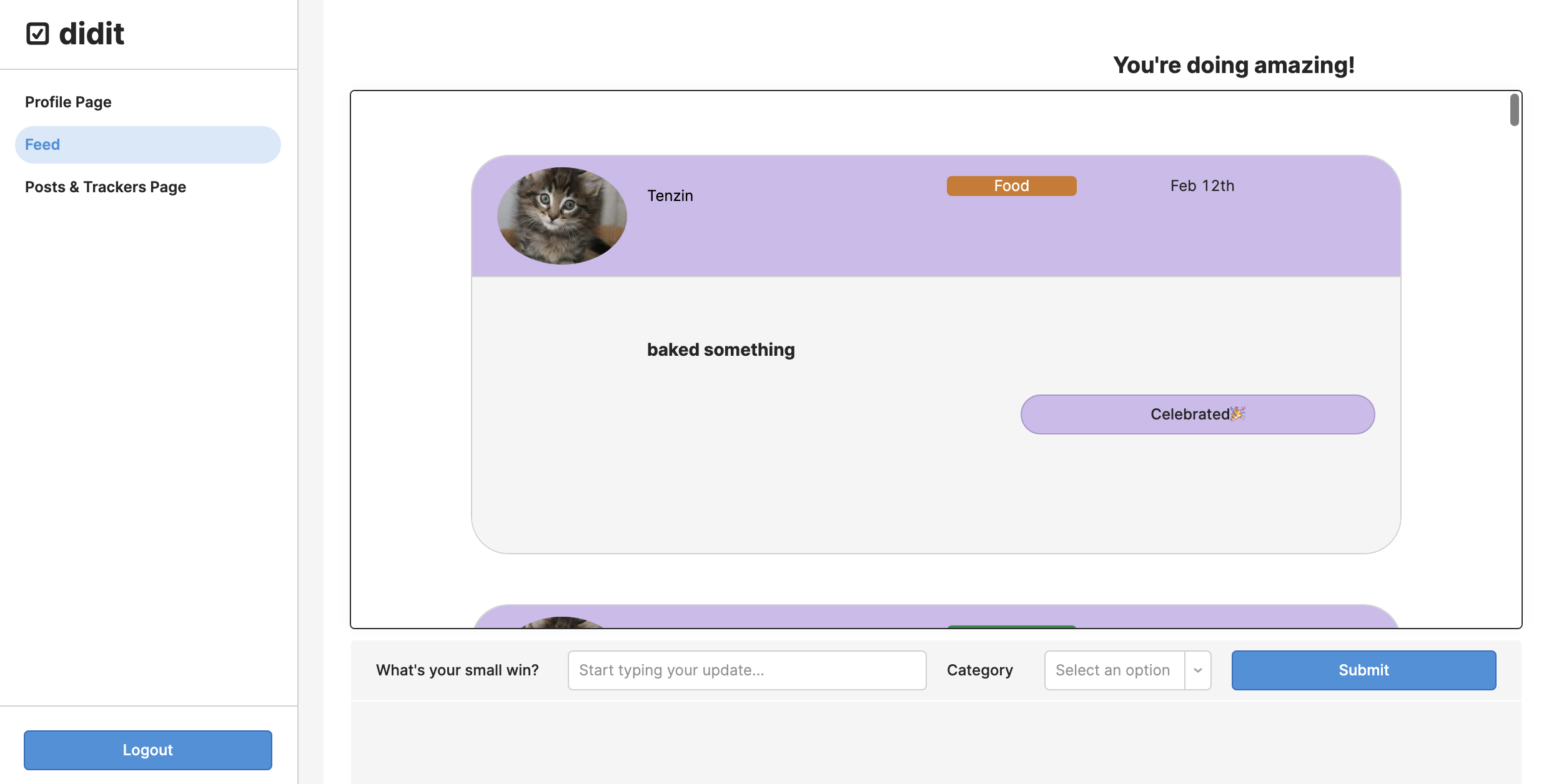
didit feed
Inspiration
In an age where GenZ has the highest rate of loneliness, we really wanted to create an app that connected us together, through our own unique goals and habits. Social media highlights some of people’s best moments and biggest accomplishments, but we also understand the importance of the smaller habits that lead to those major milestones. We were interested in building a social app for more tight knit social communities or friend groups to foster support for our “little” wins. Any accomplishments from cooking a new recipe to finishing a book can be shared with friends and connect their friendship even more through mutual support. Accomplishing goals can be stressful, and can cause you to feel like you are not good enough, but with Didit, we help prove to you that all your small wins are worthy of validation.
What it does
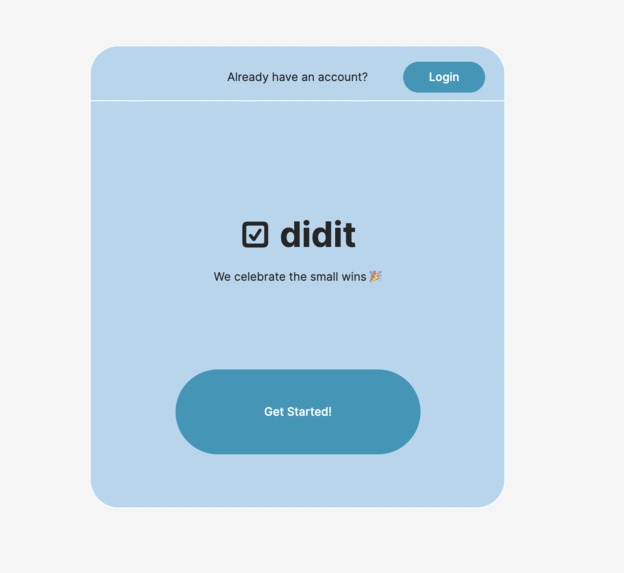
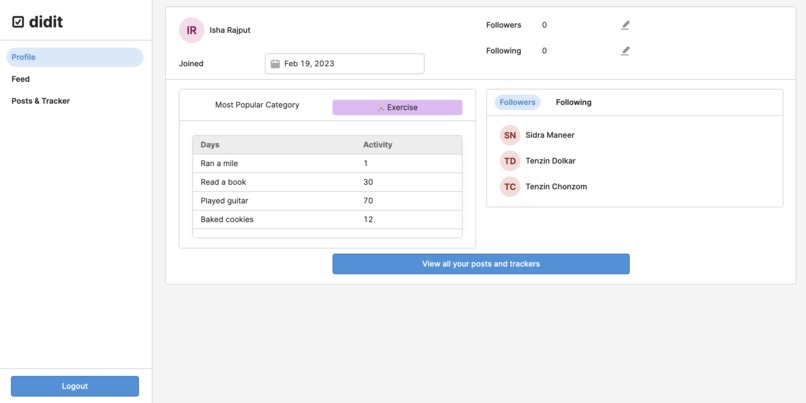
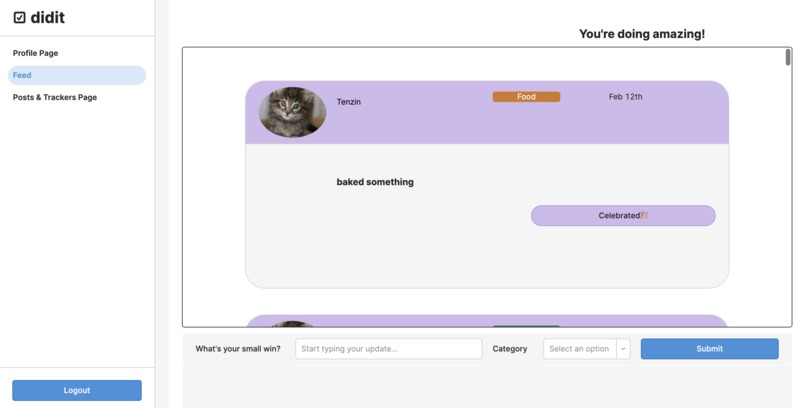
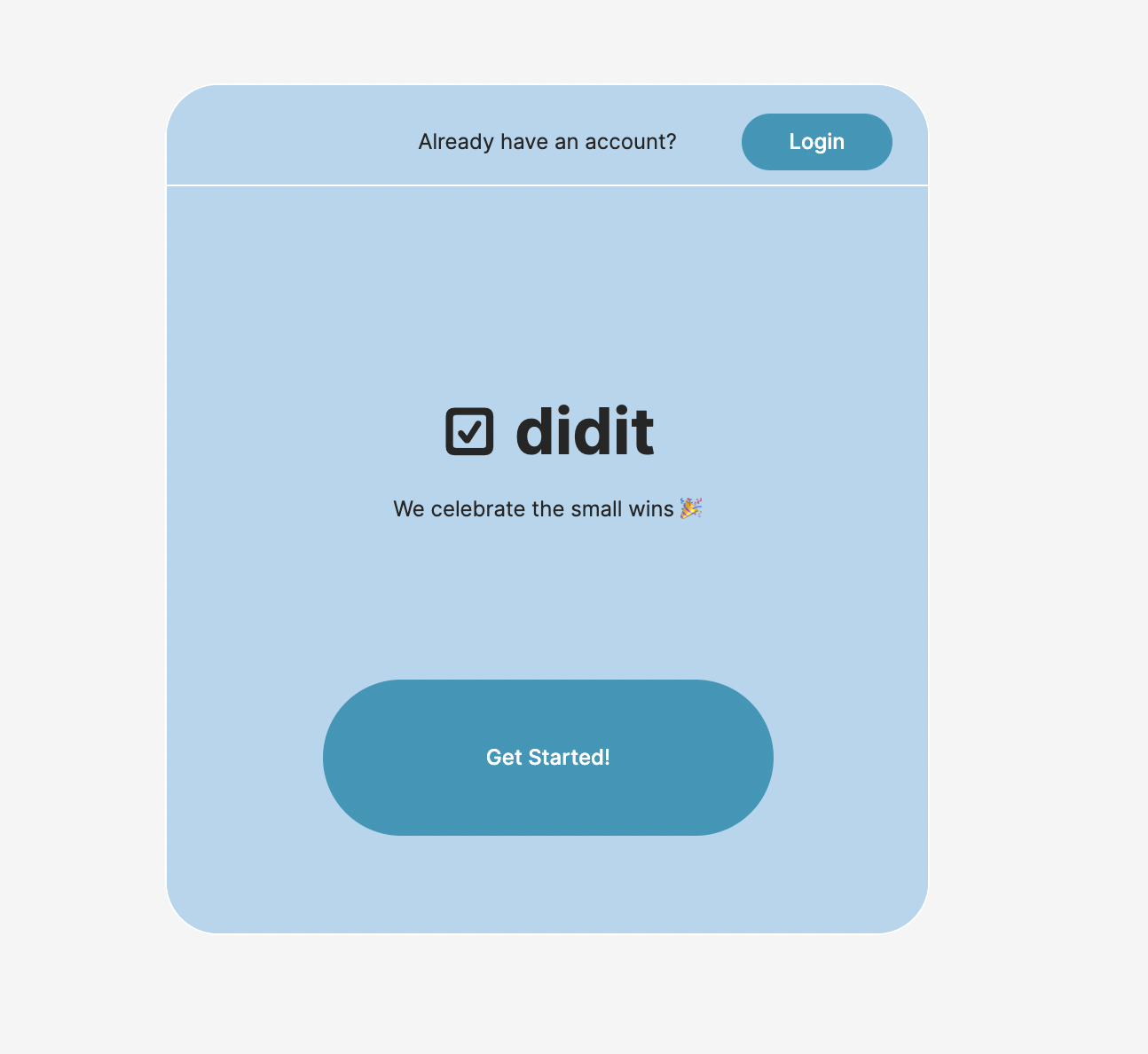
Didit is a social habit tracker, concatenating the words “did” and “it” to encompass the idea that even the “small” accomplishments in our life matter. Users are able to create posts about their small accomplishments and share them with their friends. They are also able to view summarized statistics about their most popular category of habits or accomplishments.
How we built it
We first started off by creating a Figma outline to gain a better sense of what we would like our UI and flow to be. Simultaneously, two other team-mates were working on exploring Retool and creating Firebase databases. We then used Retool to build our UI and backend tasks as well as the Firebase integration for user authentication (sign-up) and storage of Firebase Users, Trackers (and their count), Kudos that each user receives, categories each habit belongs to, and the information each post/habit contains.
Challenges we ran into
We ran into a lot of challenges learning how to use Retool for the first time as it had its own learning curve. Most of the trouble surrounding this was solved by experimenting more with Retool and watching tutorial videos to find features we had missed.
It was also difficult understanding how to design our databases and learning Firebase for the first time. Due to the large amount of information we needed to collect, it was difficult understanding how to organize our data efficiently. We also ran into issues extracting a user’s information from the database we created in Firebase, as well connecting this information from here to our google sheets; fortunately, we were able to solve that issue by learning how to properly utilize the queries feature from our database and google sheets.
Accomplishments that we're proud of
We’re really proud of how fast we were able to learn how to build on Retool. We were all really amazed at how fast we could build apps on it as well as how cleanly everything came together. We are also proud of learning how to integrate Firebase Authentication to our app, as it was our first time working with Firebase.
What we learned
We learned how to use the Firebase API with Retool to quickly build a whole new website. We learned a bit about databases and designing them, such as learning how to use Google Sheets as a database. Although it was difficult, we gained a lot of time and project management skills (such as designing databases and planning out large projects) by trying to complete our project in 2 days.
What's next for Didit
We would like to work more on the social network features of Didit such as a friend search and adding friends. Due to the time constraints of the hackathon, we couldn’t fully build out a full Firebase authentication login system, so that would be another task that’s next for Didit. Also, we want to add more CSS design features to make user interaction easier and cleaner.
Built With
- firebase
- javascript
- retool
- sheets
- sql

Log in or sign up for Devpost to join the conversation.