This below text is written by my 9-year old participant and formatted by me (the submitter dad).
Inspiration
Children are surrounded by screens but too much educational content still feels like a homework book or a collection of disconnected facts. I wanted to preserve the feeling of opening a treasured illustrated book which is the anticipation of turning a page, the freedom to linger over an image and the joy of discovering an answer for yourself.
Did You Know? began with one question with my dad. What if reliable science on a screen could feel as warm, tactile, and curiosity-led as a beautifully made book? I took it as a challenge.
I shaped what the books should feel like the questions they should encourage, and the sense of wonder they should leave with a reader. My dad helped me in turning that direction into a working application and is the eligible individual participant from Australia.
What it does
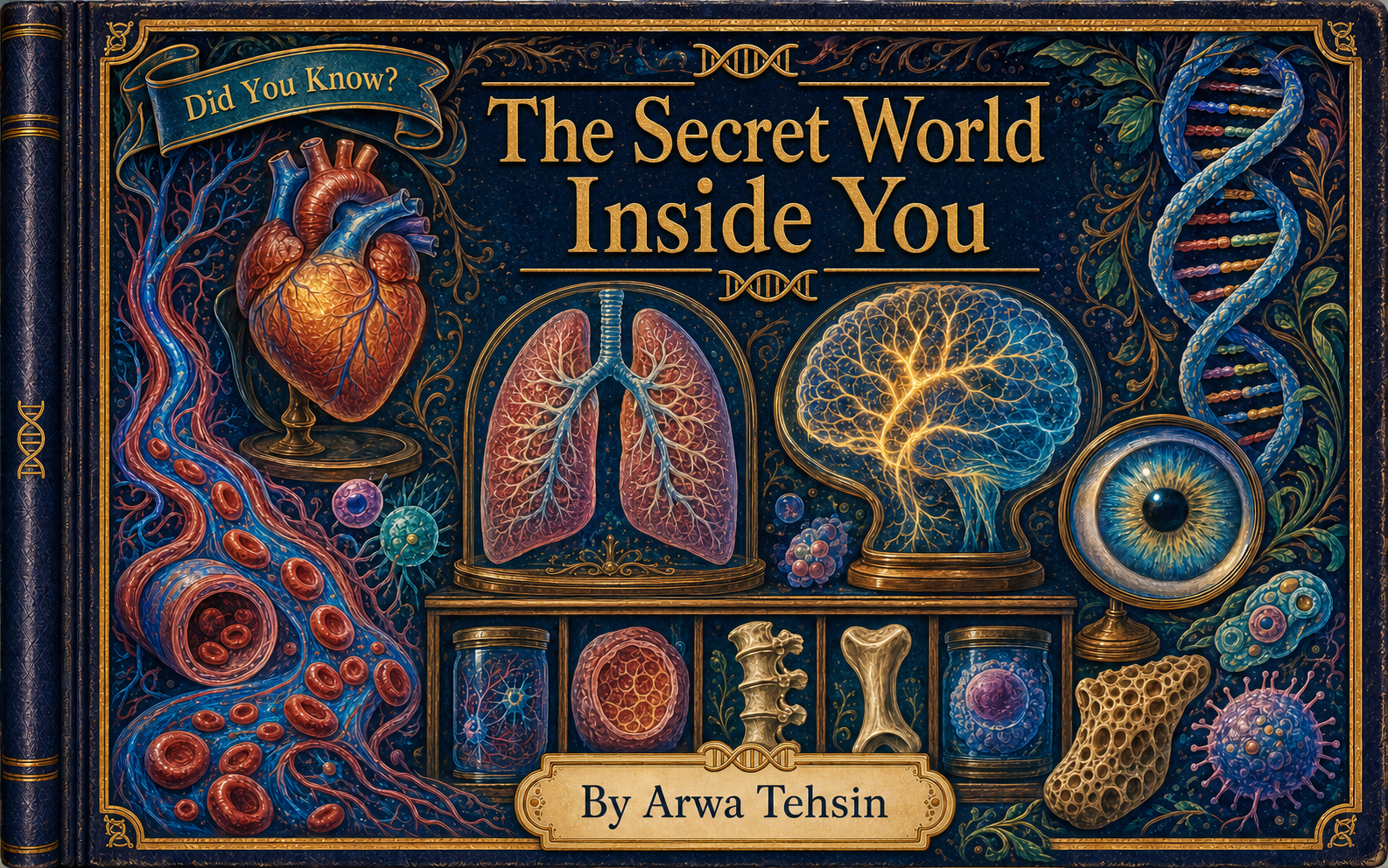
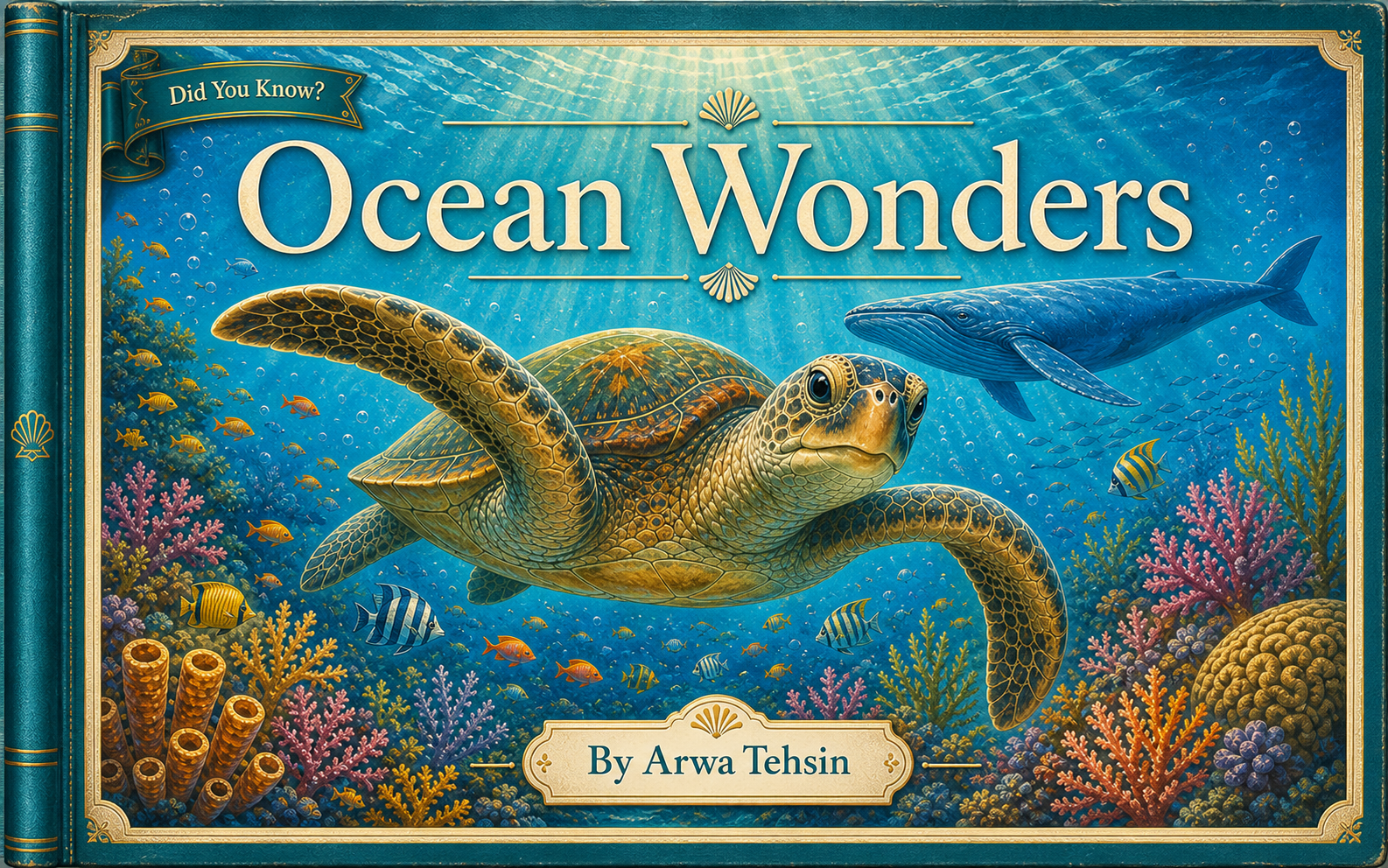
Did You Know? is an expandable digital library for children aged roughly 7–12. Its first two books are Ocean Wonders and The Secret World Inside You.
Readers can:
- choose a book from a carousel-led library
- turn pages with buttons or touch gestures
- explore illustrated, source-linked science facts across the two books
- learn scientific vocabulary in child-friendly language
- complete eight interactive mini activities
- finish each book with a ten-question challenge and answer review
The responsive reader uses single pages where space is limited and book-like spreads on wider screens.
How we built it
My dad taught me how to use Codex and how to achieve this by trying out a few techniques. I am not aware of the technicality behind it but I am now aware as if I have to create something, what's the way to do that.
I started Ocean Wonders before the Build Week but my dad encouraged me to participate in it and add one more book therefore, I added another one. I used GPT-5.6 to meaningfully extend my idea of balancing the landscape reader, adding source navigation, designing and refining swipe guidance, creating a complete second human-body book, and unifying both books inside a shared library. Codex helped me achieve everything in a visually perfect way.
Challenges we ran into
The hardest design problem was making a screen behave like a book without becoming awkward on phones or wasteful on desktop. Page pairing, cover treatment, reference pages, quiz states, and swipe thresholds all needed different rules.
A second challenge was trust. Science for children has to be simple without becoming misleading, so the books use plain language, visible source links, careful vocabulary, and explicit editorial guardrails (that my dad helped me with) especially for human-body content.
Finally, one title into a coherent series required more than duplicating a reader. We built a shared library identity while allowing each book to retain its own visual world.
Accomplishments that we're proud of
I am proud that Did You Know? feels like a complete product rather than a technical demo. It now has two substantial books, a clear series identity. The website however was not setup by me but my dad.
What we learned
A good AI collaboration is not a single prompt. The strongest results came from short design loops. Define an audience constraint, let Codex implement a vertical slice, inspect the result then refine the interaction with concrete feedback.
We also learned that verifiability can be part of the experience. Source links do not have to feel like boring footnotes as they are doors to the next discovery.
What's next for Did You Know?
More books, coming soon.
Built With
- azure-static-web-apps
- codex
- css3
- framer-motion
- gpt-5.6
- html5
- lucide-react
- react
- typescript
- vite