Inspiration
A few of our members are in a course called ECE 202, where one of our professors gave us an exam that studied the different Yahtzee scoring patterns in excel. This sparked our creativity initially lead us down the automated dice rolling path. We started with the idea of an automatic Yahtzee roller, but how useful is that? We then thought of D&D, but that still felt very narrow. With time, we realized that an automatic dice roller could be work across any game, and support participants of all abilities. By the end, we decided DiceAid's mission would be to offer accessible unbiased rolling for anyone who may struggle with traditional dice rolling mechanics.
What it does
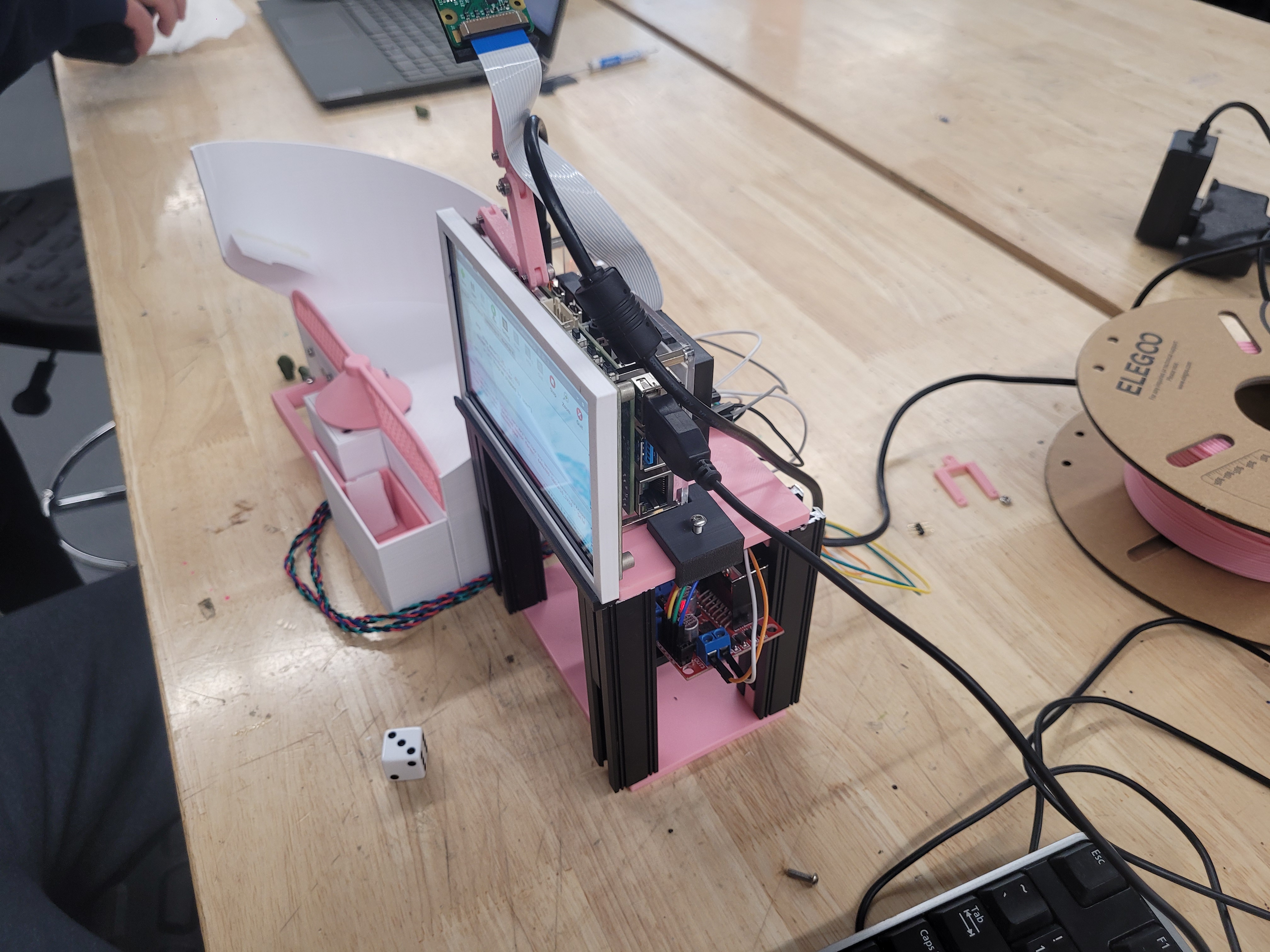
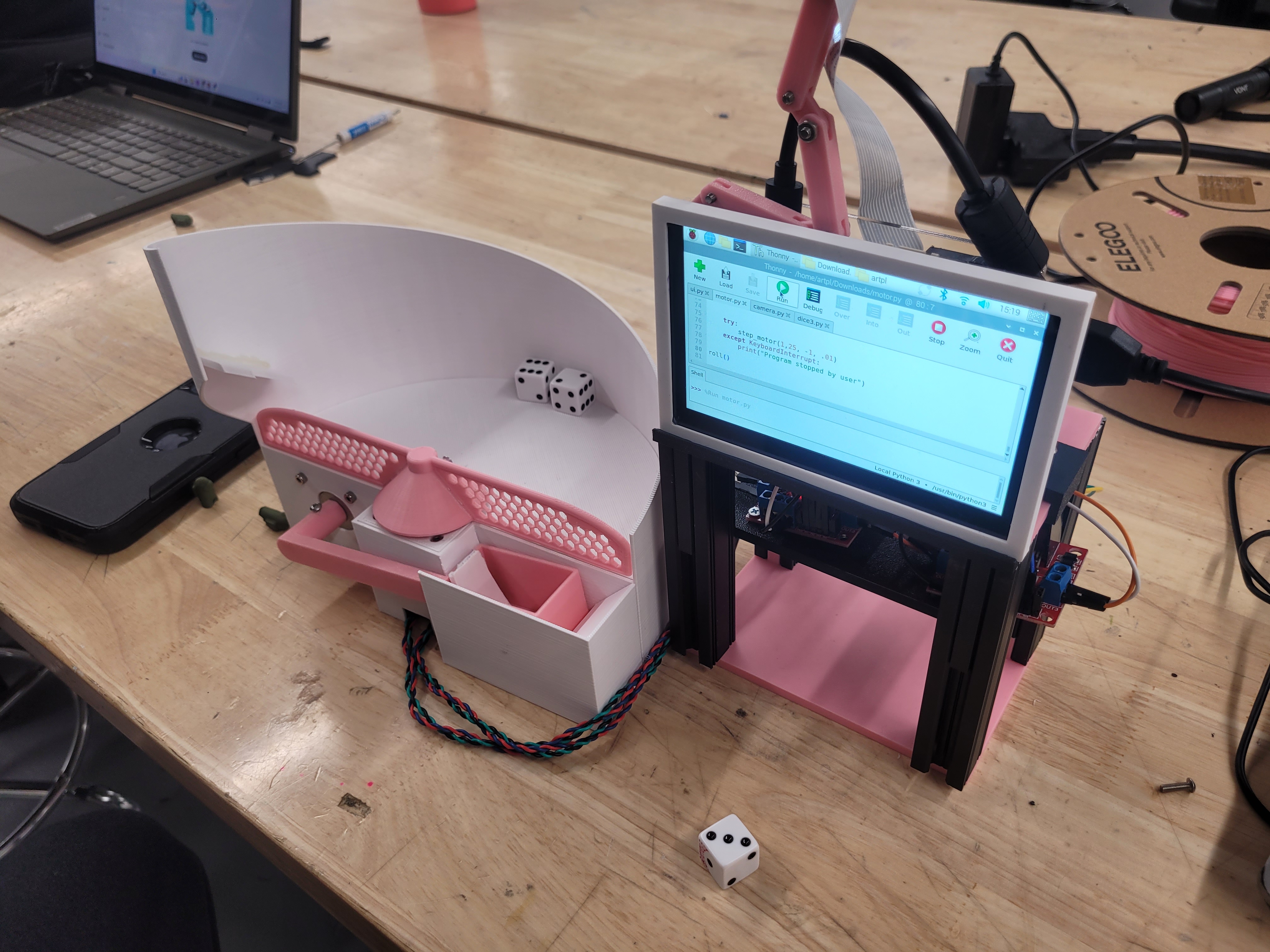
The DiceAid takes a set of dice, and with the press of a button, launches them into the play area where they are then analyzed and the swept up again. On the attached screen, an image of the dice will be displayed as well as their sum total.
How we built it
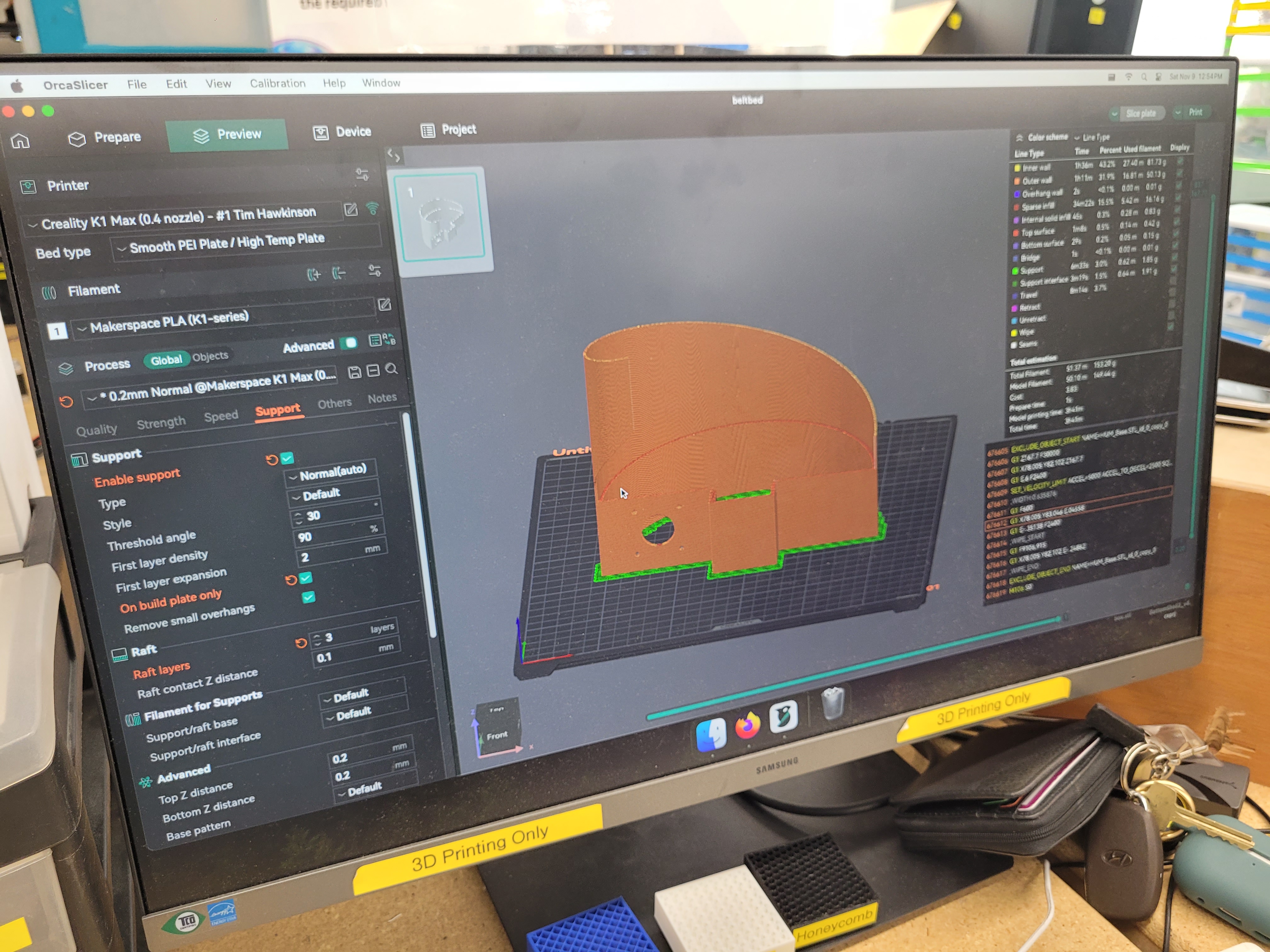
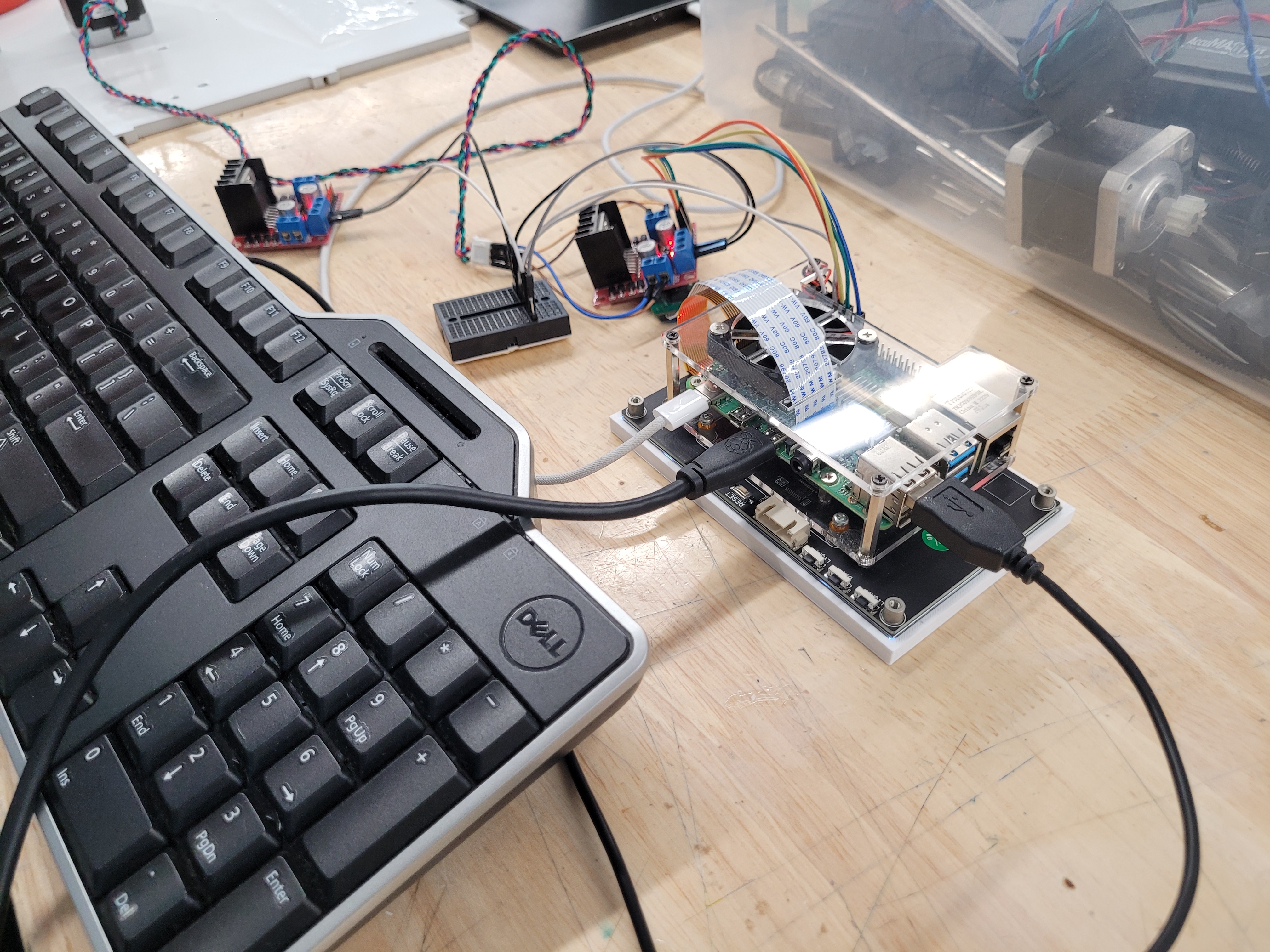
Our team is comprised of diverse engineering talent that made Dice Aid possible: Our amazing MechE, David did some outstanding CAD work and designed the 3-D the shell of our system Our EE, Artem devloped the interface between our Raspberry Pi 4B and stepper motors. Our CompE, Felicite built the UI and dice recognition for the program. Throughout the project, we collaborated closely and helped each other tremendously along the way.
Challenges we ran into
Our biggest challenge was getting a camera connected to our Raspberry Pi, in fact we went through 5 cameras, and we even drove to Target and bought a new one to no avail. In the end we finally found a working Raspberry Pi compatible camera and got to work. Our second largest challenge would most likely be in the fine tuning of our stepper motors in order for them to correctly roll the dice, it took a while and required minor adjustments in both their wiring and their programing.
Accomplishments that we're proud of
The moment that we had a working camera that could take photos and show them onto our UI we were ecstatic. That was probably the most rewarding portion of our work. Later, our next big milestone got us excited, when we got the dot recognition to work! It signified that we were on our way to the finish line.
What we learned
Felicite had never programmed a Raspberry Pi before nor had any experience with stepper motors, this was also her first hackathon and it taught her more than most of her class have. David learned how to efficiently program stepper motors and improved his CAD design, it was also his first hackathon! Artem learned how to code on a Raspberry Pi along with how to work the interface between stepper motors and their code, this was his second hackathon, but his first submitting a project!
What's next for Dice Aid
Our next step is to explore DiceAid's artistic potential. We envision dice environments that reflect the game, like D&D. We'd hope that with more artistic flare, the DiceAid would feel less robotic and clinical, combining functionality and ambiance perfectly fitting for a gaming experience.


Log in or sign up for Devpost to join the conversation.