-
-
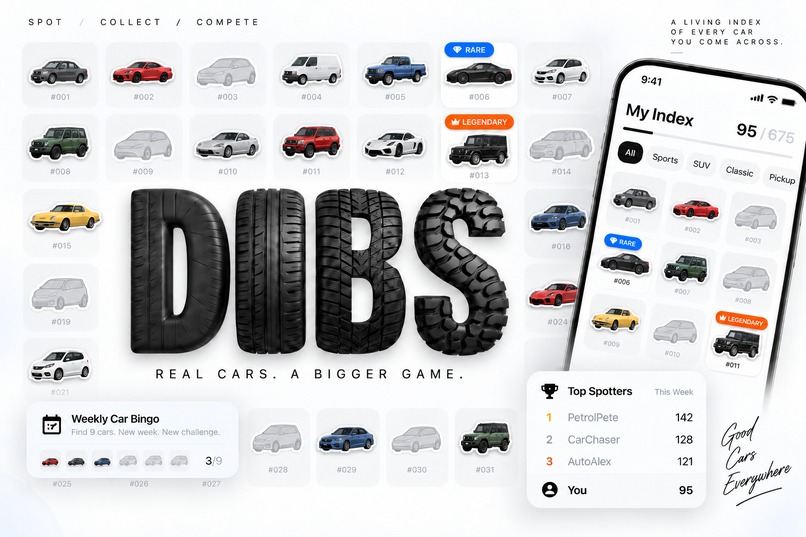
Dibs: AI Car Identifier
-
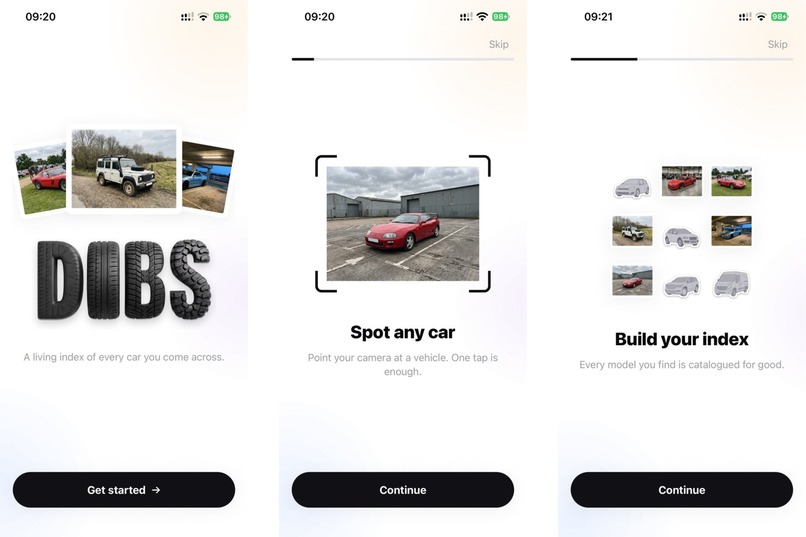
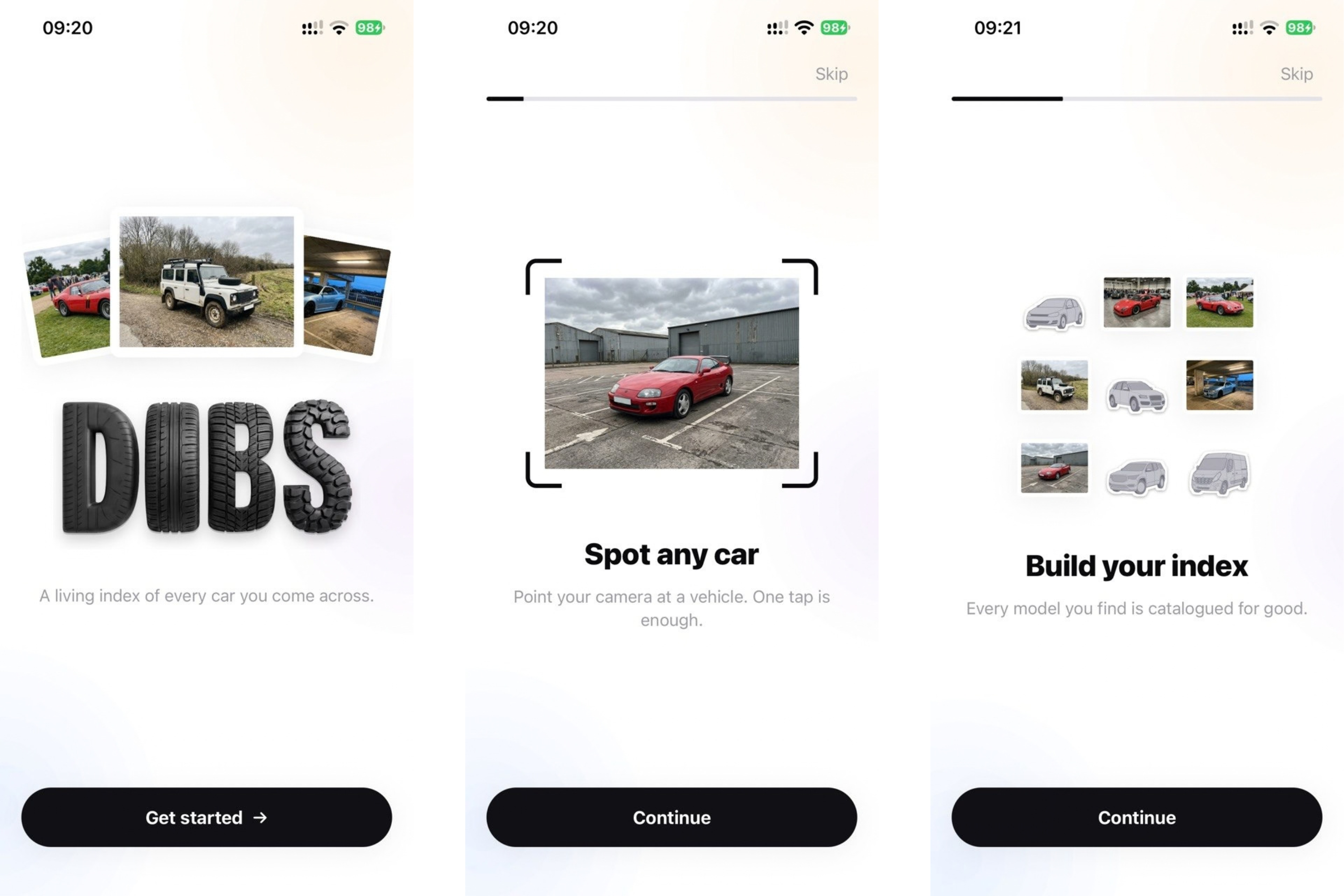
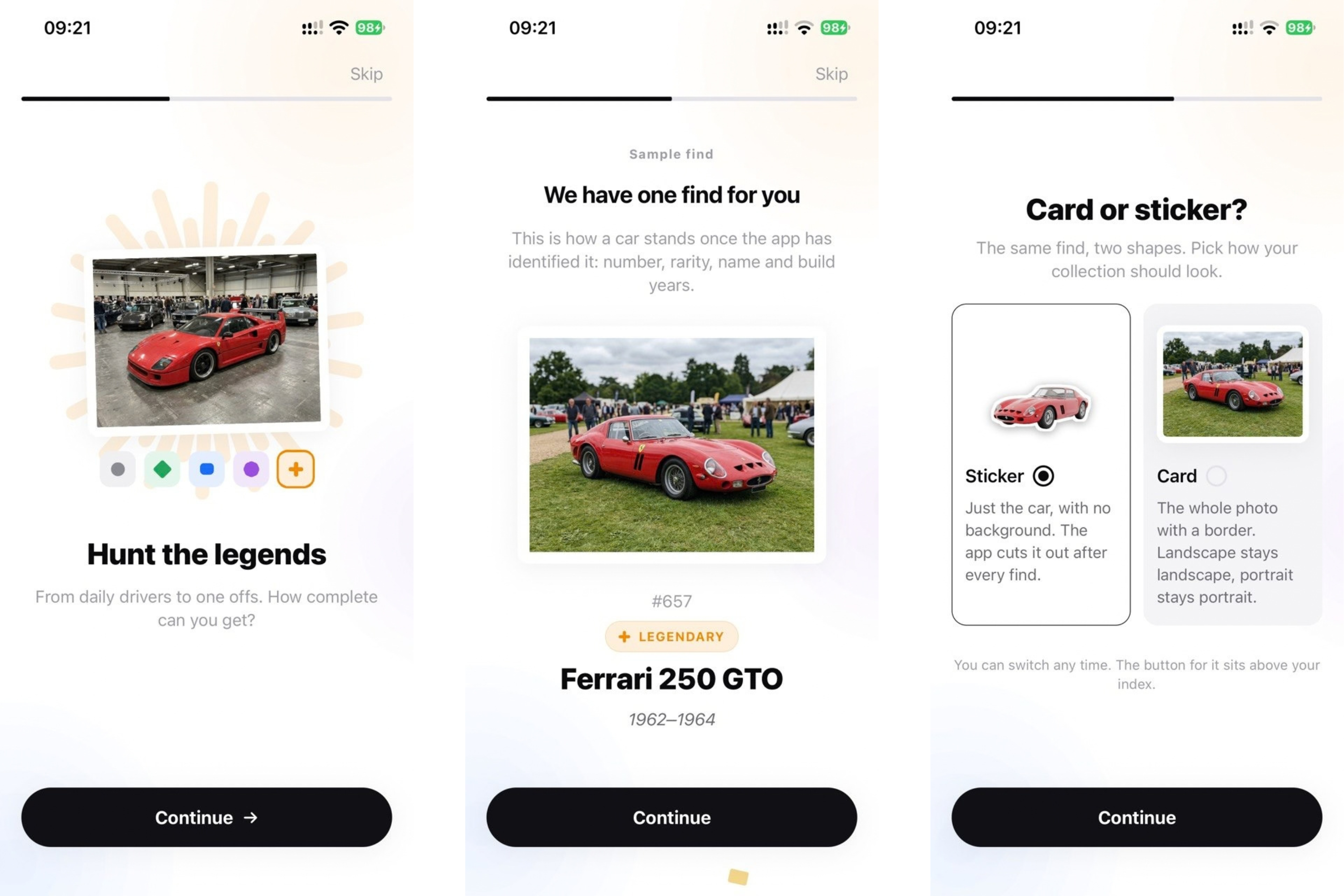
Onboarding 1
-
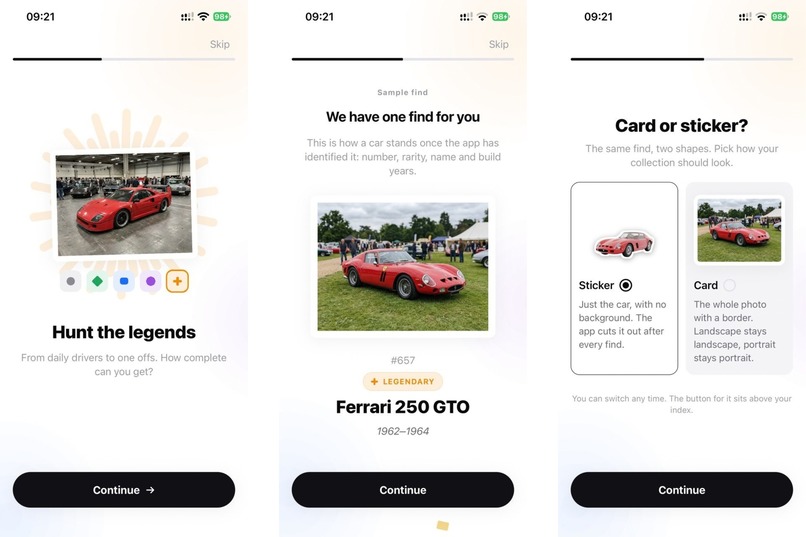
Onboarding 2
-
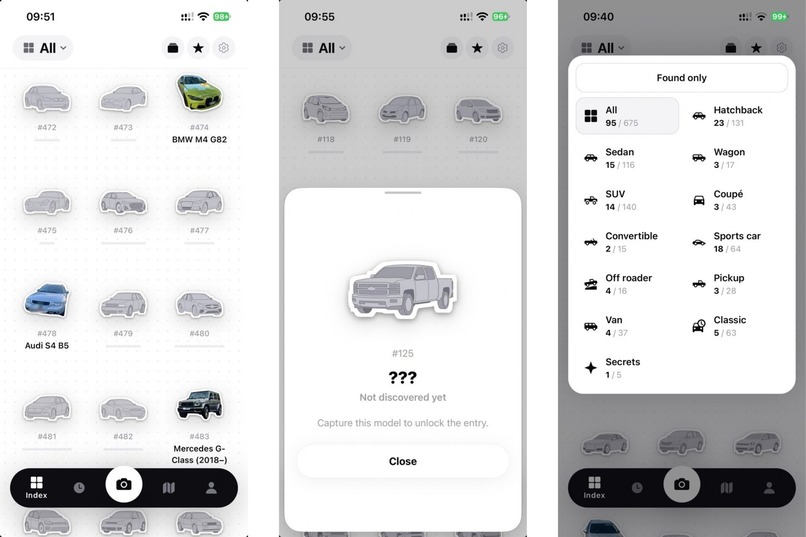
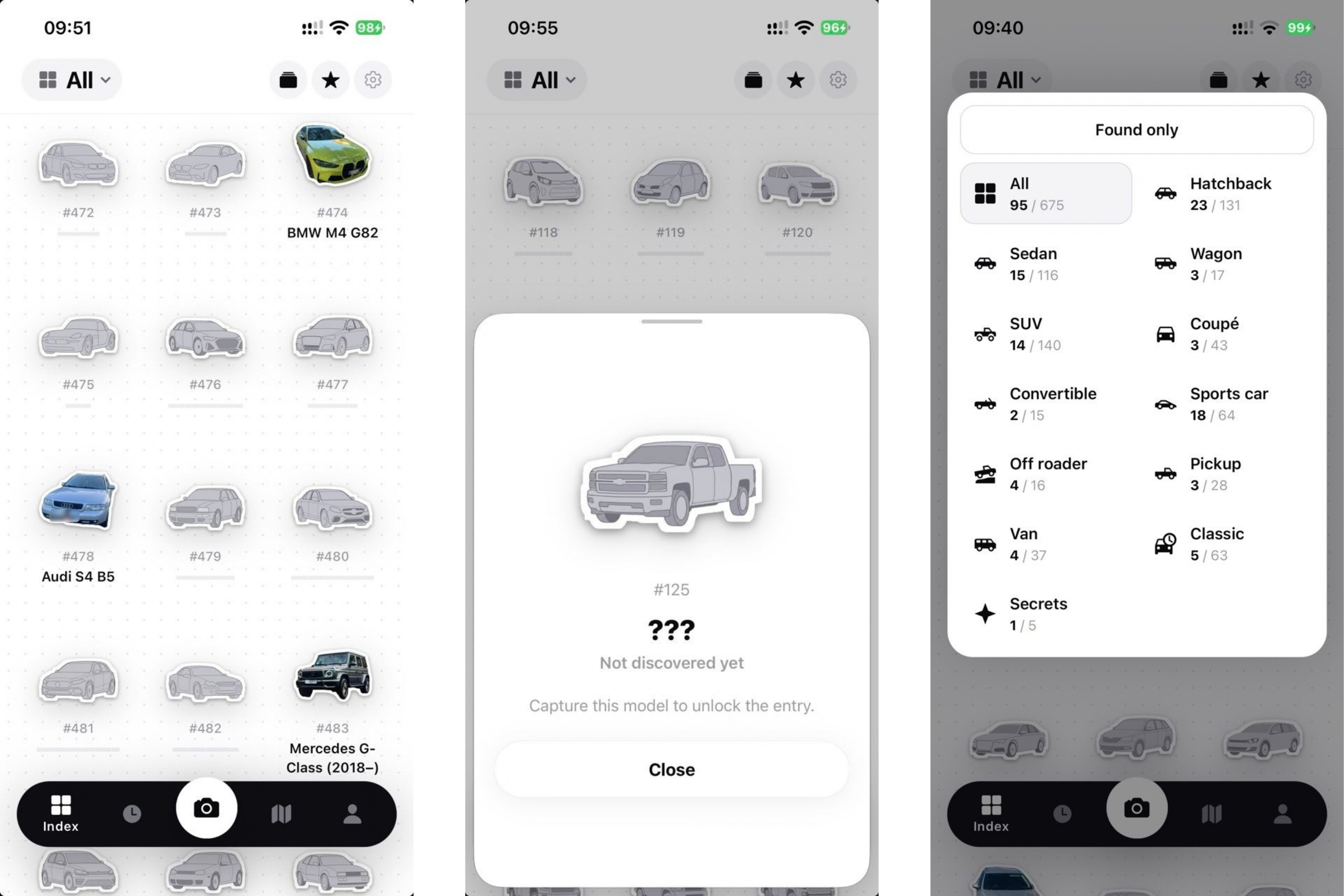
Index, Silhouettes as a hint, Car Categories
-
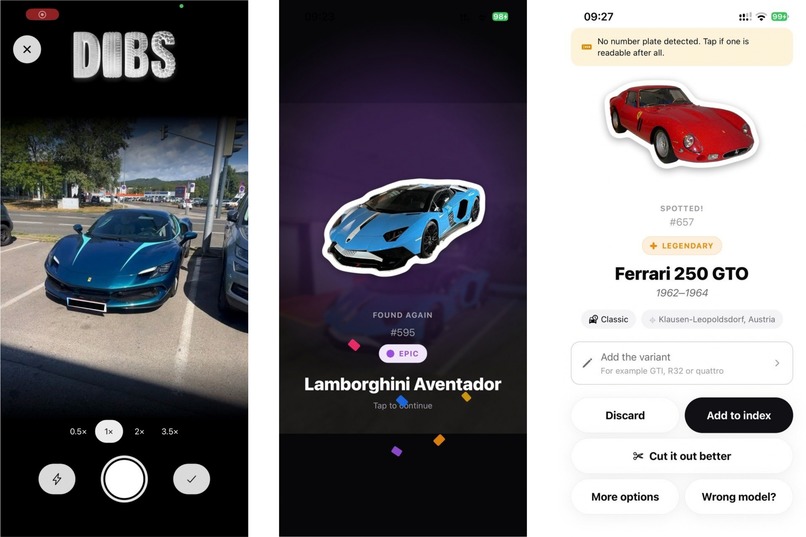
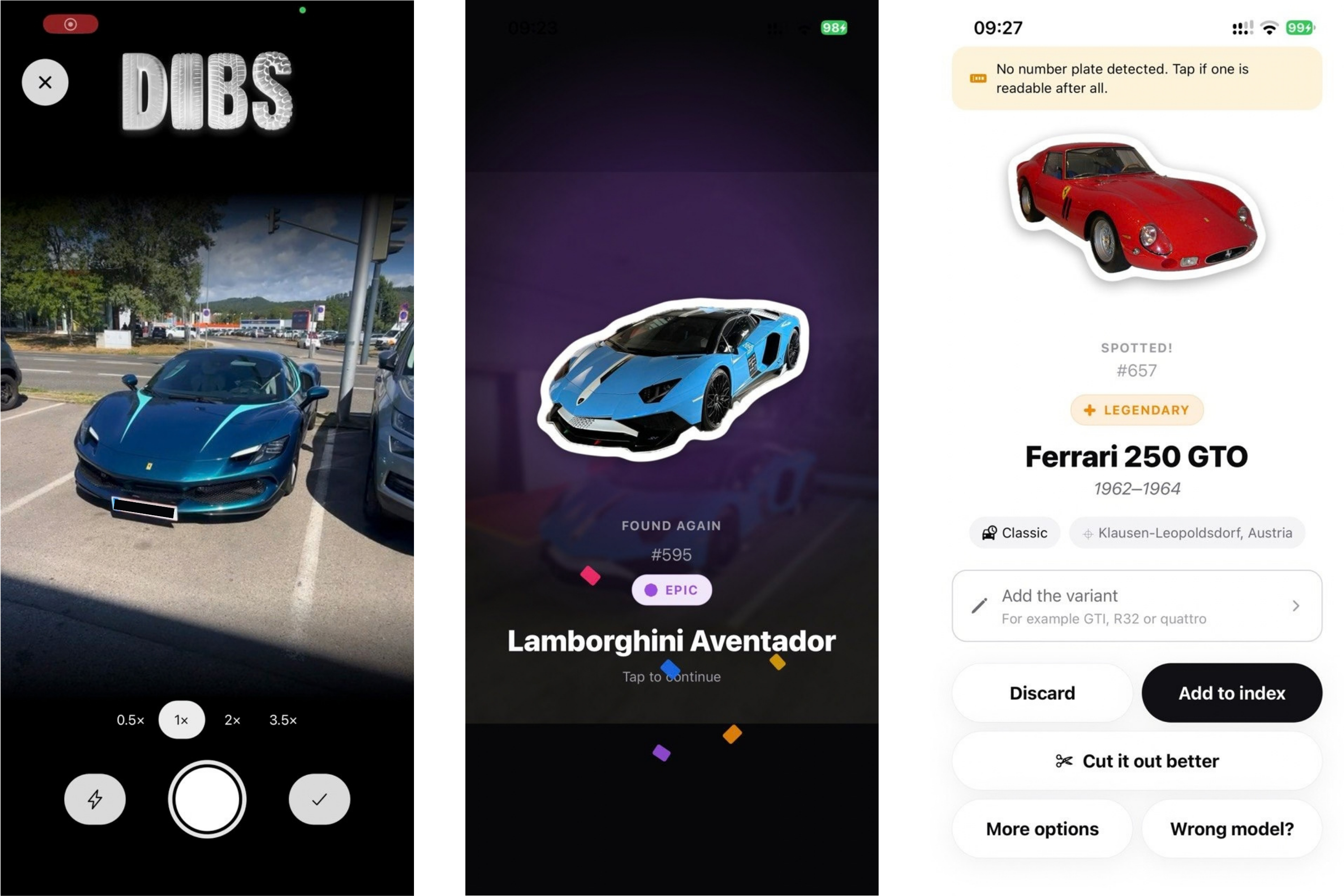
Taking a picture of a car, Identify it, Overview of the find
-
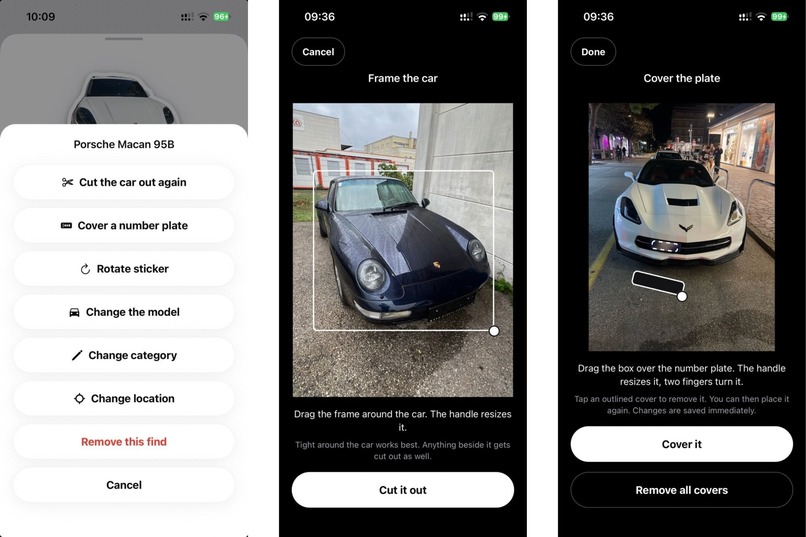
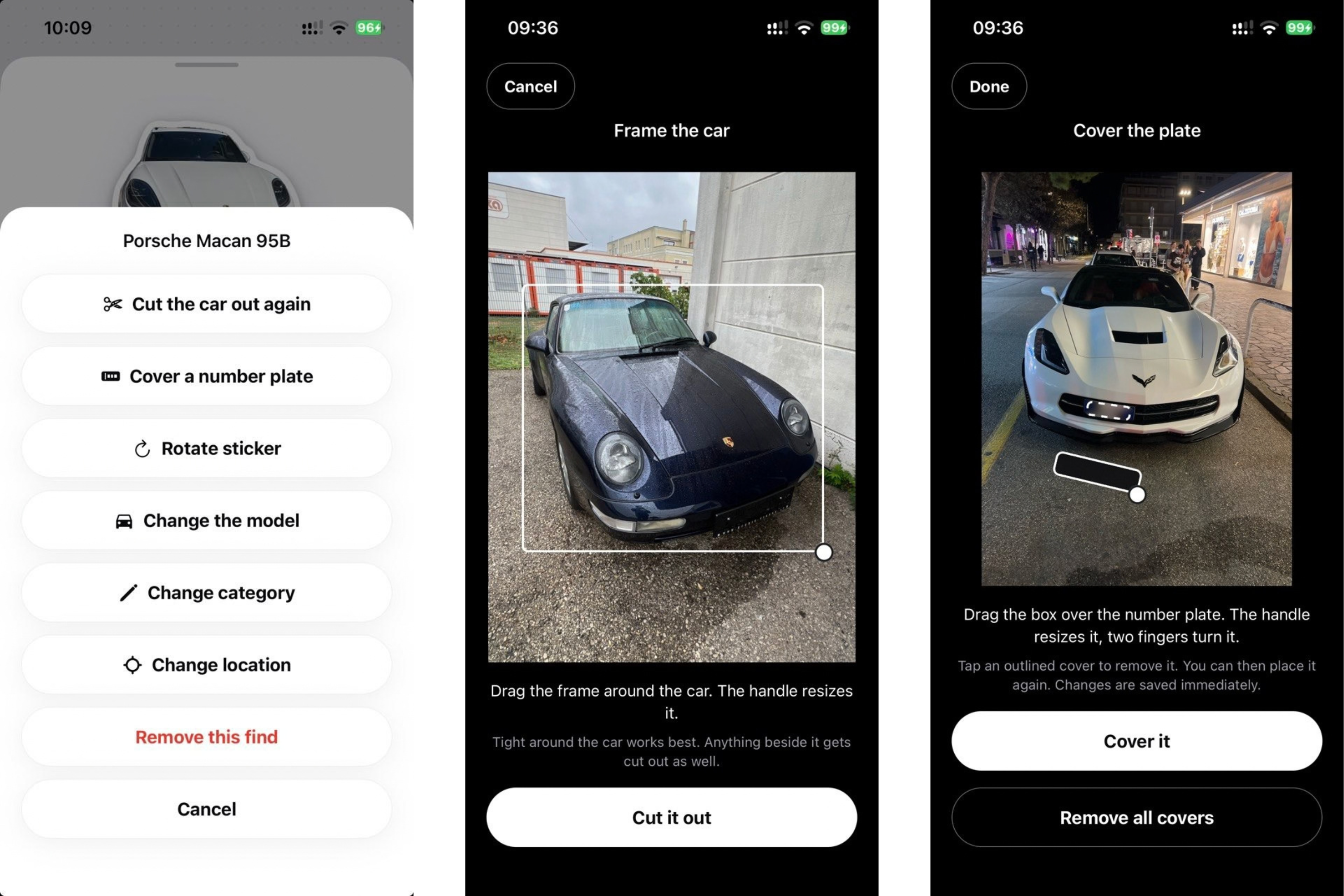
Overview of the manual changes a user could do, if auto cut is bad cut the car out agian, cover the number plate (better/again)
-
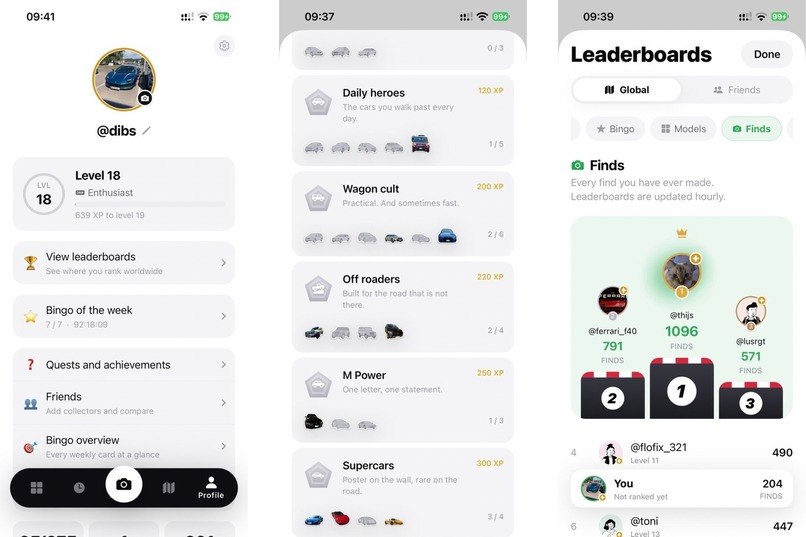
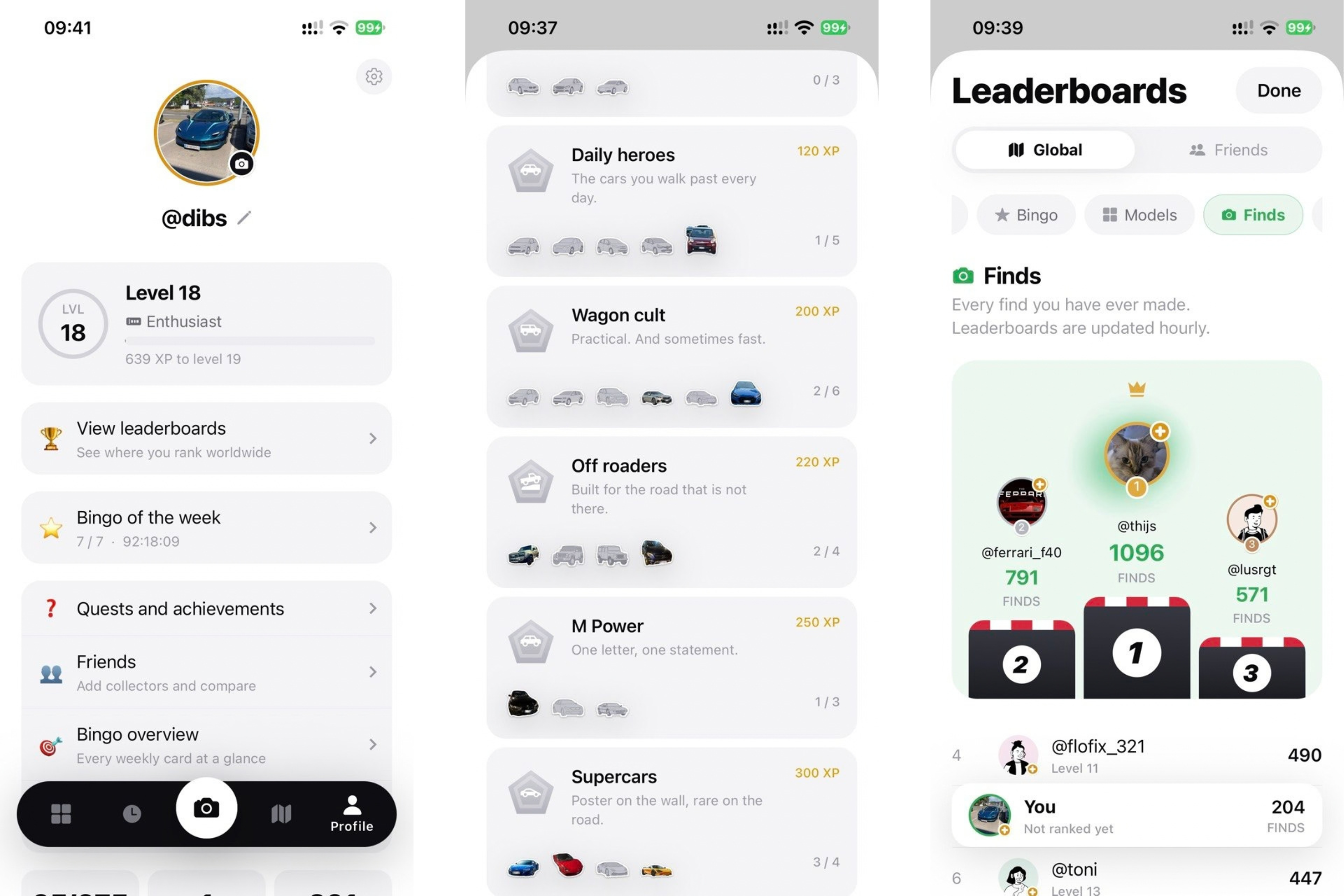
Player Profile, Challenges, Leaderboards
-
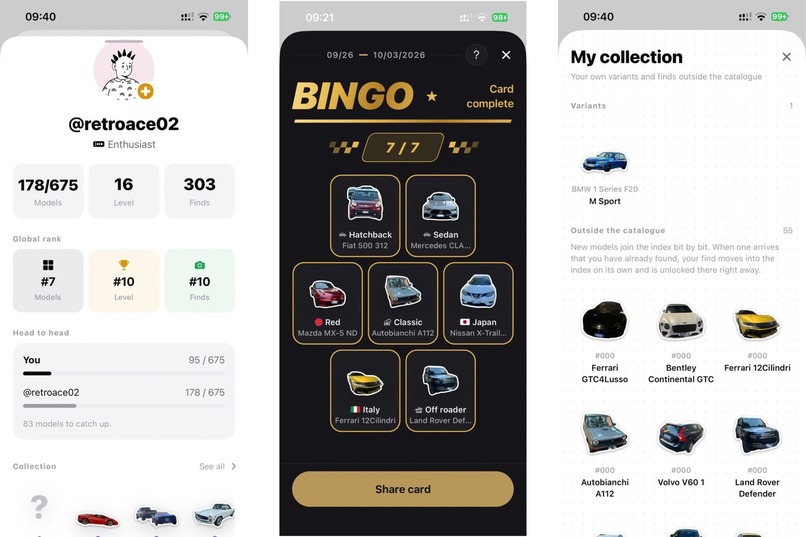
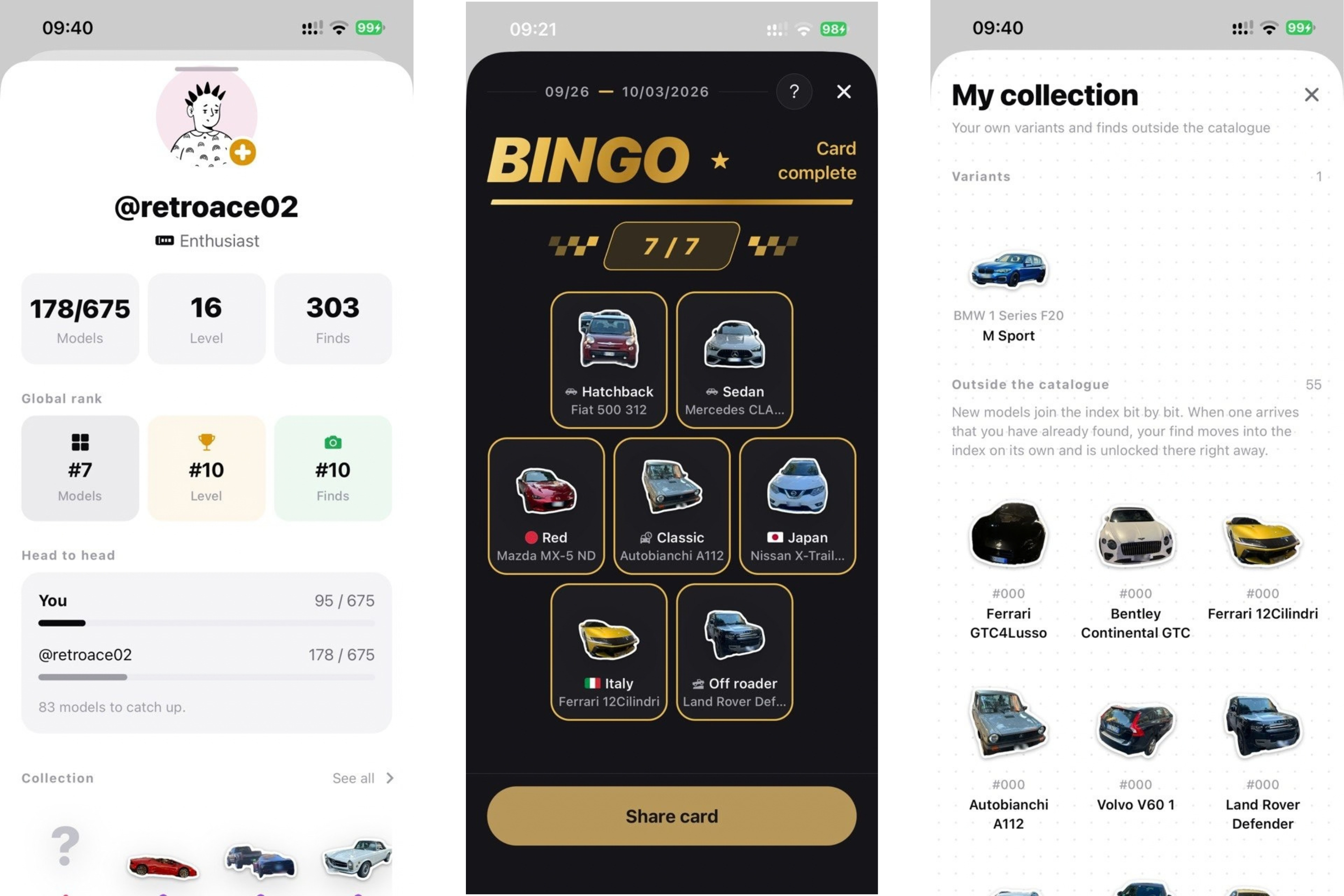
Other user/Friends profile, Weekly Bingo, Own collection with cars not in the index
-
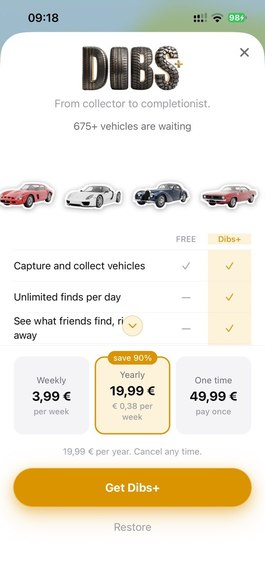
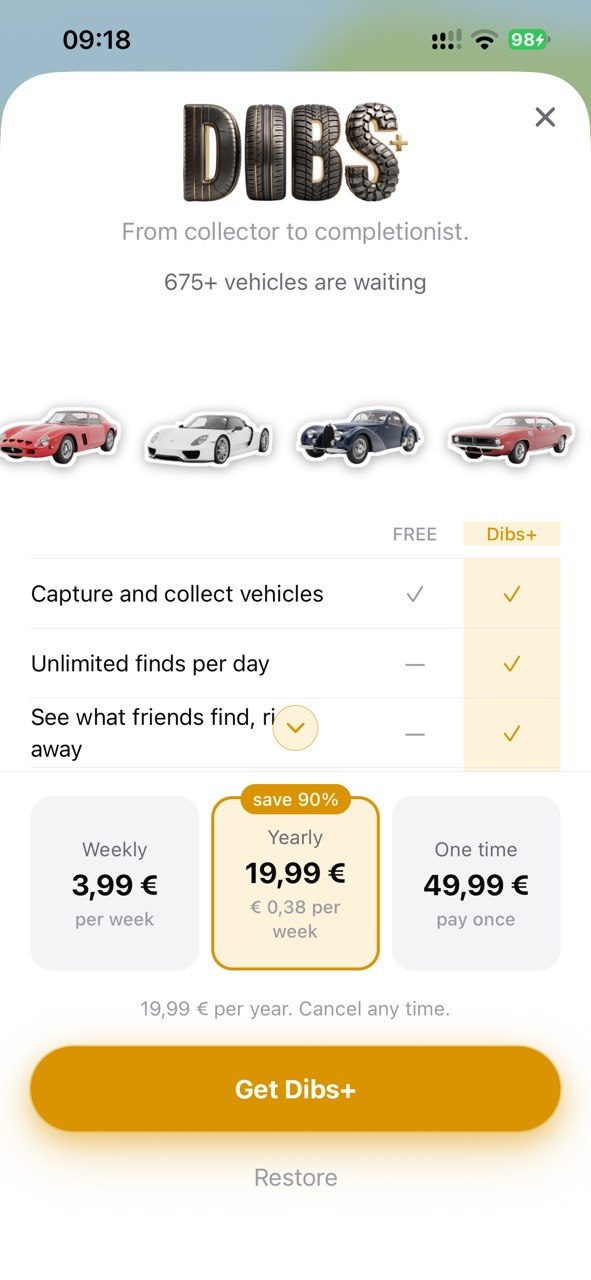
paywall
-
app icon
Inspiration
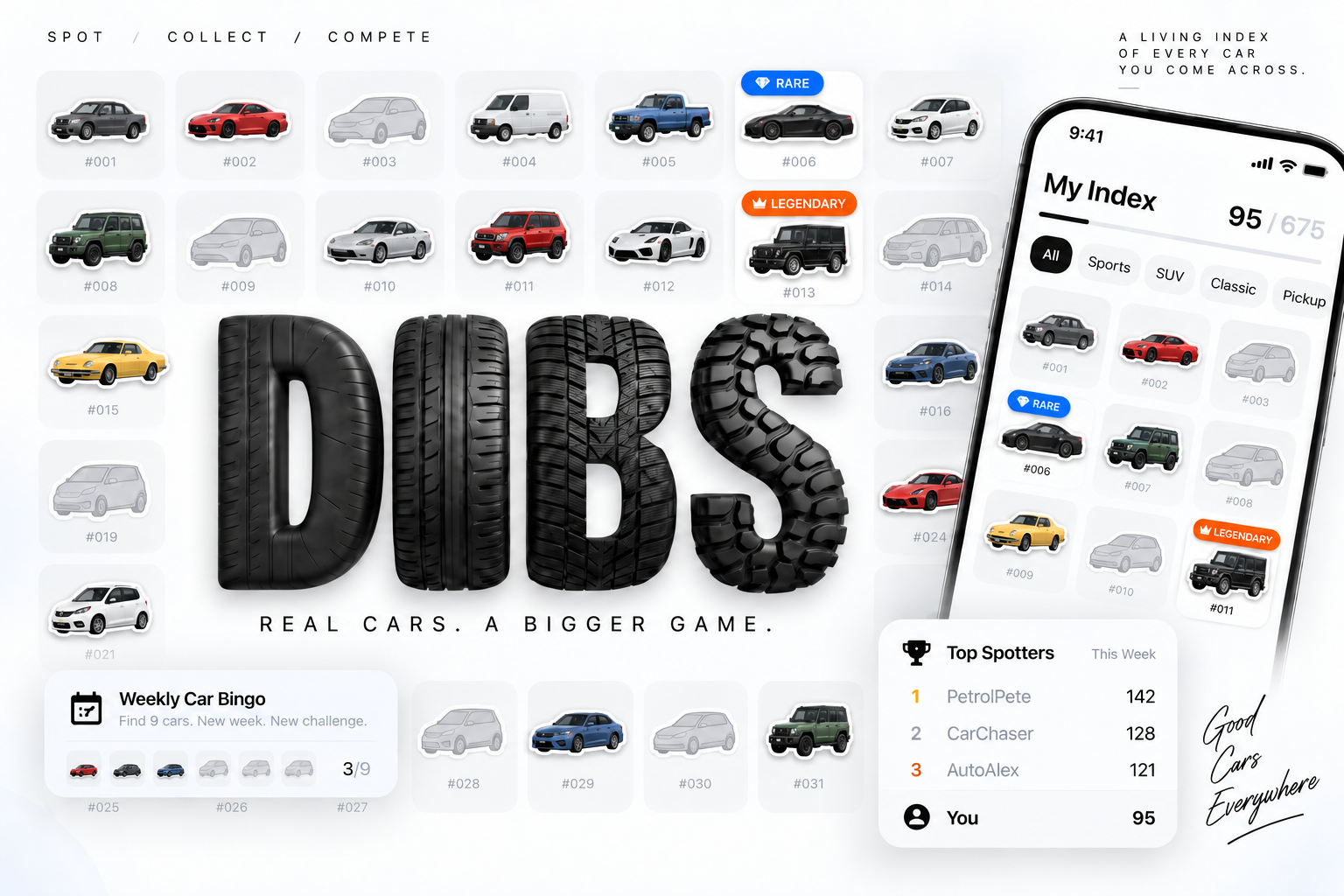
I’m a car enthusiast, and I’ve always played a quiet spotting game in my head: noticing an interesting car in traffic and thinking, “Nice.” I wanted to turn those moments into something I could collect. The idea behind Dibs is a fixed catalog whose undiscovered entries are hidden behind silhouettes. You can try to guess what’s missing, but you only reveal a car by finding it. That makes an ordinary walk more interesting: the car around the next corner could fill an empty slot. There are already apps for saving cars you like and building a personal collection or dream garage. I wanted to turn that into a game: a fixed catalog of hidden cars that you have to go out and find. Supercars and hypercars are part of it, but so is the battered little hatchback parked around the corner. That ordinary car could be the very last entry missing from your collection. The idea that even the most overlooked car could become an exciting find is what inspired Dibs.
What it does
Dibs turns real cars into collectible stickers. Take a photo, let AI identify the car, and add the find to your personal collection. Different generations count separately, so a Golf 4 and a Golf 7 fill different slots. You can review and correct the identification before saving. The catalog currently contains 674 entries covering 72 brands and special finds. Undiscovered entries appear as numbered silhouettes. Six rarity tiers and 18 curated sets, including Hot Hatch, JDM Legends, and Detroit Classics, give collectors different goals to work toward. Levels, ranks, streaks, and daily goals add reasons to keep exploring. I’ve also built weekly Bingo. Each card has seven squares based on traits such as body style, color, or country of origin. Players photograph matching cars to fill their card, and faster completion earns a higher ranking. Even an everyday car can become exactly the find someone needs.
How we built it
I built Dibs independently using Expo, React Native, and TypeScript. Car identification runs through a backend function that asks a vision model to identify the vehicle, then matches its answer against the app’s catalog. This lets the model identify cars beyond the existing collection while keeping catalog matching under my control. Sticker creation runs on the device using native image segmentation. I also built tools for selecting the car, adjusting the cutout, and obscuring license plates. Supabase handles authentication, collection storage, and synchronization. RevenueCat manages subscriptions and premium access. Alongside the mobile app, I built supporting web tools for account recovery and administration.
Challenges we ran into
The hardest challenge has been finding a way to keep Dibs free to play while covering the cost of AI recognition. Every scan costs money, and I wanted people to enjoy collecting without needing a subscription. Players get five free scans per day and can unlock up to five more by watching ads. Plus subscribers get unlimited scans and additional benefits. Finding a sustainable balance between those options has taken a lot of work, and it is still an ongoing challenge. I want the free daily allowance to feel worthwhile, with Plus offering extra value to people who enjoy the game and want to collect more. There were technical challenges too: distinguishing similar car generations, creating clean stickers from busy street photos, and letting collectors correct uncertain results. But as a solo developer, making the economics work while keeping the game accessible has been the hardest part.
Accomplishments that we're proud of
I’m proud of taking Dibs from a personal spotting habit to an app with more than 20,000 users. The collection now contains 674 entries, with distinct generations, hidden silhouettes, collectible stickers, and 18 curated sets. I’ve also built weekly Bingo to give collectors a fresh challenge alongside their ongoing collection. Building and maintaining all of this independently has been a major achievement for me. Seeing people use it gives me more ideas for where to take it next.
What we learned
I learned how much the presentation of a collection changes the experience. A silhouette gives just enough information to spark curiosity while leaving something to discover. I also learned that recognition needs a clear correction flow. Similar generations can be difficult to distinguish, and collectors need control over what enters their collection. Bingo helped me think beyond rarity. A common red hatchback can be an exciting find when it completes your card. Giving everyday cars a purpose makes the game accessible to more people.
What's next for Dibs: AI Car Identifier
I plan to keep expanding the catalog with many more cars, missing generations, and better regional coverage. I also want to develop more Bingo challenges, collection events, and ways for friends to compare and share their finds. Improving recognition and sticker quality will remain an ongoing focus. There are plenty of ideas still to explore, and feedback from the growing community will help shape what I build next.
Built With
- expo.io
- react-native
- revenuecat
- typescript

Log in or sign up for Devpost to join the conversation.