-
-

Financial Equity & Inclusion
-
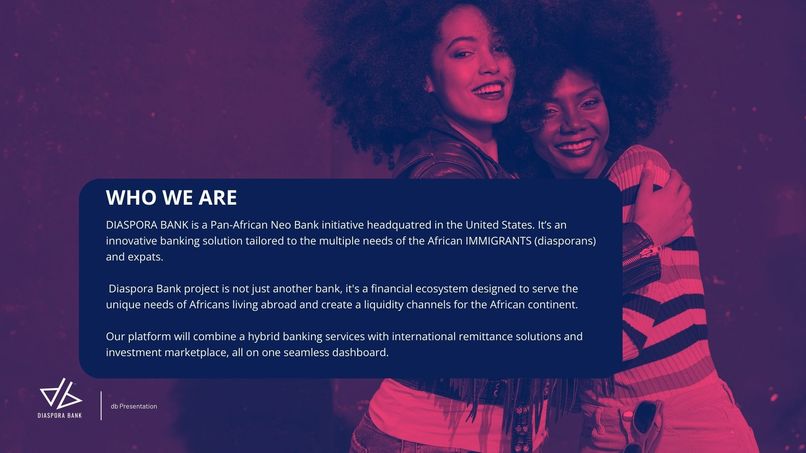
Who We Are
-
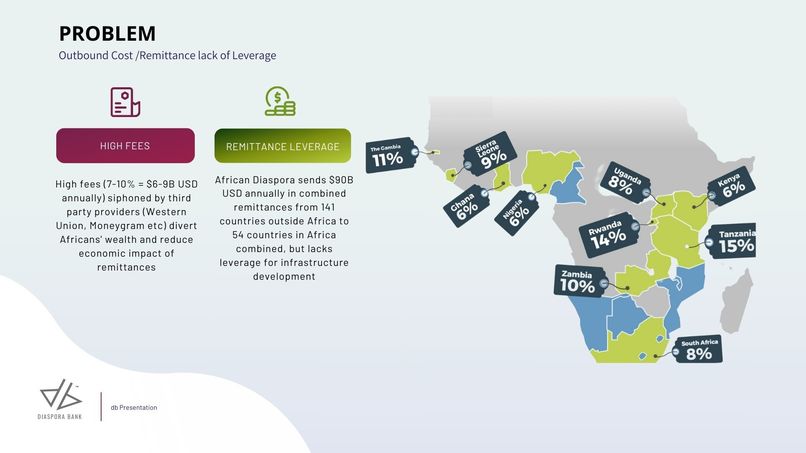
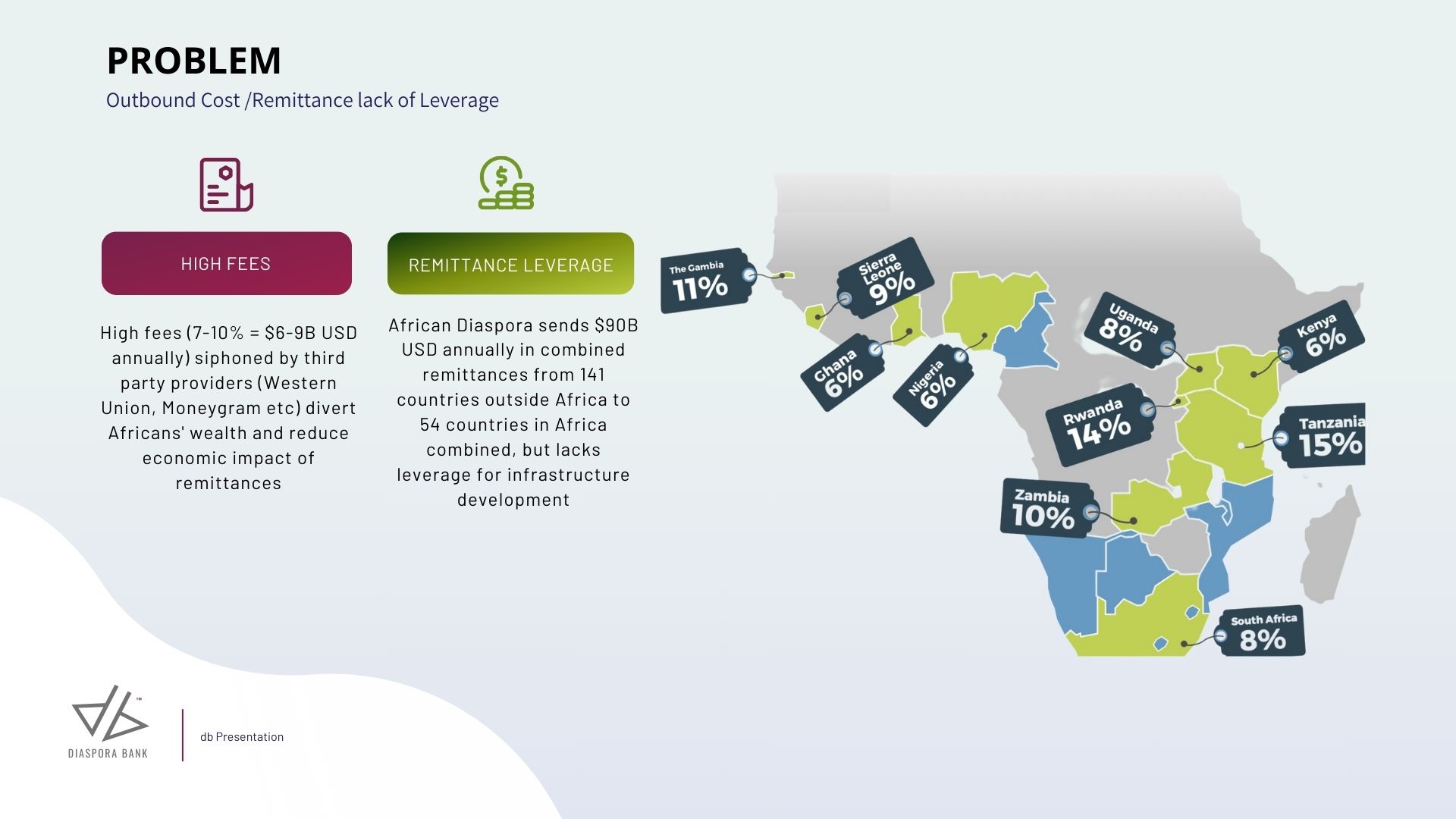
Problem We Are Solving
-
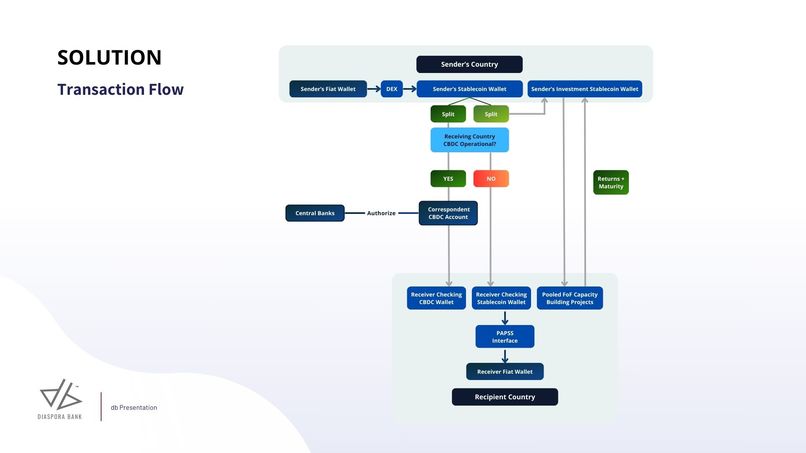
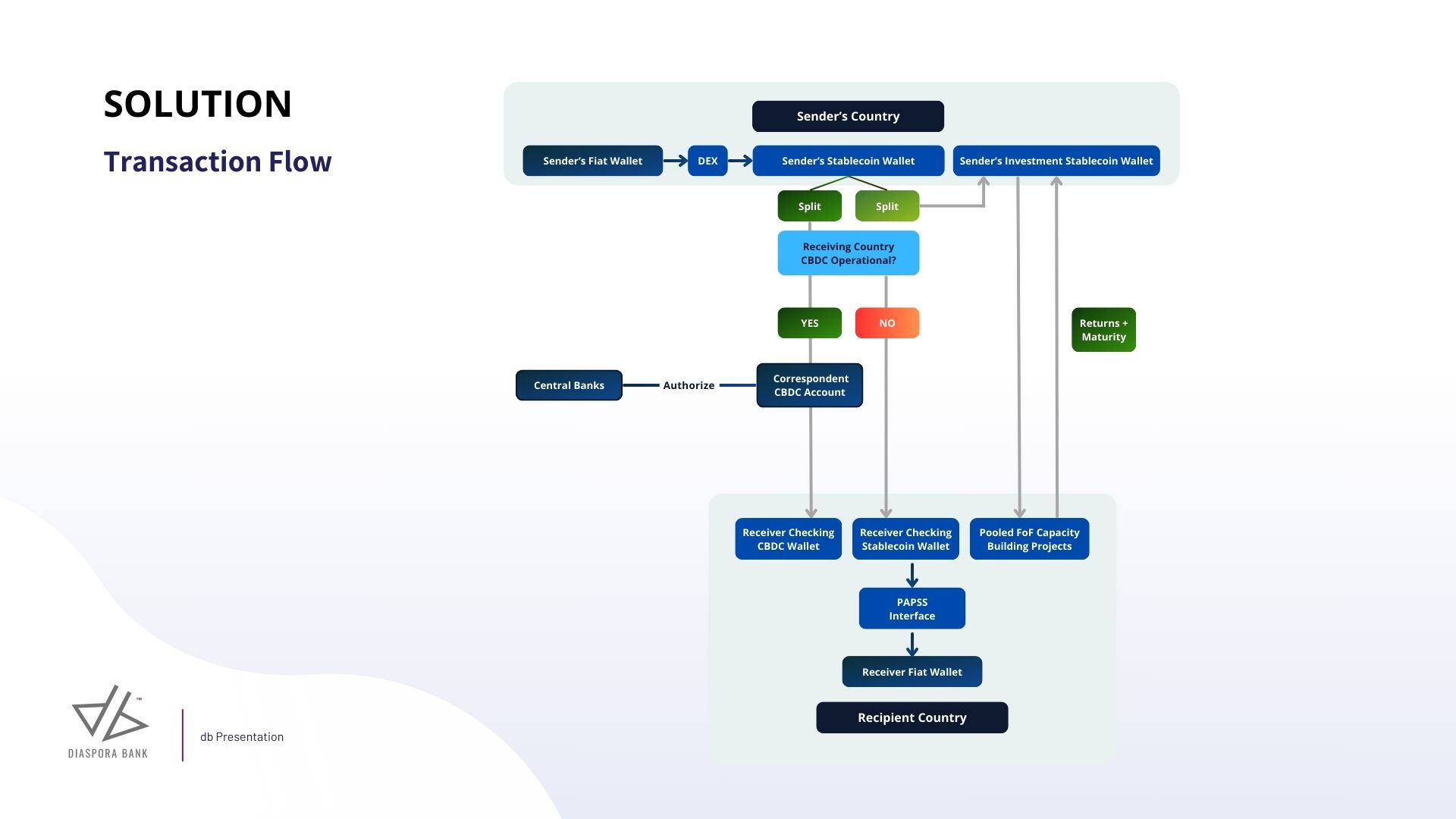
Solution Flow Chart
-
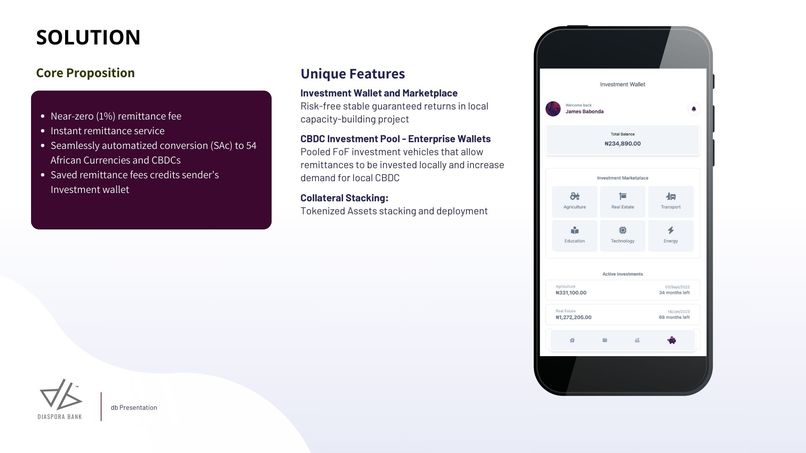
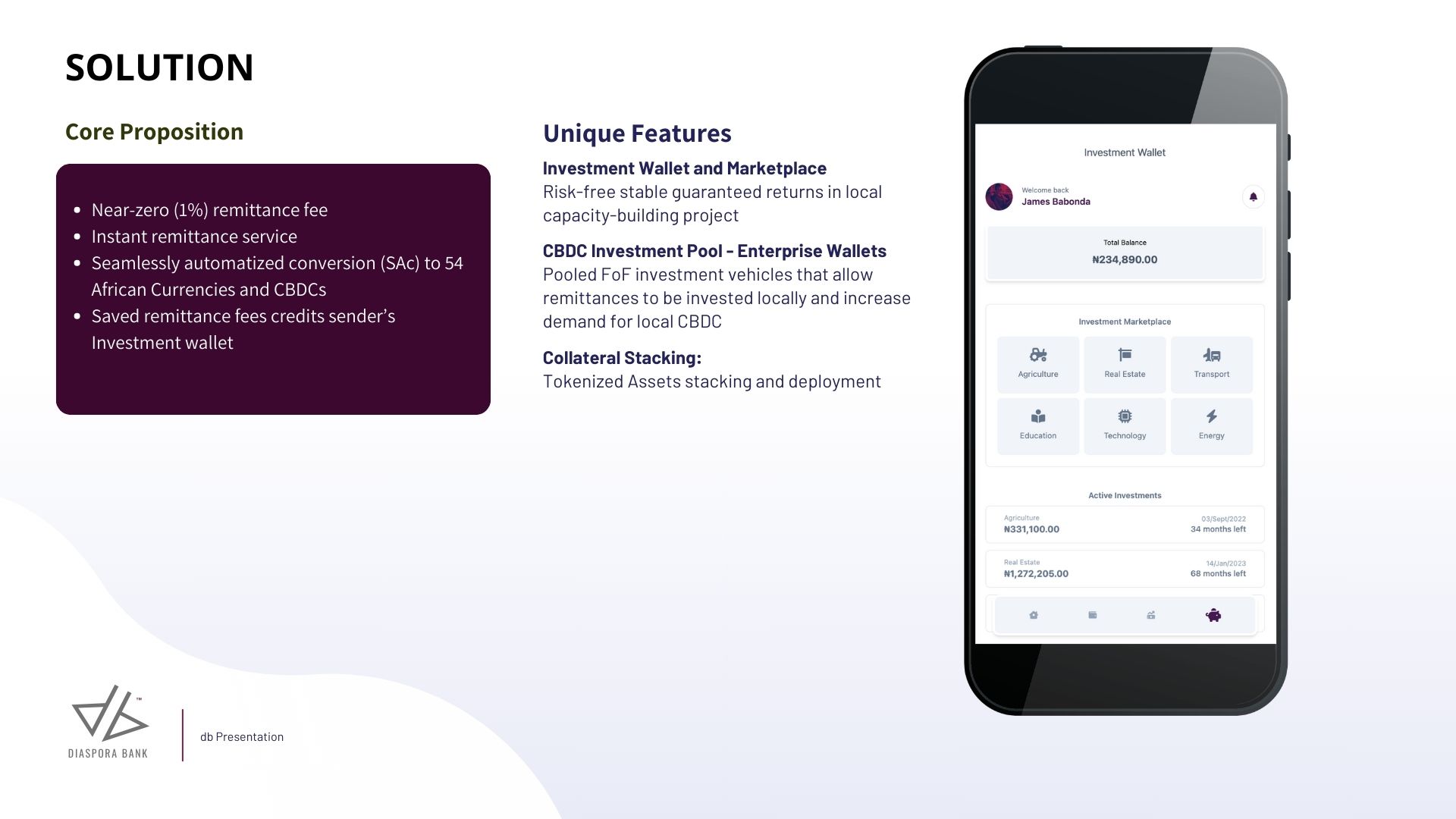
Solution: Core proposition and Unique Features
-
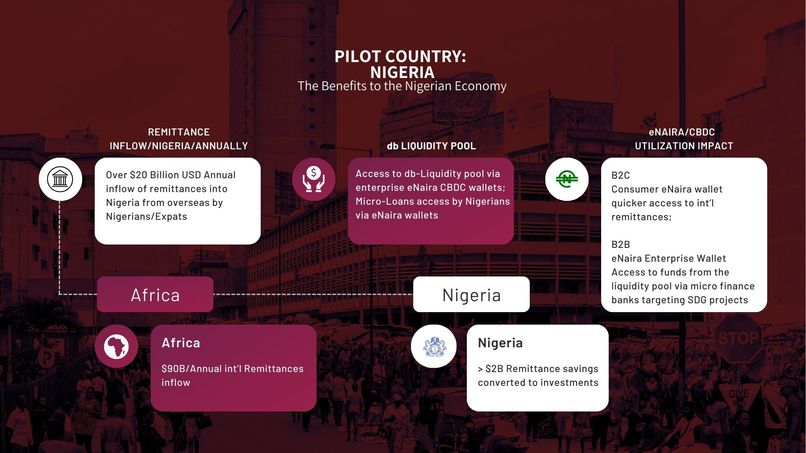
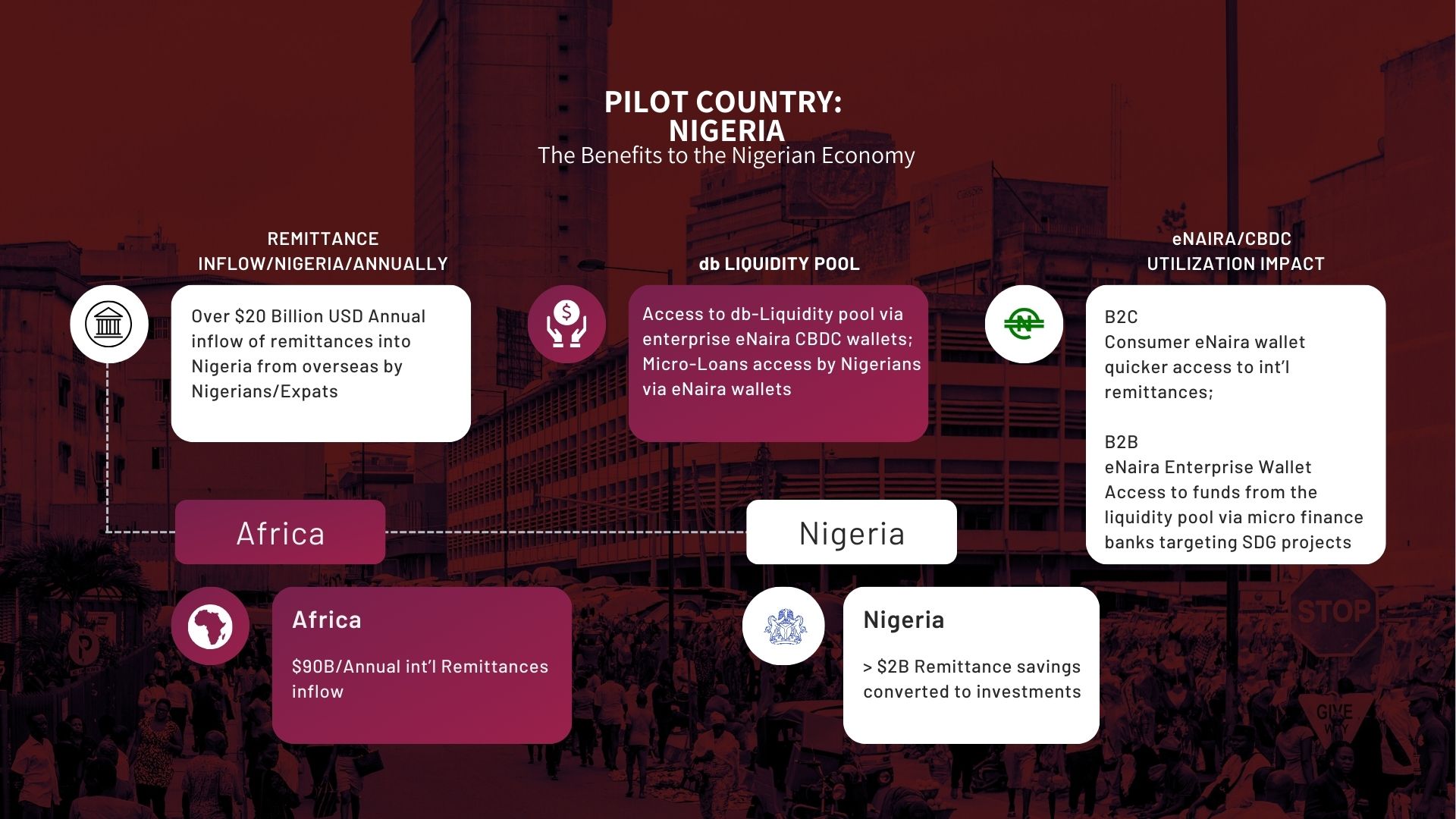
Neo-bank: Diaspora Bank CBDC Integration Pilot is Nigeria with the eNaira CBDC
-
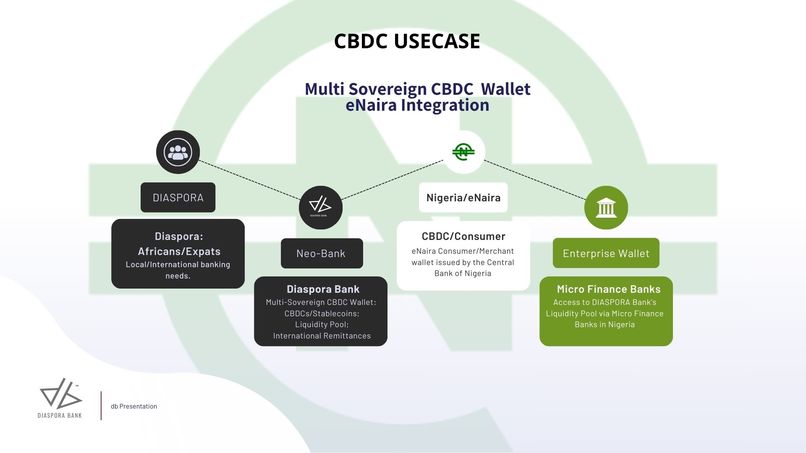
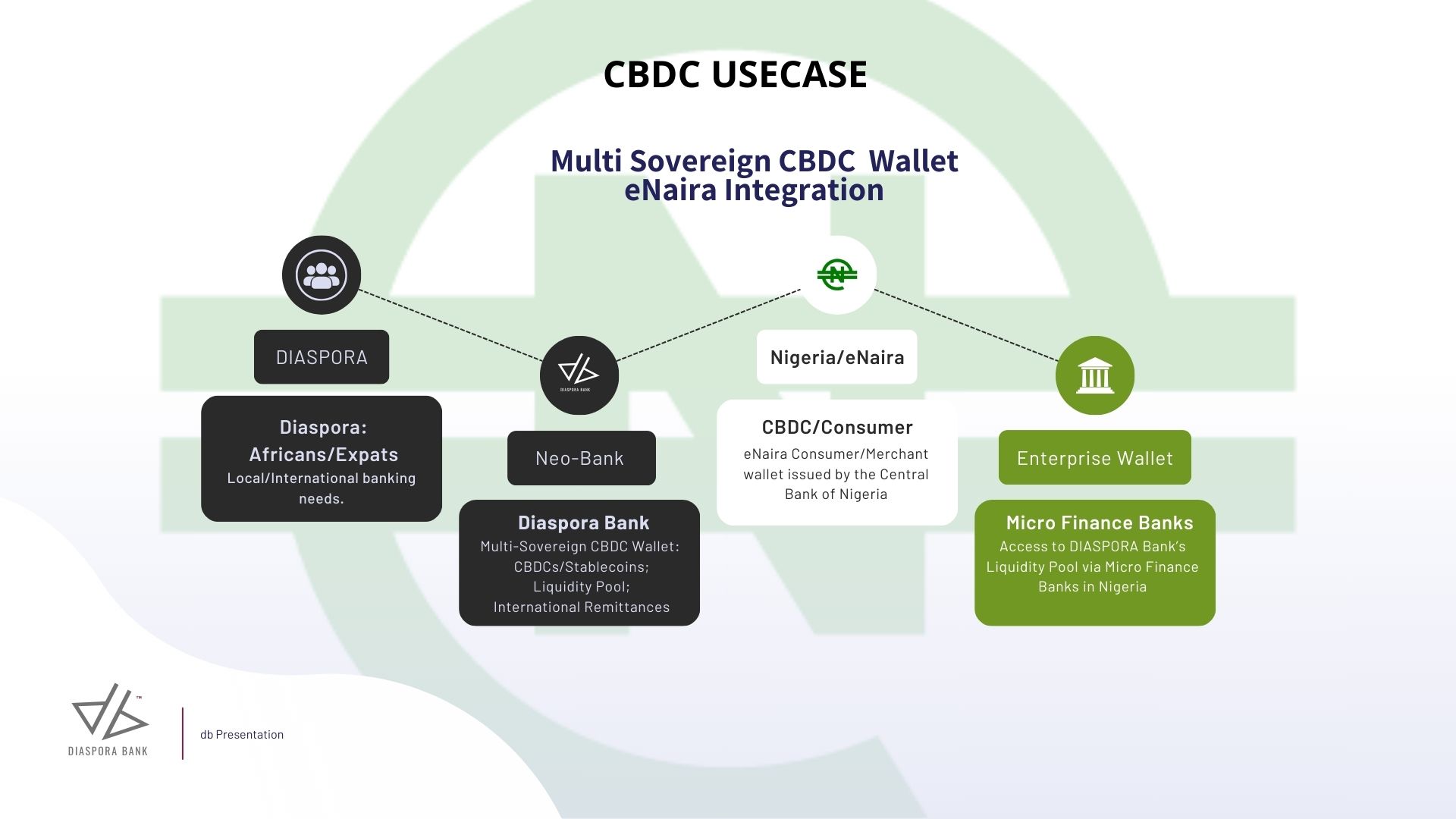
Diaspora Bank's Multi Sovereign CBDC Wallet and eNaira CBDC wallet integration/Demostrating the B2B and B2C components
-
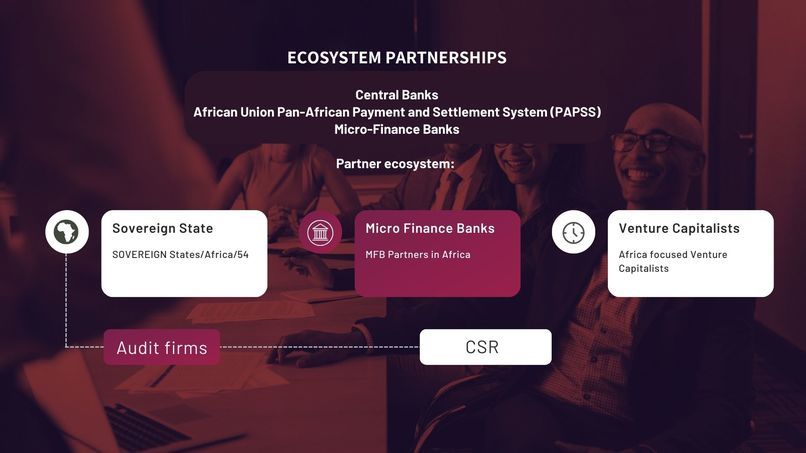
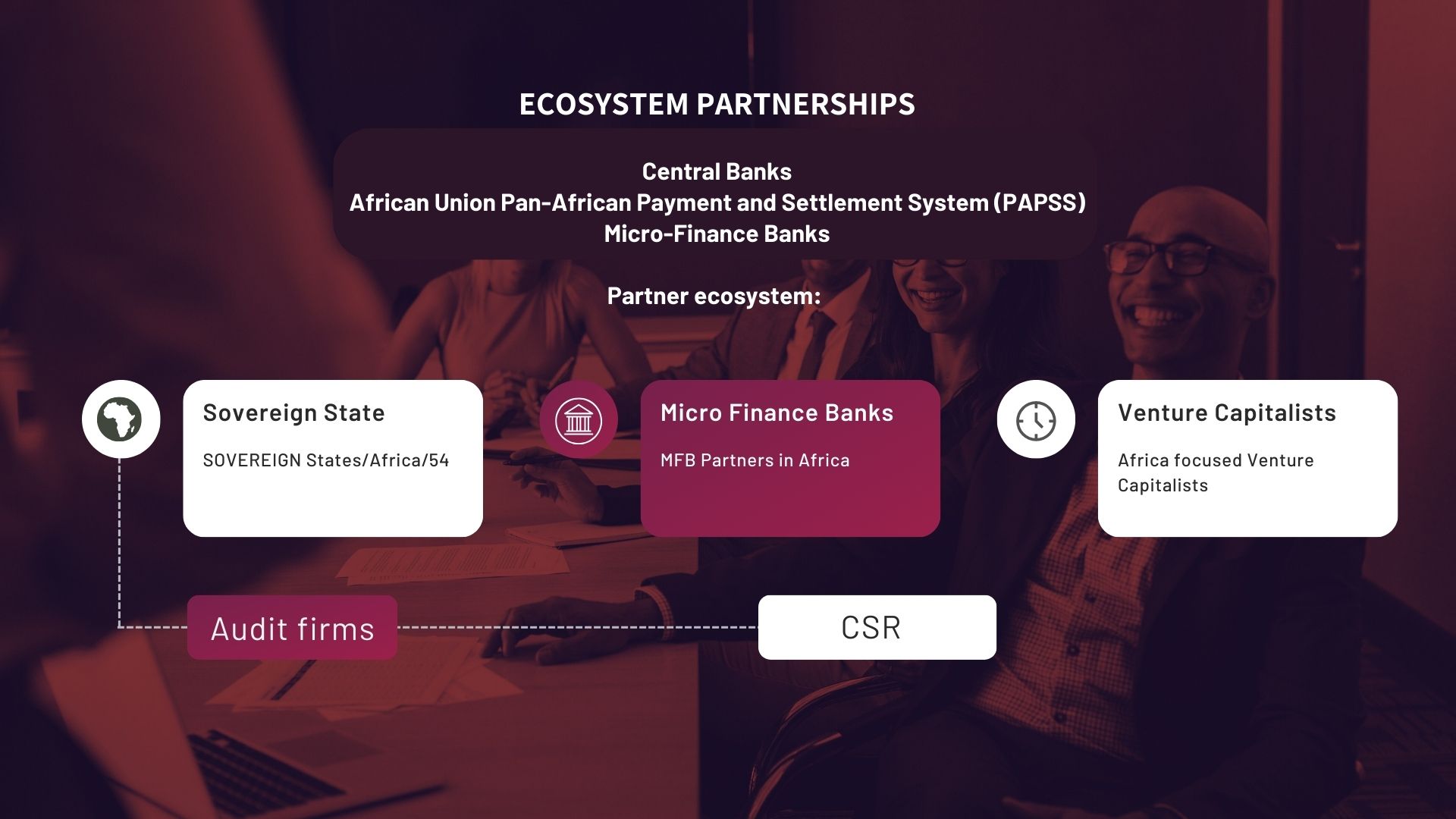
Diaspora Bank Ecosystem: Partnerships/Sovereign States/Micro finance banks/Venture fund (Capitalists)
-
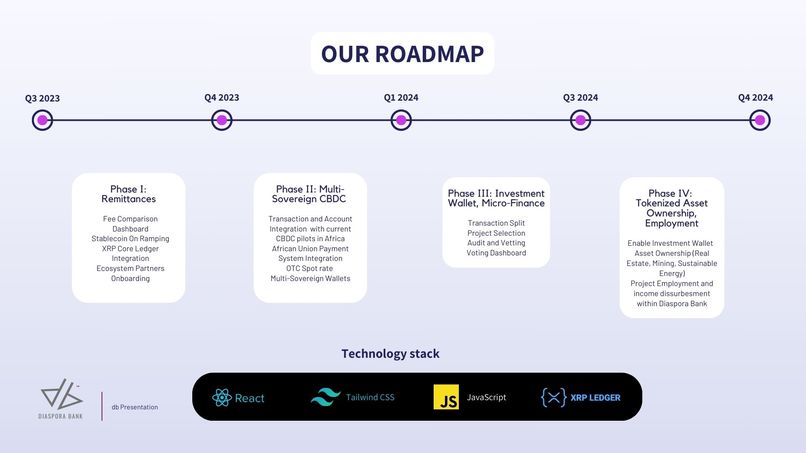
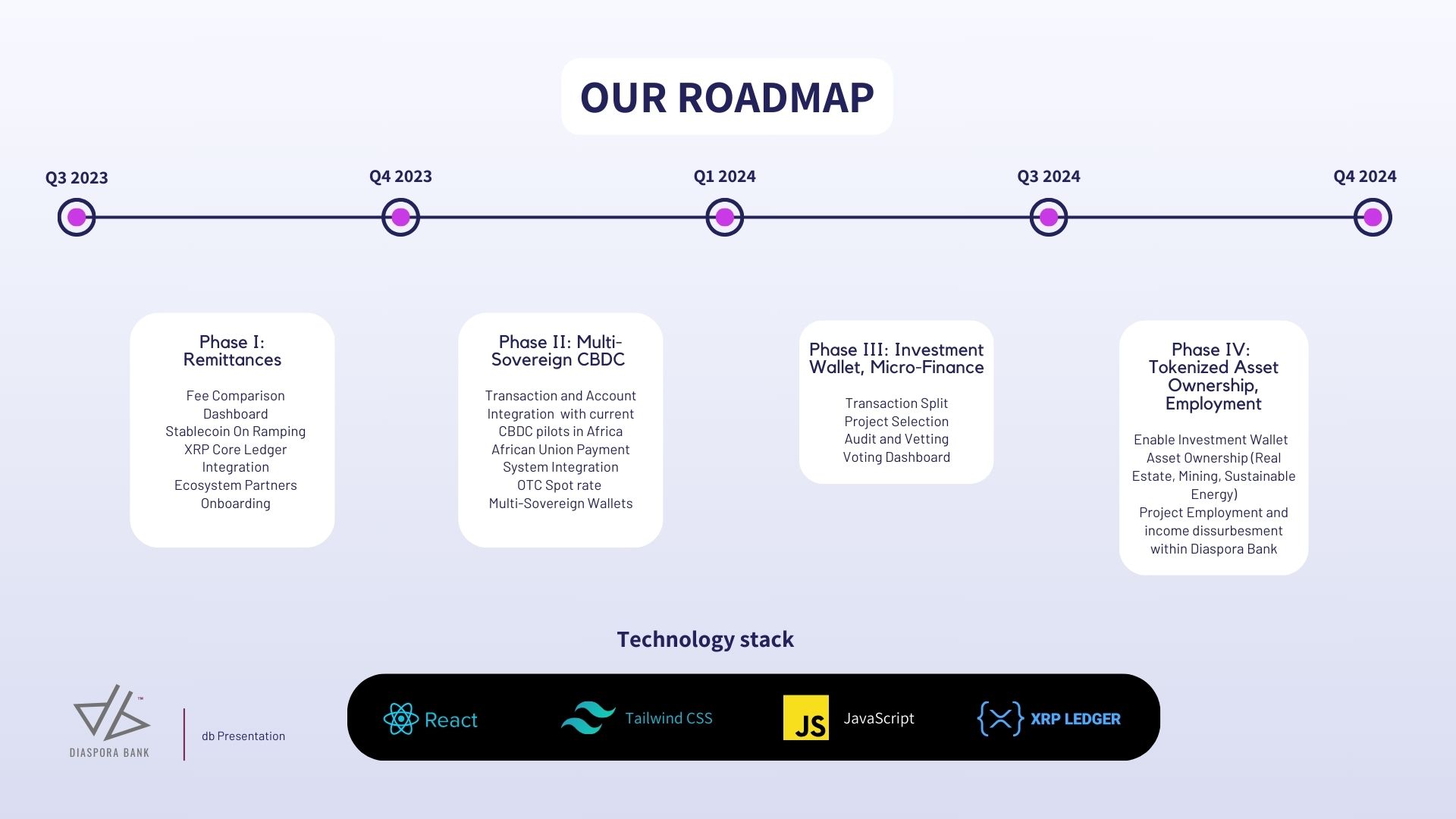
Project Roadmap:
-
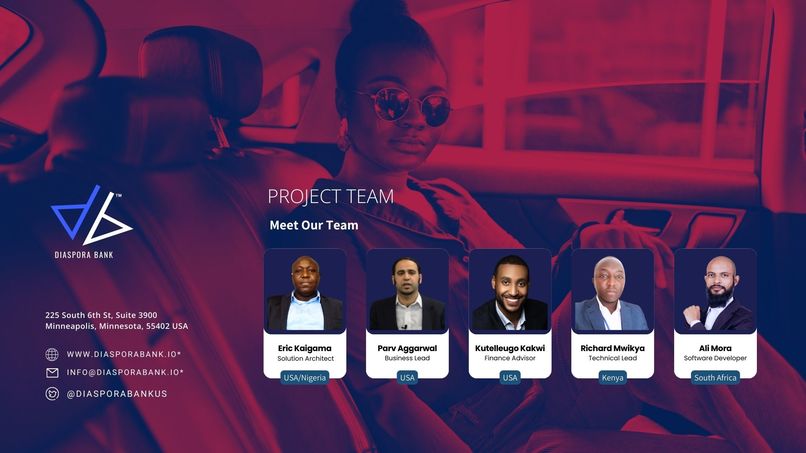
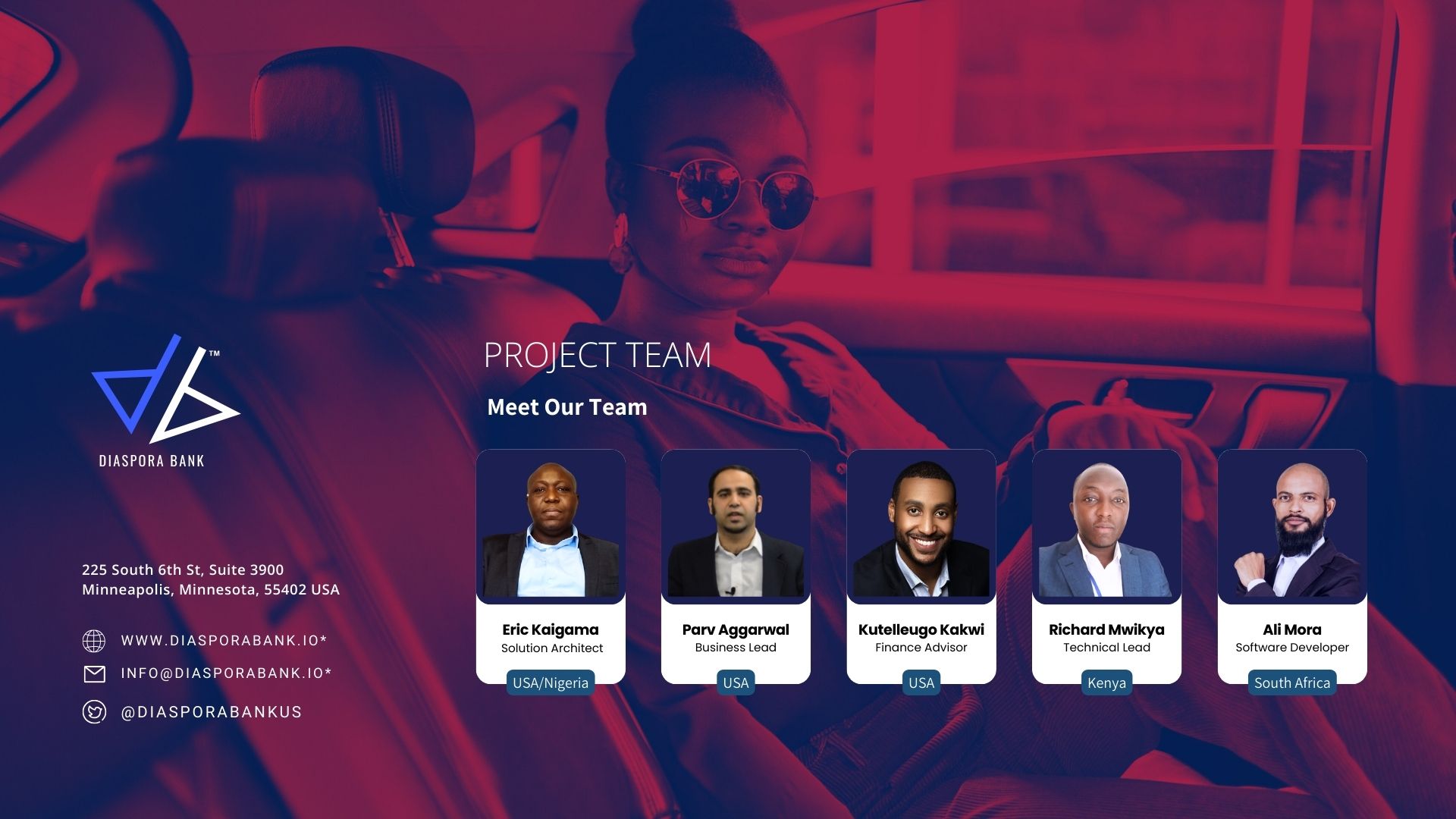
Our Team: Eric/Parv/Richard/Ali/Ugo

Inspiration
This project is inspired by the unlimited promise of the Blockchain technology in creating an equitable financial system that is financially empowering hard working African immigrants. The journey to building the diaspora bank was inspired by a personal experience, a perspective of one of our team members’ starting with his journey moving from Africa to the United States. Just like most immigrants, sending part of their checks home (Africa) to either relatives and friends was part of their norm. During his 20 year sojourn in the US, he’s come to understand the unfairness of paying exorbitant charges to money transfer operators to send money home, considering the fact that both Federal and State taxes were always deducted from thier paychecks. With the emergence of multiple blockchain applications, we saw an opportunity to change the status quo. We embarked on a difficult task to build from the ground up the diaspora bank - a bank that serves the needs of a diasporan both in their adopted country and ancestral continent (Africa) - to implement a near-zero-fee remittance charges from any part of the world to Africa and addition to other unique products and services.
What it does
The Diaspora Bank aims to tackle key pain points facing the African financial ecosystem:
- Large fees (7-10%) that deprive African families of $6-9 Billion annually from the global remittance inflows of $90 Billion.
- Difficulty in obtaining low-interest project finance capital for African businesses.
- Shortage of credible domestic investment instruments
- Lack of cross-border payment solutions with 0 fees
- CBDC rollouts limited domestically; lack of pan-African CBDC interoperability.
The Diaspora Bank is designed specifically to provide financial equity by filling the missing product-market fit by creating an all-in-one neobank solution to the fee, capital shortage, and border-limitation challenges facing the African payment ecosystem. Specifically, the Diaspora Bank leverages the Ripple XRP Ledger to create a near-0 fee flow of cross-border remittance funds to Africa, and additionally, provides the sender a unique opportunity to use their saved fees to invest in well-vetted capacity-building projects of their choosing with stable returns. Our mobile app interface has a sender's dashboard with a fee comparison feature, a receiver's dashboard with domestic fiat off ramps and P2P payment options, and an investment wallet listing well-vetted projects with stable returns, allowing a seamless user experience with remittance services, checking accounts, and investment opportunities using stablecoins, CBDC, and fiat.
The Diaspora Bank leverages our stablecoin and sender investment wallet systems integrated with African sovereign CBDC wallet. The consumer CBDC wallet allows for quicker access to int’l remittances and off ramps, and the B2B Enterprise wallet allows for direct access to funds from the liquidity pool via micro finance banks targeting SDG projects.
The Diaspora Bank will leverage the XRP Ledger to modularize its product offering to provide convenience and affordability in accessing financial services to the African diaspora community, and accessing capital within the African continent:
- Authorized Trustlines allow seamless conversion between stablecoins, multi-sovereign CBDCs and Stablecoins within Diaspora Bank’s liquidity pools and Central Bank correspondent accounts, and furthermore will enable Multi-Sovereign CBDC interoperability when leveraging the Pan-African Payment and Settlement System (PAPSS)
- Hooks allow for automated transaction split, allocating saved remittance fees into investment accounts, and automatically triggering stablecoin to CBDC conversion authorization
- Ripple’s Native DEXes on ramping from fiat to stablecoins for the sending party and off ramps to local fiat for the receiving party, leveraging the Diaspora Bank’s liquidity pools, eliminating need for third party service providers.
- Multi-Signing; when used in conjunction with trustlines, enables an additional layer of permissioned security by providing for institutional authorization of stablecoin to CBDC conversion, and investment project capital allocation from investment accounts. In addition, multi-signing flags can be set in accessing liquidity pools to allow additional review of high volume transactions, to ensure stability and solvency of the liquidity pool funds.
- Ripple Checks allow institutional-grade deposits, enabling investment account allocation from remittances, and pooled FoF (Fund of Funds) project-finance investment from individual investment accounts - in the final phase of the Diaspora Bank, checks will also enable fixed contract income disbursement
How we built it
We used FlutterFlow to create our user flow, database and Ui/Ux. After understanding the App requirements and making changes, we moved to React.js and Tailwind CSS for ‘real-world’ frontend development. Backend was developed in JavaScript. We simultaneously set up trustline-based token issuance and conversion transactions in the Ripple testbed. Finally, we combined the frontend and backend using React.
Challenges we ran into
Some of the challenges we went through included: issues Installing npm in our VSCode editor. The development team consisted of only two developers, a UI/UX Frontend developer and Backend Developer - despite being under-resourced and strict timelines, we delivered a functional demo solution.
Accomplishments that we're proud of
We have successfully been able to use the XRP Native Trustlines to issue both Stablecoins and CBDC, and convert between the two. We requested the Central Bank of Nigeria’s sandbox and APIs, and also managed to utilize a contact with Zimbabwe Central Bank.
Some of our most cherished accomplishments were figuring out the mechanics of delivering a multi layered end-to-end unique experience in addition to pursuing partnerships with African Union PAPSS, and the near zero fee component and also the stablecoin liquidity pools aggregation tool.
We clearly understood the market niche that we are going to satisfy with our product and were able to interact with The Nigerian Central Bank leadership and their IT department. Our value as a remittance solutions provider from the African diaspora to Africa allowed us the opportunity to secure meetings with the Central Bank of Nigeria, the largest inbound remittance market in Africa.
What we learned
We understood in-depth the Ripple Ledger Structure, how to set up trustlines, Ripple CBDC infrastructure, and mechanisms for the integration of every component to the diaspora bank project.
On the business process side, two points that came out clearly after a lengthy discussion with the Central Bank of Nigeria: The Central Bank of Nigeria would want to settle the Stablecoin Transactions before converting to e-Naira The Central Bank of Nigeria would want to handle all fiat currency conversion themselves rather than relying on third party exchanges and OTC markets.
What's next for DIASPORA BANK PROJECT
We need to get more developers, work on the app for three months, test it and have a solid MVP that will be used commercially. This will be introduced as a global neo-community bank that offers near zero-remittance fee transactions to Africa and aggregation of savings automatedly in an investment multi sovereign CBDC/Stablecoin/currency wallet, by growing the application from our demo system to a fully fledged multi-functional ecosystem.
With development already underway, the Diaspora neobank will offer brand new financial services in 4 phases: remittance, CBDC interoperability, investment, asset ownership, and even employment, all in one mobile hub.
Note: Testing on Devnet
- Kindly refer to readme.md in GitHub for testing instructions. The following seeds can be used sEdTRUAskFtT4LhoN8NPeFX7E4YDykq sEdV8JLghrVczwhmevA2B9TKSq7qvFx


Log in or sign up for Devpost to join the conversation.