Inspiration
We’ve worked with talent abroad and every time we tried to pay them, it felt broken.
A simple payment turned into a 3–5 day wait, 5–7% lost in fees, and no visibility into where the money was.
In many of these countries, people have already turned to crypto to move money faster. But from our side, it’s still hard to use — it feels complex, risky, and often carries a sense of “is this even legitimate?”.
There’s no clear audit trail, no built-in compliance, and no easy way to trust the process.
So we asked: what if an AI agent handled everything for us — compliance, FX, settlement — invisibly?
Just say: “Pay José €500.”
What it does
Diaspora is a multimodal AI payment agent built on top of bunq.
Users can:
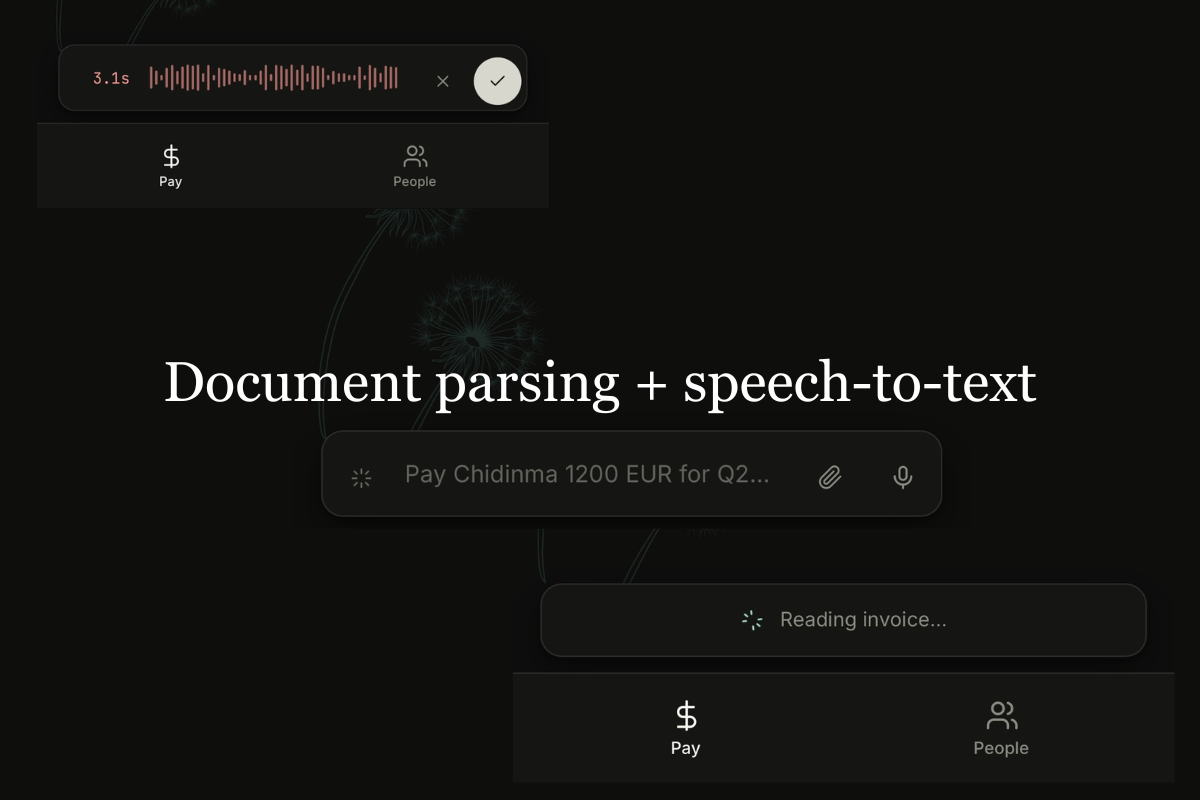
- Type, speak, or upload an invoice
The agent then:
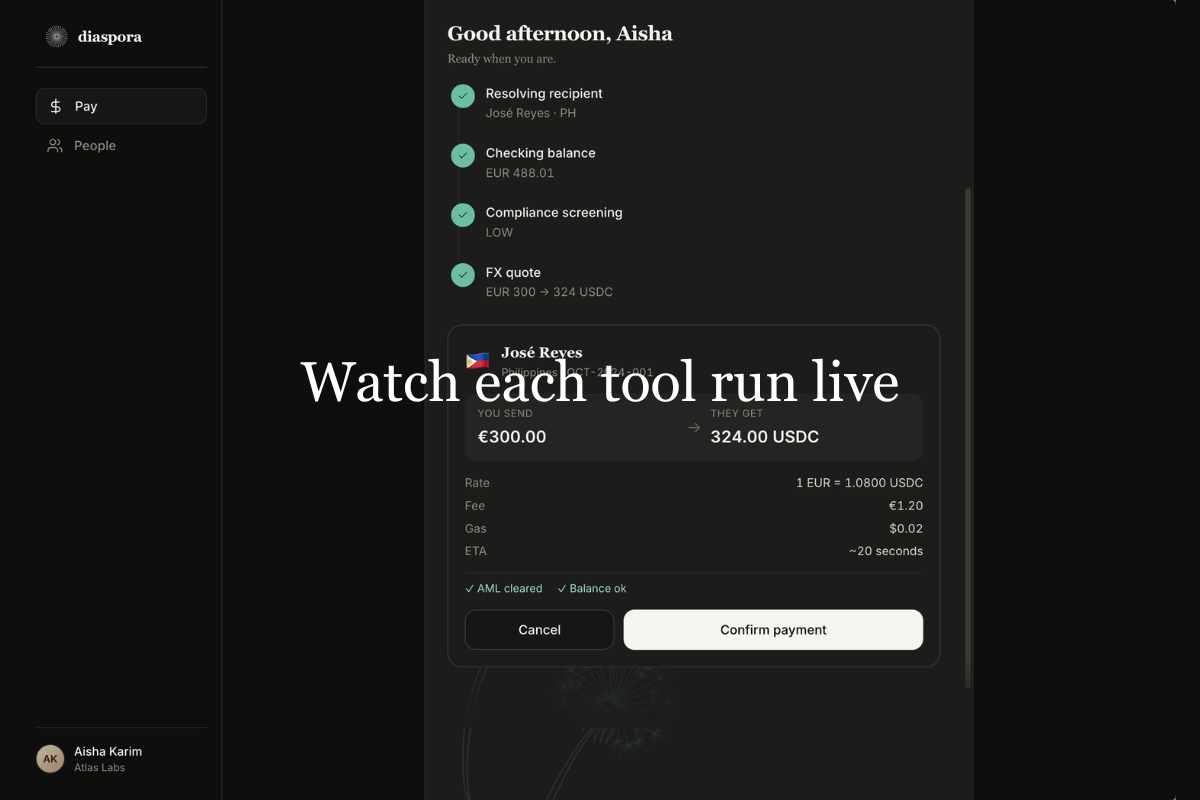
- Resolves the recipient
- Checks balance and compliance
- Generates a transparent FX quote
- Requires explicit confirmation
- Executes the payment and records a full audit trail
The user sees each step live, then receives:
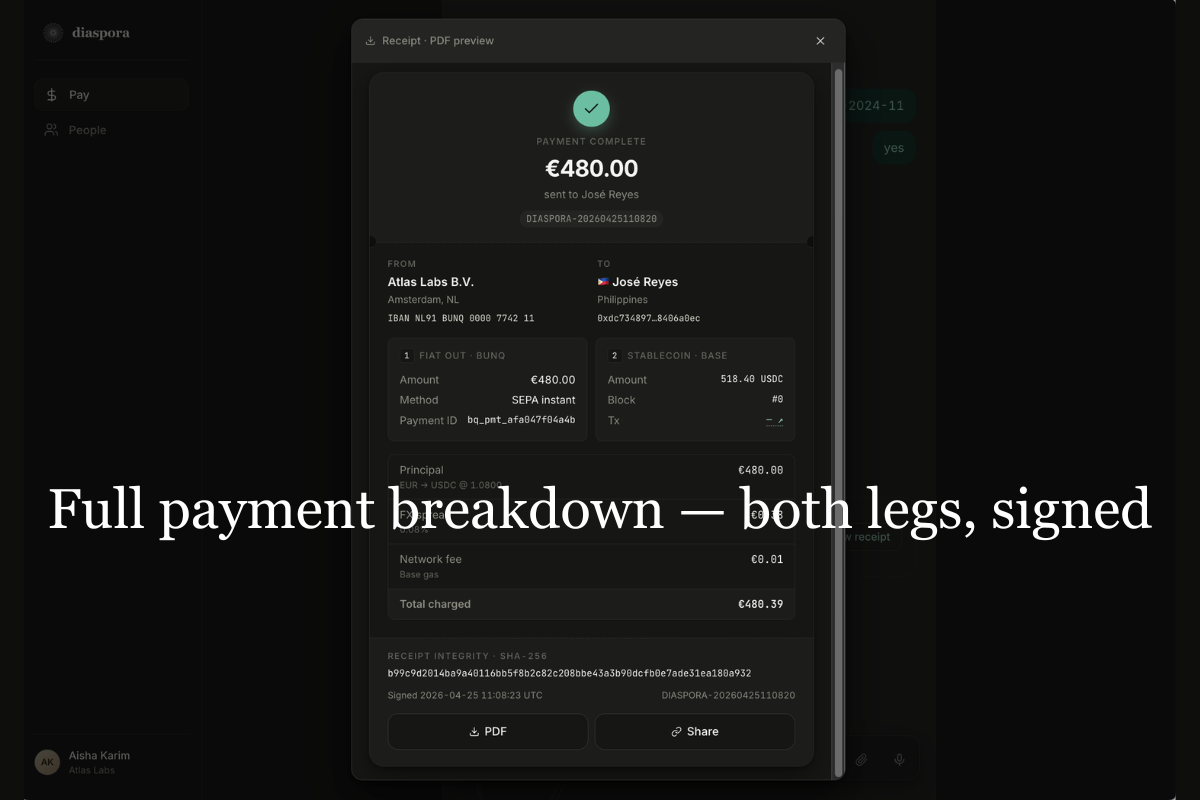
- A blockchain receipt
- A downloadable report
From 5 days → 20 seconds. Fully transparent.
How we built it
- AI Agent: Tool-based orchestration with enforced consent
- Backend: FastAPI with real-time streaming
- Multimodal: Voice + document parsing into one flow
- Frontend: Live timeline of each step
- Auditability: Every payment generates a structured record with a SHA-256 hash
Challenges
Consent had to be bulletproof Payments cannot execute without explicit user approval — enforced server-side.
Auditability had to be real We unified identity, compliance, and settlement into one verifiable record with a tamper-evident hash.
What’s next
- Real AML/KYC integrations
- Live FX rates
- Fiat ↔ stablecoin on/off-ramps
- Persistent audit storage
Final note
Diaspora isn’t about crypto. It’s about fixing how money moves.
One payment. Fully transparent. Across any border — in seconds.
Built on bunq.
Built With
- amazon-textract
- amazon-transcribe
- amazon-web-services
- anthropic
- base-sepolia
- bunq
- claude
- fastapi
- fly.io
- python
- react
- typescript
- vercel
- web3.py

