-
-
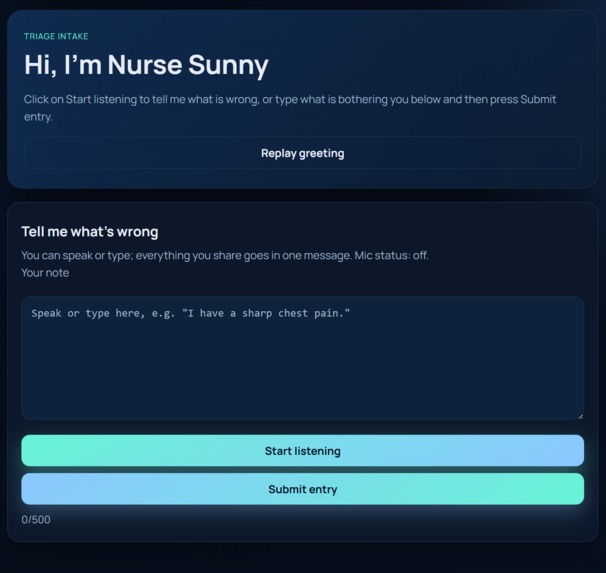
home page
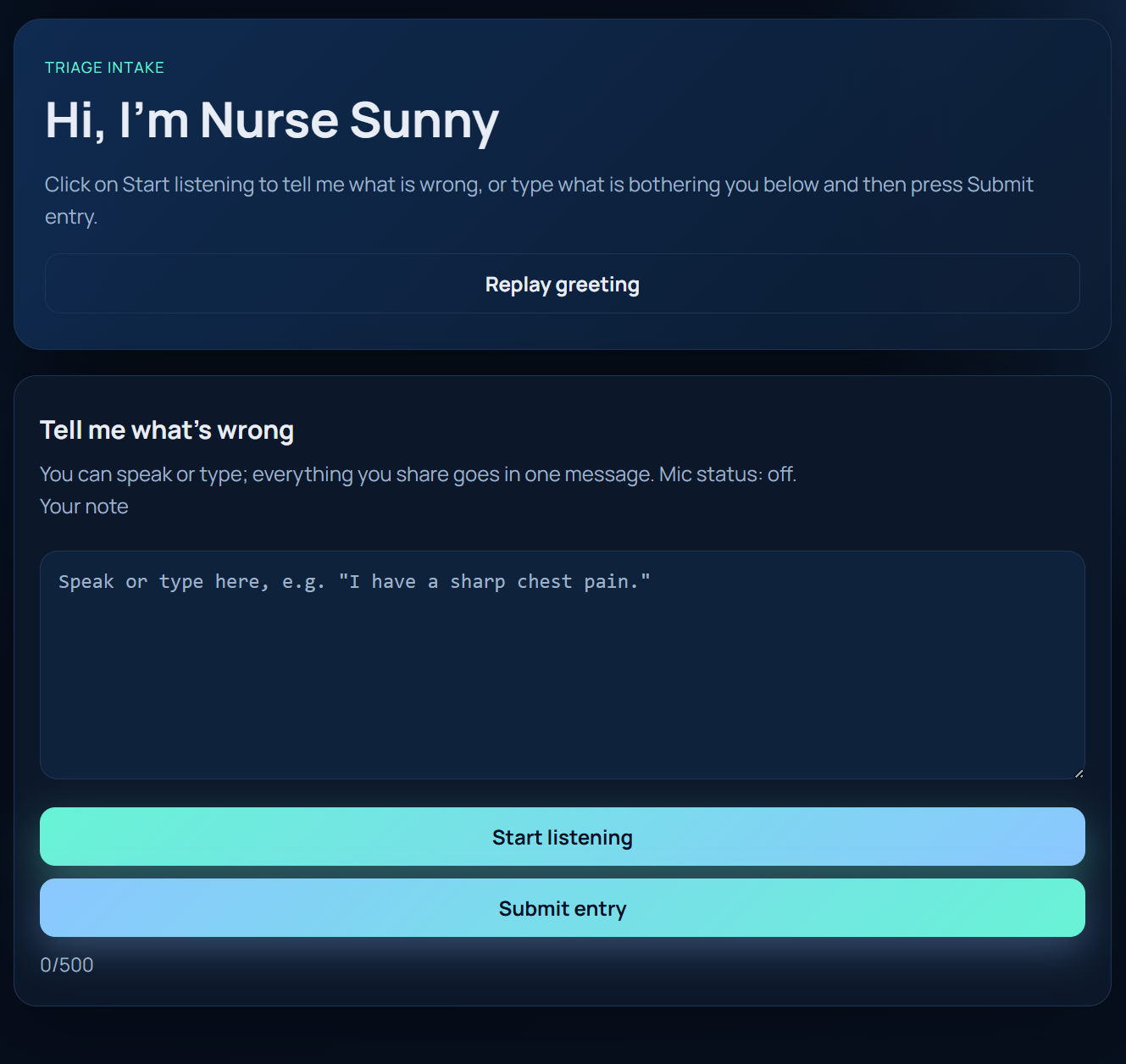
Inspiration
Watching clinicians juggle charts, notes, and vitals while patients wait; personal reminder from my father’s recent hospital stay and how when we Entered the ER we waited for hours until he got his necessary tests to figure out what was wrong with him.
What it does
It creates a medical chart based on the user’s information. If the risk rating is too high, the chart is automatically sent to the emergency room or the patient’s primary care provider. This allows medical staff to already have the patient’s information when they arrive, so they can immediately begin running tests to confirm the issue and determine what is wrong.
How we built it
Clinical data pipeline to normalize EHR inputs; AI layer to summarize and prioritize risks; responsive UI for bedside use; privacy and audit controls baked in.
Challenges we ran into
Handling messy, inconsistent data; keeping recommendations transparent and clinically reviewable; integrating with varied EHR environments without slowing workflows.
Accomplishments that we're proud of
Turning raw notes into clear, bedside-ready guidance;
What we learned
I learned how to create a unique Ollama model and how to use Ollama effectively. I also learned the importance of UX decisions, as well as how to implement speech-to-text and text-to-speech functionality.
What's next for DiagNurse
We are exploring partnerships with health insurance providers to make this pipeline even faster and to generate more realistic medical charts. By integrating the service into insurance plans, charts could be securely sent directly to in-network doctors, significantly speeding up the check-in process and boosting the product’s credibility. We are also developing on-device and offline modes to improve resilience, along with ongoing clinical validation to continuously enhance safety, accuracy, and response speed.

Log in or sign up for Devpost to join the conversation.