Inspiration
- Inspired by challenges in accessing timely healthcare and the power of AI to transform diagnosis, DiagnoseMe.AI aims to empower users with fast, accurate disease predictions from simple symptom inputs.
What it does
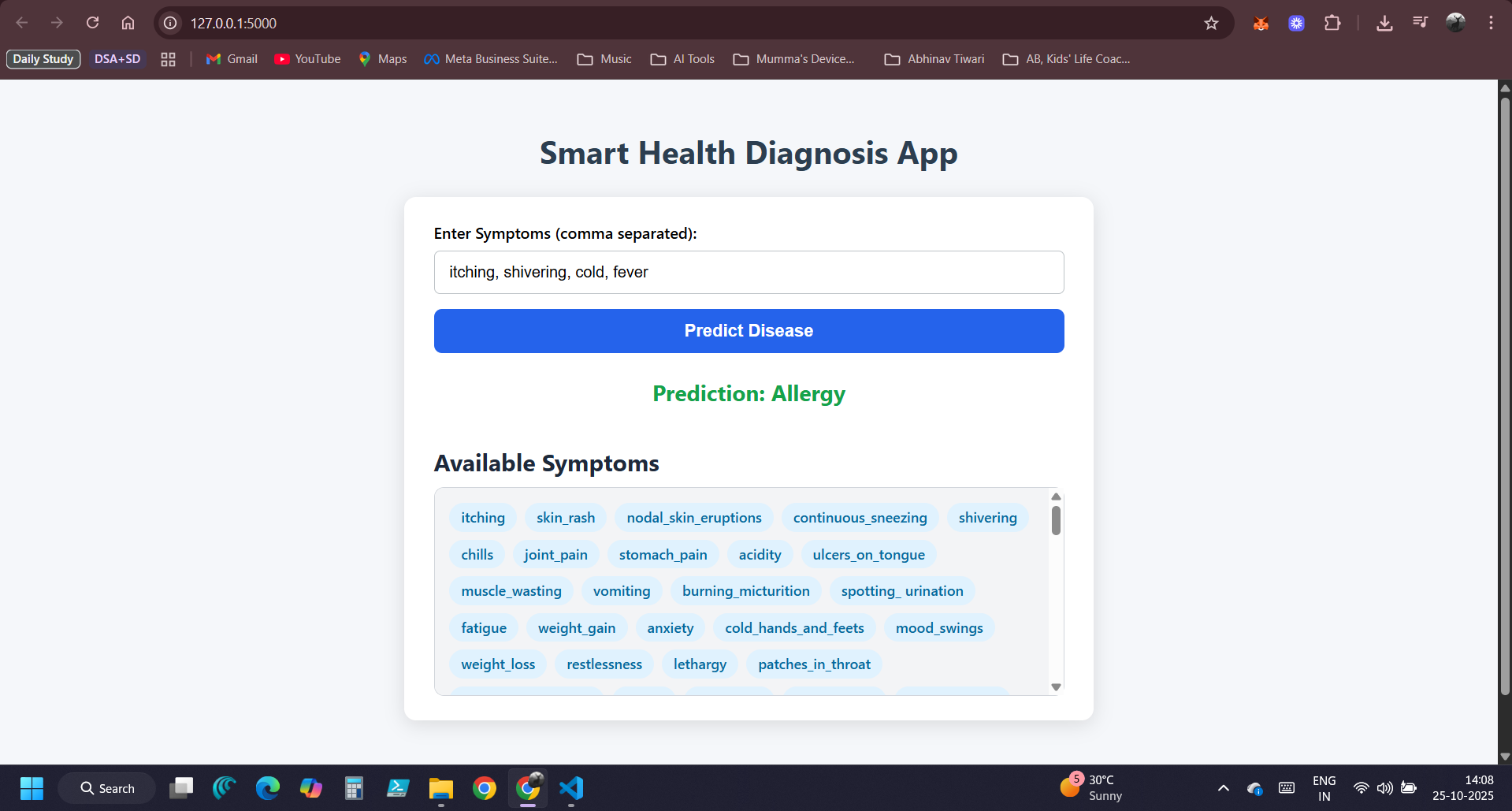
- Users input symptoms through a web app; DiagnoseMe.AI uses a trained Random Forest machine learning model to predict likely diseases, providing valuable insights without needing immediate doctor visits.
How we built it
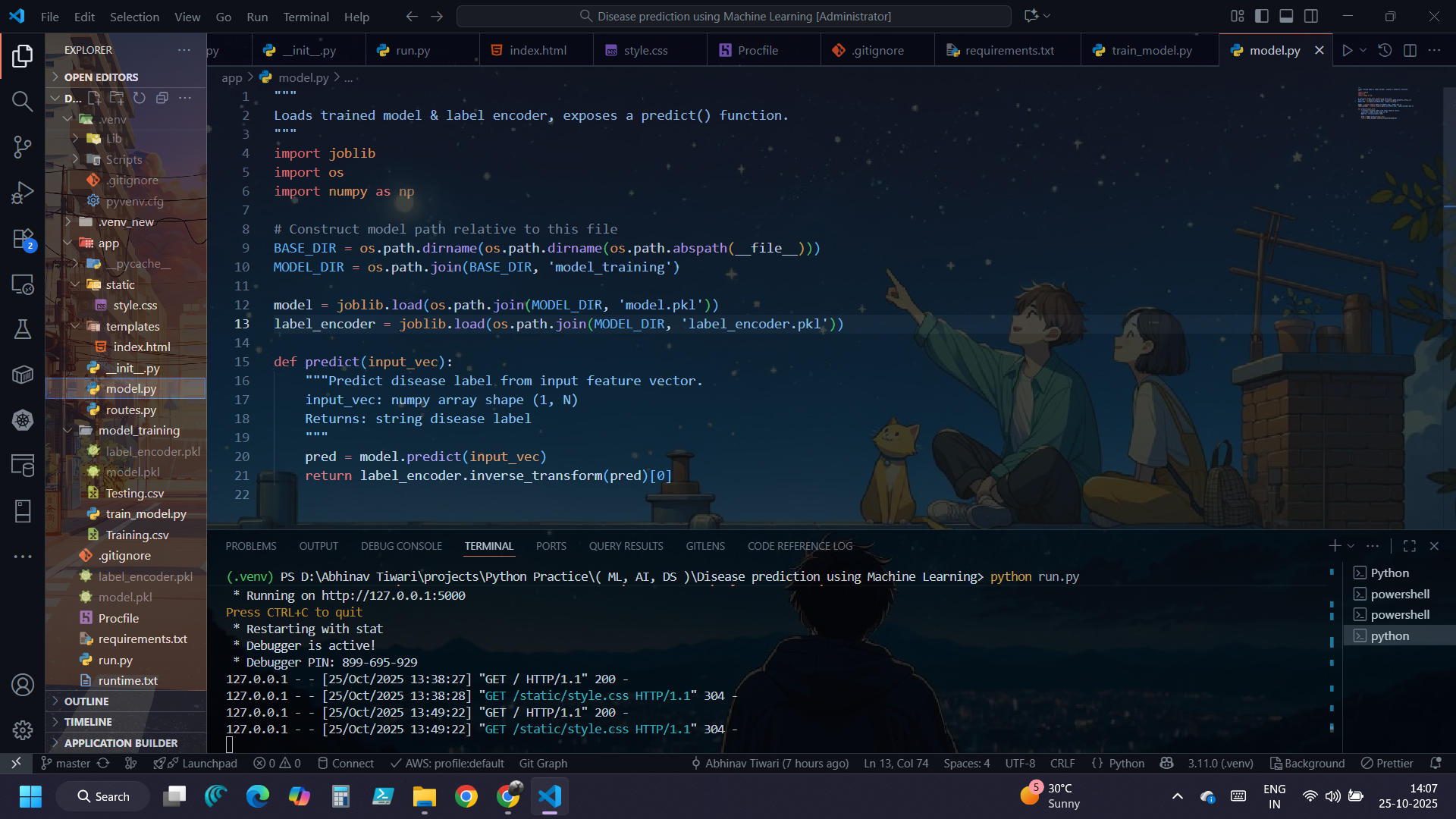
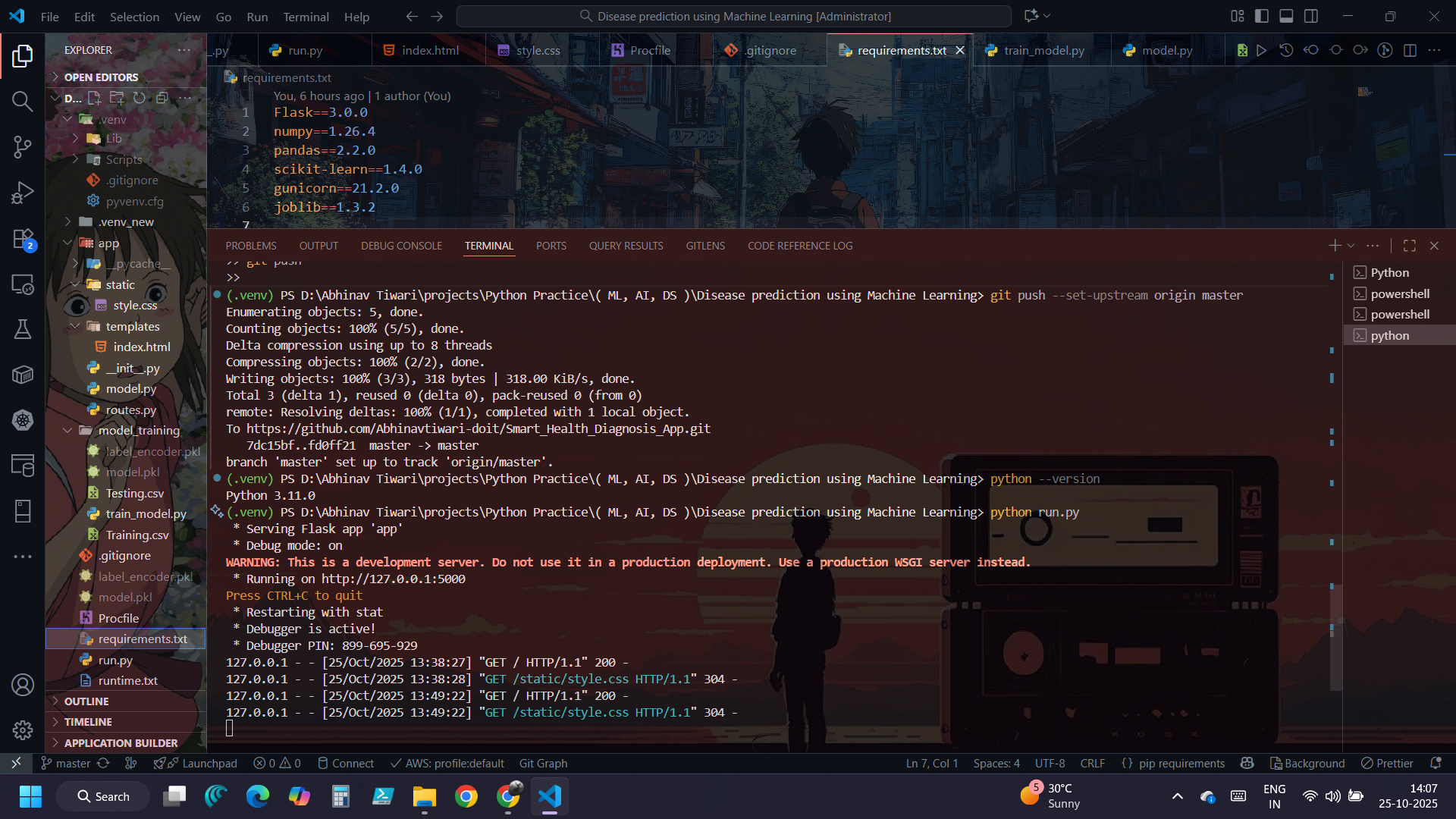
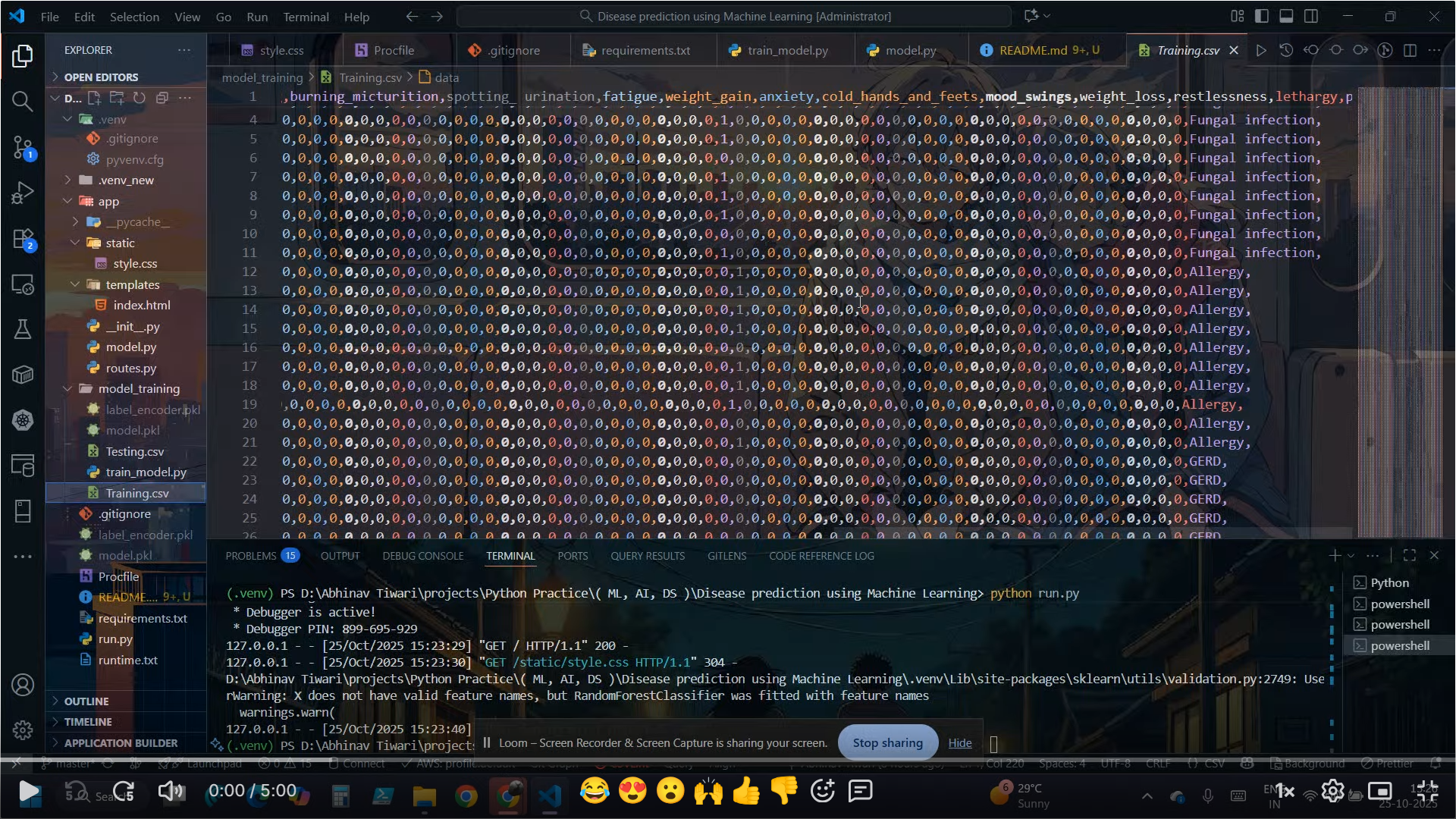
- Built with Python, Flask for the backend API, Scikit-learn for the machine learning model, and an intuitive web frontend. The model was trained using curated medical symptom data and optimized for accuracy.
Challenges we ran into
- Data quality and balancing classes carefully to avoid overfitting, ensuring compatibility of dependencies across local and cloud environments, and designing a user-friendly yet informative UI.
Accomplishments that we're proud of
- Delivering a working, deployable AI health diagnosis solution that is both accessible and reliable and improving user experience through iterations.
What we learned
- The practical challenges of deploying ML models in real-world apps, cloud deployment pitfalls, and the importance of clear communication of AI predictions to end users.
What's next for DiagnoseMe.AI
- Enhancing symptom input with NLP, expanding disease coverage, and integrating telemedicine features to connect users directly with healthcare providers.

Log in or sign up for Devpost to join the conversation.