-
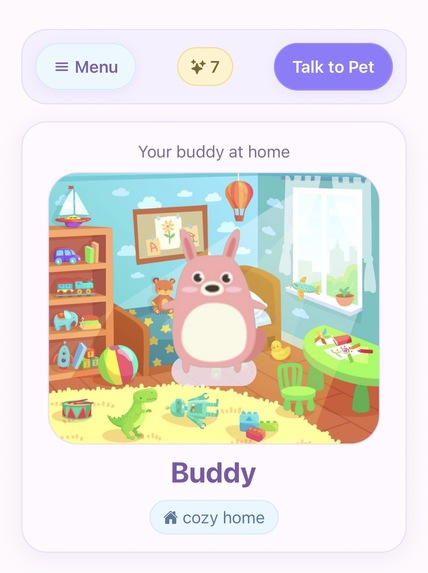
Home Page
-
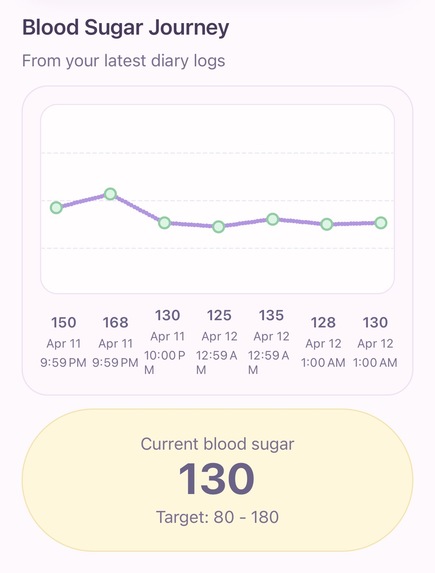
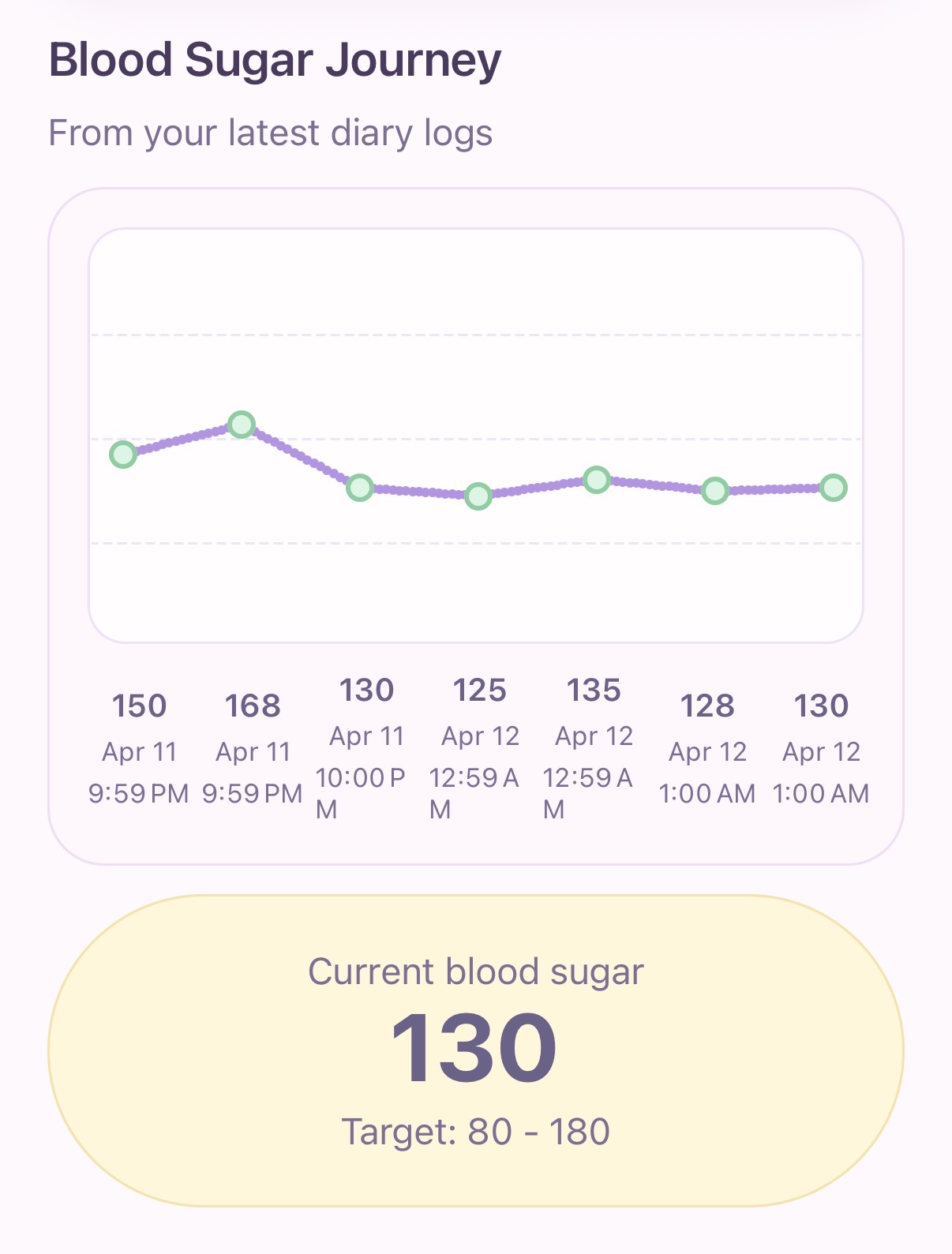
Blood Sugar Line Graph
-
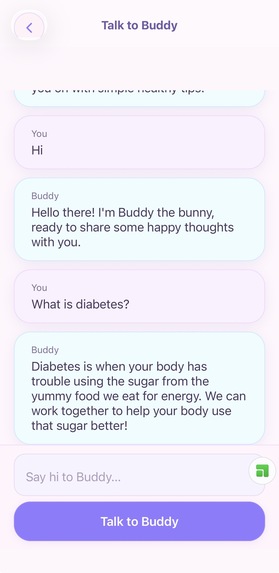
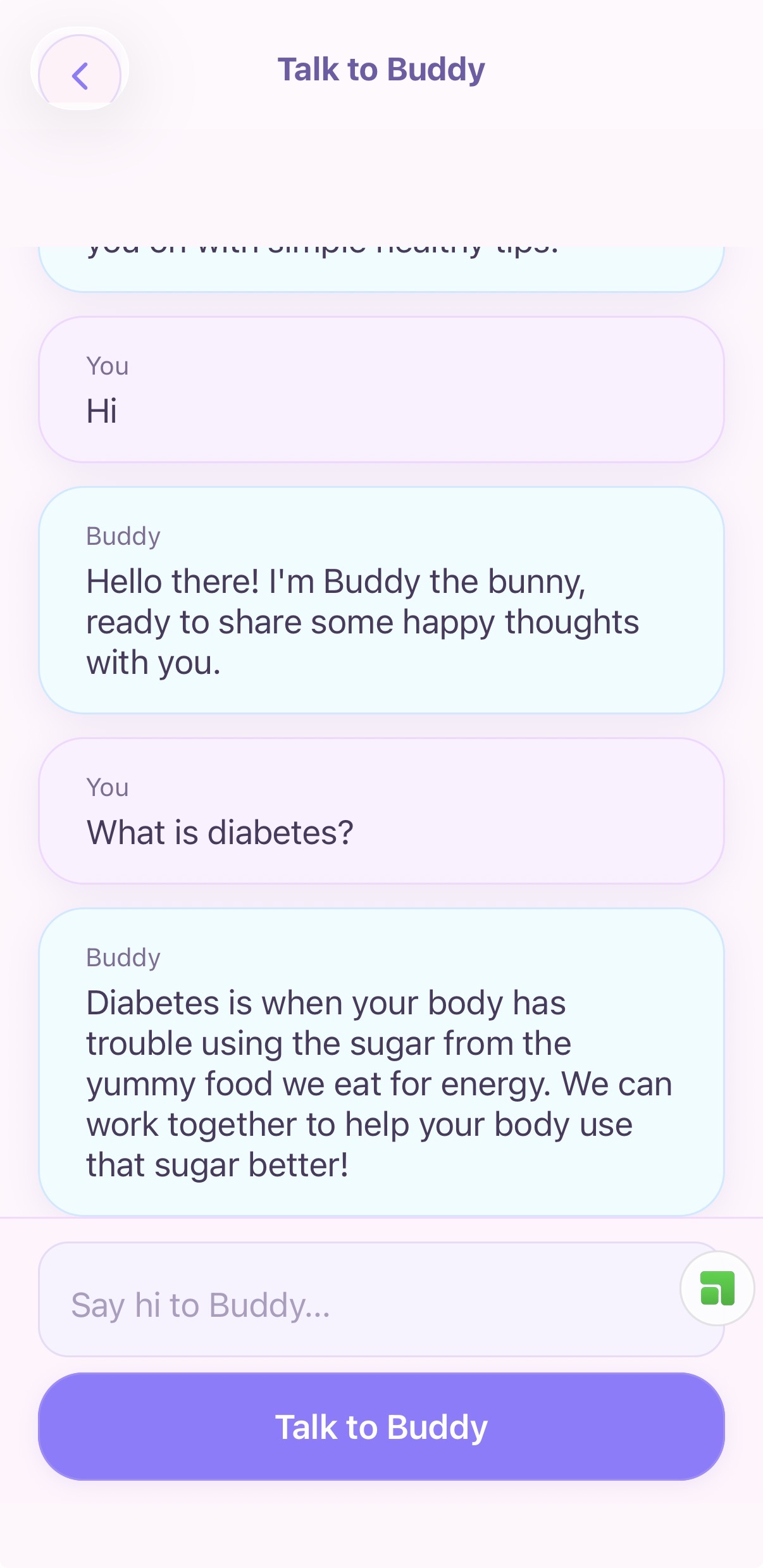
Chatbox
-
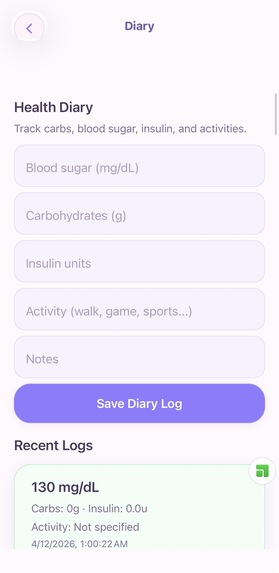
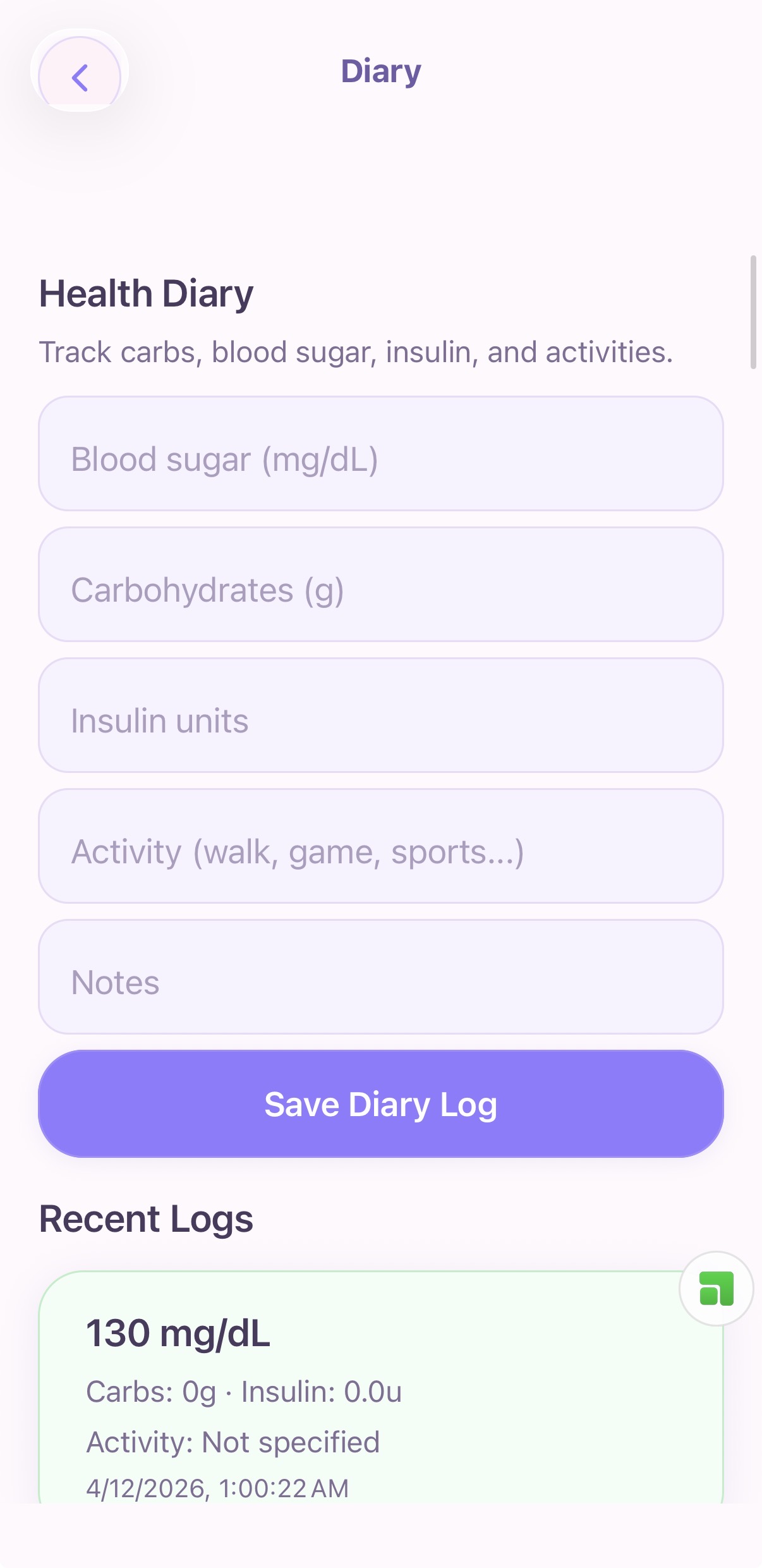
Diary Log
-
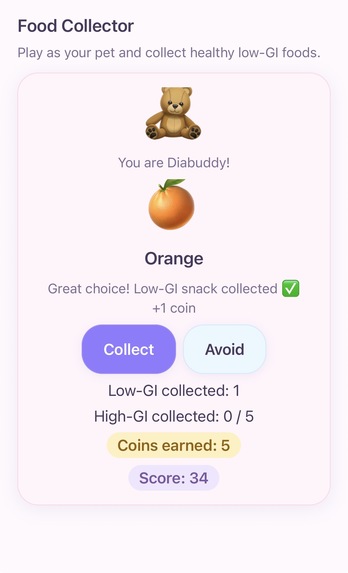
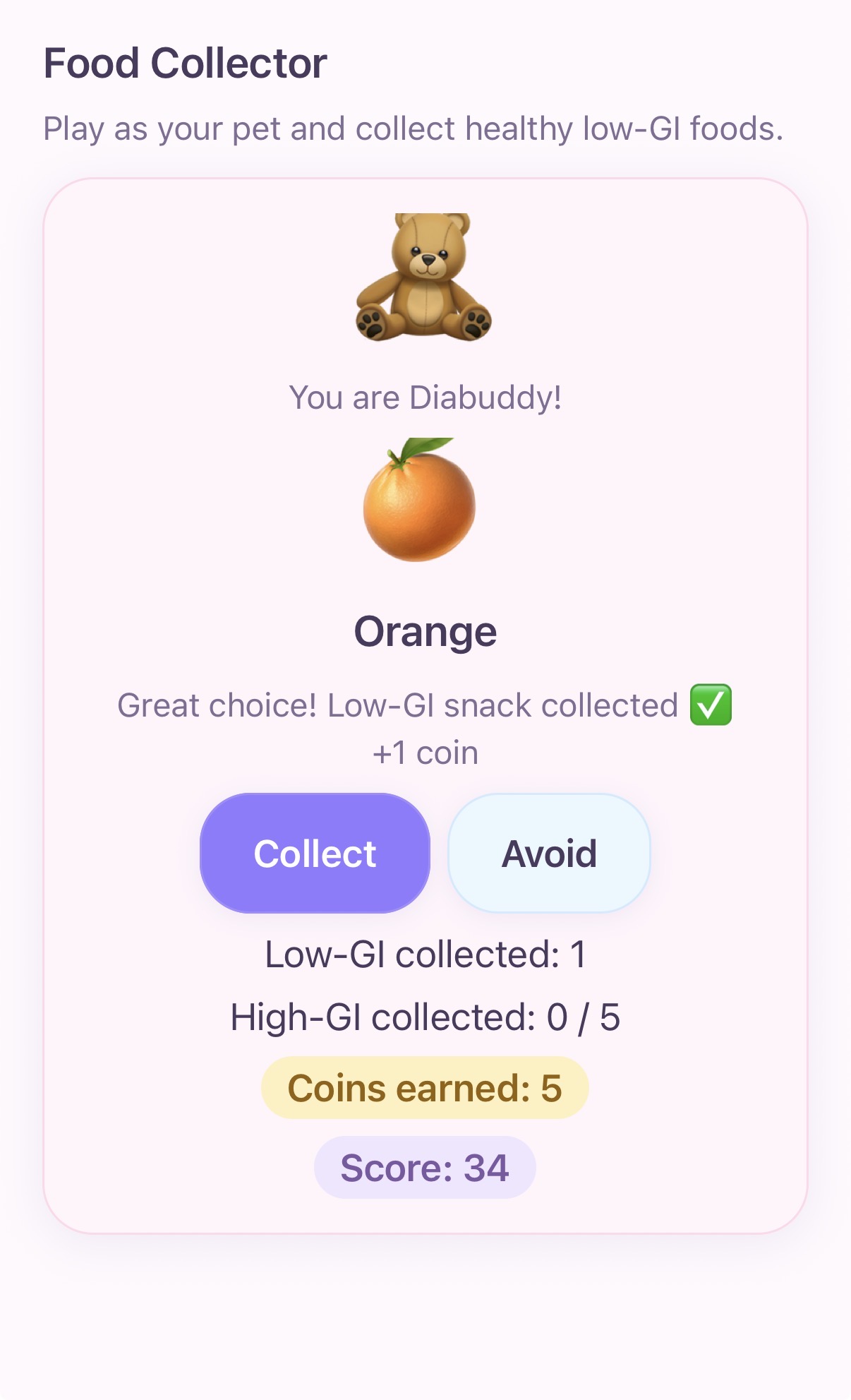
Food Collector Game
-
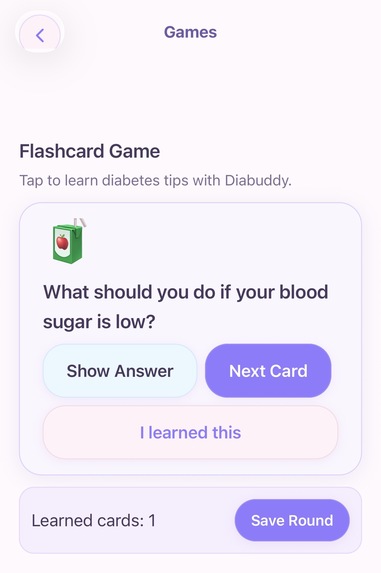
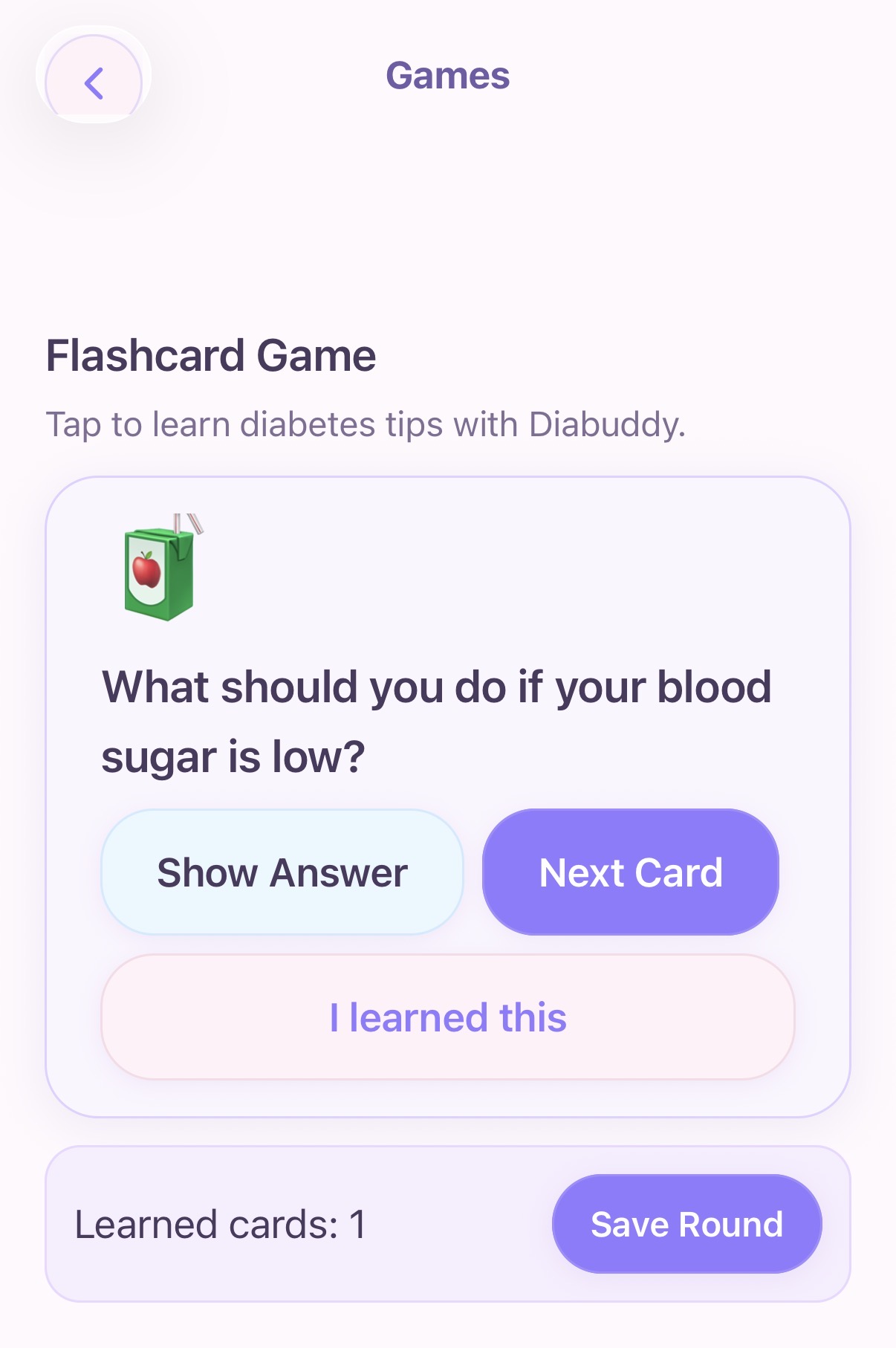
Flashcards
-
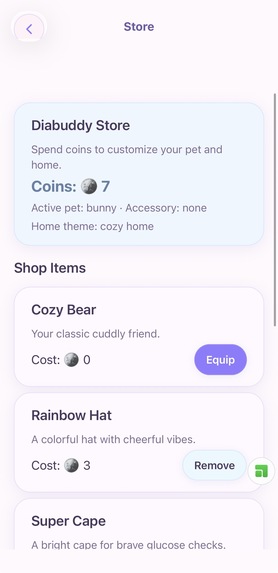
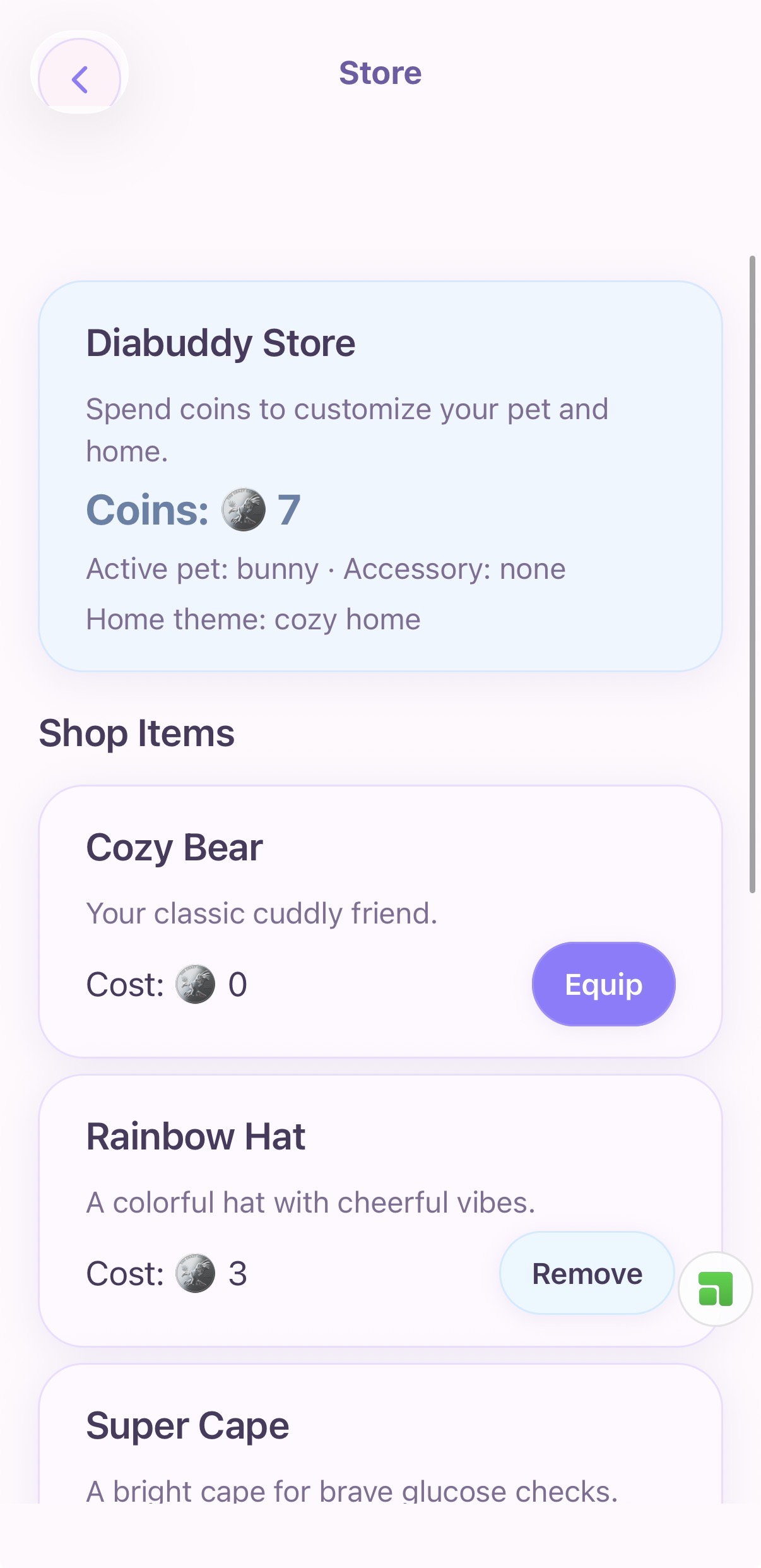
Store
Inspiration
Type 1 diabetes affects approximately 1.5 million children and adolescents worldwide, and the number continues to grow (International Diabetes Federation, 2024). Beyond physical health, these children also face increased risks of stress, anxiety, and other mental health challenges related to managing their condition (van Duinkerken et al., 2020). At the same time, research shows that AI chatbots can provide accessible support and education, though they must be designed carefully and responsibly (Gallegos et al., 2024). Our project is also personally inspired—one team member lives with diabetes and drew from her own experiences, along with tools like MySugr and Finch, and child-friendly apps like Study Bunny. Bringing these ideas together, we created Diabuddy—an interactive, AI-supported virtual pet designed to help children with diabetes build healthy habits, learn about their condition, and feel supported along the way. Our goal is to make diabetes management less intimidating and more engaging, empowering children with chronic conditions to live healthier and happier lives.
What it does
- Diabuddy is an interactive app designed to help children with diabetes build healthy habits through a combination of gamification and AI-powered support. At its core, the app encourages consistent self-management by rewarding users for tracking their health and engaging with educational content, while also providing emotional support through a virtual pet companion.
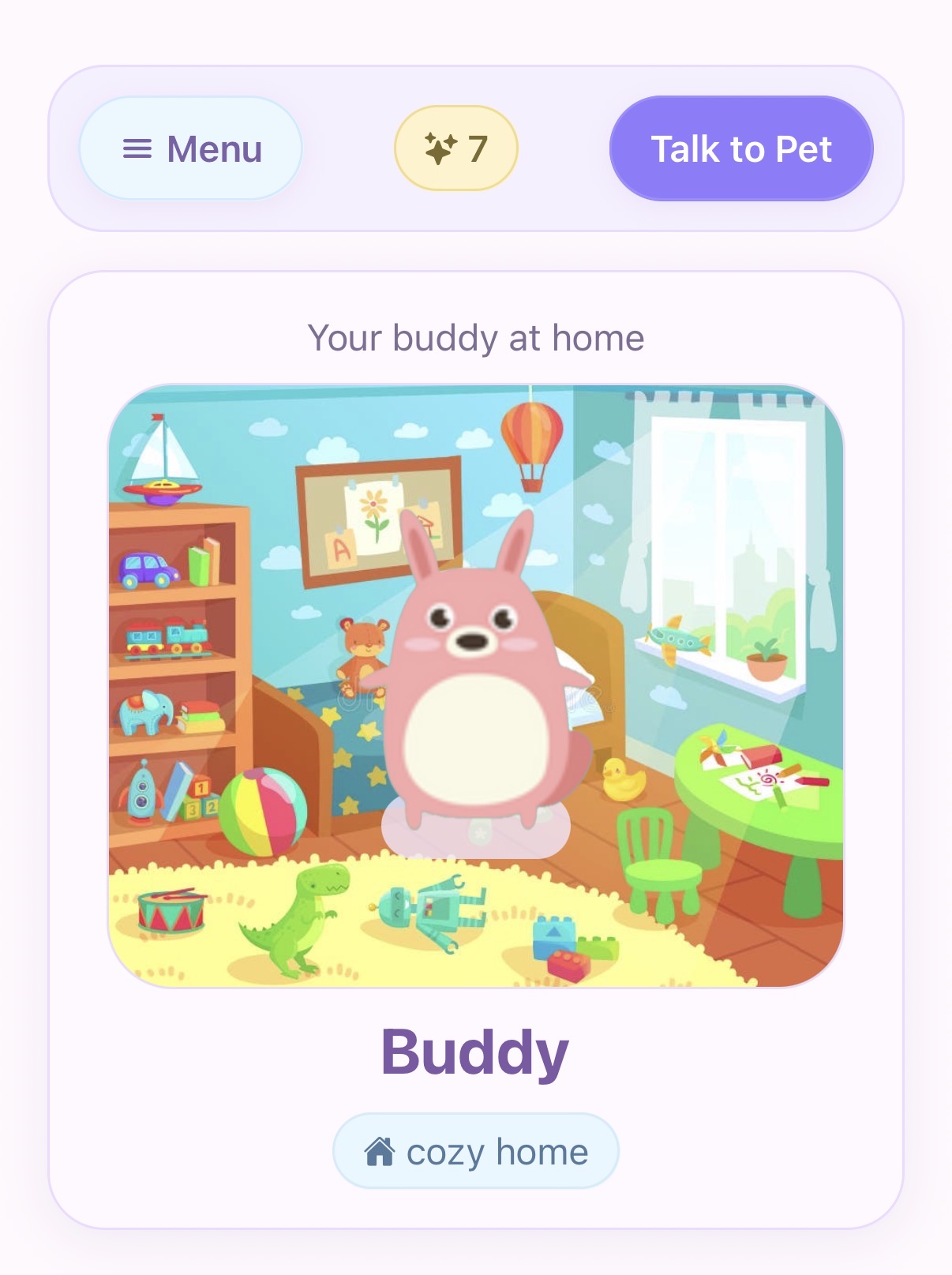
- Users can care for and customize their pet by dressing it up and interacting with it through a chatbot that offers encouragement and simple, child-friendly guidance. The app also includes a diary feature where users can log blood sugar levels, insulin intake, carbohydrates, activities, and notes, with key data visualized on the home screen.
- To reinforce positive habits, users earn coins by maintaining healthy blood sugar logs and playing minigames. These include flashcards for learning and an interactive game where players avoid unhealthy foods while collecting healthier options. Coins can be spent in the in-app store to unlock new pet skins, accessories, and room customizations, making progress both visible and rewarding.
How we built it
- We began by brainstorming and designing the core concept and user experience of the app.
- The front end was built using TypeScript and JavaScript, while the backend was implemented in Python. A generative AI development tool, Appifex, was used to rapidly build and iterate on the application. To refine prompts, debug issues, and improve functionality, we also used additional AI tools such as Claude and ChatGPT.
- Throughout the process, we received guidance and support from hackathon mentors, which helped us better understand technical challenges and improve our implementation.
Challenges
- Effectively using prompt engineering. There was often a gap between what we envisioned, what we wrote in the prompt, and what the AI actually generated. To get the results we wanted, we had to become increasingly specific and intentional with our instructions, sometimes even using other text-based AI tools to refine and improve our prompts.
- The initial UI generated by the builder was overly minimalistic and did not match our intended child-friendly design, so we had to iteratively adjust our prompts to achieve a more colorful and engaging interface.
- We also encountered technical issues, such as the pet avatar not updating correctly when different skins were equipped. Debugging these issues required us to carefully analyze how the system handled state and refine our prompts until the features worked as expected.
Accomplishments
- Tammy: I’m especially proud that this idea was able to come to life. It’s something I’ve been thinking about since I was a kid, and seeing it actually turn into a working app has been incredibly meaningful. Knowing that it has the potential to support and encourage other kids makes the experience even more rewarding, and I’m excited about where it could go in the future.
- Lina: One moment that stood out was when we finally figured out why the pet avatar wasn’t updating correctly. It took a lot of trial and error, but solving it taught us a lot about how the app works behind the scenes.
What we learned
- How powerful AI has become. At the same time, AI isn’t perfect. It can generate a lot of code, but it still requires careful guidance and refinement through prompt engineering to get the results you actually want.
- How important it is to understand code, even when using AI tools. Debugging issues, reading through generated code, and identifying where things go wrong are still essential skills.
What's next for Diabuddy
- Expand this idea beyond diabetes and create similar apps for other chronic conditions.
- Adding a secure login system and a more robust database to better support privacy and compliance with healthcare regulations.
- Introduce features like more customization options in the store and expanded pet interactions.
- Implement a parent mode or medical provider mode, where the app can generate clear, shareable reports (such as PDFs) based on the user’s logged data. This would allow the app to support not just the child, but also caregivers and healthcare professionals.
Built With
- appifex
- chatgpt
- claude
- javascript
- python
- typescript


Log in or sign up for Devpost to join the conversation.