-
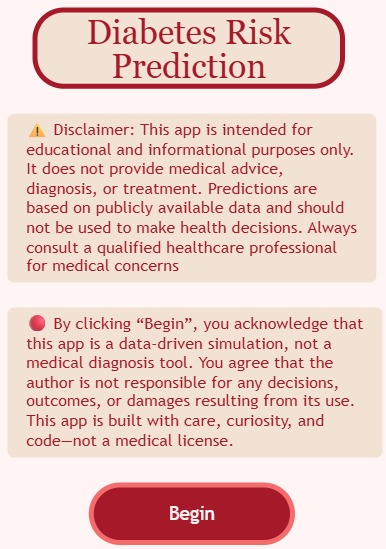
Start Screen
-
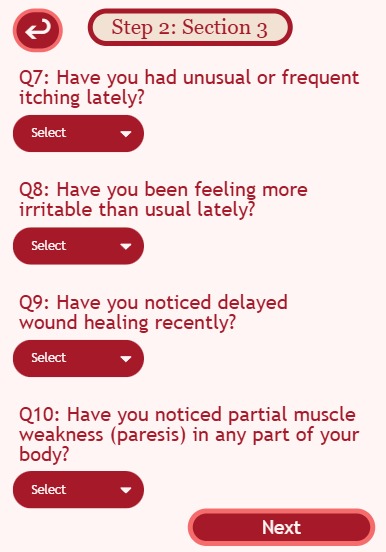
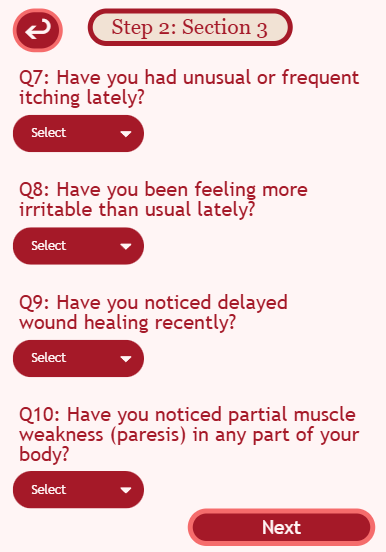
Section 3 of Question Screen
-
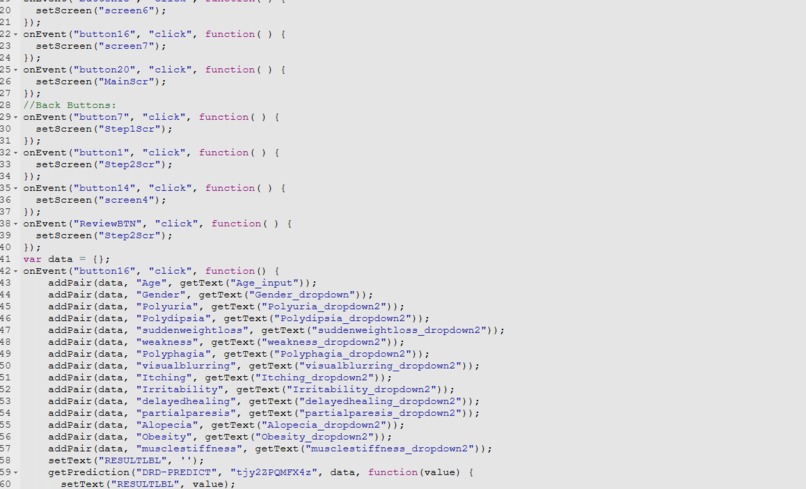
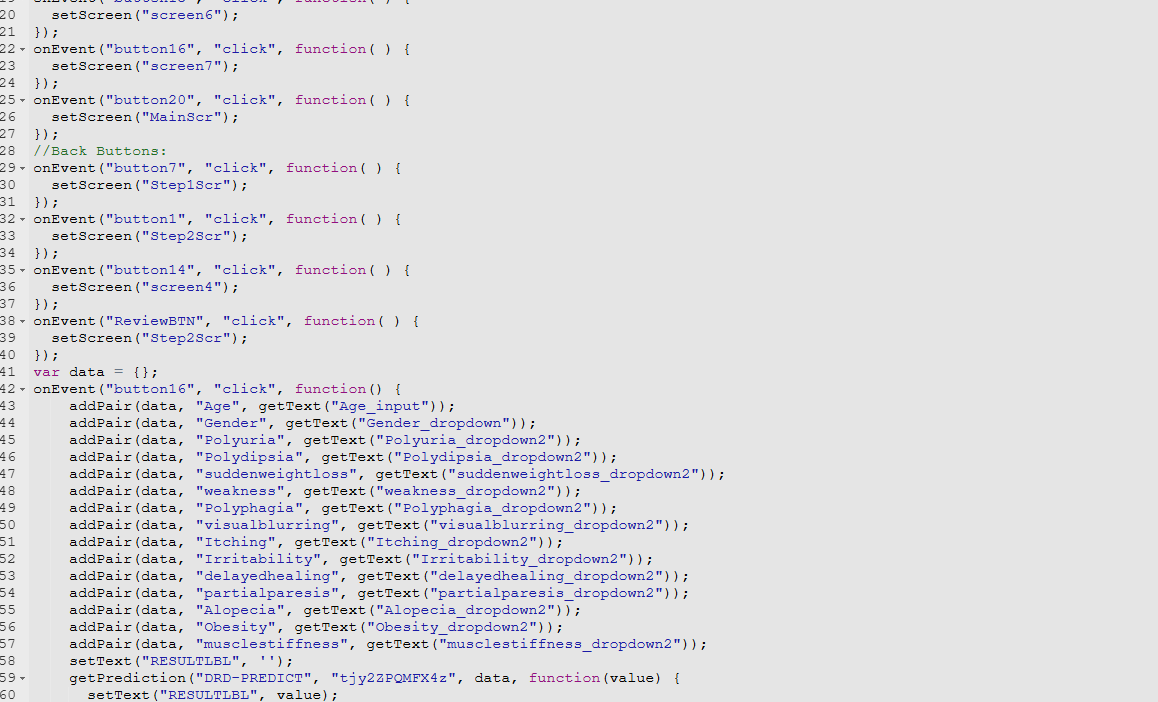
Ex of code
Inspiration
This app was born from my passion for both medicine and programming. I’ve always been fascinated by how technology can empower people to understand and manage their health. By combining these two interests, I created a tool that makes early diabetes risk detection simple, accessible, and data-driven — all through a brief, user-friendly questionnaire.
What it does
This app uses a brief, clinically-informed questionnaire to assess your potential risk for diabetes. By analyzing your responses to a few targeted questions — covering symptoms, lifestyle factors, and medical history — it generates a personalized risk prediction in minutes.
How I built it
This application was developed using App Lab on Code.org as part of a personal initiative to integrate my interests in medicine and computer science. It features a brief, user-friendly questionnaire designed to assess an individual's potential risk for diabetes.
To generate predictions, I trained a machine learning model using a curated dataset. The model analyzes user responses and classifies them as either positive (at risk) or negative (not at risk) for diabetes. This approach allows for rapid, accessible screening that can support early awareness and encourage proactive health decisions.
Challenges we ran into
One of the primary challenges I encountered was integrating the AI model into the app interface. Initially, the prediction logic wasn’t functioning as expected, which required troubleshooting both the model’s output and the way it interacted with the questionnaire data.
Additionally, I had to learn how to train a machine learning model from scratch. This involved understanding data preprocessing, selecting appropriate features, and evaluating model performance — all while ensuring the predictions were medically relevant and user-friendly. These challenges pushed me to deepen my understanding of both AI development and app integration, ultimately strengthening the technical foundation of the project.
Accomplishments that we're proud of
One of the most rewarding aspects of this project was learning how to train a machine learning model from the ground up. I gained hands-on experience with data preparation, model training, and prediction logic — skills that deepened my understanding of both AI and healthcare applications.
Additionally, the app is now fully functional, successfully integrating the questionnaire with the prediction model. Seeing the system work as intended — delivering personalized diabetes risk assessments — marks a significant milestone and a proud accomplishment in my journey as a developer.
What we learned
Through this project, I gained hands-on experience in training and integrating an AI model within a functional app environment. I learned how to prepare data, build predictive logic, and connect model outputs to user-facing features — all while ensuring clarity and usability.
Additionally, I developed advanced troubleshooting skills, navigating integration challenges, debugging prediction errors, and refining the app’s logic to ensure smooth performance. These experiences deepened my understanding of both machine learning workflows and practical app development
What's next for Diabetes Risk Predictor
For Version 2, my goal is to deliver a cleaner, more intuitive, and user-friendly experience. This includes refining the questionnaire flow, simplifying the interface, and improving clarity in both the prediction output and user guidance. I plan to enhance visual design, streamline navigation, and ensure that every interaction feels purposeful and accessible — especially for users with limited technical or medical backgrounds.
Future updates may also include:
- Improved model accuracy and transparency
- Visual risk indicators (e.g., color-coded feedback)
- Optional follow-up resources or provider links
- Expanded accessibility features
*NOTE: This application is ONLY intended for individuals aging from 16-90.
Built With
- code.org
- javascript


Log in or sign up for Devpost to join the conversation.