-
-

Predictor
-

Home
-
Code
-
Results
-
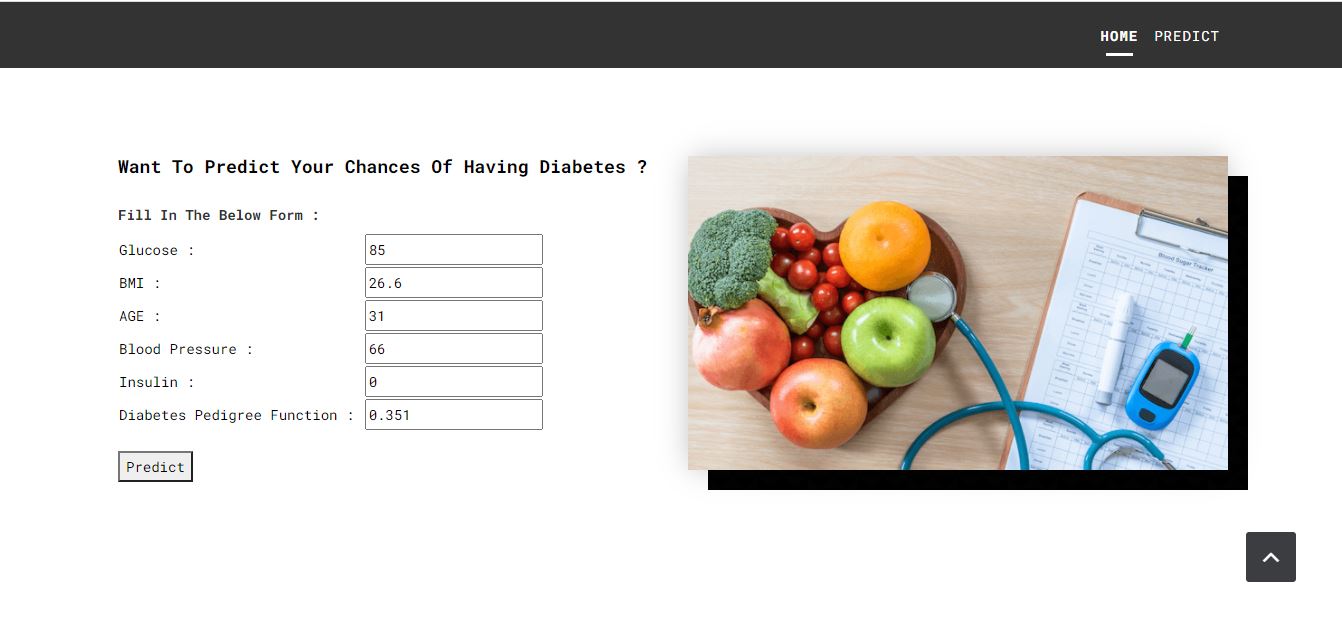
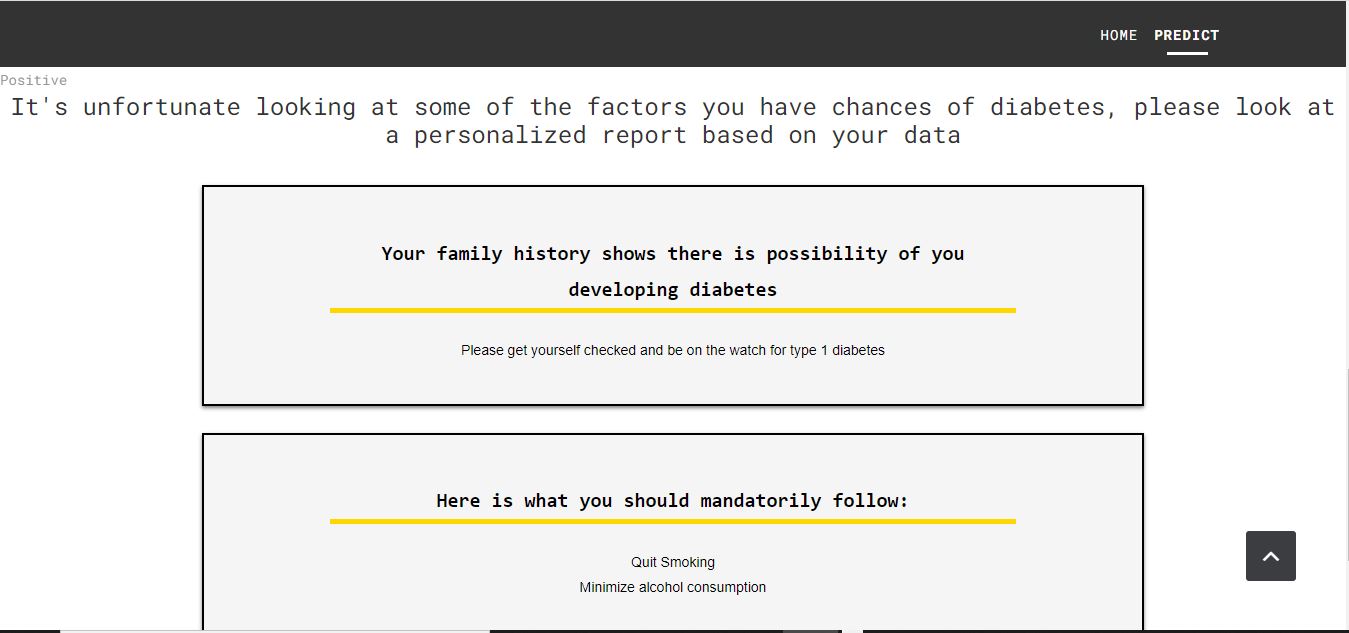
Positive
-
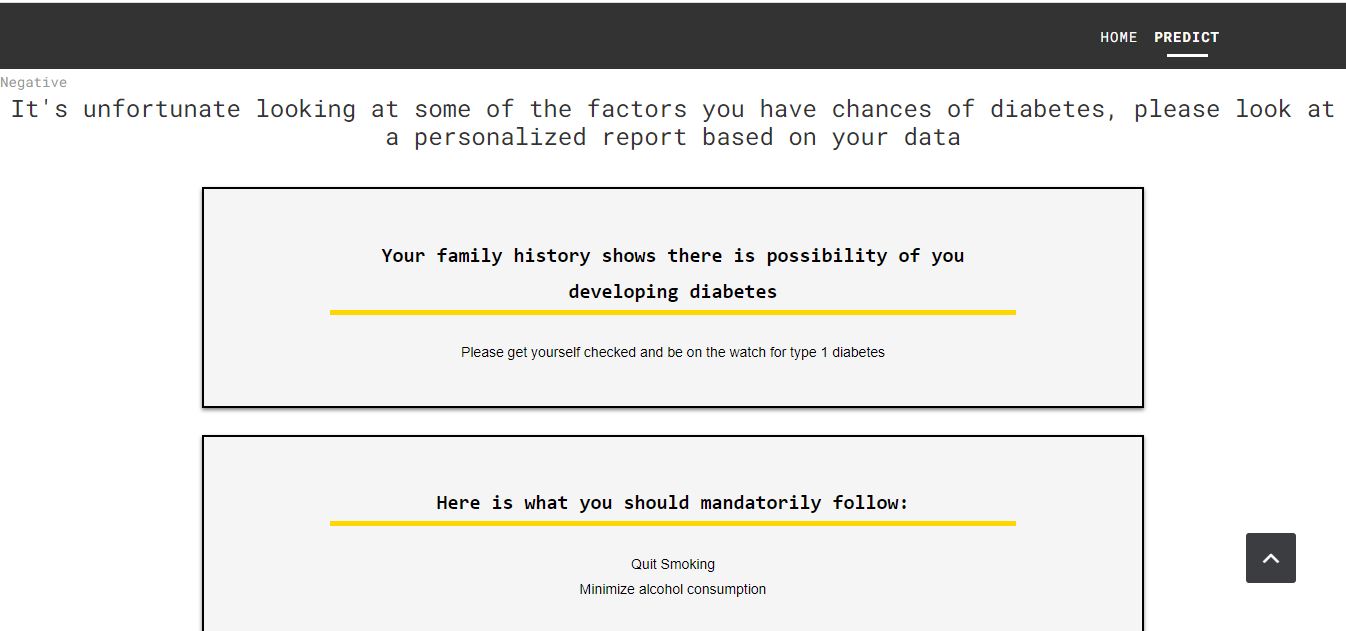
Negative


Inspiration
Since several members of our family suffer from diabetes, I occasionally wonder if my susceptibility to the disease can be determined solely by my medical history. I have a good feeling I'm not alone.
What it does
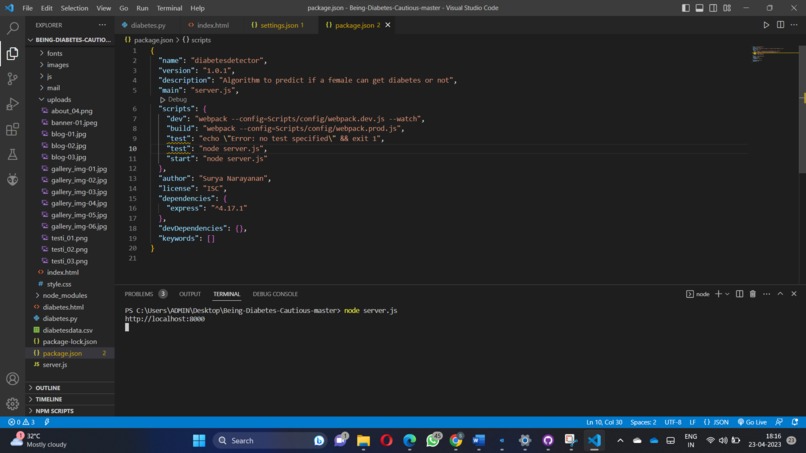
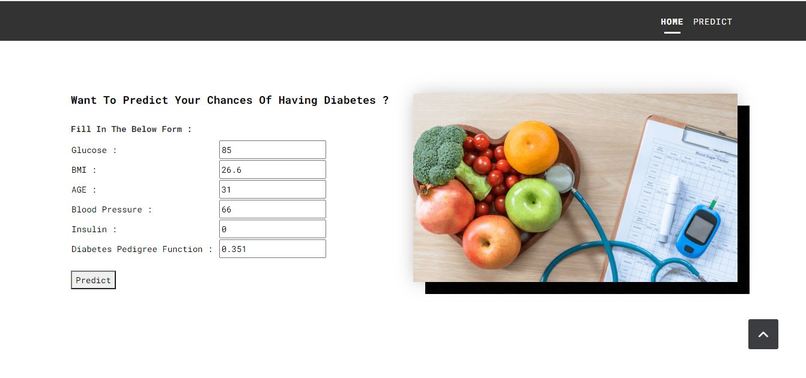
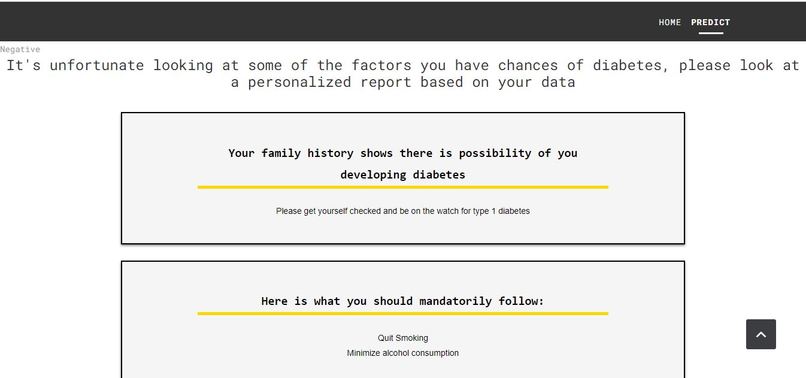
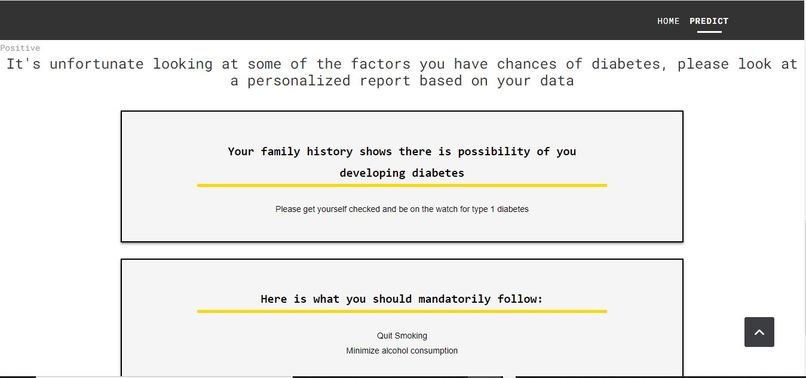
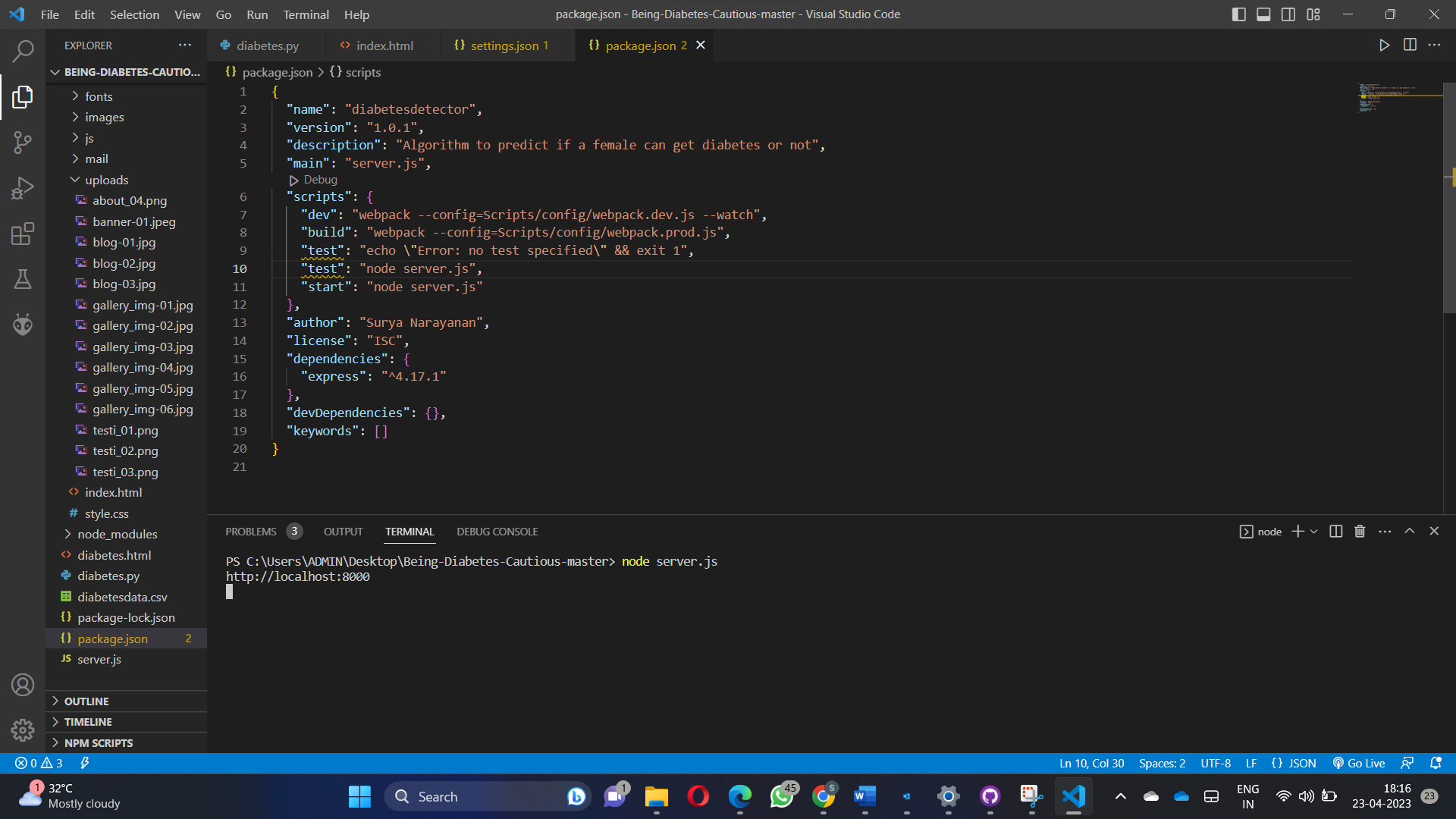
Our machine learning model, which was created using Python, basically takes a few medical inputs and forecasts your likelihood of acquiring diabetes while also recommending a few pieces of advice according to the data entered.
How we built it
We created it by analysing a dataset, applying algorithms, and using recommender systems with conditions based on derived data.
Challenges we ran into
The machine learning method heavily relies on data. Lack of high-quality data is one of the major problems that machine learning experts encounter. It can be exceedingly taxing to process noisy and erratic data. We don't want our system to produce predictions that are unreliable or flawed. Therefore, improving the result depends on the quality of the data. As a result, we must make sure that the data pretreatment procedure, which involves eliminating outliers, filtering out missing values, and eliminating undesired characteristics, is carried out with the highest degree of accuracy.
Finding a clean dataset and implementing a correct algorithm is the major challenge we ran threw.
Accomplishments that we're proud of
The fact that we were able to have everything up and running in time forecasts the diabetic condition in this situation. Using the Decision Tree method, findings determine the suitability of the planned system with a 99% accuracy rate.
What we learned
model can have a significant impact on the model's performance. It is important to ensure that the data used is representative of the problem domain and is of high quality.
Feature engineering is important: Feature engineering involves selecting and transforming the input data to create features that can help the model learn better. It is an important step in ML, as the quality of features can impact the model's performance.
Choosing the right algorithm: The choice of ML algorithm can have a significant impact on the model's performance. It is important to choose the right algorithm that is suited for the problem at hand.
Model validation is crucial: Validating the model is important to ensure that it is performing as expected. This involves testing the model on a set of data that was not used during training.
What's next for Diabetes Detector
We intend to improve this and make it available to our real-world audience so that people may be cautious and take preventative measures if they are at risk for diabetes.
Built With
- deep-learning
- express.js
- javascript
- machine-learning
- node.js
- python


Log in or sign up for Devpost to join the conversation.