-
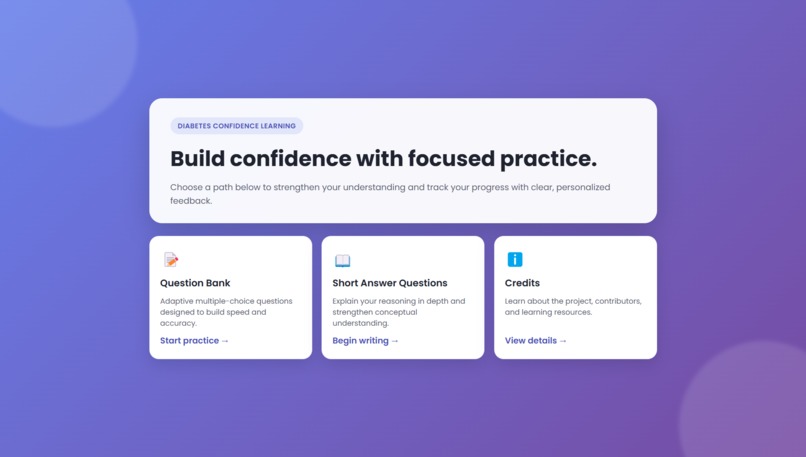
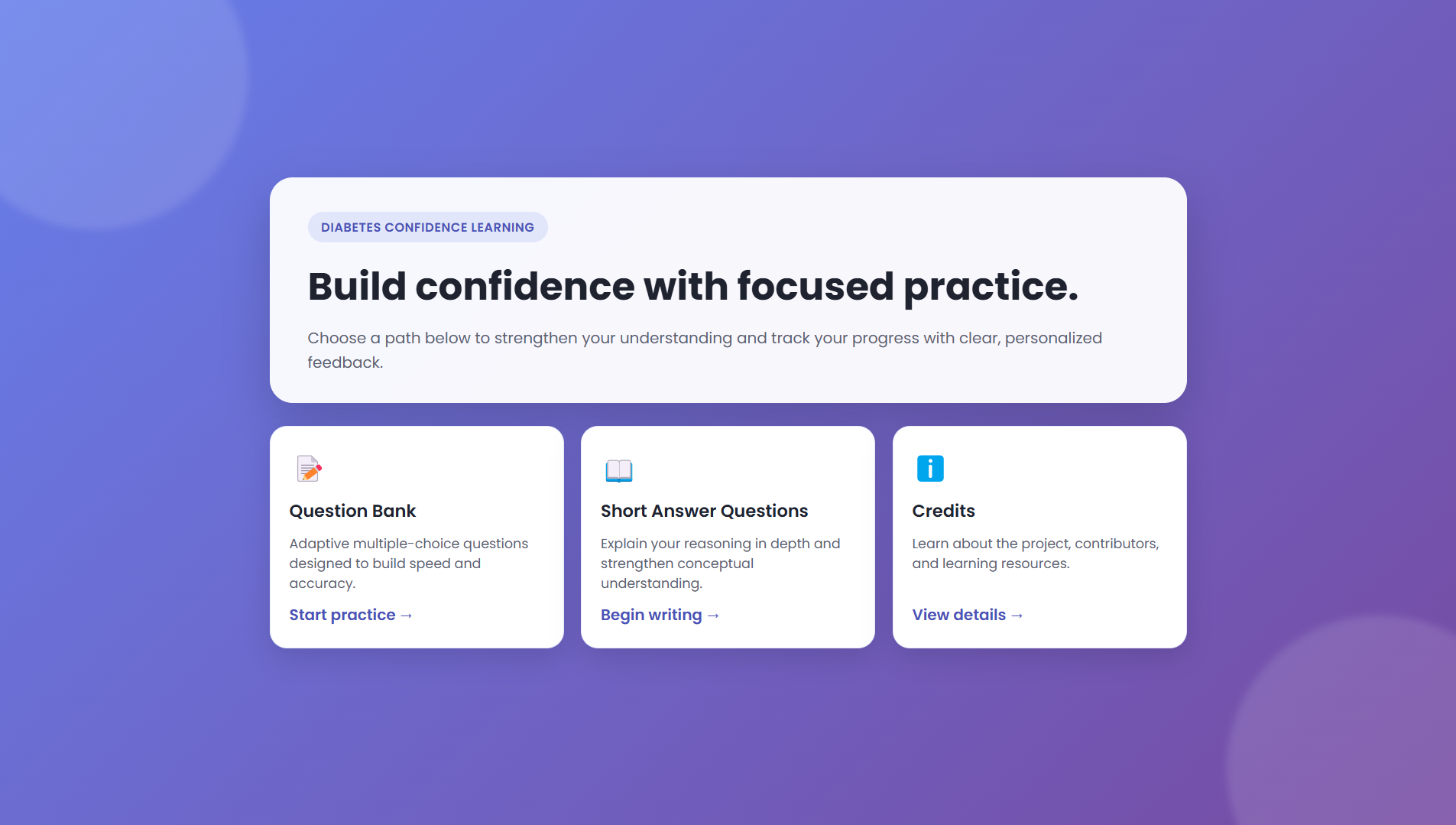
Website Homepage
-
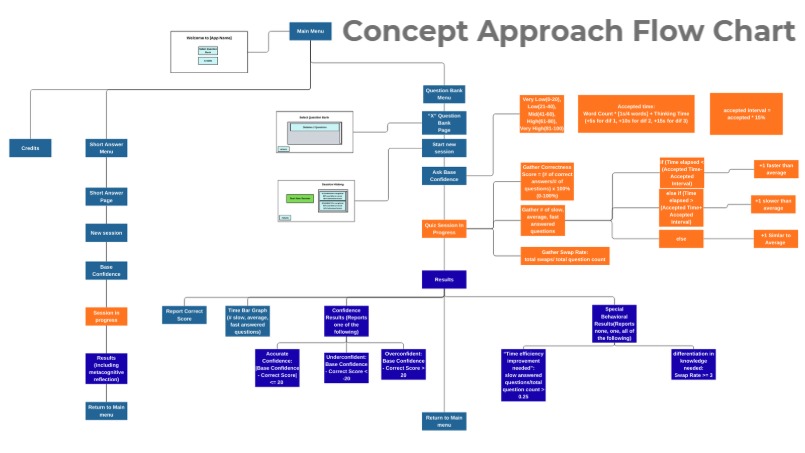
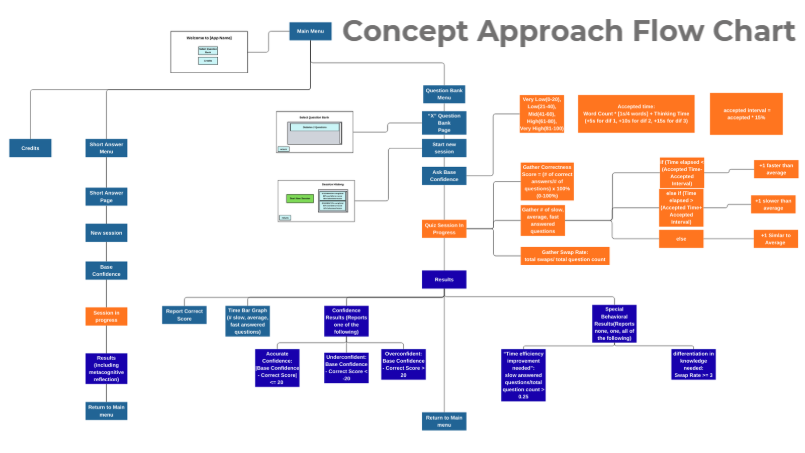
Concept Approach Flow Chart
Inspiration
Our inspirations in making this product consist of two main points: False Certainty and Calibration Impact Performance. According to a paper by Hoyoer et al, in 2024, medical students have shown a misalignment between their confidence and competence, which leads them to be certain of incorrect knowledge, while showing no improvement in their ability to discriminate. In another article by Prokop in 2020, he mentioned that miscalibrated confidence can affect diagnostic errors, which becomes a major contributor to low test scores in medicine.
What it does
This platform delivers AI-generated multiple-choice and short-answer questions built from reputable, evidence-based literature to assess both knowledge and applied reasoning. Beyond simply marking answers as correct or incorrect, the platform delivers detailed content explanations, metacognitive feedback, decision-confidence analysis, and response-time tracking. These features offer insight into how learners approach problems and reveal their metacognitive awareness, not just what they know. The system analyzes confidence levels, timing, and answer changes to detect patterns such as overconfidence, hesitation, or guessing, while also offering knowledge-gap breakdowns and personalized test-taking recommendations. By combining performance data with behavioral insights, the platform trains knowledge, calibration, time management, and strategic decision-making, creating a more intelligent, personalized, and confident learning experience than traditional quiz tools.
How we built it
We used generative AI, as approved in this Hackathon, to develop a static website filled with multiple-choice and short-answer questions. We used HTML5 to design the webpages that the quizzes will be presented on, we also used CSS3 to develop the framework of the website to make it visually appealing, and finally, we used JavaScript to ensure that the visual styles were consistent with each other as we needed to go through different html pages.
Challenges we ran into
The challenges we ran into were that with our product, we had to make sure that we did not reinvent the wheel, as in we did not make a repeat of what is already made. Another challenge is feasibility, given that this is a hackathon, there is only a limited amount of time allocated for developing our product, and as such, we had to filter our ideas to ensure that we are confidently able to implement them into the website to make sure the idea is concrete, as some ideas required time and further research to implement.
Accomplishments that we're proud of
The accomplishments that we are proud of are that we were able to use Copilot/AI to develop a simple static website that looks visually appealing, and was able to interpret our ideas/concepts into a developed prototype in the span of 48 hours, even though we did not have any experience in developing websites, and the topic was broad and very few of us had any understanding of the requirements/concepts required to implment the final project.
What we learned
We learned how the use of AI can help develop prototypes or frameworks of projects that allow our creative minds to develop concepts/ideas found in our heads into concrete, innovative products.
What's next for Diabetes Confidence Learning
Future directions that can be made for the diabetes confidence learning website are to gamify the website to include titles, which will provide feedback based on the user's trends. For example, if the user is an "Impulsive Reviser," then they have done the quiz in a fast manner, but have the tendency to change their answers. Another example is the "Deliberate Stabilizer," where they took a long time to answer their question, but did not change their answer.

Log in or sign up for Devpost to join the conversation.