-
-
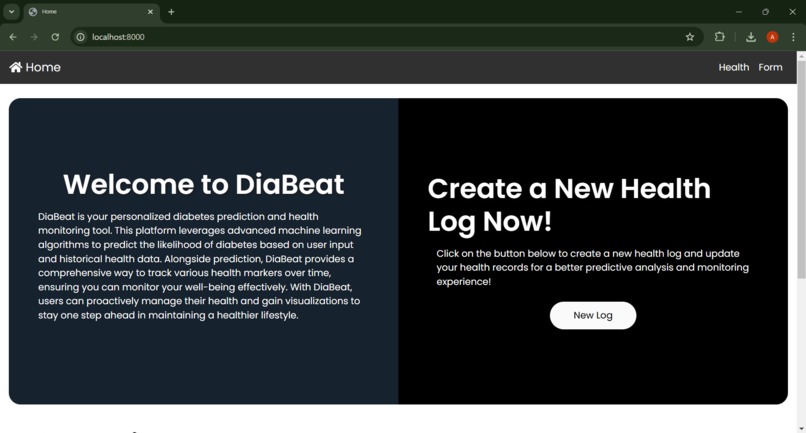
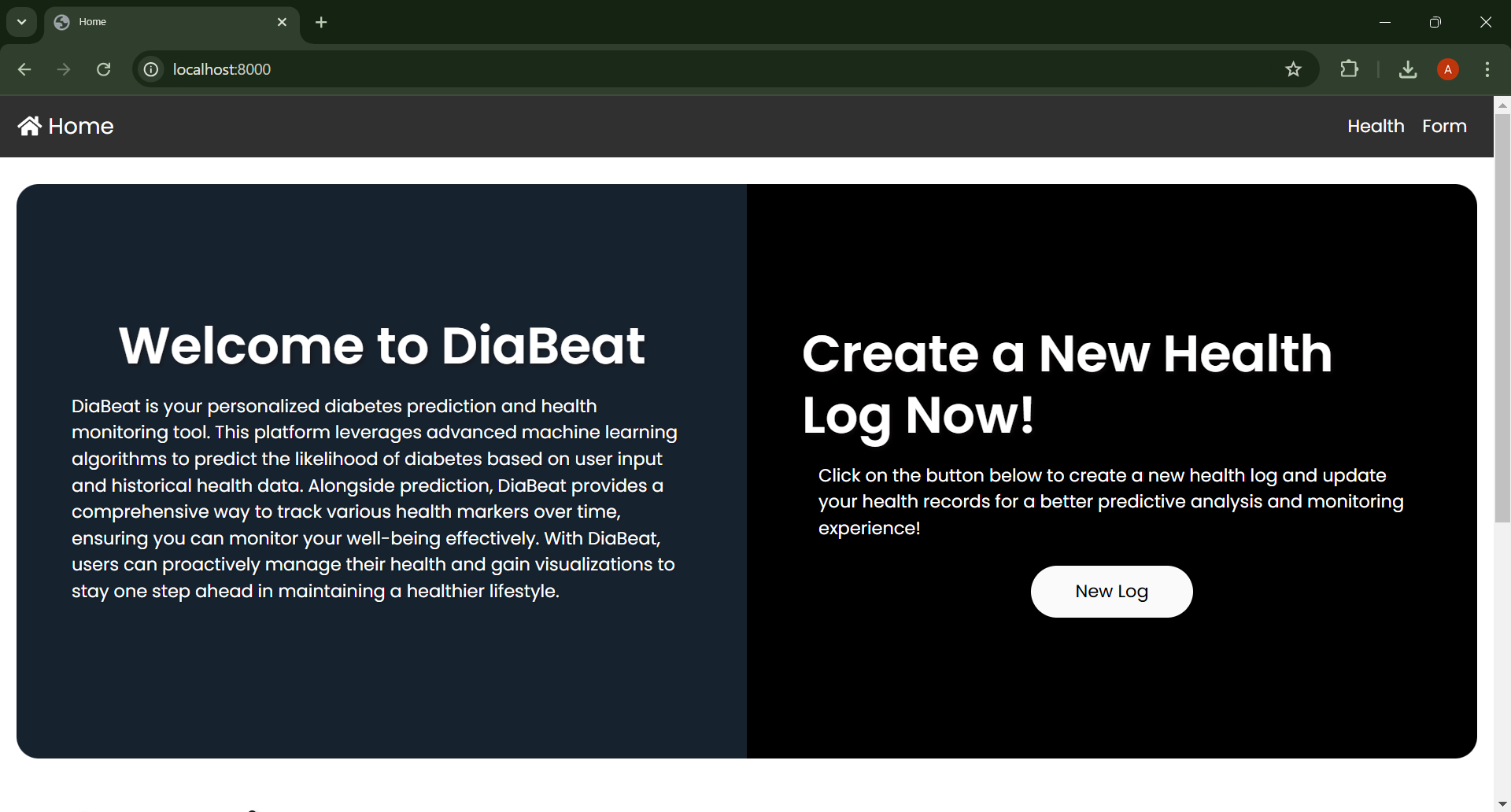
Home Page
-
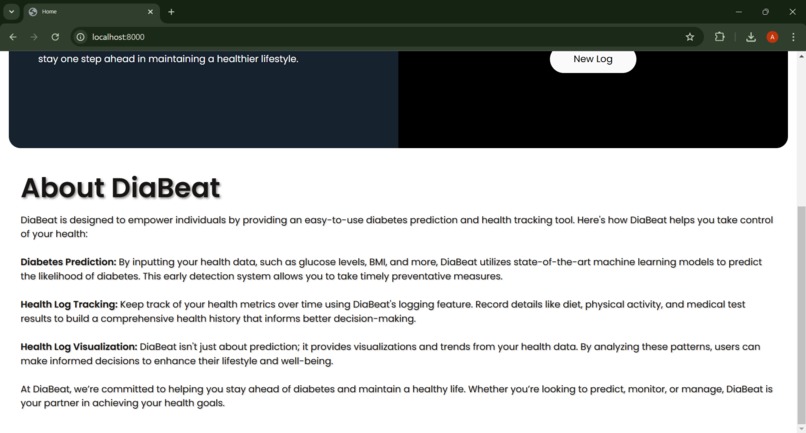
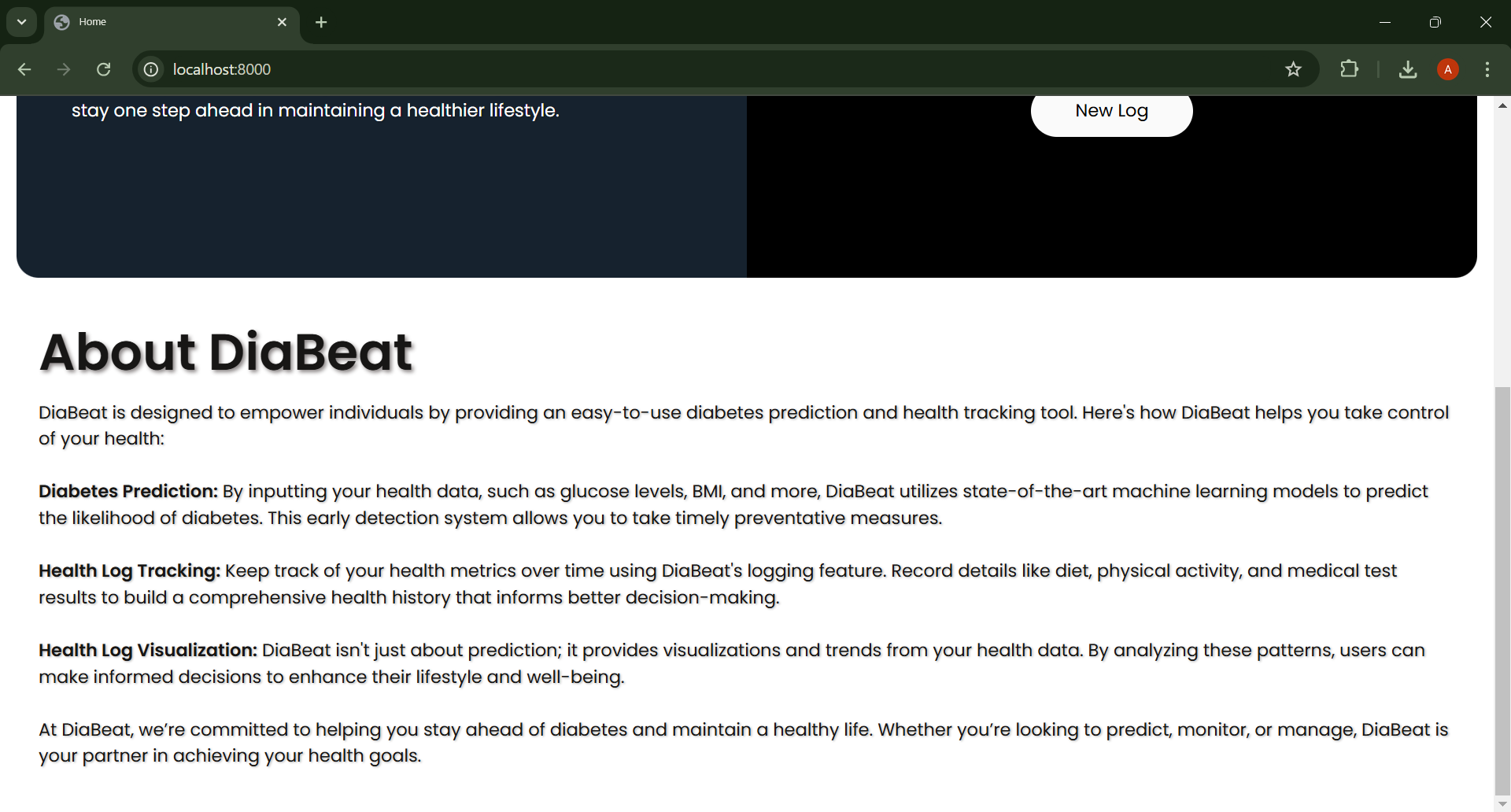
Bottom Half of the Home Page
-
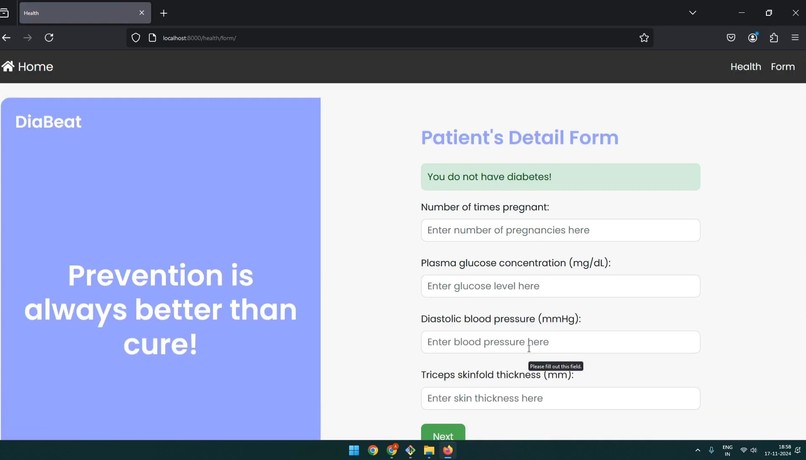
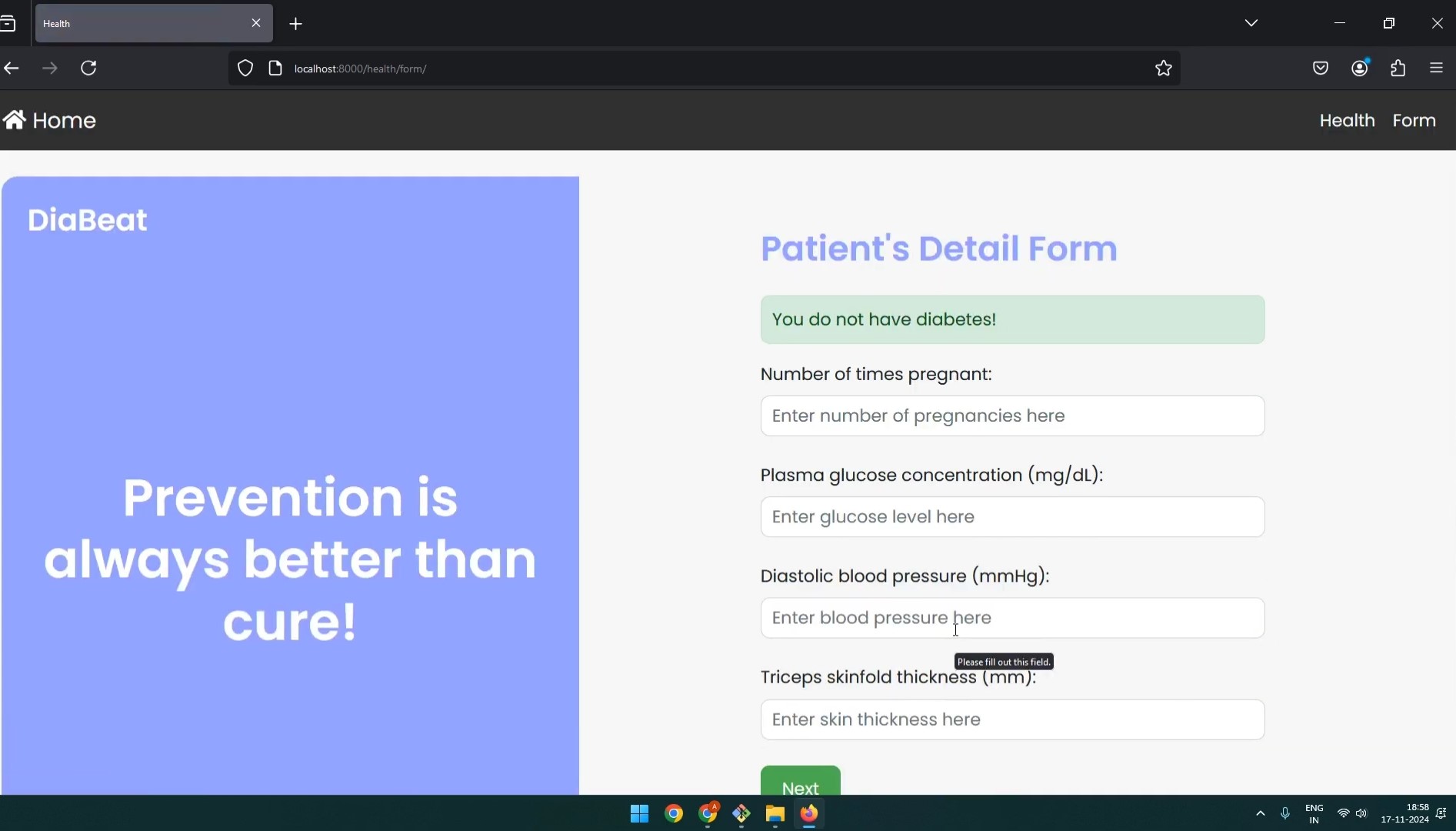
Diabetes Prediction Form when the model predicts the user does not have diabetes
-
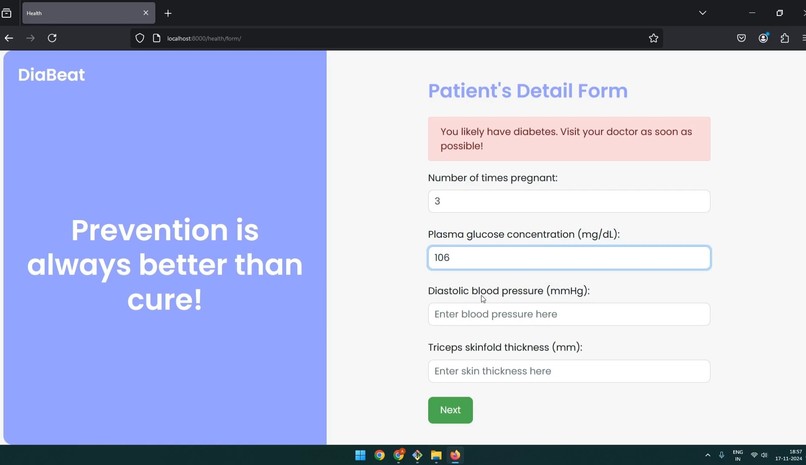
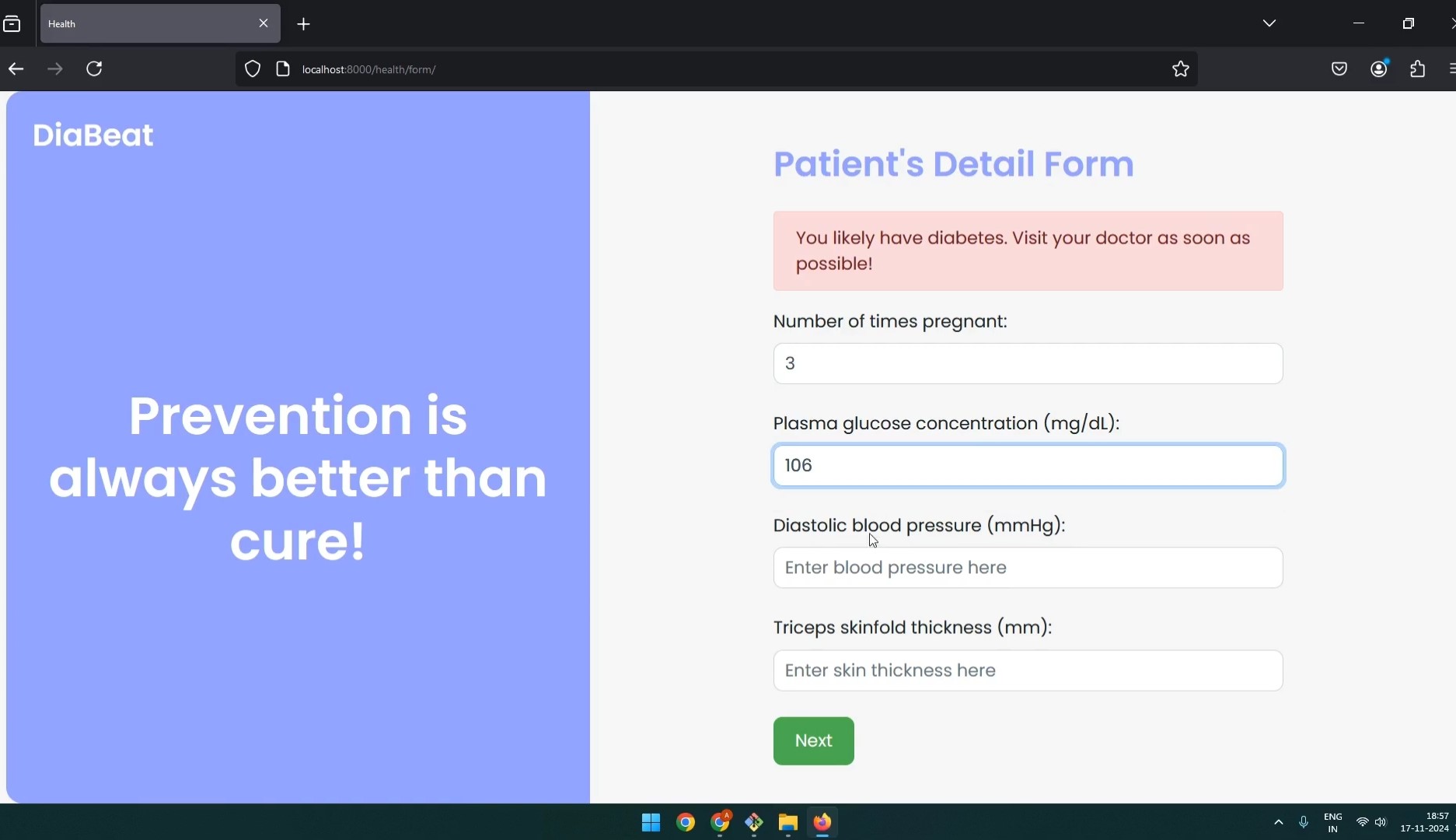
Diabetes Prediction Form when the model predicts the user has diabetes
-
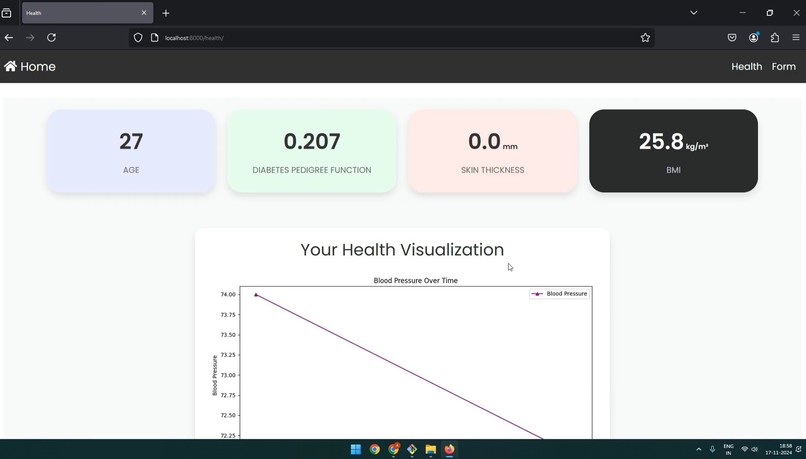
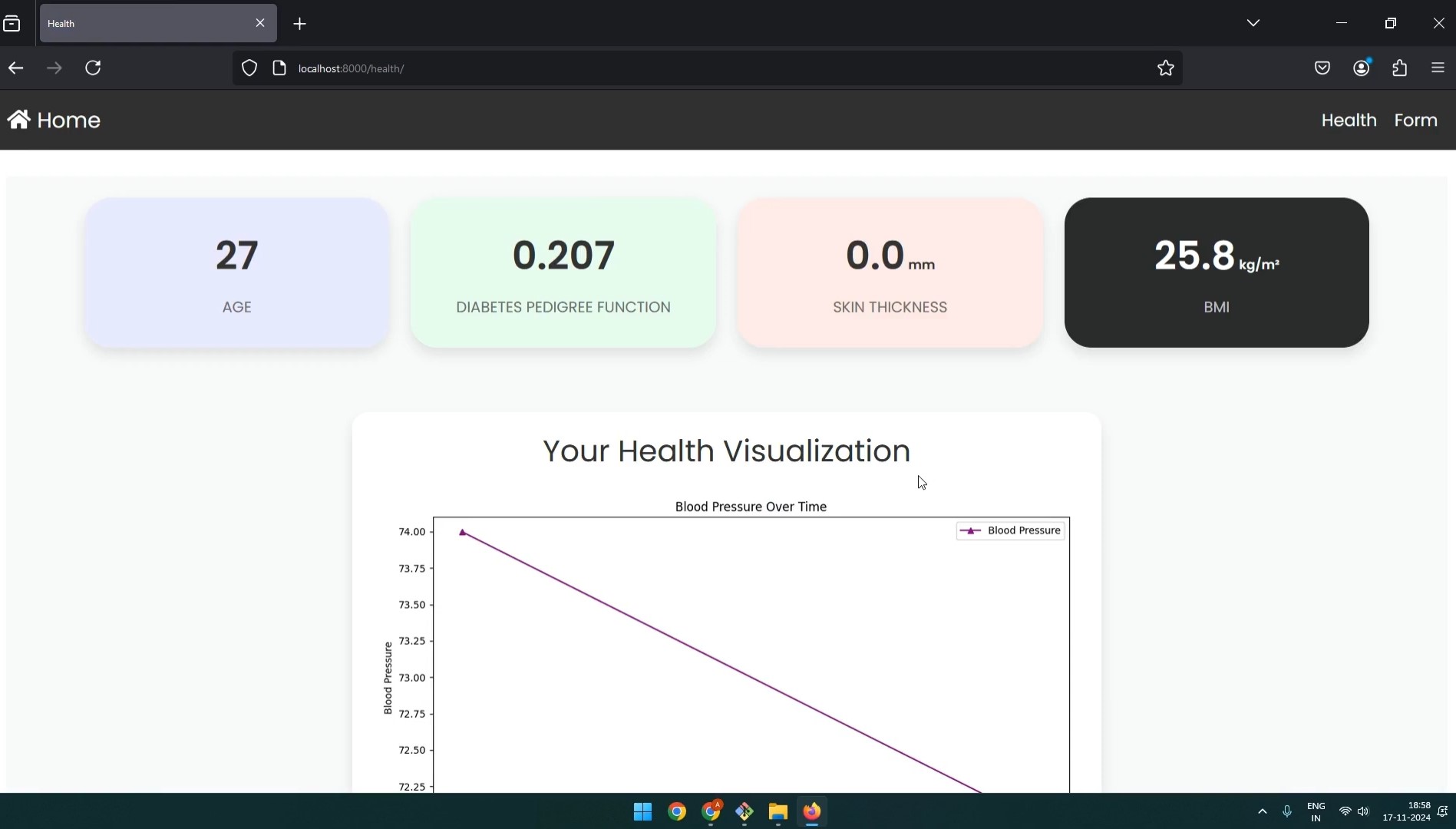
Top Half of The Health Page displaying information from the last log in Boxes
-
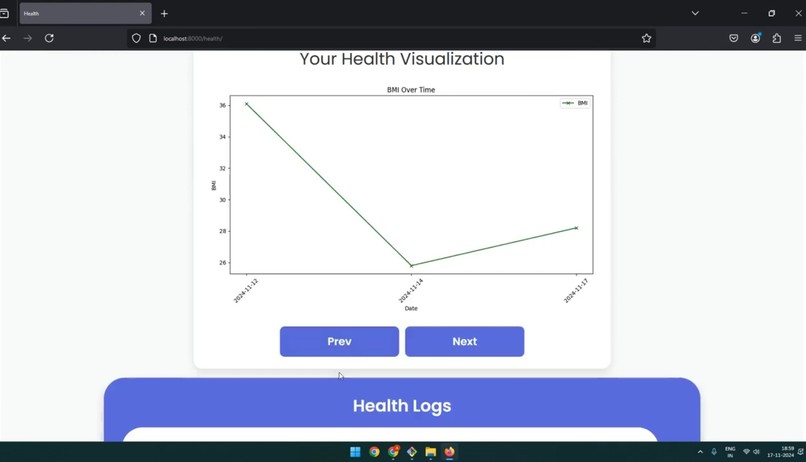
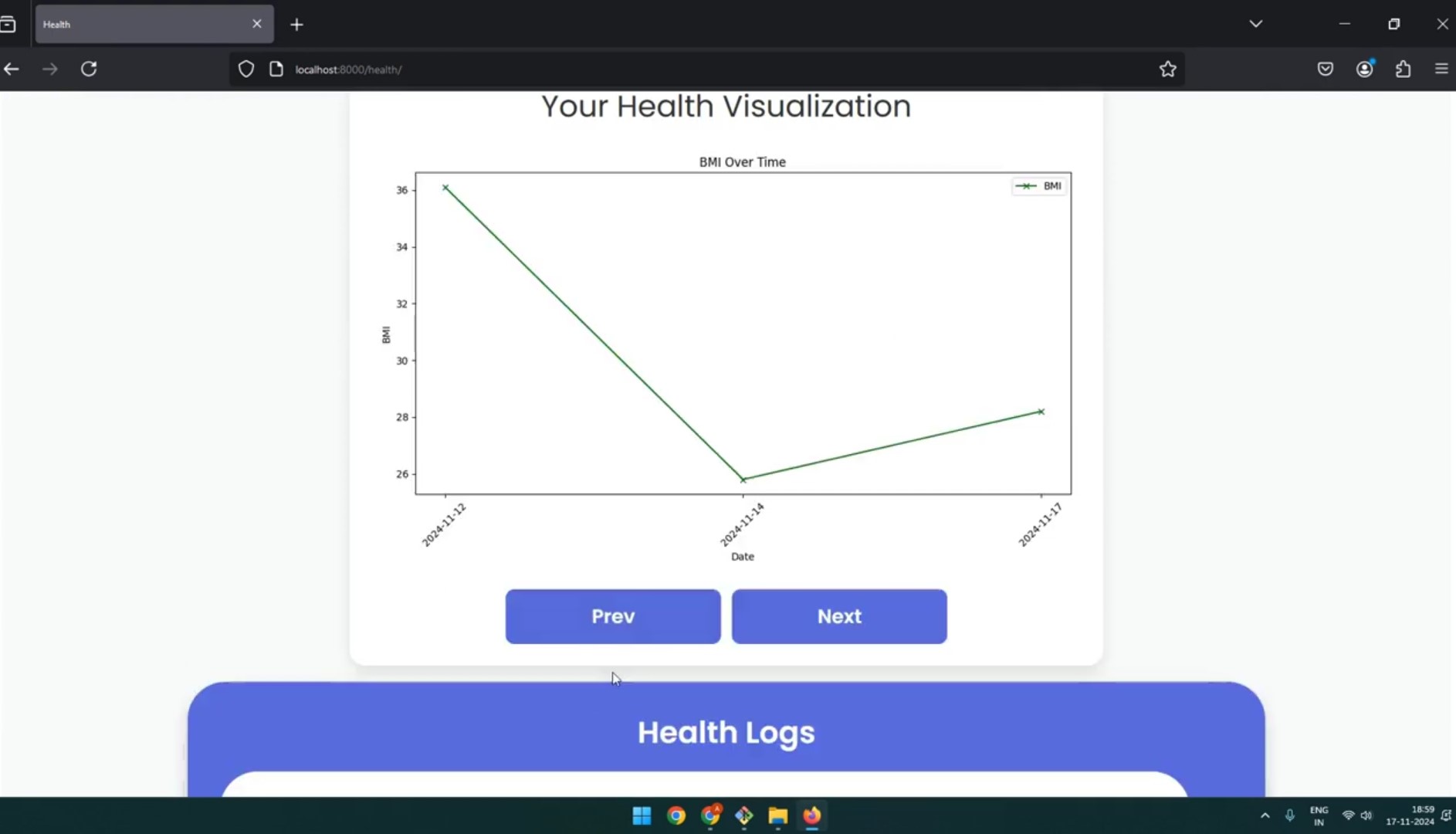
Graphs in the Health Page visualizing the user's health markers over time
-
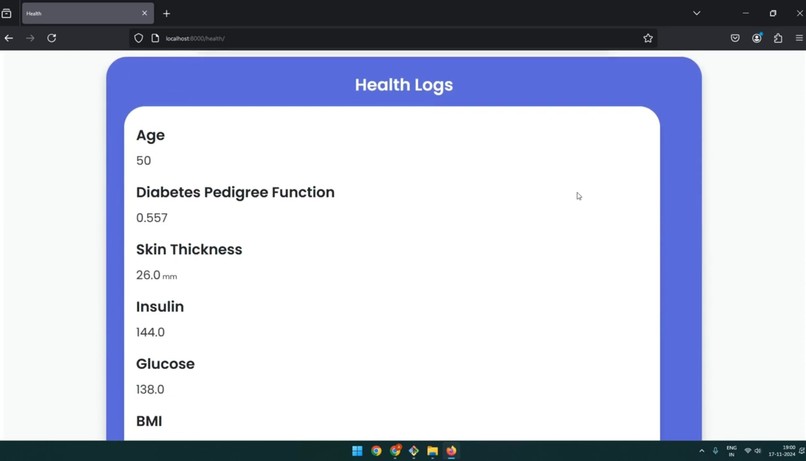
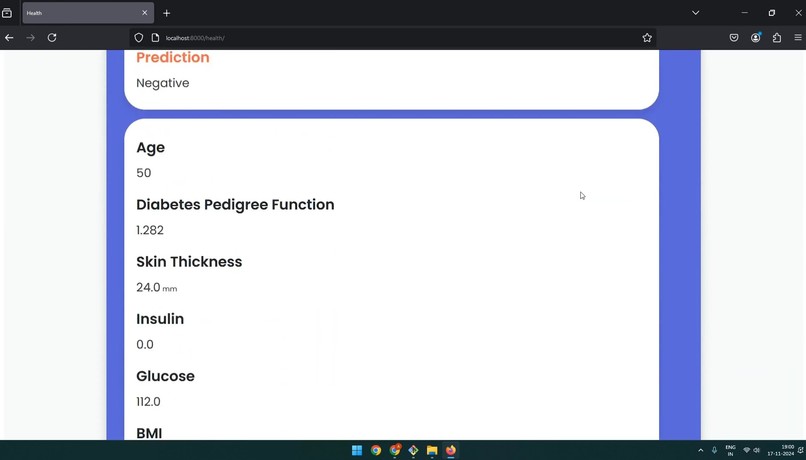
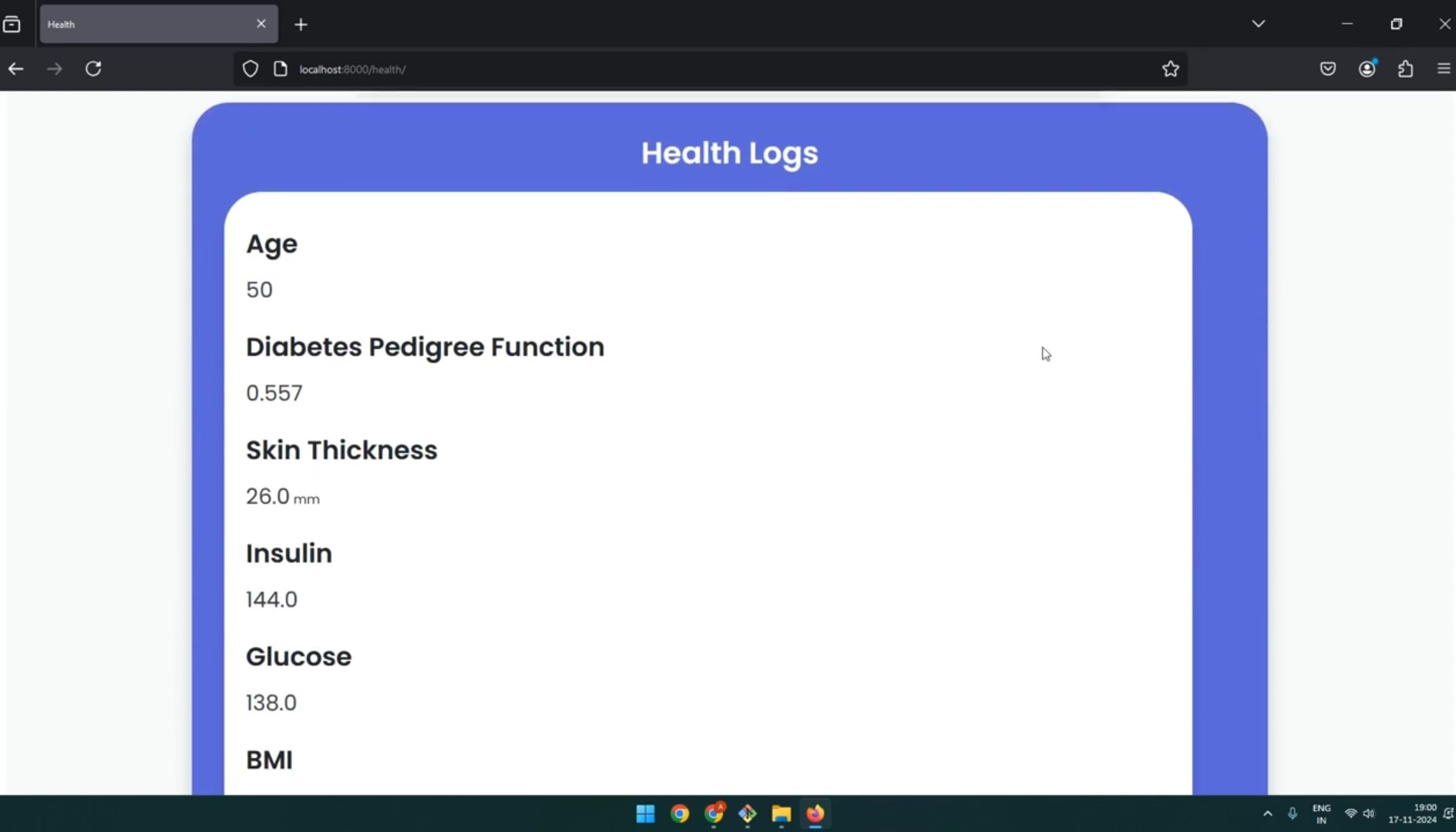
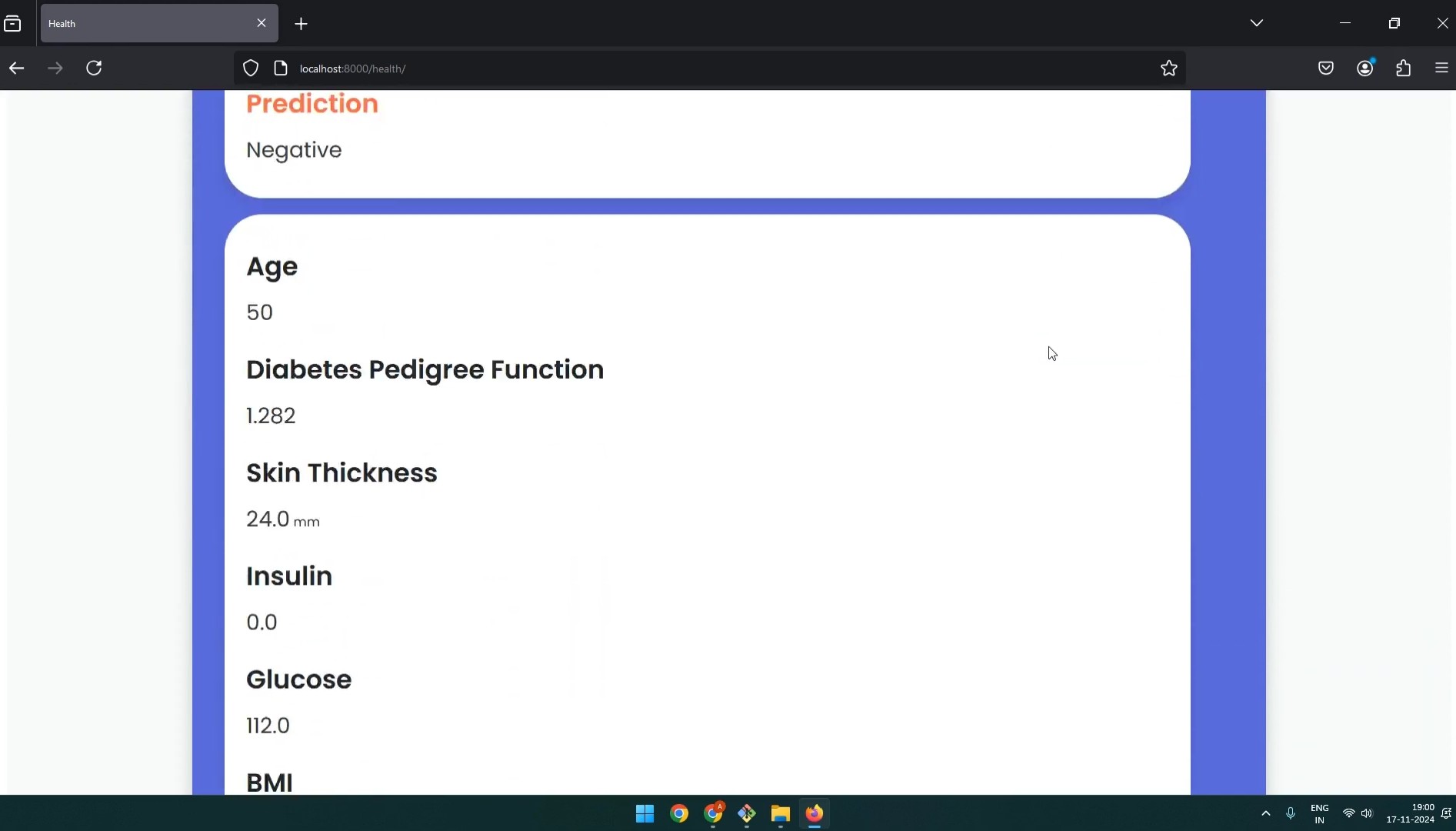
Actual entries of the user over time
-
DiaBeat: Diabetes Prediction Tool
Inspiration
The inspiration for DiaBeat came from the increasing prevalence of diabetes worldwide. We wanted to create a solution that not only helps predict the likelihood of diabetes based on health data but also empowers users to track important health parameters like BMI, age, insulin levels, glucose levels, and skin fold thickness. By combining data analysis and machine learning, we aimed to provide an easy-to-use, informative, and visually appealing platform to help users take proactive steps in managing their health.
What it does
DiaBeat is a diabetes prediction tool that leverages machine learning to predict whether users have a high risk of developing diabetes. Users can input various health parameters such as their BMI, age, insulin levels, glucose levels, skin fold thickness, and other factors. Based on this data, DiaBeat provides a risk assessment and helps users visualize these health parameters over time through interactive graphs. This allows users to track changes in their health, make informed decisions, and take preventive actions to lower their risk of diabetes.
How we built it
We built DiaBeat using the Django web framework for the backend, which provides a robust structure for handling the application logic and data. The frontend is developed using HTML, CSS, Bootstrap and JavaScript, ensuring that the application is both responsive and visually engaging.
For the machine learning aspect, we used Scikit-learn to develop a predictive model trained on health data. The model processes user inputs, predicts their diabetes risk, and presents the result in a user-friendly format. We also utilized Pandas for data manipulation and to handle the health parameters collected from users.
For the creation of graphs, we used Matplotlib to make visually appealing graphs that make it easy for the user to visualize their health markers over time.
Challenges we ran into
Data Preprocessing: One of the main challenges we faced was cleaning and preprocessing the health data. Some input features had missing values, which required us to implement proper imputation techniques. We used the SVM model from Scikit-learn to handle this, but it took some time to tune and ensure it didn't introduce bias.
Model Accuracy: Initially, the SVM model was underperforming. We struggled with tuning hyperparameters and balancing overfitting and underfitting. It took several iterations of adjusting the kernel type and C parameter to find the best configuration for optimal performance.
Frontend Responsiveness: Ensuring that the frontend was responsive across various devices proved to be tricky. We had to fine-tune the layout and design, making sure the graphs and input forms were usable and visually appealing on both desktop and mobile devices.
Real-Time Predictions: Implementing real-time predictions while ensuring the user interface remained smooth was a bit challenging. We had to optimize the backend to process inputs quickly and present results without causing significant delays.
Accomplishments that we're proud of
Accurate Predictions: We're proud of how well the machine learning model performs. After multiple rounds of testing and refinement, it now provides reliable predictions with a high level of accuracy.
Interactive Visualizations: The graphs are an important feature of DiaBeat, and we're proud of how they've turned out. Users can now easily see the relationship between different health parameters and track their progress over time.
User-Friendly Interface: Despite the technical complexity of the backend, we managed to create an intuitive and user-friendly interface that doesn't overwhelm the user. The input forms are simple, and the predictions are displayed clearly.
What we learned
Machine Learning in Web Applications: We gained hands-on experience integrating machine learning models into a web application. We learned how to train models, preprocess data, and optimize for real-time predictions.
Frontend-Backend Integration: Building a seamless connection between the frontend and backend was a key learning experience. We now have a better understanding of how to handle responses, and update the UI dynamically.
What's next for DiaBeat
Improved Prediction Model: We plan to refine the prediction model further by incorporating more health parameters, such as blood pressure and family history. We also want to explore more advanced machine learning algorithms to improve prediction accuracy.
User Authentication System: We plan to implement a user authentication system to allow users to create accounts, log in and personalize their experience even more!
Mobile App Version: We’re exploring the idea of developing a mobile app to make DiaBeat even more accessible. With the rise of health apps on smartphones, we want to extend our platform to reach a wider audience.
Community Features: We hope to add social features, such as allowing users to share their progress, success stories, or even join challenges to stay motivated in their journey to manage or prevent diabetes.

Log in or sign up for Devpost to join the conversation.