-
-
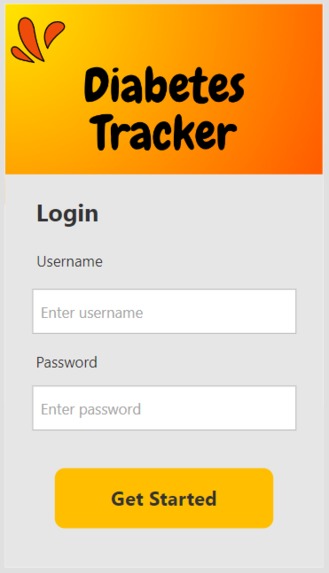
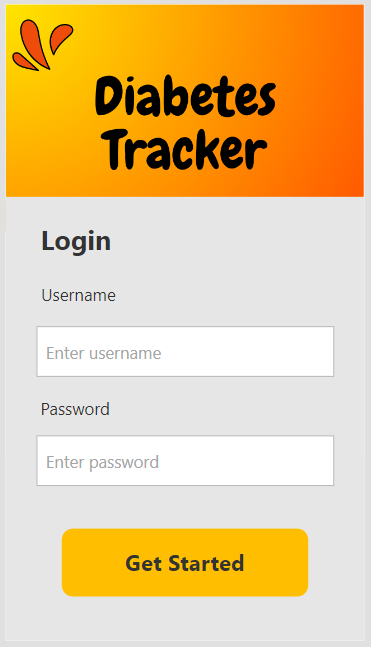
Diabetes Tracker Login Page
-
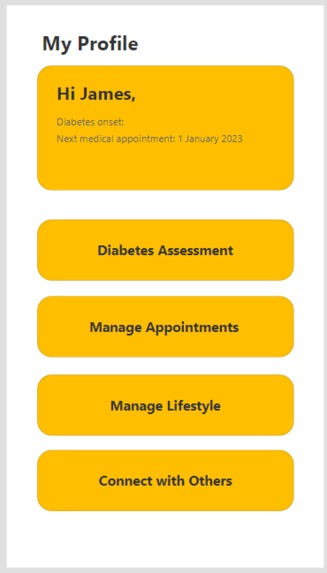
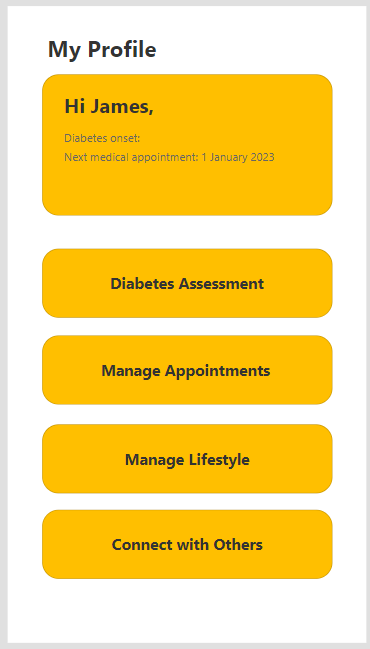
Home Screen showing features
-
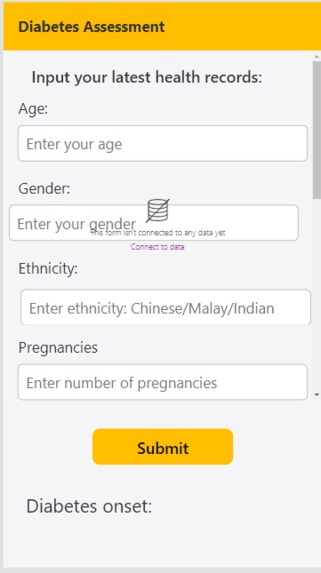
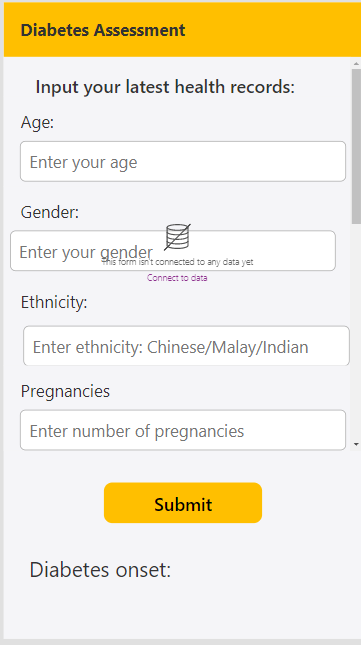
Diabetes Assessment form, displaying diabetes onset after completio
-
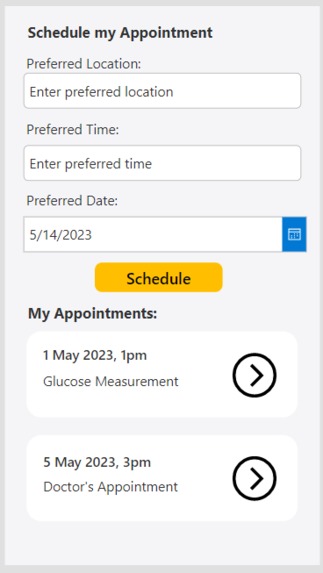
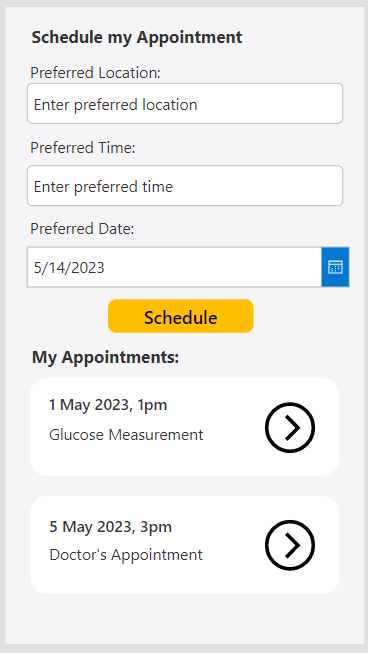
Scheduling and managing medical appointments
-
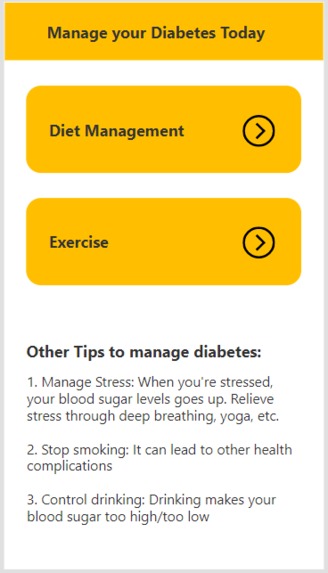
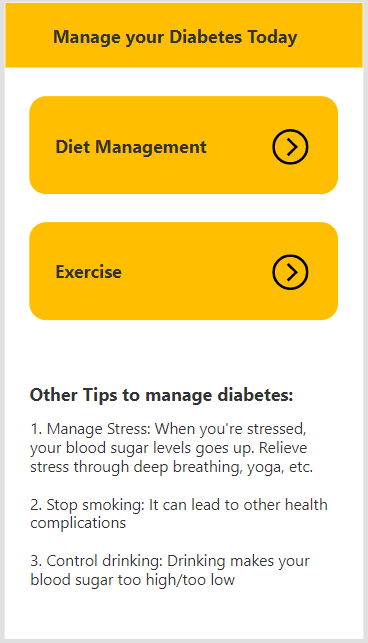
Managing diabetic lifestyle
-
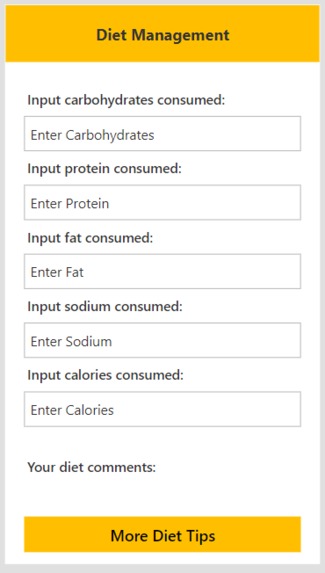
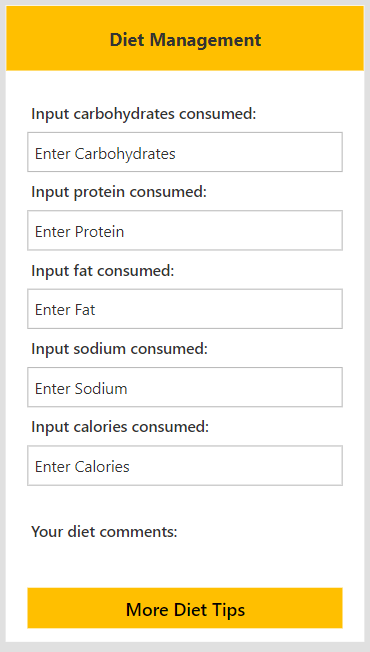
Managing user's diet
-
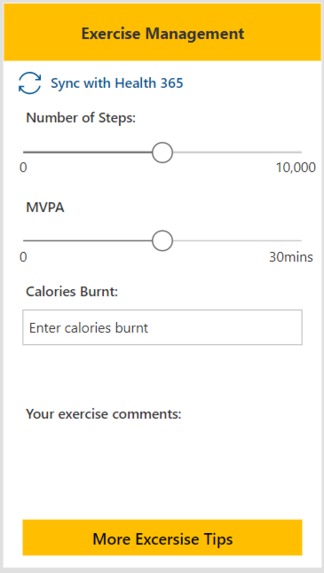
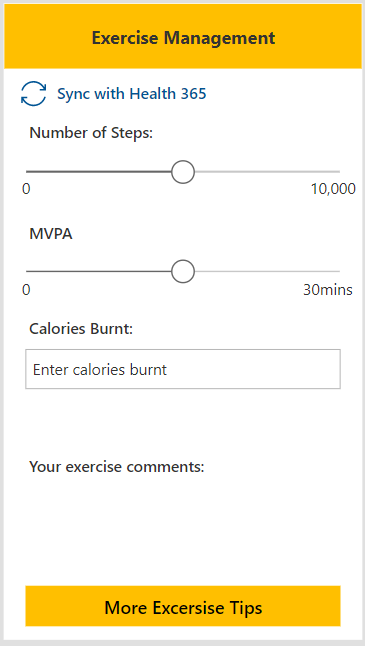
Managing user's exercise
-
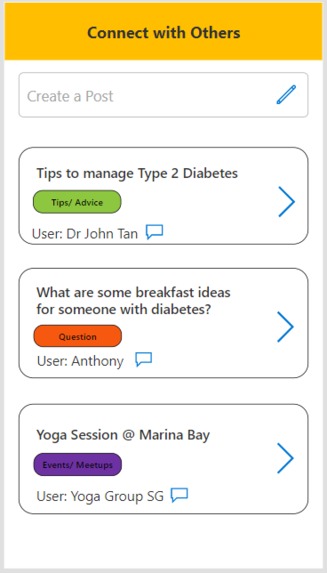
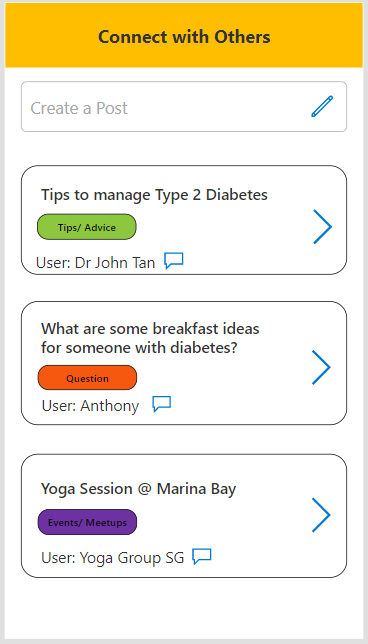
Connecting with others on the app
-
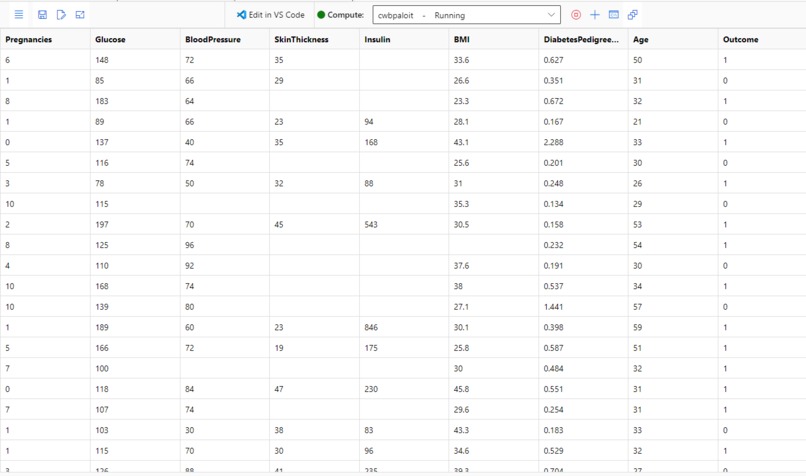
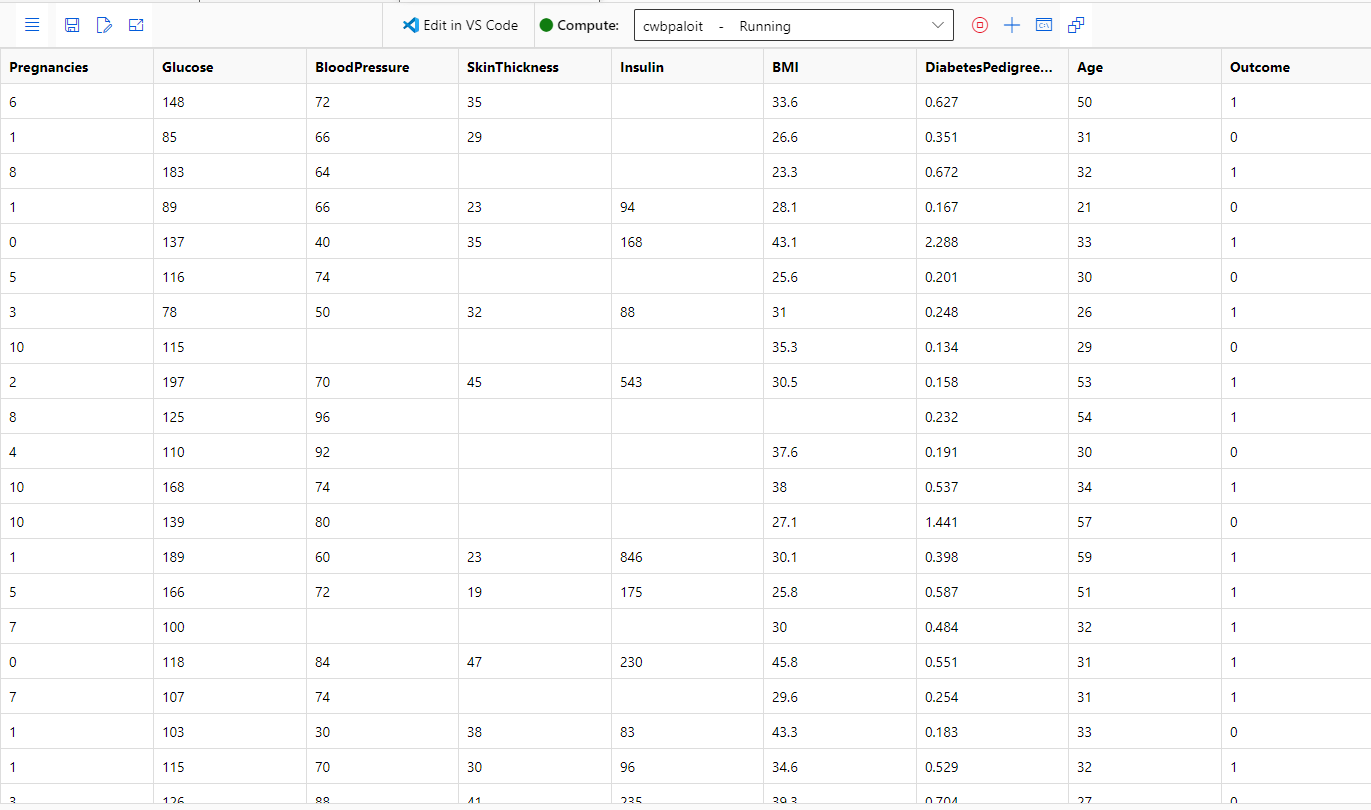
Cleaned Kaggle data
-
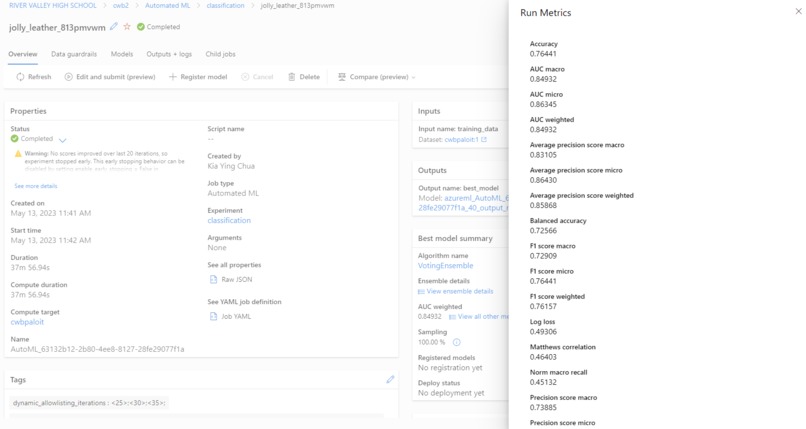
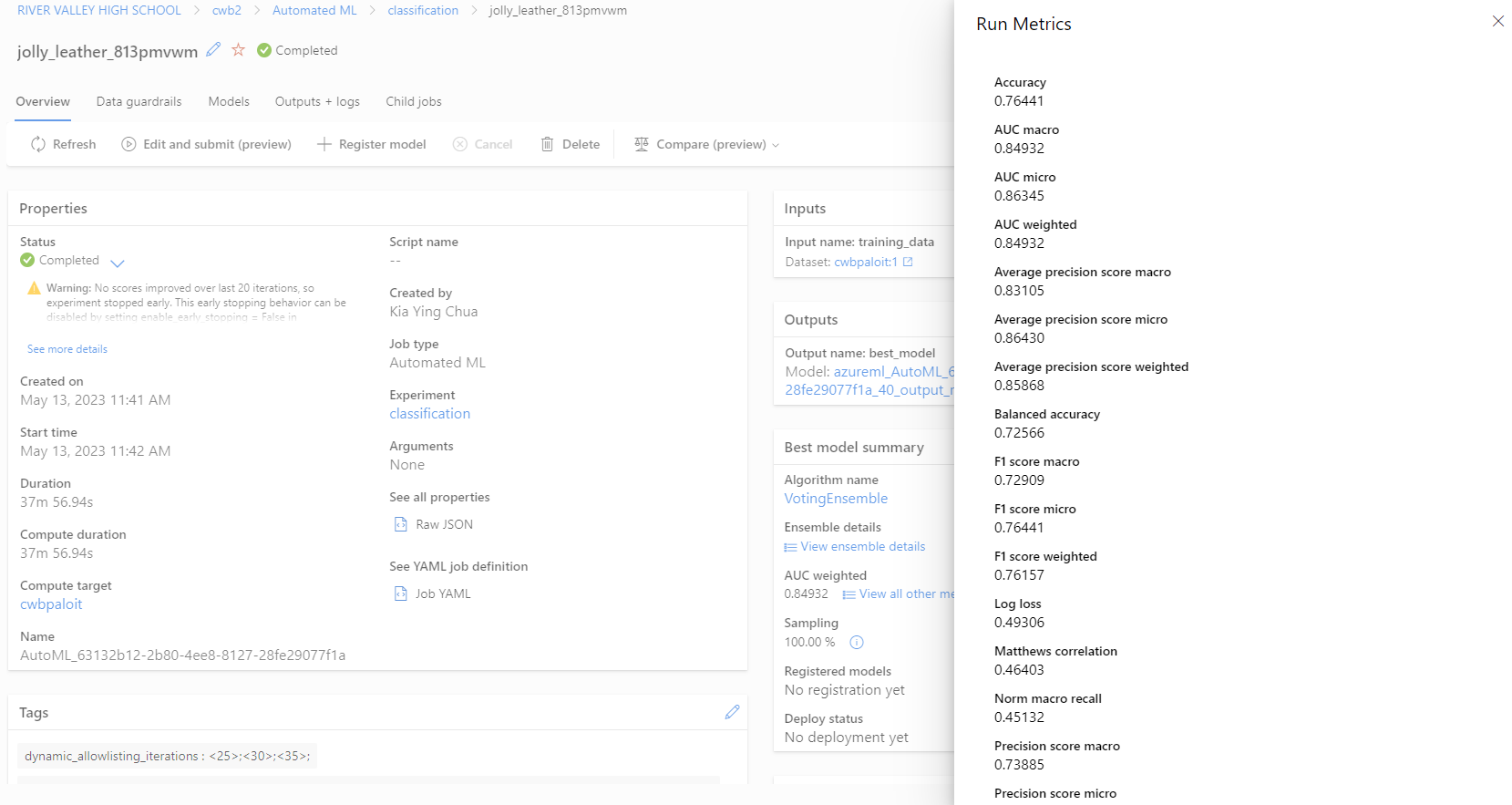
Automated Machine Learning on Azure
-
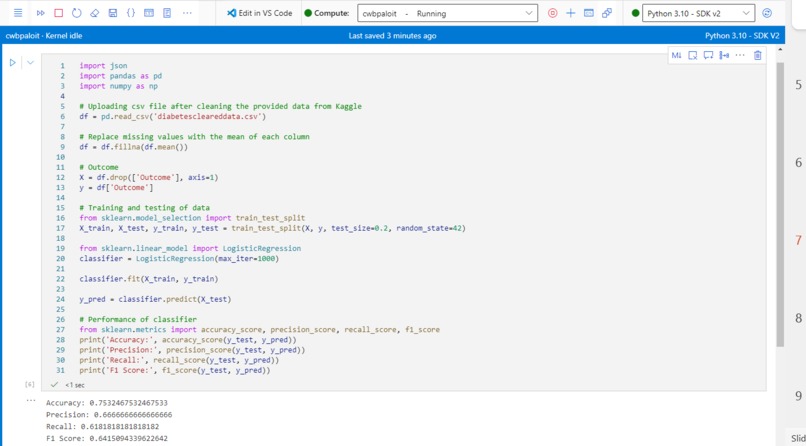
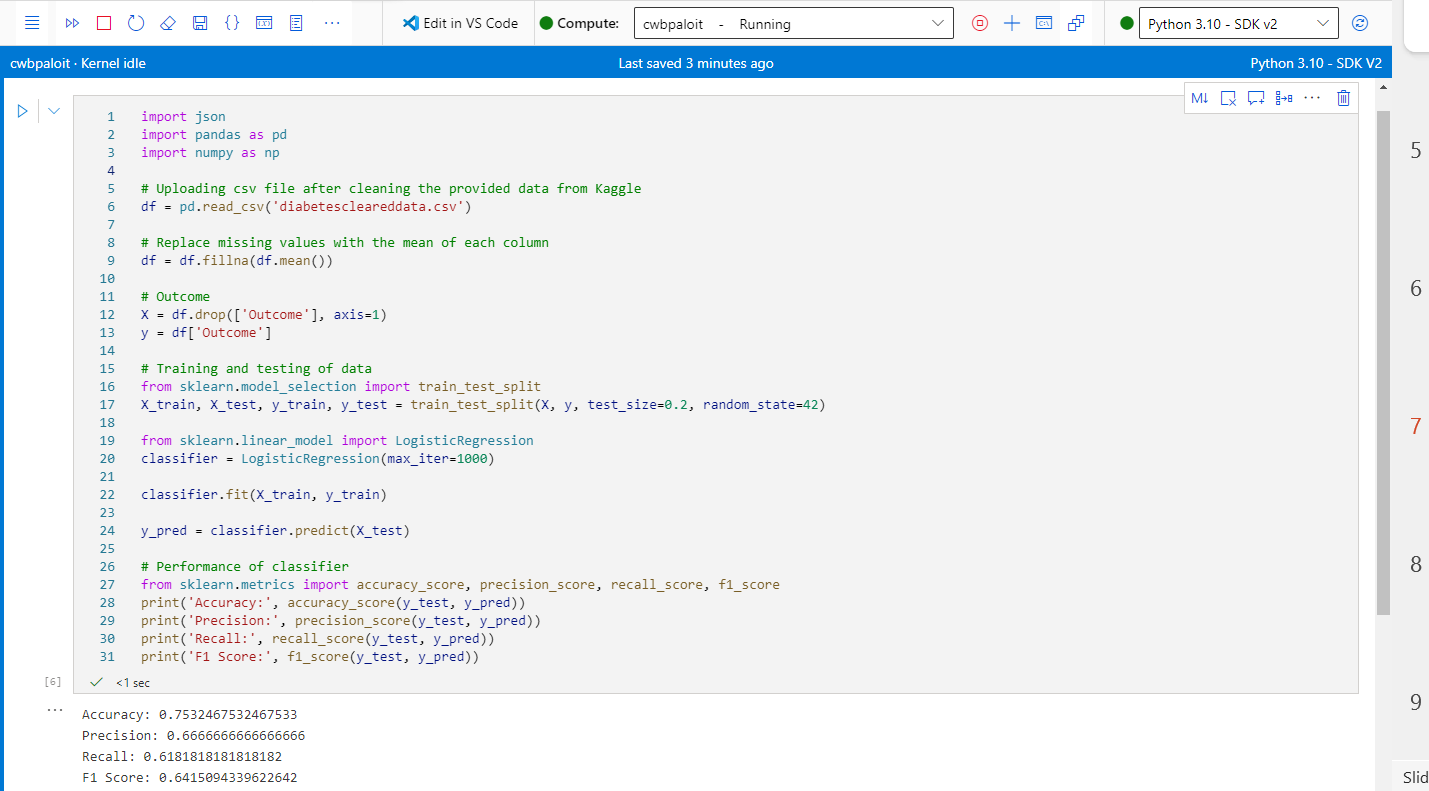
Machine Learning Notebook
-
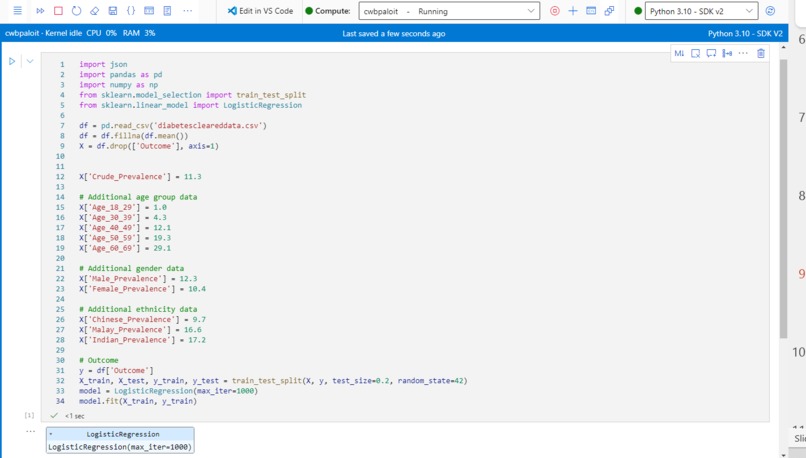
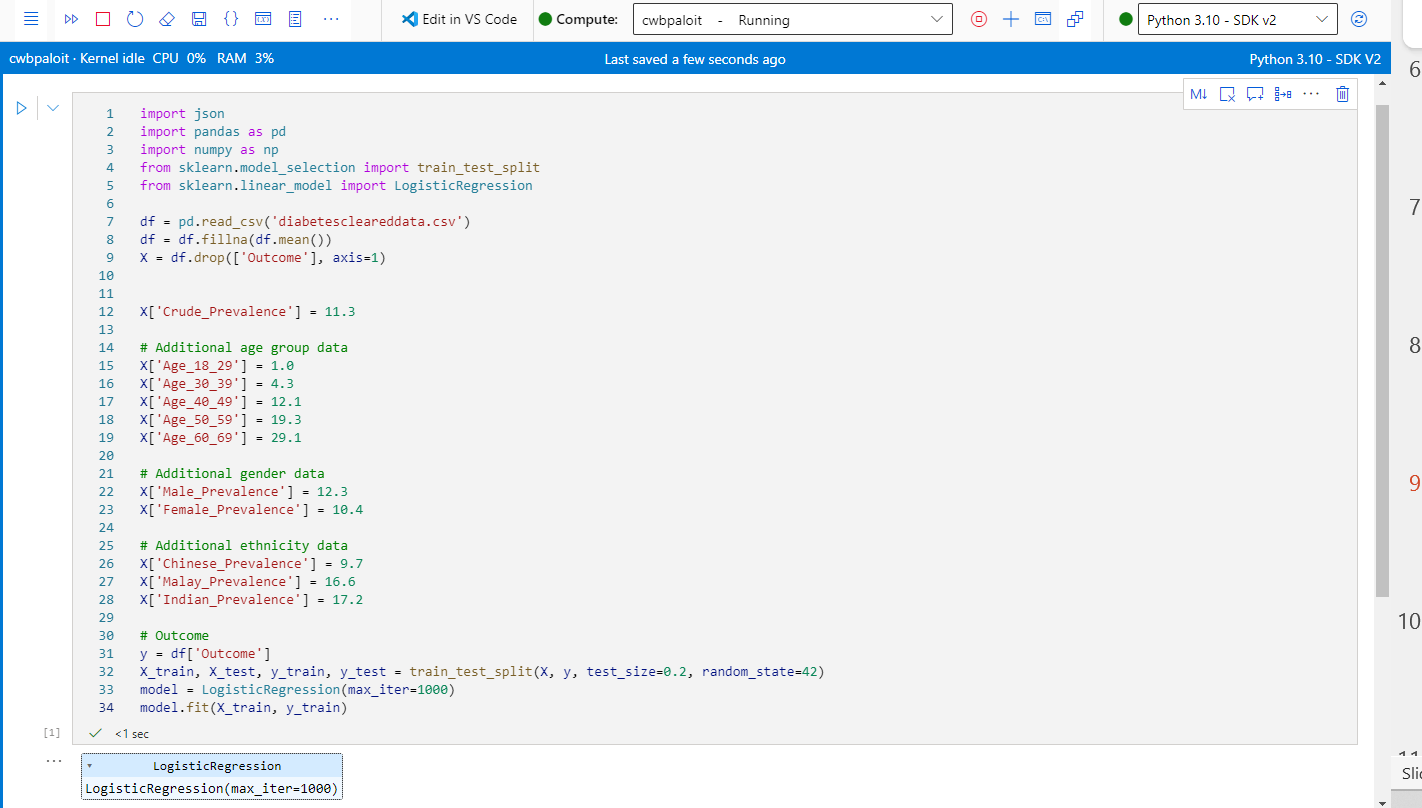
Machine Learning Notebook using additional data
Inspiration
My grandmother has diabetes, and this is also faced by a large proportion of people in Singapore. Diabetes is an increasingly challenging problem today's society and has always been an issue that I could connect with. I therefore chose this problem statement as it is interesting how the use of technology and AI will be able to help better the lives of those with diabetes.
What it does
This app has 4 main features:
1) Diabetes Assessment: Users will input in their background and health information into a form, which should be connected to a machine learning model from Azure to predict whether the user has the onset of diabetes based on the parameters they have inputed.
2) Scheduling of Appointment: Based on the diabetes assessment form, users can schedule new appointments, as well as view and manage their current appointments.
3) Manage Lifestyle: Users will be able to improve their diabetic lifestyle through diet and exercise managements, and tips will also be provided to manage diabetes and their lifestyle.
4) Connect with Others: Users of the app will be able to connect with each other through a discussion page, where they will be able to post and discuss matters such as tips/advice, questions, and events/ meetup. This can bring Singaporeans together and provide a platform where people struggling with diabetes will be able to support each other.
Azure Machine Learning: A classification machine learning model will be able to predict the onset of diabetes.
How we built it
Cleaning of data: I first cleaned the data that was provided on Kaggle, which provided parameters that showed whether a person had diabetes, so that the inconsistent 0 data were removed that could affect the training of the machine learning model.
Using Azure Machine Learning: I attempted using 2 different methods on Azure machine learning to get a classification model which could predict whether a person has diabetes: 1) The first model is a model trained using the automated machine learning feature to predict the diabetes onset. 2) The second model I created using the notebook feature. Additionally, since the original data were from females in India, I added additional data on Singapore's diabetic population to improve my machine learning model.
Using Power Apps: I used power apps to design the app, with the help of Figma, to create the various features required for the app.
Challenges we ran into
I did not have any knowledge about using both Azure machine learning and Power Apps prior to this hackathon, so I was very lost on getting started with both features, and how to connect the 2 platforms. The solution required for this problem statement is also rather complex, so it required some time for me to figure out what to do.
Accomplishments that we're proud of
I managed to pick up skills and knowledge about the use of machine learning, as well as learn more about how these Microsoft apps can be used for machine learning and app building. I am also proud of being able to learn by watch numerous YouTube guide and reading the tutorials on Microsoft pages.
What we learned
I learned more about machine learning, AI, and data science through the project and the workshops provided. I also learned functions in Azure machine learning and power apps that were applicable to this project.
What's next for Diabetes Manager (PALO IT Problem Statement 2)
1) Connecting my machine learning model on Azure to my power app. I have tried several ways such as using different connectors, but my power app was not able to create a custom connection to get the API from Azure machine learning, and hence it was unable to be deployed to the app. Other solutions can be found in other to solve this issue and link the 2 platforms together.
2) Frontend/Design/UIUX of the app can definitely be further improved to make it more aesthetic and user-friendly.
3) Focus: The current focus of my project is also on Singaporeans with Type 2 diabetes, this can be expanded to those with Type 1 diabetes, and other medical conditions Singaporeans face given our current ageing population.
4) Backend/Systems Design: The overall backend of the app can be made more complexed and to further its ability to store user data for the various features and to make everything more organized
5) Launching the app!

Log in or sign up for Devpost to join the conversation.