Inspiration
Dhyana was inspired by a simple question: What if technology could help us become more conscious instead of constantly demanding our attention?
The idea draws from the Bhagavad Gita, particularly its teachings on discipline, focused action, and bringing the restless mind back under direction, and from the Vijñāna Bhairava Tantra, which explores awareness through ordinary moments, breath, attention, and direct observation.
We wanted to transform these timeless ideas into something practical for modern digital life—helping people pause when they feel the urge to scroll, return to what matters, reflect on their experiences, and gradually build a more intentional relationship with technology.
Dhyana is therefore not about escaping technology. It is about learning to use technology without losing our awareness.
What It Does
Dhyana is an AI-powered digital wellbeing platform designed to help people build a healthier and more intentional relationship with technology. Instead of simply limiting screen time, Dhyana focuses on awareness, attention, and conscious action.
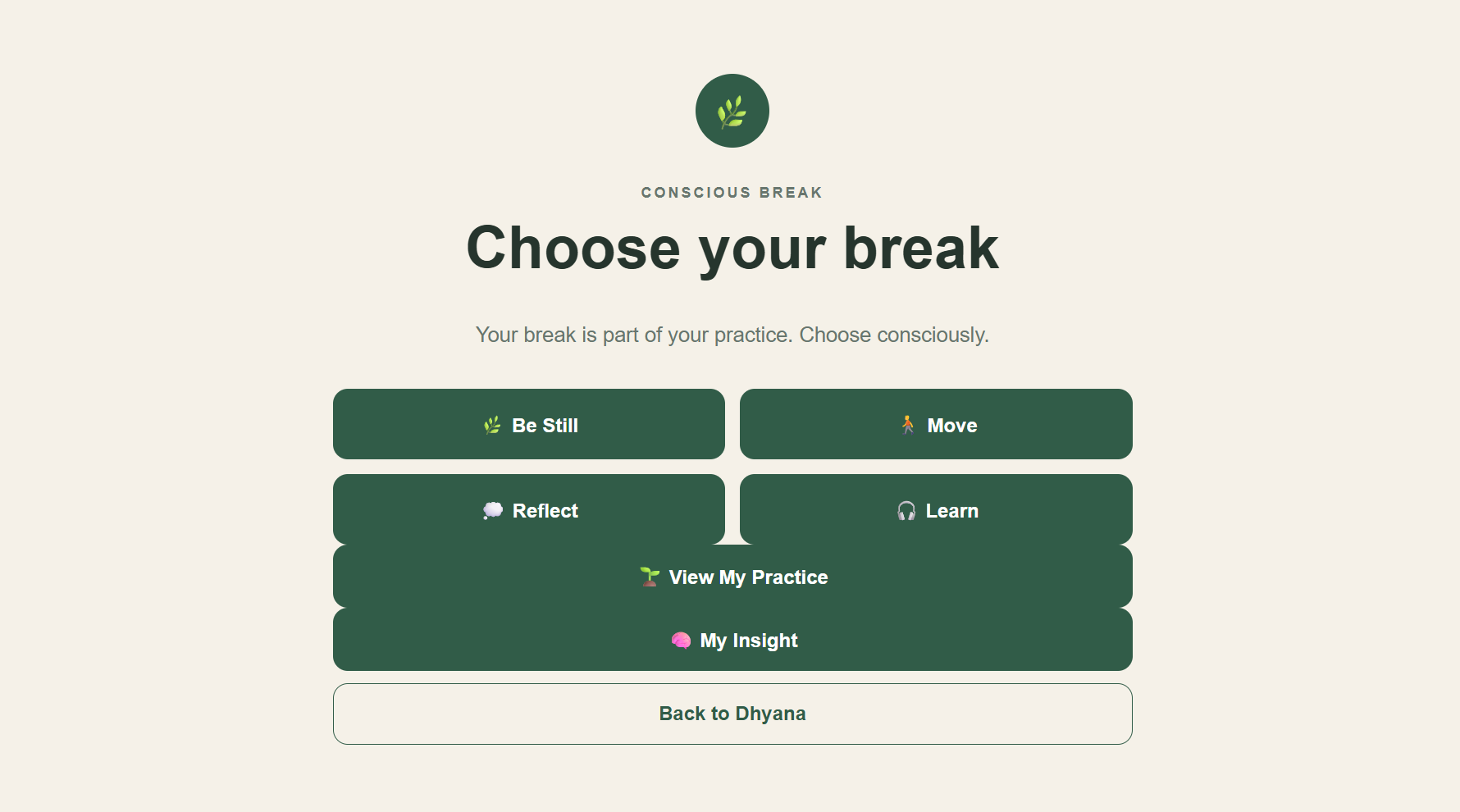
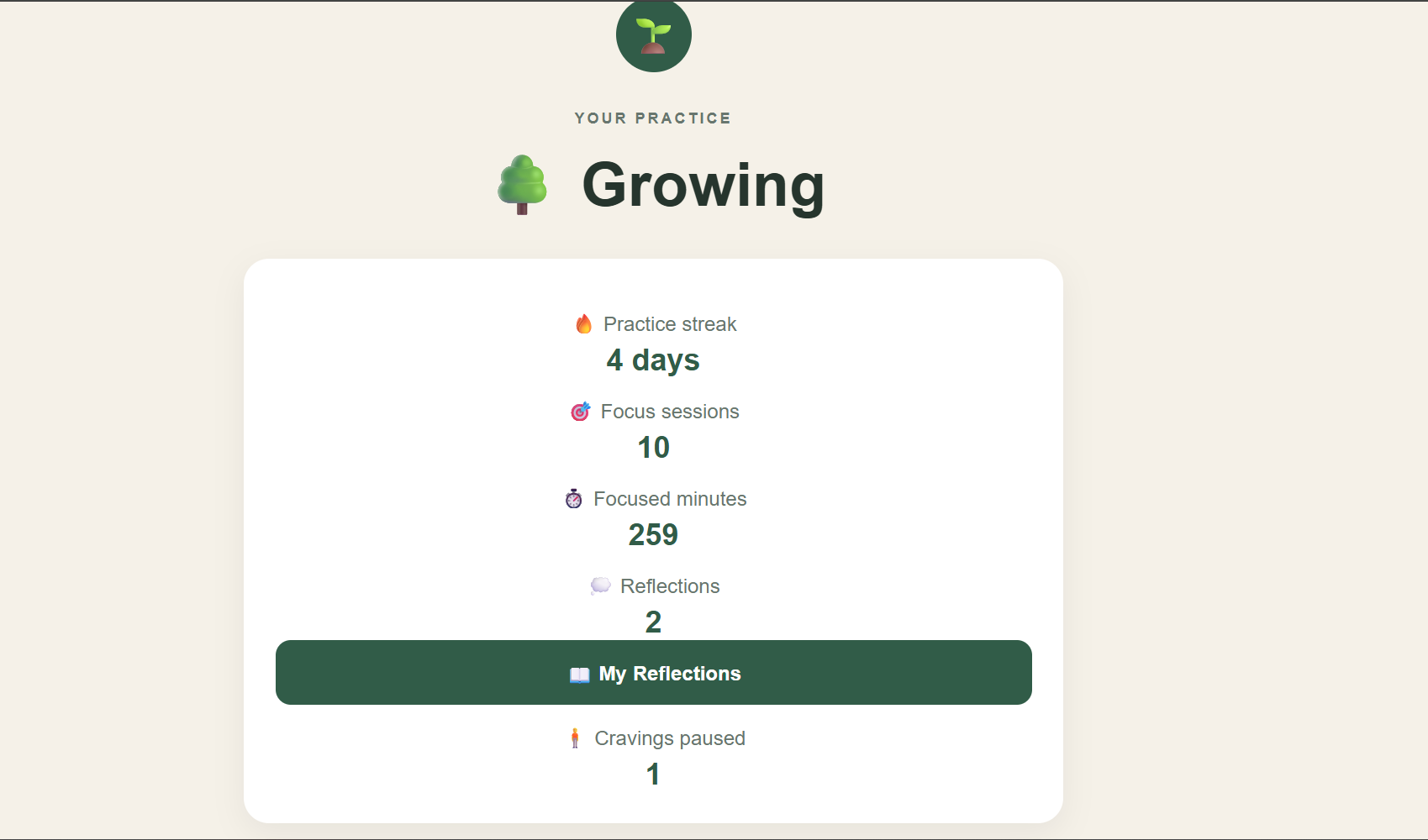
Users can begin focused sessions with a clear intention, take meaningful breaks, pause moments of impulsive scrolling through Craving Mode, and record personal reflections in a private reflection journal. Their practice is tracked through sessions, focused minutes, streaks, achievements, and other progress indicators.
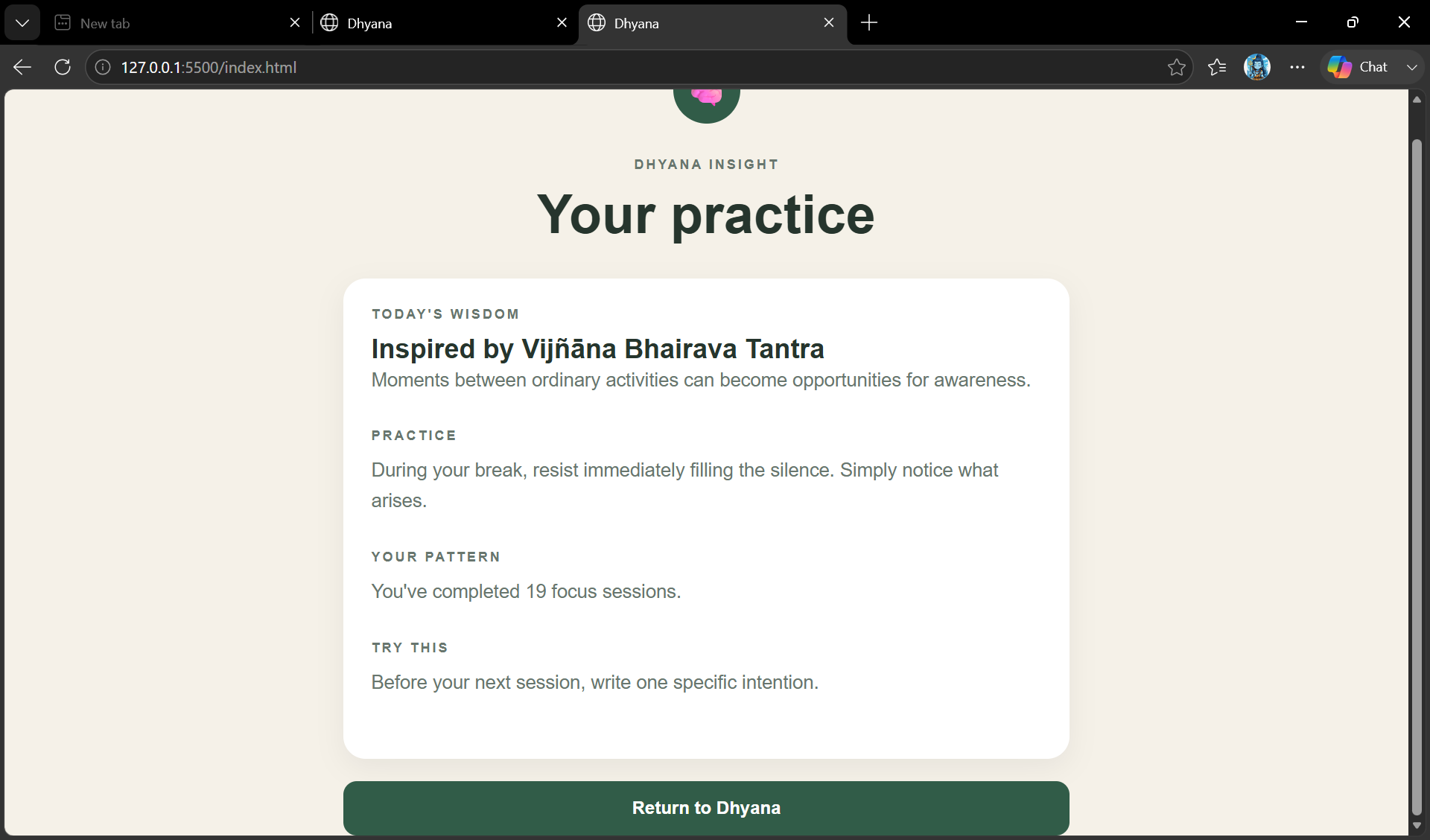
Dhyana also provides personalized AI insights based on the user's practice. These insights encourage self-awareness and practical change, while drawing inspiration from the Bhagavad Gita and Vijñāna Bhairava Tantra. Rather than presenting spirituality as theory, Dhyana turns these principles into small, practical moments of awareness that can be applied in everyday digital life.
The goal is not to make people reject technology, but to help them use technology consciously and return their attention to what truly matters.
How we built it
We built Dhyana as a lightweight web application using HTML, CSS, and JavaScript, with localStorage for saving user practice data, focus sessions, achievements, and personal reflections.
The frontend is deployed through GitHub Pages. For personalized AI insights, we built a Node.js backend and connected it to the Gemini API, with the backend deployed separately through Vercel.
The AI analyzes the user's practice patterns and generates personalized reflections and practical suggestions. We also created a curated wisdom layer inspired by the Bhagavad Gita and Vijñāna Bhairava Tantra, allowing Dhyana to connect modern digital wellbeing with traditional practices of awareness and attention.
We focused on keeping the system simple, lightweight, accessible, and free to use, while making the experience feel like a daily practice rather than another productivity tool.
Challenges we ran into
One of our biggest challenges was connecting the AI backend with the frontend while keeping the application simple and free to use. We also faced deployment and compatibility issues between local development and GitHub Pages, which required debugging JavaScript errors and API connections.
Another challenge was designing the AI so that it provides personalized and meaningful reflections rather than generic motivational messages. We also had to carefully integrate inspiration from Indian scriptures without misrepresenting or inventing scriptural teachings.
Finally, we focused on keeping Dhyana lightweight while still combining focus sessions, craving awareness, reflections, progress tracking, achievements, and AI insights into one coherent experience.
Accomplishments that we're proud of
We are proud to have built a fully functional AI-powered digital wellbeing platform from the ground up and successfully deployed it as a working web application.
We created an experience that goes beyond traditional screen-time tracking by combining focus sessions, craving awareness, conscious breaks, reflection journaling, achievements, practice tracking, and personalized AI insights.
We are especially proud of connecting modern AI with timeless ideas from the Bhagavad Gita and Vijñāna Bhairava Tantra, transforming principles of awareness and attention into practical daily experiences.
We also successfully built and connected the frontend, backend, AI service, and deployment infrastructure, while keeping the product lightweight and accessible.
Most importantly, we are proud that Dhyana is not just another productivity tool—it is an attempt to help people build awareness in their everyday relationship with technology.
What we learned
Through building Dhyana, we learned how to turn an idea into a working product by connecting frontend development, backend services, AI integration, data storage, and deployment.
We learned that building AI features is not just about connecting an API—it is about designing the AI to provide useful, contextual, and responsible responses. We also learned the importance of debugging, testing across different browsers, and solving real deployment issues.
Most importantly, we learned that technology can be designed not only to increase productivity, but also to encourage awareness, reflection, and healthier habits.
Dhyana taught us that a successful product is not necessarily the one with the most features, but the one that solves a meaningful problem in a simple and human-centered way.
What's next for Dhyana focus app with ai integration
The next step for Dhyana is to make its AI more deeply personalized and context-aware. Instead of only analyzing basic practice patterns, the AI can learn from a user's focus sessions, cravings, breaks, and reflections to provide meaningful guidance over time.
We plan to expand Dhyana with smarter AI reflections, personalized practices inspired by the Bhagavad Gita and Vijñāna Bhairava Tantra, long-term reflection insights, and adaptive focus routines.
We also want to explore privacy-first analytics, optional mobile support, community challenges, and integrations with digital wellbeing tools.
Our long-term vision is for Dhyana to become a personal AI companion for conscious technology use—helping people not just spend less time on screens, but develop greater awareness of how they use their attention.
The future of Dhyana is technology that helps you return to yourself.


Log in or sign up for Devpost to join the conversation.