Inspiration
We were inspired by how easily technology can distract us from what truly matters. We often open our phones intending to do one small thing, only to lose time scrolling without purpose. Most digital wellbeing tools focus on limiting screen time, but we wanted to explore a more thoughtful approach: helping people become aware of their choices and return to what matters.
Inspired by mindfulness and the idea of bringing a wandering mind back to the present, we created Dhyana—a digital wellbeing companion designed to make intentional technology use feel simple, positive, and achievable.
What it does
Dhyana is a digital wellbeing companion that helps people use technology more intentionally and build healthier focus habits.
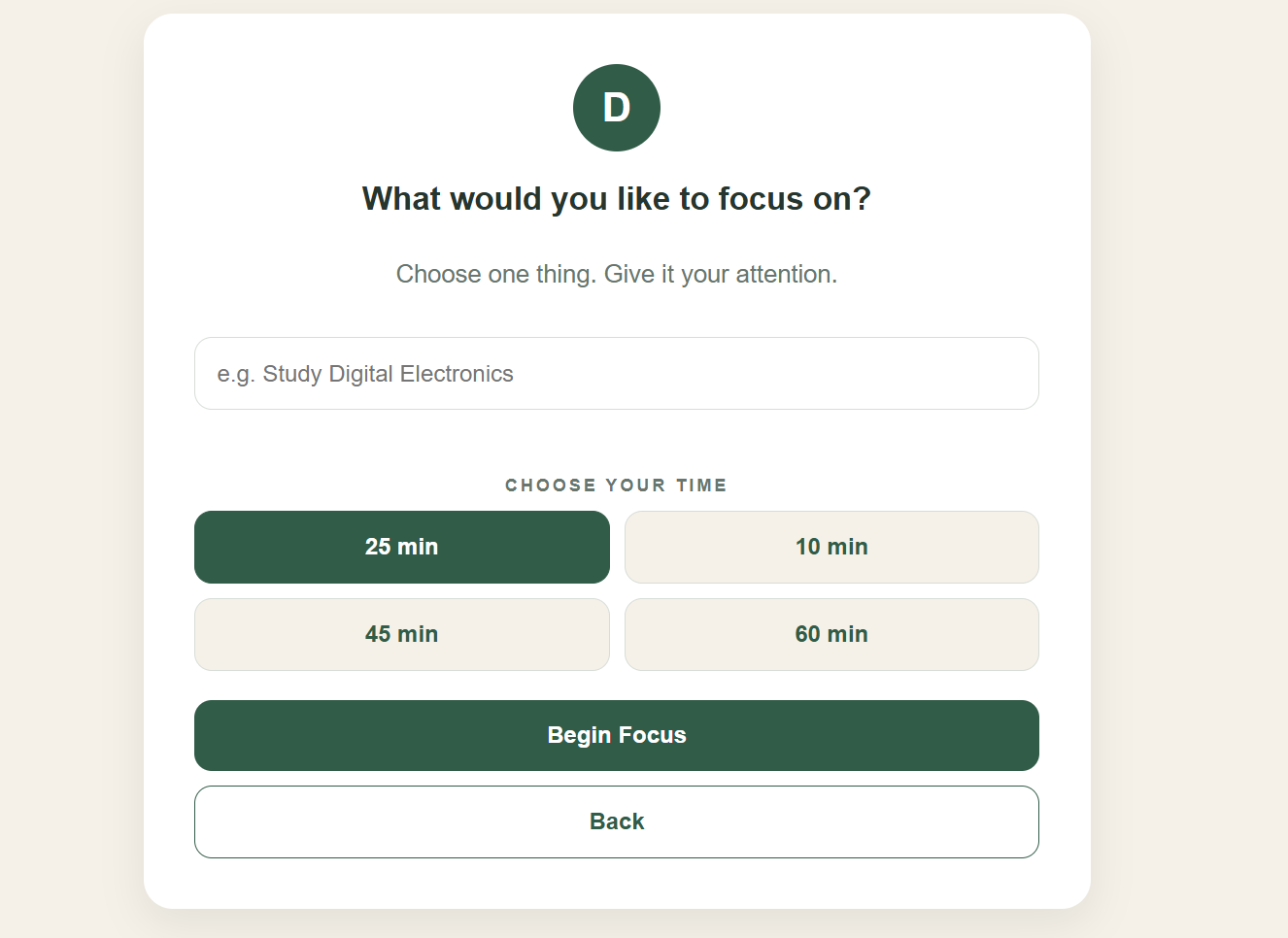
✨ Begin Focus: Set a goal and use a focus timer to dedicate time to studying, working, or personal activities.
🌱 Good Things Jar: Save positive moments and revisit them whenever you need a reminder of the good things in your life.
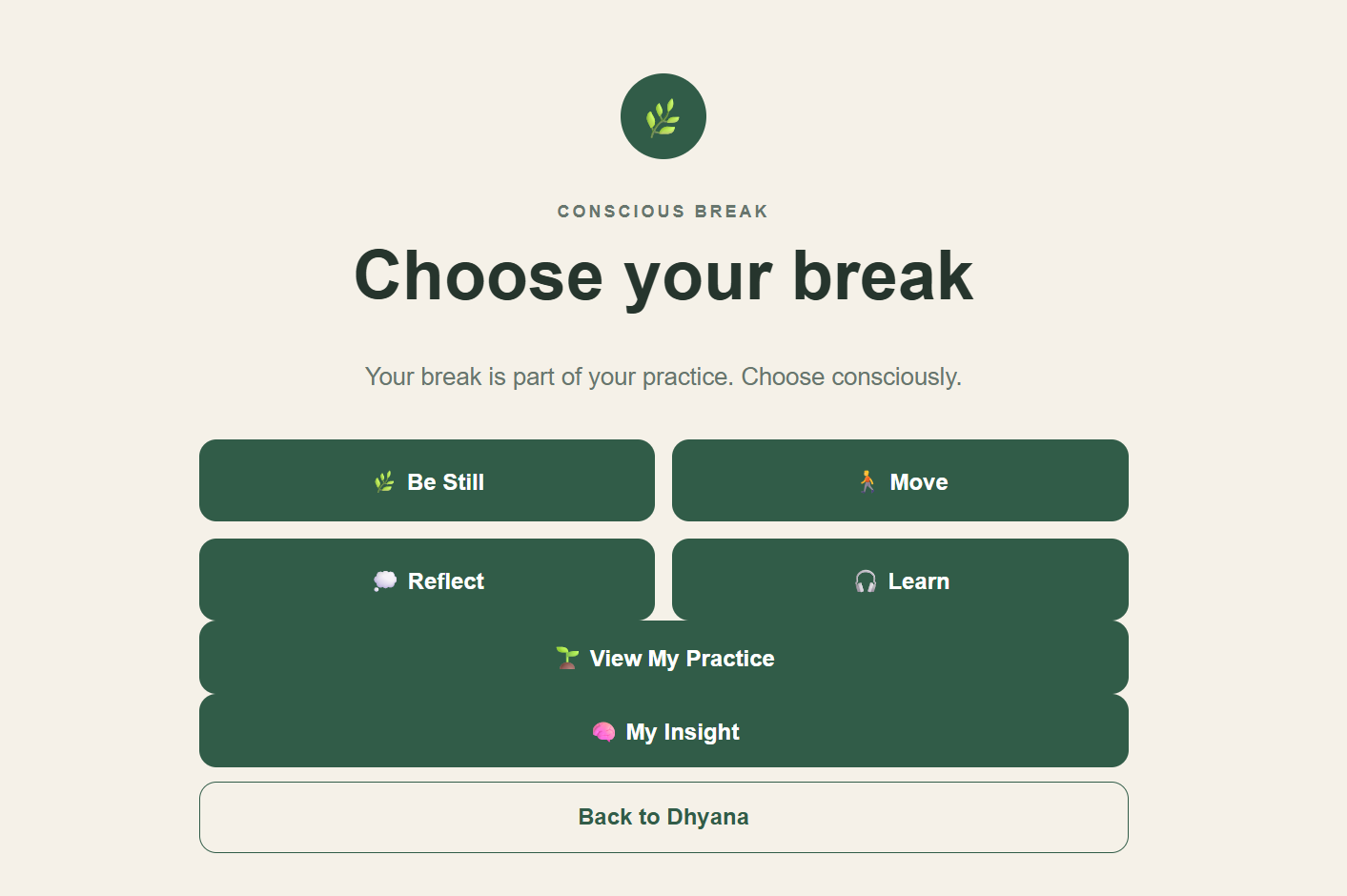
🧘 Intentional Breaks: Choose mindful activities such as being still, moving, reflecting, or learning instead of automatically reaching for your phone.
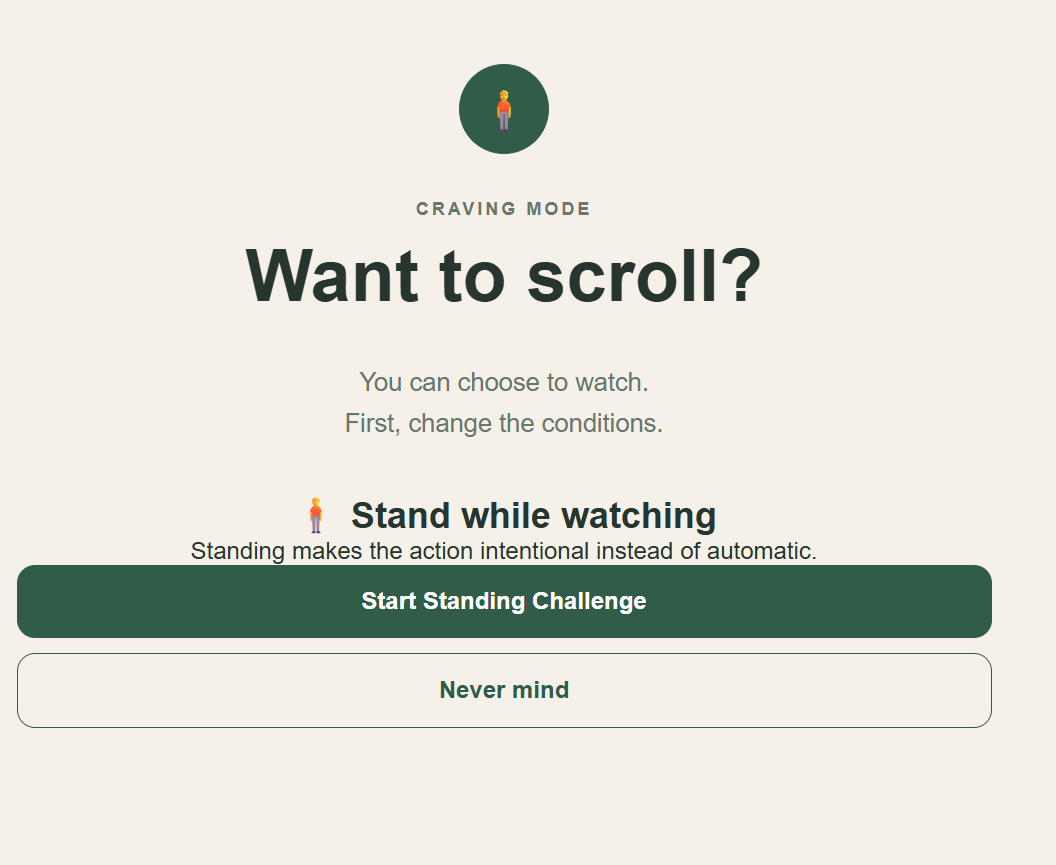
💭 Pause Before Scrolling: Create a moment of awareness when you feel the urge to scroll, helping you make a more conscious choice about how to spend your time.
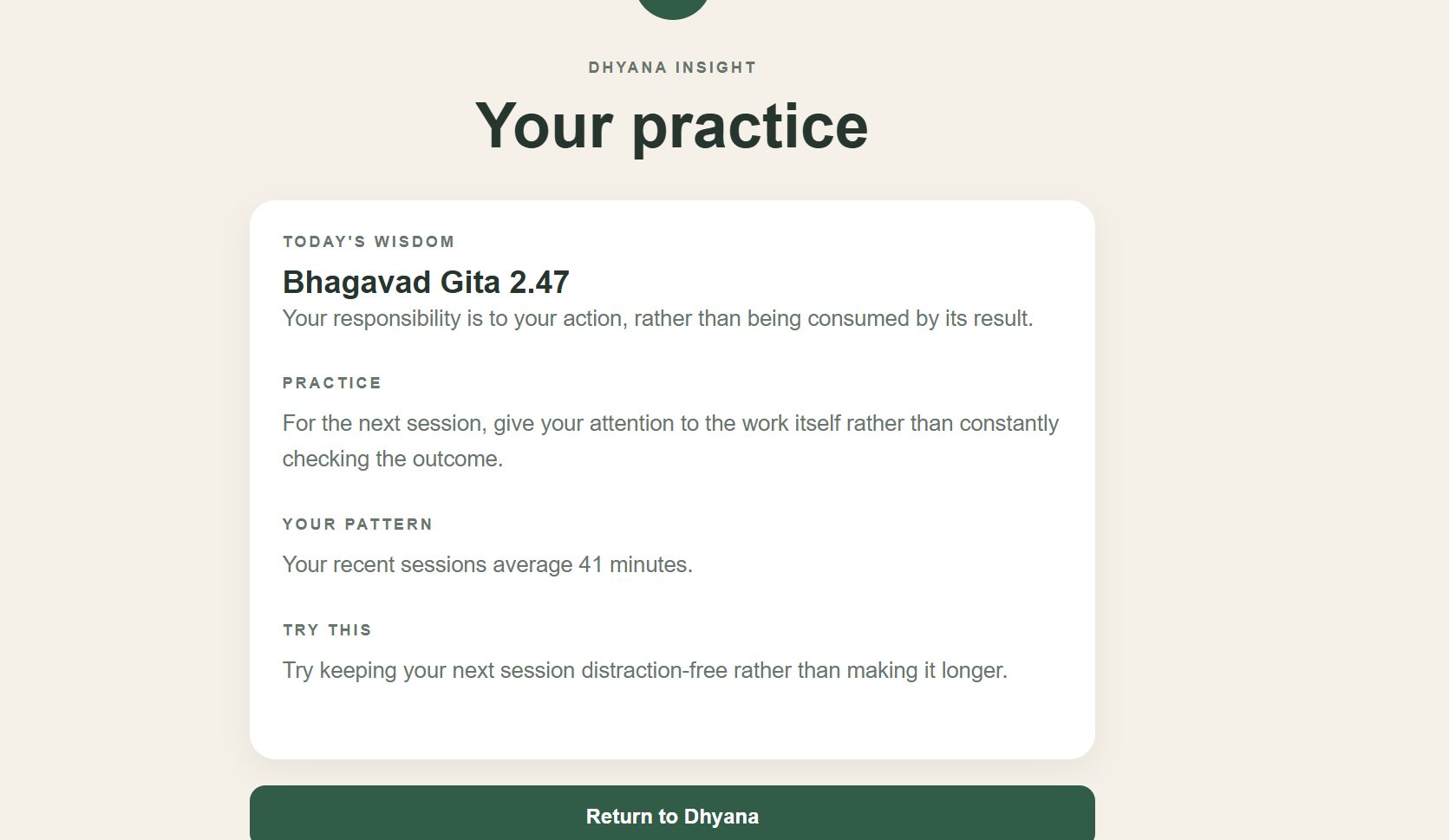
📊 Track Your Growth: View your focus sessions and consistency to recognise your progress over time.
Dhyana goes beyond simply reducing screen time. It encourages users to develop awareness, practise intentional action, and return to what matters—one small choice at a time.
How we built it
We built Dhyana as a web application focused on simplicity, accessibility, and intentional technology use.
We designed the interface around a calming, distraction-free experience, making it easy for users to start a focus session, record positive moments, take intentional breaks, and reflect on their progress.
The application uses interactive components to support focus sessions and mindful activities. Browser local storage helps preserve user data, such as saved positive moments and practice history, without requiring users to create an account.
We prioritised a simple user experience with clear navigation and minimal friction. Rather than overwhelming users with notifications and statistics, Dhyana encourages small, meaningful actions that help them reconnect with what matters.
Our main design principle was to make intentional choices easier—not to add another source of digital distraction.
Challenges we ran into
One of our biggest challenges was designing a digital wellbeing tool that helps users spend less time on mindless scrolling without becoming another source of digital distraction.
We had to think carefully about keeping the interface simple while offering meaningful features such as focus sessions, intentional breaks, gratitude journaling, and progress tracking.
Another challenge was making the experience feel encouraging rather than restrictive. Instead of making users feel guilty about distractions, we wanted Dhyana to help them pause, reflect, and gently return to their goals.
We also focused on keeping the experience accessible and reducing friction by allowing users to engage with the core features without creating an account.
These challenges taught us that good design is not just about adding features—it is about understanding people's needs and making meaningful actions easier.
Accomplishments that we're proud of
We are proud to have transformed a simple idea into Dhyana, a digital wellbeing companion built around a meaningful goal: helping people reconnect with what matters.
One of our biggest accomplishments was bringing together features such as focus sessions, intentional breaks, gratitude journaling, and progress tracking into one simple experience.
We are particularly proud of our human-centred approach. Instead of focusing only on screen-time limits, Dhyana encourages users to build awareness, make intentional choices, and develop healthier relationships with technology.
We also wanted to make mindful habits accessible by keeping the experience simple and reducing unnecessary barriers to getting started.
Most importantly, we are proud to have created a project that reflects our belief that technology should help people live more intentionally, not distract them from life.
What we learned
Building Dhyana taught us that creating a meaningful digital product requires more than writing code. It requires understanding people's habits, challenges, and the experiences that can help them make better choices.
We learned the importance of human-centred design, simplicity, and reducing friction. A digital wellbeing tool should not overwhelm users with features or make them feel guilty when they lose focus. Instead, it should gently encourage them to pause, reflect, and begin again.
We also learned that small design decisions can make a significant difference in how people interact with an application. Clear navigation, accessible features, and a distraction-free interface can make healthy habits easier to practise.
Most importantly, we learned that technology does not always need to demand more of our attention. Sometimes, the best technology helps us give our attention back to what truly matters.
What's next for Dhyana focus app
Our vision for Dhyana is to grow it into a personal digital wellbeing companion that helps people build a more intentional relationship with technology.
Next, we want to improve the user experience, introduce more personalised insights into focus habits, and make progress tracking more meaningful. We also hope to develop an AI-powered reflection feature that offers thoughtful, context-aware guidance based on users' goals and experiences.
We plan to expand the Good Things Jar, introduce gentle habit-building journeys, and explore ways to help users recognise their progress without becoming obsessed with productivity metrics.
In the long term, we want Dhyana to go beyond screen-time management and help people cultivate attention, gratitude, and self-awareness in everyday life.
Our goal remains simple: help people spend less time on autopilot and more time on what truly matters.
Built With
- app
- css3
- design
- html5
- javascript
- localstorage
- responsive
- ui/ux
- web


Log in or sign up for Devpost to join the conversation.