-
-
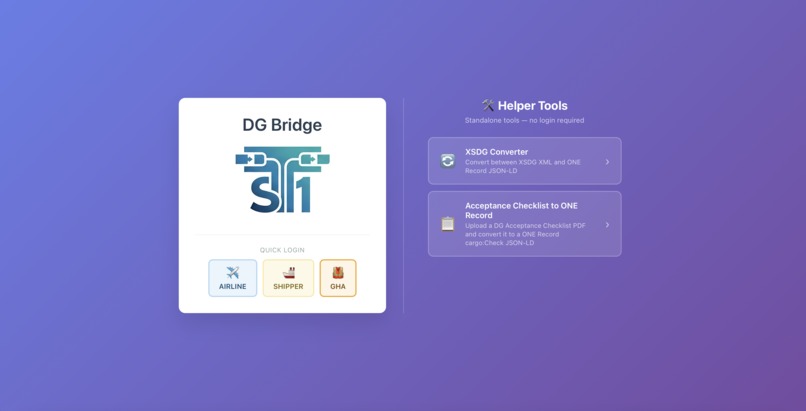
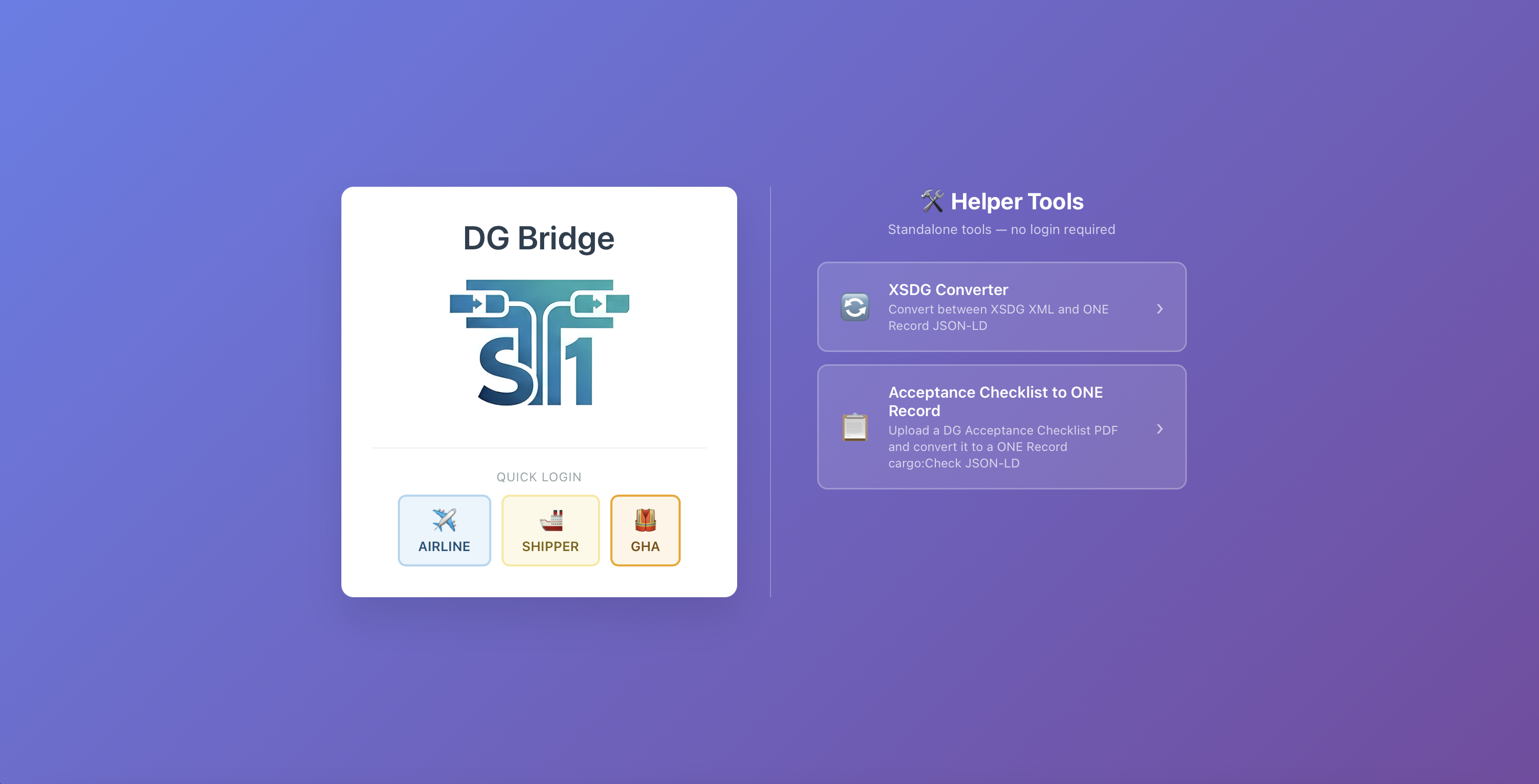
DG Bridge
-
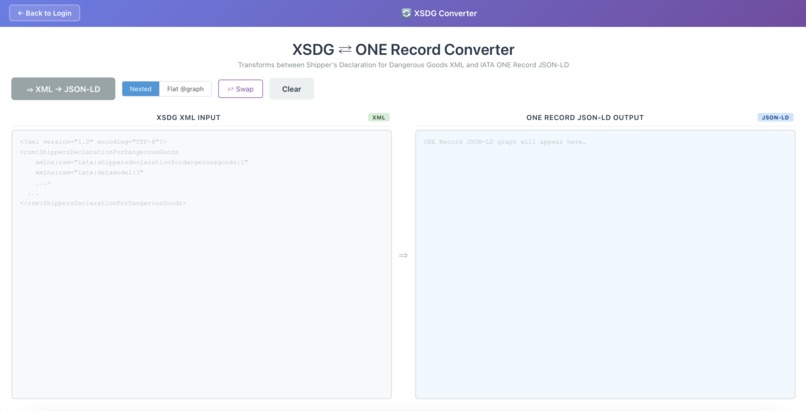
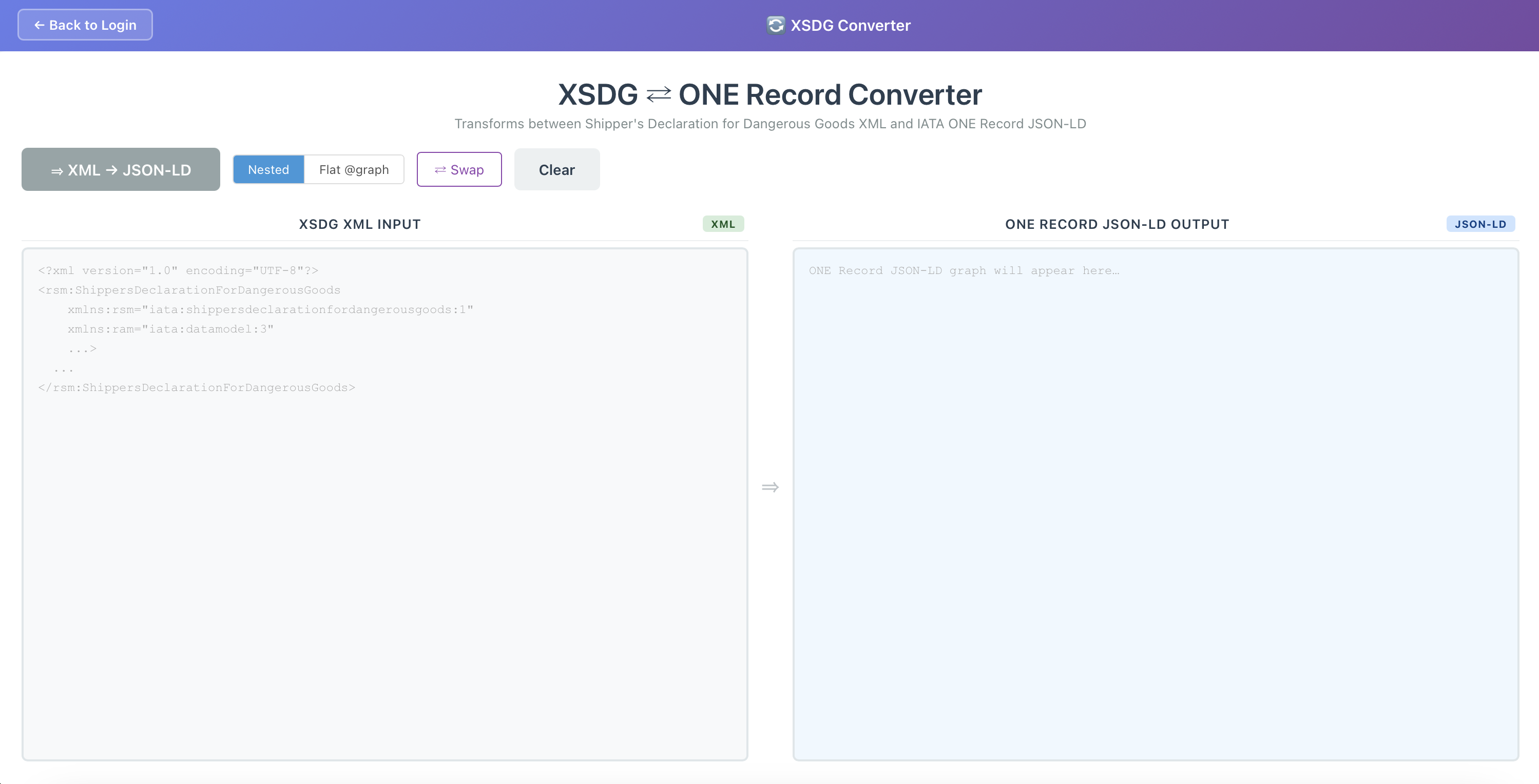
XSDG Converter
-
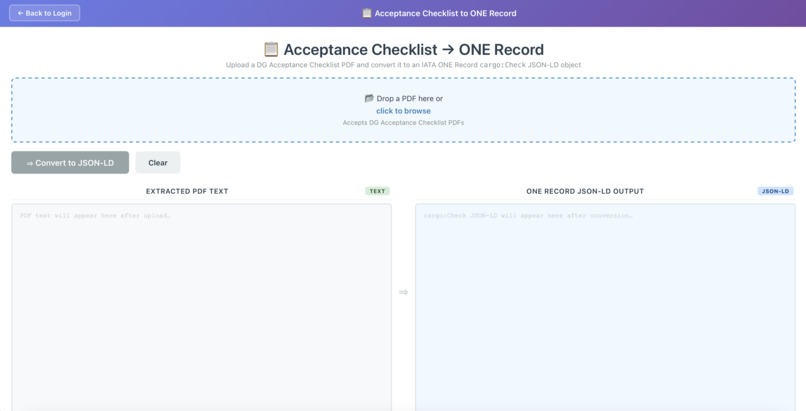
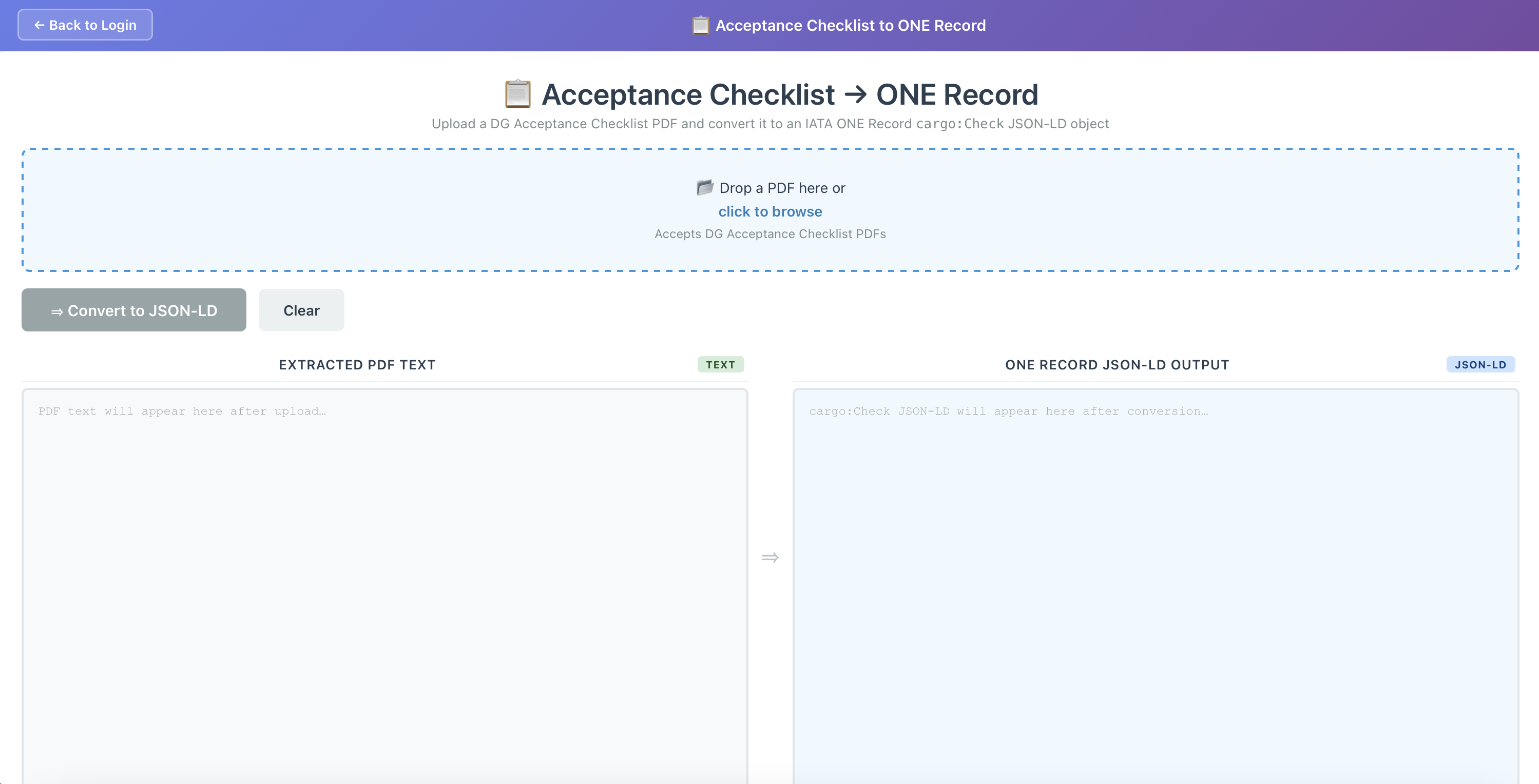
Acceptance Checklist to 1R
-
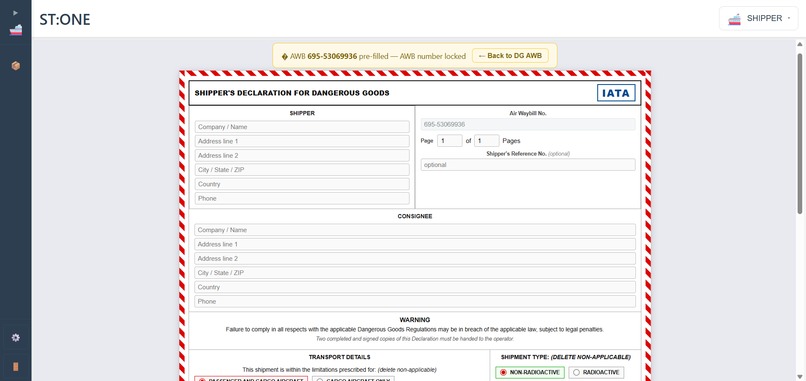
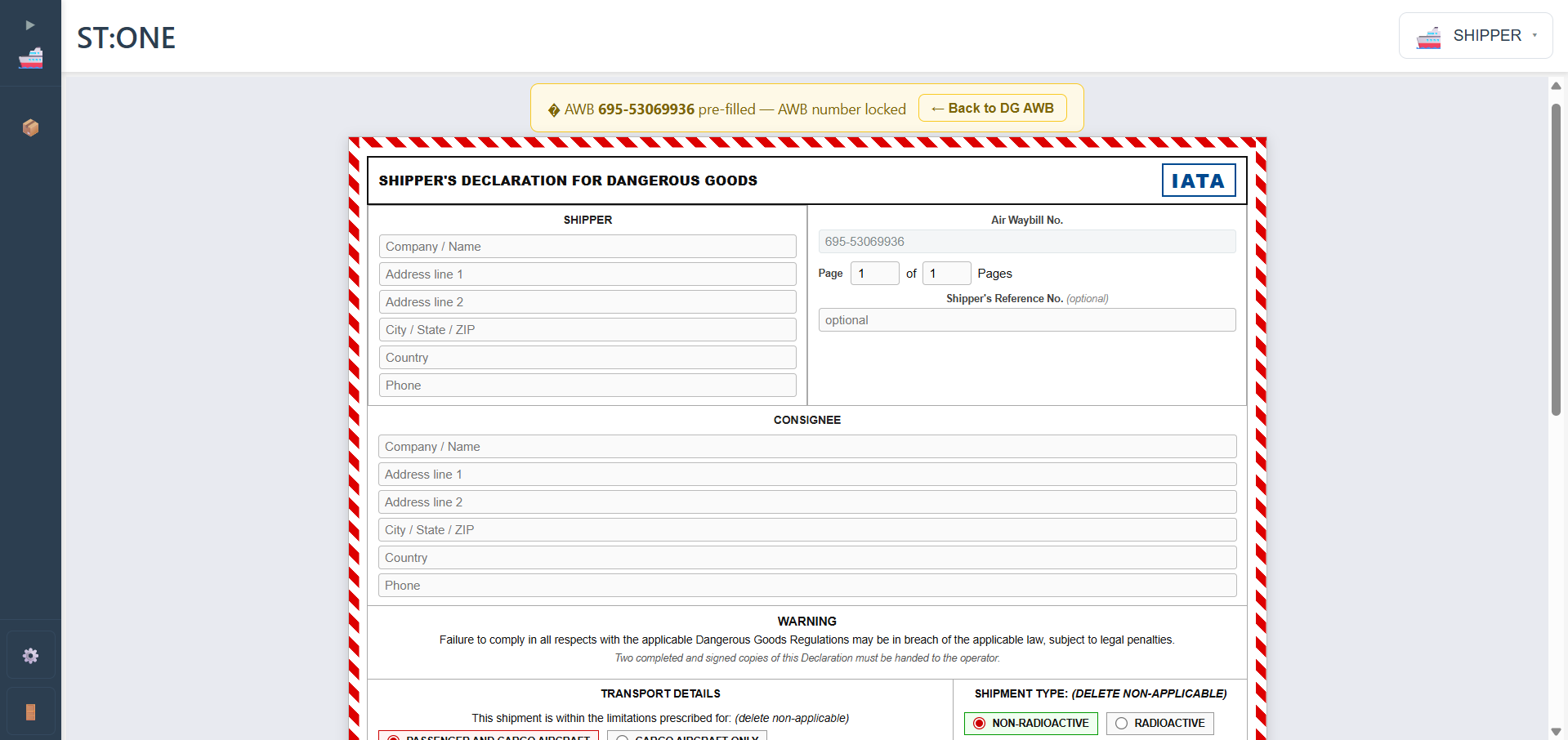
Create DGD part 1
-
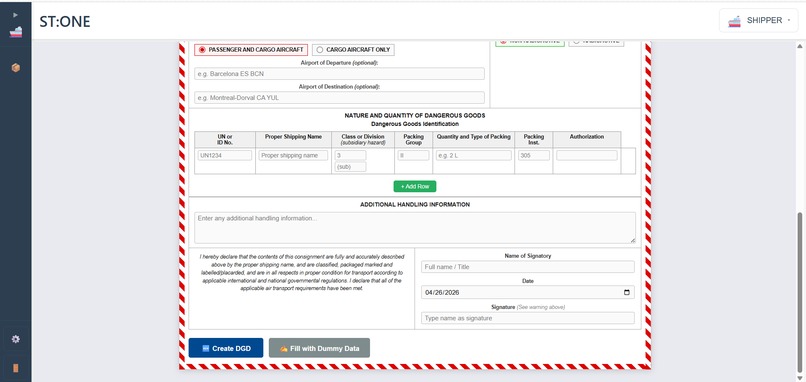
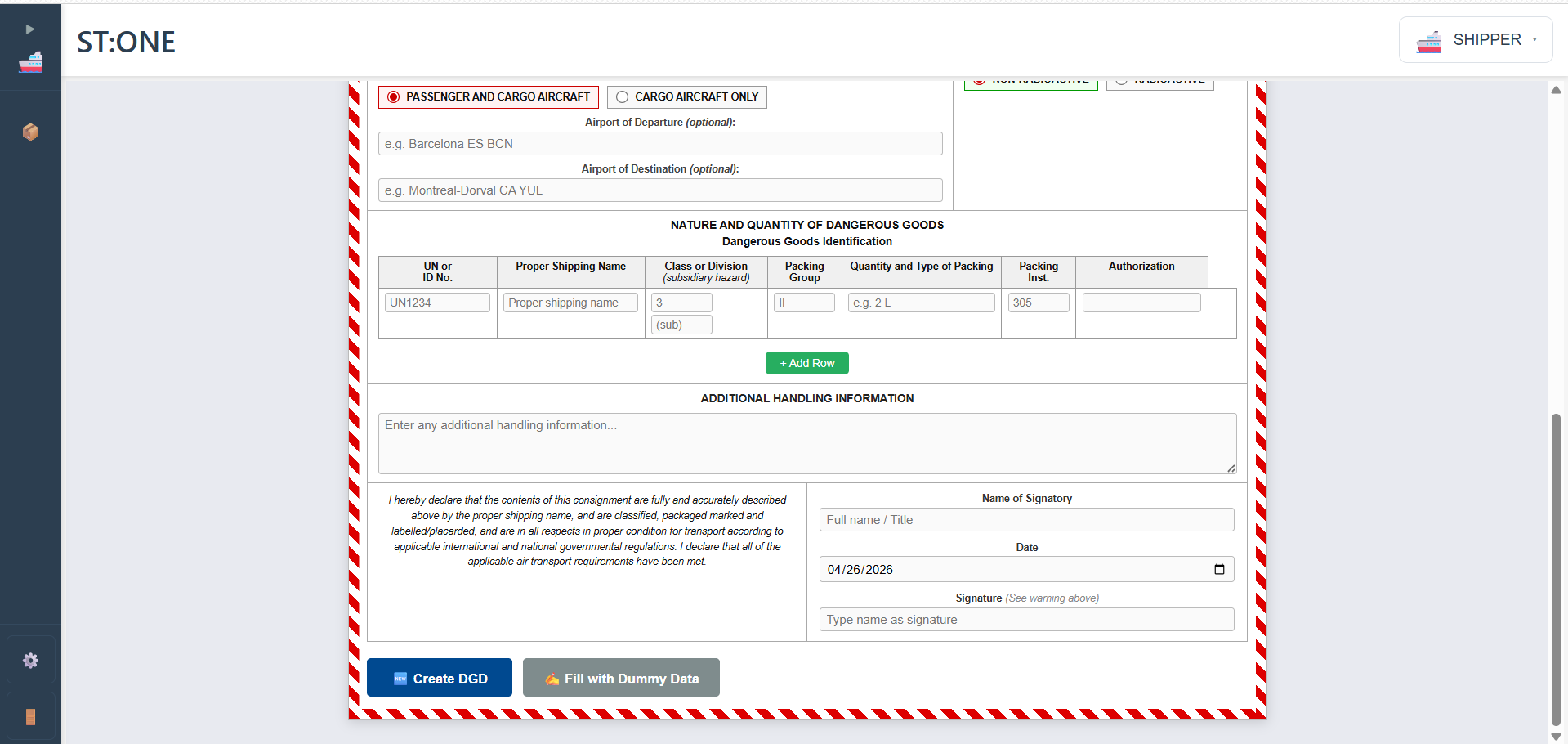
Create DGD part 2
Inspiration
Dangerous Goods (DG) data standards like e-DGD (PDF format), XSDG (XML), and ONE Record exist, yet the industry lacks an operational, open, and reusable converter that seamlessly connects these formats. This gap forces organizations to build custom mappings, slowing adoption and fragmenting data across the supply chain. Despite tools like DG AutoCheck, DG declarations are still mostly exchanged as PDFs or paper documents, embedded in disconnected, document-centric workflows. Without a shared, real-time data layer, airlines, ground handlers, and regulators redundantly re-check the same information. The core challenge is interoperability—not regulation.
What it does
DG Bridge converts Dangerous Goods Declaration data from the XSDG format into a fully compliant ONE Record JSON-LD structure, publishing it directly to a ONE Record server. This transforms DG declarations into shared, real-time digital objects accessible to all authorized stakeholders—eliminating re-keying and duplication. From this single source of truth, DG AutoCheck can be triggered via APIs, validations performed, and acceptance results written back to the same record (from PDF to ONE Record). This creates a closed, auditable digital loop that replaces document hopping with interoperable data exchange. What was fragmented becomes structured; what was manual becomes automated; what was siloed becomes shared.
How we built it
We developed an open-source XSDG-to-ONE Record JSON-LD converter as a reusable industry reference. Our end-to-end platform supports role-based workflows—allowing Airlines, Ground Handling Agents, Shippers, and Forwarders to collaborate on a single Air Waybill and its associated DG Declaration. The system automatically synchronizes data across roles, publishes structured data to a ONE Record server, and integrates DG AutoCheck validations triggered directly from ONE Record data. We leveraged existing open standards and APIs to ensure compatibility and scalability.
Challenges we ran into
There are some ambiguous areas on data mapping on both DGD and acceptance checklist. we proposed some new elements by considering the necessity in business perspective.
Accomplishments that we're proud of
• Delivering a fully operational, end-to-end workflow that tracks DG data from Air Waybill creation through DG Check completion, with real-time status updates.
• Creating an open, reusable converter that bridges fragmented industry standards into a unified digital format.
• Demonstrating seamless integration with DG AutoCheck, preserving existing validation tools while enabling modern, interoperable data exchange.
• Enabling role-based access and actions, reflecting real-world stakeholder responsibilities and improving collaboration.
What we learned
• A shared, real-time data layer (ONE Record) significantly reduces duplication and manual re-entry across stakeholders.
• Open-source, reusable converters can accelerate industry-wide standardization and reduce fragmentation. The converters also provide flexibility to use for legacy systems no matter they are not fully ONE recond ready by other role players.
• Leveraging existing open standards and APIs ensures scalability and compatibility with legacy systems.
What's next for DG Bridge
We will enhance the converter’s robustness by completing the non-core data mapping transformation and building dashboards for SLA monitoring for DG checking process by using ONE record data.


Log in or sign up for Devpost to join the conversation.