-
-
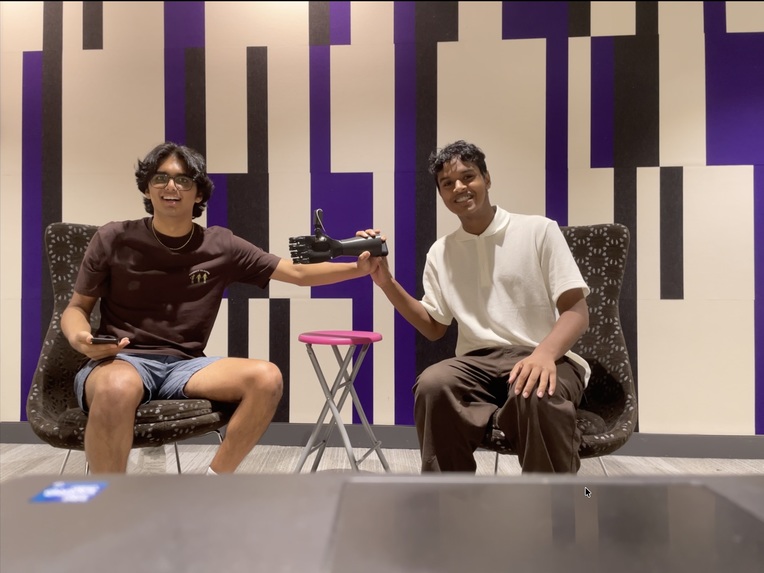
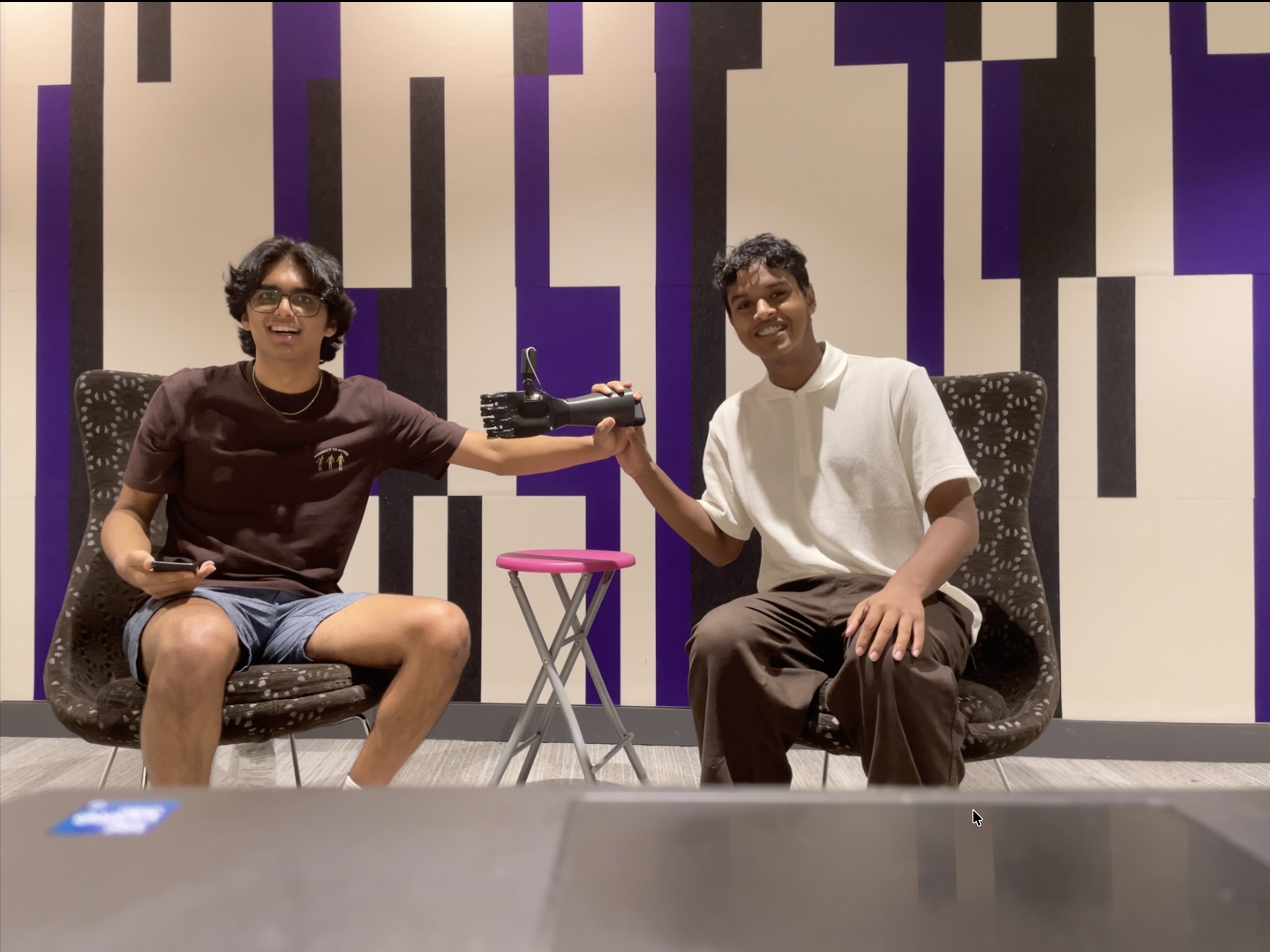
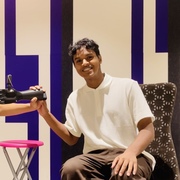
Team Photo
-
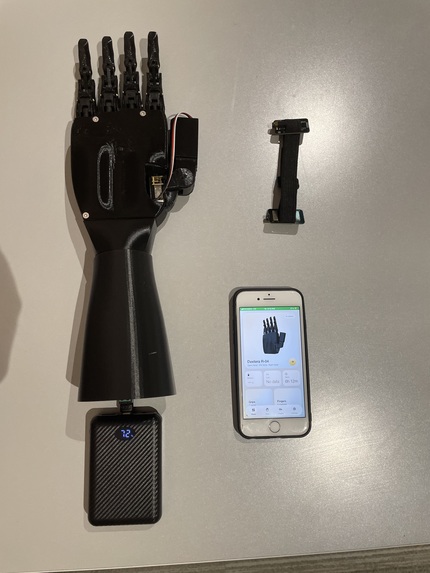
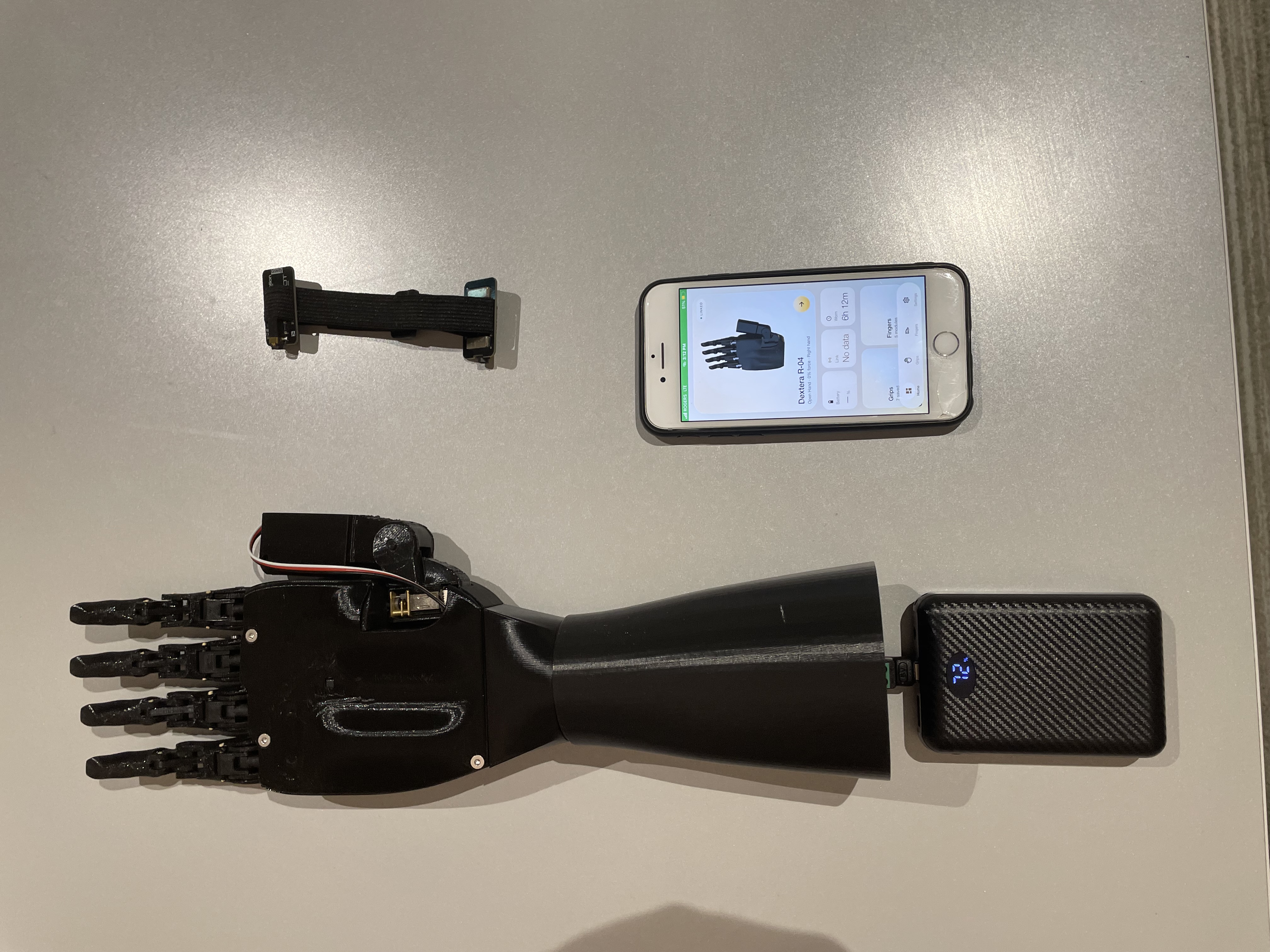
Full Apparatus
-
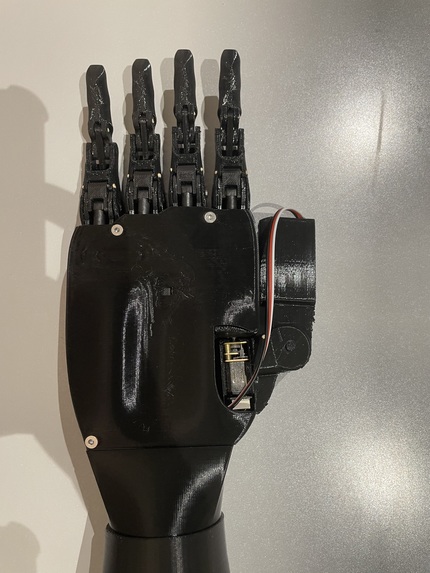
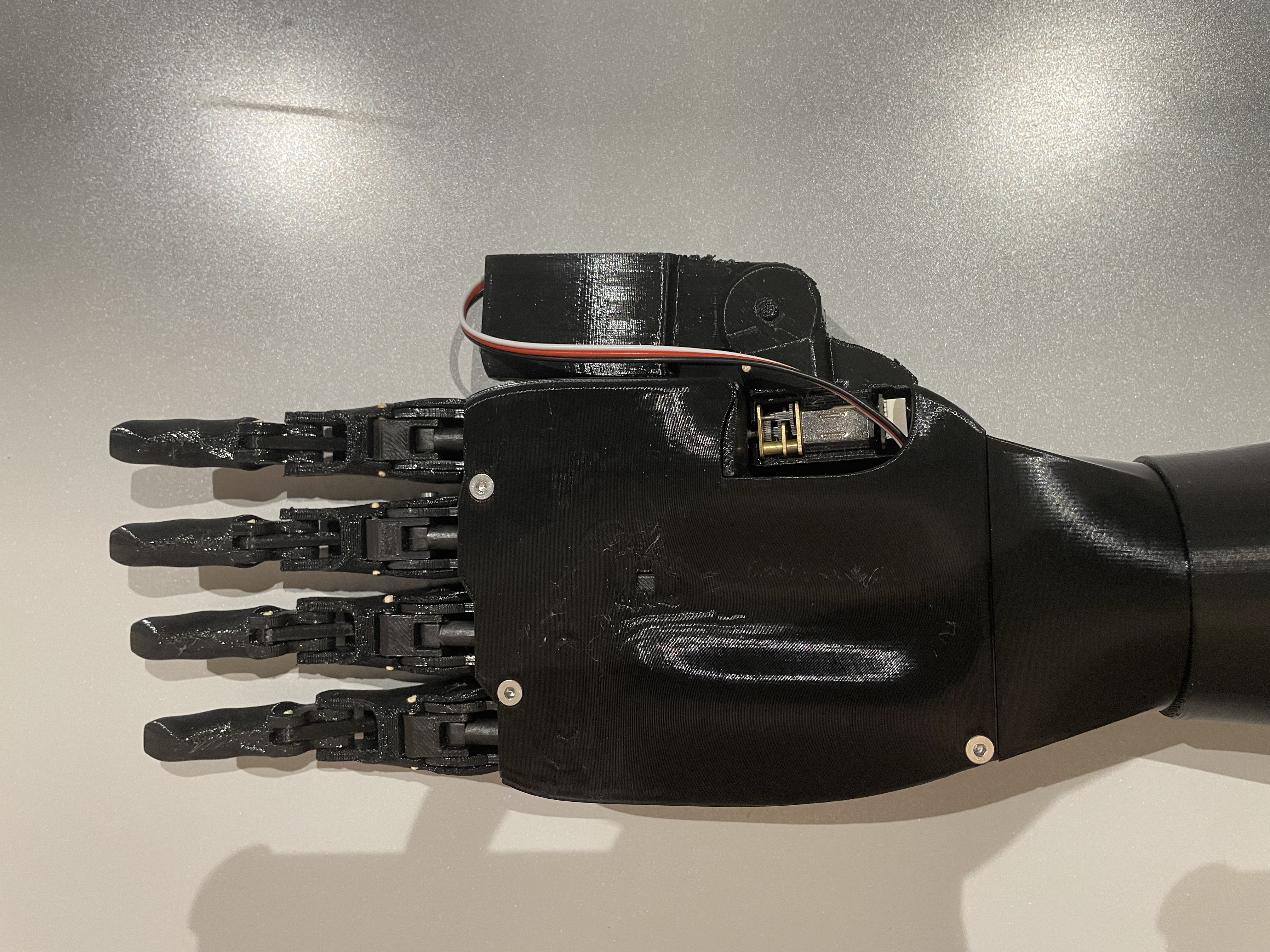
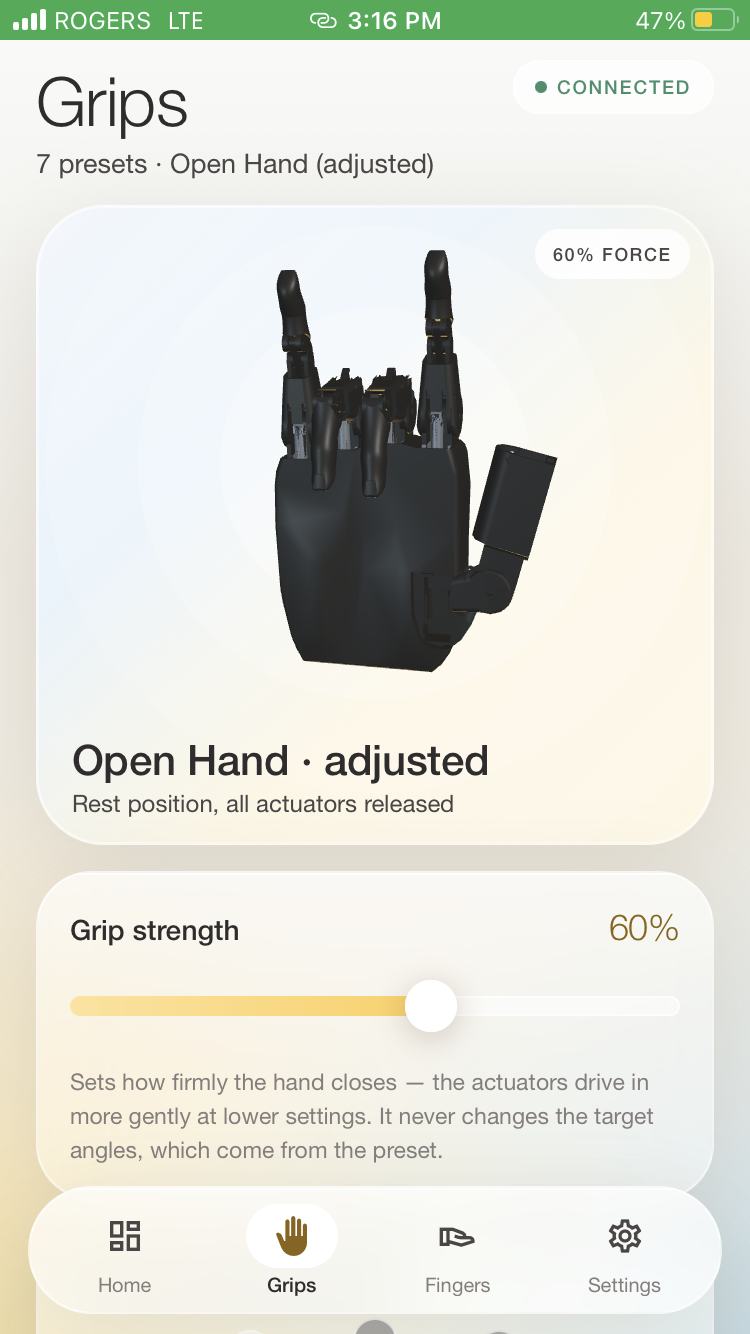
Open Hand
-
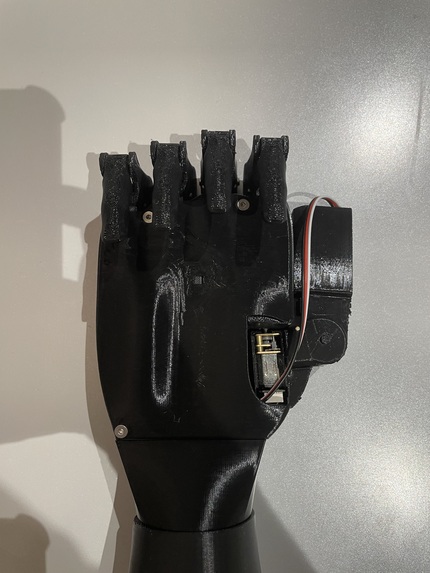
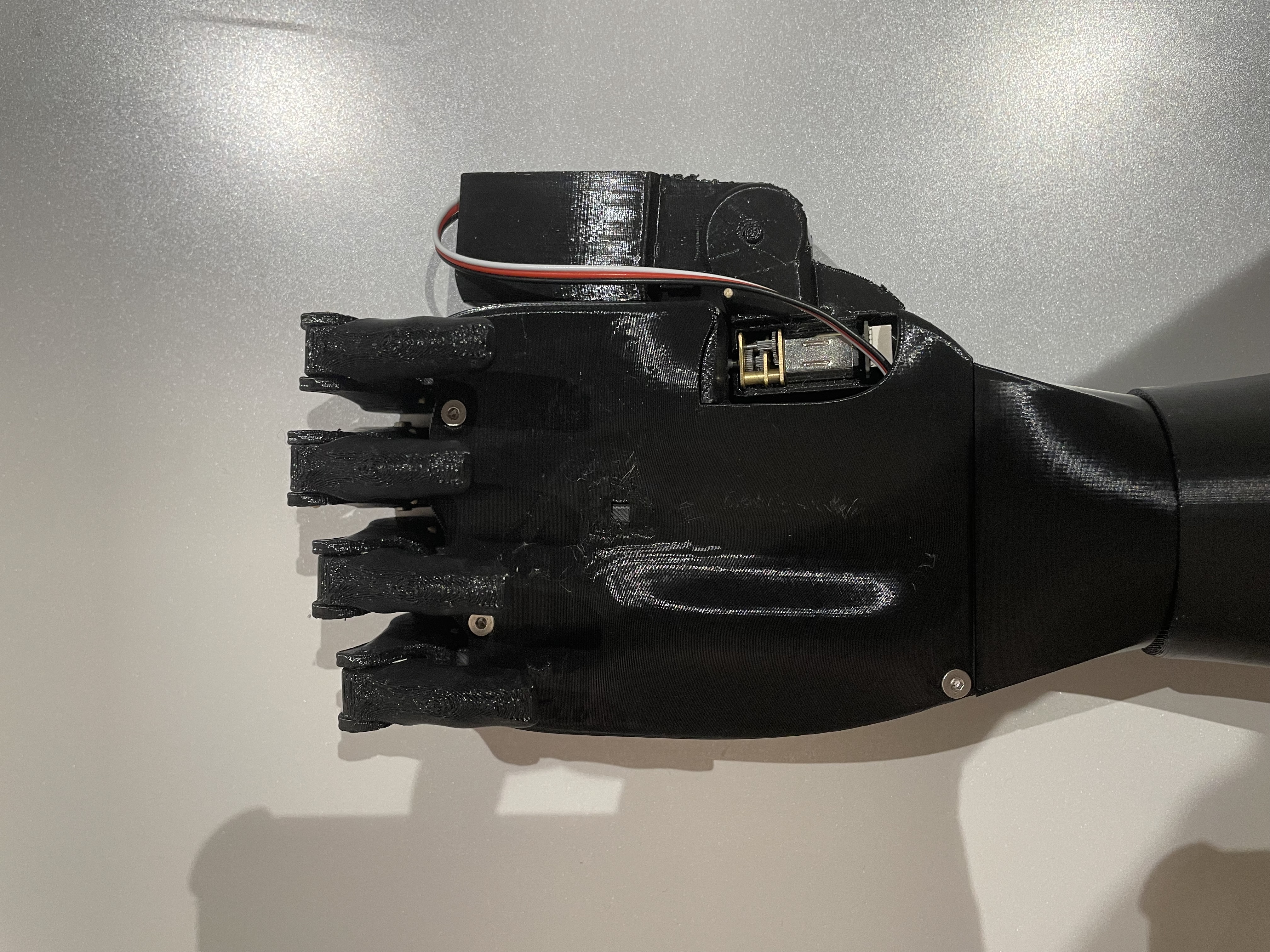
Closed Hand
-
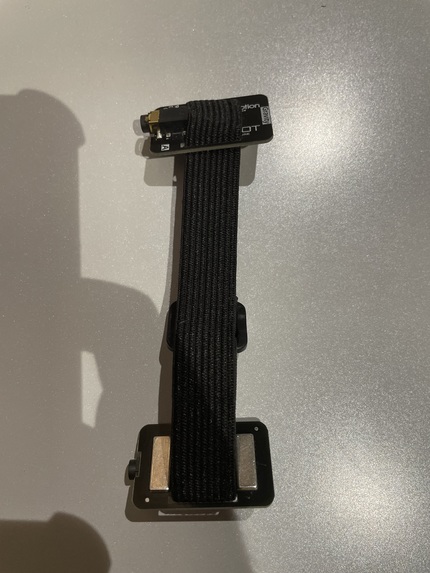
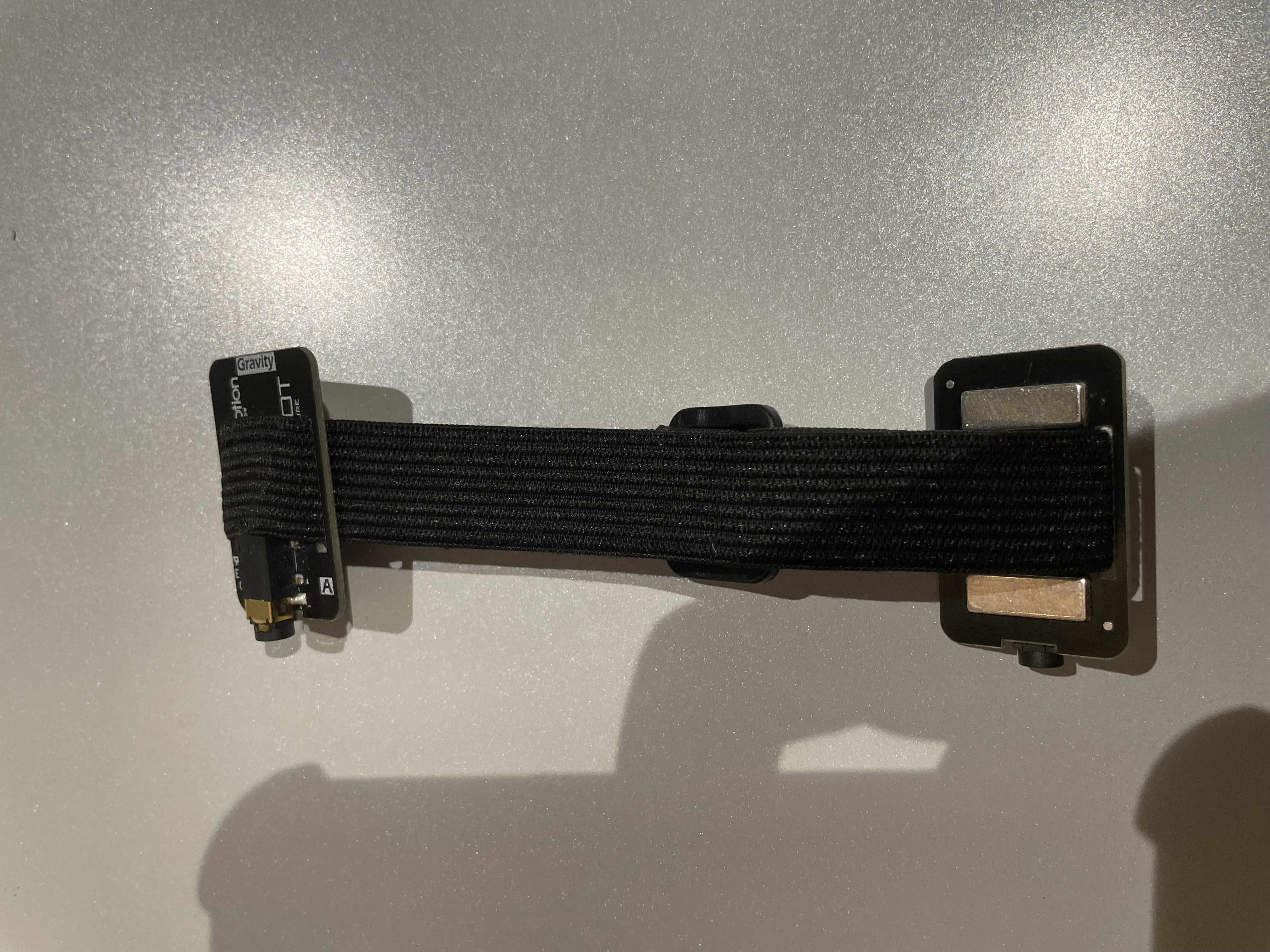
EMG Sensors
-
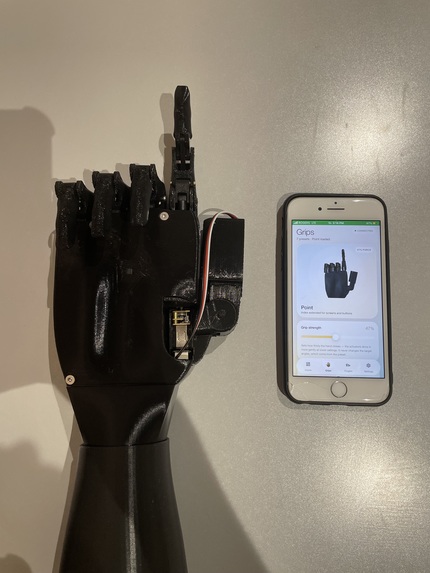
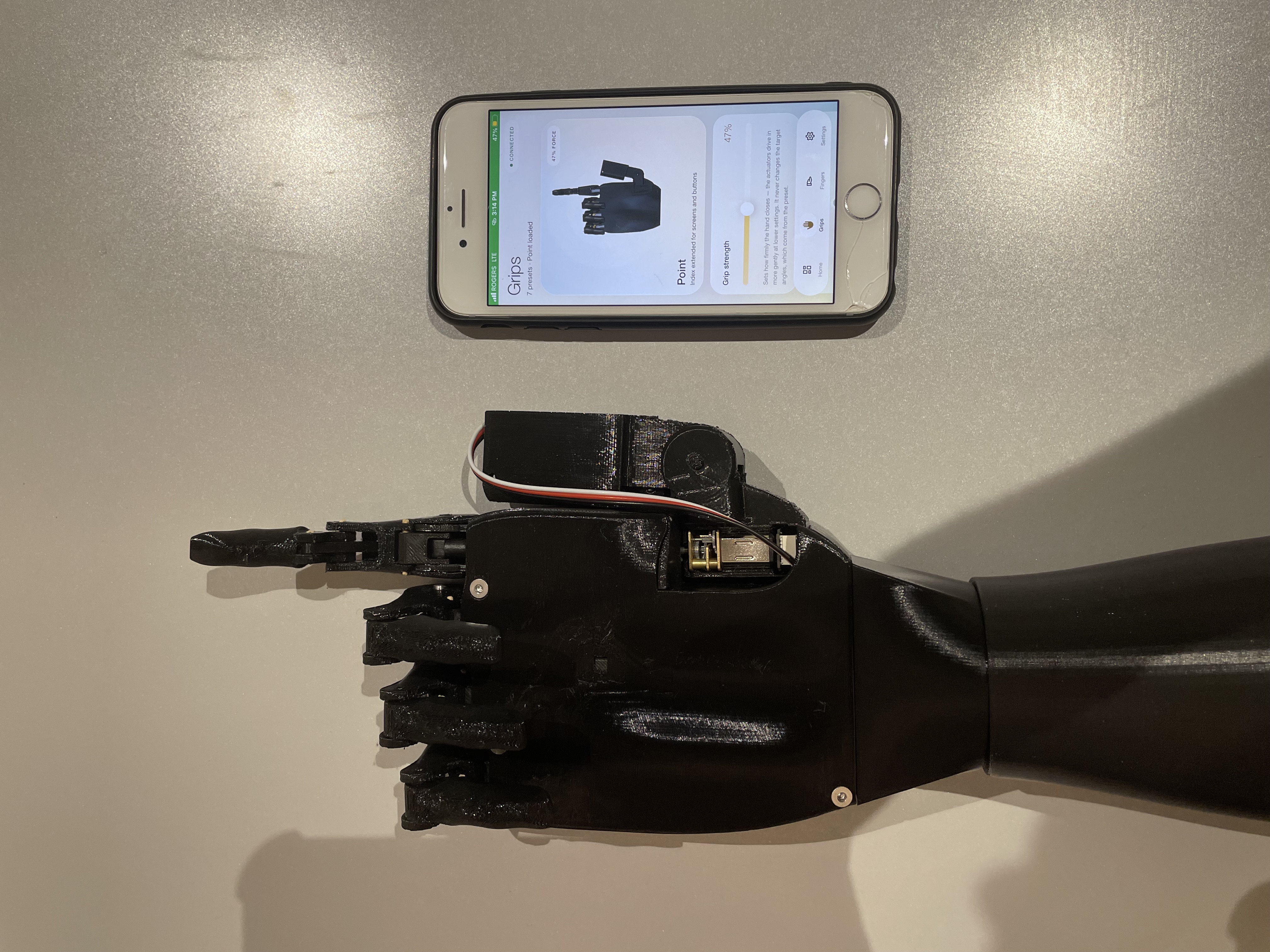
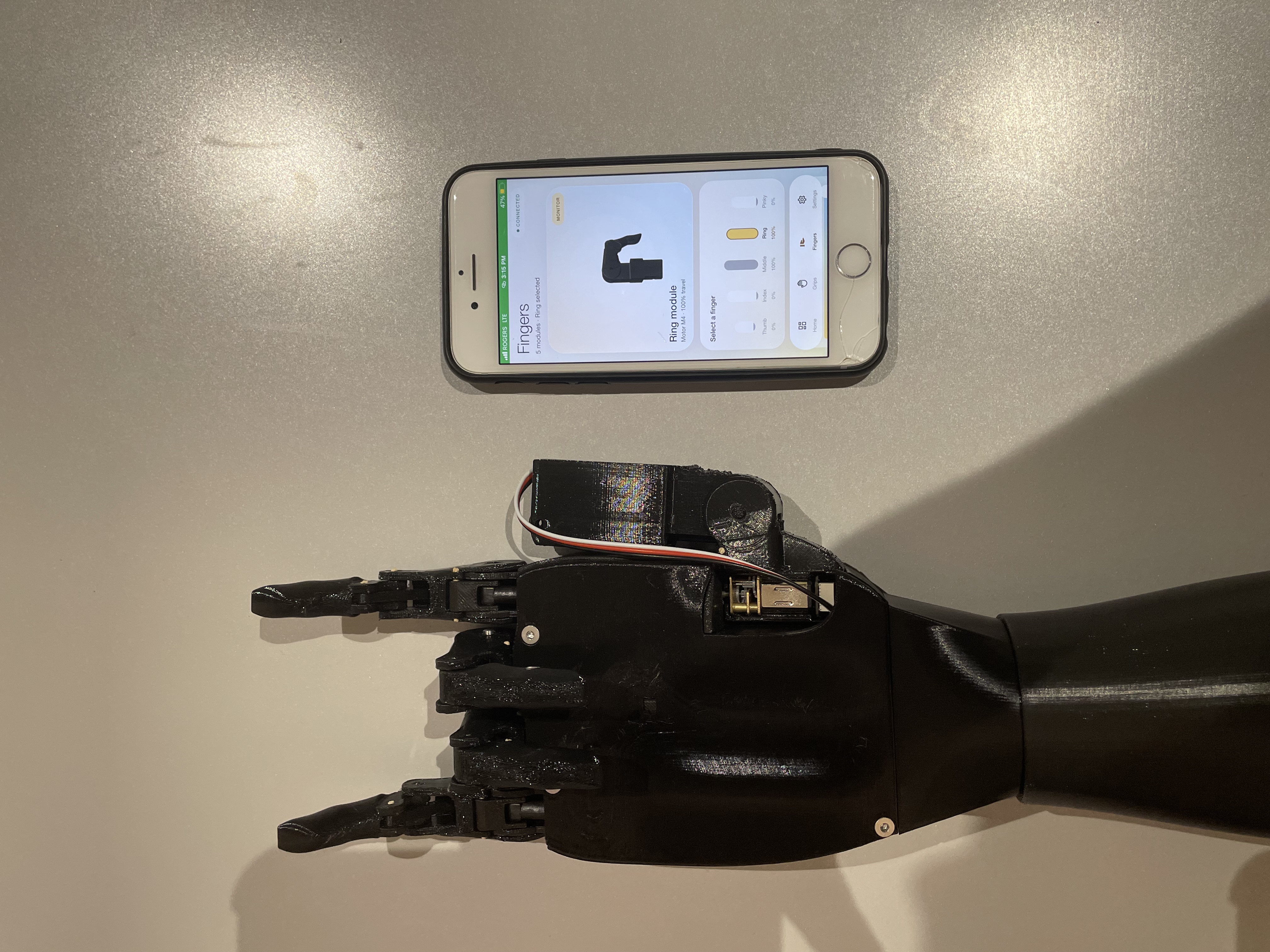
Point Grip
-
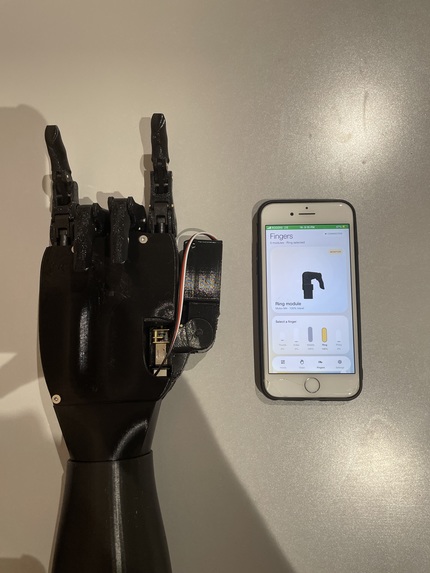
Spiderman Grip
-
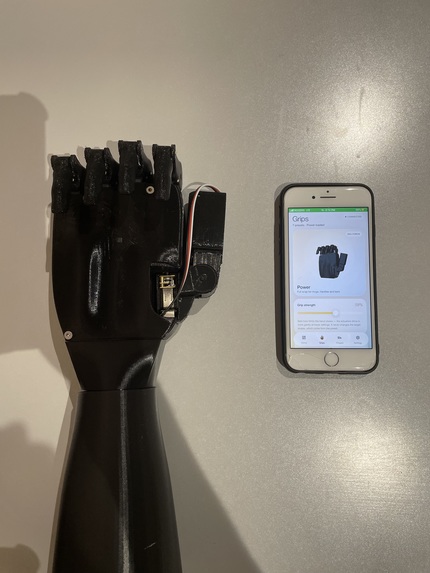
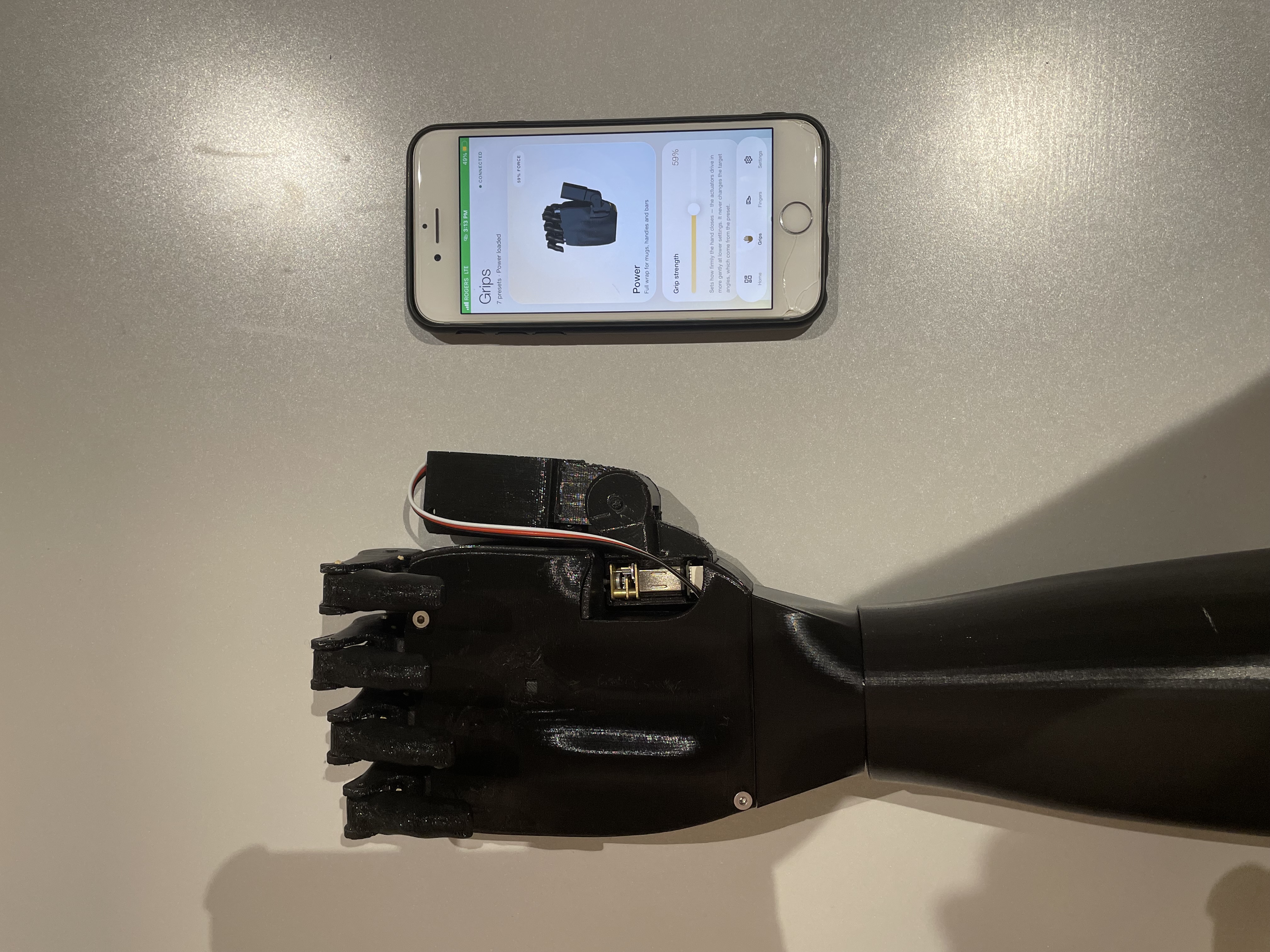
Power Grip
-
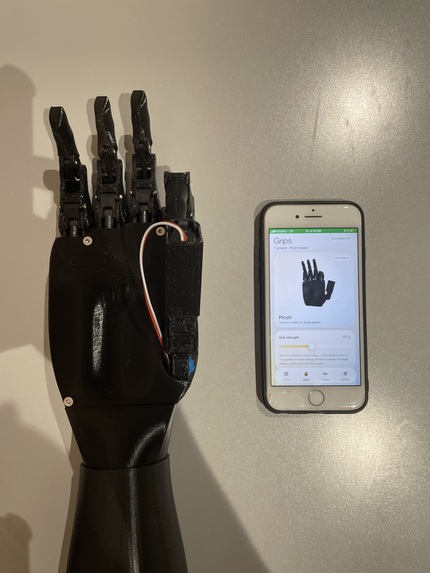
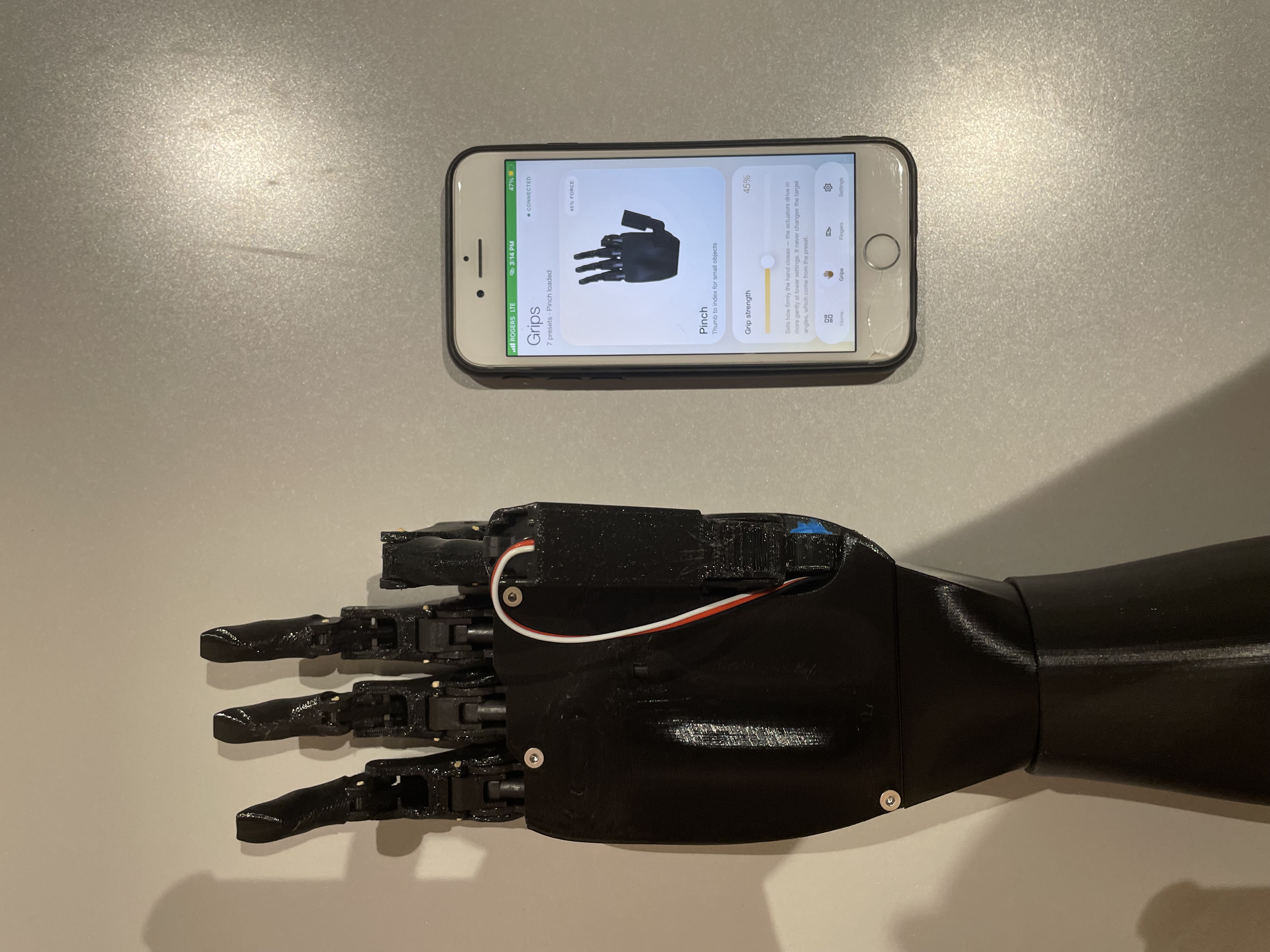
Pinch Grip
-
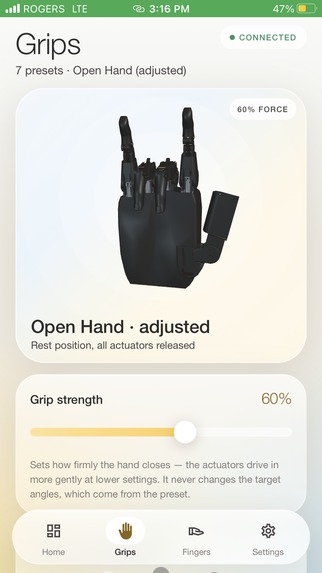
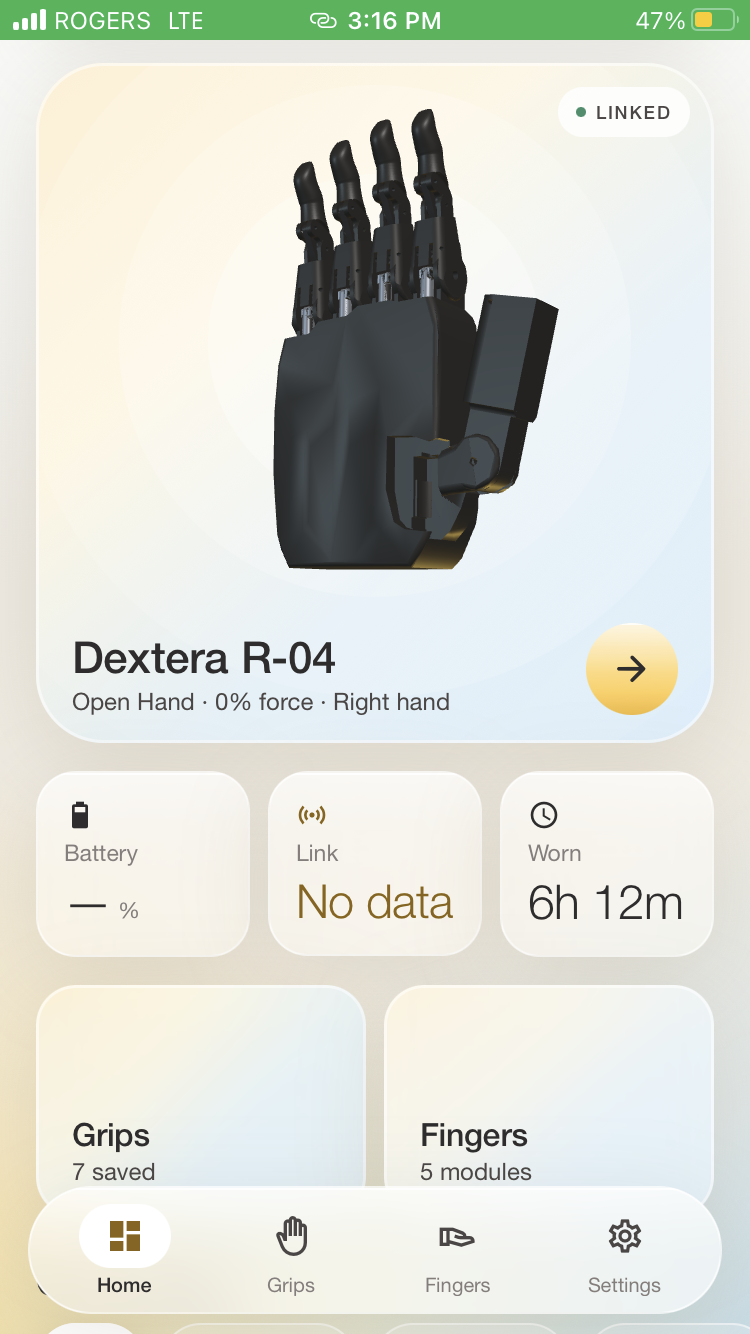
App Dashboard
-
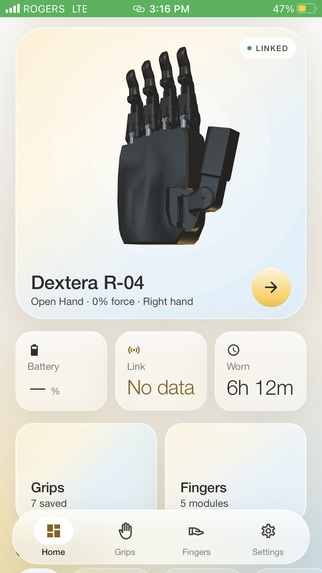
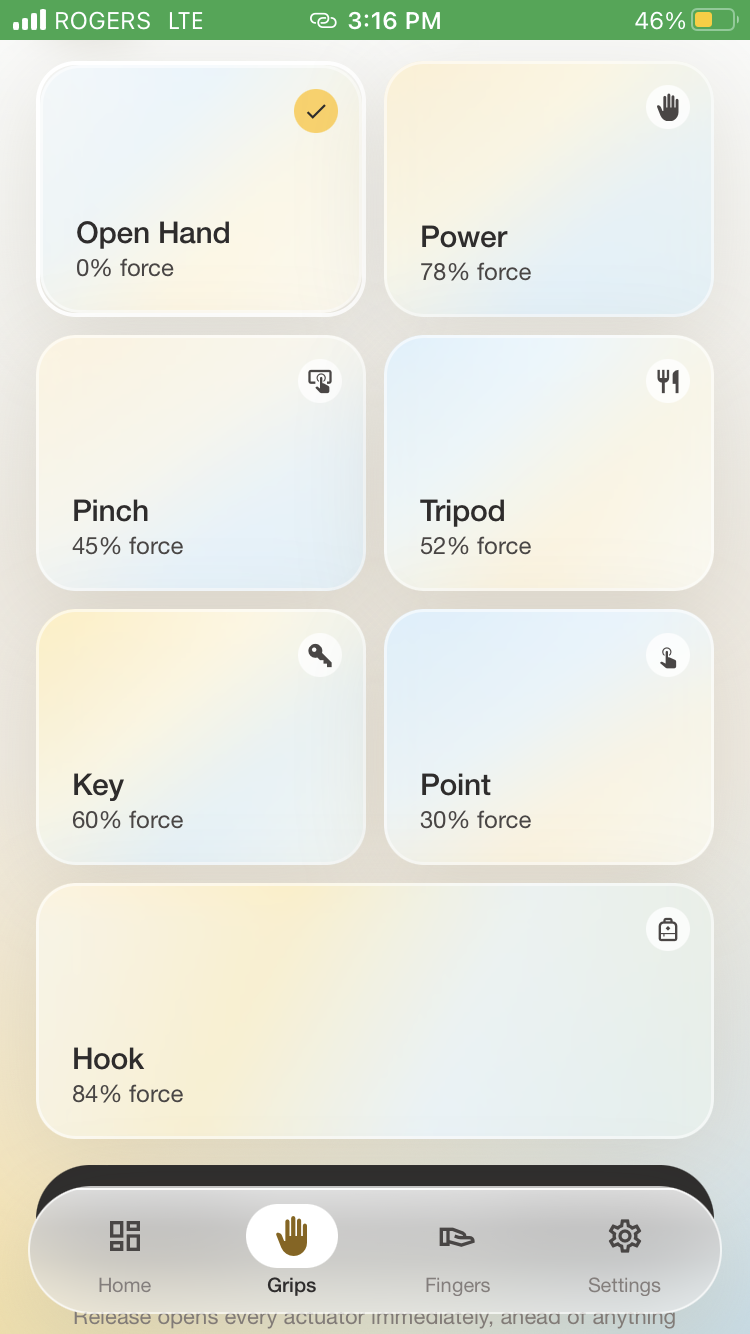
Grip Dashboard
-
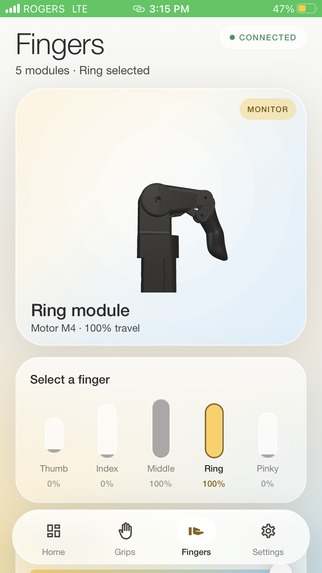
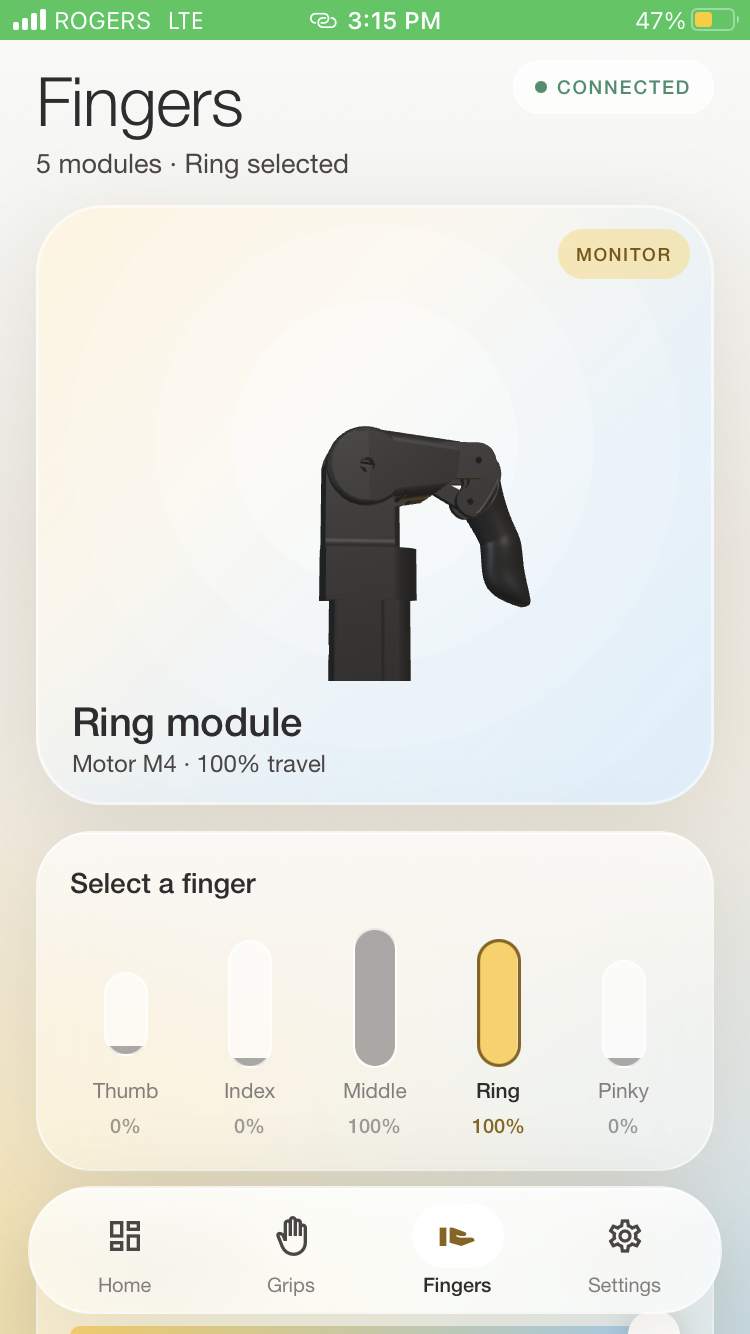
Finger Control Dashboard
-
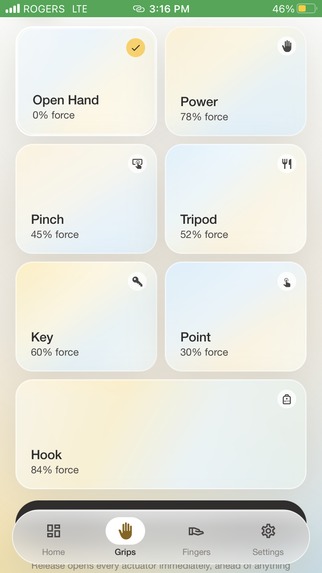
Grip Menu
-
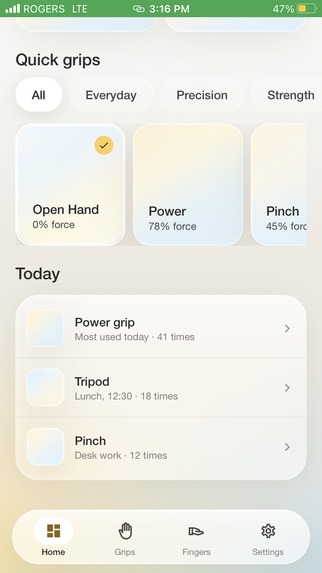
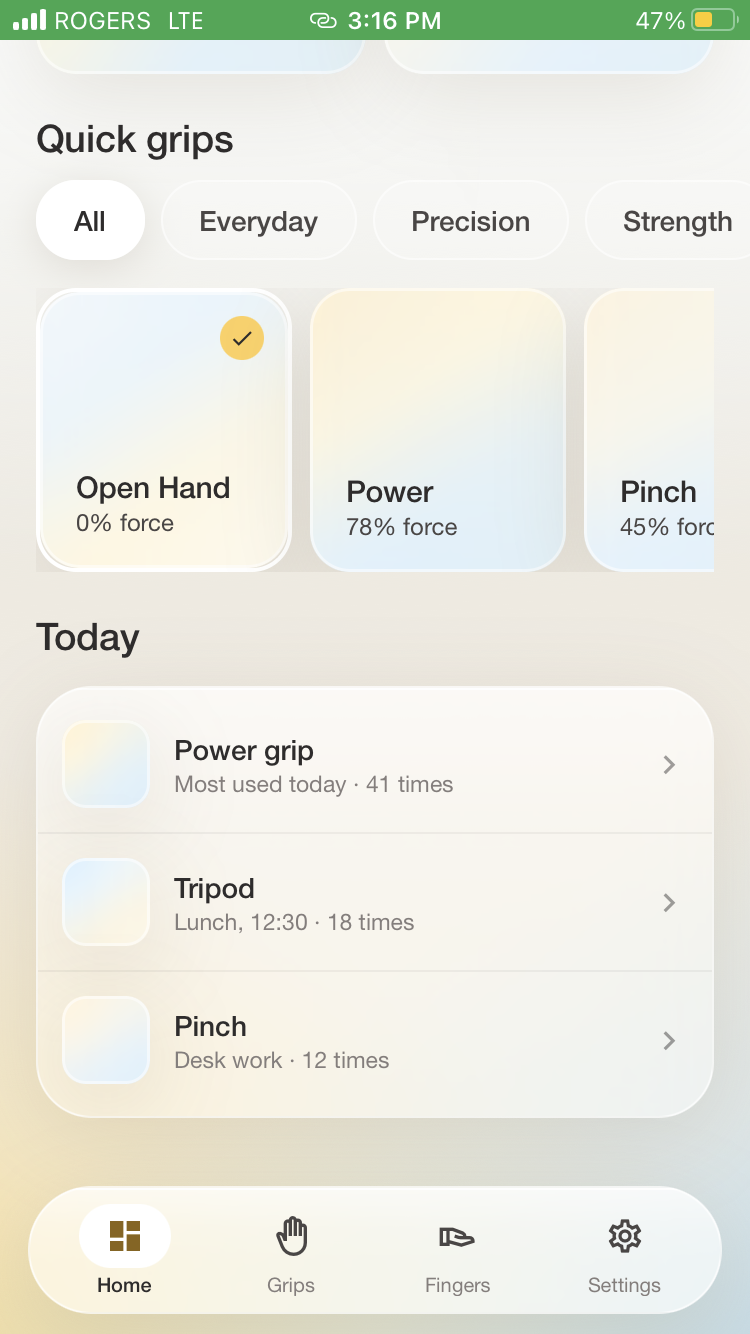
Lower Dashboard
Inspiration
One broken finger can put an entire prosthetic hand out of use. Repair may mean waiting for a specialist or replacing parts that still work. For a growing child, a good fit may not last long either.
We started Dextera with a question: what if the part that failed was the only part you had to replace?
What it does
Dextera is our entry for GIBC V2's Open track. It combines a modular, 3D-printed prosthetic hand with firmware and a companion app called MyDex. Each of the five fingers is designed as a separate module, and the design can accommodate task-specific attachments such as a stylus or paintbrush.
An ESP32 controls the finger motors. The current firmware uses one EMG sensor channel to detect a deliberate muscle contraction and activate a grip after calibration. MyDex connects directly to the hand over Bluetooth Low Energy. Users can select grips, adjust fingers, calibrate the sensor, and see the positions the hand reports back. Interactive 3D models help explain how the mechanism moves.
Our target price is $1,000 CAD, based on a $660 hardware cost estimate. Testing and manufacturing will determine whether we can meet that target.
How we built it
We designed the printed panels and fingers as separate parts so a repair would not require rebuilding the whole hand. The ESP32 firmware handles EMG calibration, motor control, and movement limits. We built MyDex with React Native and Expo, then created a Bluetooth protocol to carry commands to the hand and report its state back to the app.
The hand remains responsible for its own movement. If the phone disconnects, the firmware does not depend on the app to enforce its limits. When connected, the app draws the 3D hand using reported finger positions rather than assuming every command happened instantly.
Our CAD finger model had no animation rig, so we wrote a bending method for the mobile 3D view. We also made the app identify when it is showing preview data. Without a connected sensor, its EMG display stays flat.
Challenges we ran into
A removable finger needs two qualities that pull against each other: it must come off for repair and stay secure while gripping. The motors, controller, sensor, and wiring also have to fit inside a compact hand.
EMG introduced a different problem. Signal strength changes with the user and electrode placement, so a useful grip command needs calibration and protection against noise. Bluetooth added another constraint: dragging a finger control can generate commands much faster than the motor should act on them. We had to manage that stream while leaving movement limits with the firmware.
Accomplishments that we're proud of
The app and firmware now cover the control path we set out to build: connect, calibrate, choose a grip, send a command, and display the hand's reported state. The app also supports individual finger control and a 3D view of the mechanism.
We are proud of how the repair goal shaped the whole design. A replaceable finger affects the mechanical connection, wiring, controls, and cost. Treating it as a core requirement forced us to work across all of them.
What we learned
The price of a prosthetic is more than its price tag. A repair can also cost the user time without a working hand. That made replaceable parts as important to our design as the initial cost target.
We learned to check the boundary between software and hardware carefully. The app can request movement, but the hand has to decide what it can safely do and report what it actually did.
What's next for Dextera
Next, we need repeated gripping, lifting, and finger-swap tests. We want measured results for grip strength, response time, battery life, and wear. We also plan to test calibration across a wider range of muscle signals and seek feedback from prosthetic users, occupational therapists, and prosthetists.
Dextera is still a prototype. Use as a medical product would require formal safety testing, clinical evaluation, and regulatory approval.
Log in or sign up for Devpost to join the conversation.