-
-
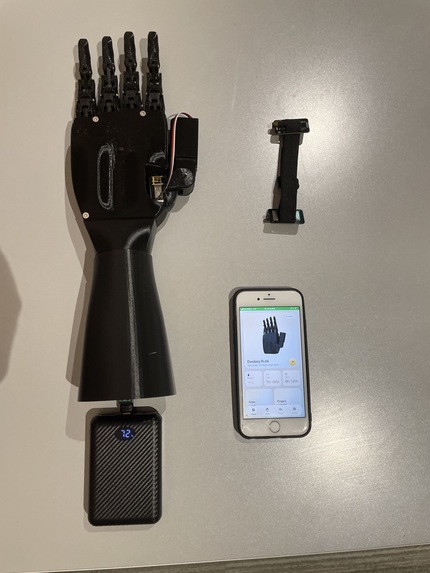
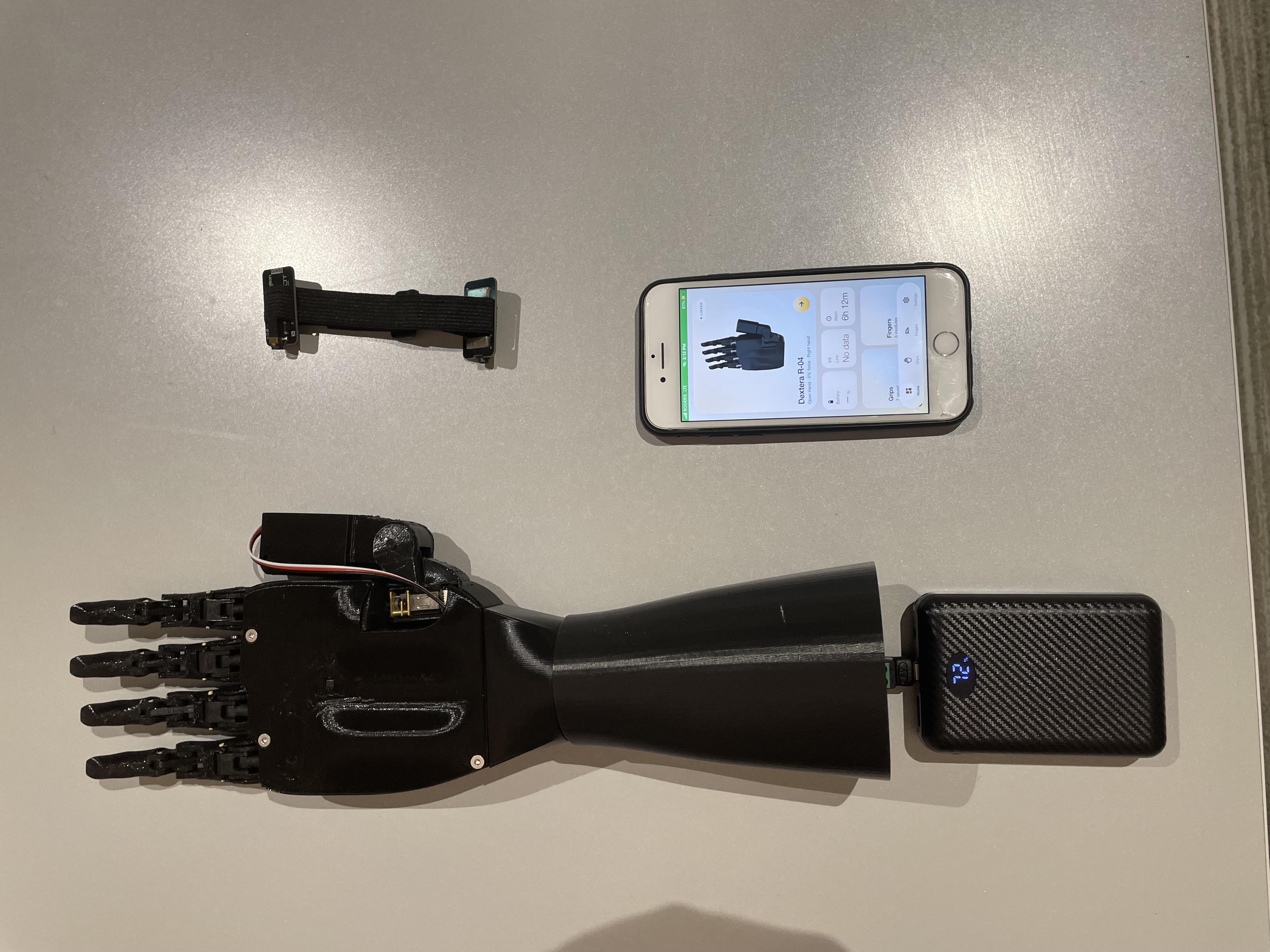
Full Apparatus
-
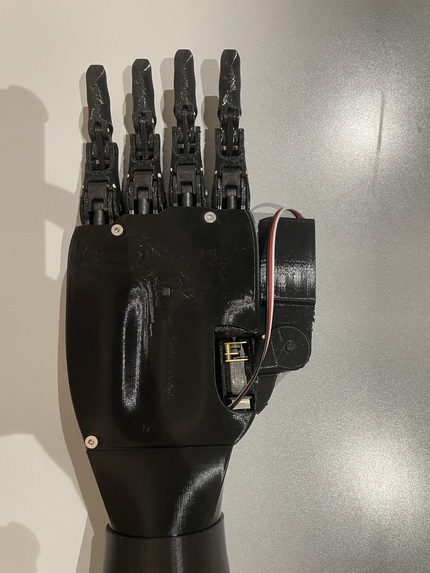
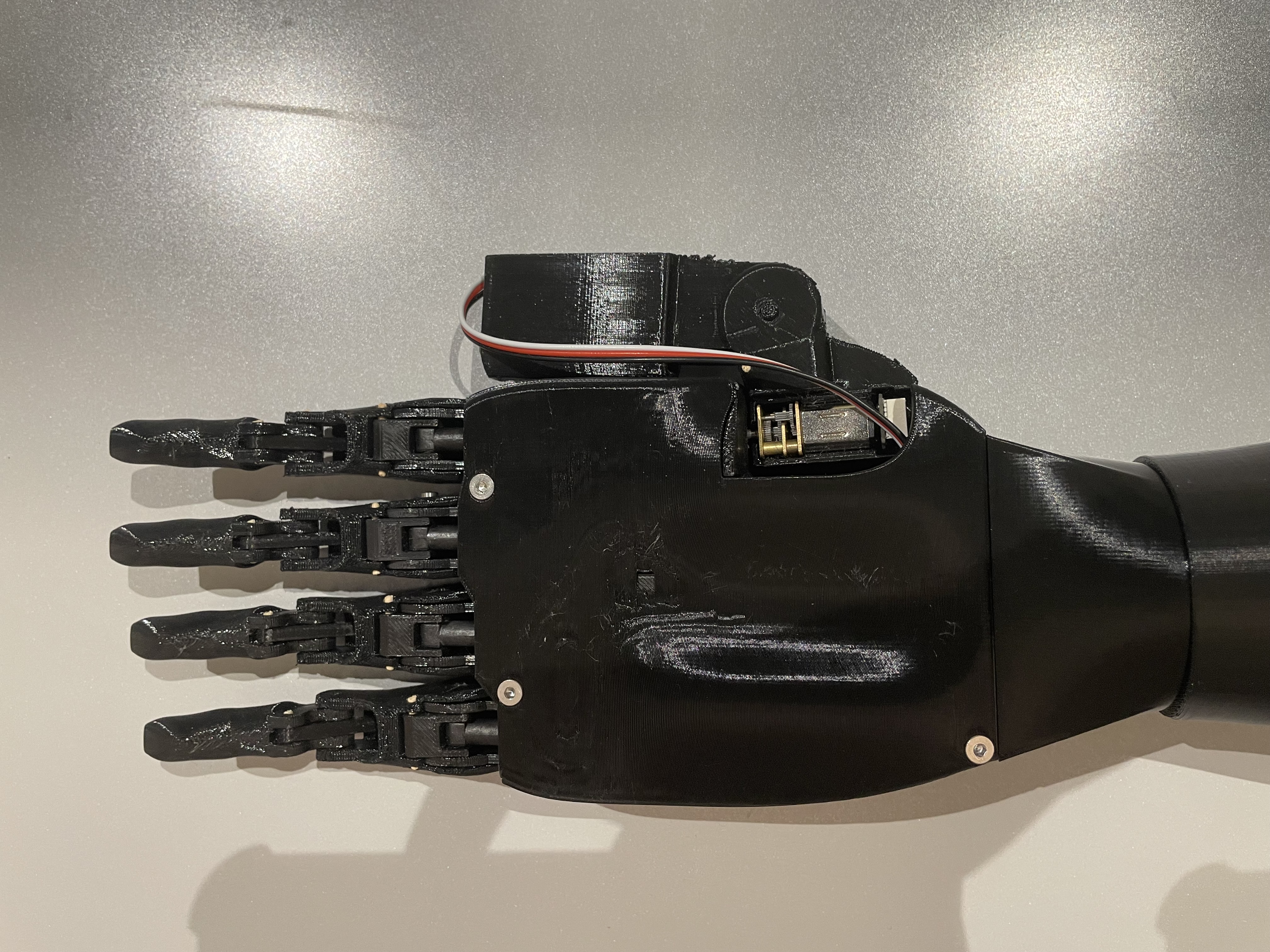
Open Hand
-
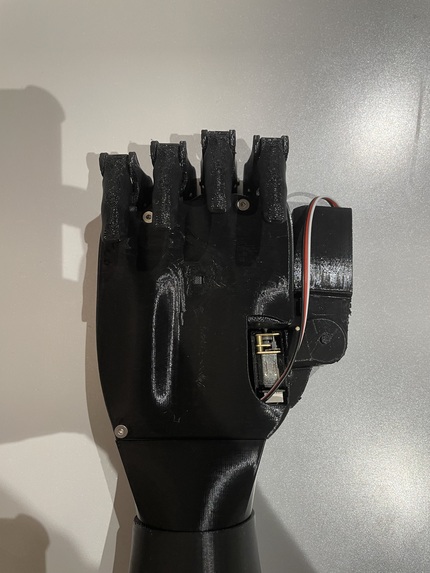
Closed Hand
-
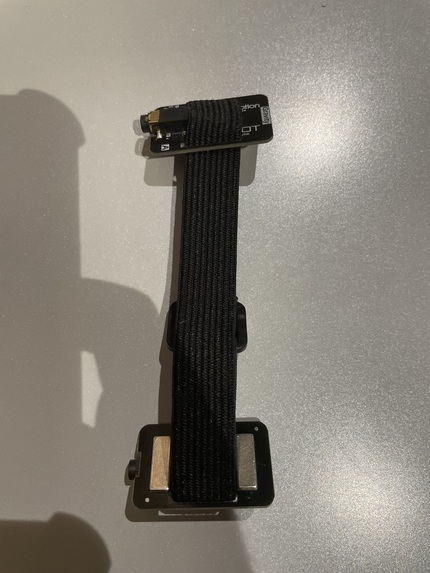
EMG Sensors
-
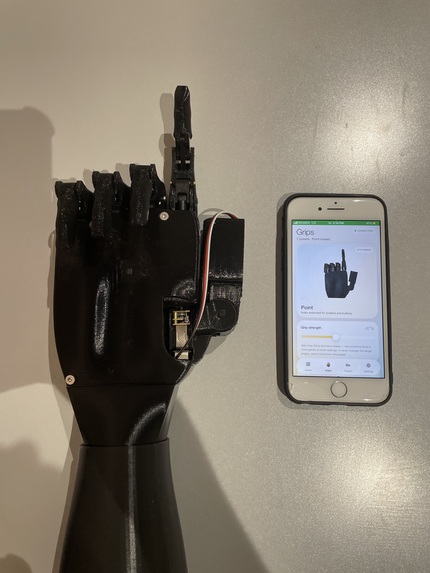
Point Grip
-
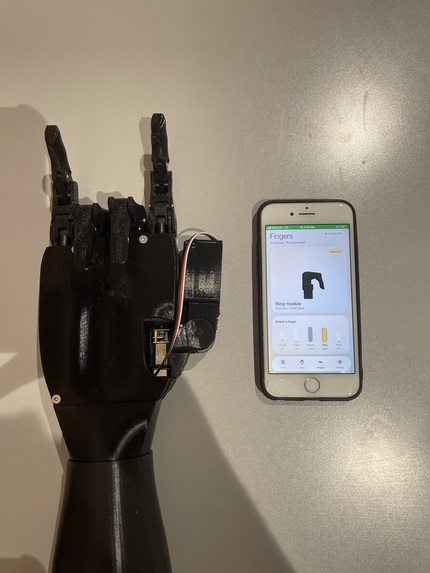
Spiderman Grip
-
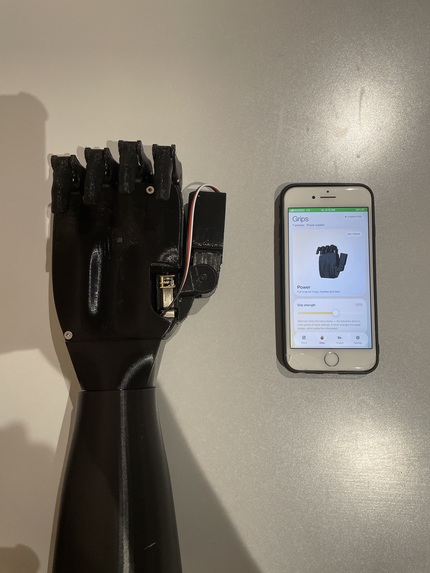
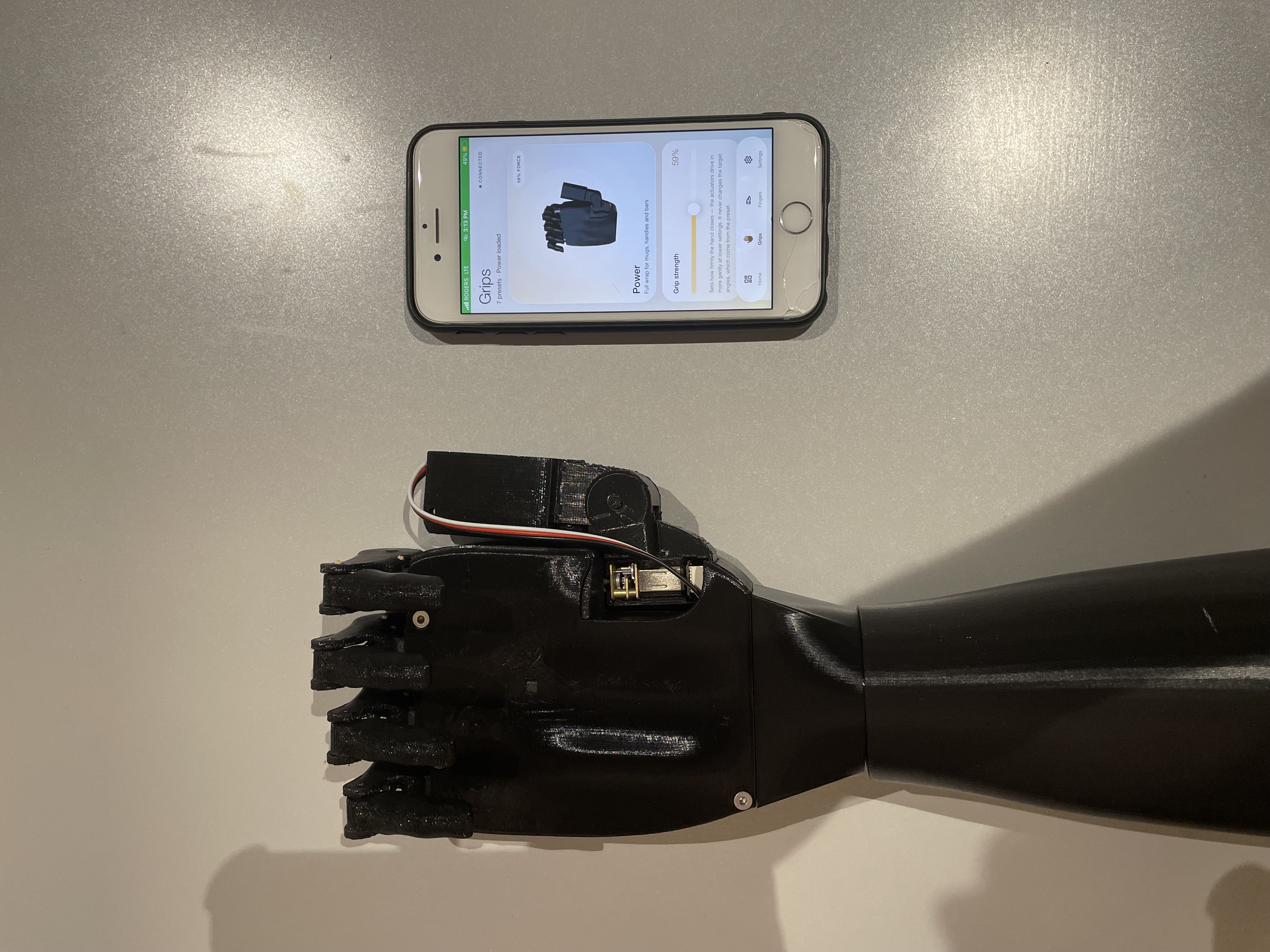
Power Grip
-
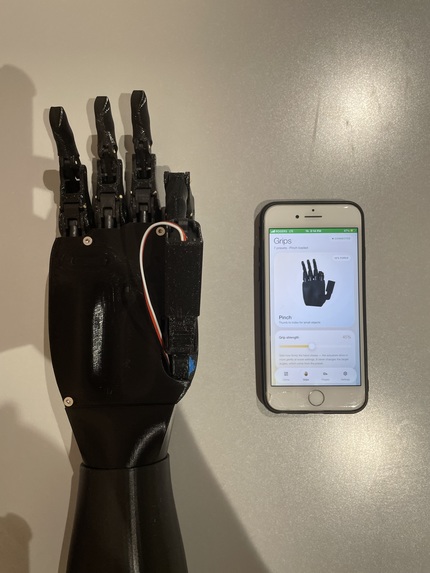
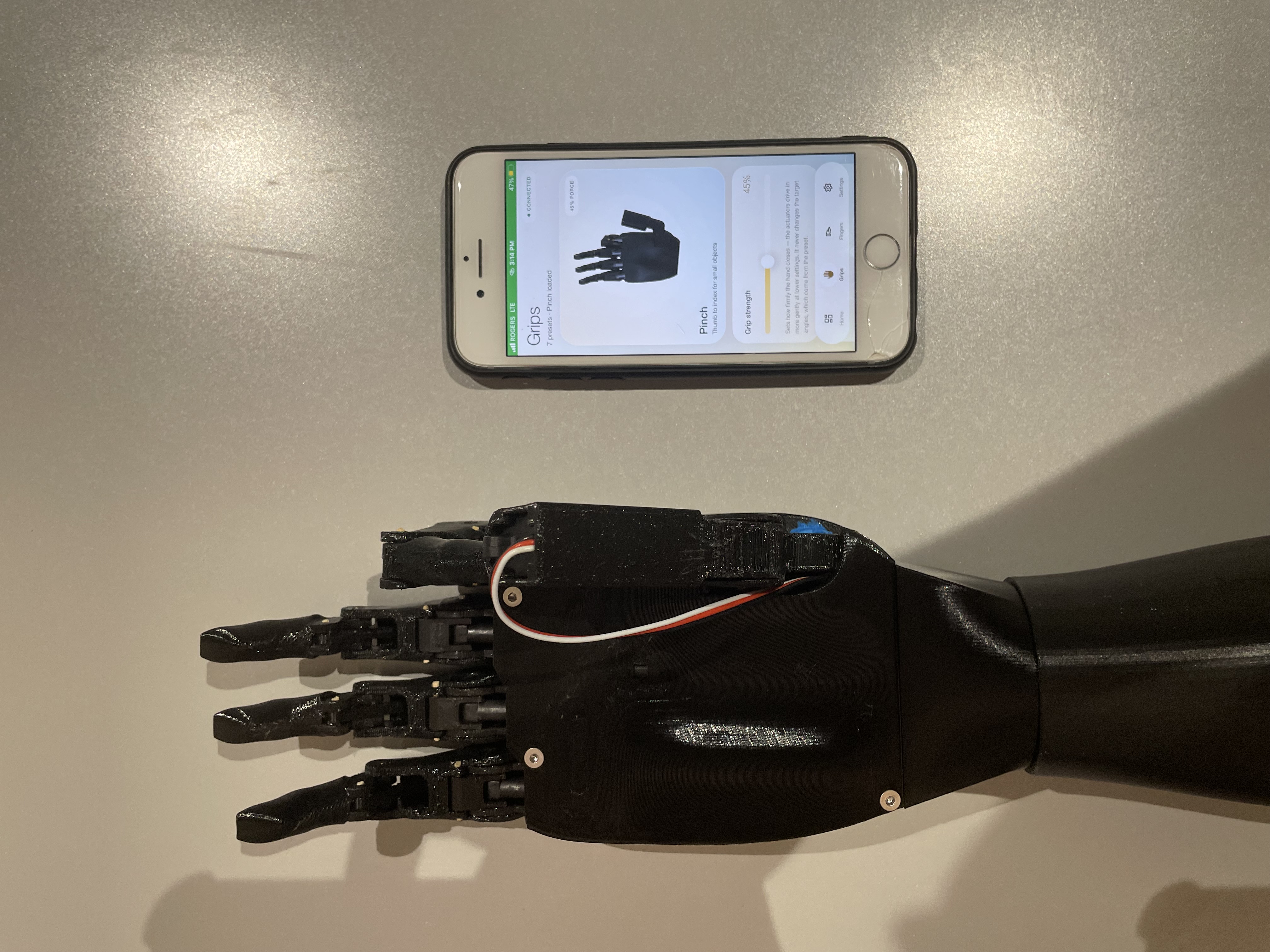
Pinch Grip
-
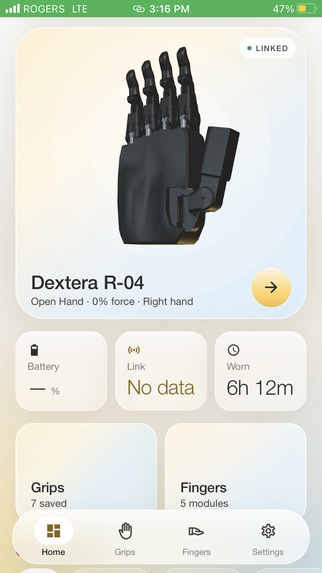
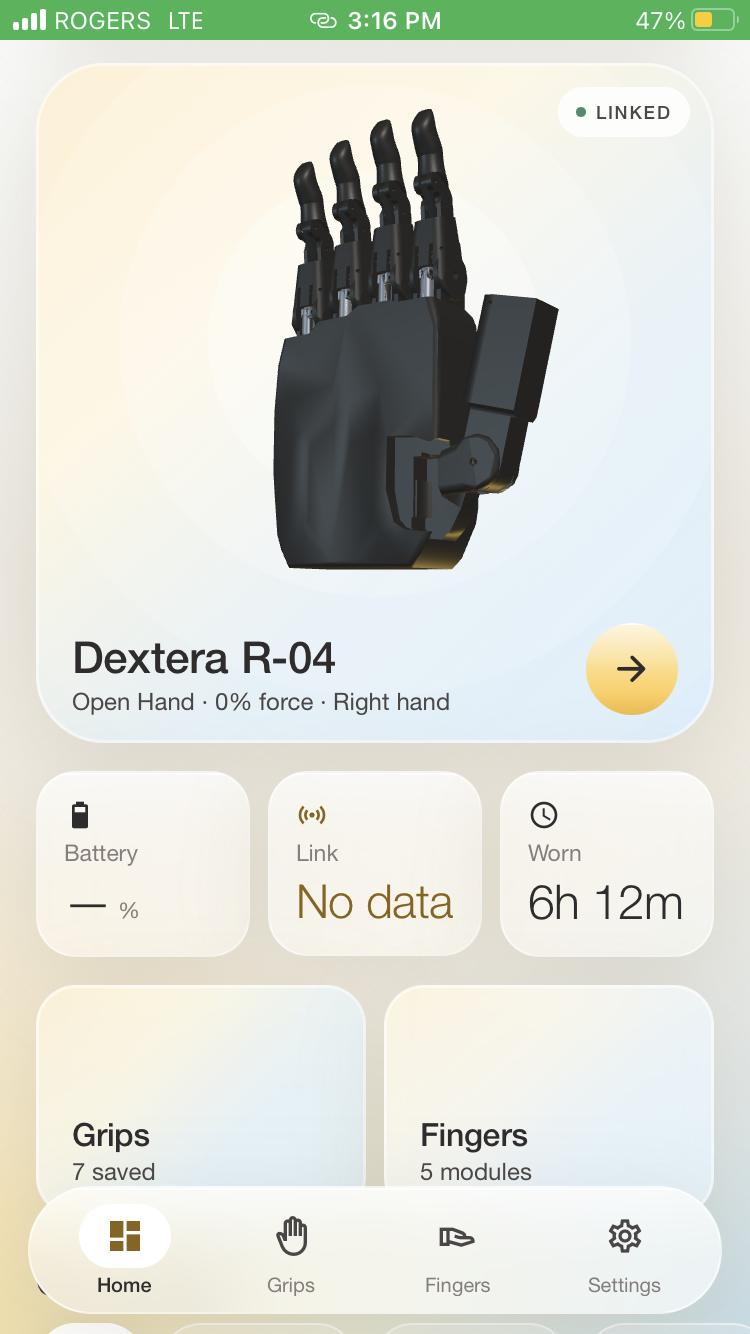
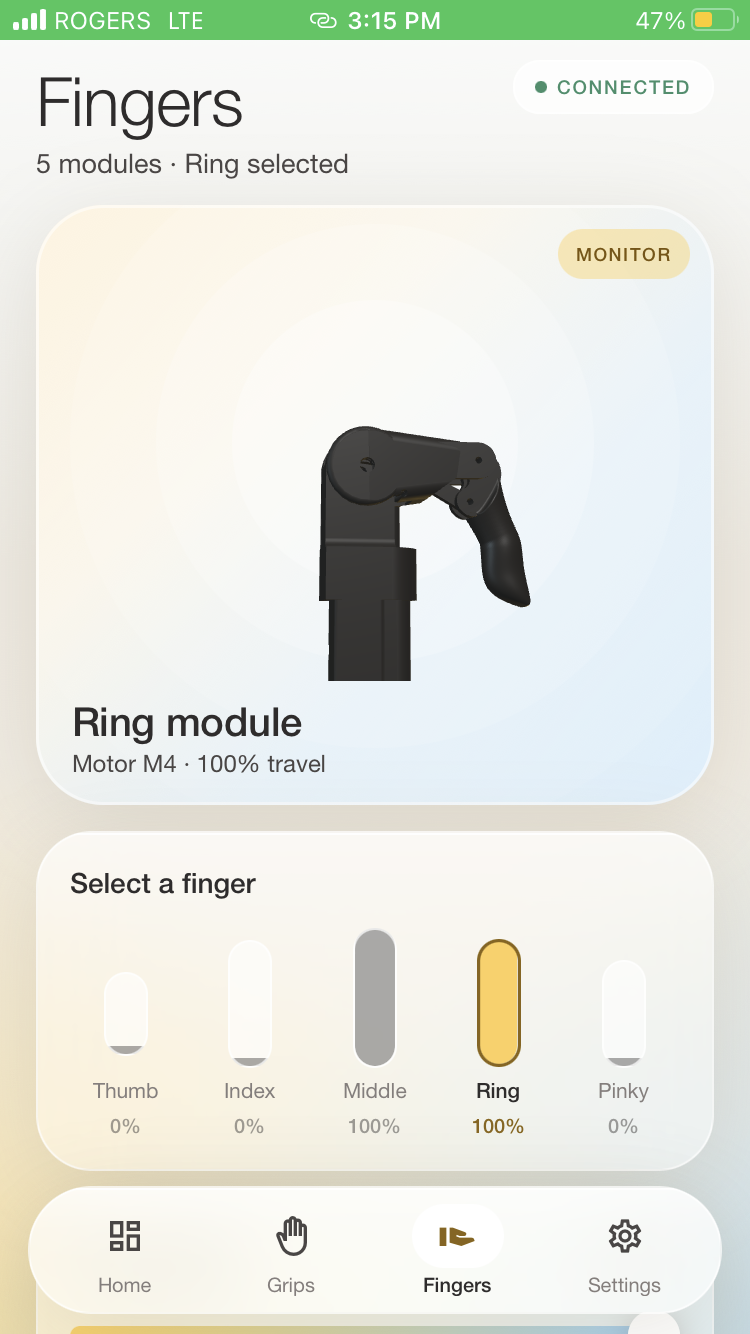
App Dashboard
-
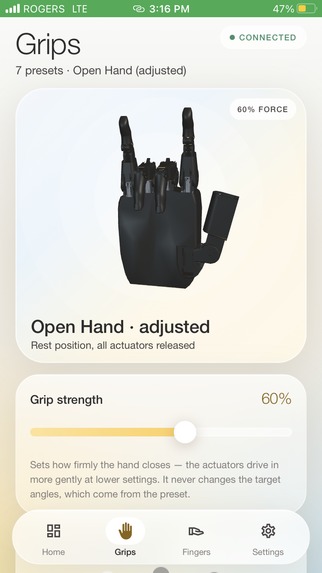
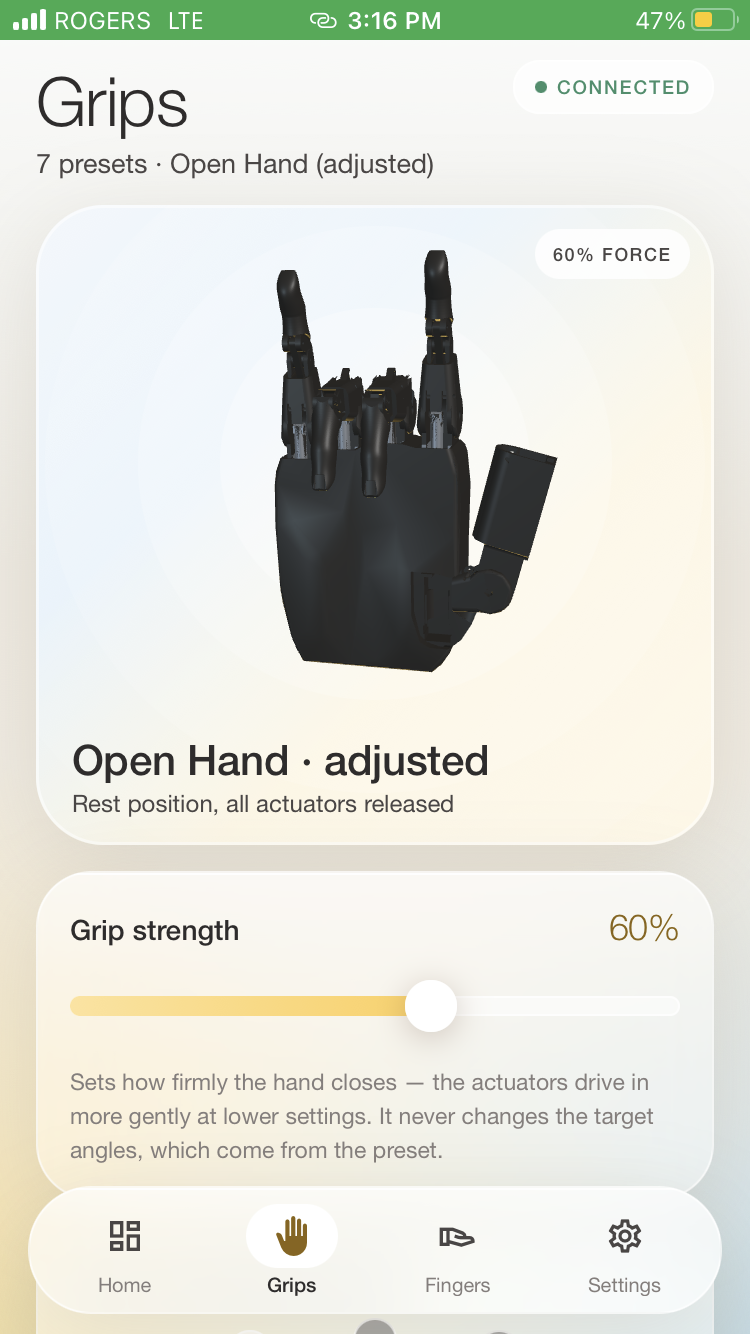
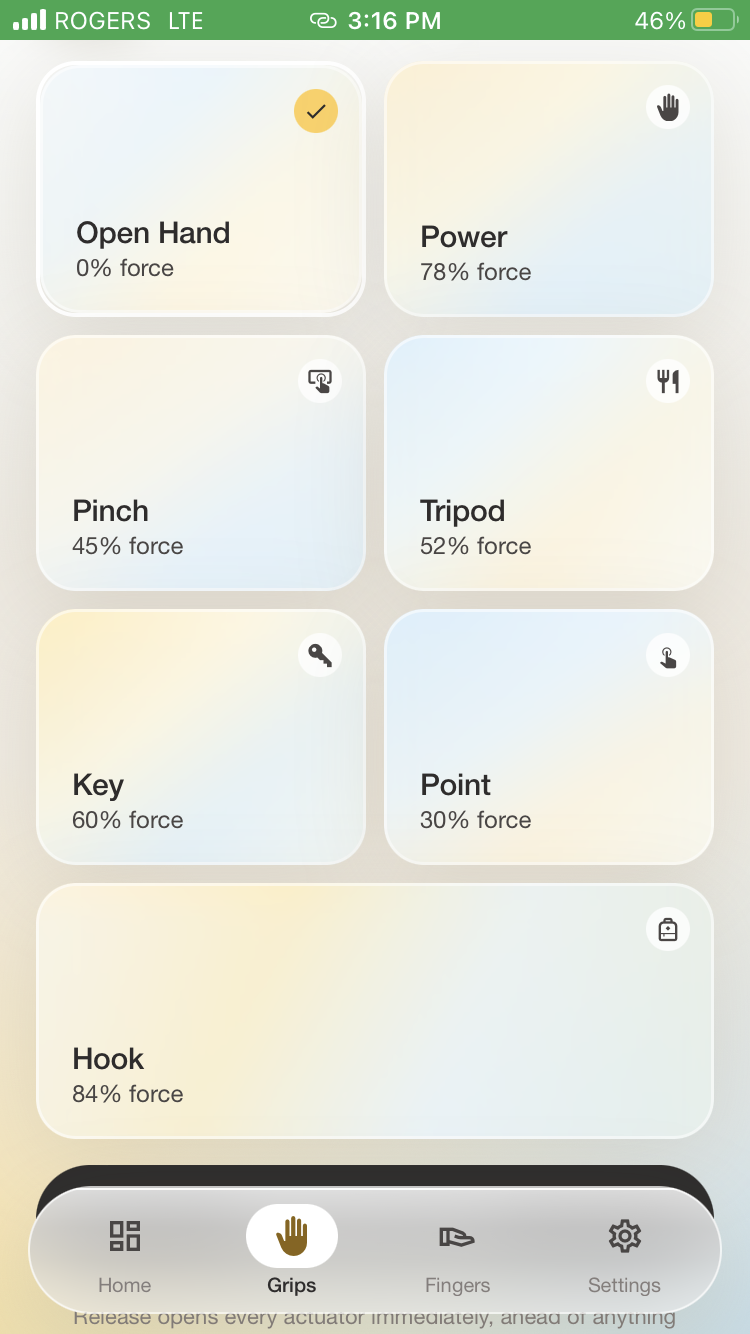
Grip Dashboard
-
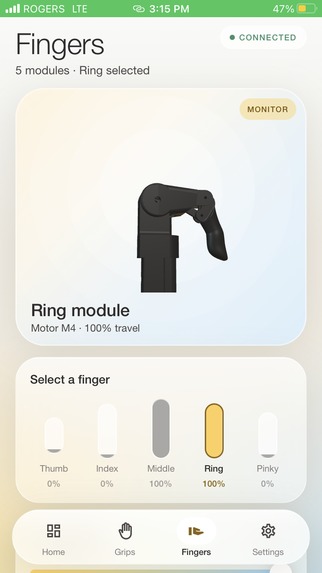
Finger Control Dashboard
-
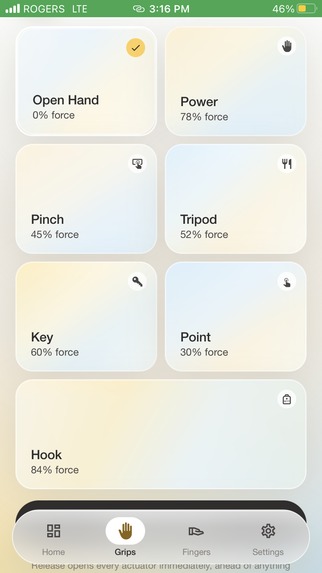
Grip Menu
-
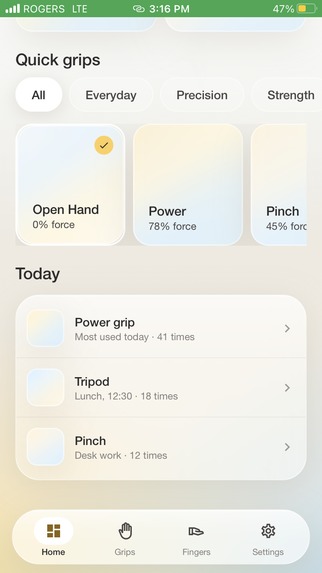
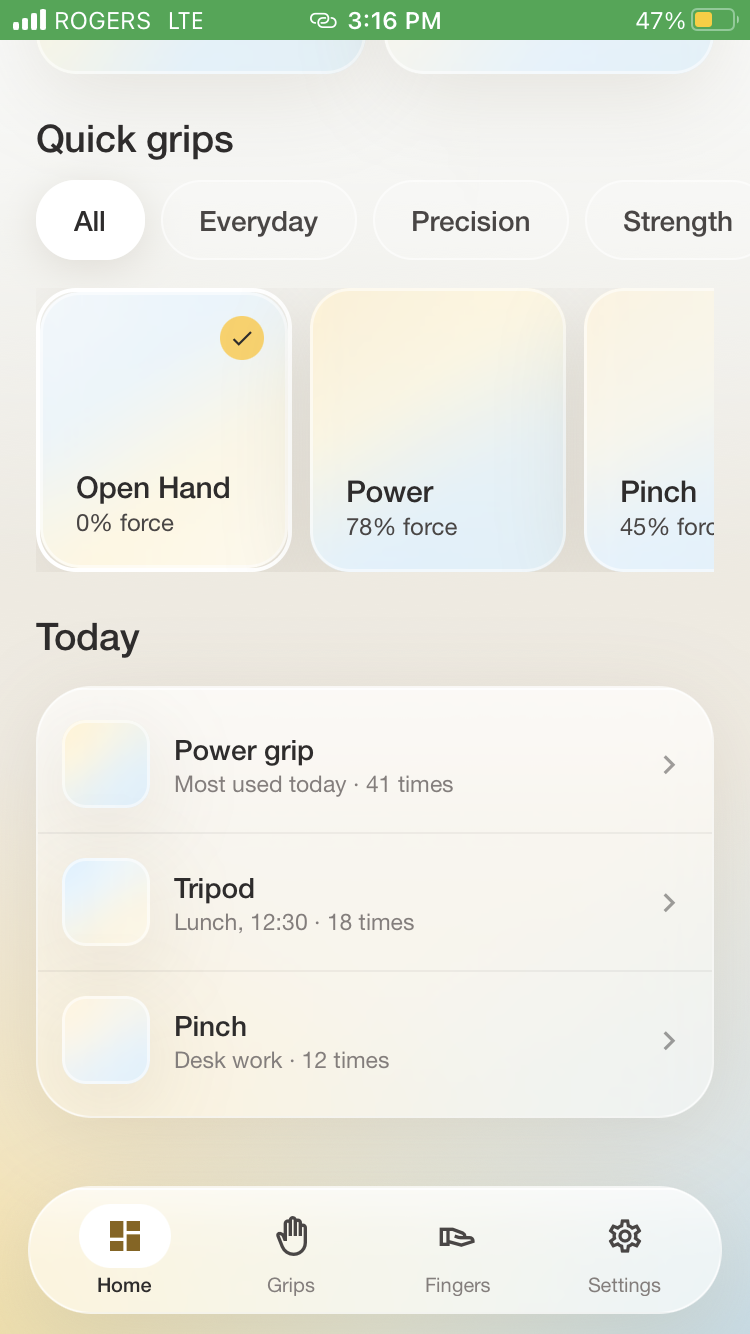
Lower Dashboard
-
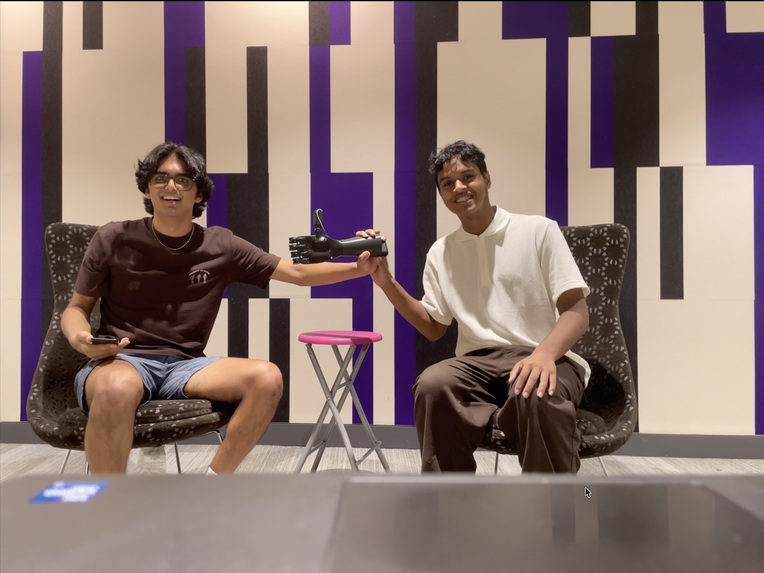
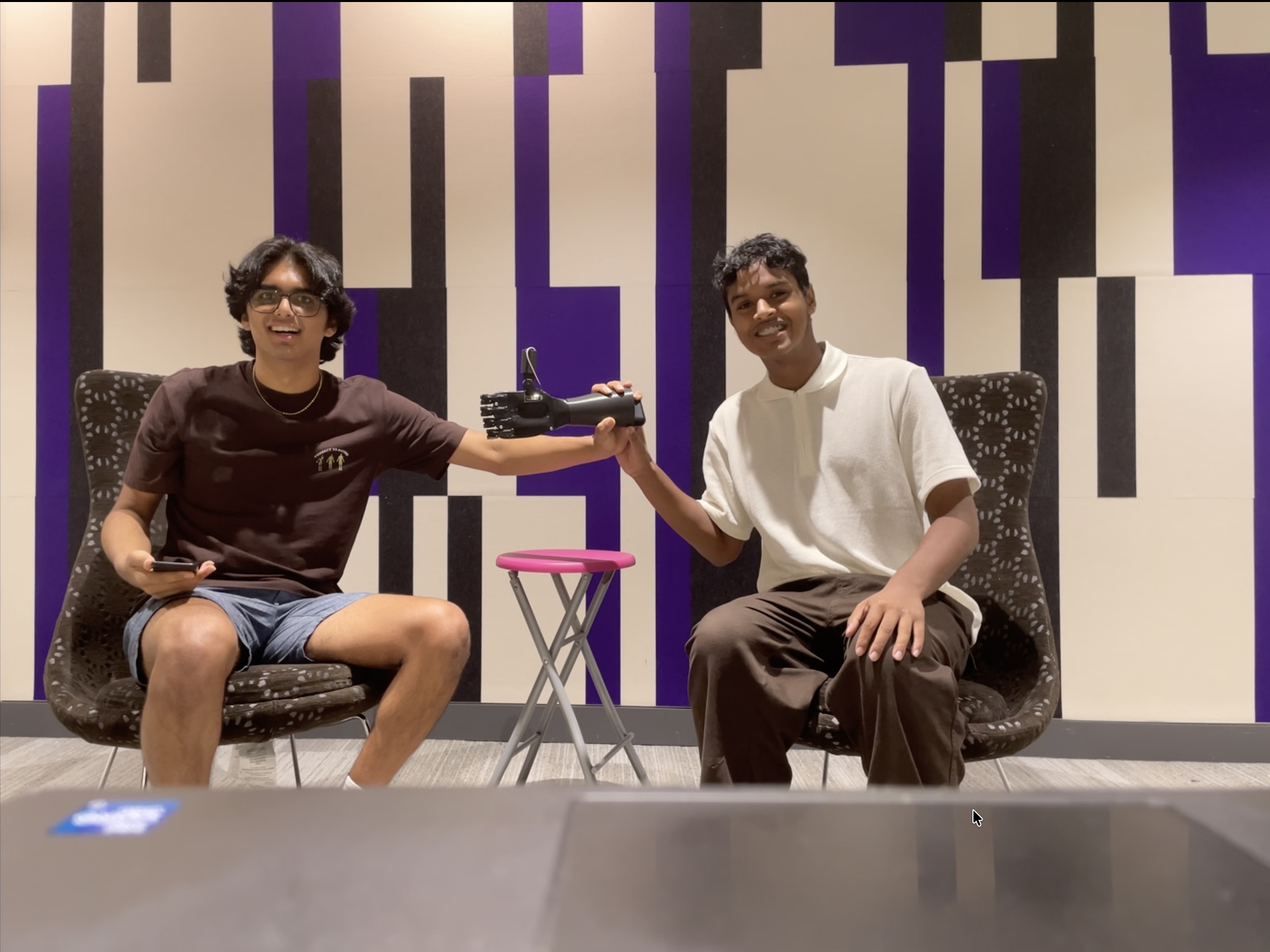
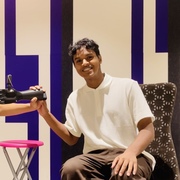
Shail and Sharaf Team Photo
Inspiration
We started Dextera after learning how difficult it is for many people to access a functional prosthetic hand. Advanced myoelectric hands can cost thousands of dollars, and even a small repair may require a specialist. Children face another problem because they can quickly outgrow a device that was made for them.
We wanted to design a prosthetic that could change with its user. Instead of replacing the entire hand when one part breaks or no longer fits, the user could replace that part and keep the rest of the system.
What it does
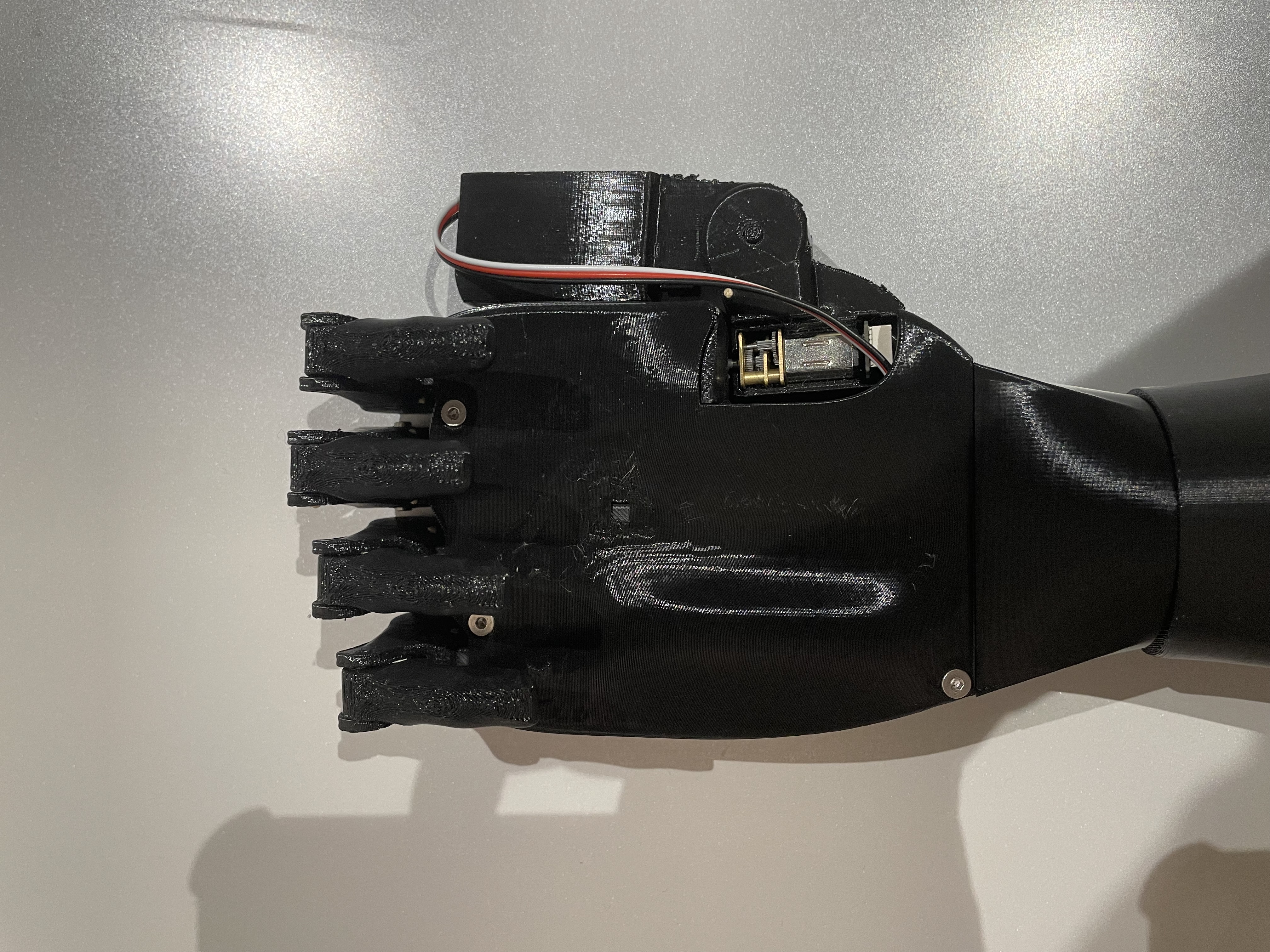
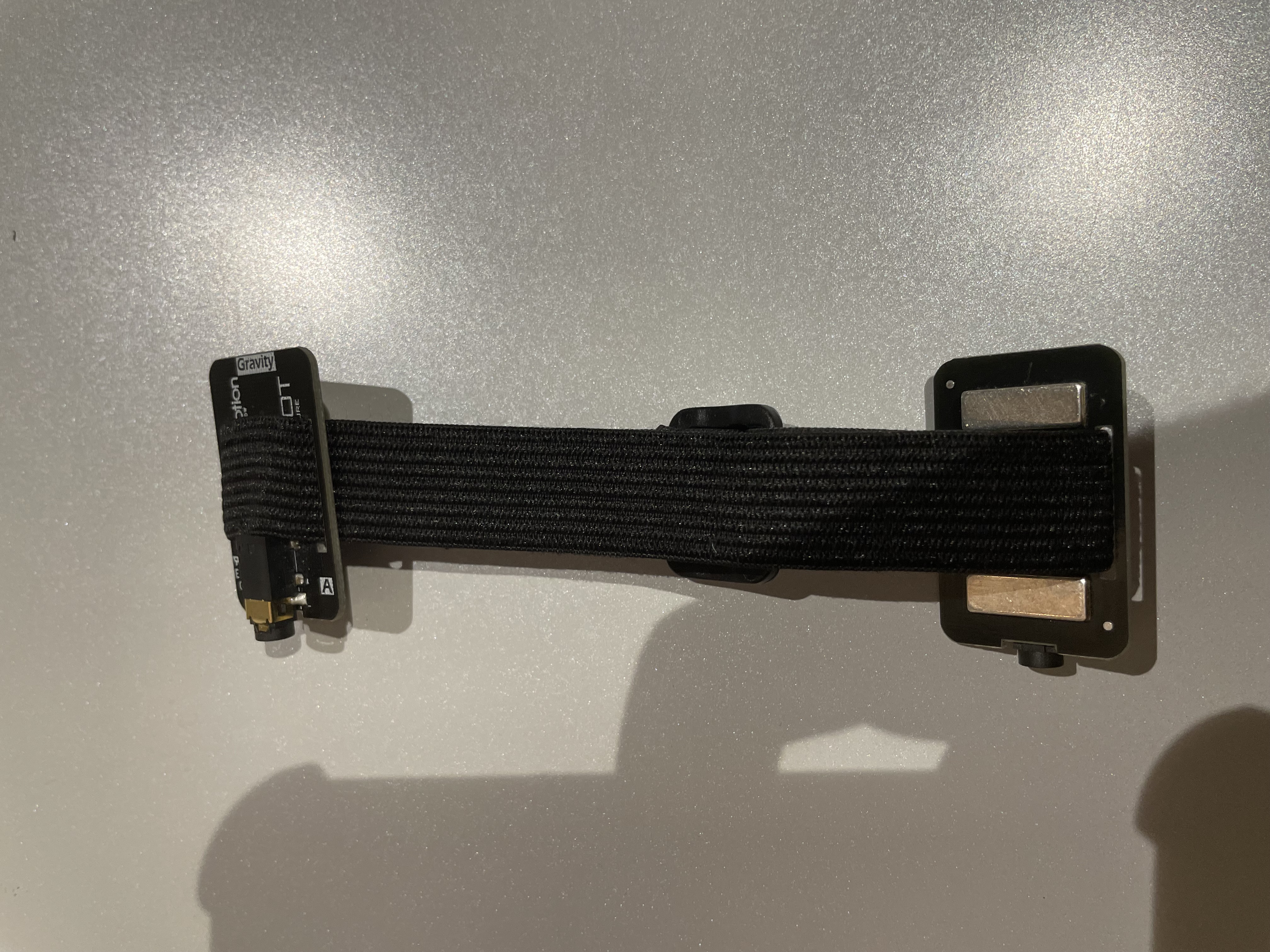
Dextera is a modular, 3D-printed myoelectric prosthetic hand. Two EMG sensors read muscle activity in the user's residual limb. A microcontroller processes those signals and controls five finger motors, which turn muscle contractions into hand movements.
Each finger is a removable module that can be replaced without specialized tools in under a minute. Standard fingers can also be exchanged for task-specific attachments such as a stylus, screwdriver, or paintbrush.
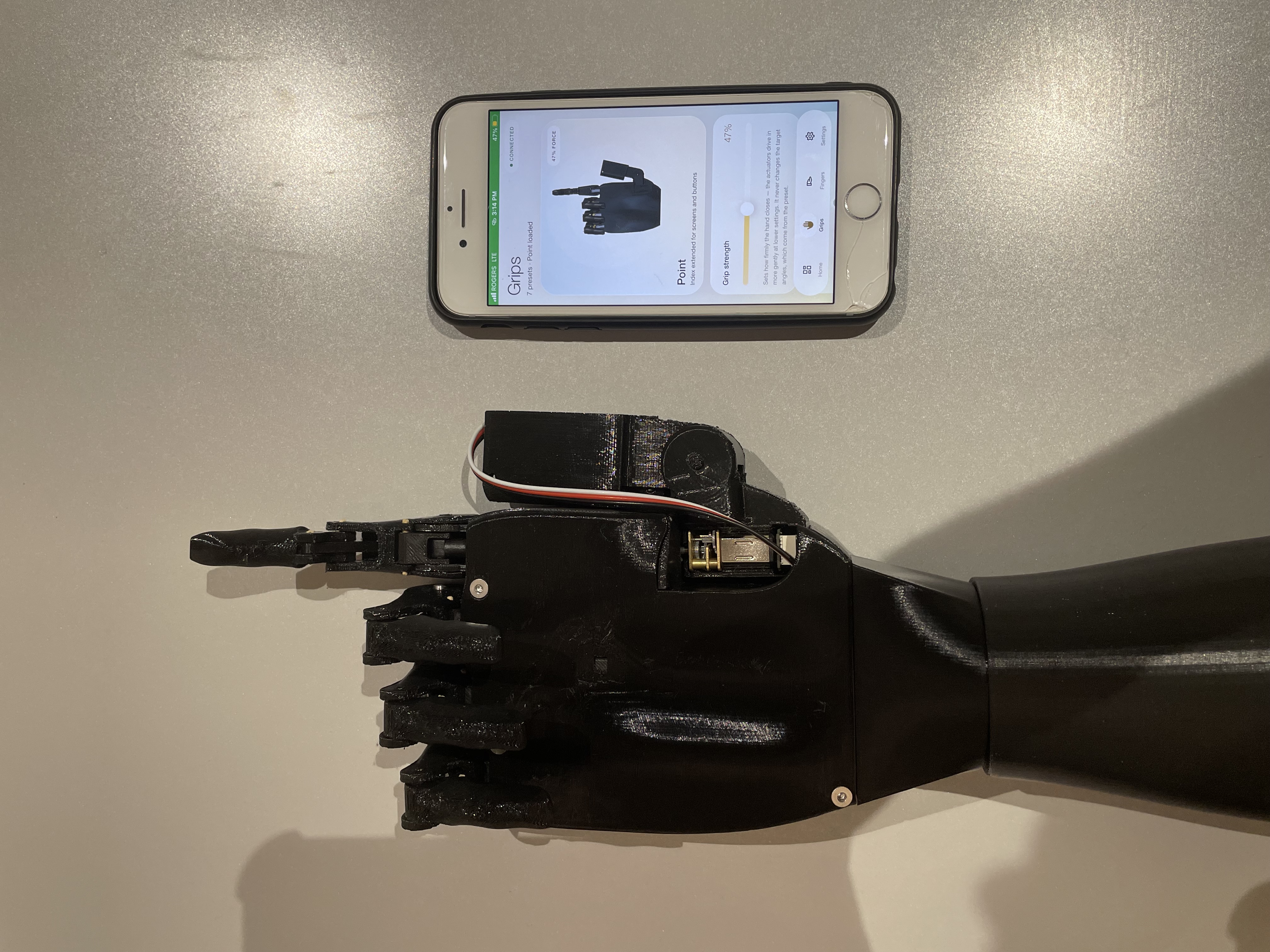
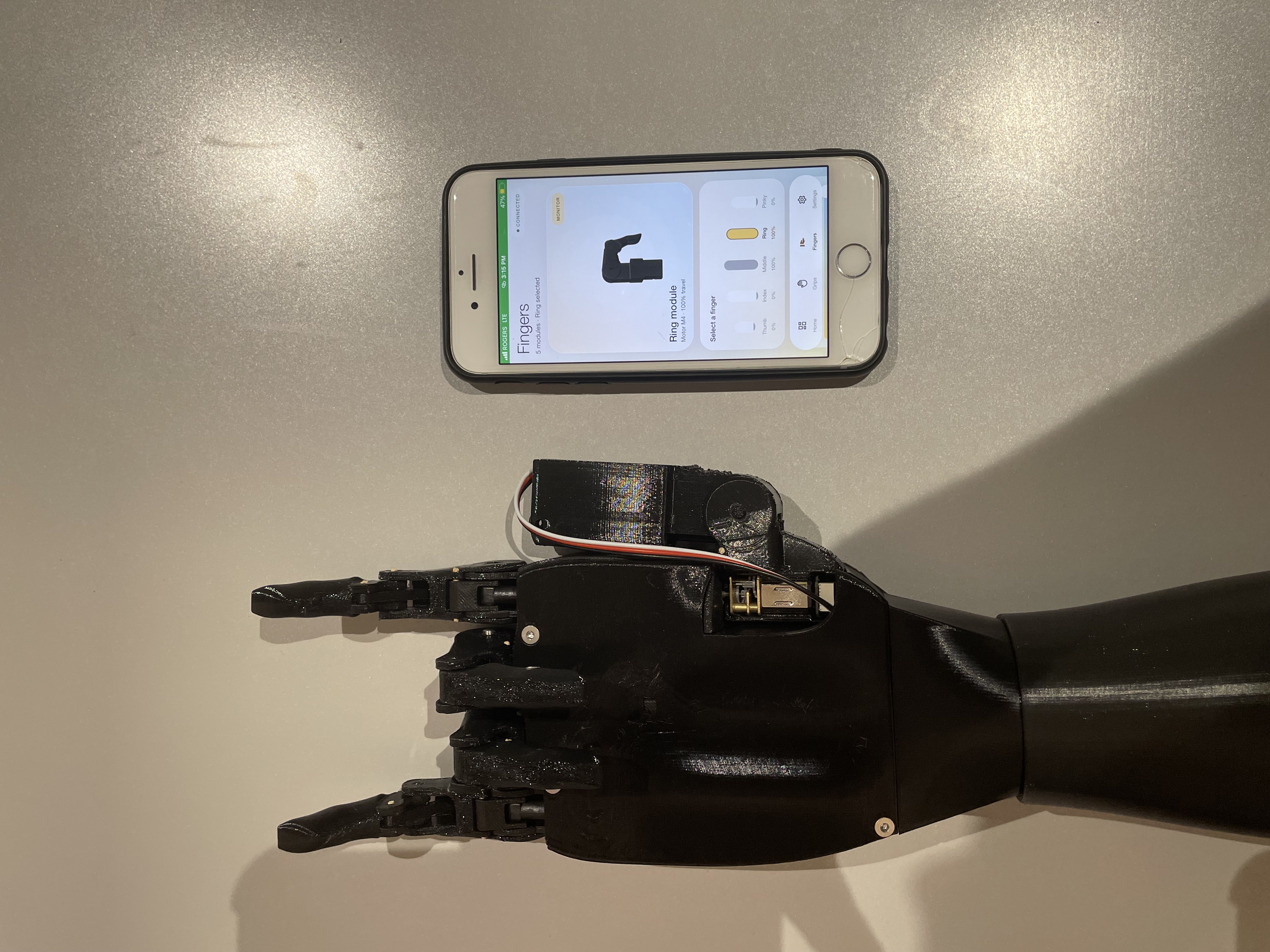
The MyDex mobile app connects to the hand through Bluetooth. Users can control individual fingers, adjust grip positions, calibrate the EMG sensors, and save grips for different activities. The app also includes interactive 3D models that help users understand how the hand and finger mechanisms move.
Our target price for Dextera is $1,000 CAD. The listed hardware has an estimated cost of $660, which gives us room to keep the device affordable while continuing to improve it.
How we built it
We designed Dextera as a set of separate mechanical and electronic modules. The external panels and finger structures are 3D printed, so damaged or outgrown parts can be reproduced without rebuilding the entire hand.
Inside the hand, five motors control the fingers. A motor driver connects them to an ESP32 microcontroller, while two EMG sensors collect muscle signals. The software translates those signals into finger positions and preset grips.
We built the MyDex app with React Native and Expo. It includes onboarding, Bluetooth connection, EMG calibration, finger controls, grip controls, haptic feedback, and animated transitions. We also added 3D models of the hand housing and finger assembly. Users can rotate the hand model and watch a finger bend as they adjust its position.
For safety, the app limits outgoing values and only sends movement commands when a valid connection is active.
Challenges we ran into
The hardest mechanical challenge was making the fingers easy to remove without making the connections weak. A modular part still needs to stay secure during daily use and transfer force reliably. We also had to fit the motors, sensors, controller, and wiring into a compact hand.
EMG control required a calibration system because muscle signals vary between users and can change with electrode placement. The software needs to separate intentional muscle activity from unintentional noise before moving the fingers.
The mobile app created its own challenges. Bluetooth commands had to be responsive without sending unsafe or repeated motor instructions. Our finger model was not rigged for animation, so we had to create a custom bending method that could show smooth movement on a phone.
Accomplishments that we're proud of
We created a complete design that connects the physical hand, its electronics, and a working mobile app. The app layout is designed as follows to ensure the best user experience:
onboarding -> connect to the hand -> calibrate the sensors -> adjust individual fingers -> and create useful grip patterns.
We are also proud of the replaceable finger design. A damaged finger can be swapped instead of forcing the user to replace the full prosthetic or wait for a major repair.
Our estimated $660 hardware cost supports a target price of $1,000 CAD. This is far below the price of many existing myoelectric hands.
Most importantly, Dextera treats personalization as part of the function. Users can change the hand's colours, panels, finger modules, and grip settings to match their needs.
What we learned
We learned that affordability depends on more than lowering the purchase price. Repairs, replacement parts, travel, and time without a working prosthetic can create major costs for the user.
We also learned to design hardware and software together. A modular finger is only useful if the electronics and app work in tandem to recognize and control it, and if the user can replace it without damaging another component.
Building the app taught us how to manage Bluetooth connections, sensor calibration, 3D assets, animations, and safety limits in one interface. Building the hand taught us how quickly a small mechanical decision can affect strength, weight, wiring, and comfort.
What's next for Dextera
Our next step is to test the hand with repeated gripping, lifting, and finger replacement. We want to measure durability, grip strength, response time, battery life, and long-term wear.
We also plan to improve EMG calibration and test the controls with a wider range of muscle signals. Feedback from prosthetic users, occupational therapists, and prosthetists will help us refine the socket, controls, weight, and repair process.
Future versions could include more finger attachments, better grip customization, and new sizes for growing users. Before Dextera can be used as a medical product, it will also need formal safety testing, clinical evaluation, and regulatory approval.


Log in or sign up for Devpost to join the conversation.