-
-
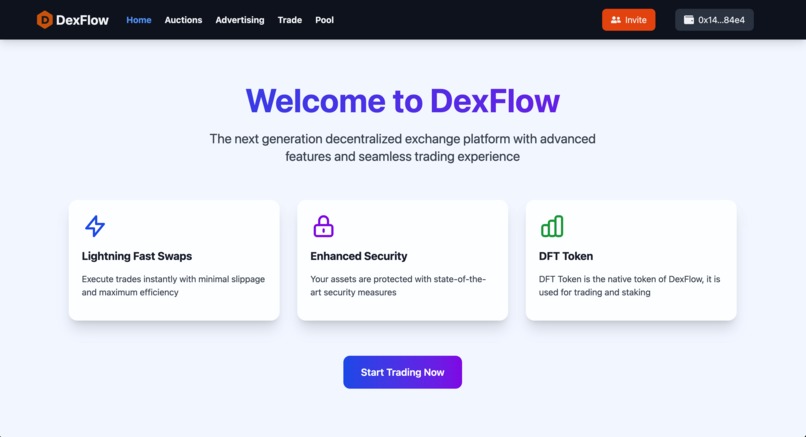
Home
-
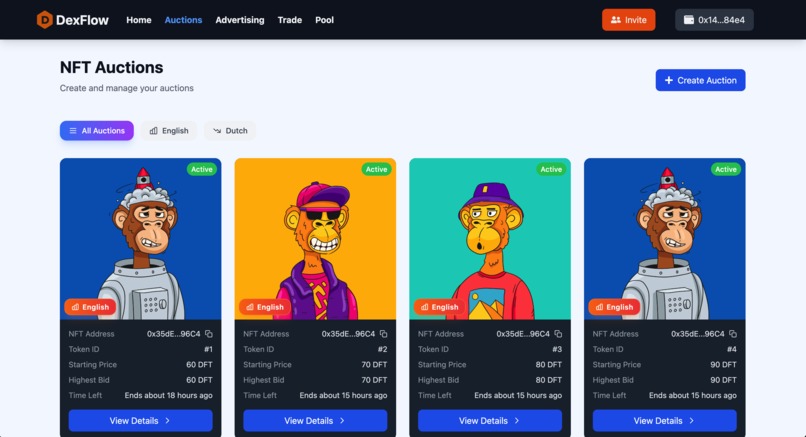
Auctions
-
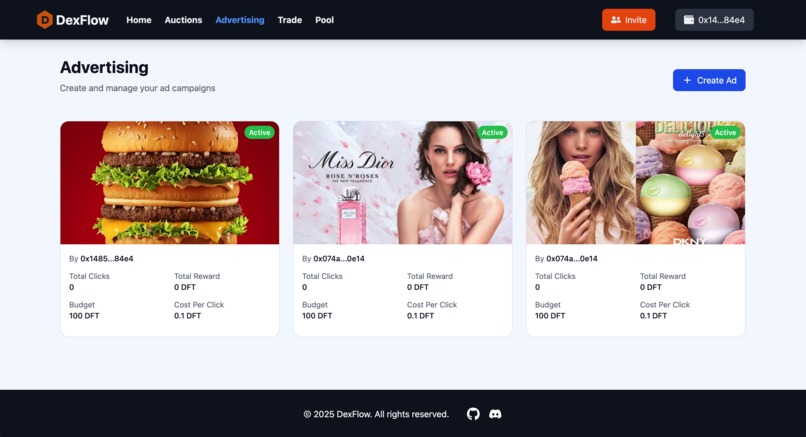
Advertising
-
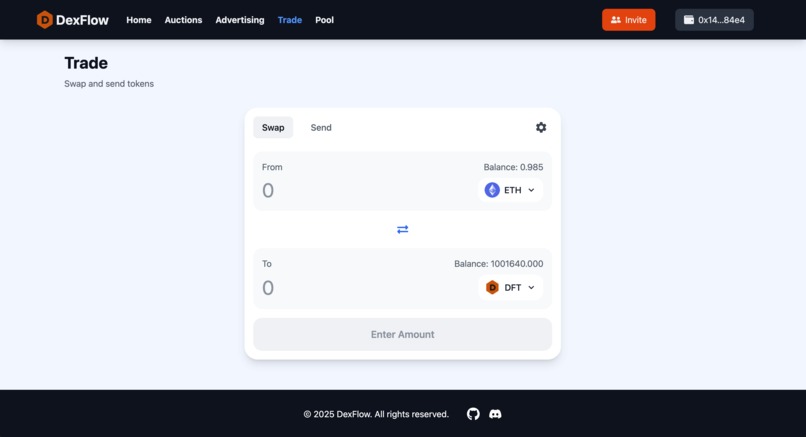
Trade
-
Pools
Inspiration
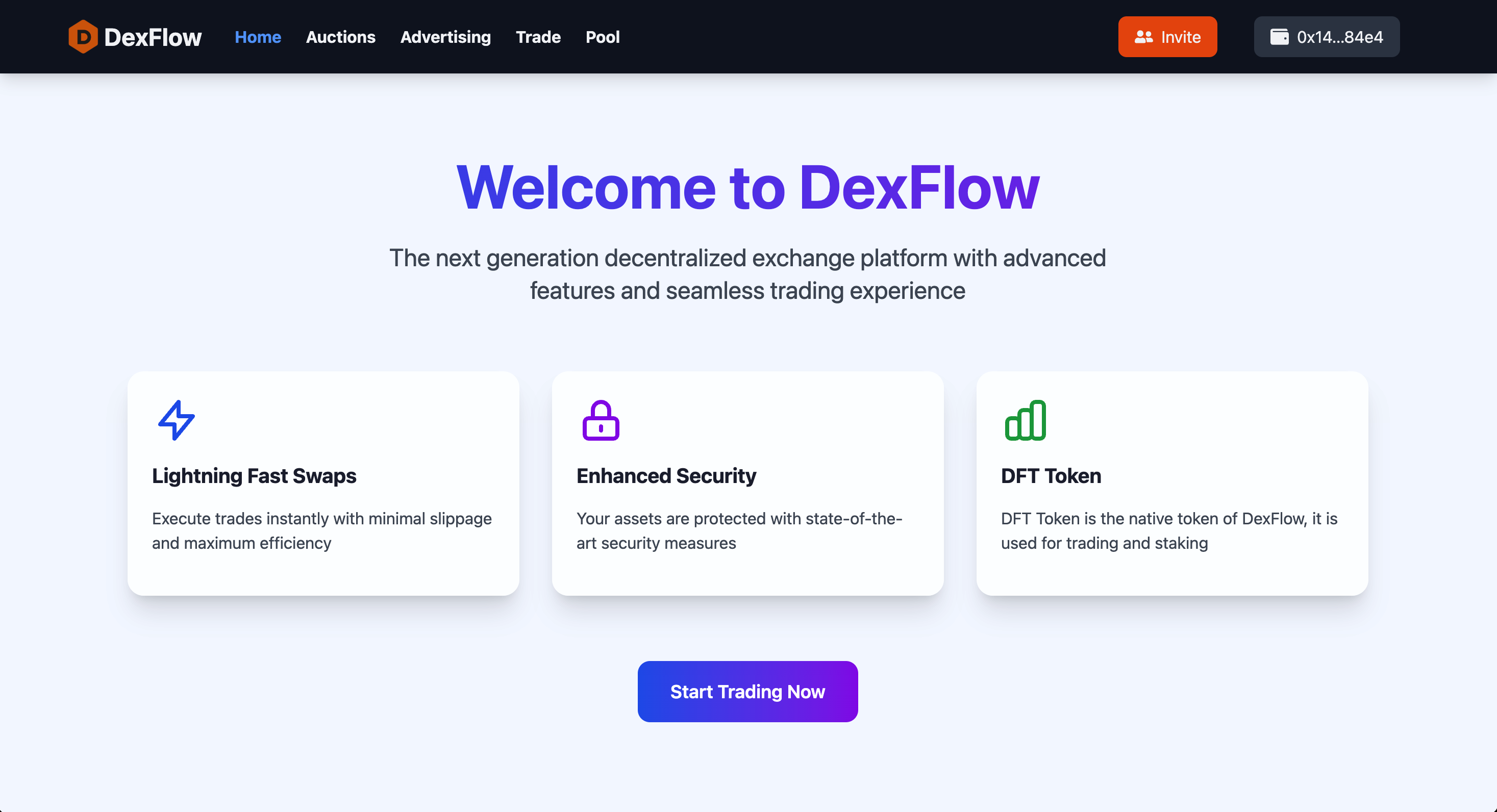
DexFlow was inspired by the need to create a more comprehensive and user-friendly decentralized exchange platform. We observed that existing DEXs often lack advanced features like NFT auctions and advertising capabilities, which are essential for a complete Web3 ecosystem.
What it does
DexFlow combines traditional DEX functionality with innovative features:
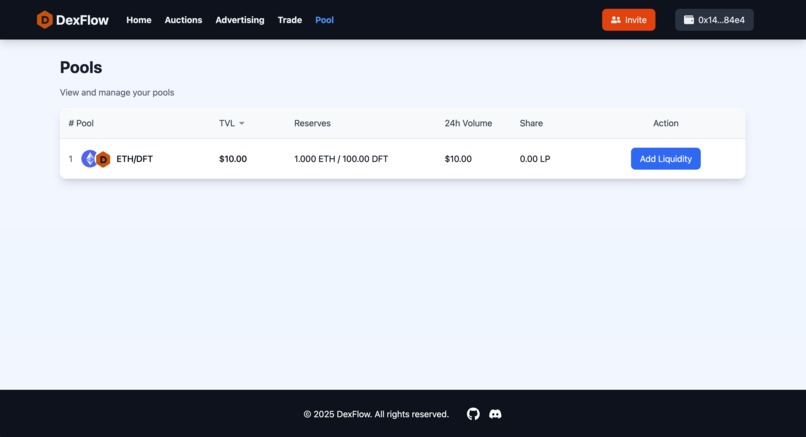
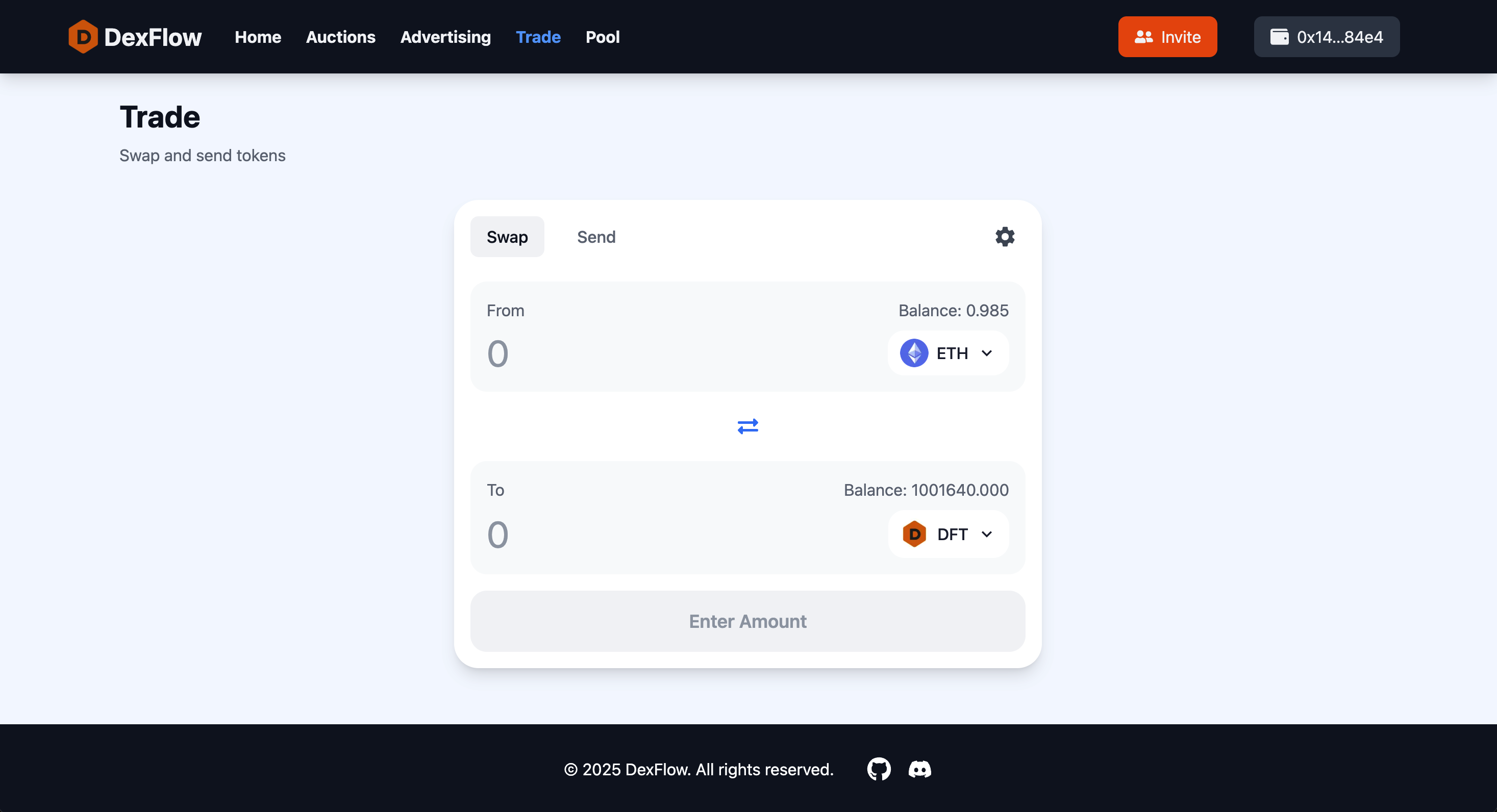
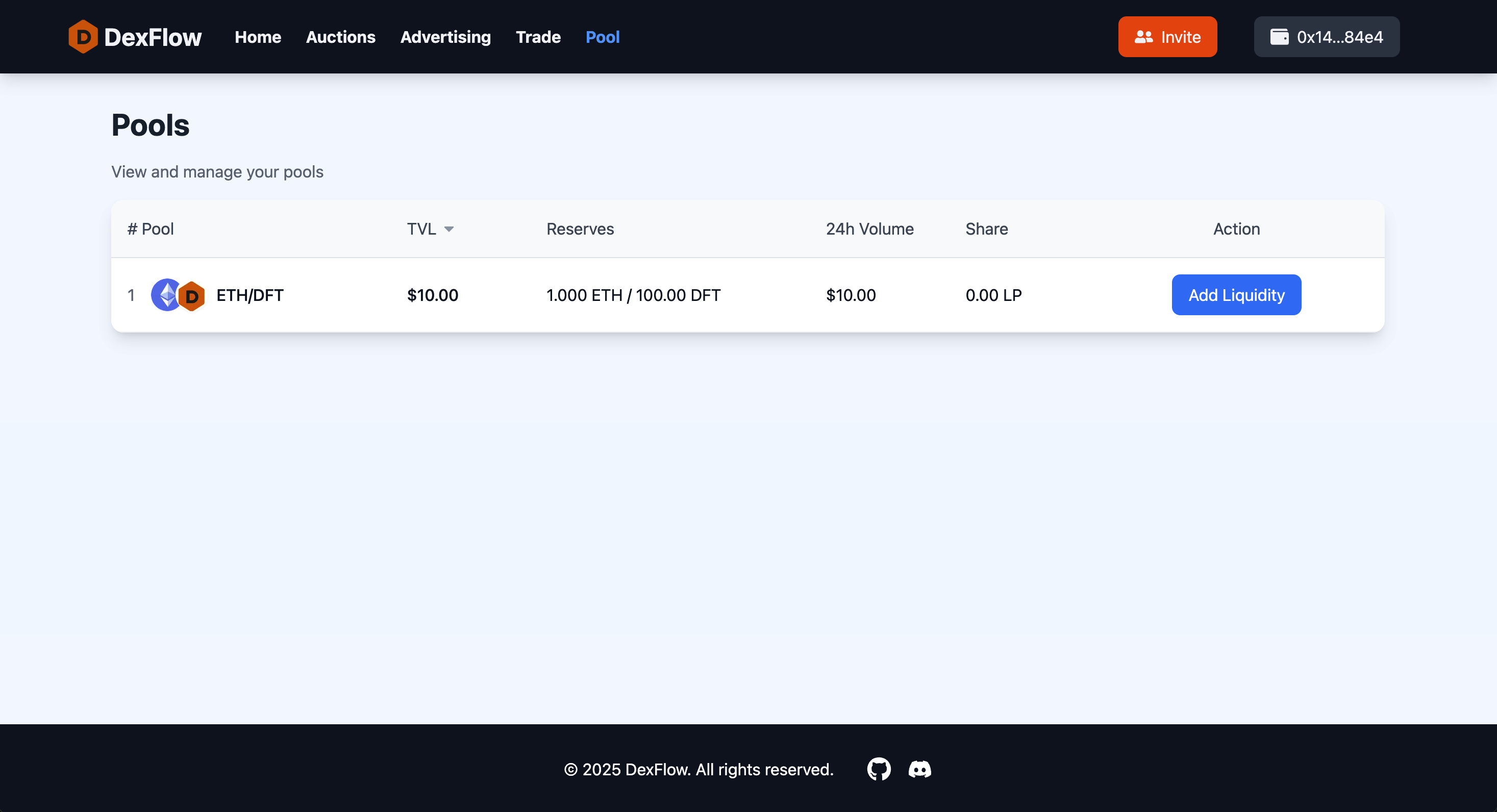
- Token swapping and liquidity provision
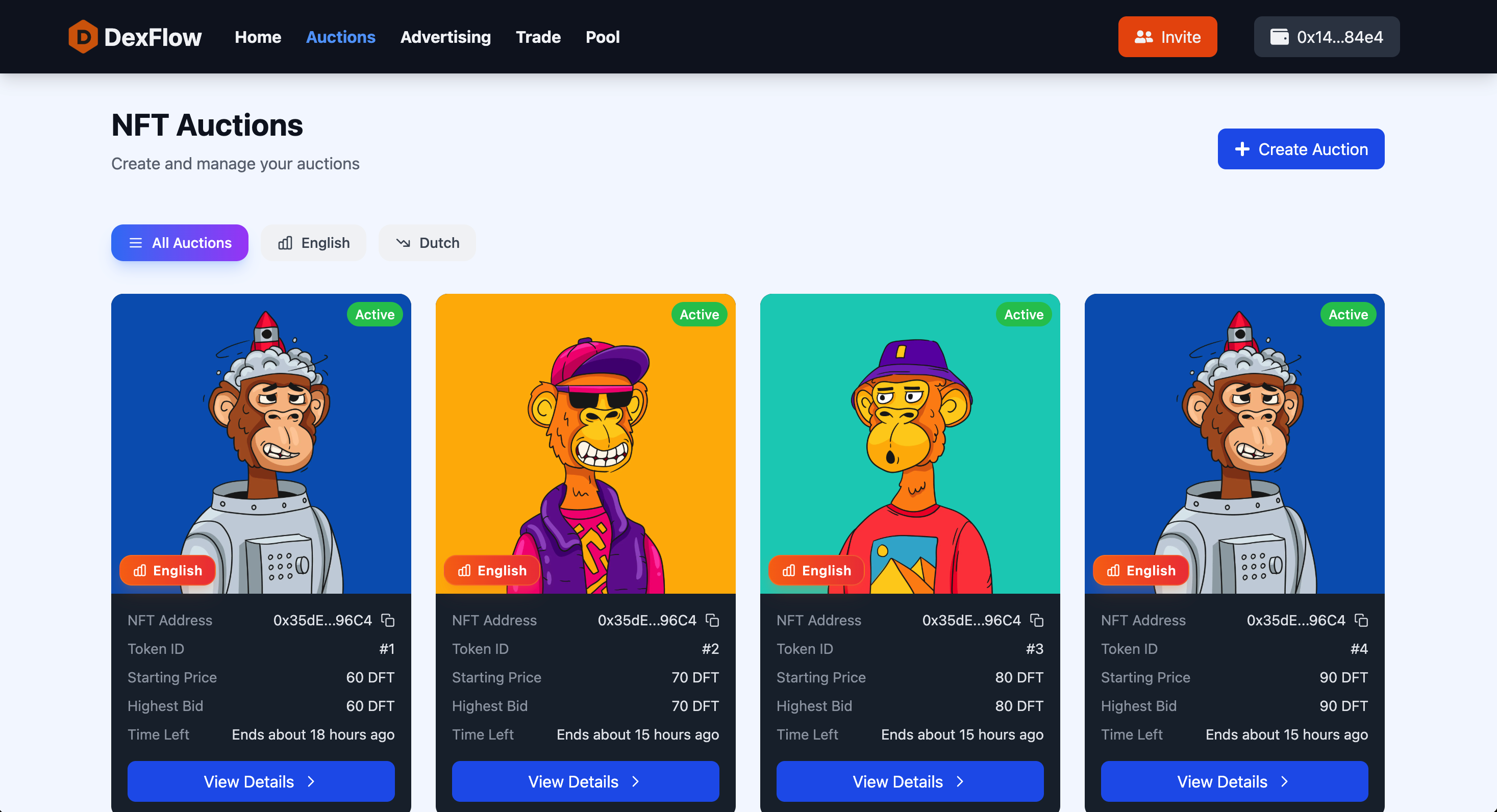
- NFT marketplace with English and Dutch auctions
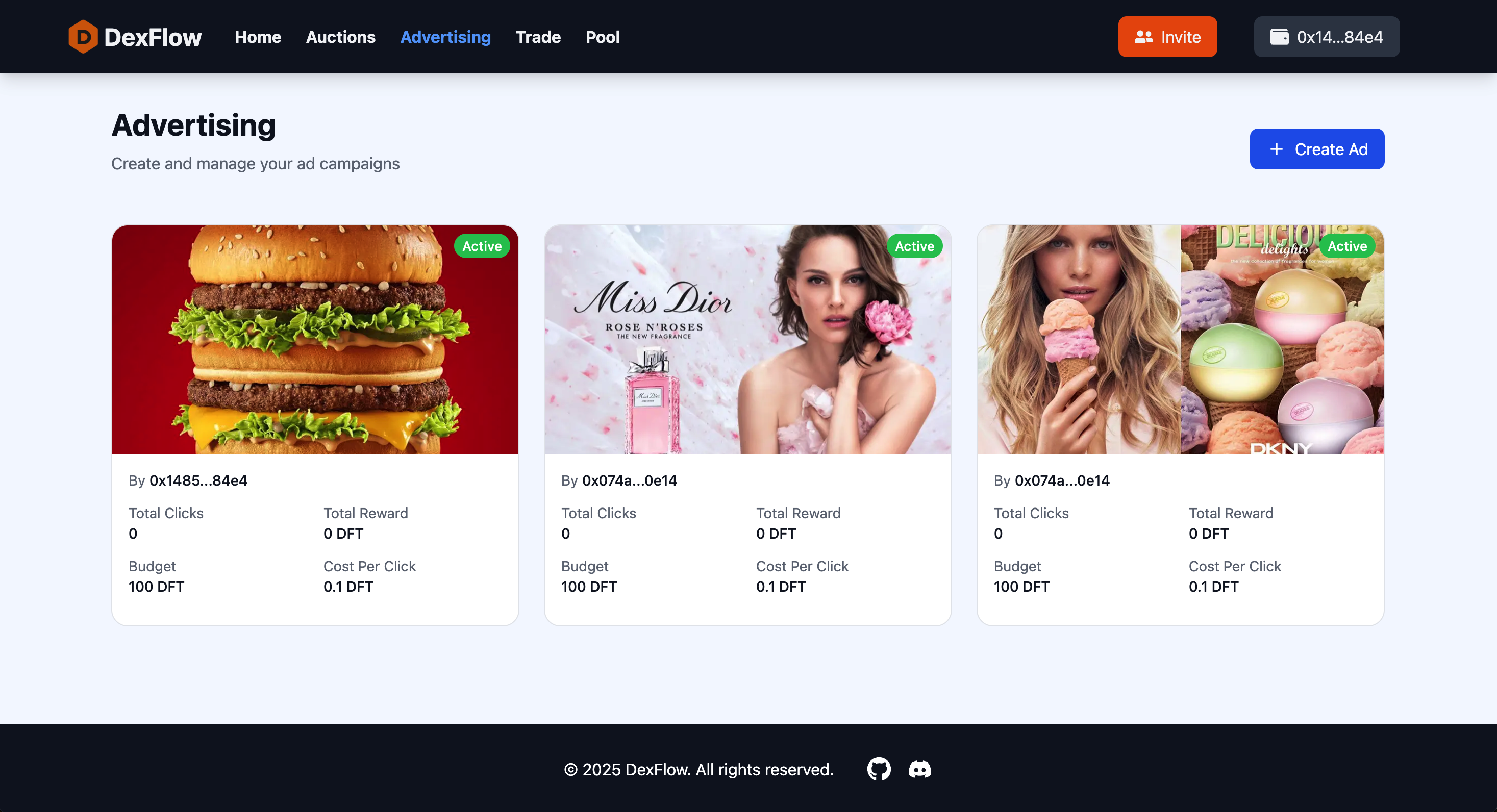
- On-chain advertising system
- Native DFT token and DFNFT integration
- User invitation system
How we built it
We built DexFlow using a modern tech stack:
- Smart Contracts: Solidity for core functionality
- Frontend: Next.js with TypeScript
- Backend: Prisma for database management
- Infrastructure: Vercel for deployment
- Testing: Hardhat for contract testing
Challenges we ran into
Complex auction mechanisms implementation
Liquidity pool optimization
Cross-contract interactions
Real-time price updates for Dutch auctions
Accomplishments that we're proud of
Seamless integration of DEX and NFT marketplace
Innovative on-chain advertising system
User-friendly interface with real-time updates
Efficient liquidity management system
What we learned
- Advanced smart contract patterns
- Complex state management in DeFi applications
- Cross-contract communication strategies
- Real-time data handling in Web3
What's next for DexFlow
- Multi-chain deployment
- Advanced trading features
- Enhanced advertising analytics
- Community governance implementation
Built With
- blockchain
- defi
- hardhat
- liquidity
- next.js
- nft
- prisma
- react
- solidity
- swap
- typescript
- vercel
- web3


Log in or sign up for Devpost to join the conversation.