

Inspiration
Many teams use AI for small tasks or autocompletion — but what if AI could run entire dev pipelines, automating not just coding, but planning, testing, and integration? Backlog refinement (grooming) shows that vague tasks often block progress; giving each task clarity before work begins saves time and reduces rework. By combining AI, automation, and proper orchestration, we can turn backlog items into real code faster, reliably, and with higher consistency — letting human engineers focus on design, architecture and complex logic.
What it does
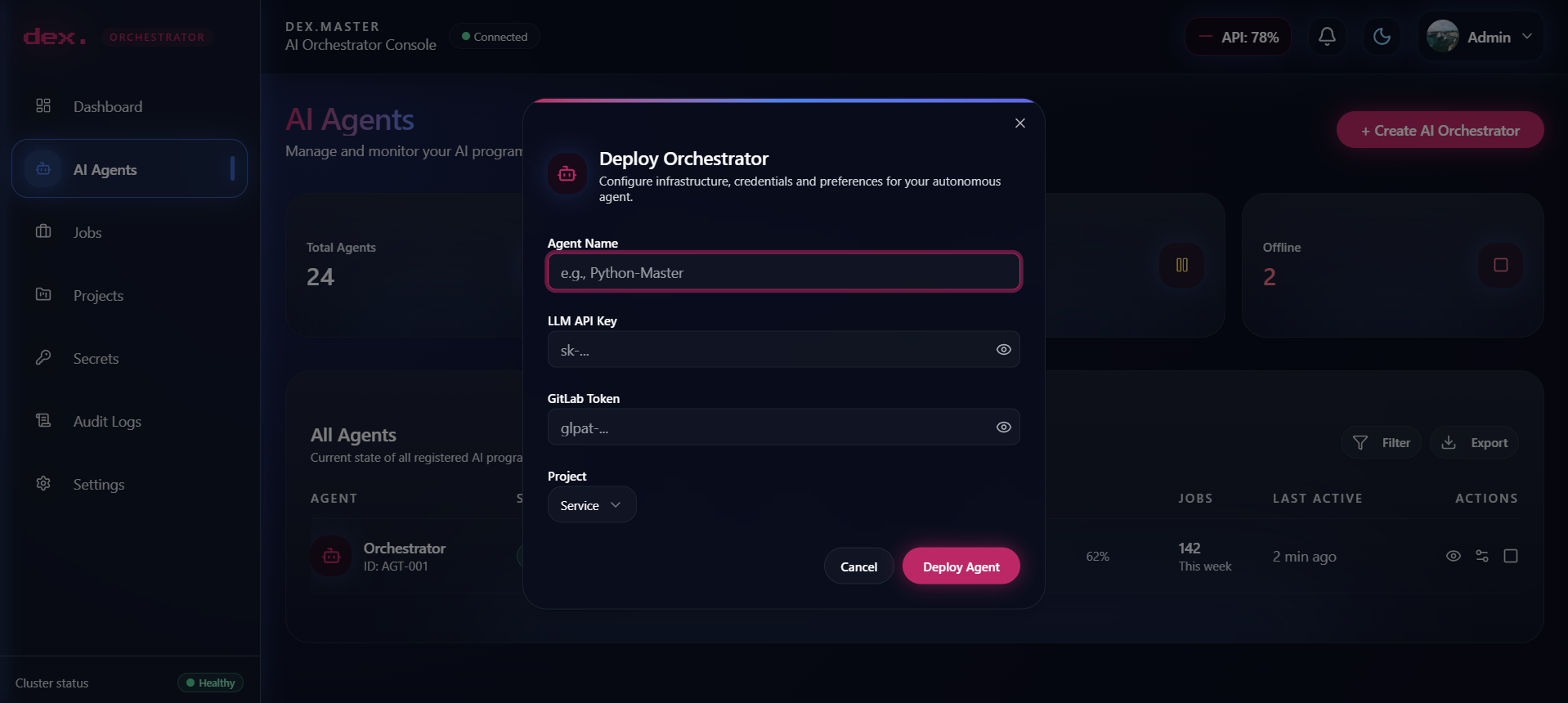
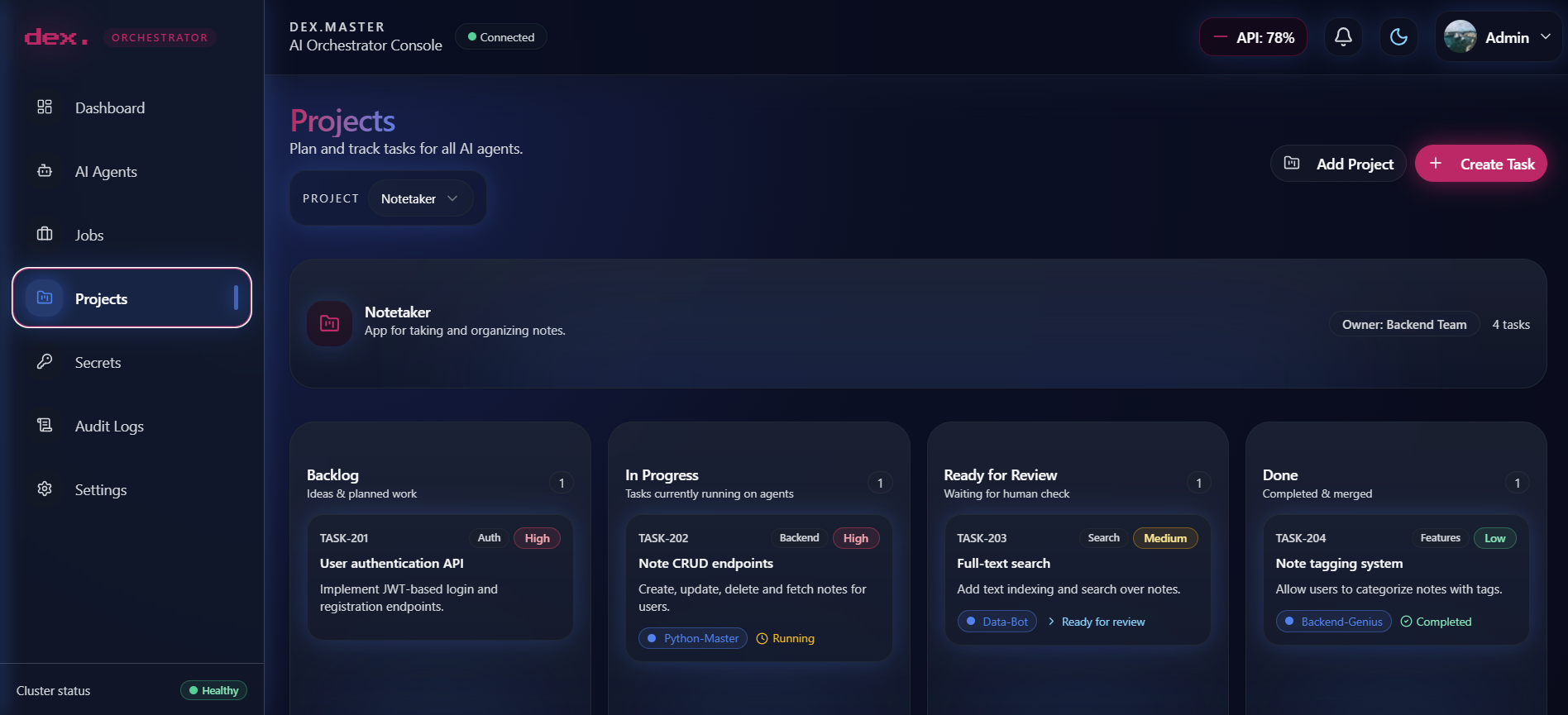
DEX automatically ingests tasks from external project management systems. Before any execution begins, it refines and clarifies each task to ensure full understanding and remove ambiguity. It then generates a structured plan, breaks work into actionable subtasks, and assigns them to specialized AI agents defined through configurable templates. The system uses contextual retrieval to understand the existing codebase and project environment, enabling agents to produce consistent, high-quality contributions. All agents run in isolated environments and receive work through an event-driven orchestration layer. Their outputs are validated through reasoning, testing, and static checks to maintain reliability and safety. Progress is visualized on an internal Kanban board that mirrors real engineering workflows. Human involvement is minimized — intervention is only required for final review or approval also when task clarification is needed.
How we built it
We built DEX-3 using a modular backend architecture: FastAPI + SQLAlchemy + Pydantic — backend API, task management, agent-template configs, db ORM. PostgreSQL — persistent storage of tasks, subtasks, agent runs, configs. Kafka — event-driven orchestration and job routing to agents. Python agent runtime(LangChain & LangGraph) — generic containerized worker that loads config from DB and executes a ReAct loop. RAG (Qdrant) — retrieves codebase context so agents write code that fits the project. Tool layer + MCP protocol support — safe access to filesystem, git, tests, and repo operations. Planning + refinement agents — ensure every Jira task becomes clear before execution. Everything is configurable — new agent types are defined through DB templates, not new code.
Challenges we ran into
Time limitations: Building a fully functioning multi-agent system in hackathon time required simplifying while keeping the core architecture intact. The Resource Limitations: Having only a singular VM to run a software on it while having constant network drops was one of those pains.
Accomplishments that we're proud of
Usable and attractive Frontend. Really good representative logo, name and presentation. For the time we had we accomplished quite working backend. We’ve put together a dependable, well-balanced team.
What we learned
Communication and cooperating between team members. How to work in team using design thinking methods. New technologies.
What's next for DEX.-3
Connecting Frontend and backend. Automatic merge-request creation with full test evidence. Advanced QA agent for static analysis + security scanning. GitOps integration for infra pipelines. Organization-wide agent swarm orchestration.


Log in or sign up for Devpost to join the conversation.