-
-
-
-
-
Web Dashboard


Note: This is not the full report. Please visit the following google doc for the full report. https://docs.google.com/document/d/11fiTgcDPayZRR1QuttujGXTla0cLxl2nnQIvxD3IUaw/edit?usp=sharing
Inspiration
There are countless news stories and articles on the impacts of human activity on the climate. Until I started this hackathon, I’ve realized that the topic of the impacts of climate change on society isn’t as well explored. Yet, it is an equally crucial subject that must be addressed. While news outlets focus on climate outlooks and the implications on industry, I wanted to focus on the communities that are impacted most by climate change.
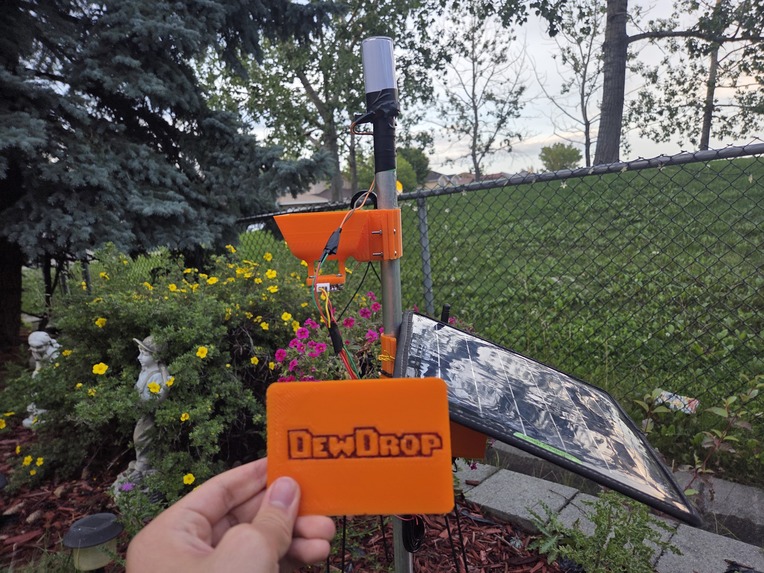
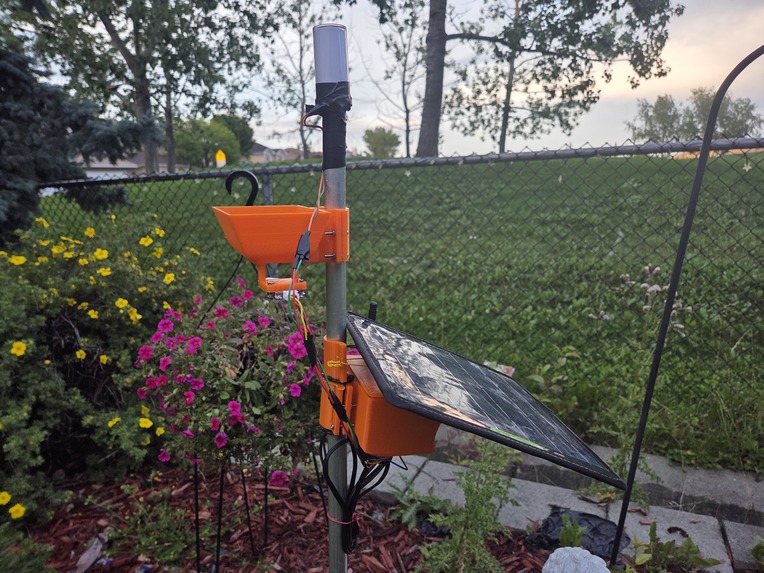
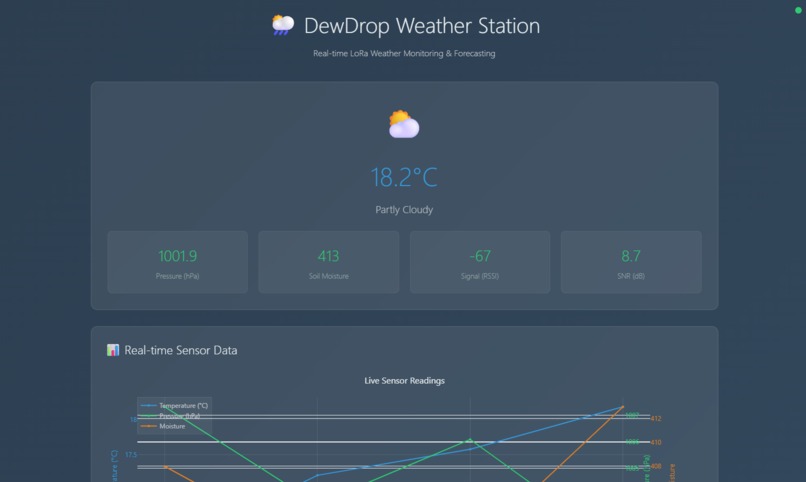
This is why I have decided to create DewDrop - an accessible and affordable IoT based weather station aiming to provide the early detection of severe weather events to remote / vulnerable areas.
How we built it
The DewDrop was created with a few critical criteria in mind:
The weather station must be easy to deploy and operate in inaccessible areas (such as mountain ranges, etc.)
- Many remote areas are very hard to access and thus pose a challenge to developing infrastructure in general
The weather station must be self-sustaining (must not require external infrastructure to operate)
- The lack of power networks in small communities is a concern that can be mitigated through solar power and the use of long distance radios (LoRa)
The station must be affordable and easy to produce
- In addition to affordability, the DewDrop should be easy to make to create a more effective detection network, rather than a few centralized stations that may not pick up holistically on adverse weather effects in time
Challenges we ran into
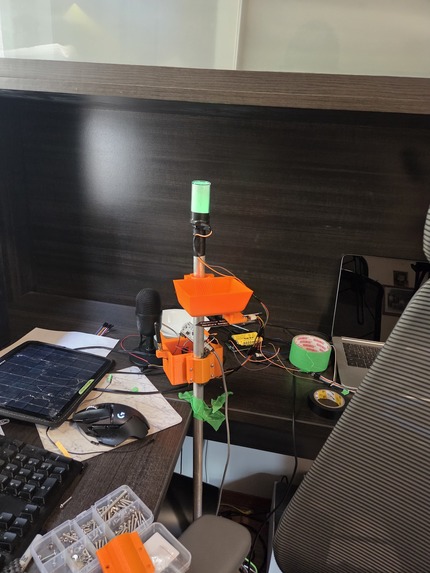
The most challenging part of the project was the wiring, as all devices outside of the case had to be routed through the bottom and thus made it extremely difficult to assemble, and made it nearly impossible to debug. As a result, future iterations would likely utilize a PCB with predefined pin headers for easy assembly
Accomplishments that we're proud of
As this is my first successful LoRa IoT project, I am extremely proud to have created a full stack working implementation that could be truly implemented in the real world.
What we learned
When talking about climate change, the first thing that comes to my mind are national policies and the actions of the people. However, I have learned much more about the real life implications of climate change through researching this project.
What's next for DewDrop
As Dewdrop is highly modular by design, I want to create more modules in the future that could include wind speed tracking and perhaps even camera systems to detect events such as wildfires.


Log in or sign up for Devpost to join the conversation.