-
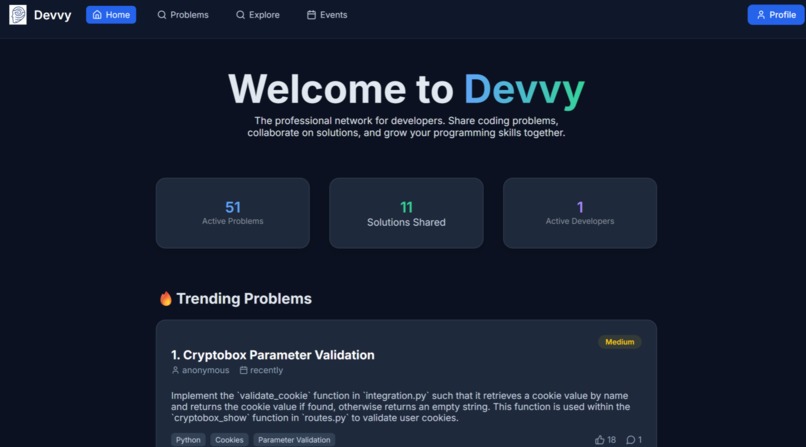
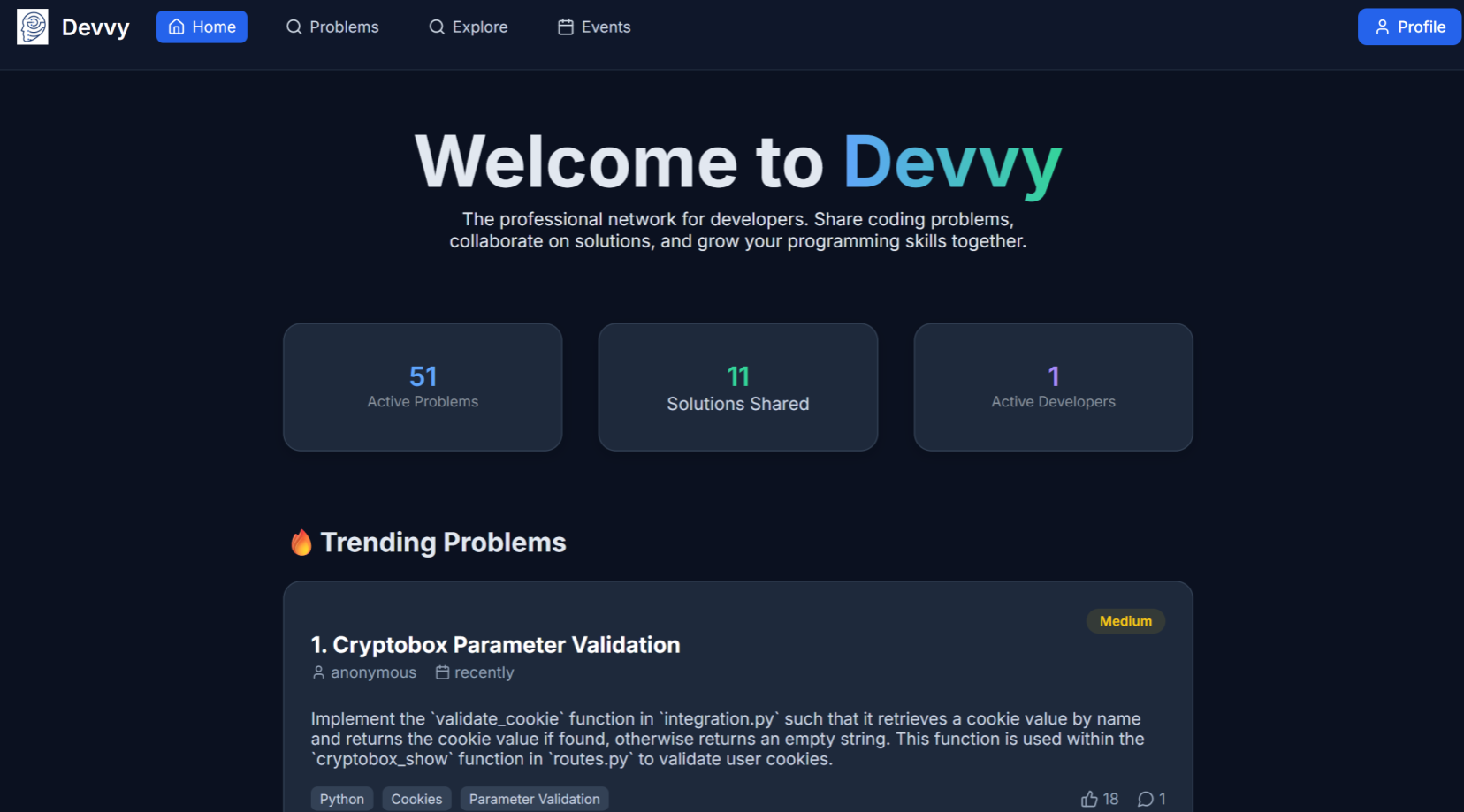
ui design home page
-
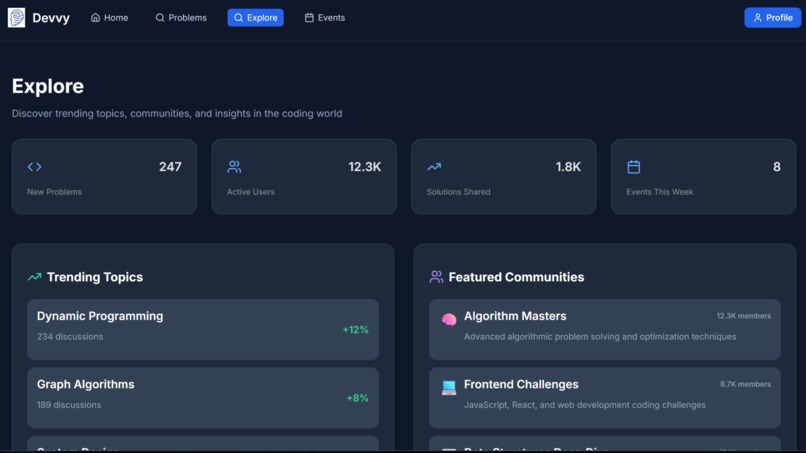
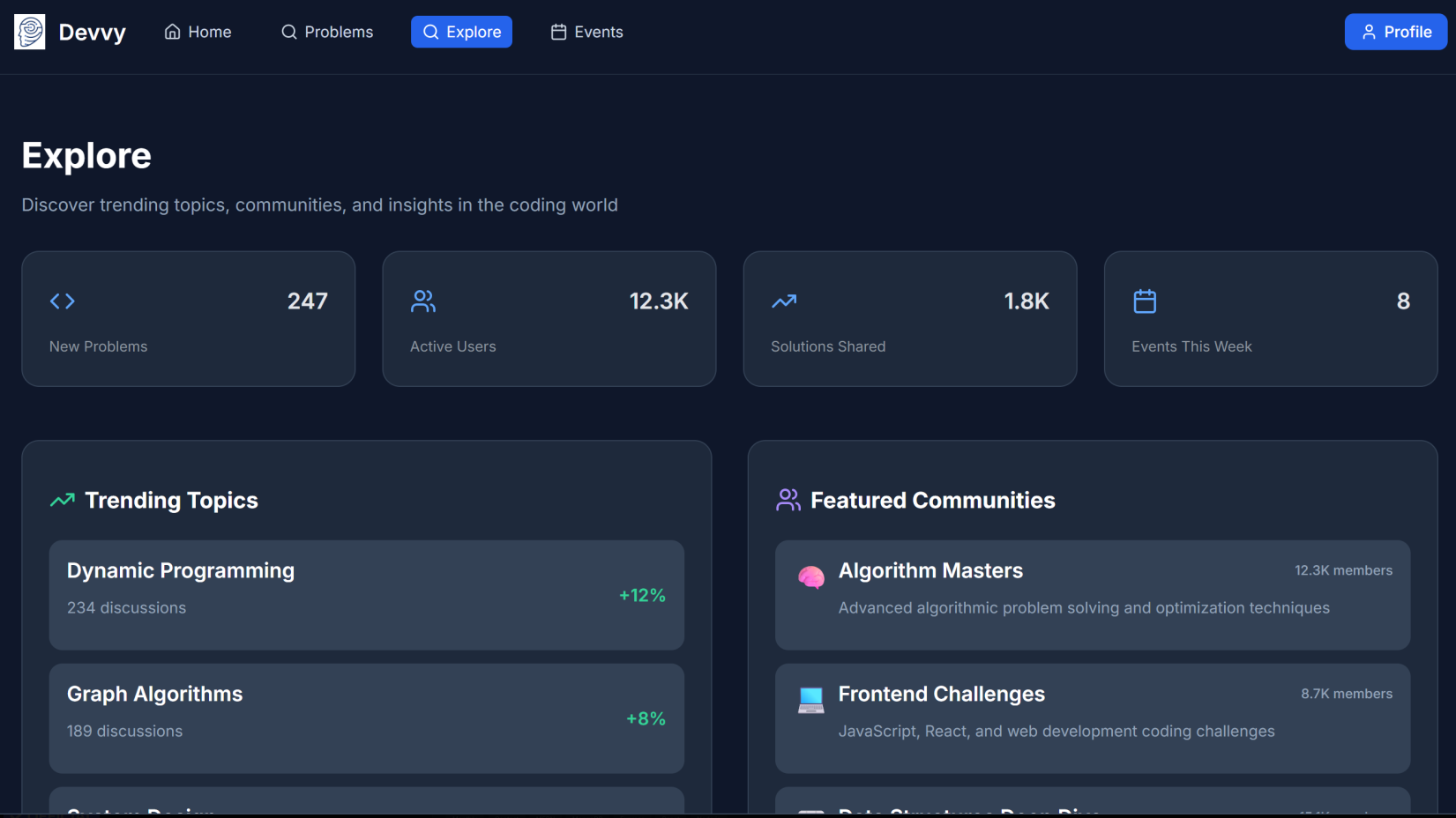
ui design explore page
-
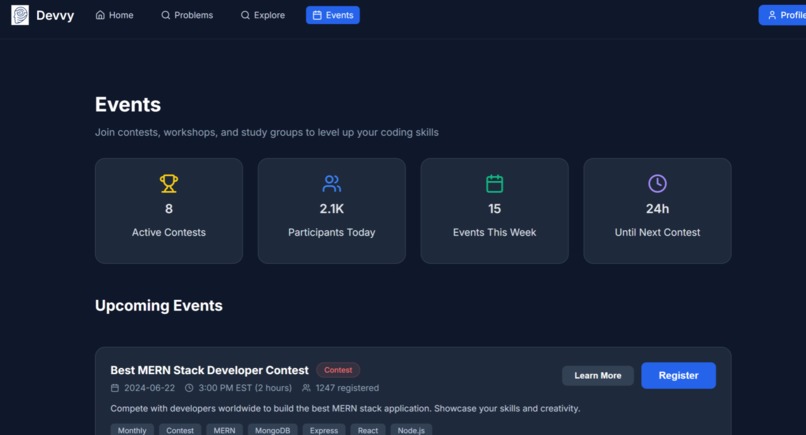
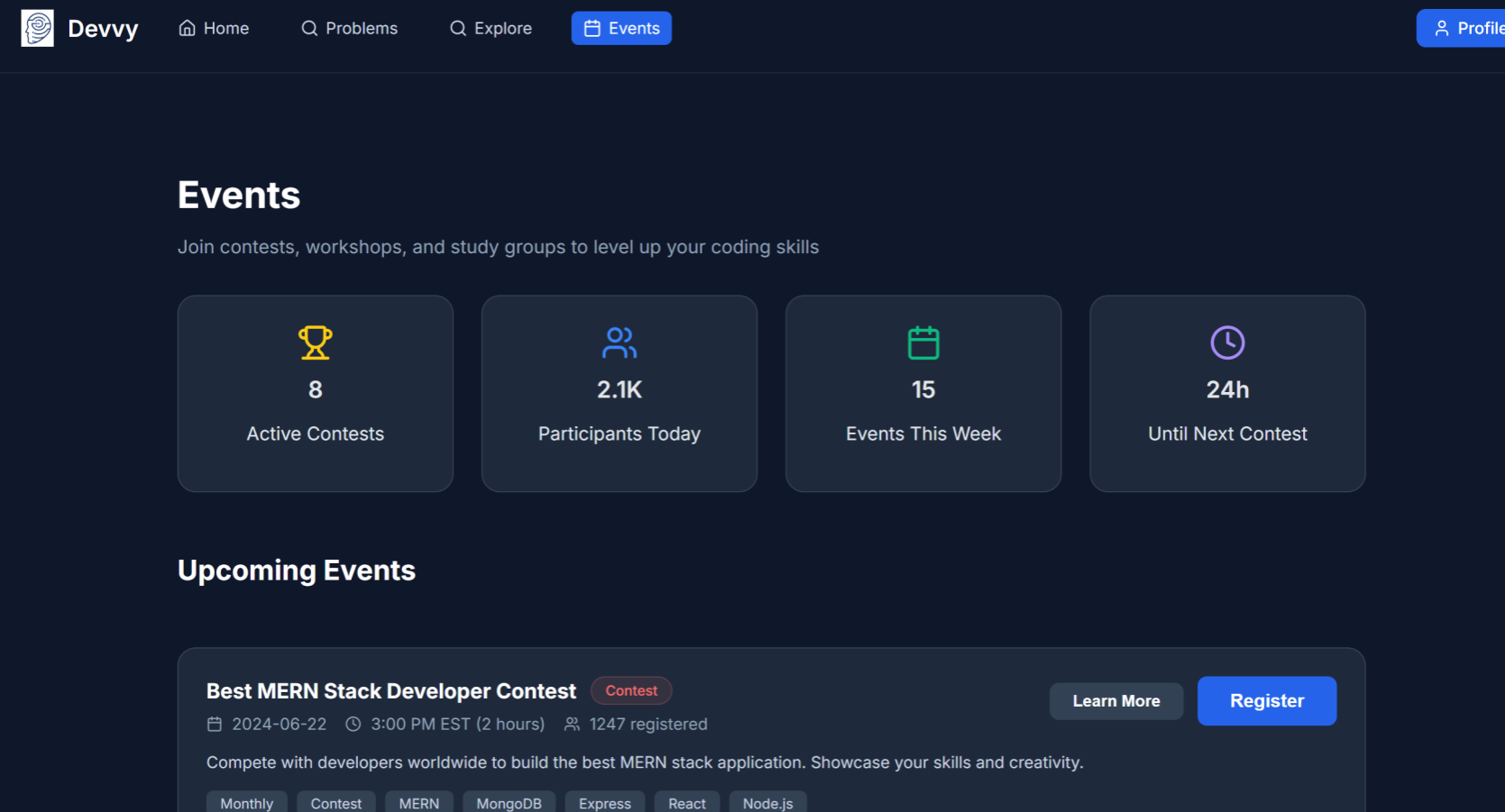
ui design events page
-
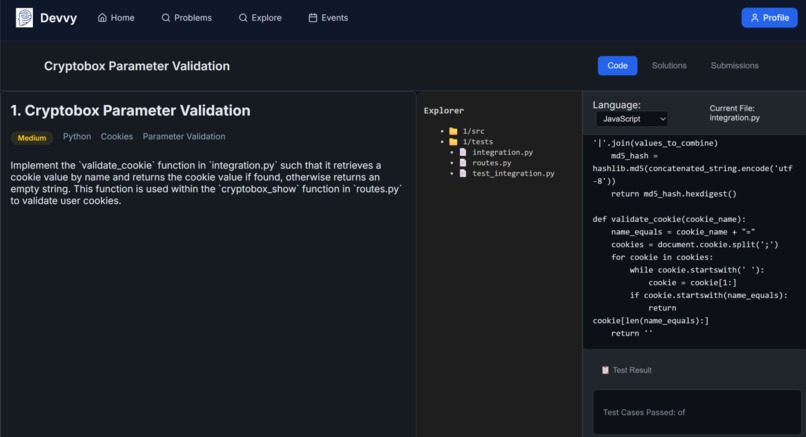
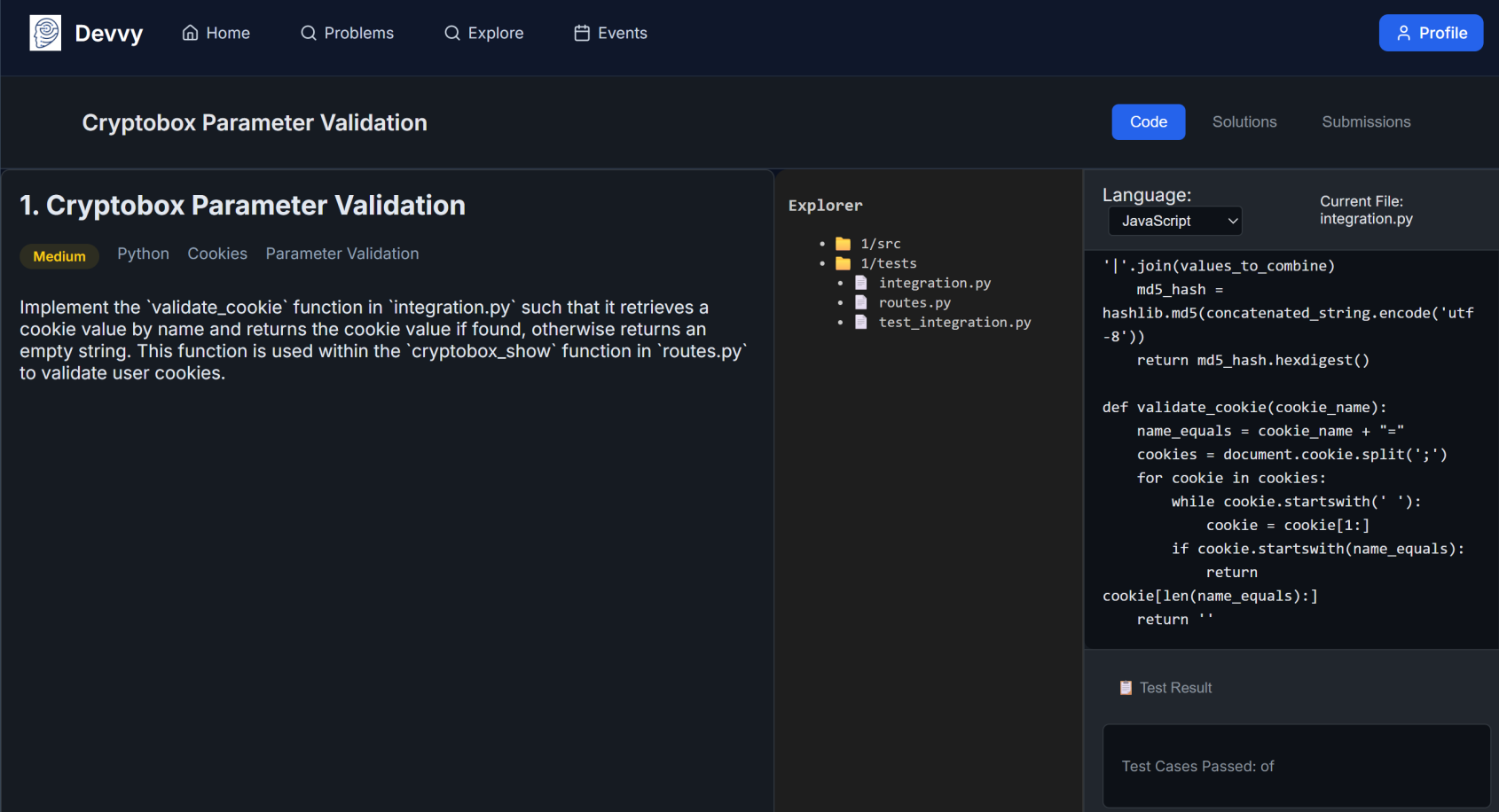
ui design problem interface
Inspiration
We’ve all been there, spending weeks grinding LeetCode, only to bomb a technical interview that demands real-world skills: debugging, system design, UI implementation, teamwork. The catch? None of that is taught by puzzles.
As engineering students, we build amazing side projects however, recruiters still judged us by whether we could invert a binary tree.
So we asked ourselves:
What if technical platforms looked more like real engineering work?
Devvy is our answer; a platform where students solve real company-style tasks with real applications and gain understanding of tech stacks. Allowing students to problem-solve and gain experience of what they will actually do on the job. This public platform will then also allow companies to post their own problems and scout potential hiring candidates
What it does
Devvy is a project-based technical challenge platform that mimics the real work engineers do, allowing students to solve projects from a database of real company-style problems. Generating experience with corporate applications, rather than repetitive complex algorithm puzzles that pose no relevance to work life.
For Students & Developers:
💻 Solve challenges using real-world stacks: React, Node.js, Spring Boot, and more
🧠 Work on tasks like bug fixes, system design, feature implementation
📁 Build a public portfolio based on peer-reviewed, upvoted solutions
🔄 Get feedback from other engineers in the community
For Recruiters & Companies:
🧪 Post real-world tasks to screen candidates in your specific tech stack
🔍 See how candidates approach problems, not just if they got the "right" answer
🧰 Build a talent pool from devs who already work in your workflows
Devvy connects learning → building → hiring in one seamless flow.
How we built it
Frontend: React, Axios
Backend: Gemini, Open AI, Supabase, PostgresSQL, Docker, Fast API
Challenges we ran into
Managing file and folder structures: We faced issues navigating and parsing project directories, especially when trying to extract meaningful code components for challenge/project generation.
Injecting parsed data into the database: Translating raw file data into structured entries and automating that insertion into our database took several iterations to get right.
Shifting gears: We initially approached Devvy like a startup MVP, but quickly had to pivot and focus on building a hackathon-ready prototype within the time constraints.
Web scraping + AI prompting: We scraped real GitHub repositories and sent the parsed code to ChatGPT to generate prompts. This was tedious and required careful tuning to generate clean, relevant problems.
Accomplishments that we're proud of
⚙️Automated challenge generation pipeline: We successfully pivoting from many previous methods and built a system that scrapes GitHub repositories, parses their content, and uses AI to generate structured, realistic engineering problems. We wanted to create an accurate database of projects for Devvy, therefore we took questions from real GitHub repos.
🔄Dynamic challenge sourcing: We explored and tested multiple approaches (manual curation, scraping, and AI generated prompting) — and ultimately built a working proof-of-concept that creates relevant, practical challenges.
🤝Collaboration under pressure: With a limited time window, we rapidly coordinated tasks across frontend, backend, and AI integration with optimal communication and teamwork.
🚀 From MVP idea to functional product: Despite our ambitious project and initial startup version, we delivered a functioning prototype with real data, working filters, and project-level detail; not just a business pitch.
What we learned
🧹 Scraping real GitHub projects introduced inconsistencies we had to clean manually
🧩 Building flexible frontend components was key when data was incomplete or malformed
🔄 Learned how to simulate API calls using JSON before the backend was ready
🧪 Database seeding required validation logic to avoid crashes and duplicate entries
📉 Miscommunication between team members caused bugs — documentation and clear roles helped
🔄 Frontend/backend syncing got tricky when data shapes changed mid-project
✂️ Pivoting early saved time — we focused on core features instead of overbuilding
🧪 Testing with real data exposed edge cases we didn’t consider with test data
What's next for Devvy
Company-powered challenges: Open up Devvy to allow engineering teams at real companies to post their own internal challenges (bug tickets, endpoint builds, UI components) and use our platform to scout talent based on submissions.
University/bootcamp partnerships: Run real-time events or cohorts where schools assign Devvy challenges instead of traditional assignments, helping students build portfolio-ready, peer-reviewed projects.
Domain-specific tracks: Expand Devvy beyond web dev, introduce specialized tracks for ML, mobile, DevOps, UI/UX, and systems with tailored project templates and company-authored tasks.
Sponsored challenge events: Allow companies to run Devvy Sprint Weeks. Competitive challenge events open to students worldwide. Participants solve branded tasks, get feedback, and top candidates get fast-tracked interviews.
Hiring integration: Build tools for recruiters to view candidate profiles based on actual Devvy submissions, feedback, and tech stack fluency; shifting hiring from resumes to repositories.
Built With
- axios
- docker
- fastapi
- gemini
- openai
- postgresql
- react
- supabase

Log in or sign up for Devpost to join the conversation.