-
165 CLIENT SIDE TOOLS FOR FREE
Every time I needed to format a massive JSON payload, decode a JWT containing sensitive PII, or generate a complex CSS layout, I found myself googling for tools and blindly pasting data into random, ad-riddled websites.
The realization that my production API keys, private system architecture, and client data were being sent to remote servers I couldn't verify was alarming. I realized the developer ecosystem desperately needed a modern, zero-knowledge alternative. I built DevUtility Hub as a privacy-first suite of tools to solve this problem permanently.
What it does
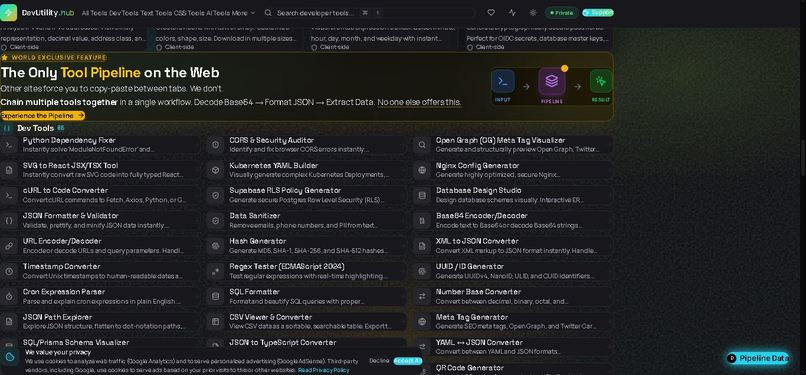
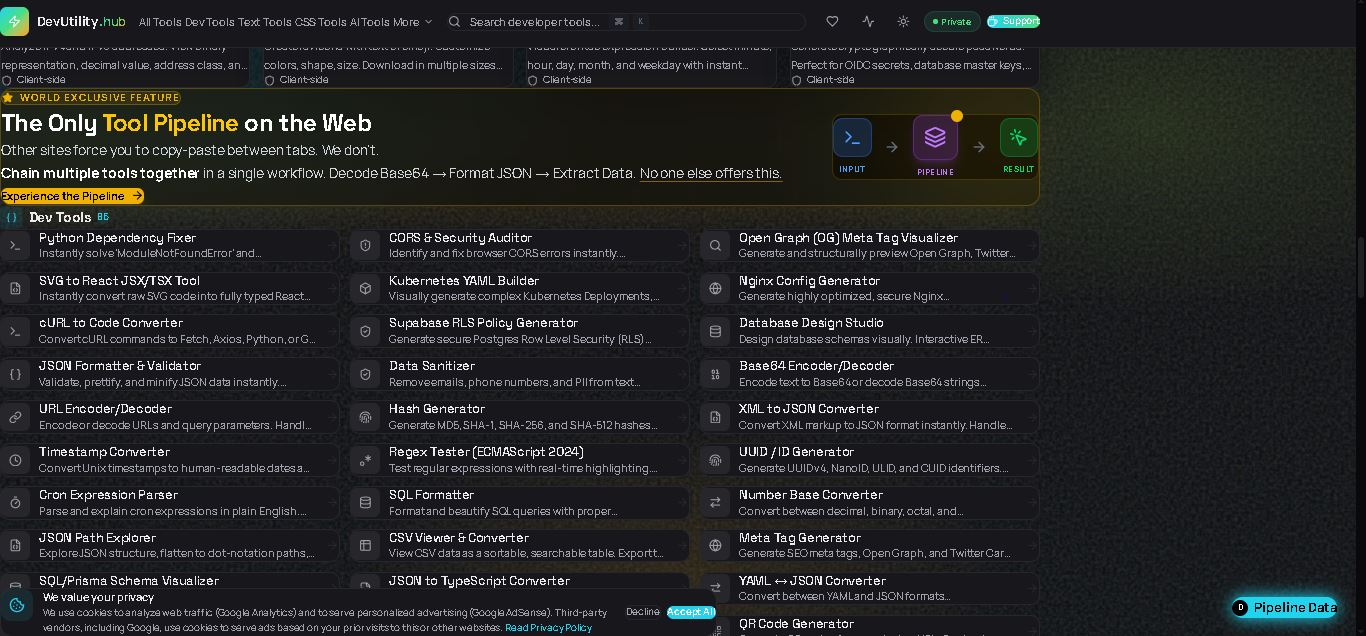
DevUtility Hub is an offline-capable, client-side toolkit featuring over 165+ developer and design utilities. It includes:
- JSON Formatters & Validators
- JWT Decoders
- Base64 Image Encoders
- RSA Key Generators
- CSS Glassmorphism generators
Because the entire application relies on modern Web APIs and WebAssembly (Wasm) rather than a backend server, all data processing happens locally on your device. Once the web app loads, you can completely disconnect your internet, and the tools will continue to function flawlessly in fully air-gapped, secure environments.
How I built it
I architected the platform using React 19 and the Next.js 15 App Router.
To ensure absolute data privacy, I intentionally omitted any backend databases or server-side API endpoints for the tool processing. For the UI, I used Tailwind CSS with a custom-built design system to create a premium, dark-mode-first aesthetic. The entire application is statically generated and hosted on Vercel's global edge network to guarantee instant load times regardless of geographic location.
Challenges I ran into
One of the biggest challenges was ensuring that computationally heavy tasks—like deep YAML-to-JSON parsing, complex cryptography hashing, and large image conversions—didn't block the main thread or cause browser lag. I had to heavily optimize the client-side JavaScript execution and leverage web workers for intensive tasks to maintain a buttery 60fps experience.
Accomplishments that I'm proud of
I am incredibly proud of the Zero-Knowledge Architecture. Building 165 independent tools that can handle thousands of concurrent users with effectively zero server cost or latency is a massive achievement. Furthermore, successfully implementing "Smart Paste"—which automatically detects the format of the clipboard content and redirects the user to the correct tool—creates a magical user experience.
What I learned
I learned an immense amount about the limits and capabilities of the modern browser. Managing client-side state efficiently across a massive suite of tools, optimizing Next.js static payloads, and implementing strict security headers (like Content Security Policies) without breaking client-side functionality were tremendous learning experiences.
What's next for DevUtility Hub
The immediate next steps are expanding the "2026 Stack" frontier tools (like MCP Protocol Inspectors and AI Context Compressors), and building out a seamless Tool Pipeline feature.
This pipeline will allow developers to chain tools together—for instance, taking a minified JSON payload, piping it into the formatter, converting it to TypeScript interfaces, and generating Zod validation schemas all in one fluid, automated workflow.

Log in or sign up for Devpost to join the conversation.