Inspiration
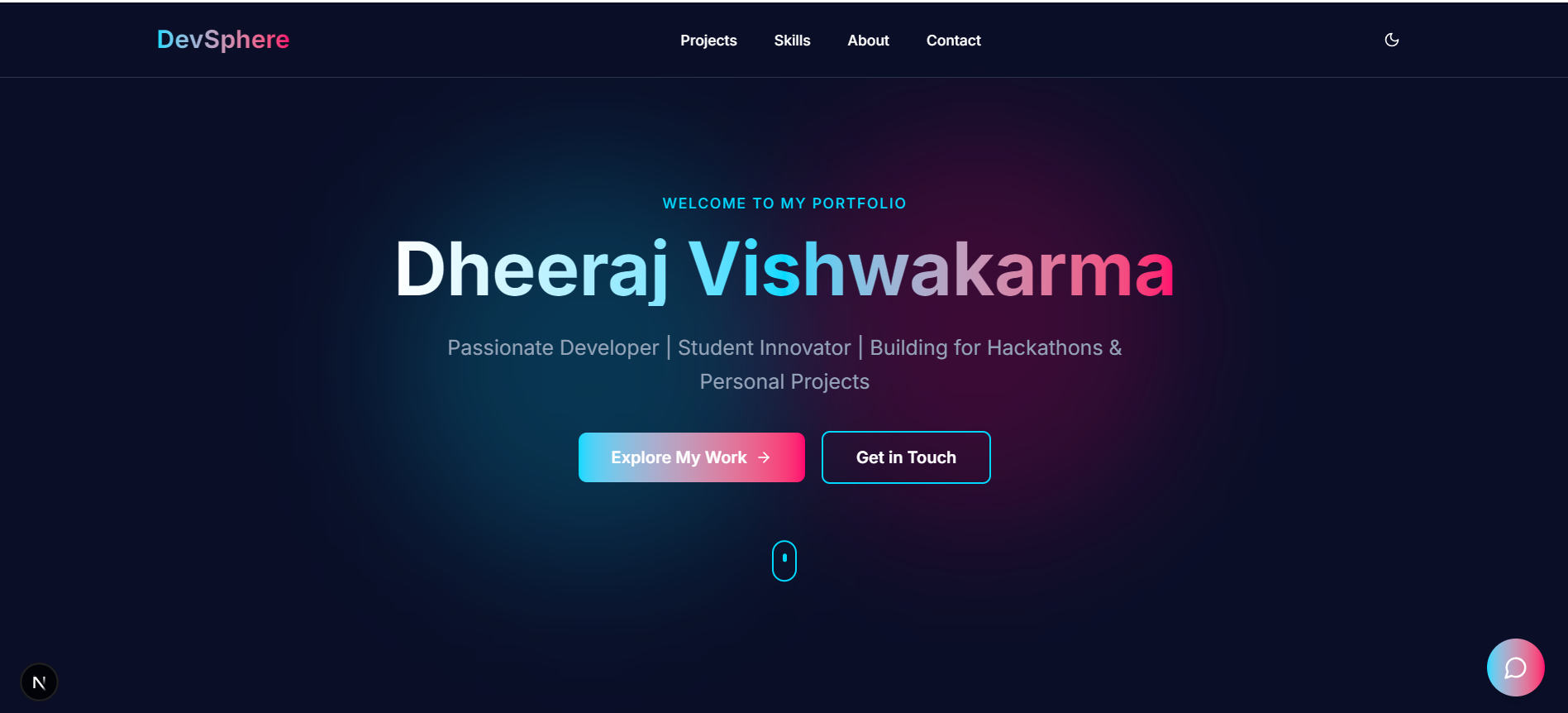
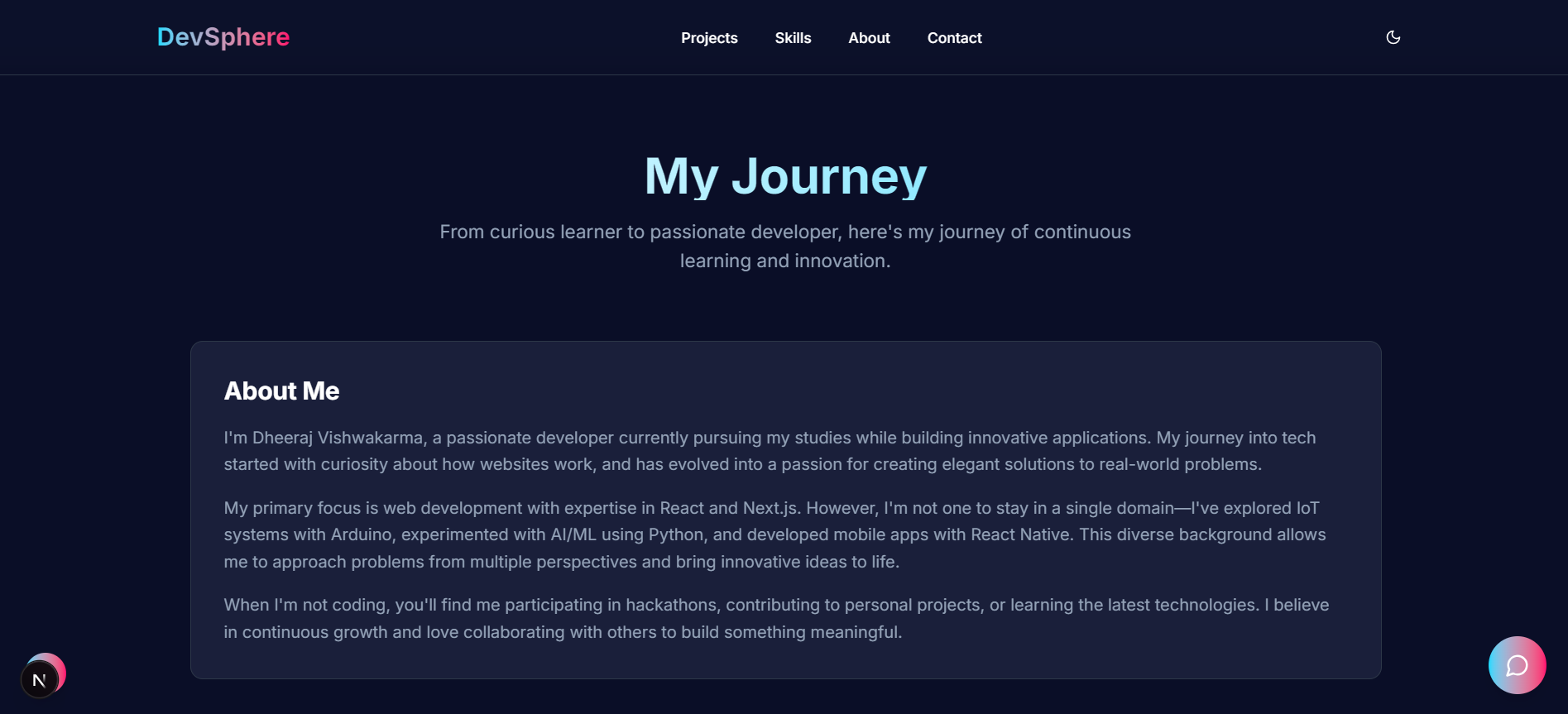
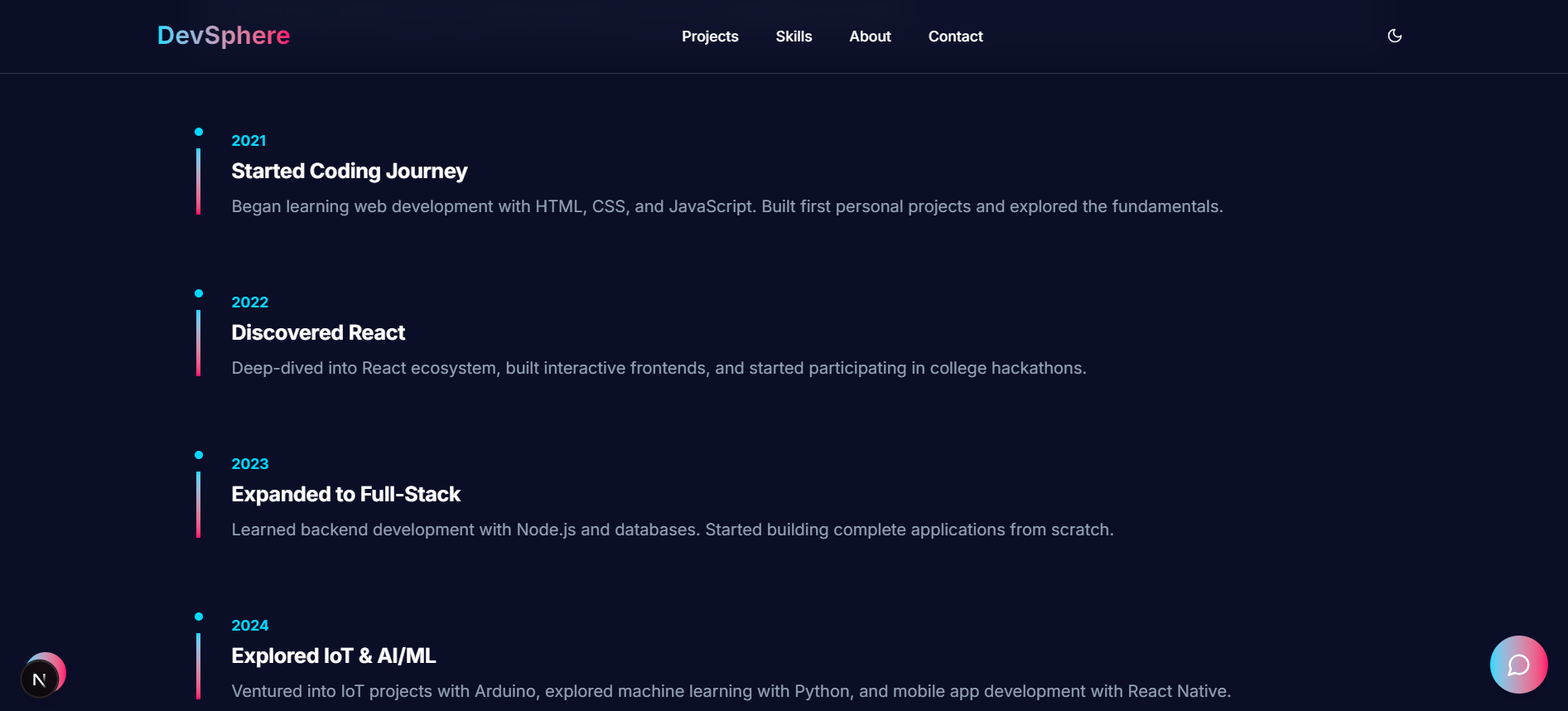
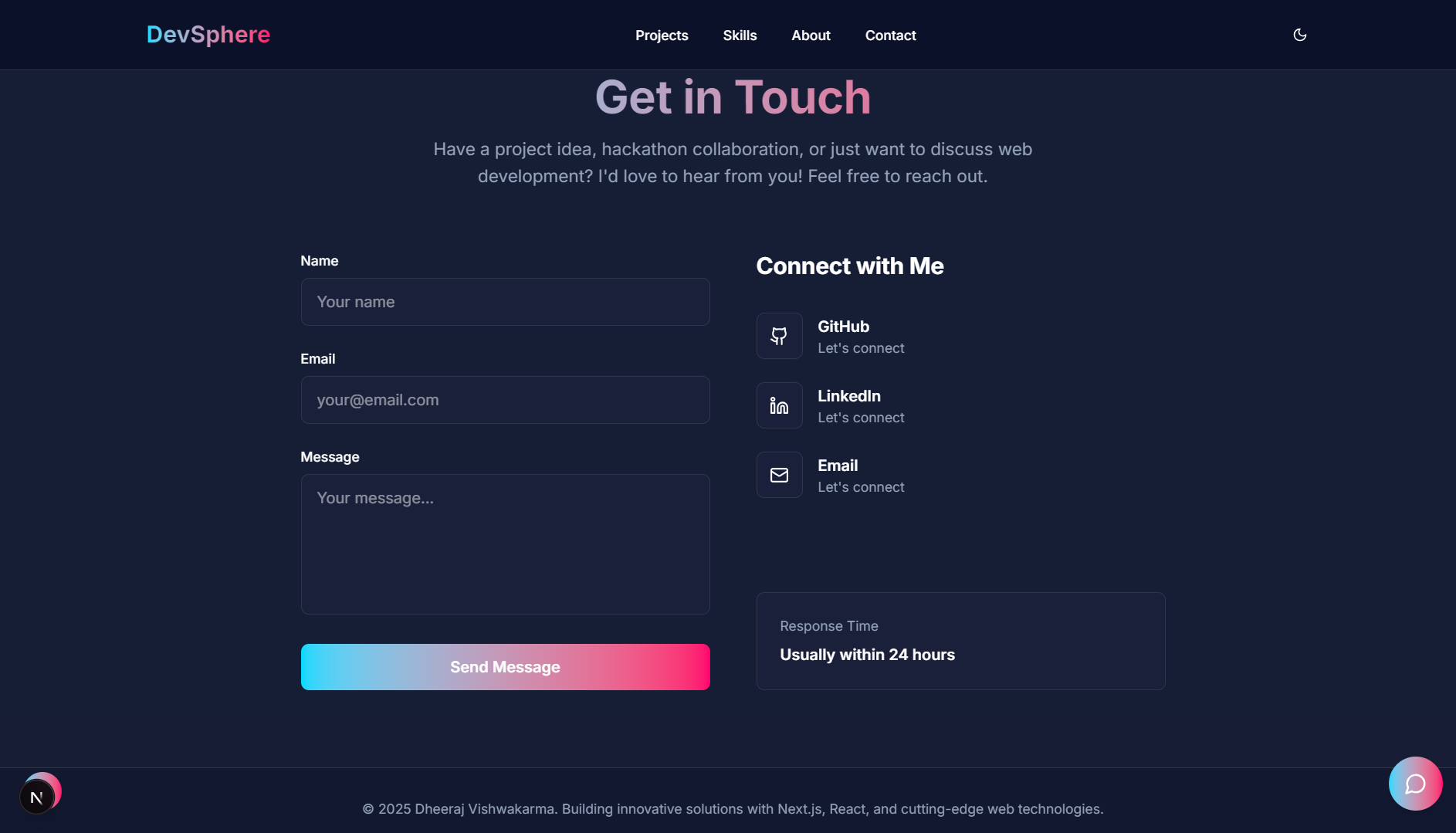
We built DevSphere to create a single, polished hub for experiments and finished projects. The idea came from participating in hackathons and wanting a central place to link live demos, source code, and concise write-ups. We also wanted a space to learn integrations between modern stacks (Next.js, Streamlit, AI APIs) and to showcase small, focused demos alongside a professional portfolio.
What it does
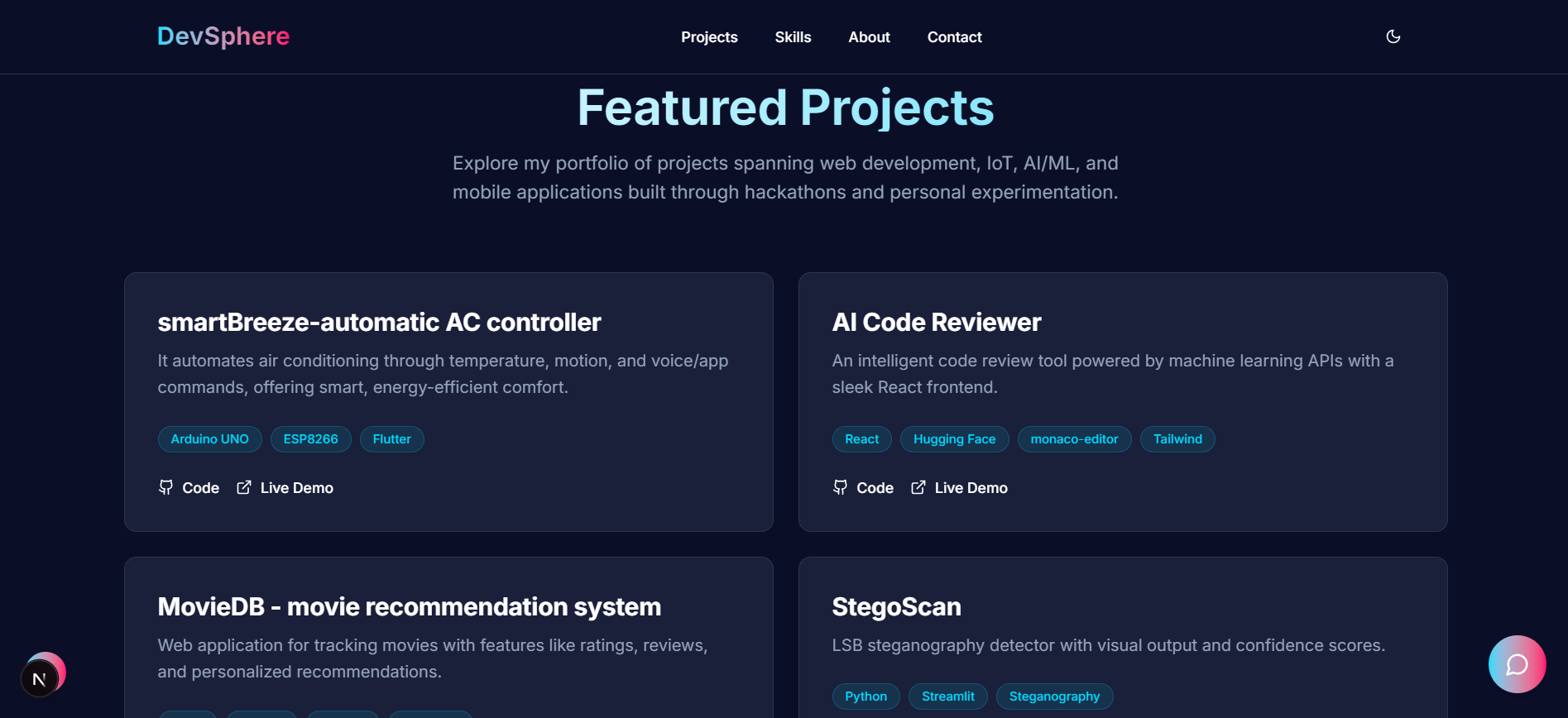
- Presents featured projects with one-line summaries, repo links, and live demo URLs.
- Hosts an AI-powered chat endpoint (
/api/chat) that summarizes projects and responds to visitor queries using OpenAI models via theaipackage. - Links to small demo apps (Streamlit) such as StegoScan (steganography detection) and an ipynb-to-pdf converter.
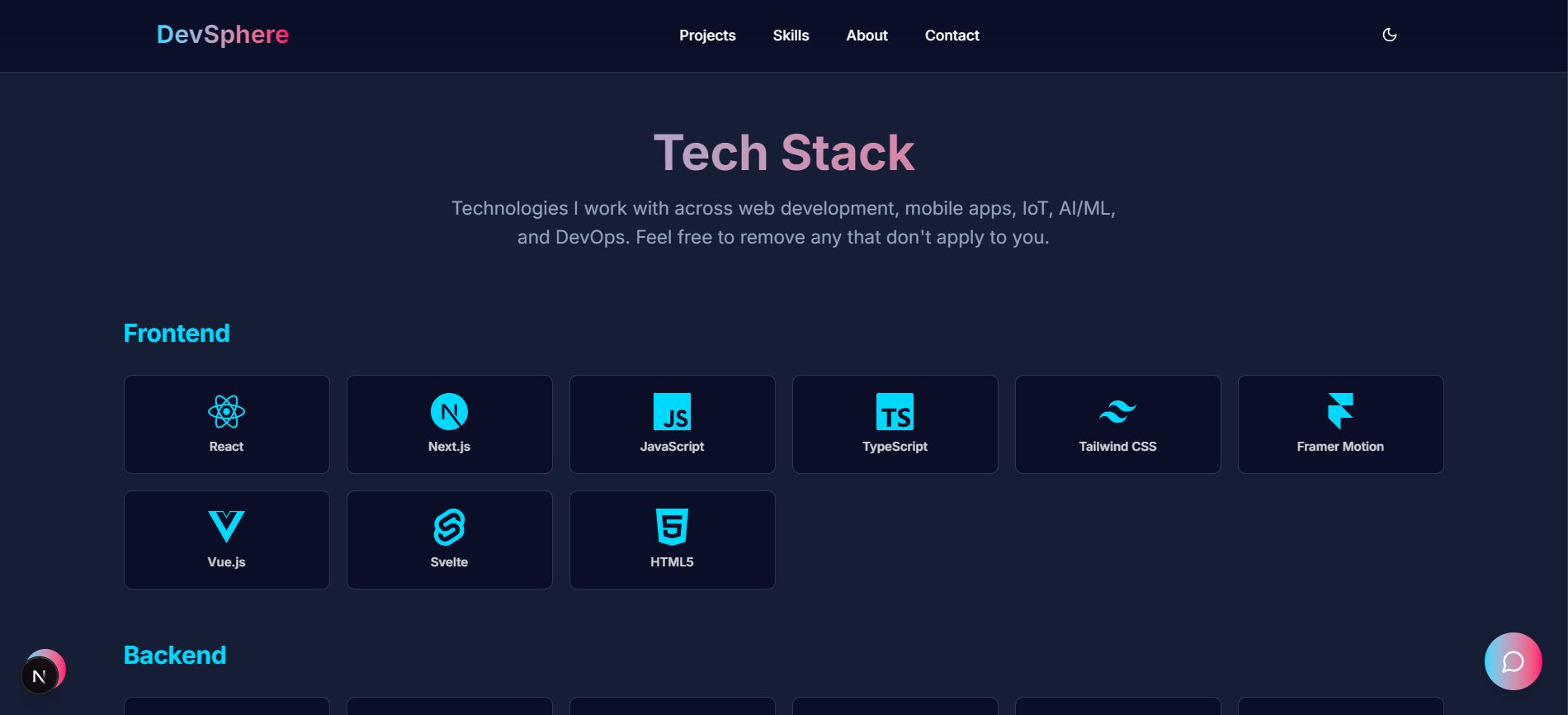
- Provides a responsive, animated UI built with Next.js + TypeScript + Tailwind and Framer Motion.
How we built it
- Frontend: Next.js 13 (App Router) + TypeScript, Tailwind CSS, and Framer Motion for animations. Components are under
components/and pages underapp/. - API: A server-side route
app/api/chat/route.tswraps theaipackage and forwards chat messages to OpenAI. Environment variables are used for API keys. - Demos: Streamlit apps are small, independent services linked from the portfolio cards and hosted separately to keep the main site lightweight.
- Demos: Streamlit apps are small, independent services deployed separately (for example, on Streamlit Cloud). The portfolio links point to those external live deployments — we do not host these demo apps inside the Next.js site itself.
- Deployment: We recommend deploying the frontend to Vercel and Streamlit demos to Streamlit Cloud or another simple host.
High-level data flow:
- Browser requests Next.js pages (SSR/SSG) and receives rendered content.
- Visitor message -> frontend posts to
/api/chat. - API calls OpenAI (via
ai), receives response, and returns it to the frontend.
Challenges we ran into
- API contract differences: The
aipackage expectsmaxOutputTokens(notmaxTokens) which caused TypeScript errors until corrected. - Hosting decisions: Managing multiple small Streamlit deployments while keeping the main site performant required separate hosting and stable links.
- Content scoping: Distilling projects into concise, consistent one-line descriptions took several iterations to make them scannable for judges.
Accomplishments that we're proud of
- A coherent portfolio that doubles as a developer playground and demo hub.
- Integration of a server-side AI chat endpoint that safely forwards messages to OpenAI and returns responses to users.
- Several small live demos (StegoScan, ipynb-to-pdf) linked directly from the site for rapid evaluation.
What we learned
- Practical, end-to-end integration: connecting a modern React frontend to small Python microservices and third-party AI APIs is straightforward but requires careful interface design.
- Type safety is invaluable: TypeScript and type definitions for third-party packages quickly revealed incorrect option names and prevented runtime surprises.
- UX for demos: short summaries and direct live links help reviewers evaluate projects faster during hackathons.
What's next for DevSphere - Personal Portfolio
- Add automated tests for the
/api/chatendpoint and a simple end-to-end test. - Add screenshot thumbnails and short GIFs for each featured project to improve the submission package.
- Expand StackQuest gamification with a richer XP and achievement model and surface analytics on the project page.
- Optionally generate a one-page PDF submission brief from this document for hackathon submission.
Built With
- next.js
- tailwindcss
- typescript


Log in or sign up for Devpost to join the conversation.