-
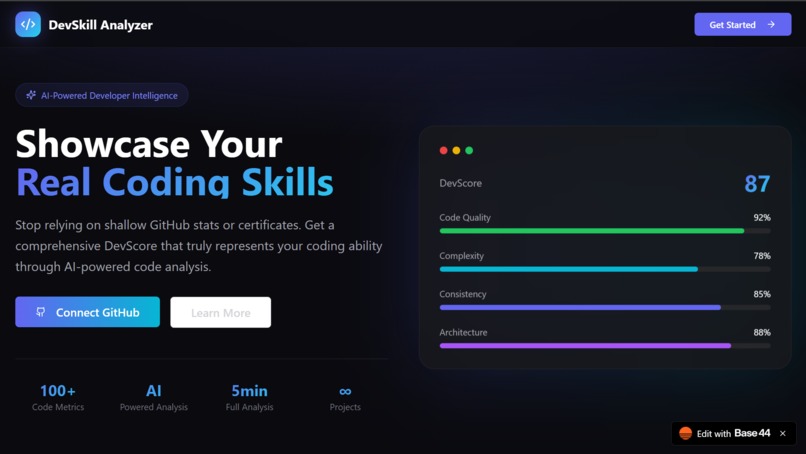
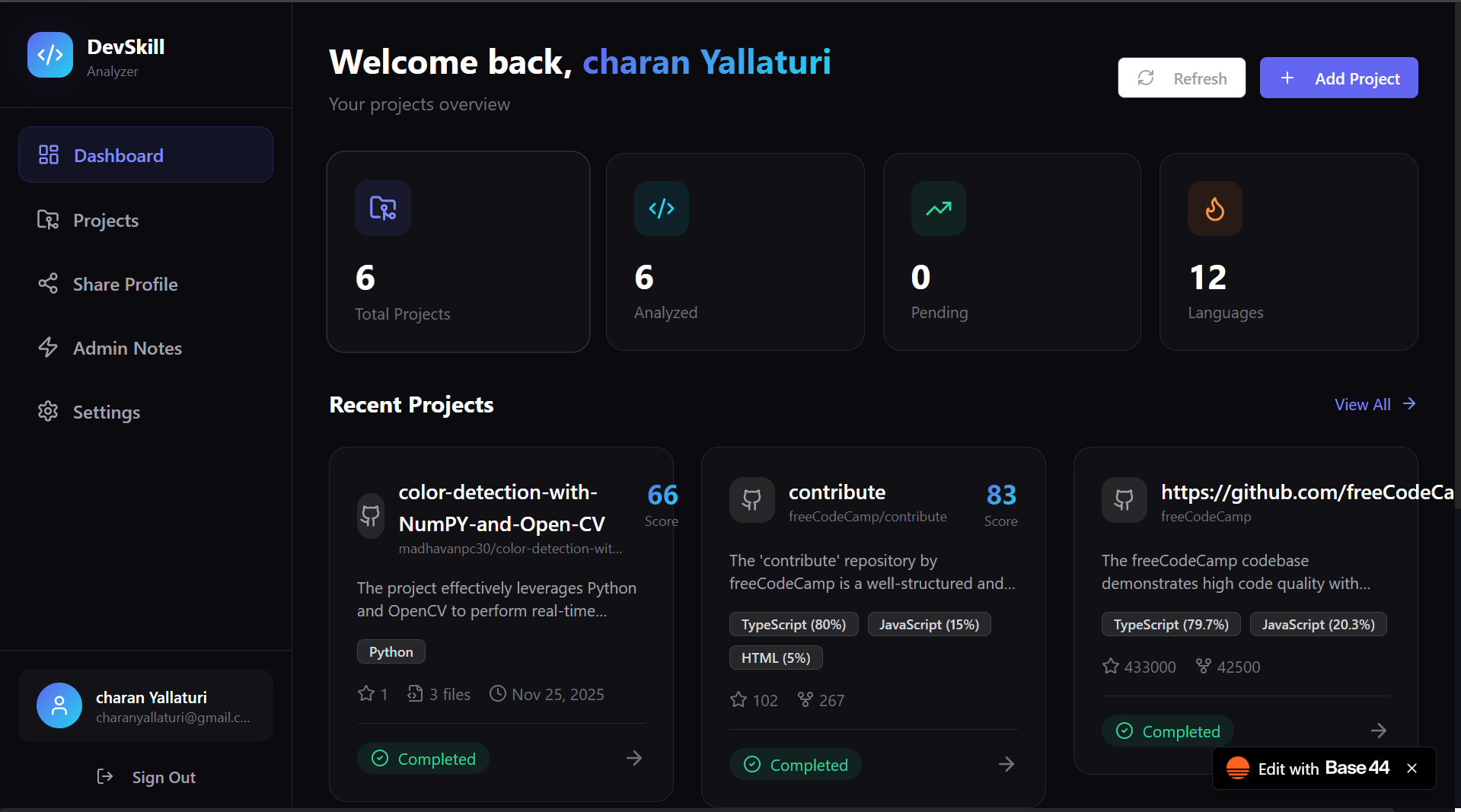
Dashboard page
-
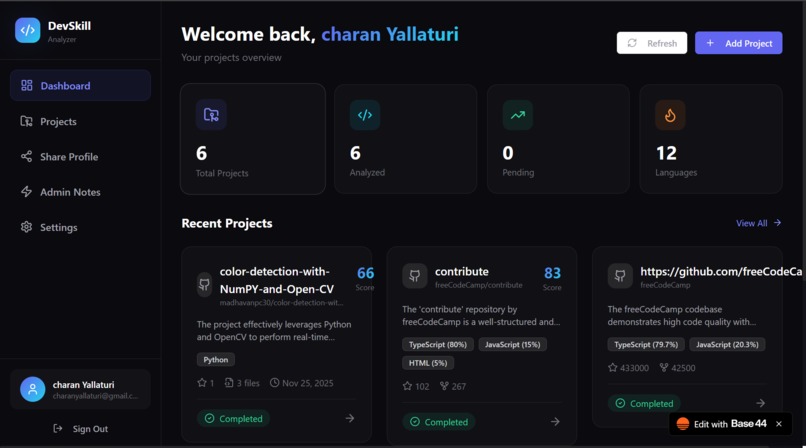
projects pages
-
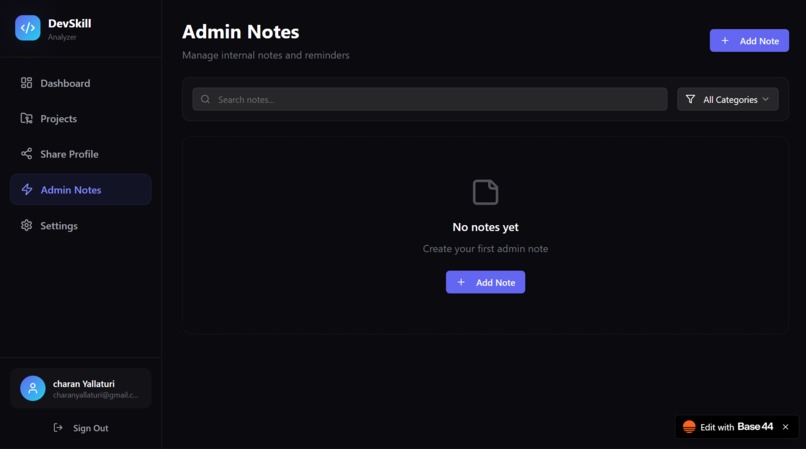
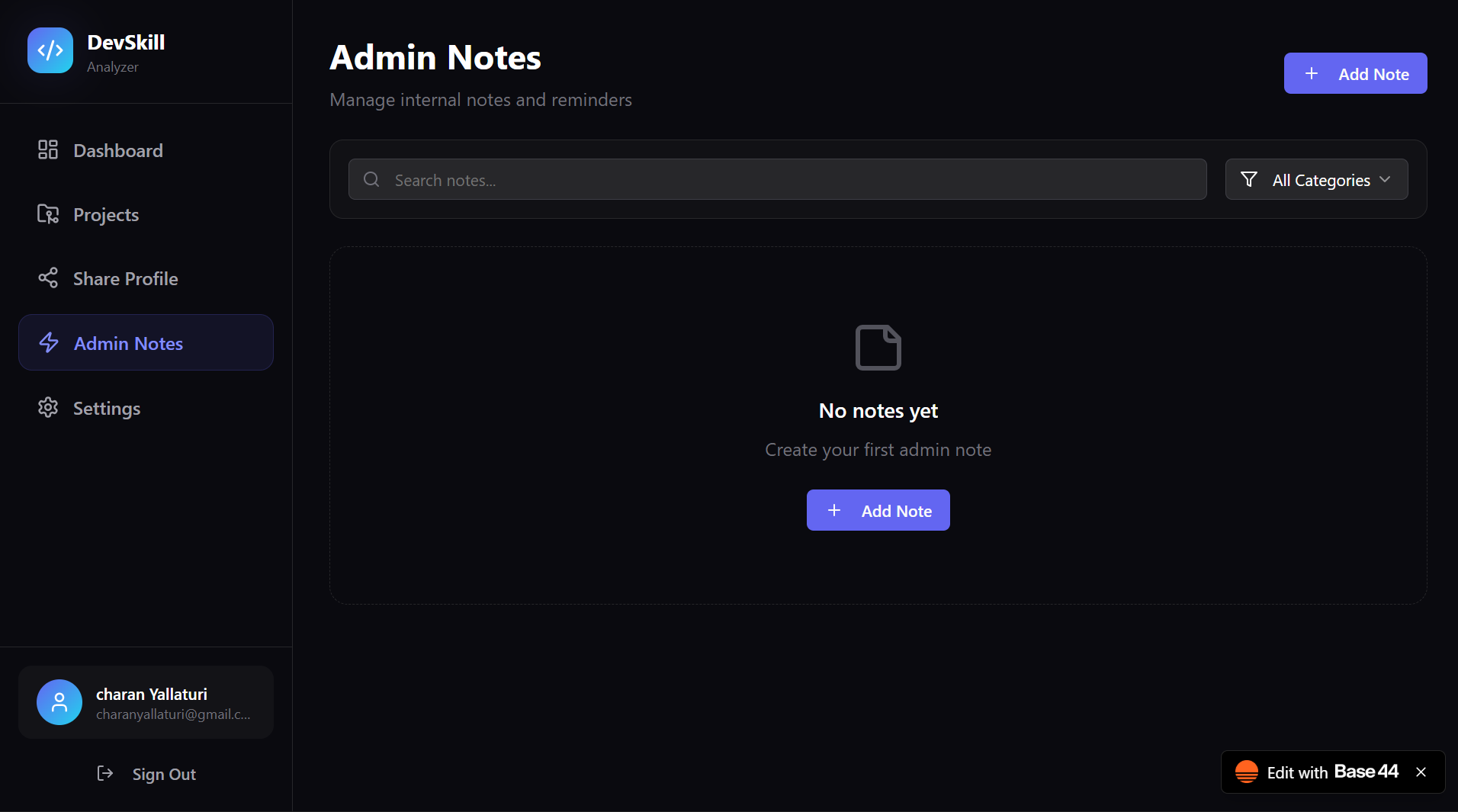
notes page
-
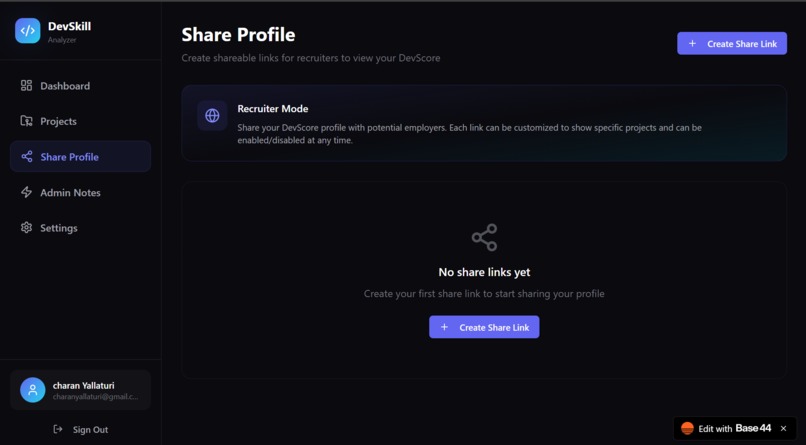
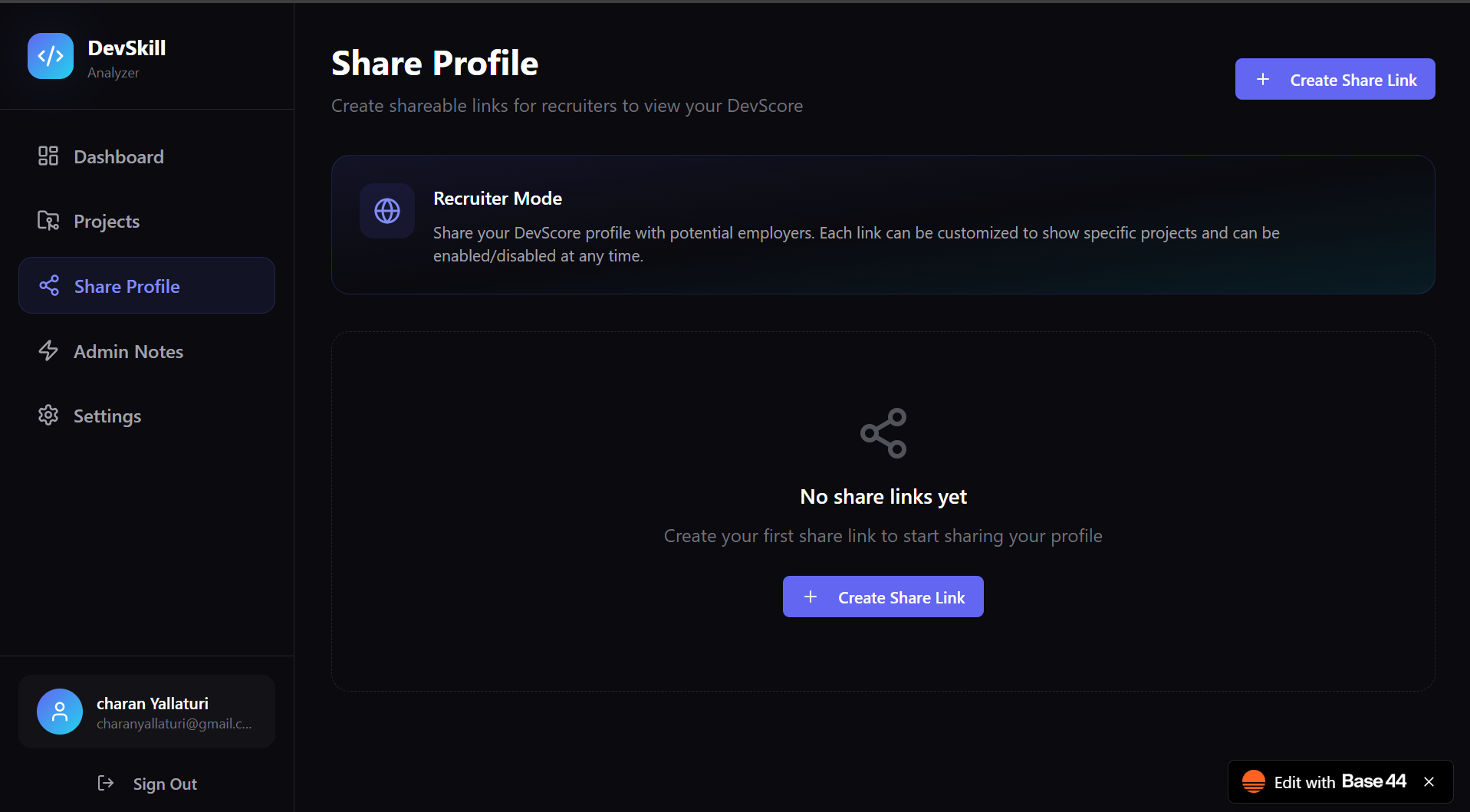
share profile page
-
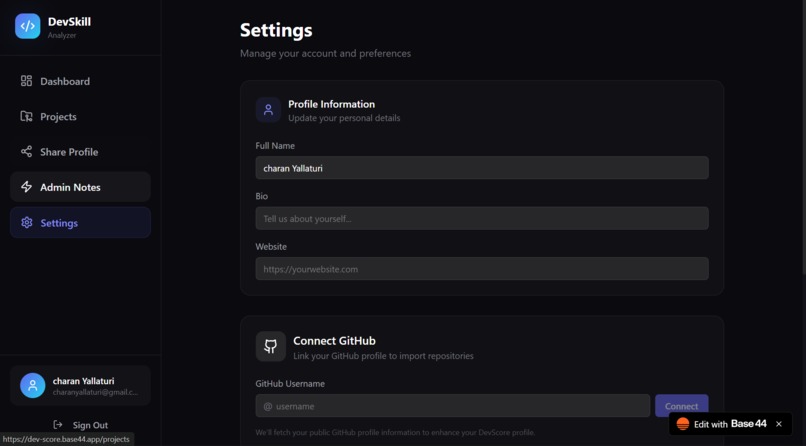
Gallery section
-
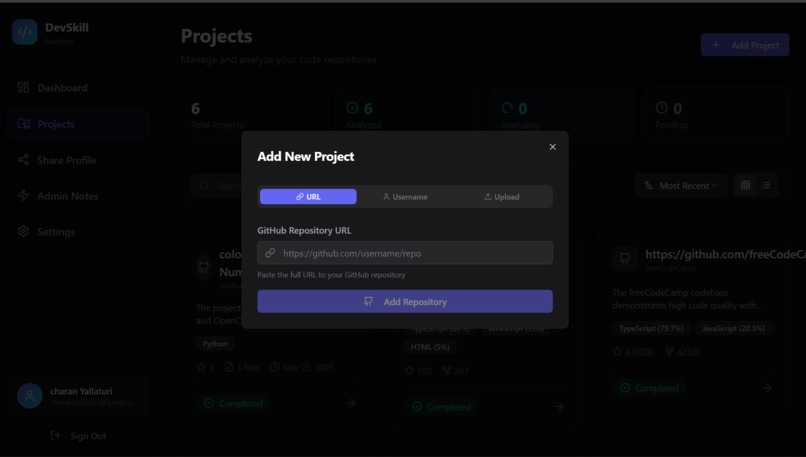
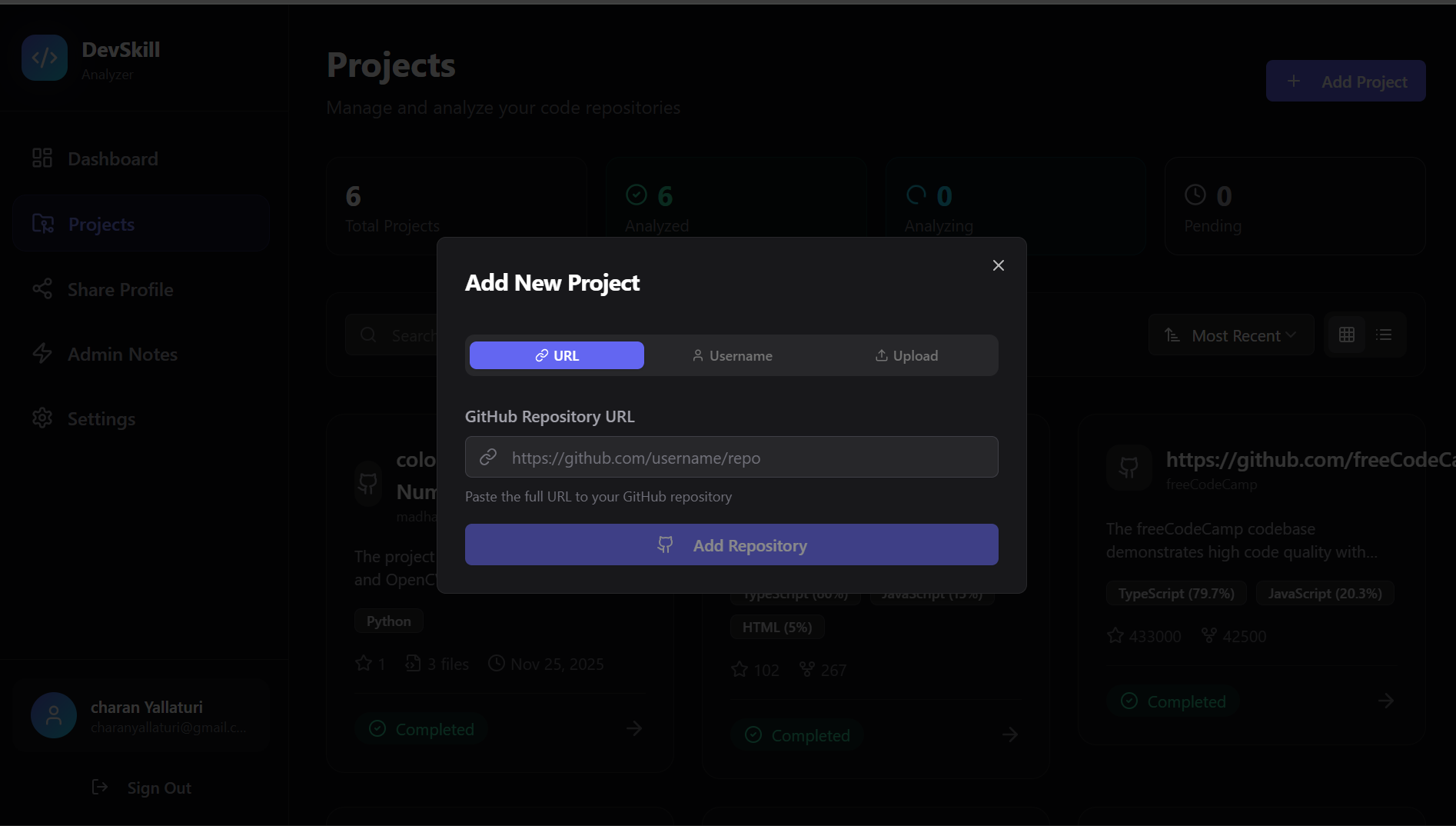
project linking page
Inspiration
We were inspired to build DevSkill Analyzer because developers are often judged by CGPA, certificates, or resume keywords instead of what truly matters — their real coding ability. GitHub stats like stars and commit counts don’t reflect actual skill, and recruiters struggle to understand a developer’s true strengths by manually checking repositories. We wanted to create a fair, transparent, AI-powered platform that measures genuine coding ability based on real work, real code, and real consistency. This project was born from the idea that talent should be recognized through skill, not superficial metrics.
What it does
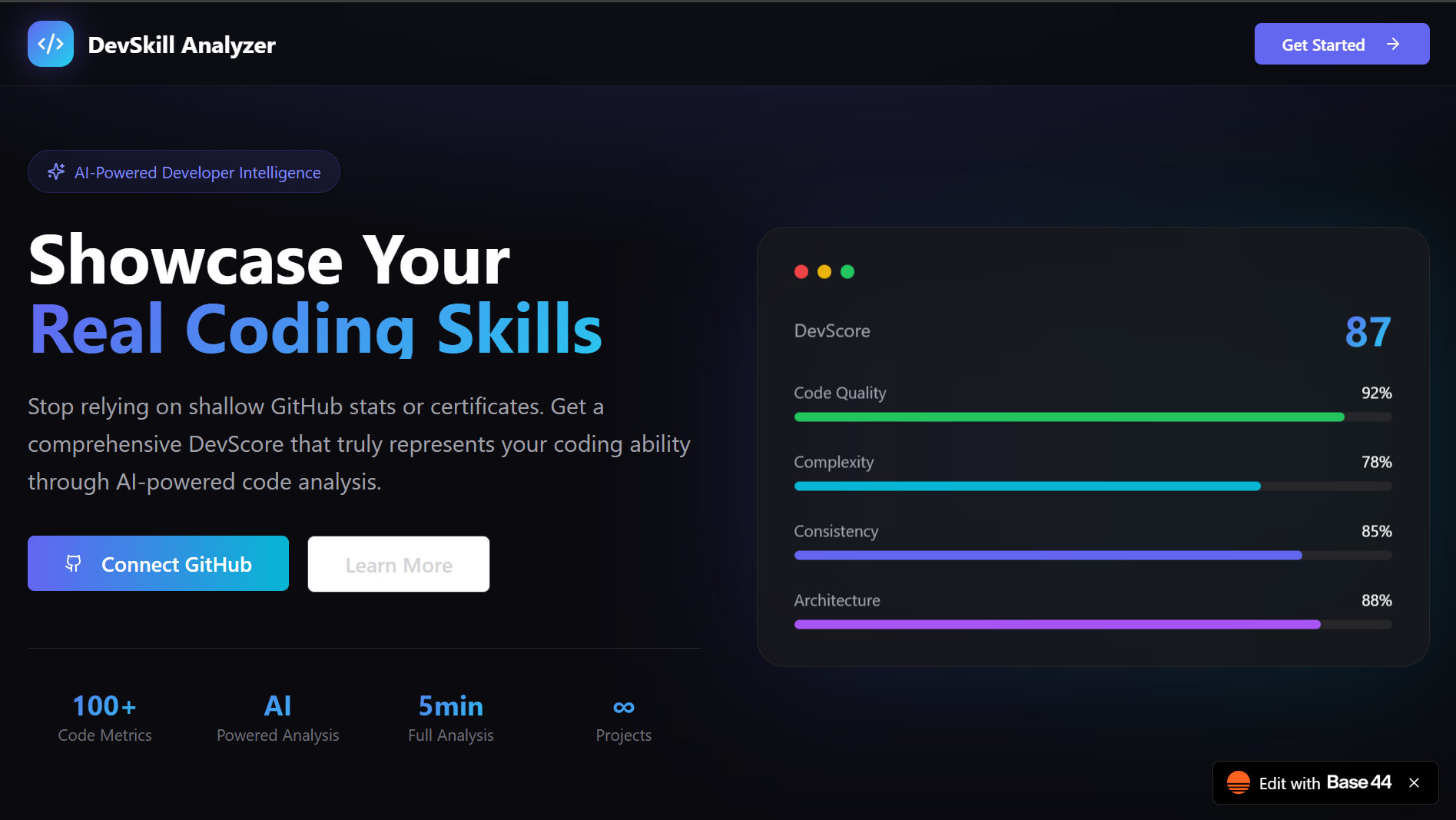
DevSkill Analyzer evaluates a developer’s actual ability by analyzing their GitHub repositories, commits, coding habits, and project structure. It checks code quality, complexity, documentation, and architecture patterns using automated tools and AI. The platform then generates a unified DevScore out of 100, highlighting strengths, weaknesses, and coding consistency. Developers get a detailed dashboard with charts, analysis, and AI reviews, while recruiters receive a clean, shareable skill scorecard to understand a candidate’s true potential.
How we built it
We built DevSkill Analyzer using a modern full-stack architecture. The frontend was developed with Next.js to create a fast, responsive, and developer-friendly UI. The backend was built using Node.js and Express, handling GitHub OAuth, data fetching, and analysis workflows. GitHub’s API was used to retrieve repositories, commits, languages, and activity timelines. For code analysis, we combined linting tools, complexity analyzers, and AI models to evaluate quality and patterns. MongoDB stored user data, project metrics, and DevScores, while cloud services were used to deploy the platform efficiently.
Challenges we ran into
We faced several challenges throughout development, especially while analyzing multiple programming languages and large repositories. Handling GitHub API limits and ensuring smooth OAuth integration required careful planning. Designing a fair scoring system that balances quality, complexity, and consistency was also difficult. Integrating AI code review without slowing down the backend was another major challenge. Ensuring the UI remained clean, accurate, and easy to understand while presenting complex data required multiple iterations. Despite these challenges, we were able to build a reliable and well-structured platform.
Accomplishments that we're proud of
We are proud of creating a platform that truly reflects developer skill using real data instead of superficial indicators. Integrating GitHub OAuth, building a complete analysis pipeline, and generating a meaningful DevScore were major milestones. The AI-based code review system, project insights, and clean dashboard design turned out better than we expected. We’re especially proud that the platform can genuinely help developers showcase their abilities and assist recruiters in discovering real talent quickly and accurately.
What we learned
Throughout this project, we learned how to work with advanced GitHub APIs, manage OAuth authentication securely, and analyze real-world code structures at scale. We gained experience in combining static analysis tools with AI models to build a hybrid scoring system. We also learned how to design dashboards that simplify complex information and present clear insights. This project taught us teamwork, problem-solving, and how to build scalable full-stack applications that handle real developer data.
What's next for devskill
Our next steps include expanding language support, improving the AI review engine, and adding a live coding assessment module. We plan to introduce a roadmap tracker that helps developers improve their skills based on weaknesses identified in their analysis. We also want to launch recruiter dashboards, team-based scoring for companies, and support for Bitbucket and GitLab integrations. Ultimately, we want DevSkill Analyzer to become the standard platform for measuring developer ability fairly and accurately.
Built With
- amazon-web-services
- apis:
- database:
- frontend:-next.js-(react)-typescript-tailwind-css-chart.js-/-recharts-backend:-node.js-+-express-github-oauth-ai-&-analysis:-base44-ai-/-openai-eslint
- github
- mongodb
- pylint
- radon
- render
- storage

Log in or sign up for Devpost to join the conversation.