-
-
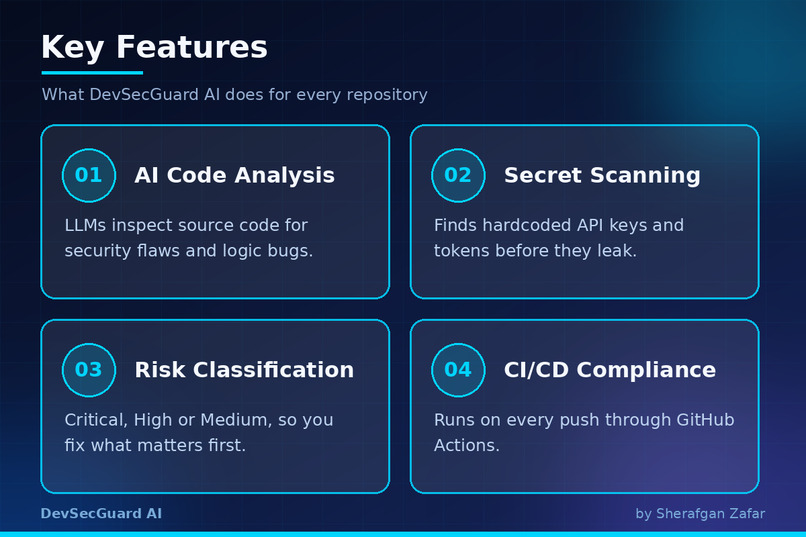
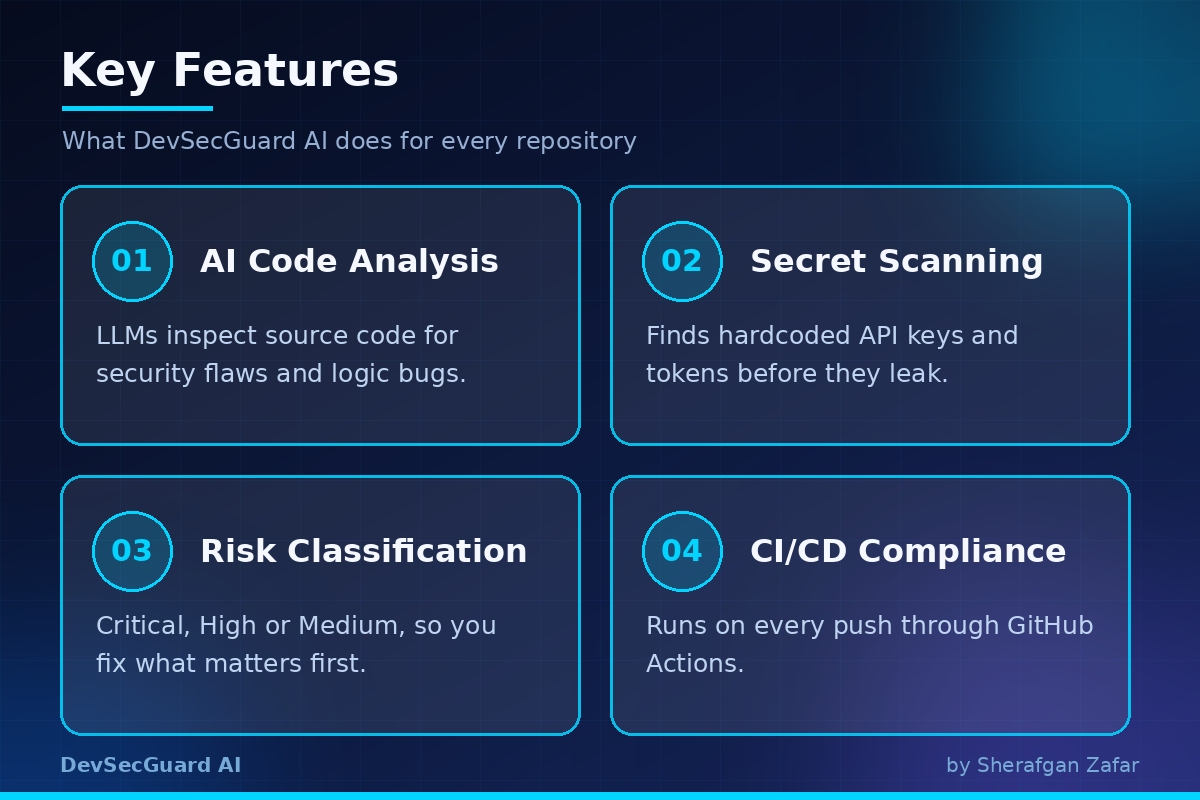
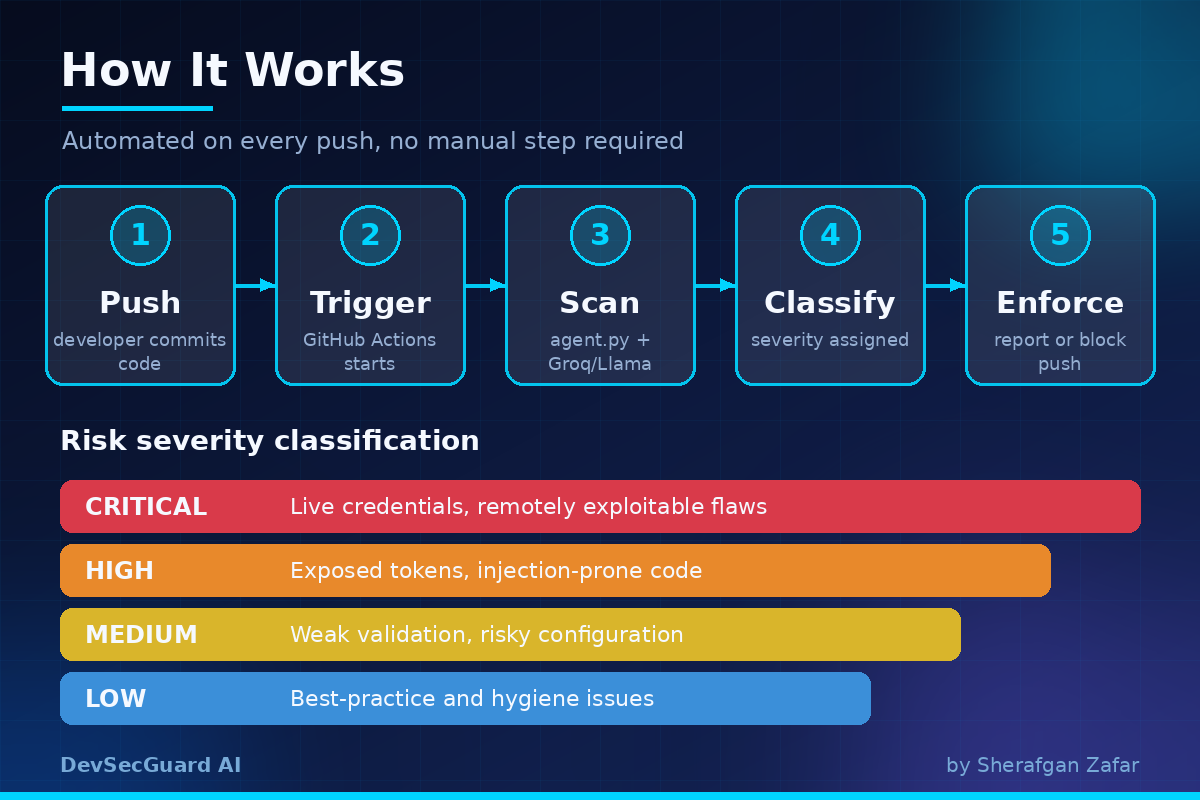
Key features: AI code analysis, secret scanning, risk classification and CI/CD compliance that runs automatically on every push.
-
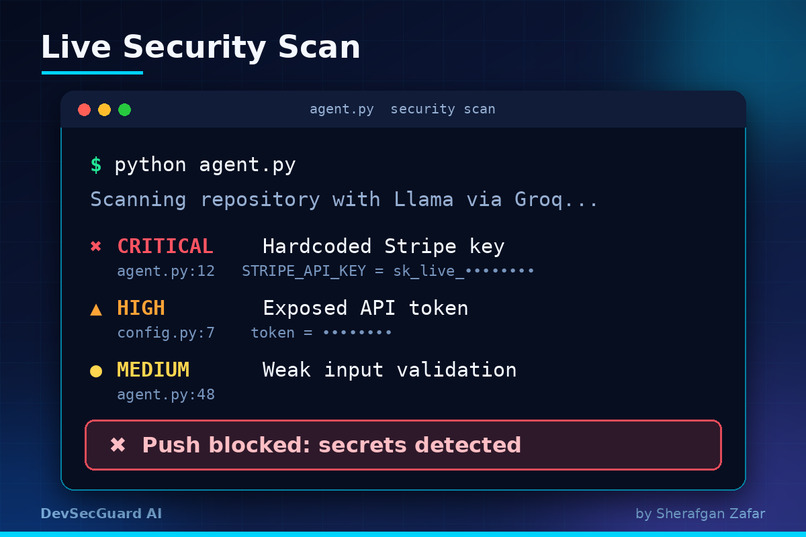
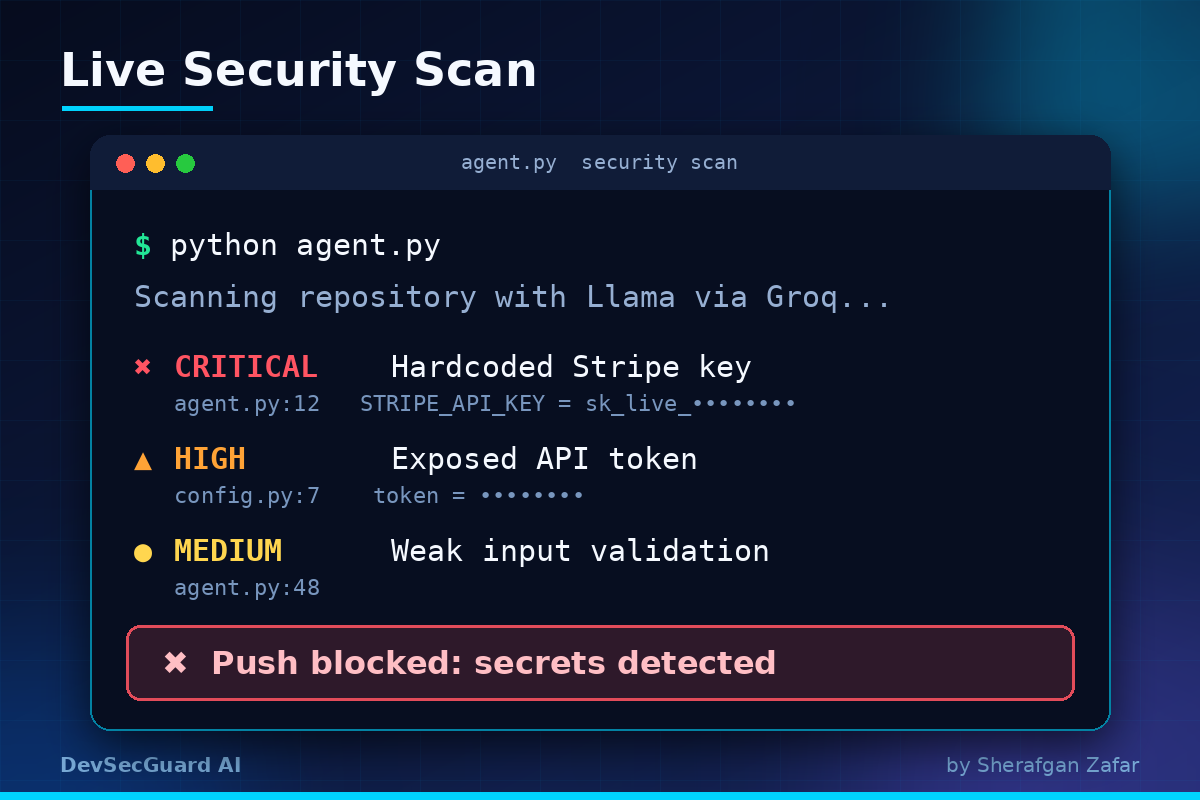
Live scan: agent.py ranks findings as Critical, High or Medium and blocks the push until secrets are removed.
-
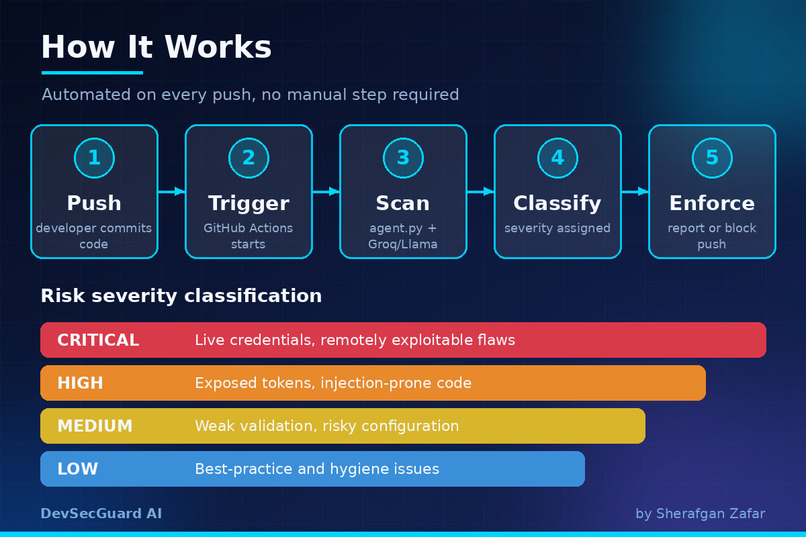
Live scan: agent.py ranks findings as Critical, High or Medium and blocks the push until secrets are removed.
-
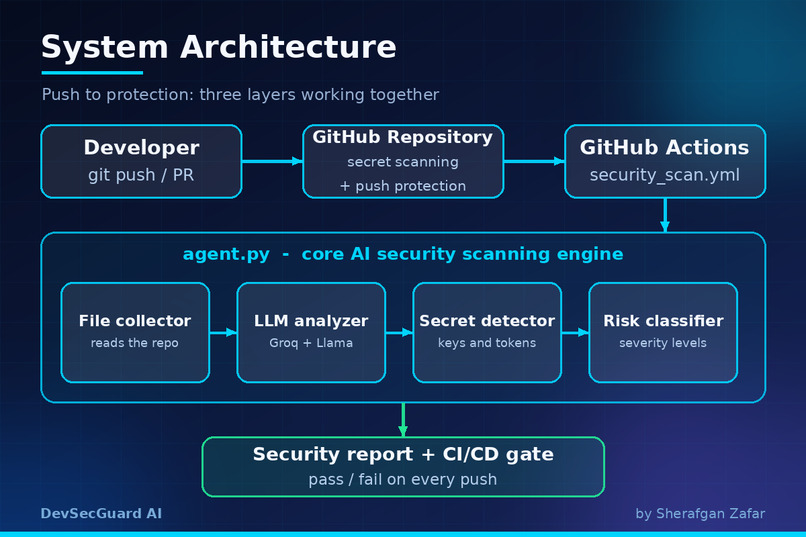
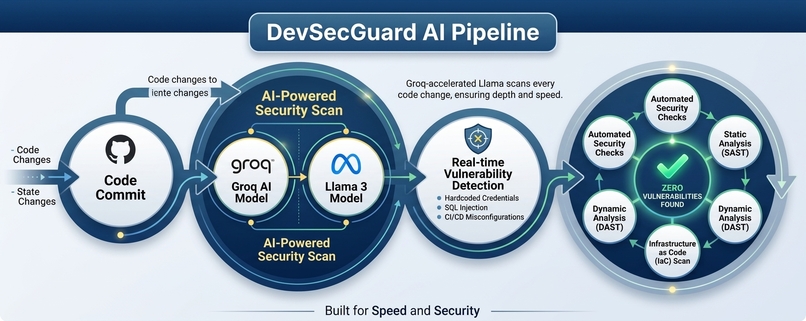
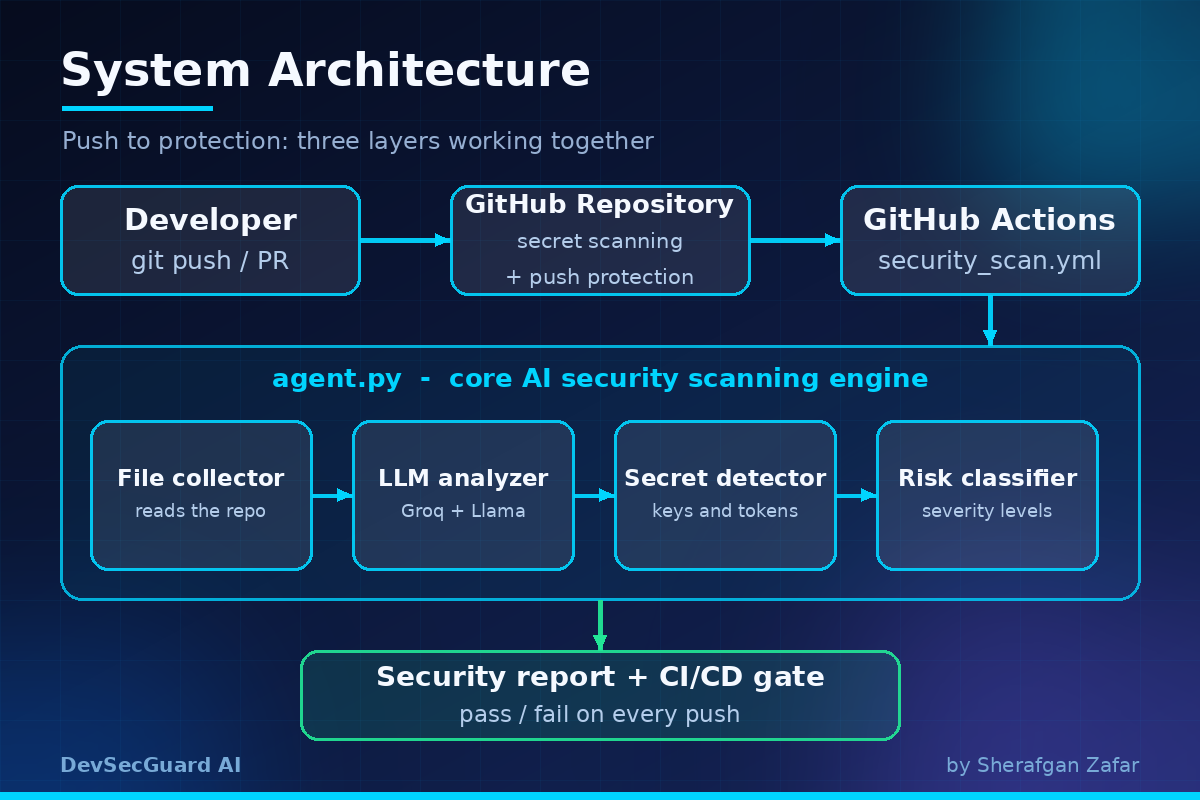
Architecture: GitHub push protection and Actions feed the agent.py engine, which outputs a pass/fail CI/CD gate.
-
-
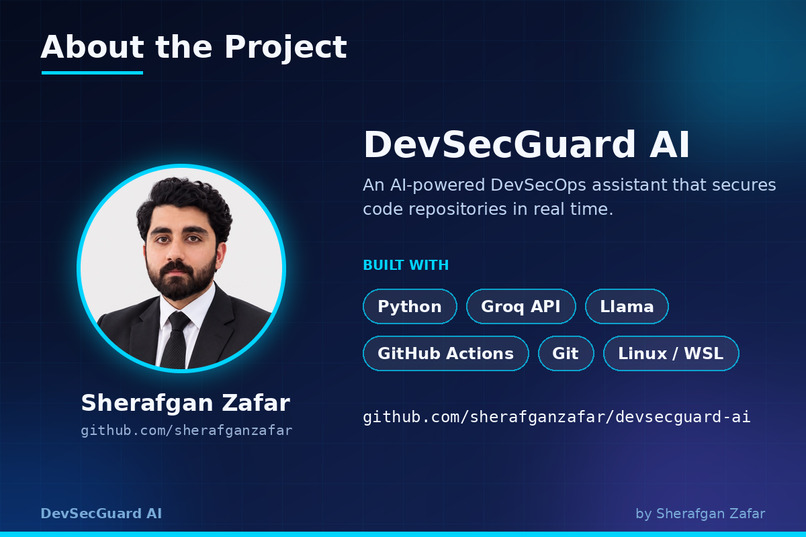
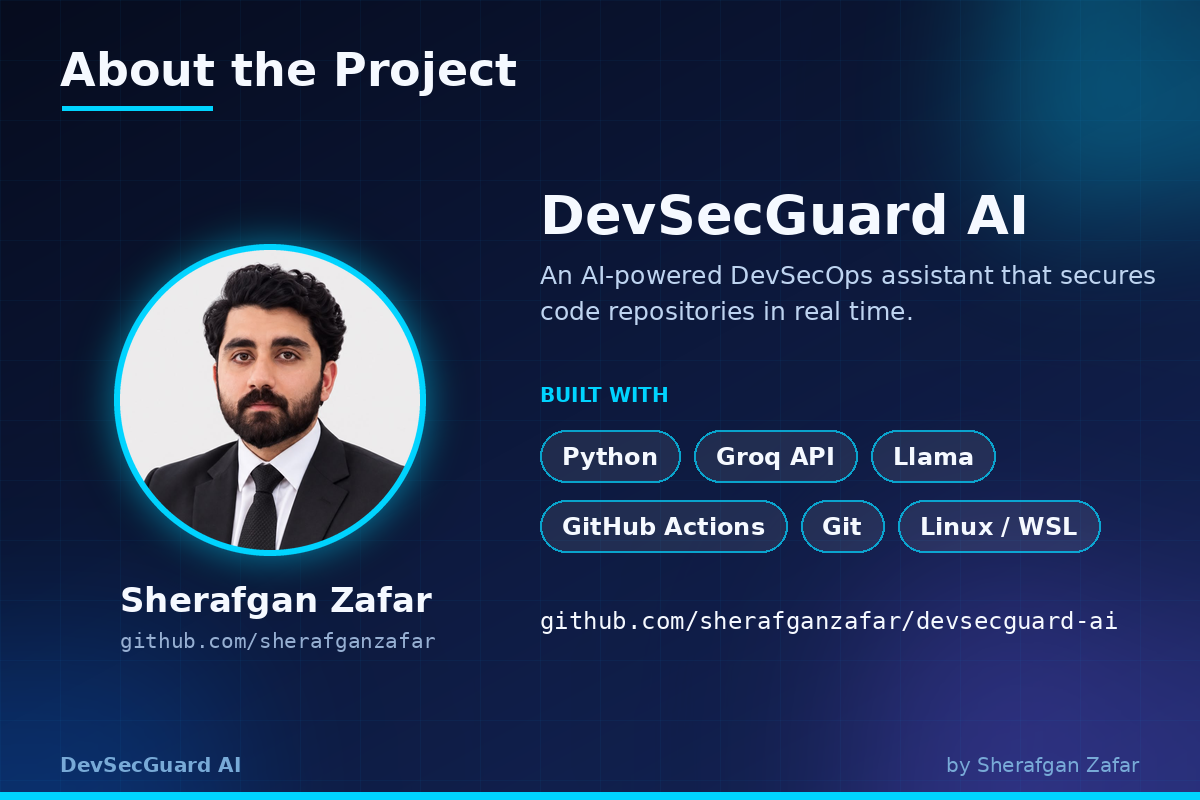
Built by Sherafgan Zafar with Python, Groq, Llama and GitHub Actions. No hardcoded secrets in the code.
Inspiration
Every developer has heard the horror stories: an API key accidentally pushed to GitHub, a hardcoded password sitting in a repo for months, a vulnerability discovered only after it was exploited. Security checks usually happen too late, or not at all. We wanted a guardrail that works at the moment code is written and pushed, not weeks later during an audit. That idea became DevSecGuard AI.
What it does
DevSecGuard AI is an AI-powered DevSecOps assistant that secures code repositories in real time. It:
- Scans codebases with LLMs to find security flaws and logical vulnerabilities
- Detects hardcoded secrets such as Stripe API keys and tokens, locally and inside CI/CD pipelines
- Classifies risk severity (Critical, High, Medium) so teams know what to fix first
- Enforces continuous compliance by running automatically on every push through GitHub Actions
How we built it
- Python powers the core scanning engine (
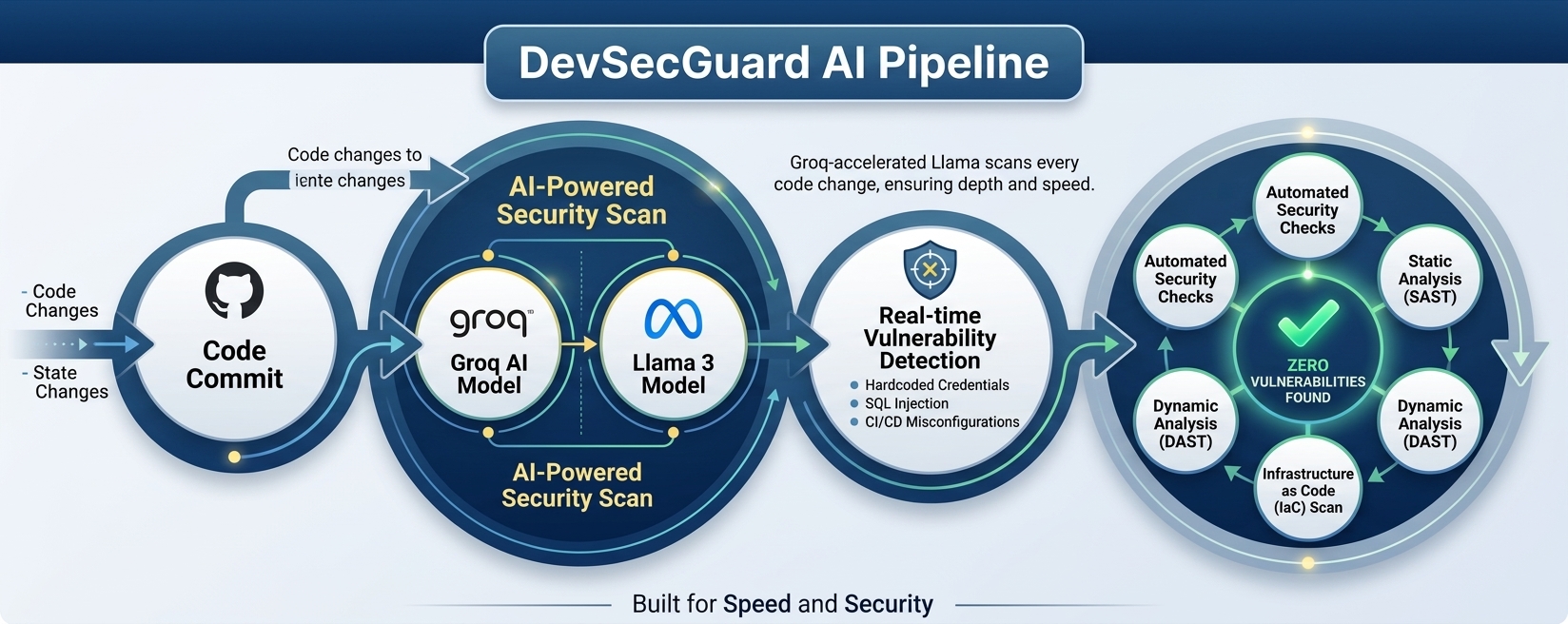
agent.py) - Groq API with Llama models analyze the code quickly and report vulnerabilities
- GitHub Actions (
security_scan.yml) runs the security scan on every push - GitHub secret scanning and push protection stop accidental credential leaks
- A helper script (
list_nvidia_models.py) manages the available models - Developed and tested on Linux / WSL (Ubuntu)
Challenges we ran into
- Securely managing API keys: all secrets were purged from active branches and moved to environment variables
- Getting the LLM to return consistent, useful severity ratings instead of vague answers
- Integrating the scan into the CI/CD pipeline so that it runs automatically without slowing developers down
Accomplishments that we're proud of
- A working end-to-end pipeline: code push → automated AI scan → risk report
- Zero hardcoded secrets in the final repository
- Real-time, automated compliance with no manual steps
What we learned
- How DevSecOps shifts security "left", into the earliest stages of development
- Practical prompt design for getting structured results from LLMs
- How to build and secure GitHub Actions workflows
What's next for DevSecGuard AI
- Support for more languages and scanning of whole repositories
- Automatic fix suggestions and pull request comments
- A dashboard with security trends and reports
- More model options and integrations with other CI/CD platforms

Log in or sign up for Devpost to join the conversation.