-
-
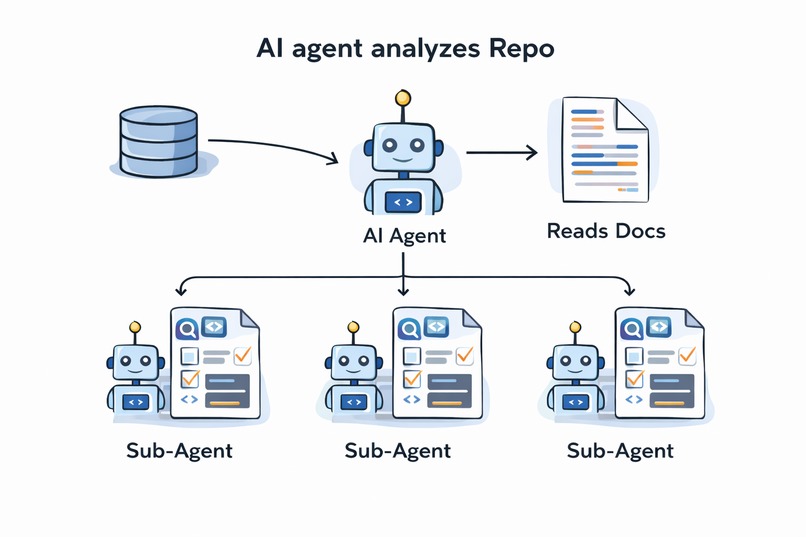
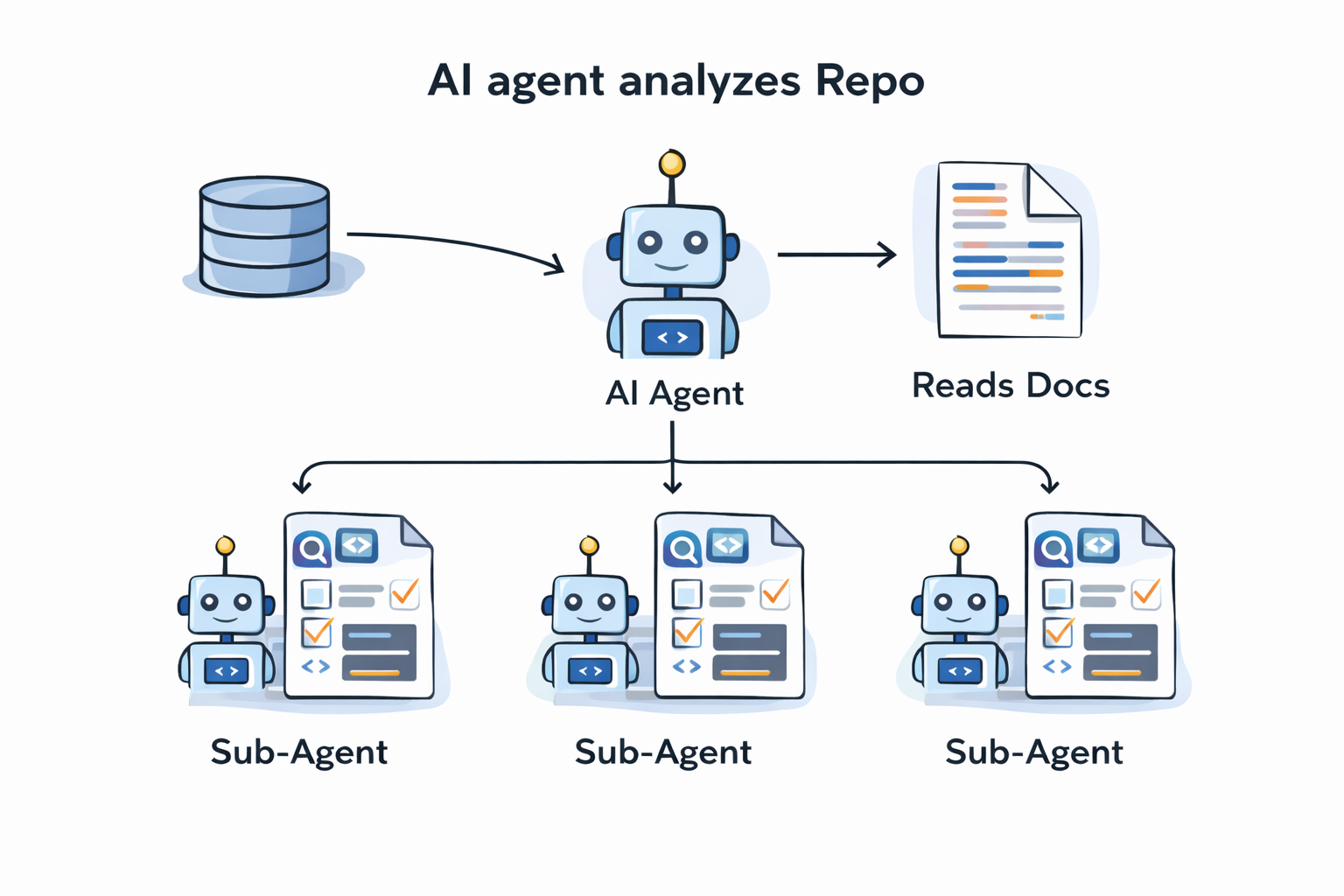
Simple breakdown of our logic / technical layout
Inspiration
Onboarding into a new codebase can feel overwhelming. Important context is spread across docs, issues, and senior engineers’ heads, and new hires often do not know what to read first or what “good” understanding looks like. We wanted to reduce that stress while also helping teams scale without relying on constant 1:1 time from senior engineers.
A big early challenge was even choosing the right project. We wanted something rooted in our everyday lives that could help both consumers and businesses. Once we focused on ramp-up and onboarding time, the problem became obvious and urgent. An issue prevalent in big and small enterprise companies not only wastes money but also wastes senior developers' time.
What it does
DevRamp turns any GitHub repository into a structured ramp-up onboarding course. It generates:
- A guided learning path tailored to the repo
- Auto-generated lessons based on the actual codebase
- Quizzes to validate understanding
- Coding prompts tied to key modules and workflows
- A repo-specific glossary so terms are searchable and consistent
The goal is to make onboarding knowledge repeatable, searchable, and measurable, so teams can cut time-to-productivity and reduce stress.
How we built it
We built DevRamp with AI tools plus custom code to orchestrate multiple LLM agents.
High level flow:
- Repo parsing agent: Our first agent connects to a repository and extracts the structure (directories, key files, docs, and patterns).
- Planning and task breakdown: That agent identifies what matters for onboarding, then breaks work into tasks for other agents (lesson topics, glossary terms, quiz scope, coding prompts).
- Course generation agents: Downstream agents generate lessons, quizzes, prompts, and glossary entries aligned to the repo.
- Assembly and consistency: We combine outputs into a coherent course directory with a logical progression.
We treated onboarding like an optimization problem.
DevRamp targets this by making learning paths structured and by validating understanding through quizzes and prompts.
Challenges we faced
- Finding the right project: The biggest early challenge was defining a project that solved a real pain point we lived every day and that also had clear value for businesses.
- Connecting the first agent to real repo parsing: Another major challenge was getting our first LLM agent to reliably parse repositories and then distribute work to other agents in a way that produced consistent, structured output.
- AI logic and orchestration: Multi-agent systems can drift. We had to iterate on prompts, task boundaries, and output formats to keep lessons, quizzes, and glossaries aligned.
Accomplishments we’re proud of
- Built an end-to-end pipeline that turns a dynamic repository search into a structured course directory.
- Created a repeatable method for generating onboarding content grounded in the repo, not generic.
- Delivered quizzes and coding prompts that validate understanding instead of relying on passive reading.
What we learned
- Picking the right problem matters as much as solving it. Once the problem is clearly defined, the build becomes much more focused.
- Repo parsing alone is not enough. The real value comes from structuring knowledge into a learning path and verifying comprehension.
- Multi-agent systems work best when each agent has a clear scope, consistent output format, and a strong assembly step to keep everything cohesive.
What’s next for DevRamp
Next, we want to make DevRamp enterprise-ready and tailored to enterprise onboarding needs:
- Deeper analysis of large, complex repos (architecture awareness, workflows, dependencies)
- Custom learning paths by role or team
- More course integrations with enterprise onboarding tools
- Better measurement and reporting on ramp-up progress and knowledge gaps


Log in or sign up for Devpost to join the conversation.