-
-
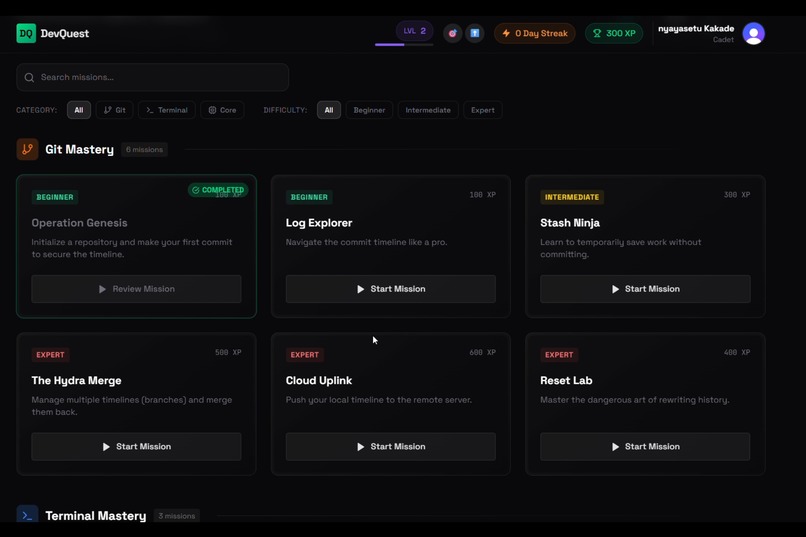
Dashboard
-
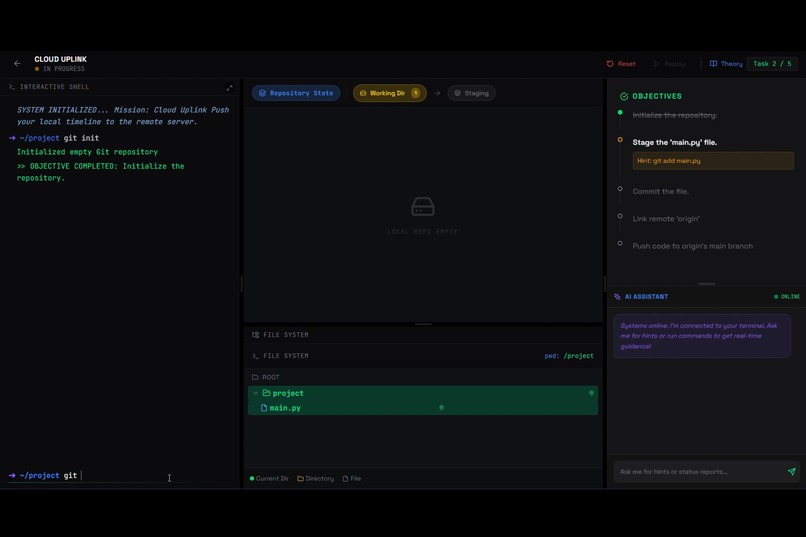
Learning Dashboard
-
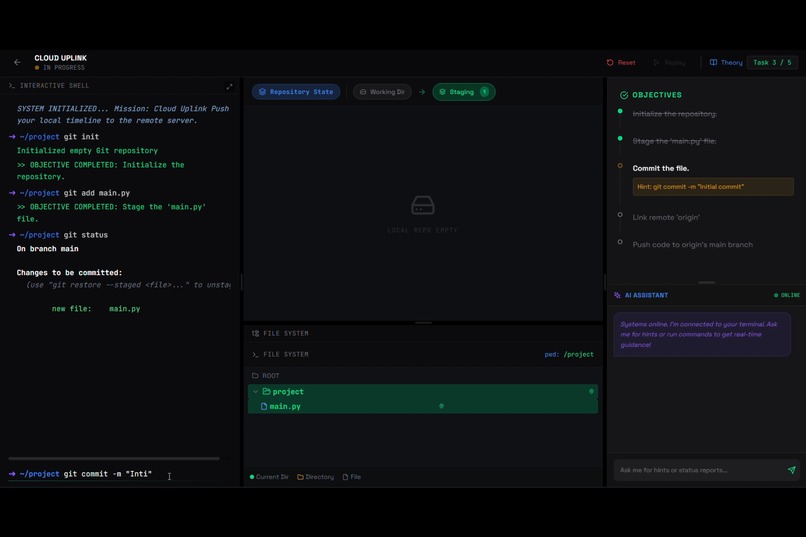
Step processing
-
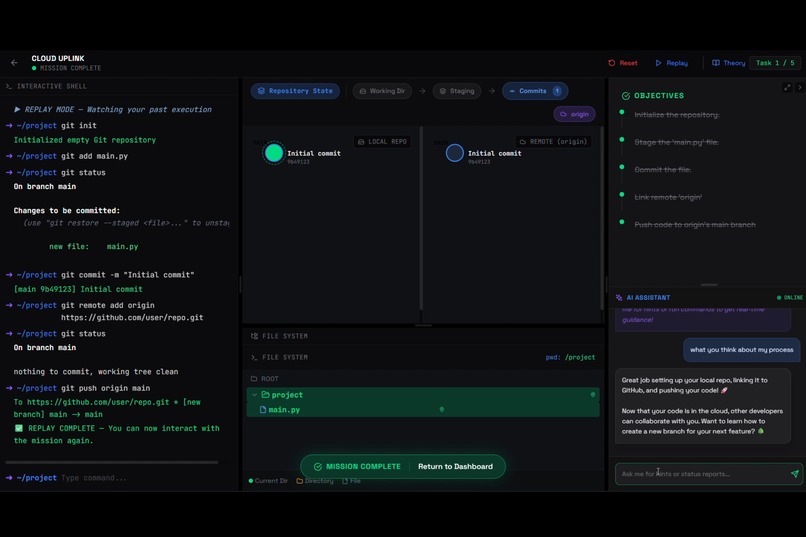
Step Completion
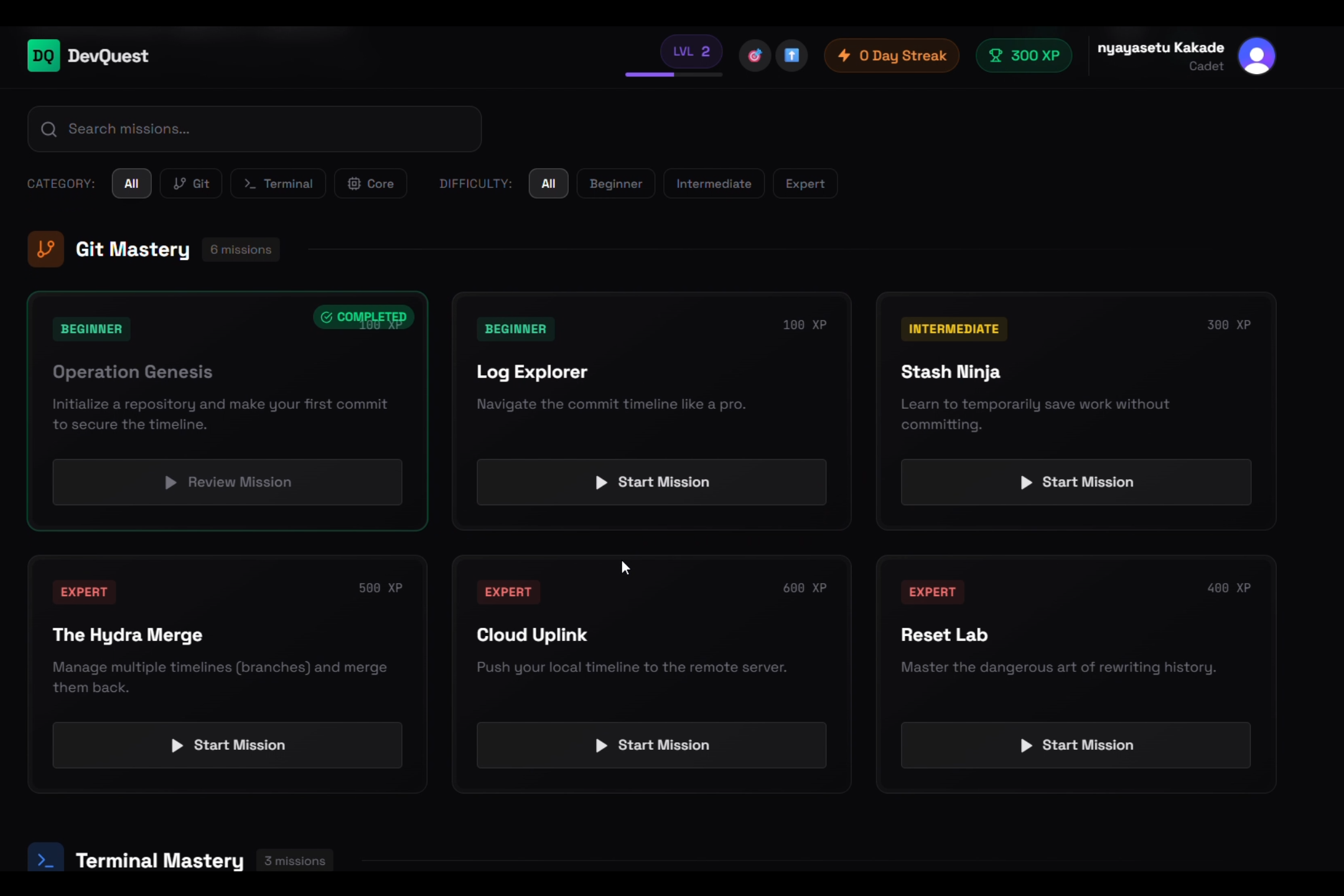
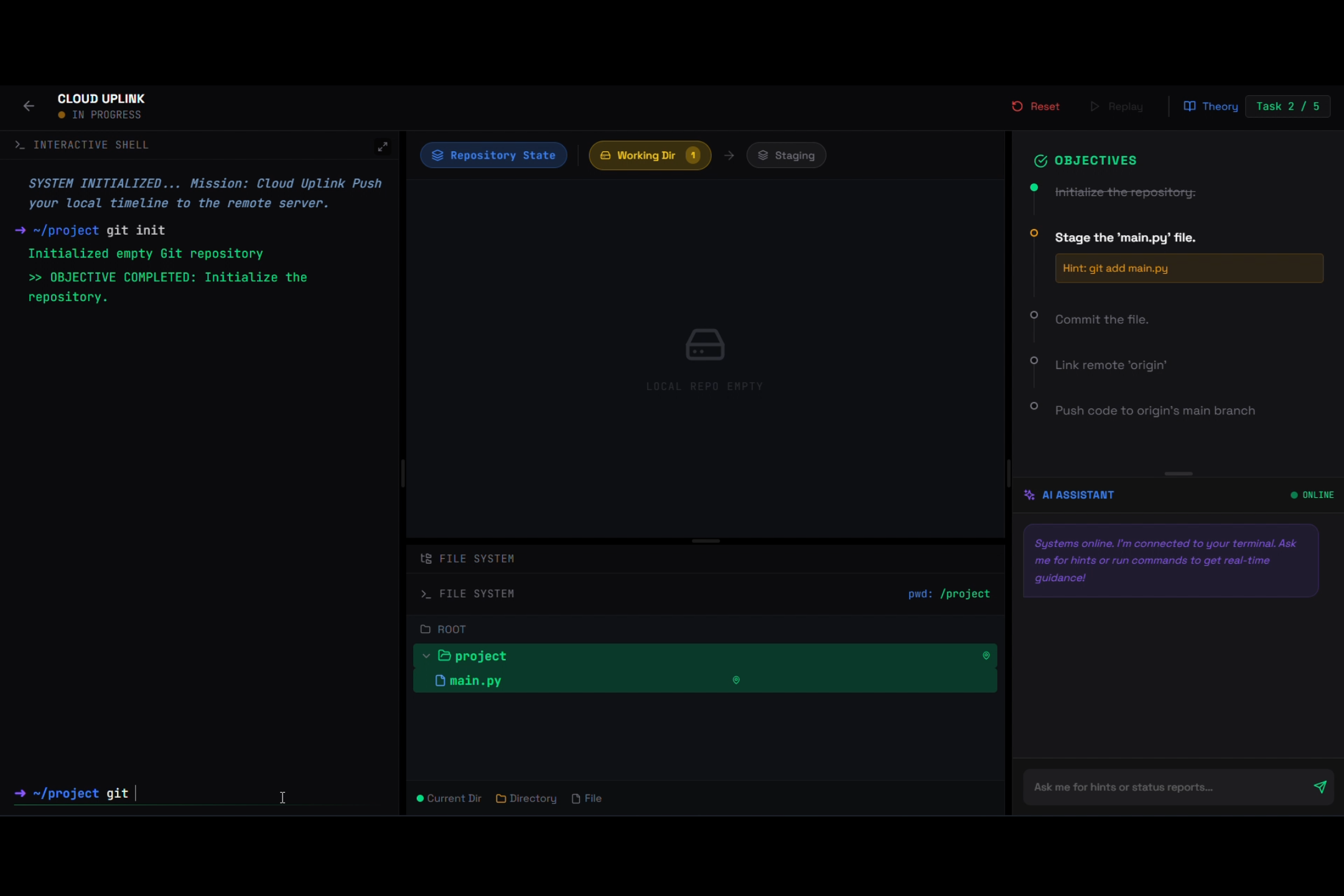
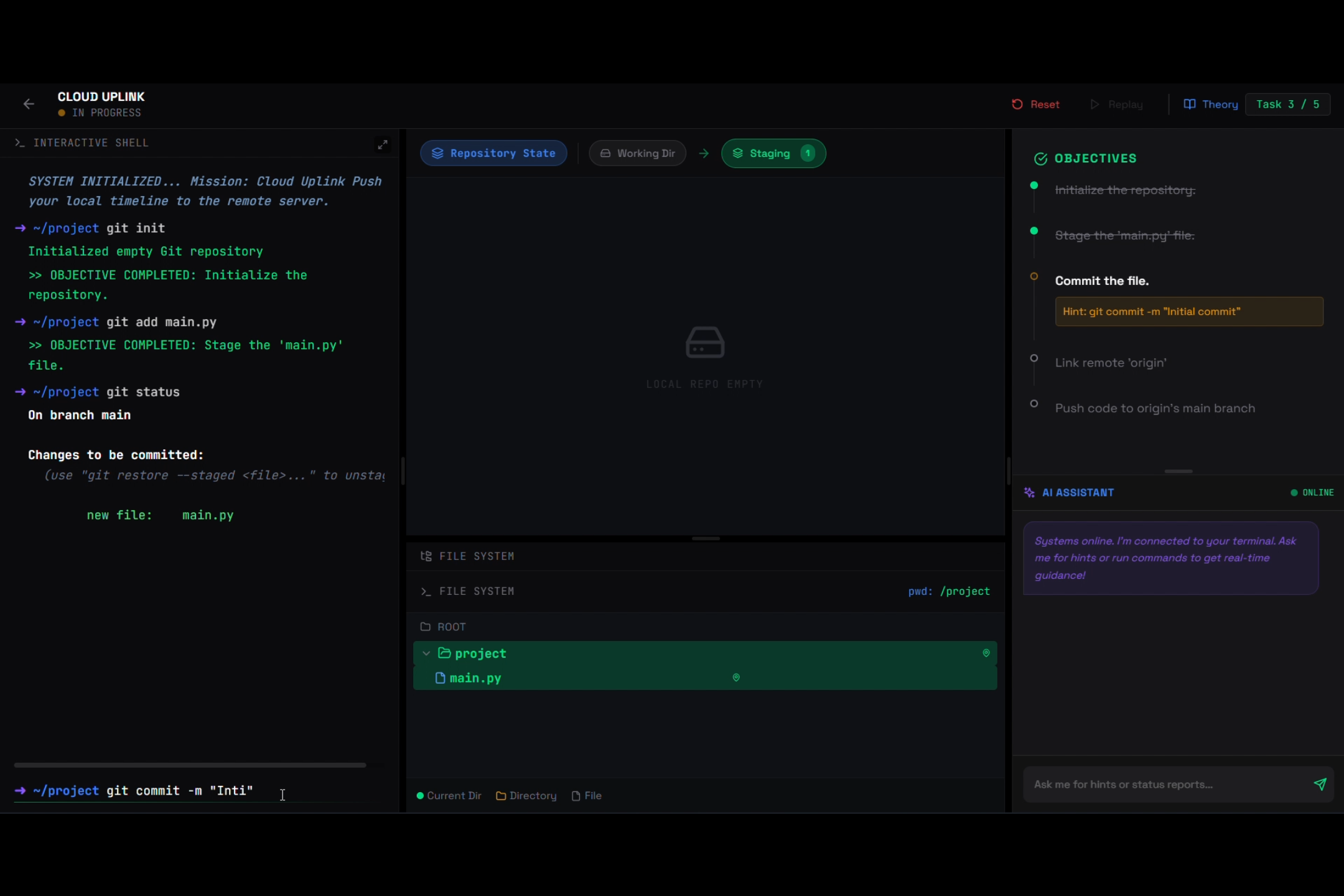
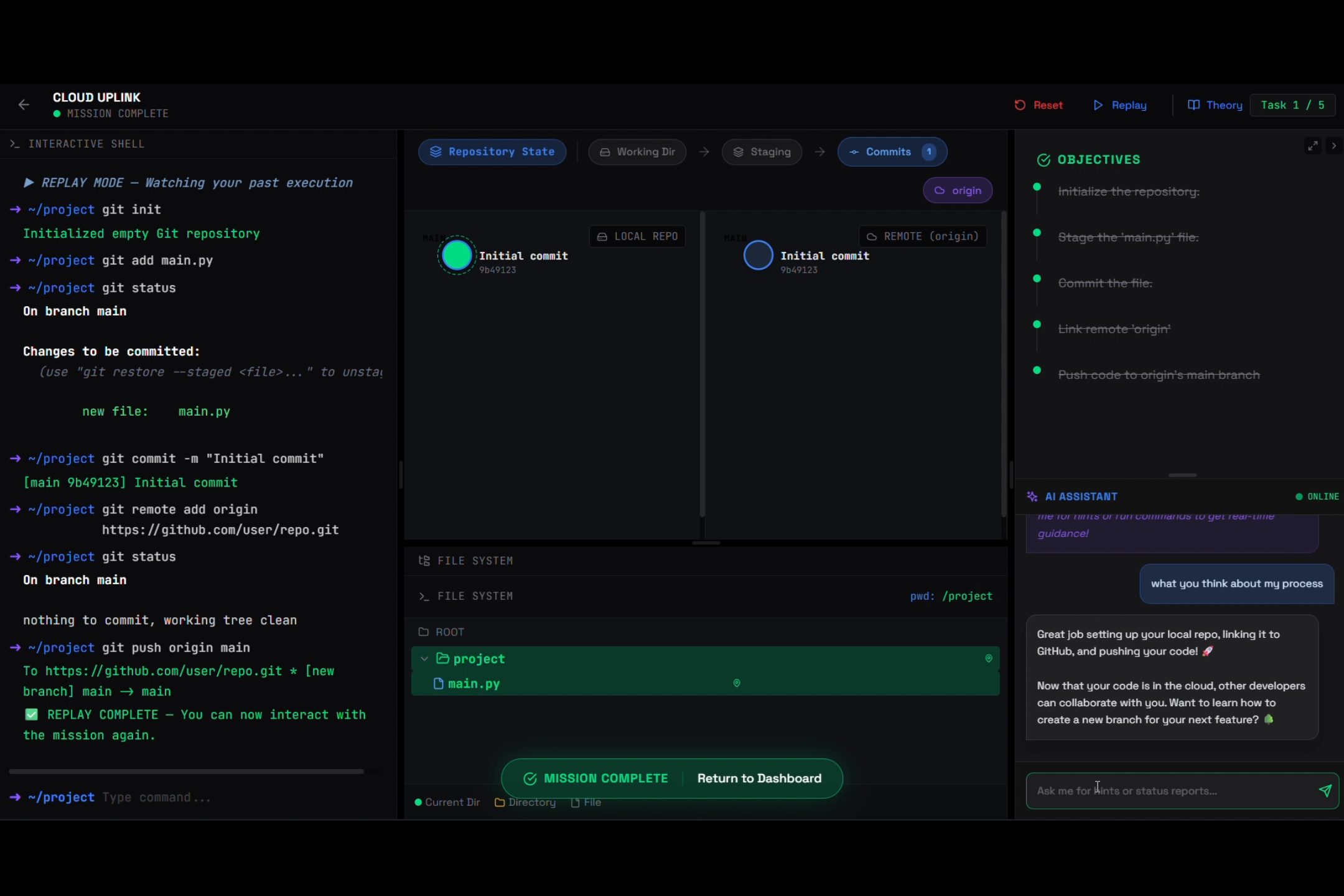
DevQuest — Learning Development by Playing
💡 Inspiration
The idea for DevQuest came from a simple but frustrating observation: most beginners struggle not because coding is hard, but because the fundamentals are taught without intuition. Concepts like Git, Bash, file systems, and repositories are invisible when taught through plain text commands. I wanted to build something where new developers, experienced developers, and even non-developers could see what is happening behind the scenes and learn by playing, not memorizing.
📚 What I Learned
While building DevQuest, I learned that:
- Visualization dramatically improves understanding of abstract technical concepts.
- Game mechanics like objectives, hints, checkpoints, and resets keep users motivated.
- AI tutors are most effective when they guide, not give direct answers.
- Designing for beginners requires more clarity than complexity.
- State persistence (saving progress, resetting exercises) is as important as content itself.
Mathematically, learning retention improves when feedback is immediate: $$ \text{Retention} \propto \frac{\text{Visual Feedback} \times \text{Interaction}} {\text{Cognitive Load}} $$
🛠️ How I Built the Project
DevQuest was built as an interactive learning platform with:
- A command playground for Git, Bash, and Unix basics.
- A graph-based visualization engine showing repositories, commits, branches, merges, and file states.
- Game-style objectives that progress only when the correct concept is applied.
- An AI-powered tutor to explain theory, answer questions, and give contextual hints.
- Progress tracking with save, replay, and reset options so learners can experiment freely.
The system separates logic into:
- Frontend for visualization and interaction.
- Backend for command simulation and state management.
- AI layer for tutoring and adaptive hints.
🚧 Challenges Faced
Some major challenges included:
- Making Git operations visually accurate while keeping them beginner-friendly.
- Preventing users from getting stuck when objectives didn’t clearly explain why a command failed.
- Designing exercises that teach concepts without overwhelming learners.
- Persisting exercise states while allowing full resets.
- Explaining complex workflows (like merges and conflicts) in a way that felt intuitive, not confusing.
Despite these challenges, each obstacle helped refine DevQuest into a more approachable and effective learning experience.
🌱 Final Thought
DevQuest is not about teaching tools — it’s about teaching understanding. By turning invisible processes into visible, playable experiences, learning development becomes less intimidating and a lot more fun.
Built With
- bash
- d3.js
- docker
- express.js
- gemini-3-api
- gemini-live-api
- github
- google-ai-studio
- javascript
- kiro
- mermaid
- mongodb
- node.js
- react.js
- tailwind-css
- typescript


Log in or sign up for Devpost to join the conversation.