-
-
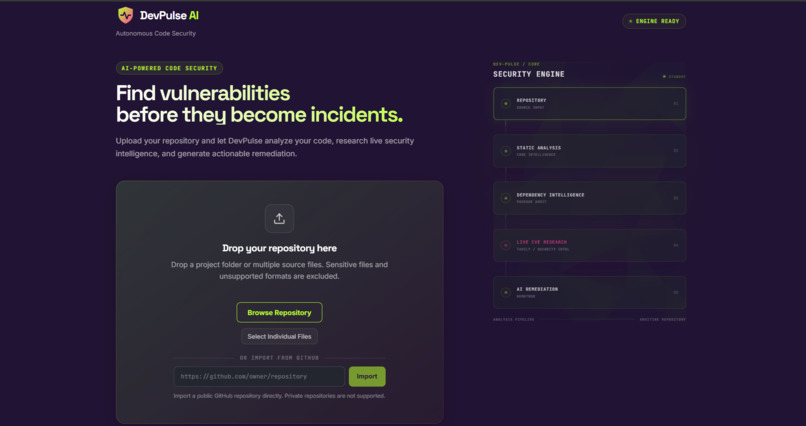
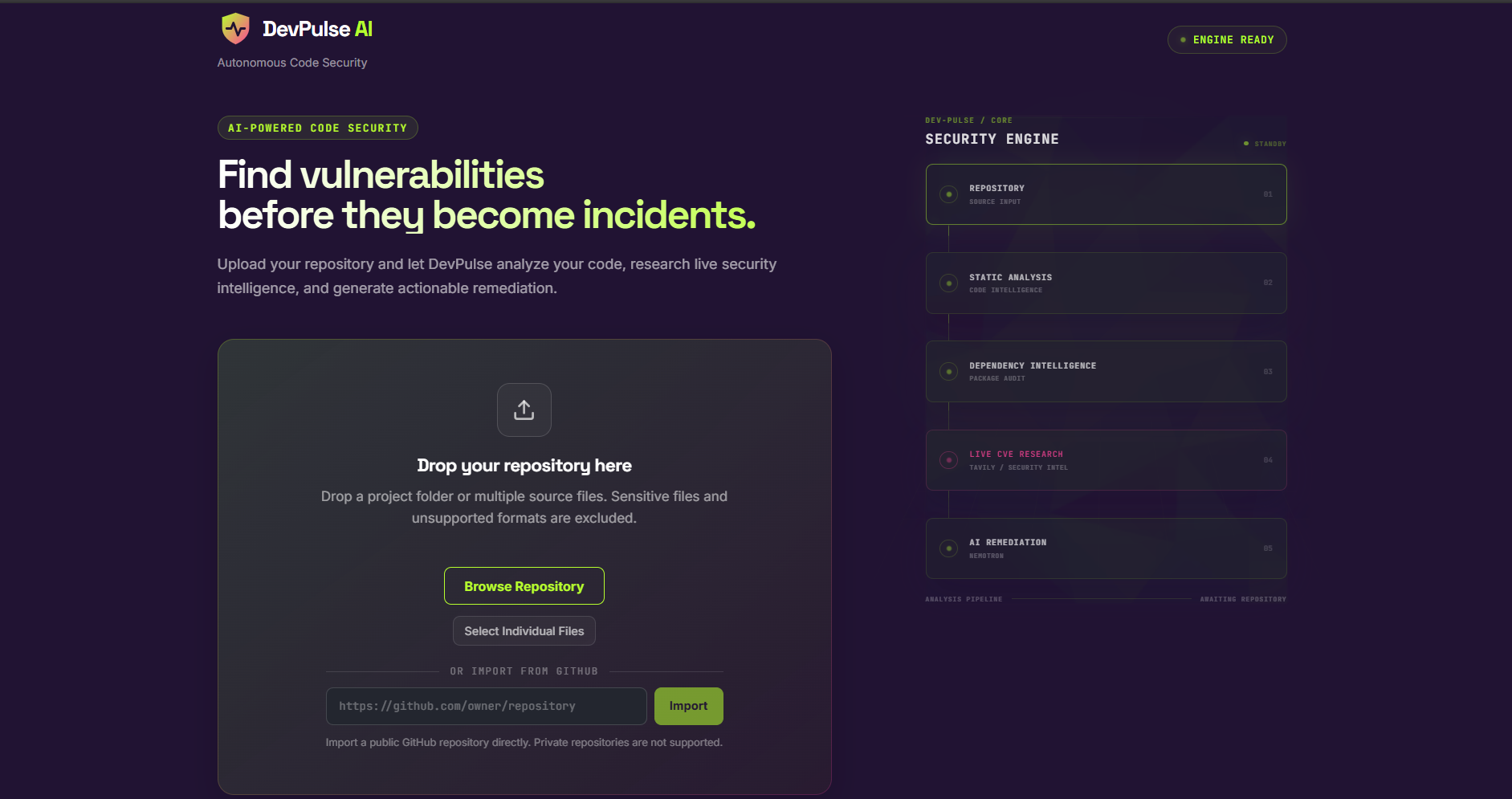
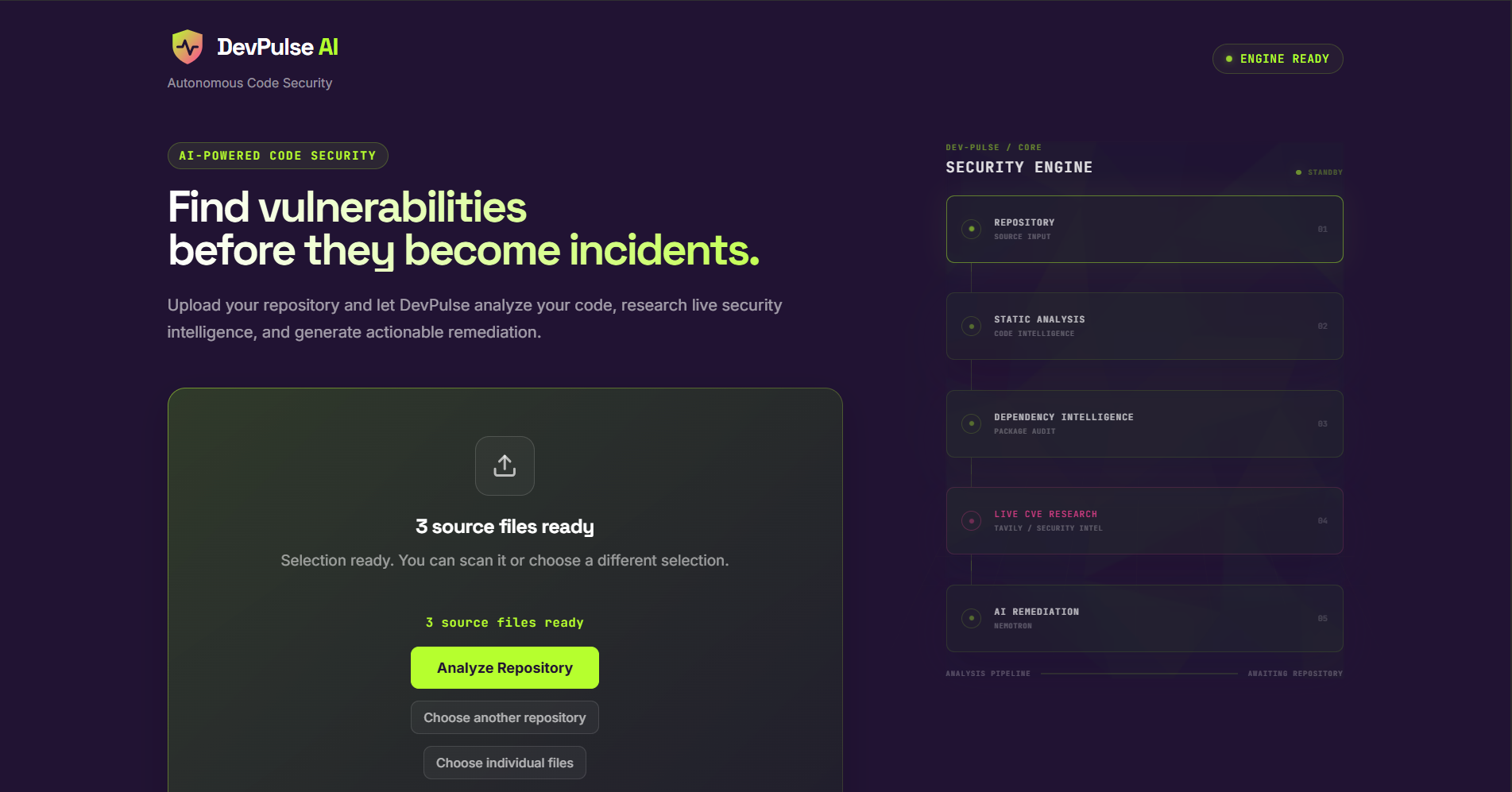
Main DevPulse AI dashboard featuring the security engine and repository input interface.
-
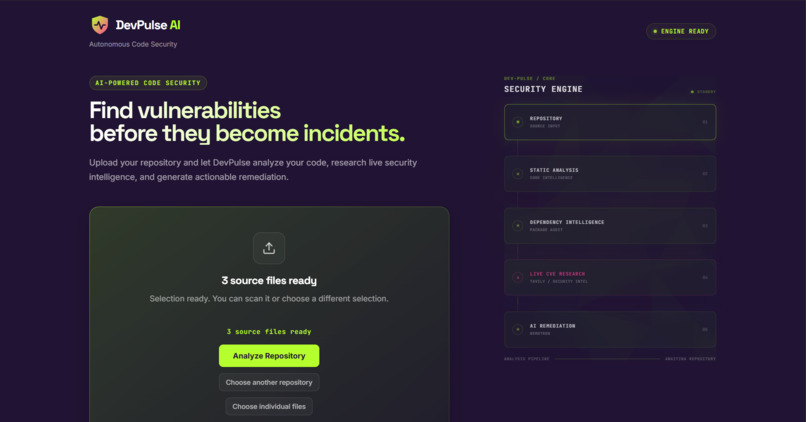
Repository selection interface supporting local folder uploads, individual files, and direct GitHub repository imports.
-
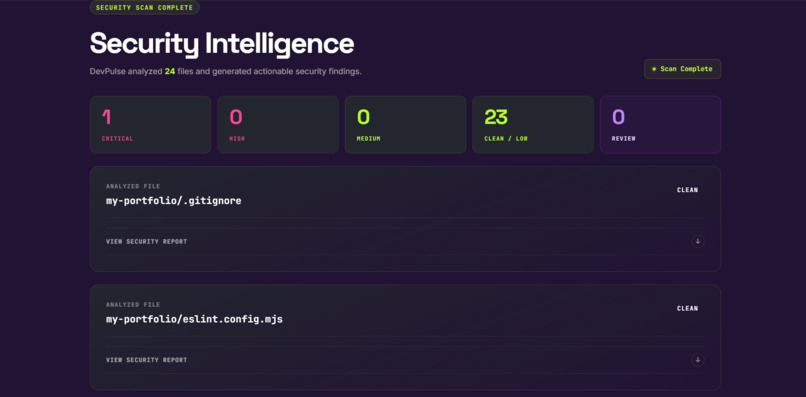
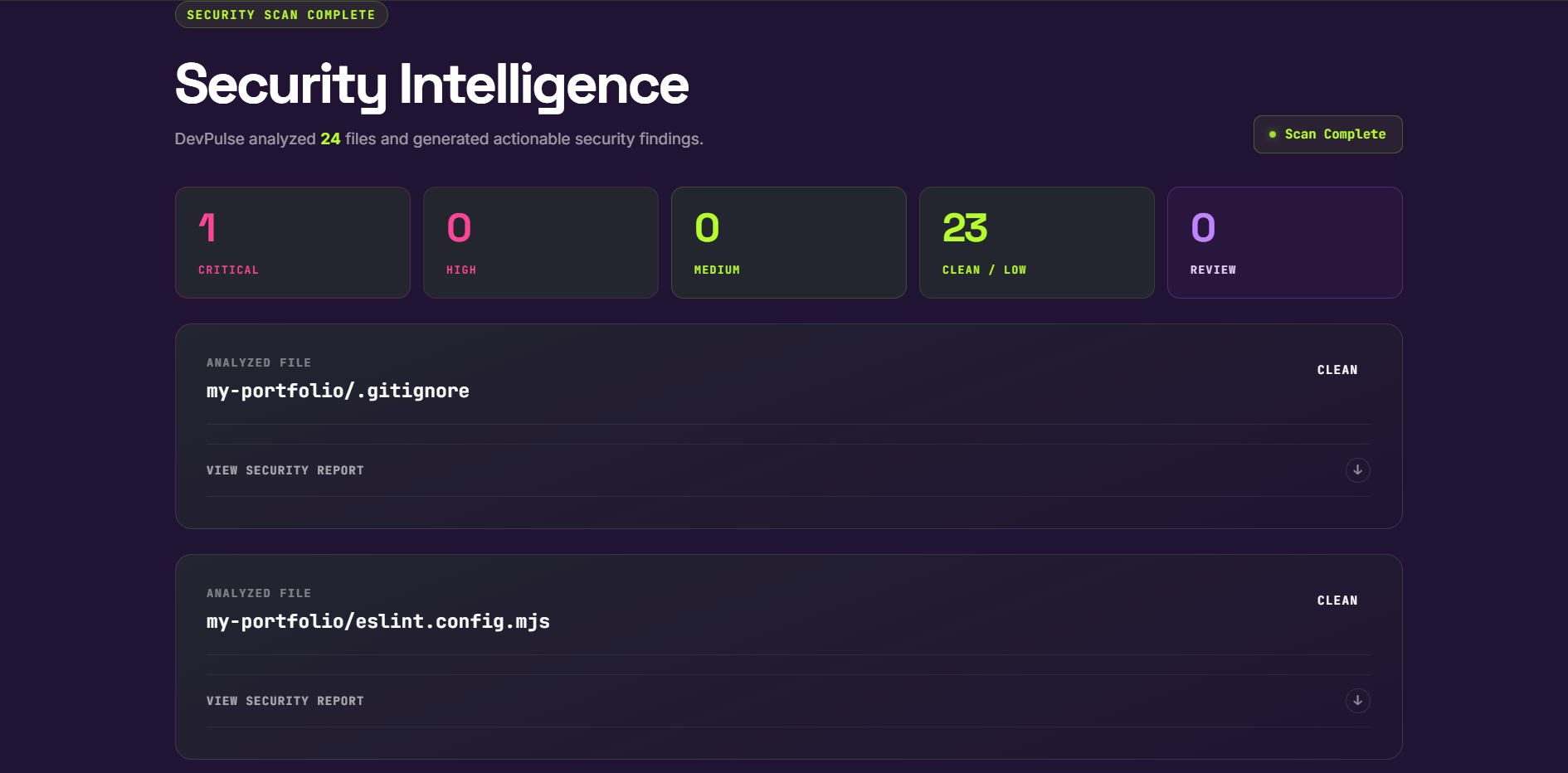
Security scan overview displaying vulnerability severity distribution and analyzed file statistics.
-

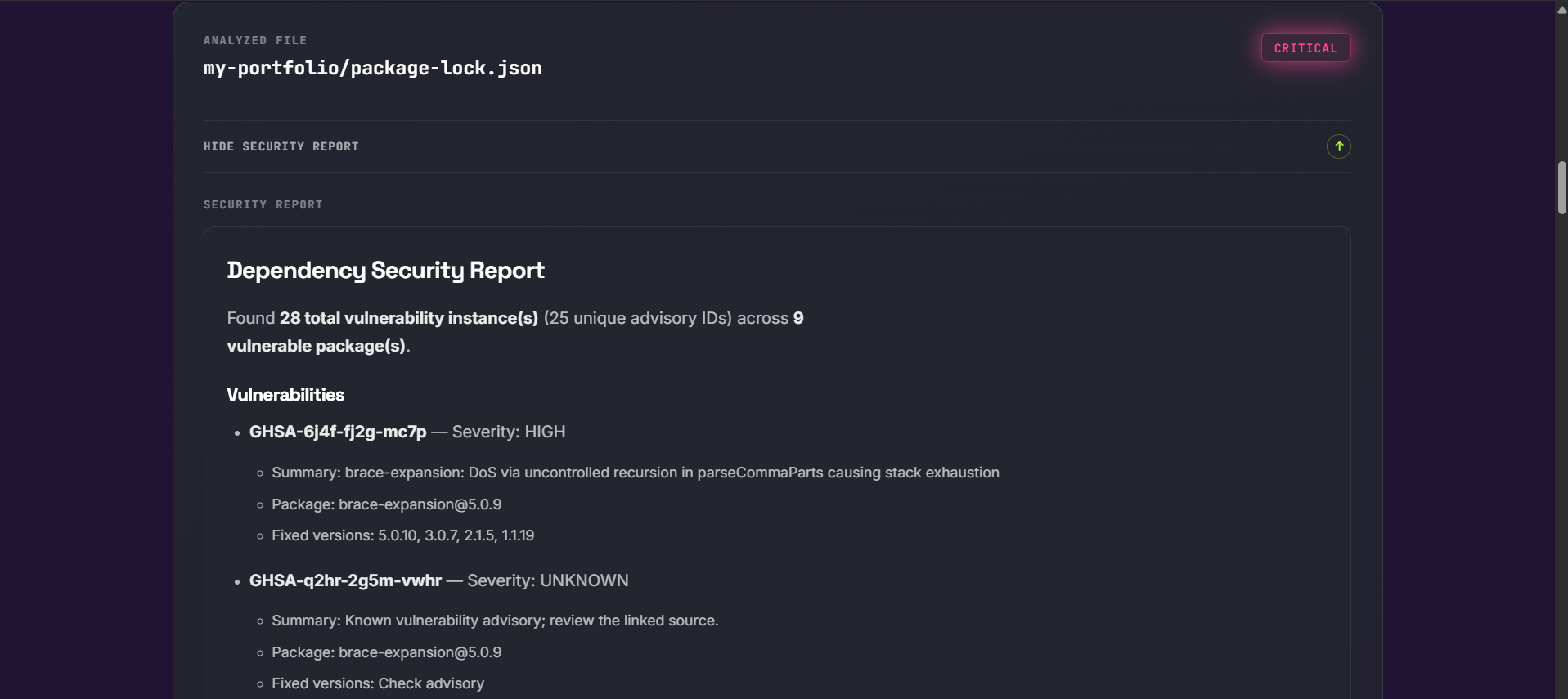
Detailed view of a critical security finding with its associated vulnerability report.
-
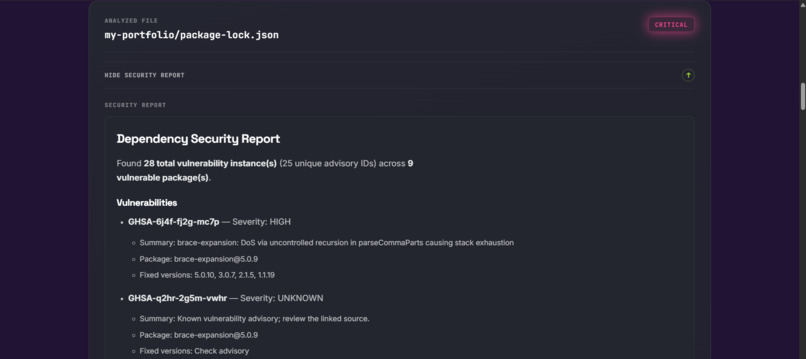
Dependency security report identifying vulnerable packages, advisory IDs, severity levels, and fixed versions.
-
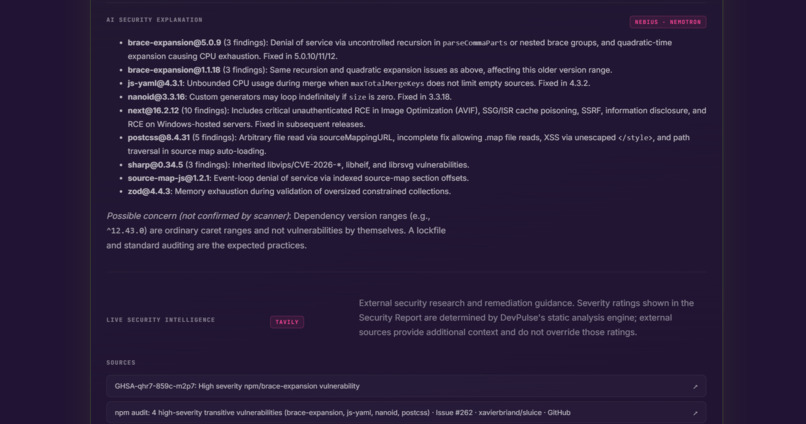
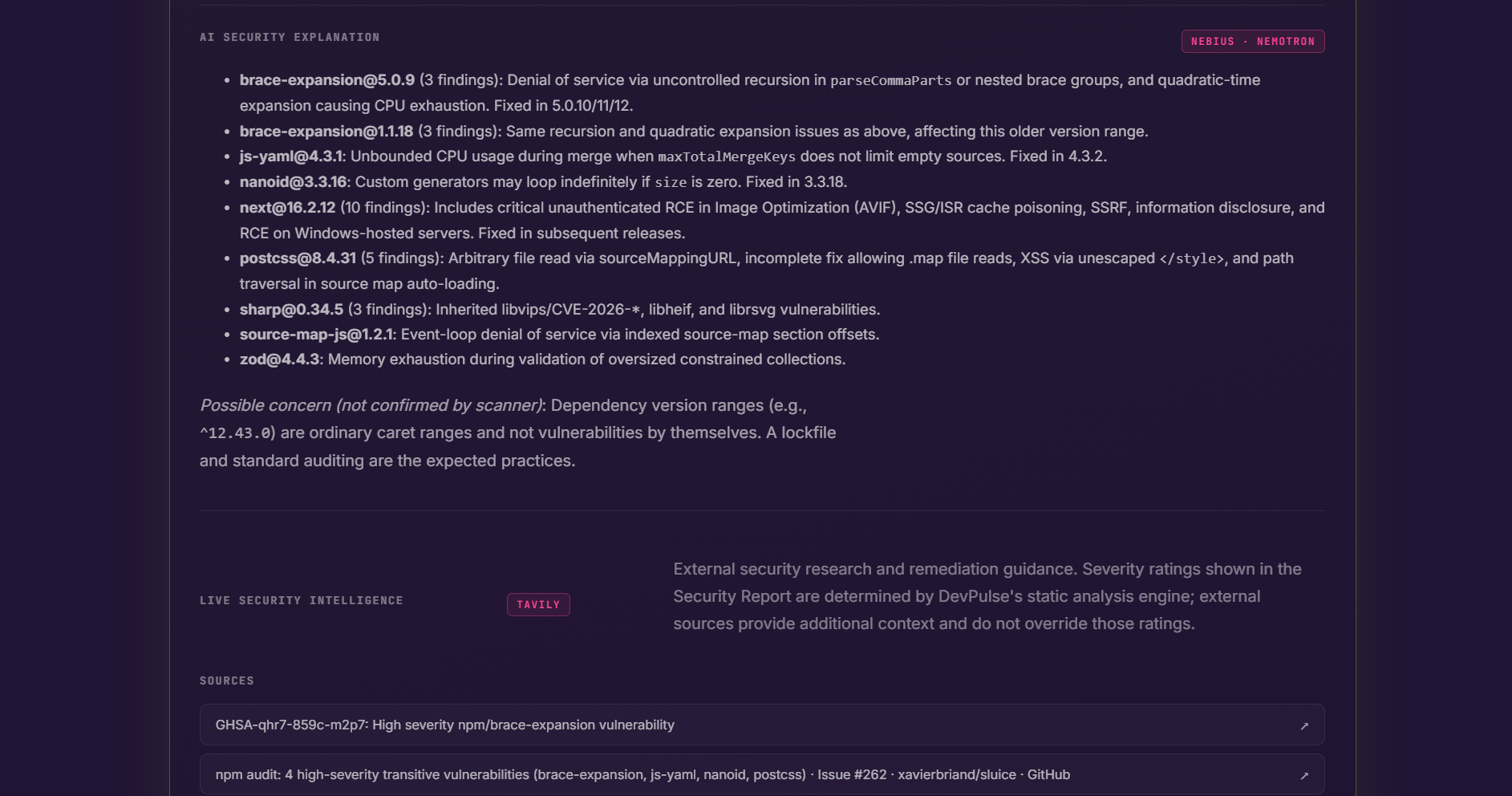
NVIDIA Nemotron-powered security explanations with remediation guidance and Tavily research context.
-
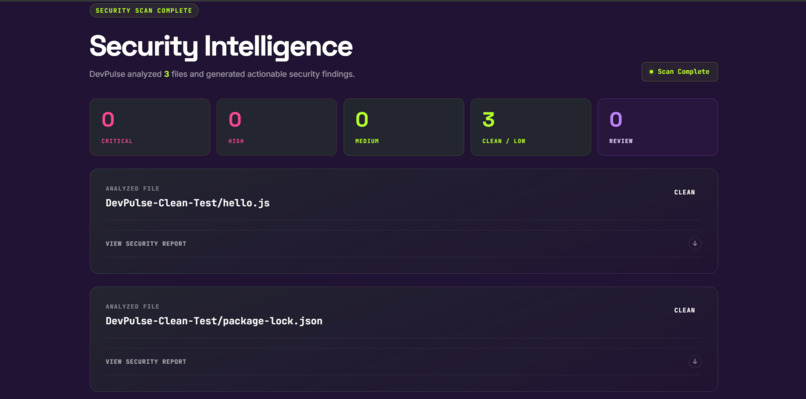
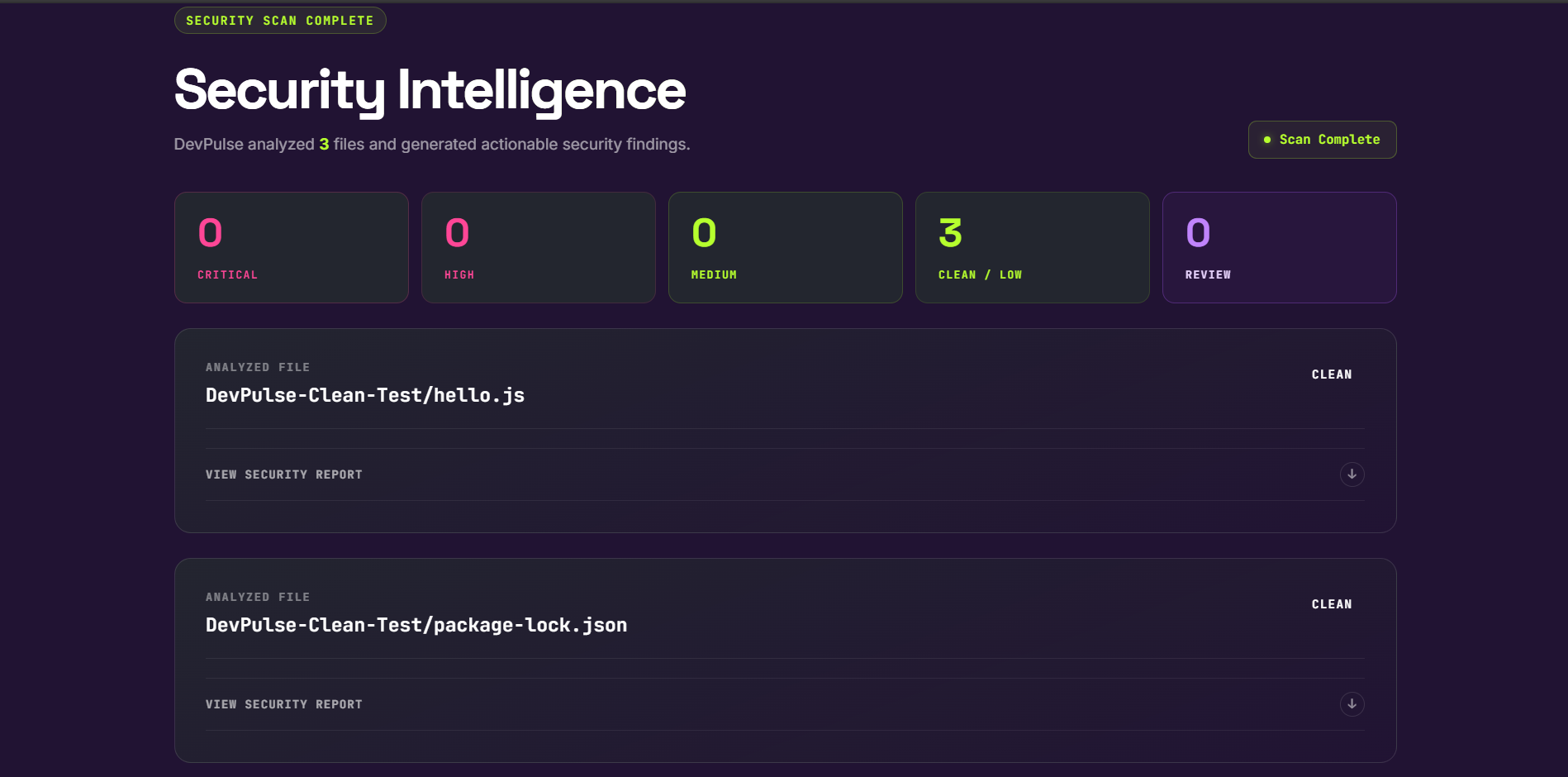
Clean repository scan showing analyzed files with no detected security findings.
-
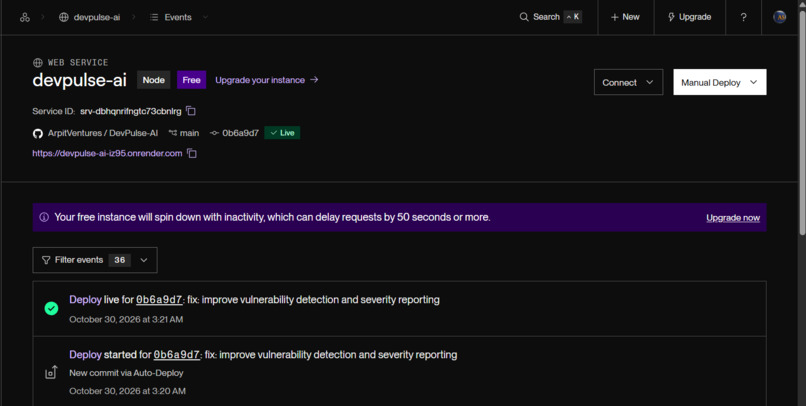
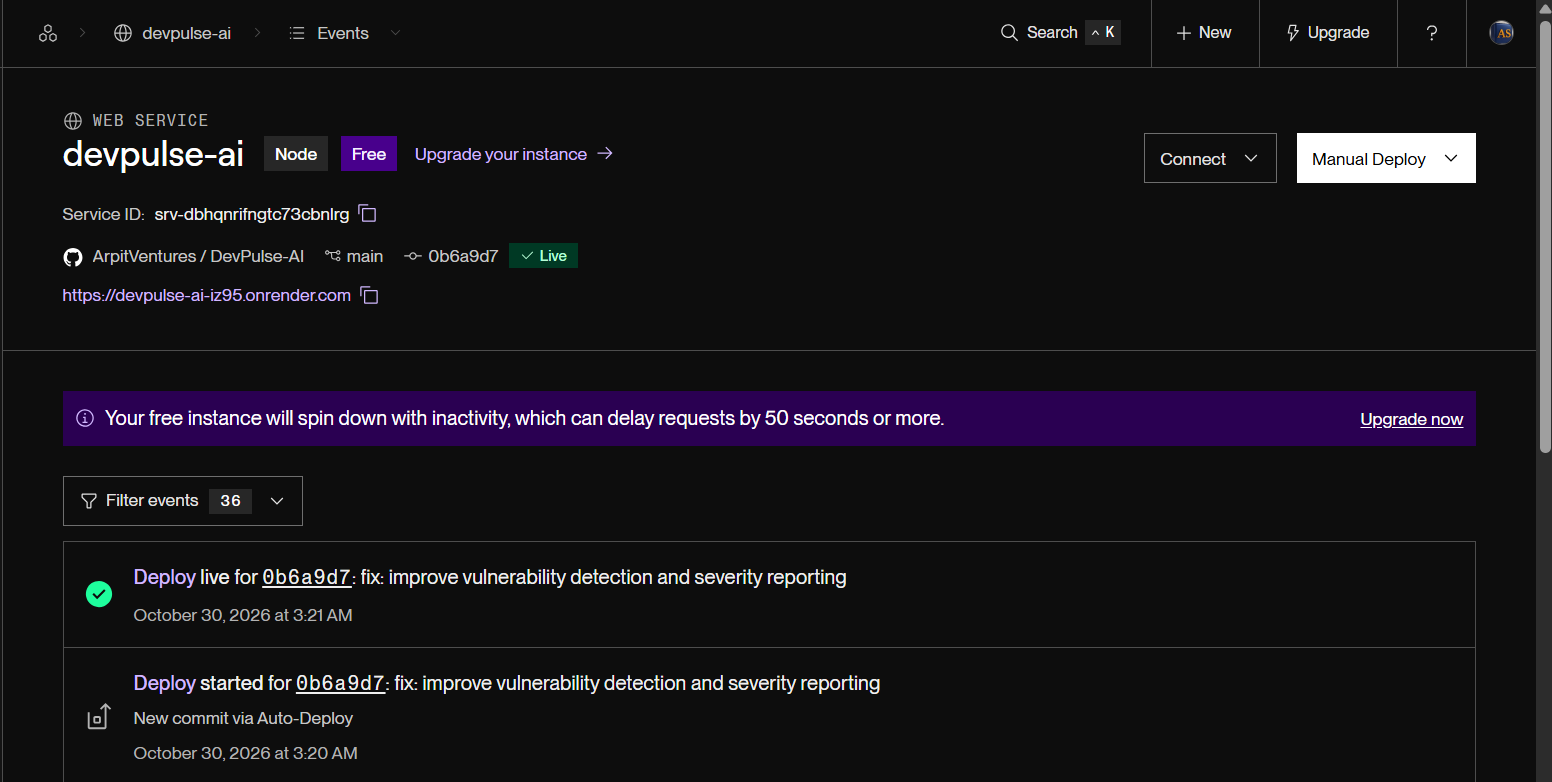
DevPulse AI live deployment on Render, demonstrating the hosted application.

DevPulse AI — Autonomous Code Security & Live Vulnerability Researcher
Inspiration
Modern software applications depend on hundreds of packages, libraries, and interconnected components. A single vulnerable dependency or insecure coding pattern can introduce serious security risks.
As I explored application security and software development, I realized that developers often need multiple tools to inspect source code, audit dependencies, research vulnerabilities, and understand possible remediation strategies.
I wanted to bring these capabilities together into one unified platform.
That idea led me to build DevPulse AI — an AI-powered security analysis platform designed to help developers identify potential vulnerabilities, understand security risks, and investigate actionable remediation strategies.
What It Does
DevPulse AI combines static security analysis, dependency intelligence, live vulnerability research, and AI-powered explanations in a single workflow.
Its core capabilities include:
- Static Security Analysis: Inspects supported source files for potentially dangerous coding patterns using custom security detectors.
- GitHub Repository Import: Imports public GitHub repositories directly through their repository URLs.
- Local Repository Upload: Supports project folder uploads and individual source file selection.
- Dependency Auditing: Analyzes supported dependency information to identify known security vulnerabilities.
- Live Security Research: Uses Tavily to retrieve relevant vulnerability intelligence and supporting sources.
- AI-Powered Explanations: Uses NVIDIA Nemotron through Nebius Token Factory to generate contextual explanations and remediation guidance.
- Security Intelligence Dashboard: Presents scan results, severity classifications, analyzed files, and file-level security reports.
How I Built It
I developed DevPulse AI using a React and TypeScript frontend with a Node.js, Express, and TypeScript backend.
The security analysis engine uses custom static security detectors to inspect supported source files. I also developed a dependency auditing service to evaluate supported package information for known security risks.
For AI-powered intelligence, I integrated NVIDIA Nemotron through Nebius Token Factory. I also integrated the Tavily Search API to retrieve relevant security research and supporting information.
I implemented two primary repository input methods: local repository uploads and direct imports from public GitHub repositories.
The analysis results are presented through a dedicated Security Intelligence dashboard, allowing developers to review findings and investigate potential remediation strategies.
Challenges I Faced
One of my biggest challenges was bringing multiple security analysis capabilities into a single workflow without making the system unnecessarily complex.
Some of the key engineering challenges I worked through included:
- Processing repository files while excluding sensitive files and unsupported formats.
- Handling repository uploads within file-count and content-size limits.
- Integrating dependency auditing with the existing static analysis pipeline.
- Connecting external AI and security research services while handling provider failures.
- Implementing public GitHub repository import without disrupting existing local upload functionality.
- Presenting security findings in a clear, actionable, file-level reporting interface.
What I Learned
Building DevPulse AI gave me hands-on experience in combining static analysis, dependency intelligence, AI inference, and external security research into a practical developer tool.
I gained experience integrating NVIDIA Nemotron through Nebius Token Factory, using Tavily for security research, building repository-processing workflows, and developing a full-stack application that connects multiple independent services.
Most importantly, I learned that identifying a potential security issue is only part of the solution. Helping developers understand why it matters and where to investigate a fix is equally important.
What's Next
I envision DevPulse AI evolving into a more comprehensive developer security intelligence platform, with expanded vulnerability detection, deeper dependency analysis, and more advanced remediation workflows.
DevPulse AI — Find vulnerabilities before they become incidents.
Built With
- ai
- cybersecurity
- express.js
- github
- javascript
- nebius
- nemotron
- node.js
- nvidia
- react
- render
- tavily
- typescript
- vite

Log in or sign up for Devpost to join the conversation.