-
-
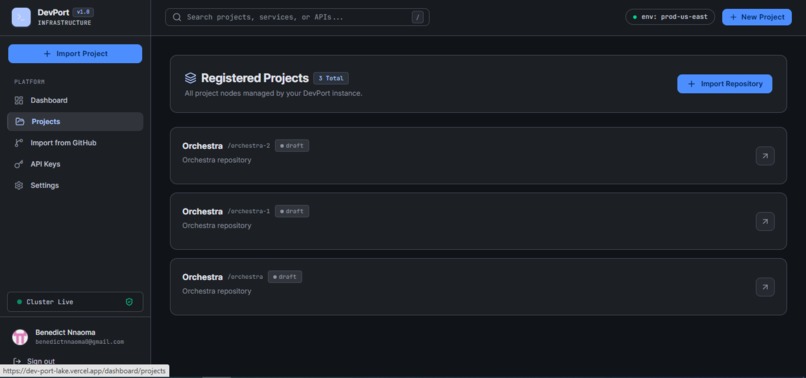
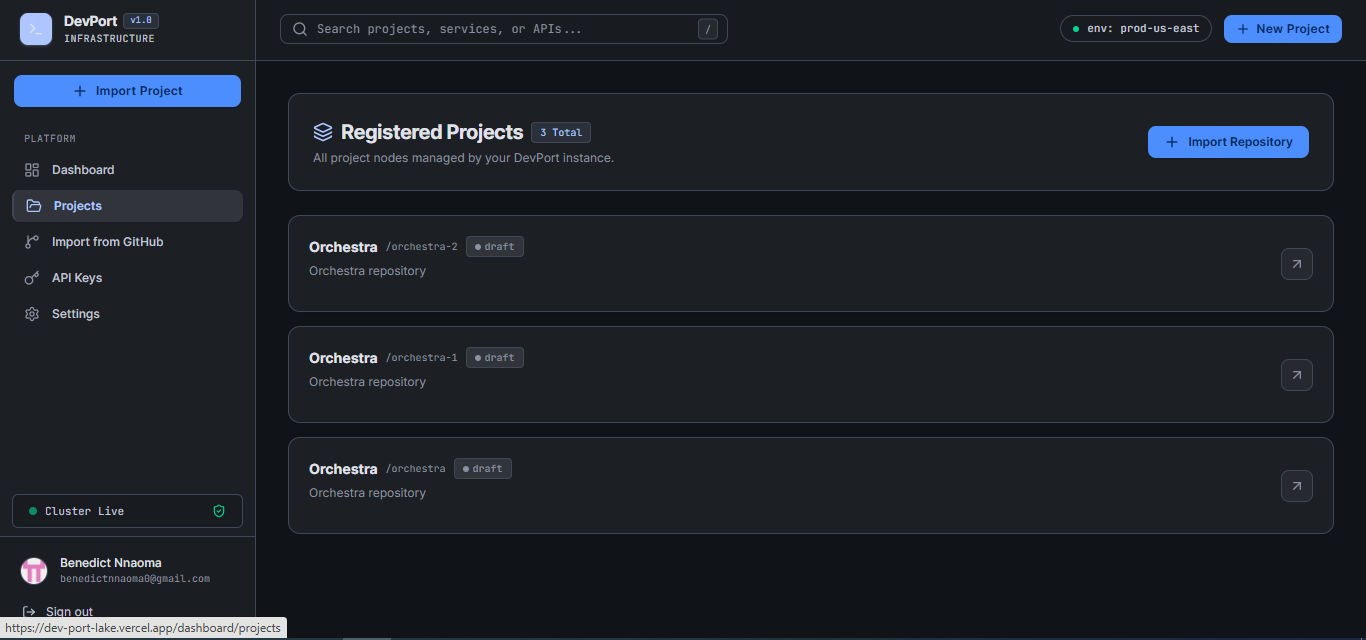
Projects overview
-
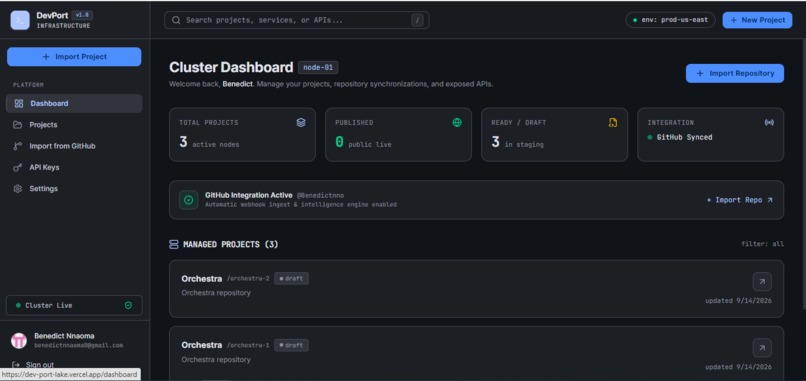
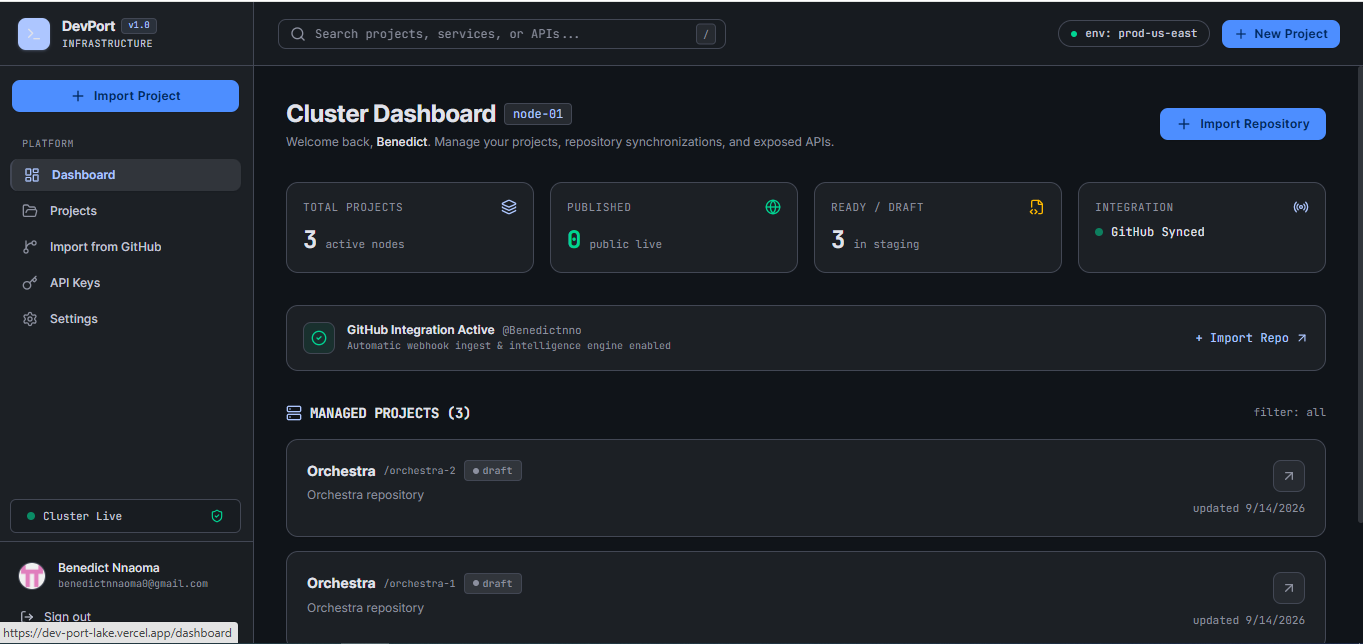
Dashboard page
-
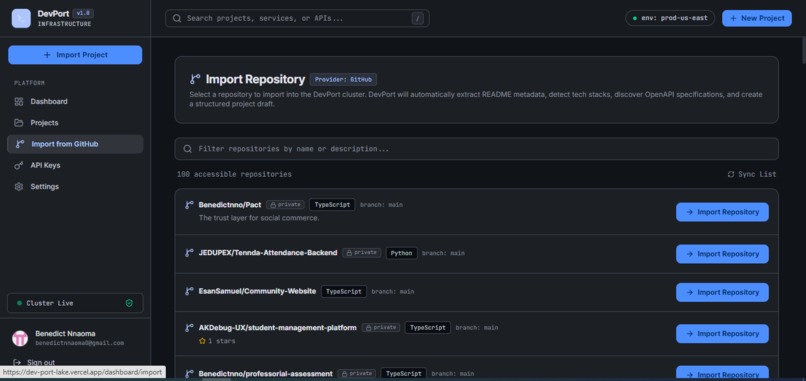
Importing your Project
-
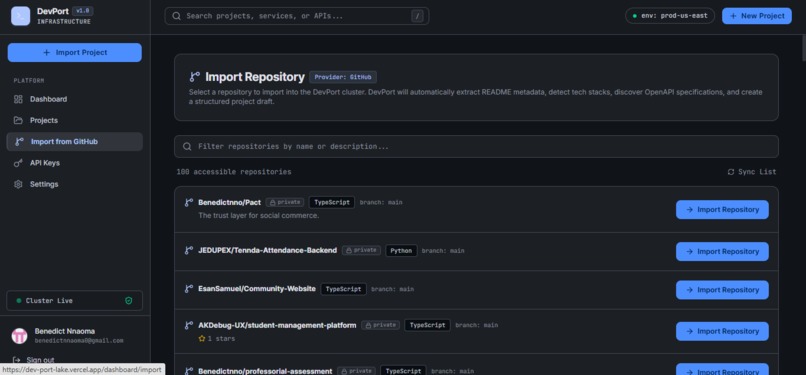
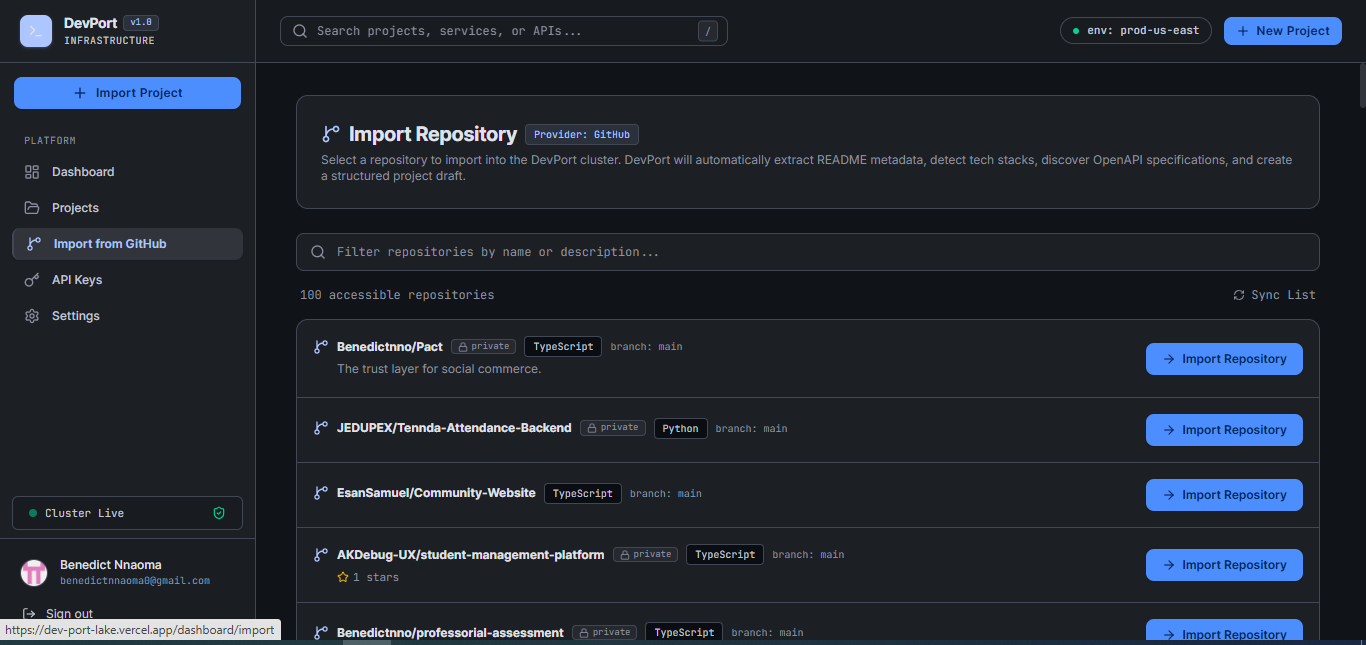
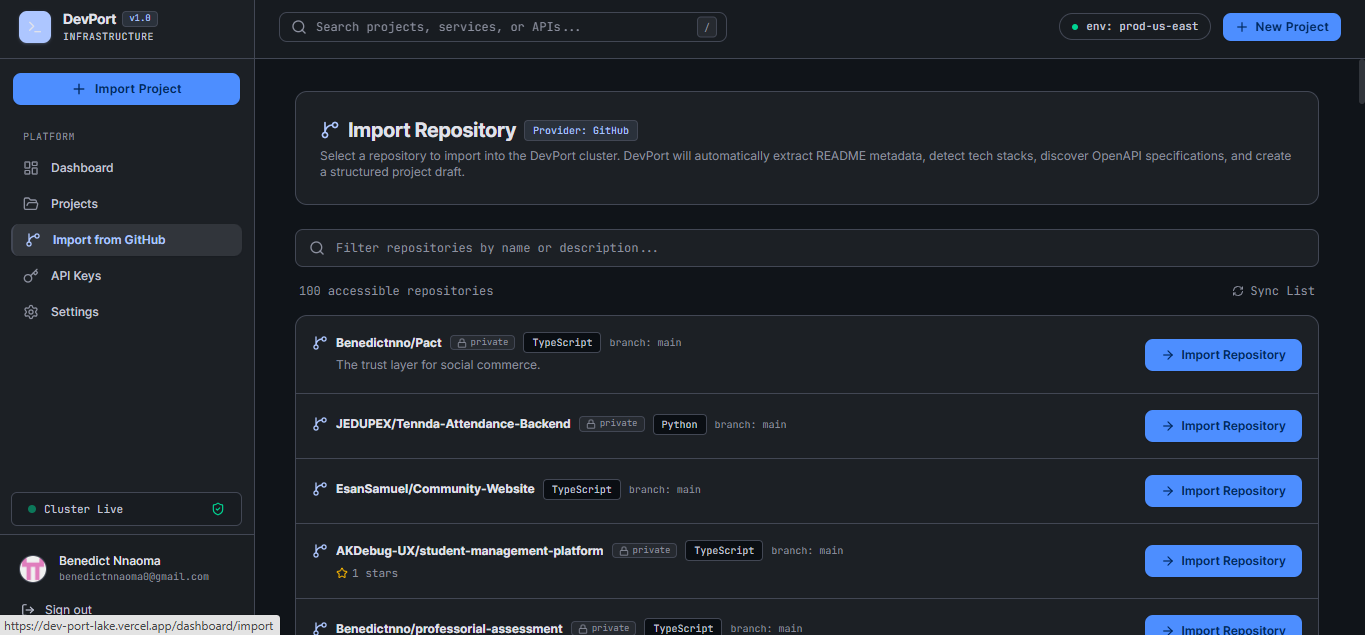
Importing Repos
-
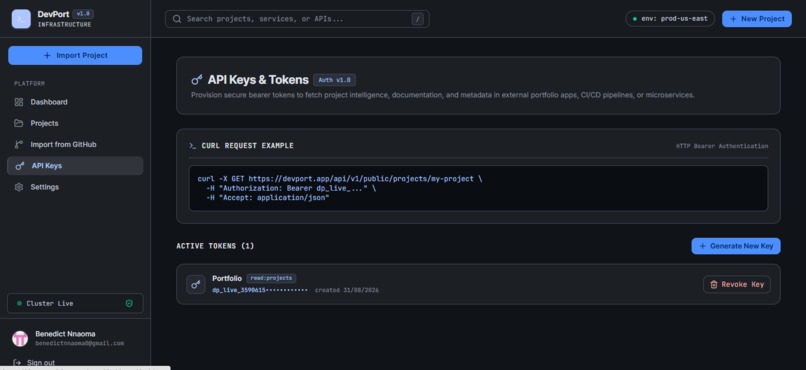
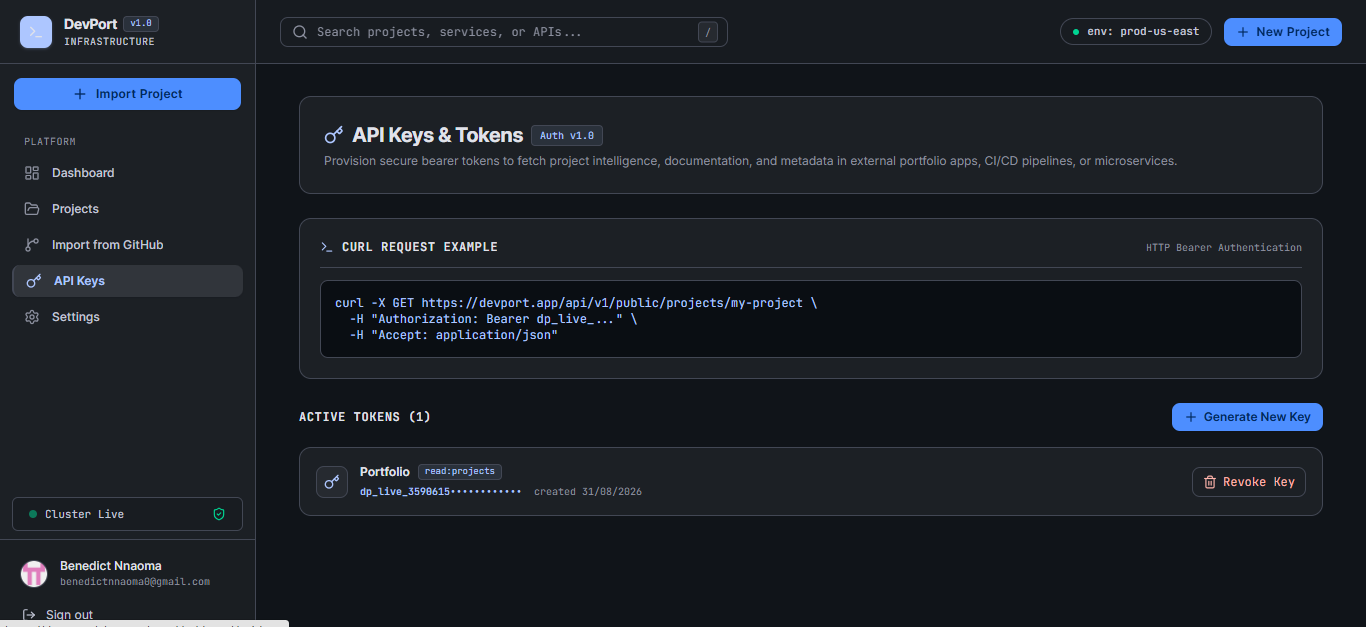
Api Keys
Inspiration
As developers, we constantly create projects, but the information surrounding those projects is often scattered across GitHub, README files, API documentation, deployment platforms, portfolios, and personal notes.
I wanted to solve this problem by creating a single source of truth for software projects, a place where a project could be documented, understood, and connected to the tools and services it uses.
That idea became DevPort.
What it does
DevPort is a developer platform for organizing, documenting, and exposing project information through a structured API.
Developers can connect their projects to sources such as GitHub, OpenAPI documentation, and deployment platforms. DevPort then brings relevant information together into a unified project model.
The goal is to make project information reusable. Instead of manually updating the same project description across a portfolio, documentation site, or other application, developers can retrieve structured project data through DevPort's API.
DevPort also provides a foundation for automated project analysis and AI-assisted documentation while keeping developers in control of the final information.
How we built it
We built DevPort using Next.js, TypeScript, Tailwind CSS, shadcn/ui, PostgreSQL, Prisma, Redis, and BullMQ.
The system follows a modular-monolith architecture, with the project domain at its center. External services are implemented as separate integrations so they can contribute information without tightly coupling the core application to a specific provider.
For operations that could take time such as synchronizing repository information, we use Redis and BullMQ to process jobs asynchronously.
The application is also API-first, allowing other applications to consume structured project information instead of keeping that data locked inside the DevPort interface.
Challenges we ran into
One of the biggest challenges was designing a data model capable of representing information from completely different sources without becoming overly complicated.
We also had to consider what happens when external APIs fail, return incomplete information, or provide conflicting data. This led us to treat external services as sources of information rather than the source of truth.
Another challenge was designing the integration architecture so that adding another provider would not require rewriting the core application.
Accomplishments that we're proud of
We are proud of building a working foundation for a platform that can turn scattered project information into a structured, reusable data layer.
We are particularly proud of the integration architecture, asynchronous processing system, and API-first approach. These decisions make DevPort more than just another project-management dashboard, they provide the foundation for other developer tools and applications to consume project information programmatically.
What we learned
Building DevPort taught us that good developer infrastructure is often less about collecting more information and more about organizing information correctly.
We learned how important source precedence, data normalization, background processing, and integration boundaries are when building systems that depend on multiple external services.
We also learned to design for failure. External services will eventually be unavailable, change their APIs, or return unexpected data, so integrations need to fail gracefully without compromising the core application.
What's next for DevPort
The next step is expanding DevPort's integrations and making project synchronization more intelligent.
We want to support more development tools, improve automated project analysis, and provide richer APIs for portfolios, documentation platforms, developer dashboards, and other applications.
Long term, we see DevPort becoming a project intelligence layer for developers, a structured source of truth that understands not just what a project is, but how it is built, where it is deployed, what it depends on, and how it evolves.
Built With
- bullmq
- golang
- next.js
- postgresql
- prisma
- redis
- tailwind
- typescript

Log in or sign up for Devpost to join the conversation.