Inspiration
Every developer has felt this: you drop into a repo you've never seen and lose the first hour just figuring out what it does before you can touch anything. With Codex and GPT-5.6 landing for Build Week, we wanted to build the tool we'd actually reach for on day one of a new codebase — something that reads the code and hands back answers instead of making you dig for them.
What it does
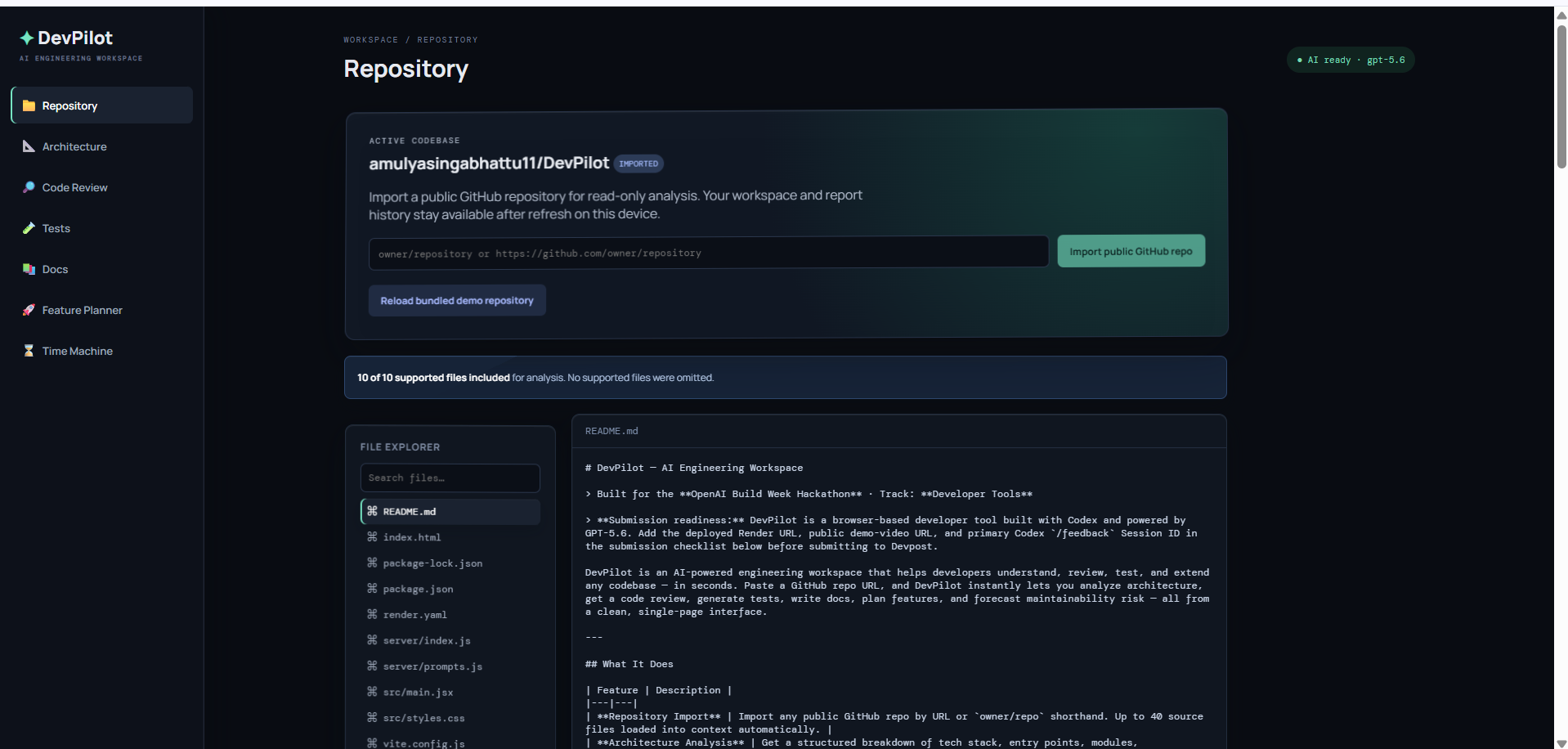
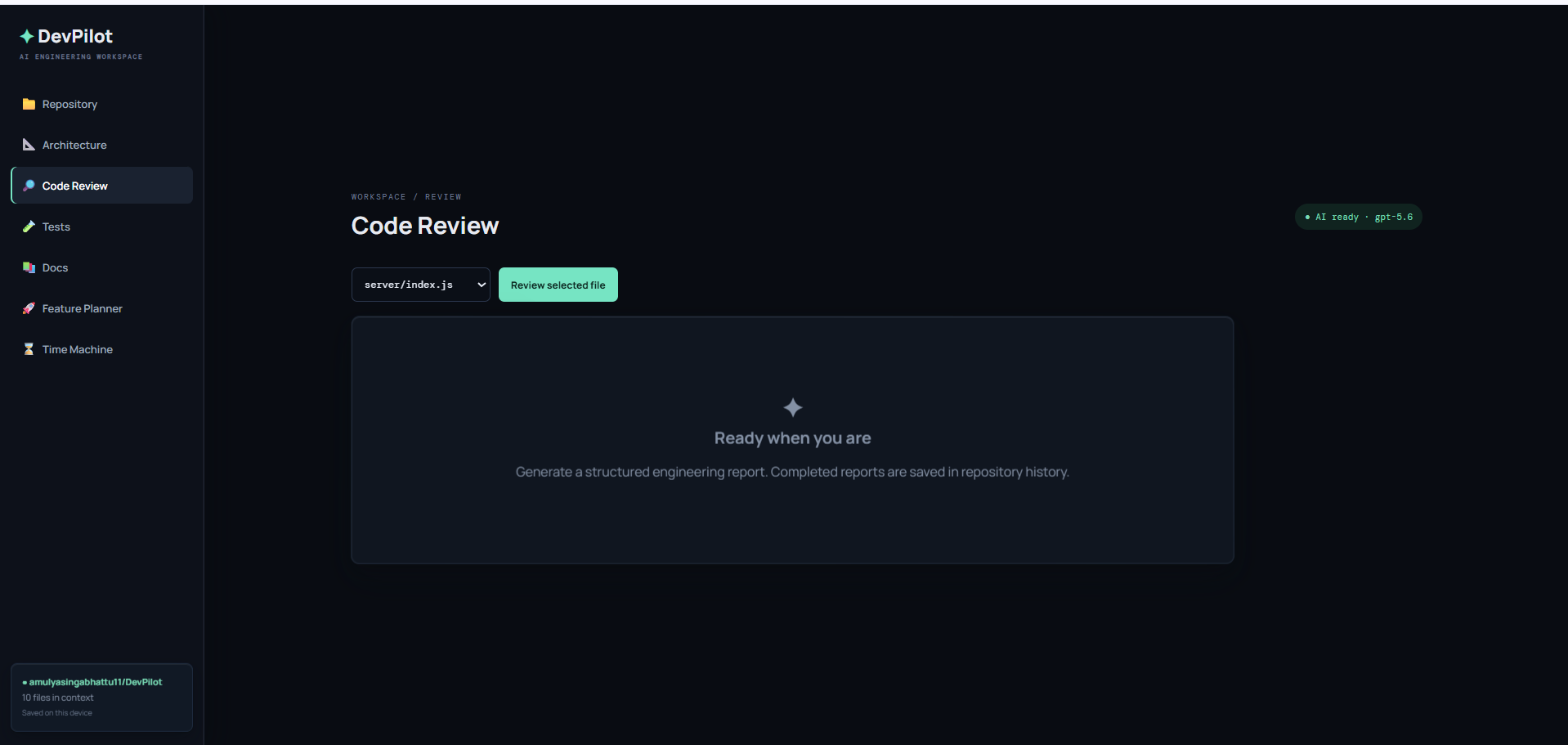
DevPilot is a browser-based AI engineering workspace. Paste a public GitHub repo URL and it pulls source files straight from the GitHub API into a live workspace, then gives you six tools in one place:
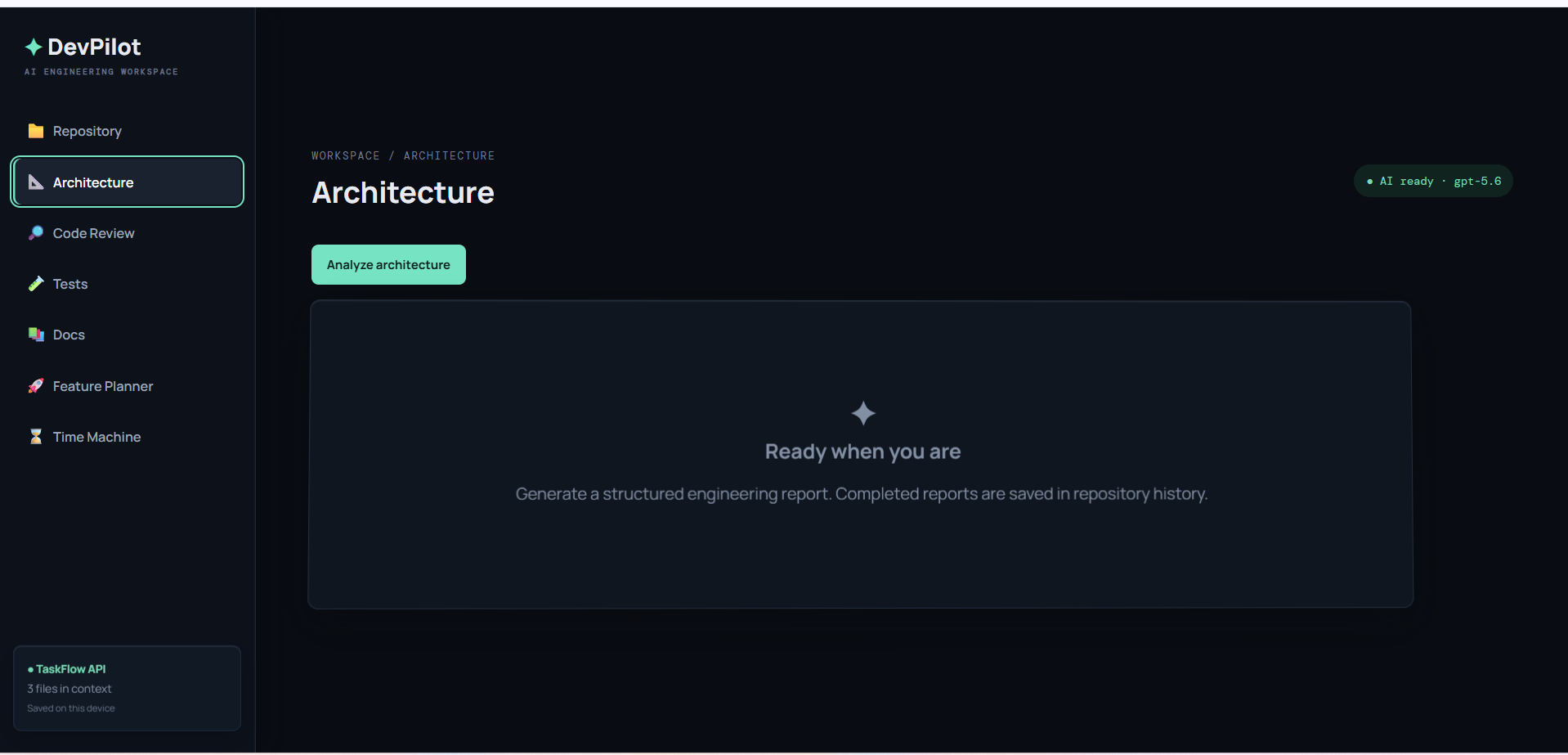
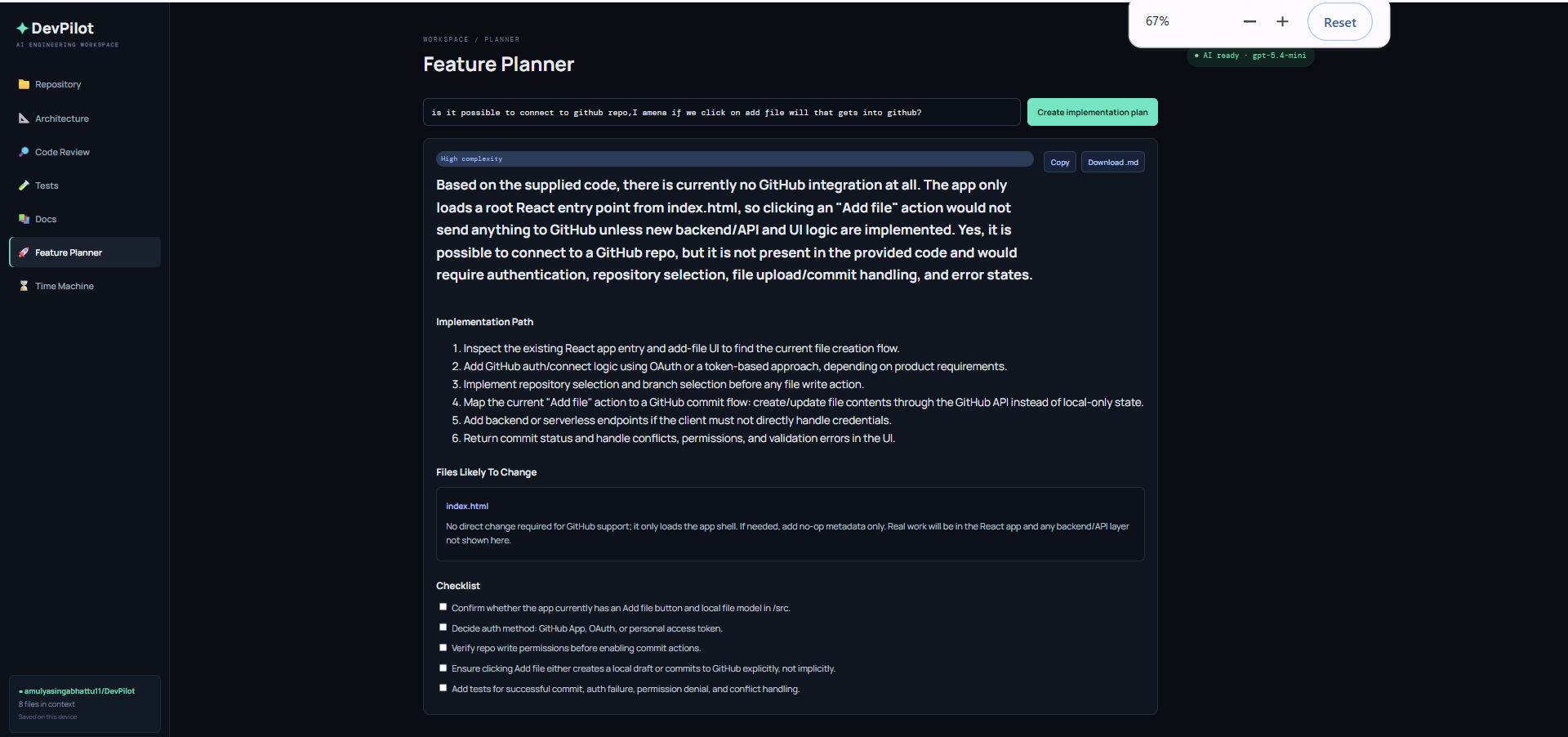
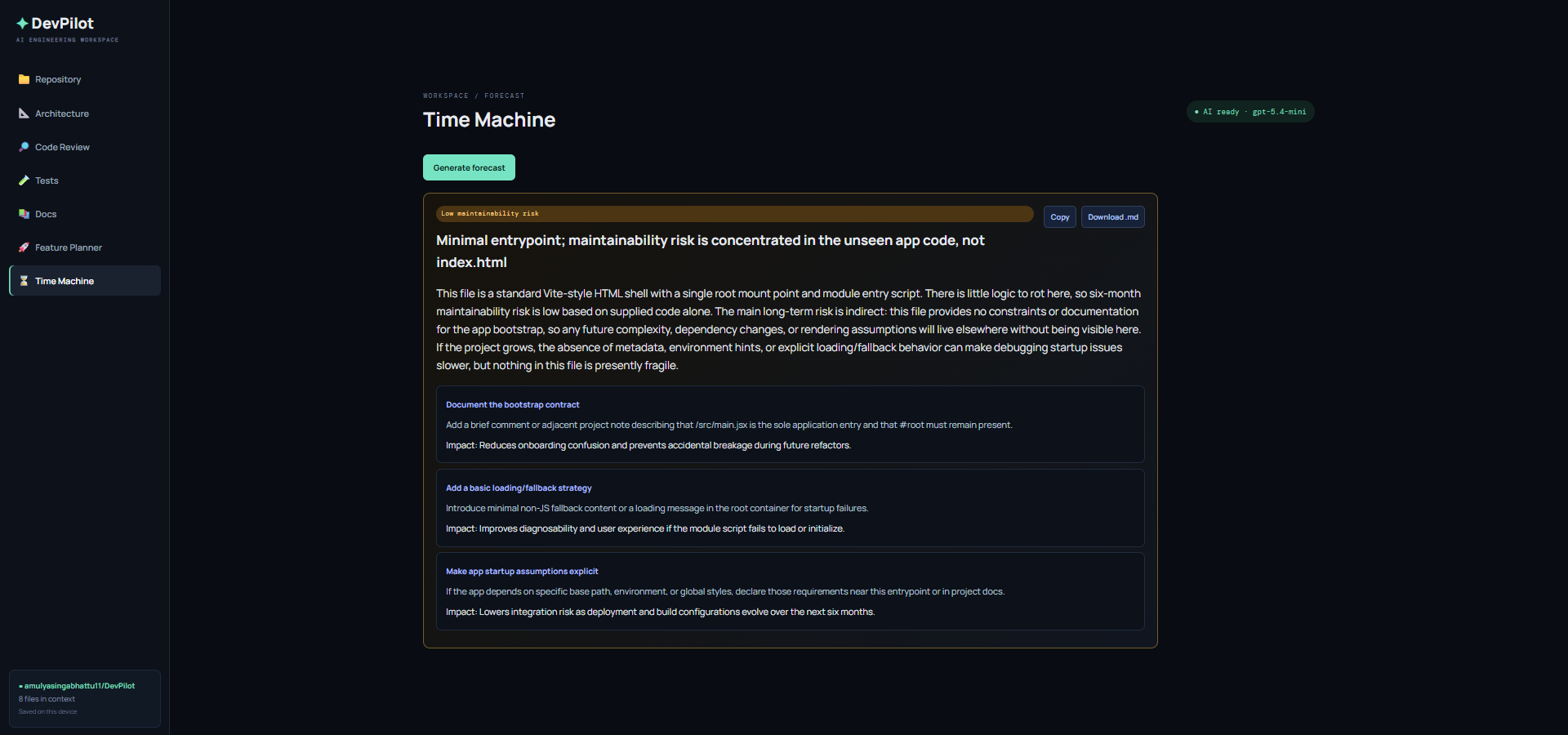
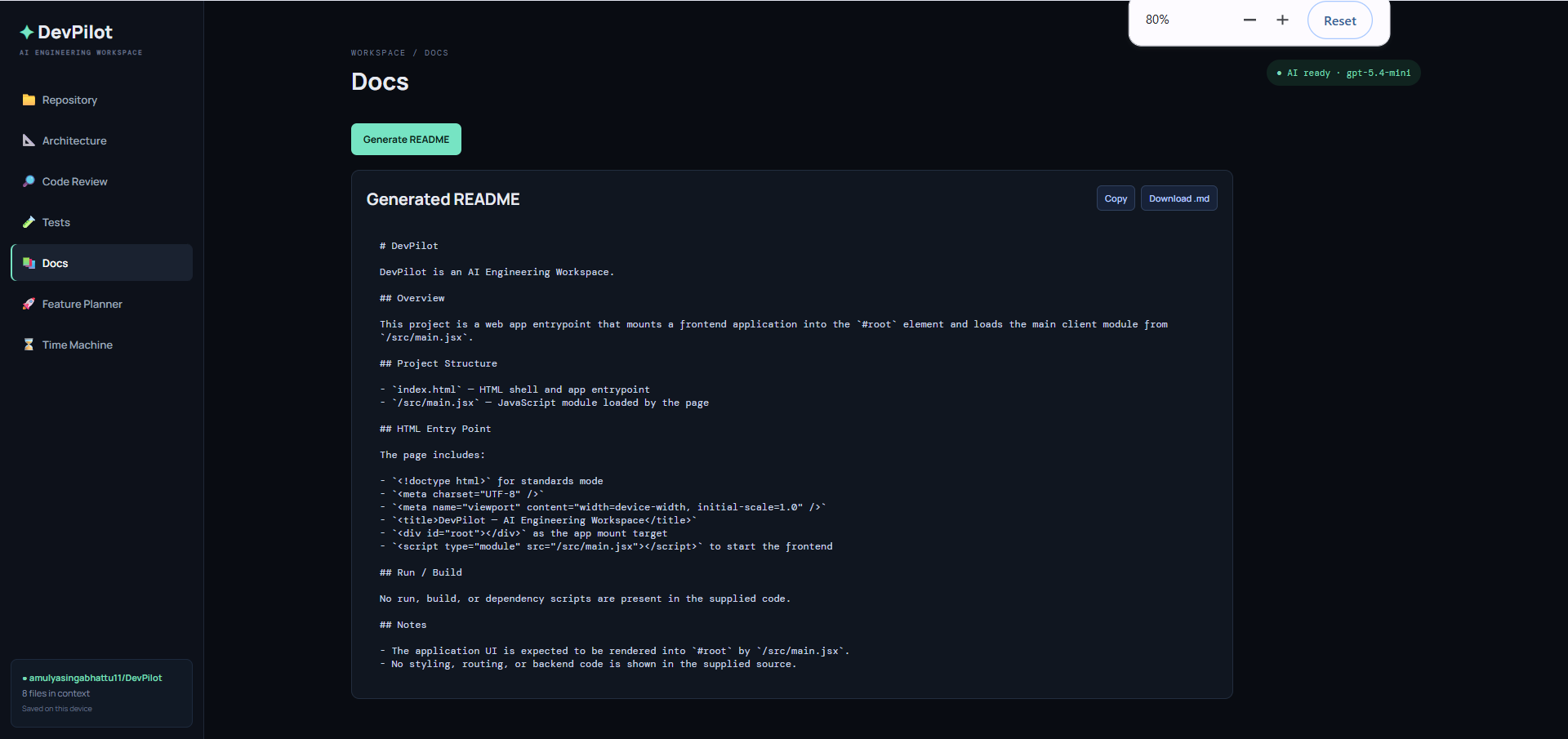
Architecture — tech stack, entry points, modules, and complexity notes Code Review — file-level findings (security, code smells, performance) with specific fixes Tests — a generated test suite with edge cases called out Docs — a production-ready README written from the actual code Feature Planner — describe a feature in plain English, get back an implementation plan with affected files and a checklist Time Machine — a six-month maintainability forecast with concrete suggestions to cut down technical debt
No login, no database, nothing to install — import a repo and start working.
How we built it
The stack is React 18 + Vite on the frontend and Node/Express on the backend, calling GPT-5.6 through OpenAI's responses endpoint. Codex was the primary build partner throughout:
Scaffolded the GitHub import pipeline (tree fetch → file filtering → parallel content fetch → base64 decode), including edge cases for rate limits, private repos, and truncated trees. Generated and tuned the in-memory rate-limiting middleware with zero external dependencies. Iterated on all six prompt templates in server/prompts.js until GPT-5.6 reliably returned clean JSON that mapped directly to UI components. Handled the repetitive JSX and state wiring for the sidebar navigation, file explorer, and result rendering.
Key product decisions stayed with us: a stateless, file-in-context architecture with no auth or database to keep the tool instantly usable; capping context at 40 files / 50KB per file to stay within model limits while still covering real-world repos; and choosing these six features around the most common friction points in onboarding to unfamiliar code.
Challenges we ran into
Getting GPT-5.6 to return strictly parseable JSON — no markdown fences, no stray commentary — took several rounds of prompt iteration, since a single malformed response would break the UI. The GitHub import step also needed careful handling for rate limits, truncated repo trees, and oversized files without silently dropping context the model needed. Balancing file/byte caps against giving the model enough of the codebase to reason about accurately was a constant trade-off.
Accomplishments that we're proud of
Six distinct AI-powered workflows sharing one clean, stateless architecture — no database, no auth, nothing for a judge or a new user to configure before it's useful. The code review output in particular consistently returns specific, actionable findings rather than generic advice, which was the bar we cared most about clearing.
What we learned
Structured-output reliability is mostly a prompt design problem, not a model capability problem — once the prompt format was locked down, GPT-5.6's output quality became consistent across very different codebases. We also learned how much a stateless design simplifies both the build and the judging experience: there's nothing to break between sessions.
What's next for DevPilot
Private repo support via GitHub OAuth, incremental re-analysis so imports don't need to be redone after small changes, and letting Feature Planner hand off its checklist directly into a PR description or issue tracker.
Built With
- codex
- express.js
- github-api
- gpt-5.6
- javascript
- node.js
- openai-api
- react
- rest-api
- vite

Log in or sign up for Devpost to join the conversation.