-
-
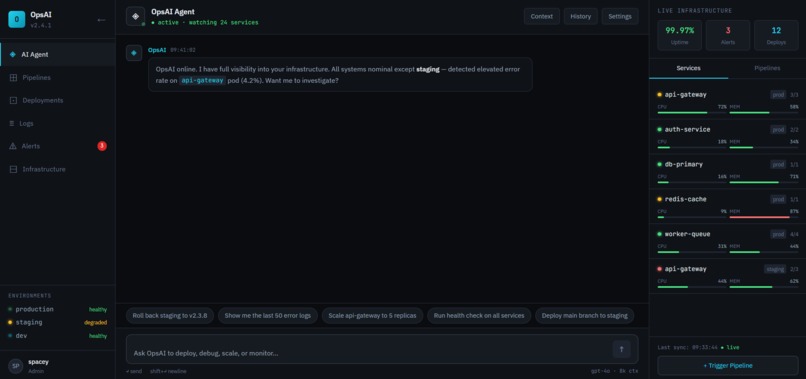
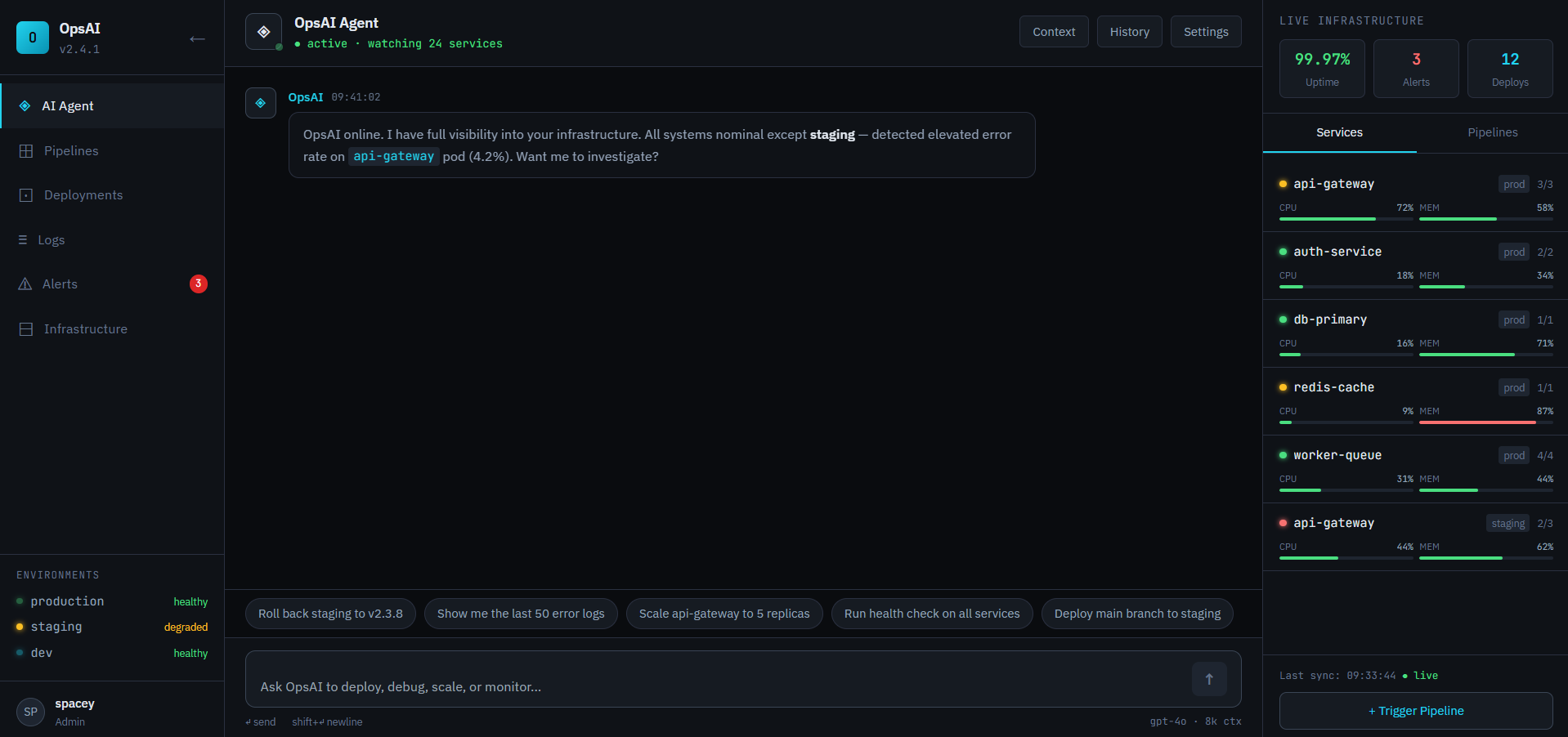
MODEL UI
Inspiration
Modern systems generate massive amounts of logs, but most developers either ignore them or manually debug issues after failures occur. I was inspired by the idea of proactive DevOps, where systems can understand themselves using AI. Instead of reacting to crashes, I wanted to build something that could detect, analyze, and suggest fixes automatically.
What it does
OPSAI is an AI-powered DevOps agent that:
- Collects and processes application logs from a backend system
- Analyzes logs to detect anomalies, failures, and unusual patterns
- Provides actionable insights for debugging and system improvement
How we built it
- Built a dummy backend API (Node.js / Python) to simulate real-world systems
- Generated structured logs (JSON format) from API activity
- Used Postman to simulate traffic and edge cases
- Developed a custom logging pipeline to capture and store logs
- Integrated an AI agent (via Fortiself) to analyze logs
- Used MCP (Model Context Protocol) servers to connect tools and provide context to the agent
- Leveraged Google Cloud AI Builder for AI-assisted development and rapid prototyping
Challenges we ran into
- Unstructured logs made AI analysis difficult, so logs were converted into structured JSON
- Designing meaningful anomaly detection logic without real production data
- Integrating MCP servers and ensuring smooth communication between components
- Making AI outputs useful and actionable, not just descriptive
- Simulating realistic system failures for testing
Accomplishments that we're proud of
- Built a functional AI-driven DevOps pipeline from scratch
- Successfully implemented log-based anomaly detection
- Integrated AI agent with MCP architecture
- Created a system that mimics real-world observability workflows
What we learned
- Importance of structured logging for intelligent systems
- How AI can be used beyond chatbots into system monitoring and DevOps
- Practical understanding of AI agents and tool integration (MCP)
- Real-world DevOps concepts like observability, monitoring, and debugging workflows
- Using AI tools like Google Cloud AI Builder for faster development cycles
What's next for OPSAI
- Integrate with real-time log streaming tools (e.g., ELK stack, Kafka)
- Add automated alerting and self-healing capabilities
- Improve anomaly detection using advanced ML models
- Deploy on cloud with scalable infrastructure (Docker + Kubernetes)
- Build a dashboard for visualizing logs and insights in real time
Built With
- ai
- ai-driven
- analysis
- anomaly
- apis
- builder
- cloud
- context
- custom
- devops
- express.js
- fastapi
- javascript
- log
- logging
- mcp
- model
- monitoring
- postman
- protocol)
- python
- rest
- servers
- systems


Log in or sign up for Devpost to join the conversation.