Inspiration
Modern DevOps teams are overwhelmed by alerts, failing pipelines, and late-night production incidents. Existing tools stop at monitoring and notifications, leaving engineers to manually debug, patch, and verify fixes under pressure.
We asked a simple question: What if an AI didn’t just alert you—but actually fixed the problem end-to-end?
DevOps Guardian was built to act as an autonomous Tier-1 Site Reliability Engineer that detects incidents, finds root causes, writes fixes, tests them safely, and ships them without human intervention.
What it does
DevOps Guardian is an autonomous AI-powered SRE that protects both Production Infrastructure and CI/CD pipelines.
It:
- Monitors live production logs and CI/CD events
- Detects failures in real time
- Performs root cause analysis
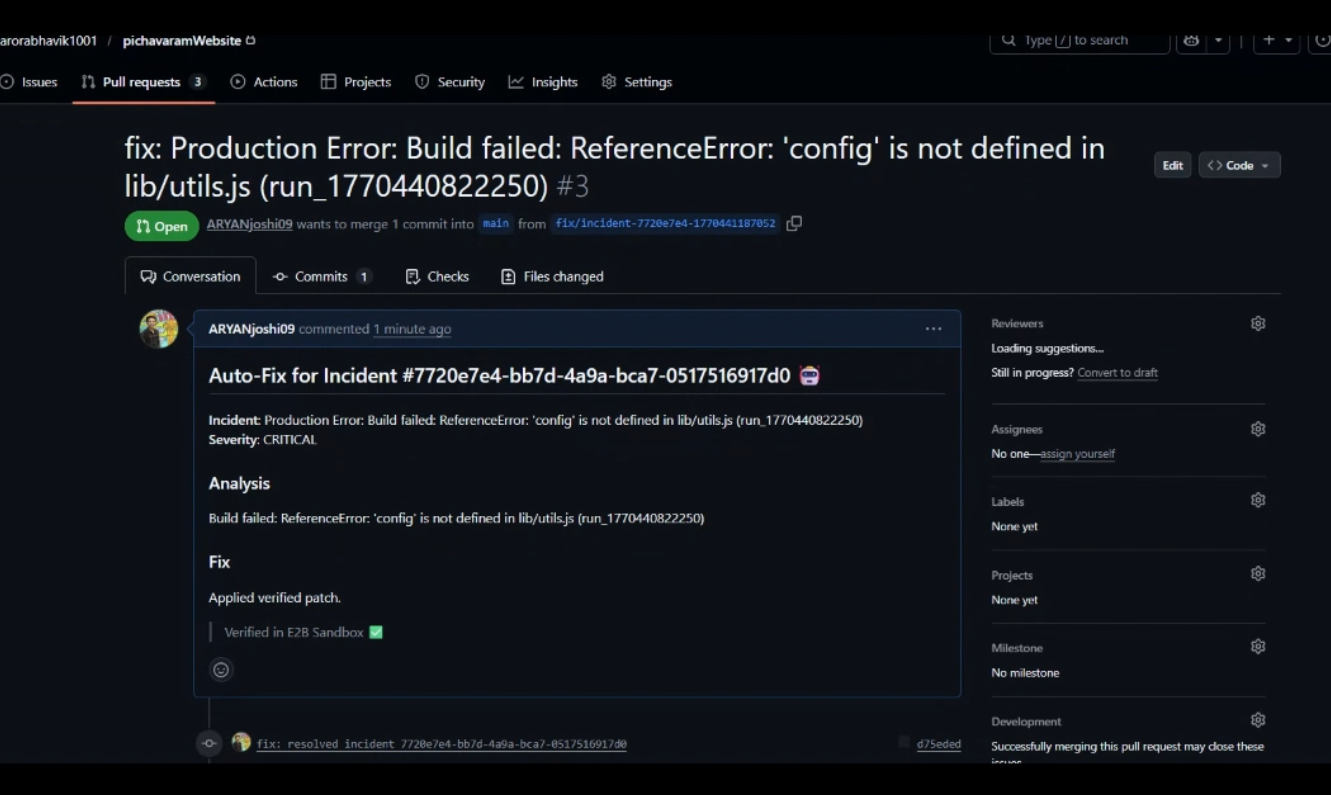
- Writes and tests fixes automatically in an isolated sandbox
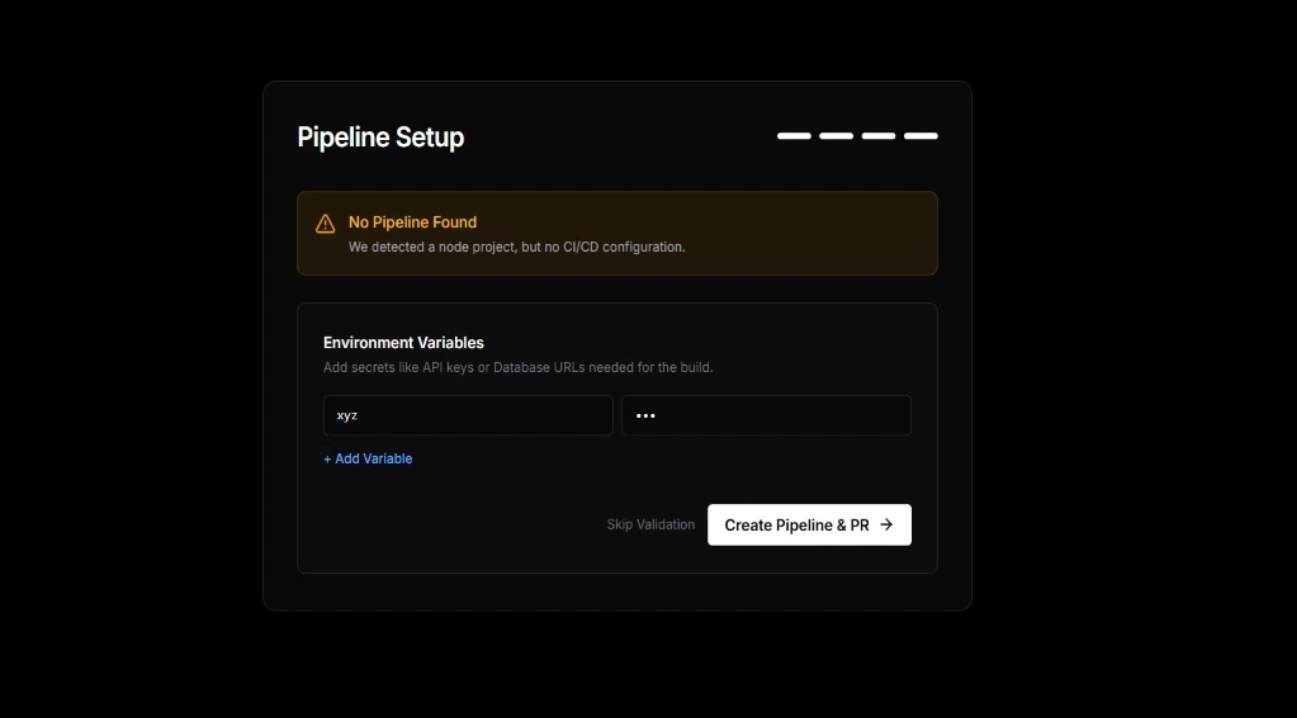
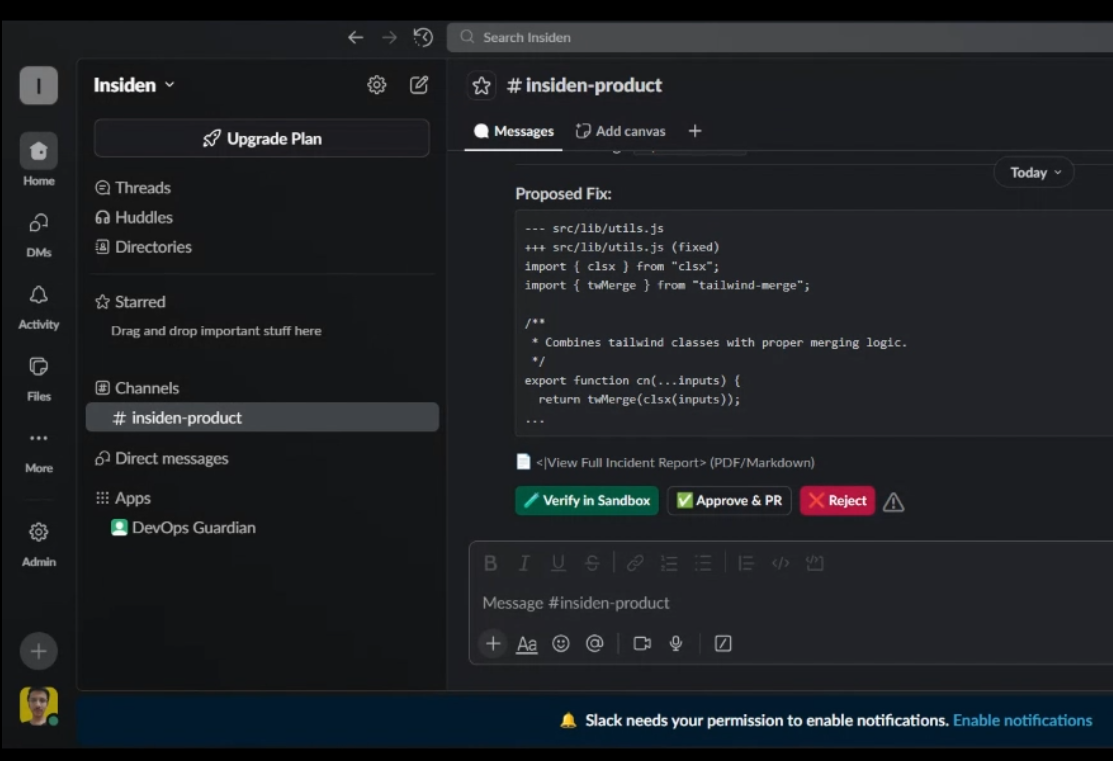
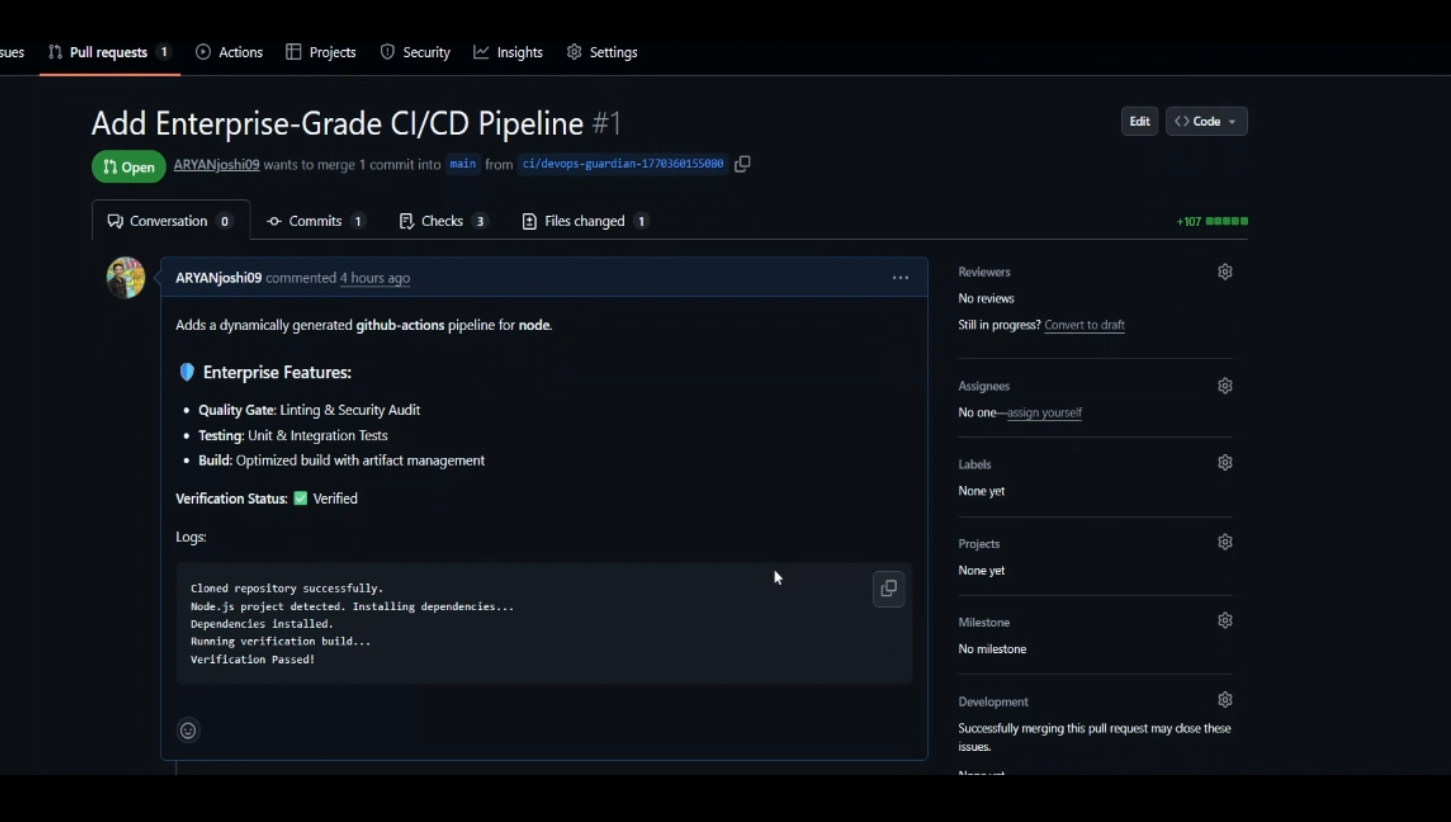
- Creates GitHub pull requests and notifies teams via Slack
Unlike traditional monitoring tools, DevOps Guardian closes the loop from detection to resolution.
How we built it
DevOps Guardian is designed as a multi-agent autonomous system:
- Log ingestion from AWS CloudWatch, Datadog, and GitHub Actions
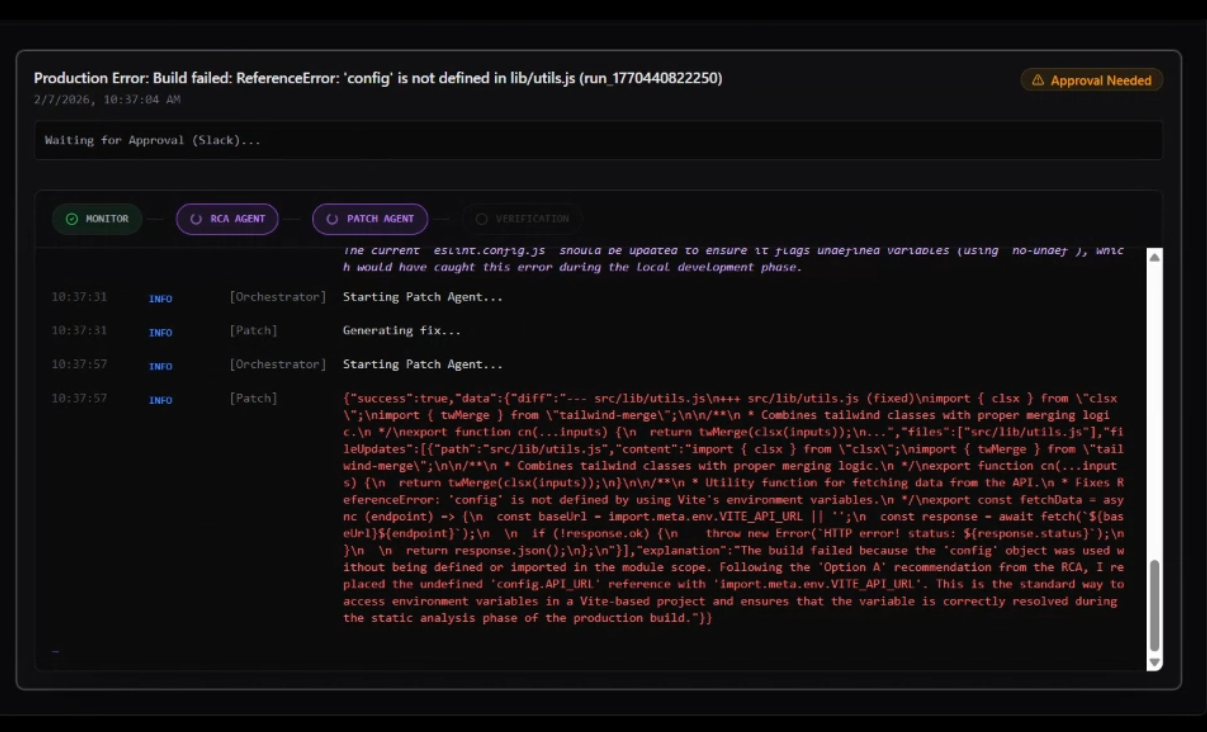
- An Orchestrator that coordinates specialized AI agents
- RCA Agent using Gemini 3 Pro for deep reasoning over logs and code
- Patch Agent using Gemini 3 Flash for fast, context-aware fixes
- Verify Agent that runs tests inside an isolated E2B sandbox
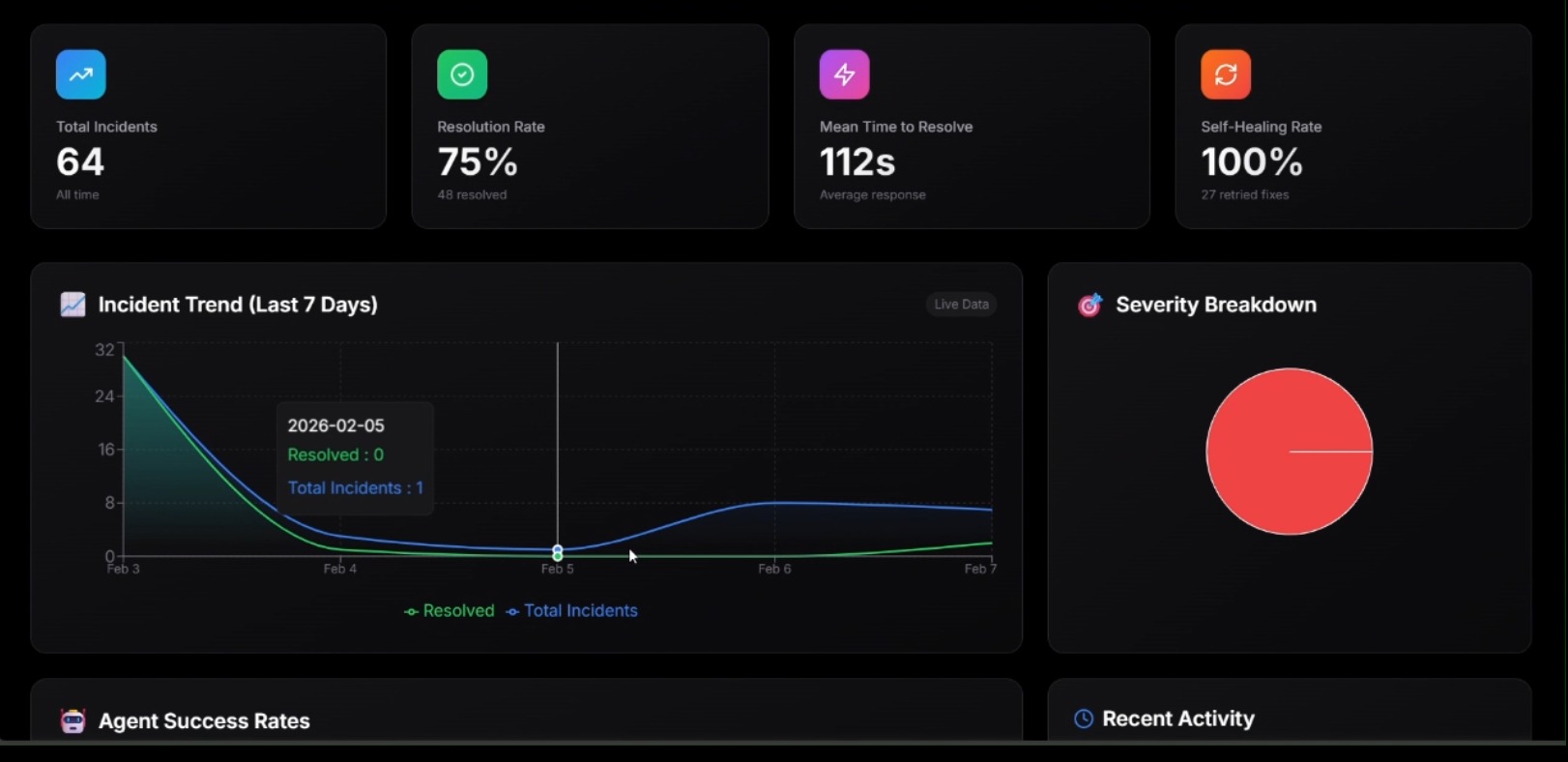
- Real-time dashboard built with Next.js and Socket.io
- Slack bot for approvals and incident updates
- GitHub integration for automated pull request creation
The system is built using Next.js, Node.js, Prisma, PostgreSQL, and AWS Secrets Manager for secure operations.
Challenges we ran into
- Designing a safe autonomous loop without blindly pushing production changes
- Ensuring AI-generated patches follow existing code style and architecture
- Running real tests securely without exposing credentials
- Balancing full autonomy for CI/CD with human-in-the-loop approvals for production
- Filtering noisy logs to extract meaningful failure signals
Accomplishments that we're proud of
- Built a fully functional autonomous CI/CD self-healing system
- Implemented real-time incident simulations for demos
- Achieved end-to-end automation: detect → analyze → fix → test → PR
- Created a live dashboard that shows the AI working in real time
- Integrated enterprise-grade security and approval workflows
What we learned
- Autonomous systems must be observable, reversible, and safe
- Clear separation of AI agent responsibilities improves reliability
- DevOps tools should reduce cognitive load, not increase it
- AI works best when combined with strong verification and guardrails
What's next for DevOps Guardian
- Kubernetes and container-level incident handling
- Auto-generated runbooks and post-incident reports
- Learning from historical incidents to improve future fixes
- Support for more CI/CD tools and cloud providers
- Gradual move toward fully autonomous production remediation
Built With
- amazon-web-services
- docker
- gemini3
- jenkin
- nextjs
- node.js
- railway