-
-
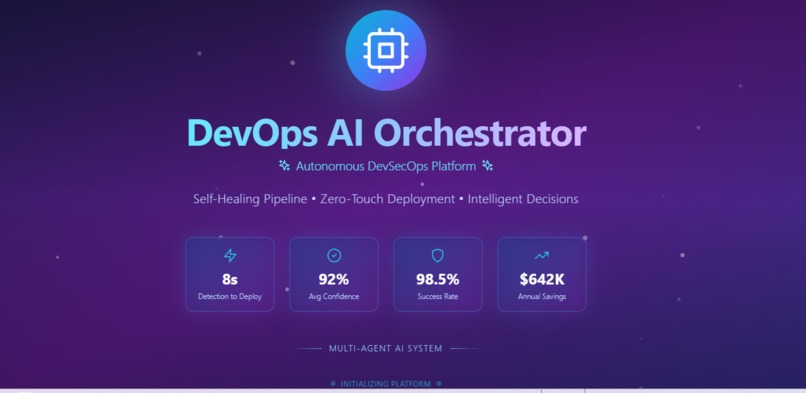
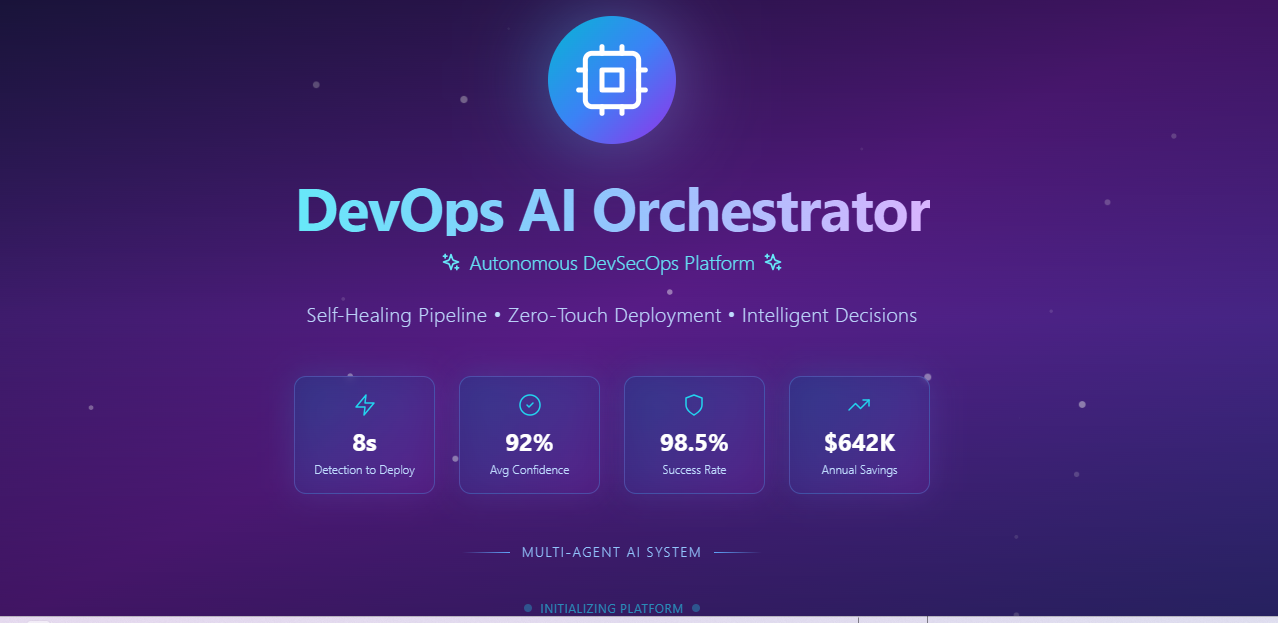
Splash
-
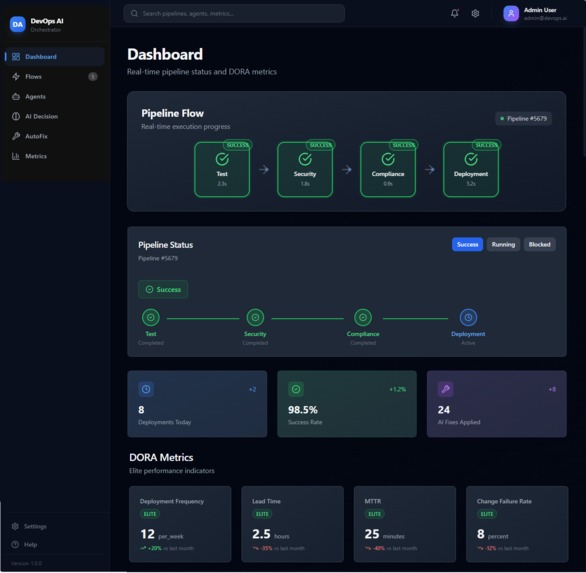
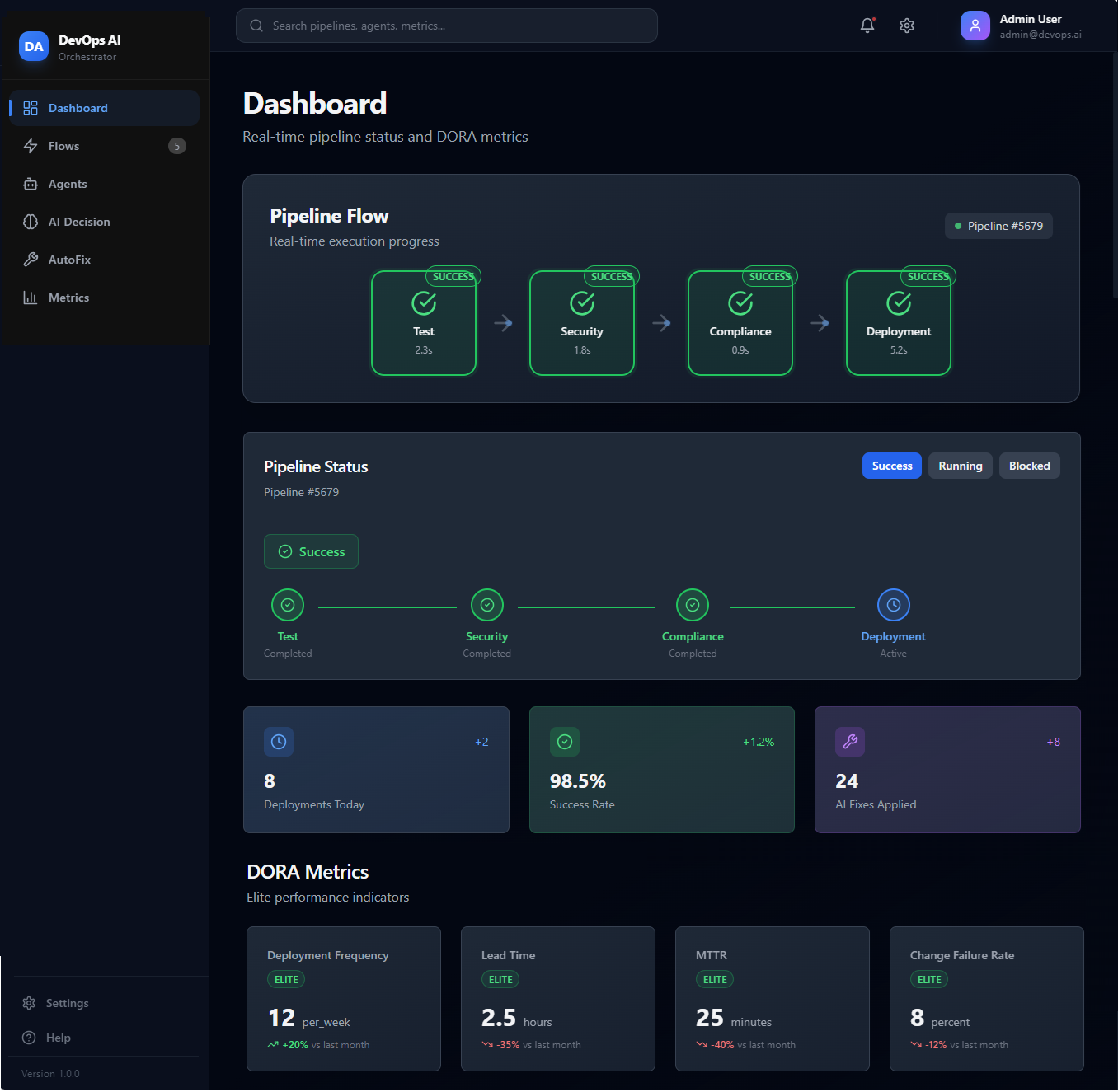
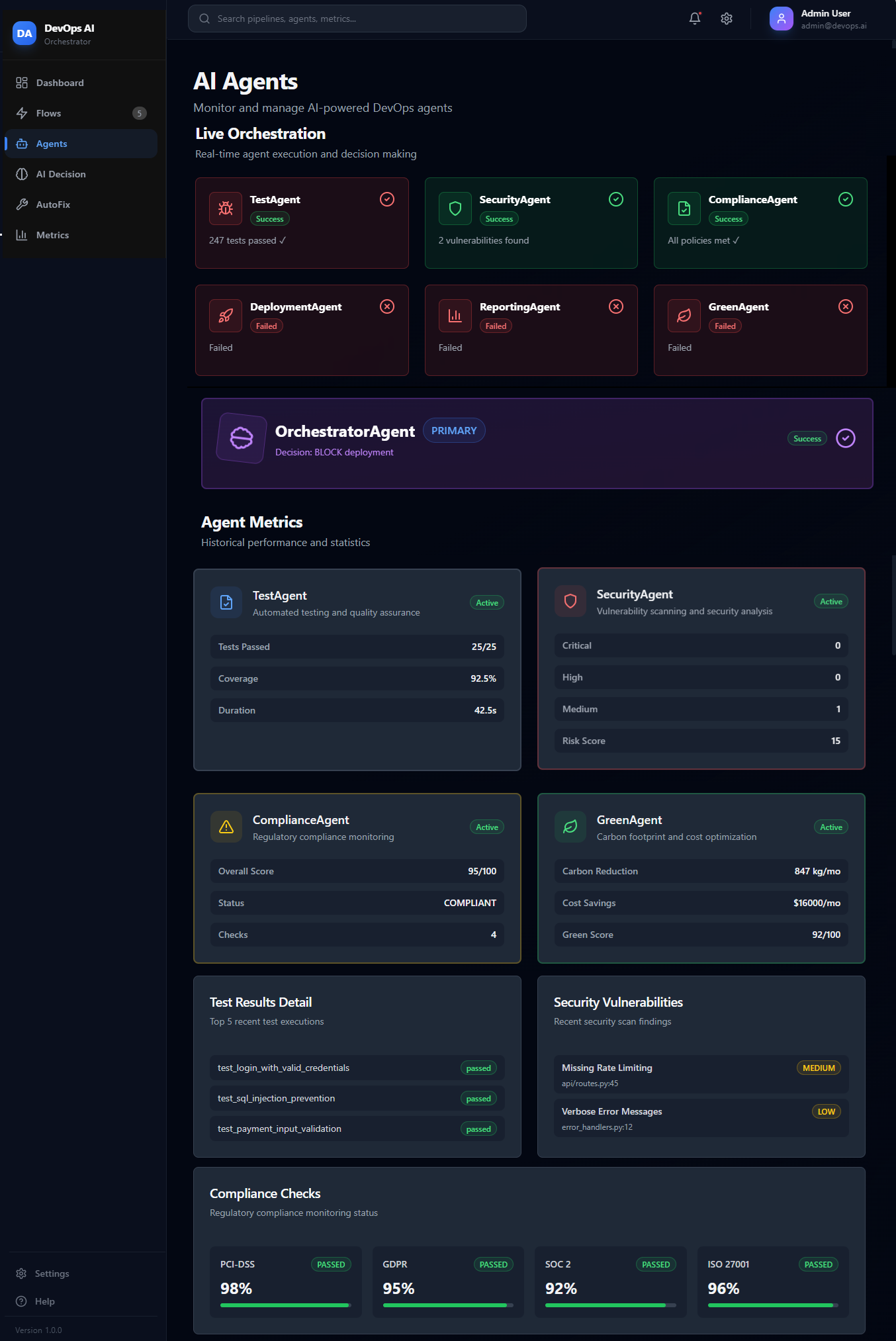
Dashboard
-
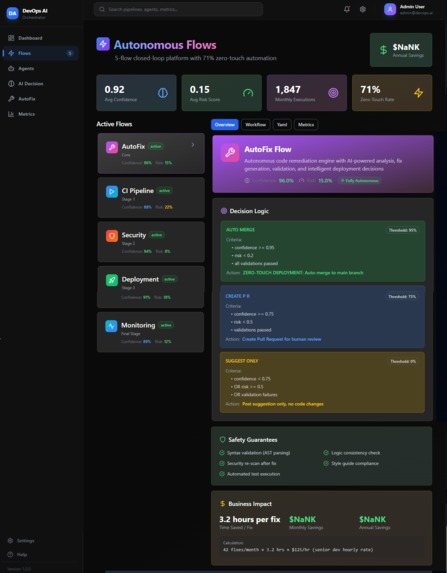
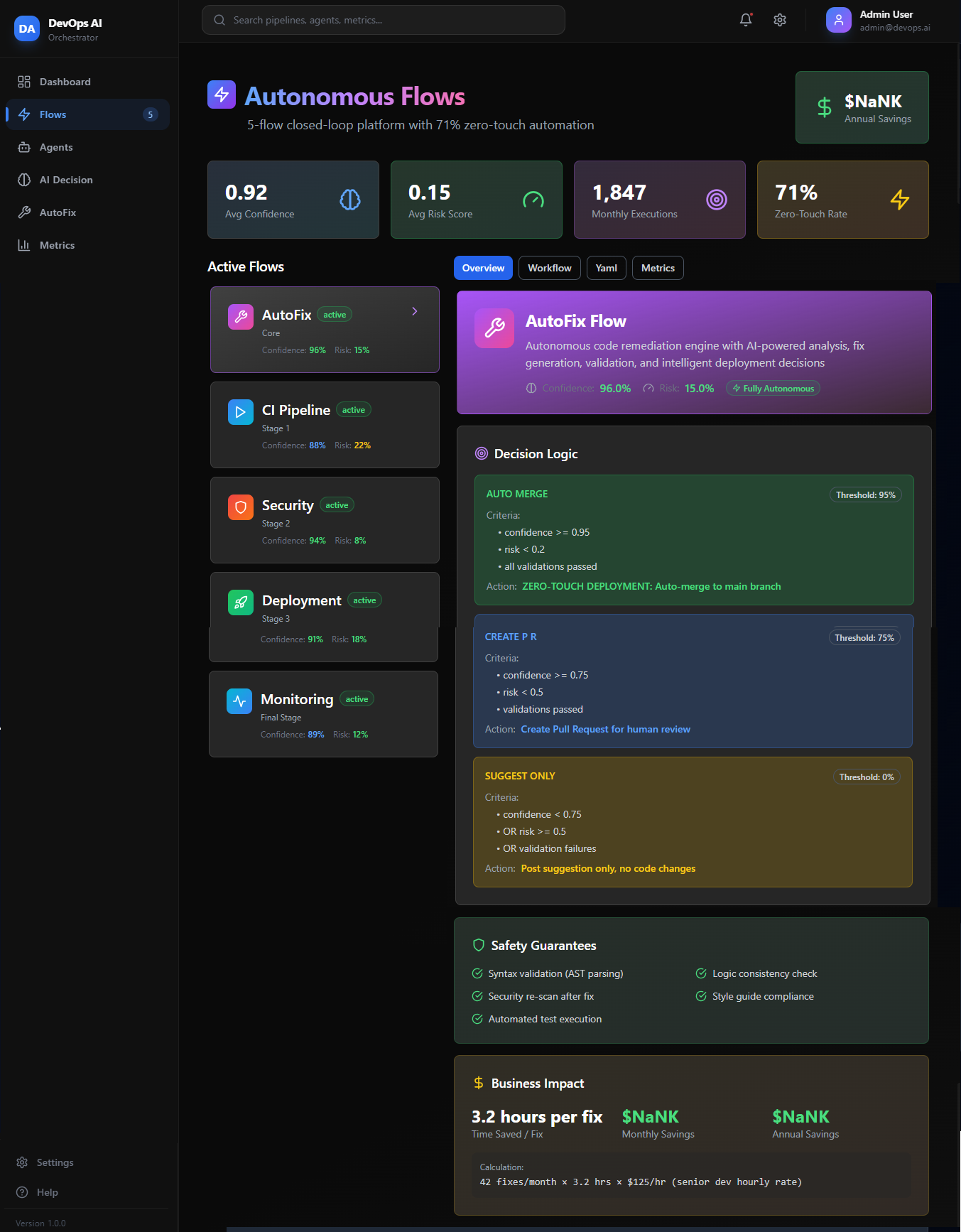
Flows
-
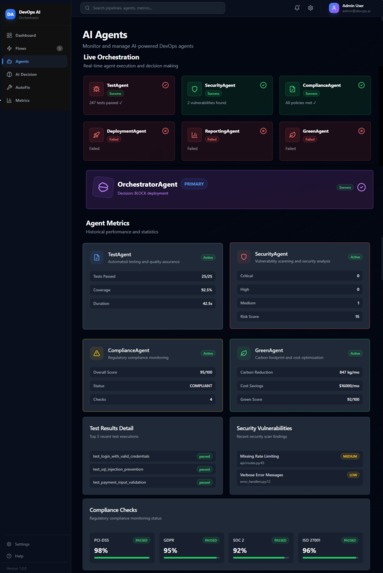
Agents detect failure
-
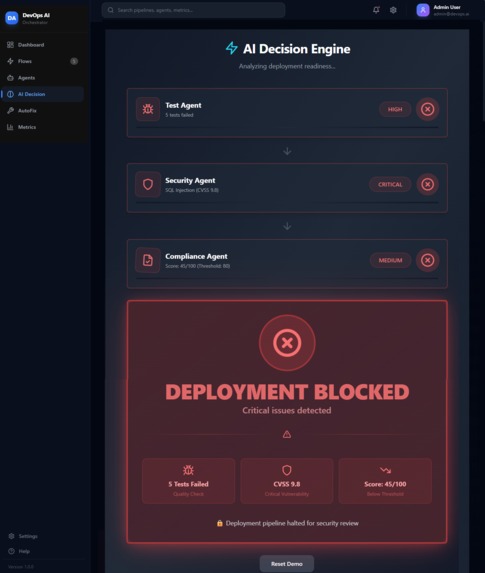
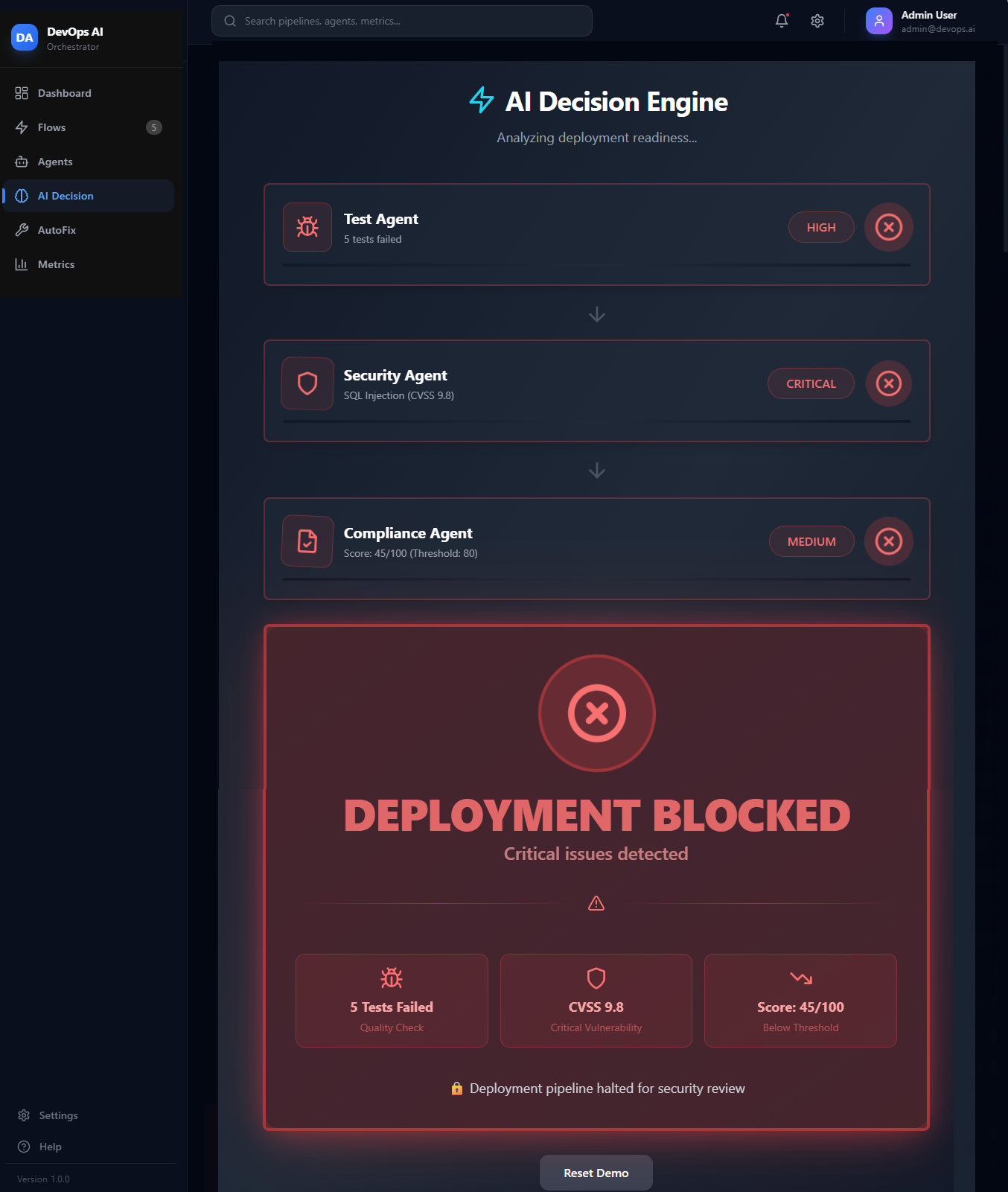
Agents' decision Deployment blocked
-
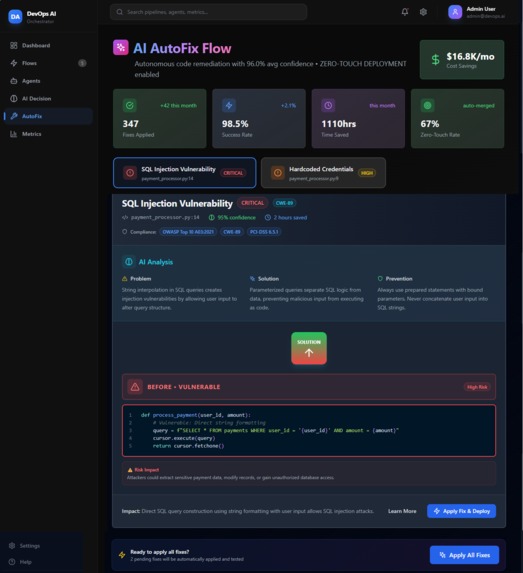
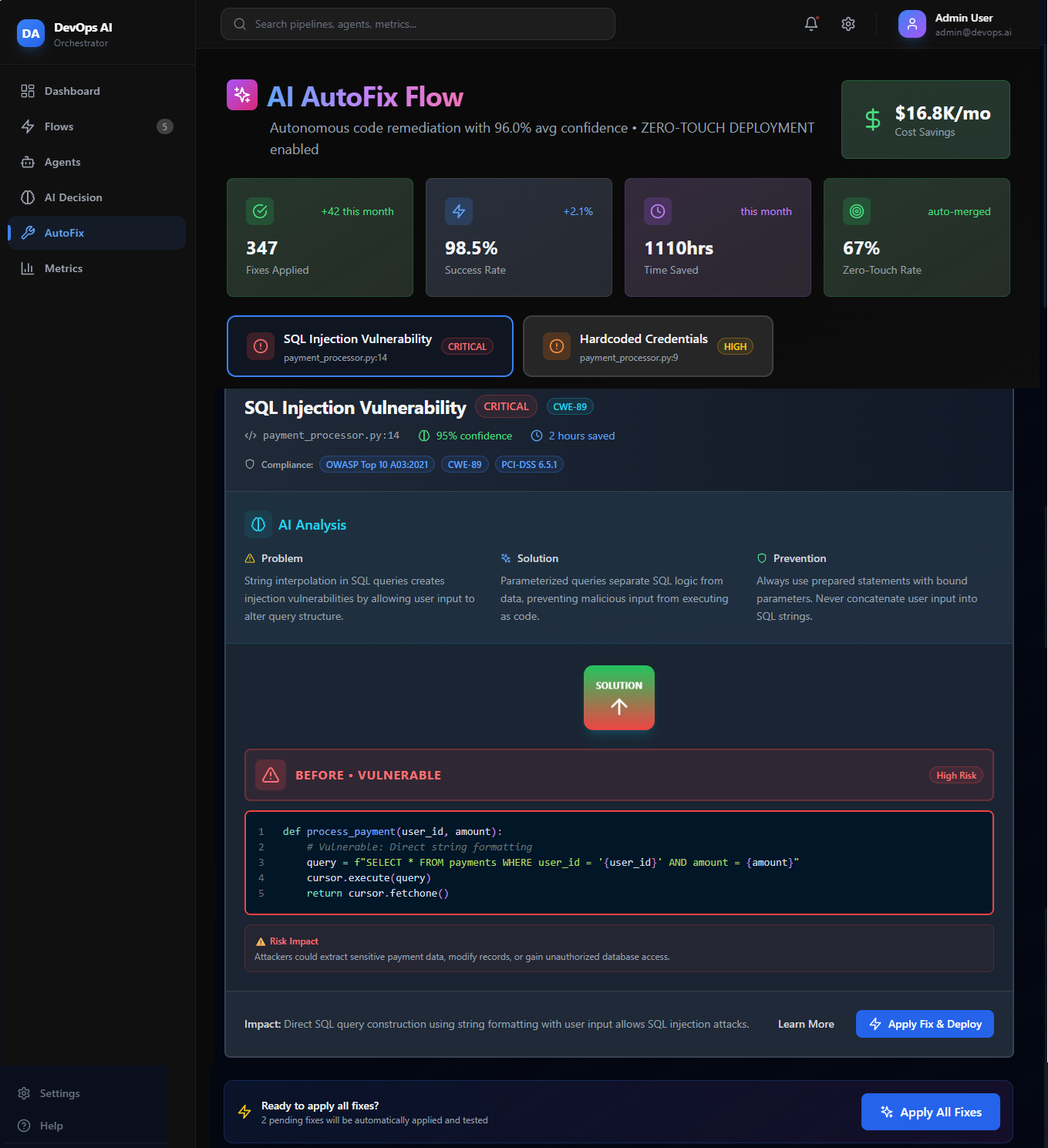
Before Auto Fixing
-
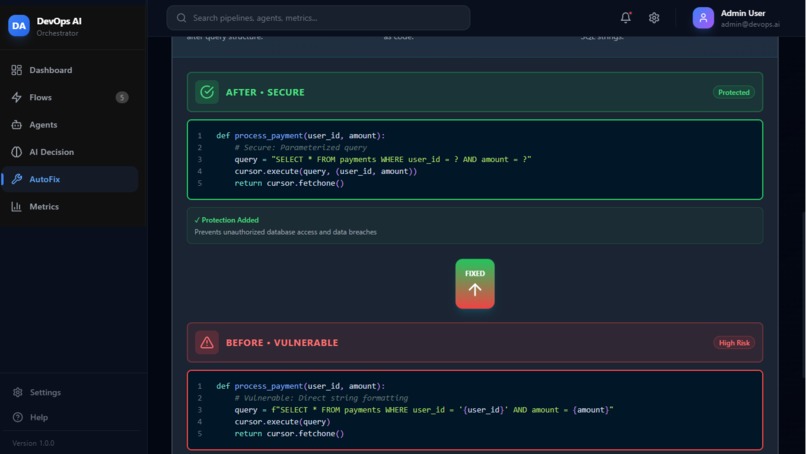
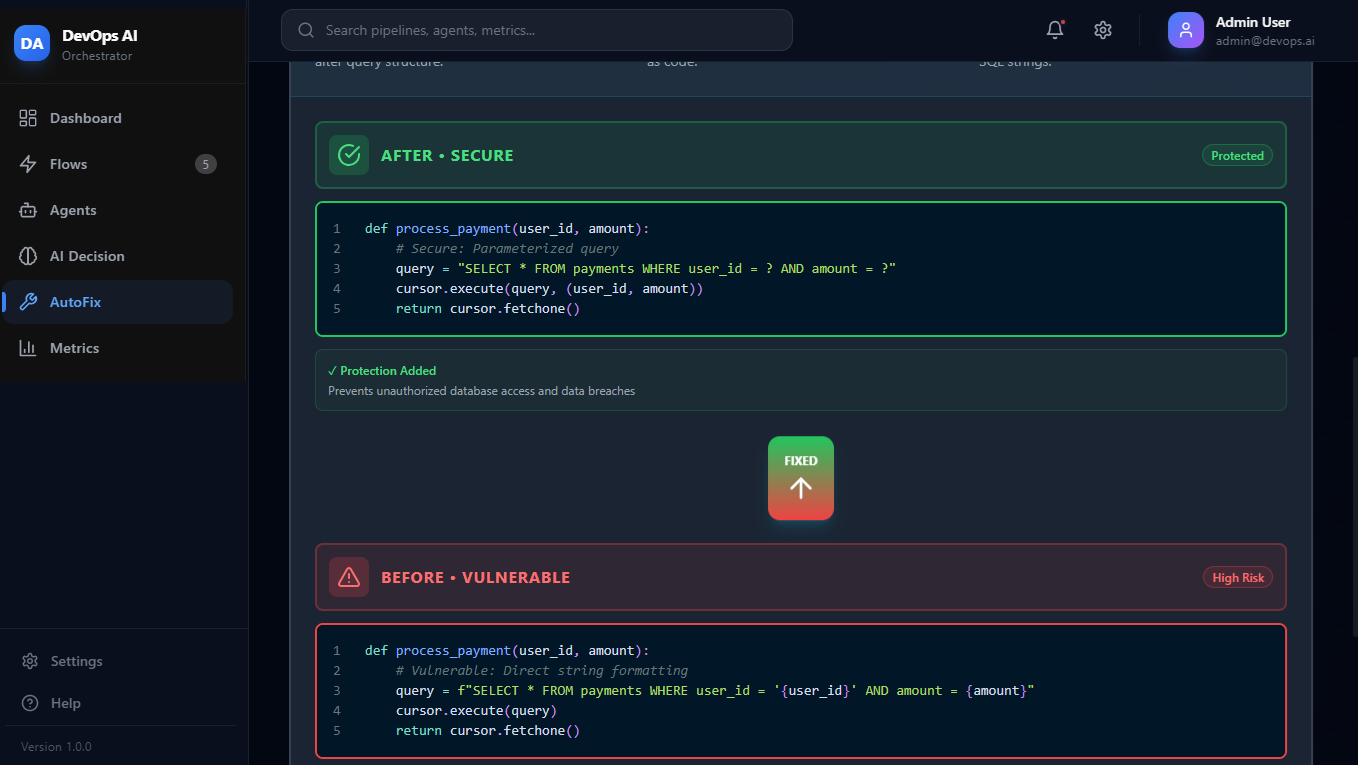
After Auto Fixing
-
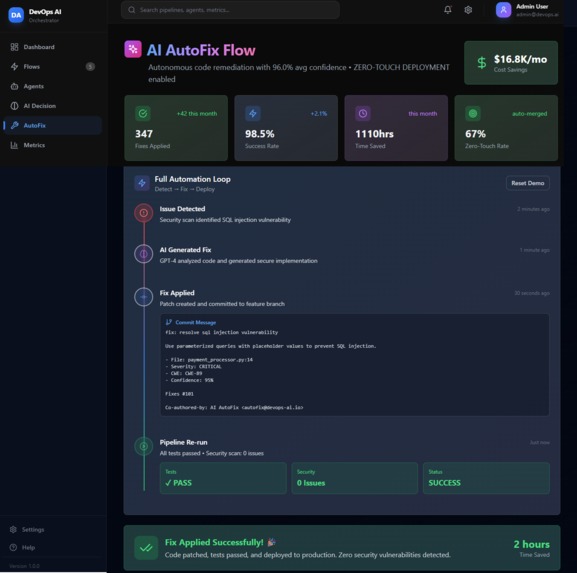
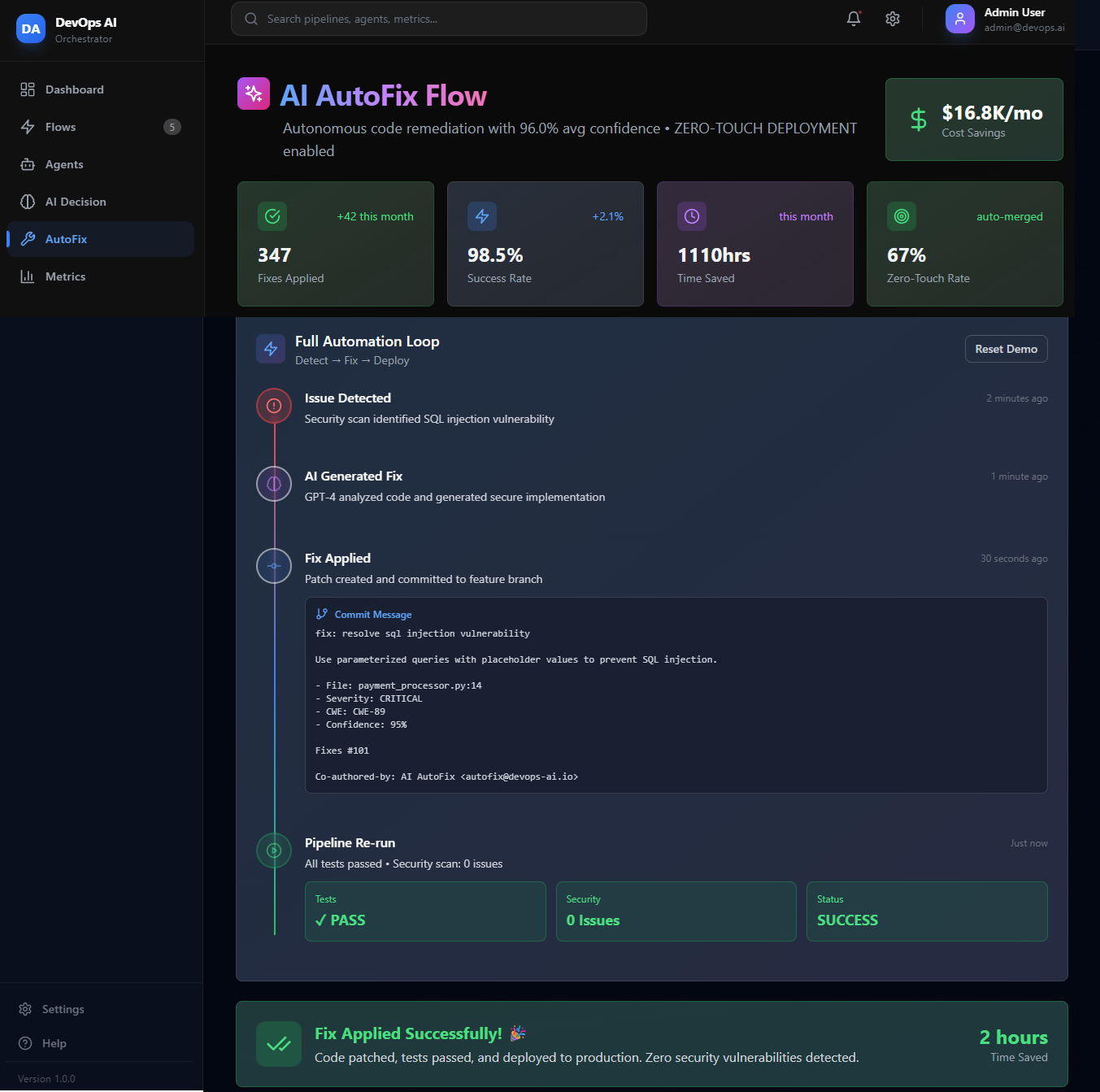
Auto Fixing Sucess
-
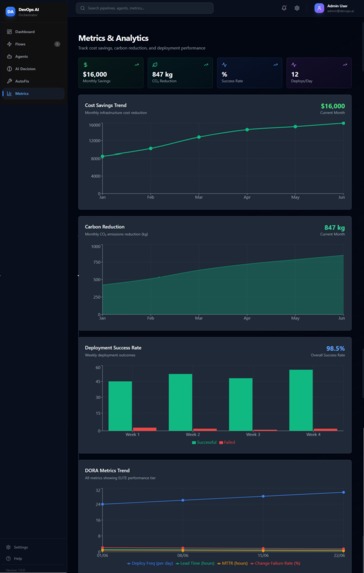
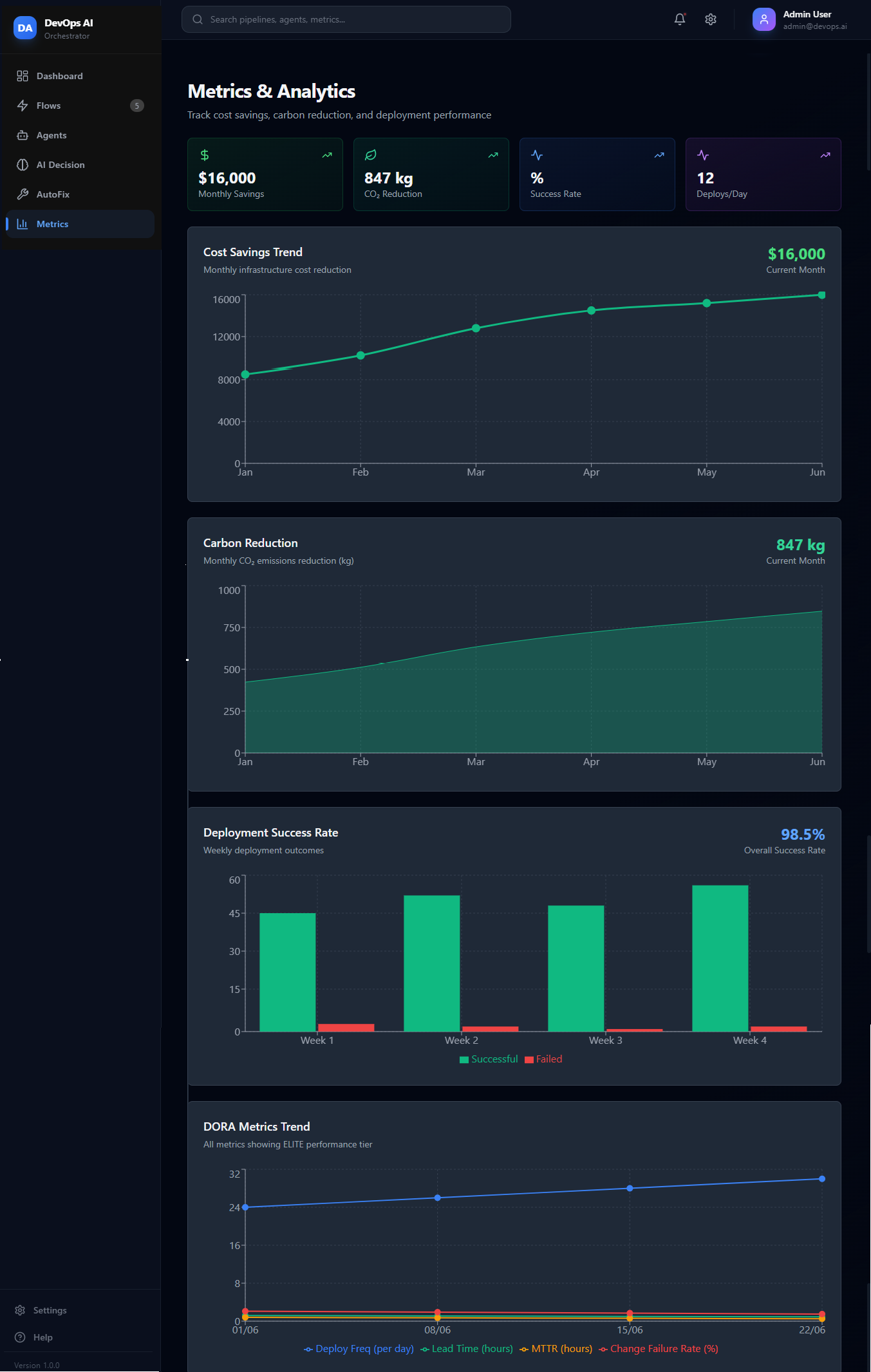
Metrics
Inspiration
Modern software delivery is still fundamentally reactive.
Despite advances in CI/CD, teams rely on pipelines that detect issues but depend heavily on human intervention to resolve them. This leads to delays, increased risk, and inefficient workflows—especially in large-scale enterprise environments.
With the rise of AI and agent-based systems, we saw an opportunity to rethink this model.
Our inspiration was simple: What if pipelines didn’t just detect problems… but understood them, made decisions, and actively helped resolve them?
This led us to design a system where AI is not just an assistant—but an active participant in the software delivery lifecycle.
What it does
DevOps AI Orchestrator is an AI-powered platform that transforms traditional CI/CD pipelines into intelligent, decision-driven systems.
Instead of simply running checks, the platform introduces a multi-agent orchestration layer where specialized AI agents analyze different aspects of the pipeline:
- TestAgent evaluates code quality and detects failures
- SecurityAgent identifies vulnerabilities and risks
- ComplianceAgent enforces policies and standards
- DeploymentAgent optimizes release strategies
- ReportingAgent measures performance using DORA metrics
- GreenAgent tracks cost and environmental impact
- Orchestrator Agent coordinates decisions across all agents
The system can:
- Automatically block unsafe deployments
- Provide AI-assisted fixes for detected issues
- Re-run pipelines with improved outcomes
- Deliver measurable business and engineering impact
This shifts DevOps from reactive monitoring to proactive, intelligent orchestration.
How we built it
The project was designed as a modular, multi-agent architecture simulating real-world DevOps environments.
Frontend:
- React-based dashboard for visualizing pipelines, agent activity, and decision flows
- Animated components to represent real-time agent behavior and system states
Backend (conceptual and partially implemented):
- Event-driven architecture for agent communication
- Simulated orchestration layer coordinating multiple agents
- AI-assisted logic for issue detection and AutoFix recommendations
AI Components:
- Integration concepts using LLMs (local and cloud-based)
- Retrieval-Augmented Generation (RAG) patterns for contextual understanding
- Prompt-driven logic for security fixes and recommendations
DevOps Integration (design level):
- Designed to integrate with platforms like GitLab and GitHub
- CI/CD pipeline simulation reflecting real workflows
The system is presented as a high-fidelity prototype based on a production-ready architecture.
Challenges we ran into
One of the biggest challenges was balancing realism with time constraints.
Building a fully autonomous multi-agent system with real-time AI decision-making requires significant infrastructure and integration effort. To address this, we focused on creating a high-fidelity prototype that accurately represents how such a system would function in production.
Other challenges included:
- Designing clear responsibilities across multiple AI agents
- Simulating realistic pipeline scenarios (failures, security issues, compliance violations)
- Making complex architecture understandable through a clean UI
- Avoiding over-engineering while maintaining credibility
Ensuring the system felt real—without being misleading—was a key design priority.
Accomplishments that we're proud of
- Designed a complete multi-agent DevOps architecture from scratch
- Built a working prototype that clearly demonstrates autonomous decision-making
- Created an AI-driven AutoFix concept for real-world vulnerabilities (e.g., SQL injection)
- Delivered a full pipeline lifecycle: detect → decide → fix → validate
- Presented measurable impact using DORA metrics and cost/environmental indicators
- Transformed a complex technical concept into a clear and compelling demo experience
Most importantly, we demonstrated a shift from "monitoring tools" to "intelligent systems."
What we learned
- Multi-agent systems provide a powerful model for breaking down complex DevOps workflows
- AI is most impactful when integrated into decision-making—not just analysis
- Clear visualization is critical when presenting complex architectures
- Real-world constraints (security, compliance, performance) must be part of AI system design
- Simulations, when done correctly, can effectively communicate future-ready systems
We also learned how to balance technical depth with storytelling—especially for mixed audiences.
What's next for DevOps AI Orchestrator
The next phase is to evolve from a high-fidelity prototype into a production-ready platform.
Key next steps include:
- Implementing real AI agents as independent microservices
- Integrating with live CI/CD platforms such as GitLab
- Adding real-time LLM-based decision-making and AutoFix execution
- Expanding support for enterprise security and compliance frameworks
- Enhancing scalability using Kubernetes and event streaming systems
- Building a fully interactive SaaS platform
Our long-term vision is to enable truly autonomous software delivery—where pipelines not only execute, but think, decide, and improve continuously.
Built With
- .net-core
- amazon-web-services
- azure
- azure-openai
- docker
- faiss
- github-actions
- gitlab-ci/cd
- javascript
- kubernetes
- langchain
- node.js
- ollama-(llama2)
- rag-(retrieval-augmented-generation)
- react
- sentencetransformers
- sonarqube
- typescript


Log in or sign up for Devpost to join the conversation.