-
-
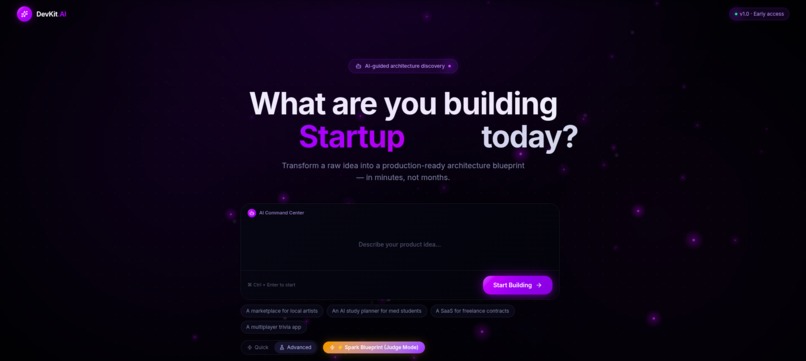
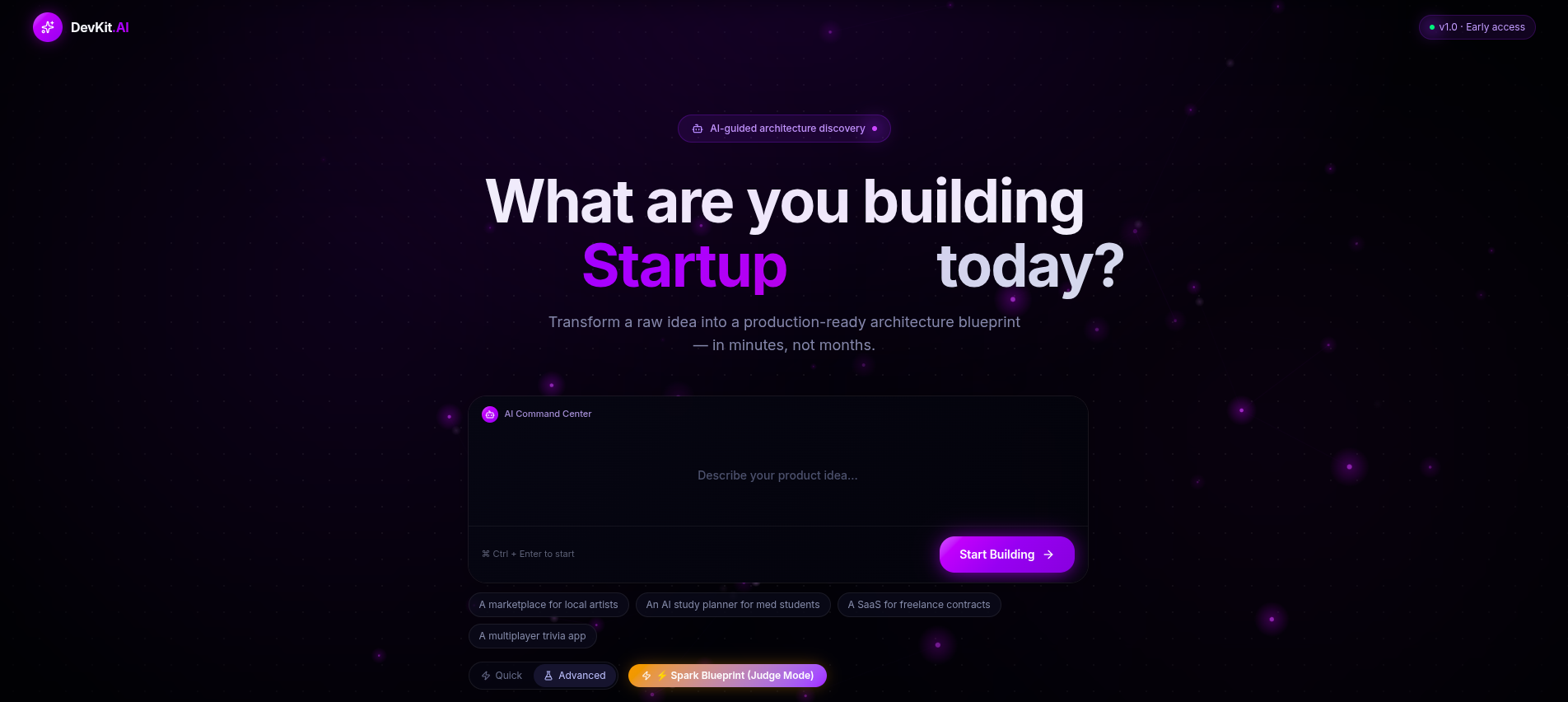
The DevKit.AI Command Center: Turning vague ideas into reality.
-
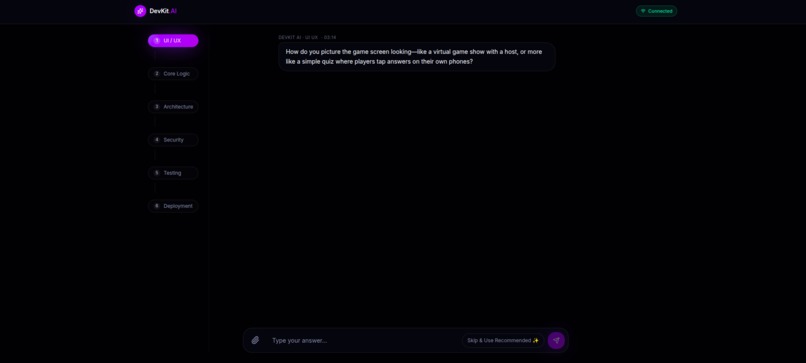
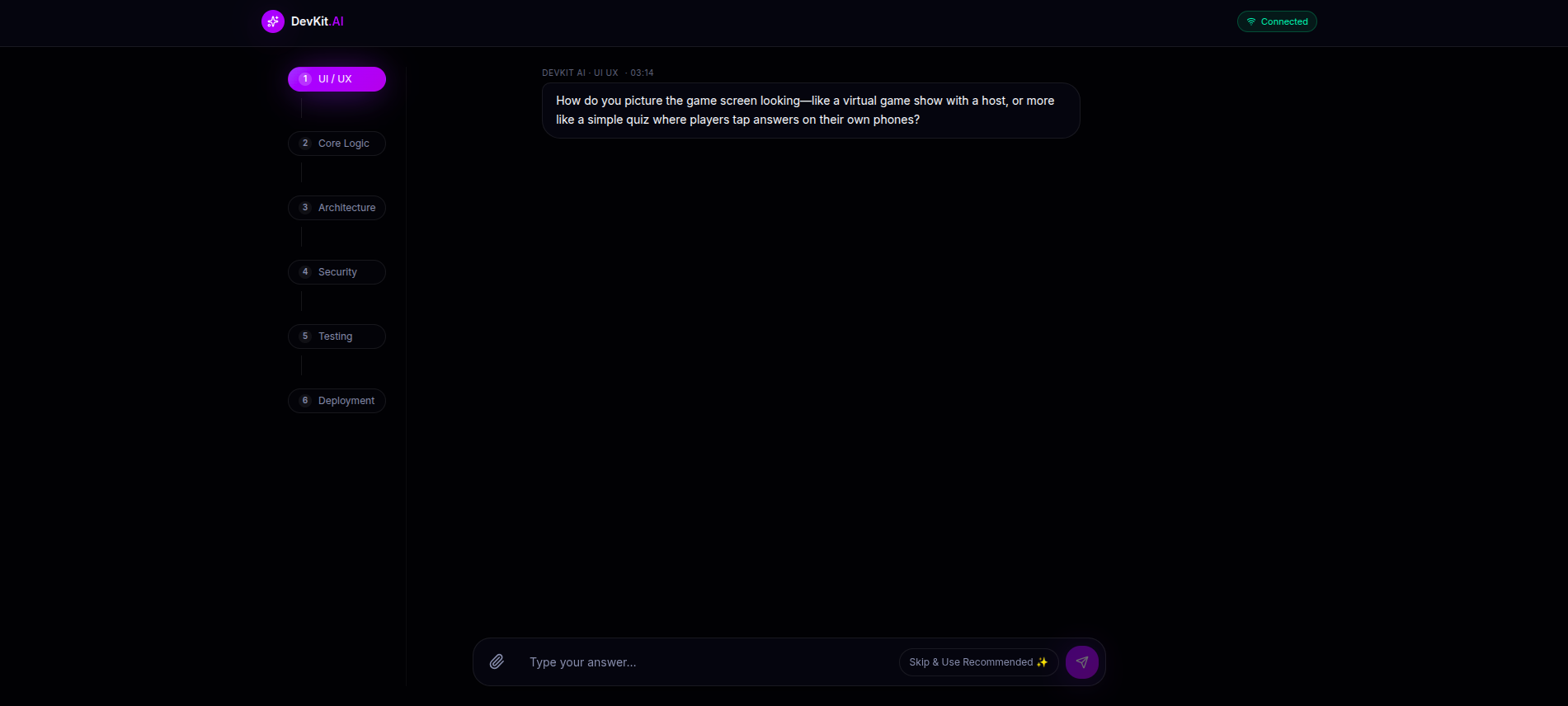
The 6-Phase Dynamic Discovery Engine adapting to user technical fluency.
-
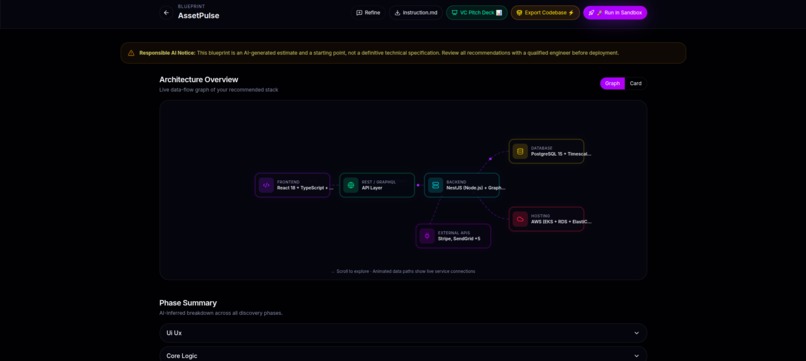
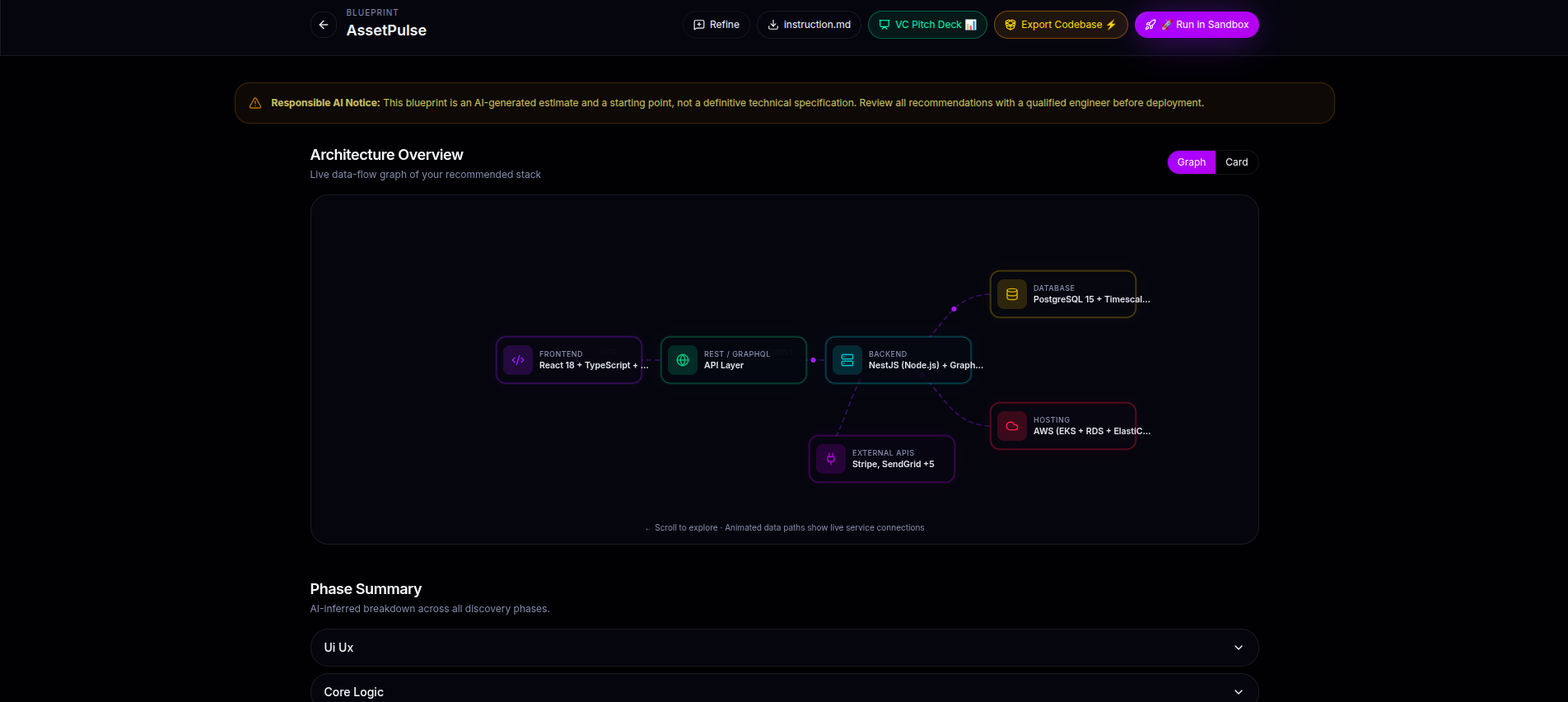
The Interactive Dashboard displaying project milestones and cost estimates.
-
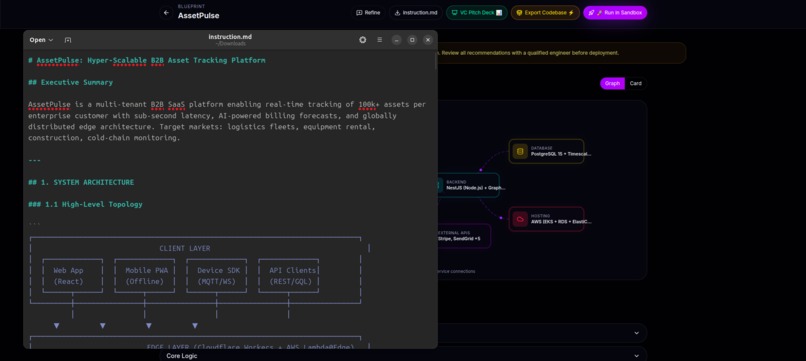
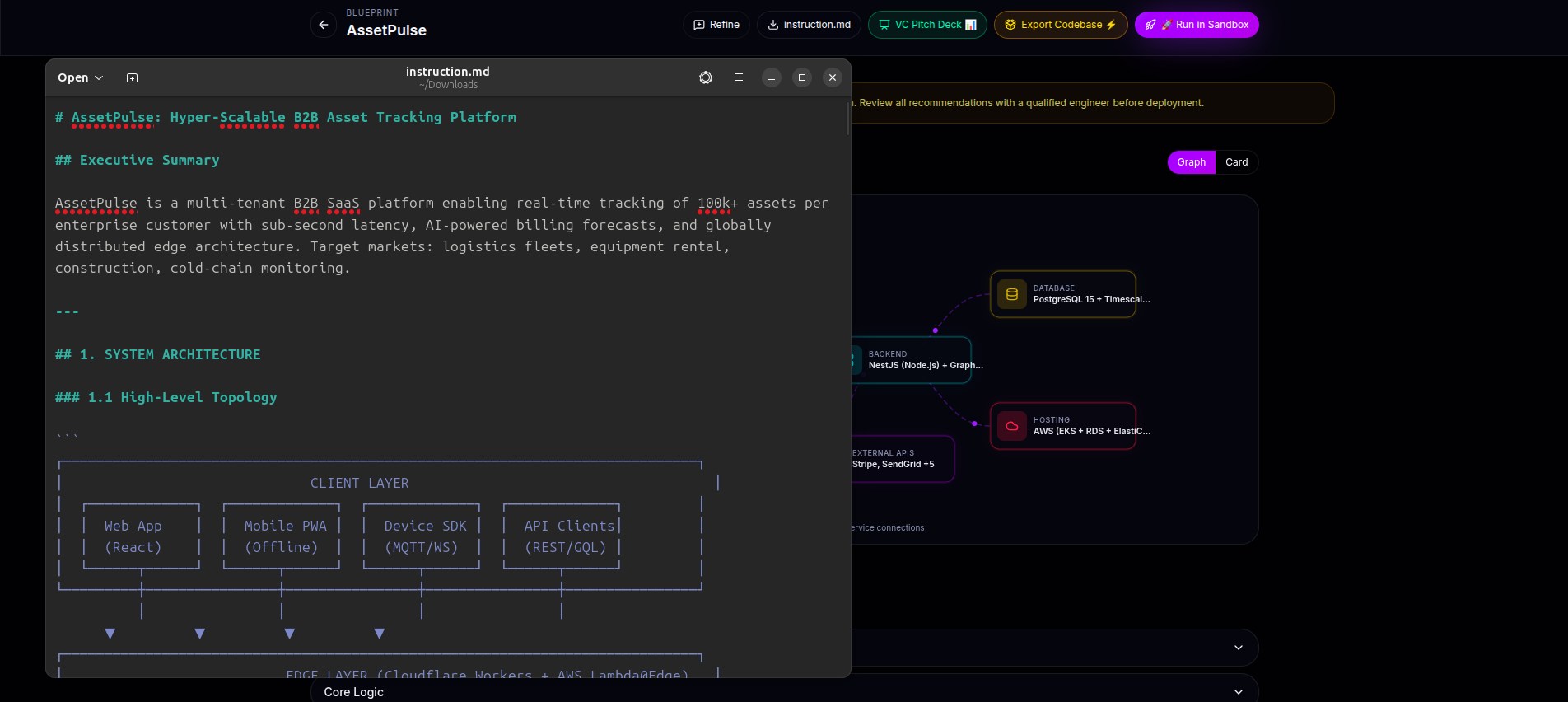
A machine-readable instruction.md payload for AI IDEs.
Inspiration
Modern life is overloaded with uncertainty, especially when trying to turn a vague software idea into a deployable application. Junior developers and non-technical founders often face "Blank Canvas Paralysis." They are expected to make high-stakes architectural decisions—like choosing tech stacks, database schemas, and hosting platforms—with incomplete information. Throwing a generic chatbot at the problem often overwhelms them rather than guiding them. We realized builders don't need another generic chat interface; they need a Senior System Architect.
What it does
DevKit.AI is a multi-agent "Second Brain" designed specifically for software creation. It replaces infinite chatbots with a structured pipeline that transforms a raw idea (or UI screenshot) into a production-ready architectural blueprint.
To provide a complete "Zero-to-One" experience, DevKit.AI includes several powerful features:
- Dynamic Interaction Modes: The system profiles the user's technical fluency. For developers, it discusses WebSockets and AWS S3. For beginners, it hides the jargon entirely, asking simple business logic questions and silently translating them into backend requirements.
- The Refinement Engine: The generated architecture is never set in stone. Users can converse naturally with the Orchestrator agent to refine, tweak, and patch the blueprint until it perfectly matches their vision.
- Live Sandbox Integration: Users don't just get text outputs. The built-in live sandbox environment allows users to instantly visualize and test generated UI components directly in the browser, proving that the architecture is grounded in reality.
- Export Codebase: Once the architecture is finalized, DevKit.AI compiles the data and can export the foundational codebase scaffolding, allowing users to transition from planning to execution seamlessly.
- Cost & Scale Estimator: Calculates the exact launch cost using free tiers (e.g., Vercel, MongoDB) and provides a horizontal/vertical scaling roadmap for when the app gains traction.
How we built it
We architected DevKit.AI using a robust, three-part microservice architecture to separate concerns and maximize performance:
- Frontend (The Command Center): Built with React 19, Vite, TailwindCSS v4, Zustand, and Radix UI to create a highly polished, interactive dashboard.
- API Gateway (The Router): A high-performance FastAPI backend managing conversation states in MongoDB and streaming data via Server-Sent Events (SSE).
- The LLM Swarm (The Brain): A Python-based gRPC service orchestrating multiple specialist AI agents (Triage, Orchestrator, Systems Architect, Project Manager, and Prompt Engineer).
- Retrieval-Augmented Generation (RAG): We integrated a Chroma Vector DB grounded in up-to-date developer documentation and cloud pricing to ensure the AI's architectural suggestions are mathematically and technically sound.
Challenges we ran into
- Latency in Multi-Agent Pipelines: Waiting for 5 different AI agents to sequentially process an architecture would take over 60 seconds. We solved this by building an Early-Yield Streaming system. Agents execute sequentially but yield their progress instantly back to the API Gateway using SSE, providing real-time feedback to the user.
- LLM JSON Hallucinations: We experienced issues where the LLM would wrap JSON payloads in markdown blocks or hallucinate fields. We built a robust JSON extraction and self-healing fallback mechanism (with retry logic) to salvage payloads and keep the pipeline stable.
- Choice Overload for Beginners: We realized beginners were getting stuck on technical questions. We solved this by implementing an "Auto-Pilot Skip Engine" that queries our RAG database and silently auto-fills safe, industry-standard architectures to keep momentum moving.
Accomplishments that we're proud of
We are incredibly proud of the Asymmetric UI and Q&A Routing. It allows DevKit.AI to adapt its vocabulary to anyone, making software engineering highly accessible. We're also incredibly proud of integrating the Live Sandbox, which successfully bridges the gap between abstract architectural planning and actual, functional code rendering. Finally, successfully orchestrating a complex gRPC microservice swarm that feels instantly responsive on the frontend was a massive technical win for us.
What we learned
We learned a massive amount about microservice architecture, specifically how to bridge a stateful FastAPI gateway with a highly concurrent Python gRPC backend. We also mastered the art of taming LLM outputs using strict system prompts and multi-agent delegation, proving that a team of specialized, narrow-focus AI agents heavily outperforms a single, massive "do-it-all" prompt.
What's next for DevKit.AI
- Direct IDE Integrations: Building VS Code and Cursor extensions so the exported codebase can be instantly injected into local developer environments.
- Automated CI/CD: Allowing the Orchestrator agent to automatically generate and push GitHub Actions workflows based on the finalized tech stack.
- Multimodal Expansion: Allowing users to drop in Figma files, not just screenshots, to instantly generate exact React component hierarchies.
Built With
- chroma
- fastapi
- grpc
- javascript
- llm
- mongodb
- multi-agent-systems
- openai
- python
- rag
- react
- tailwindcss
- typescript
- vite
- zustand

Log in or sign up for Devpost to join the conversation.