-
-
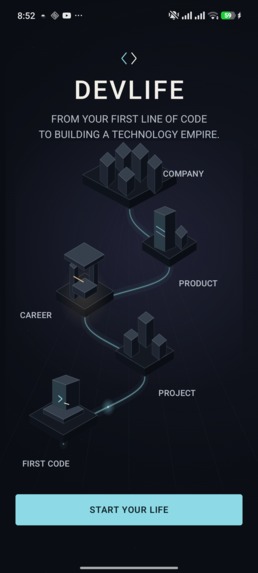
Start Your Developer Journey
-

Write Your First Program
-

Every Choice Shapes Your Journey
-
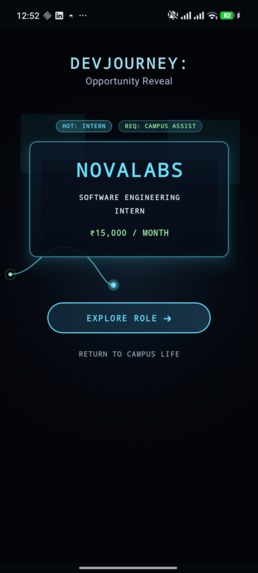
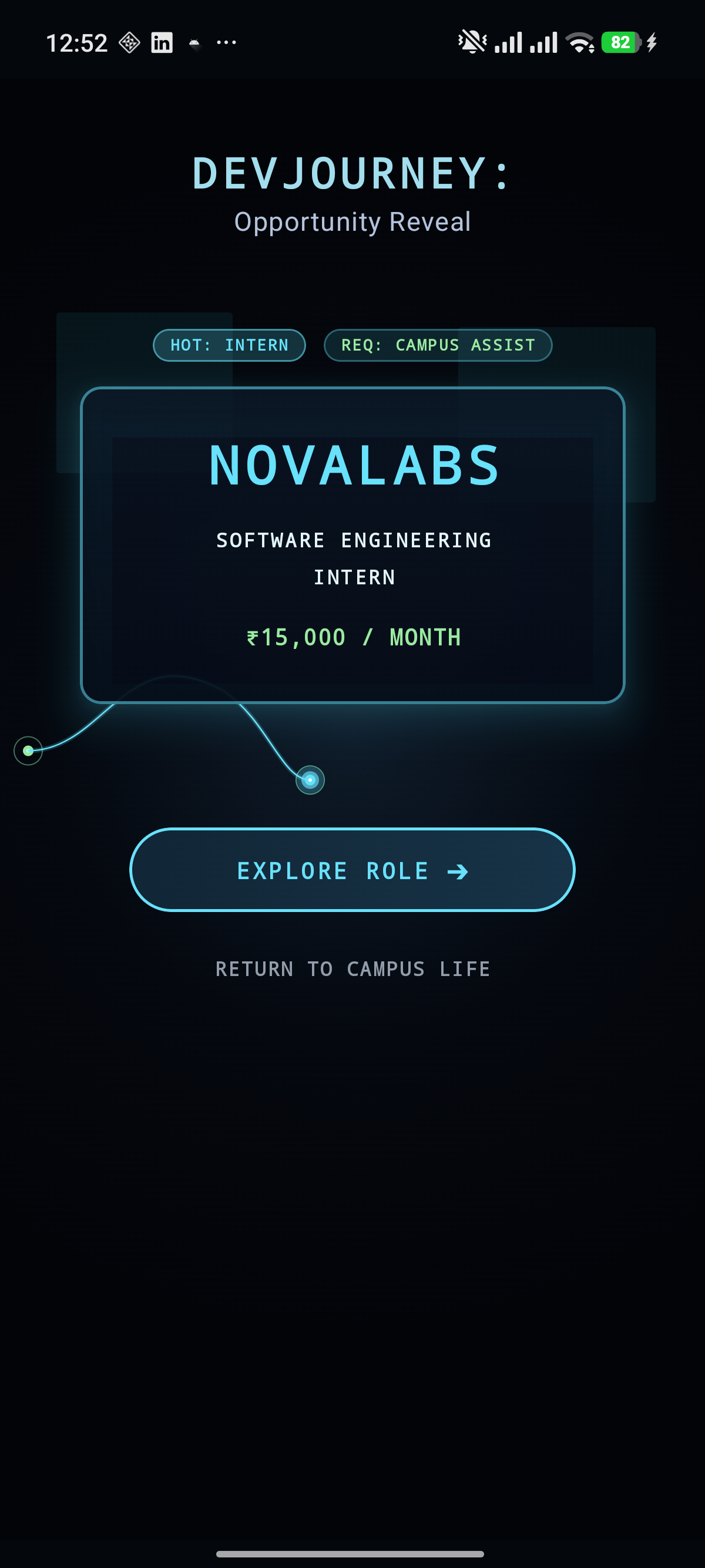
Your First Career Opportunity
-
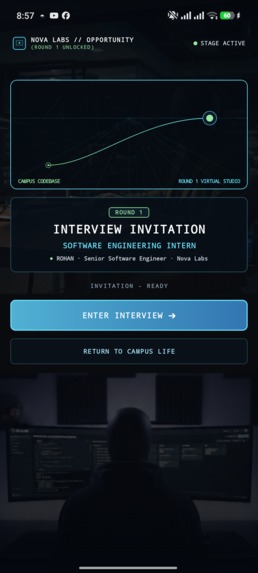
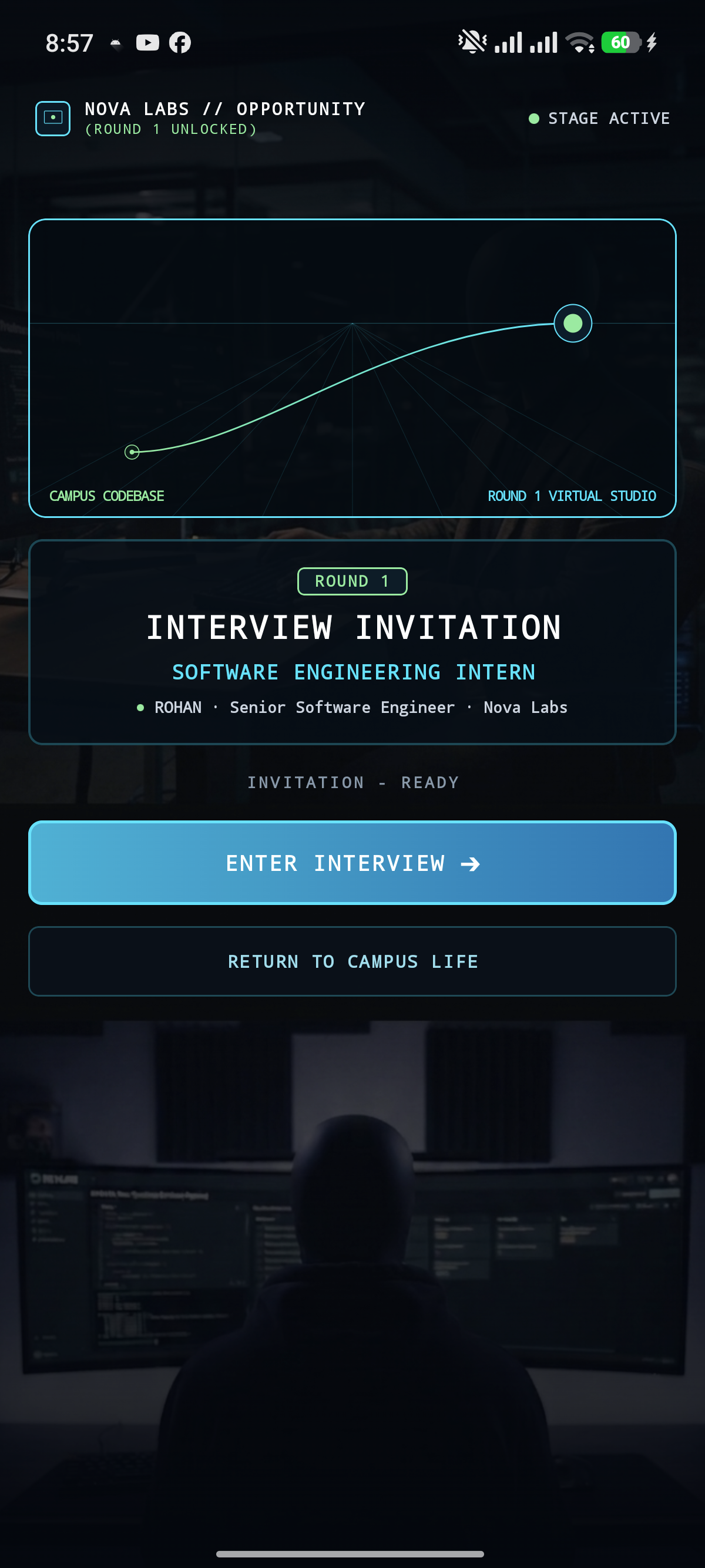
Face Your First Interview
-
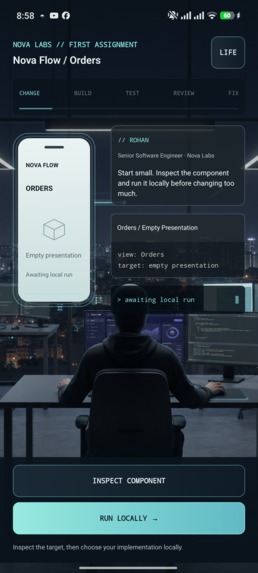
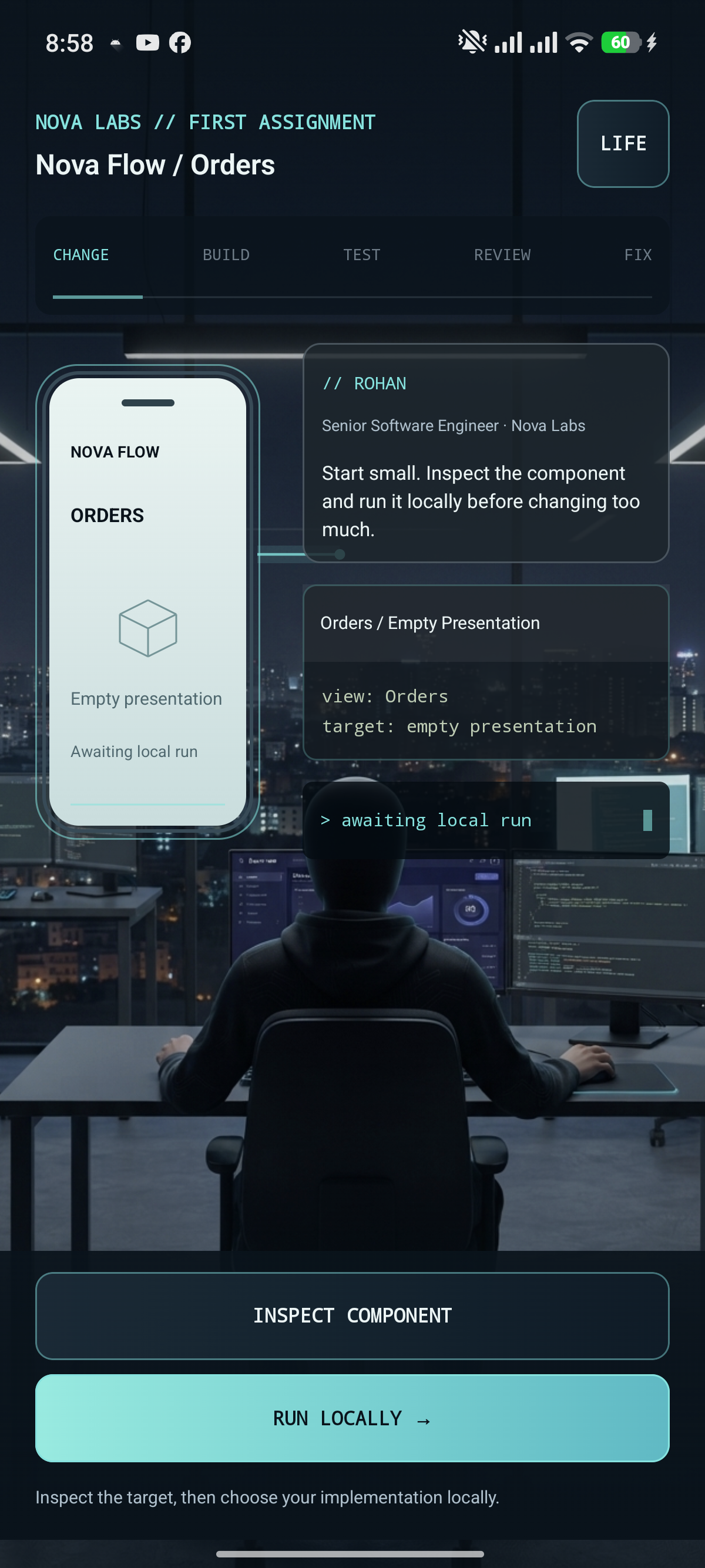
Build, Debug & Ship Real Work
-
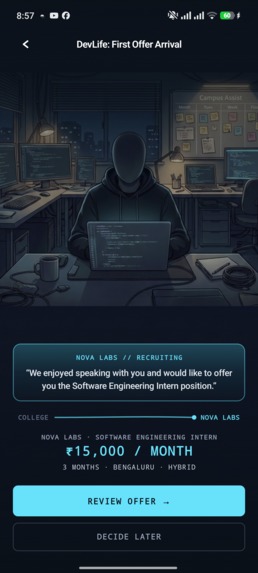
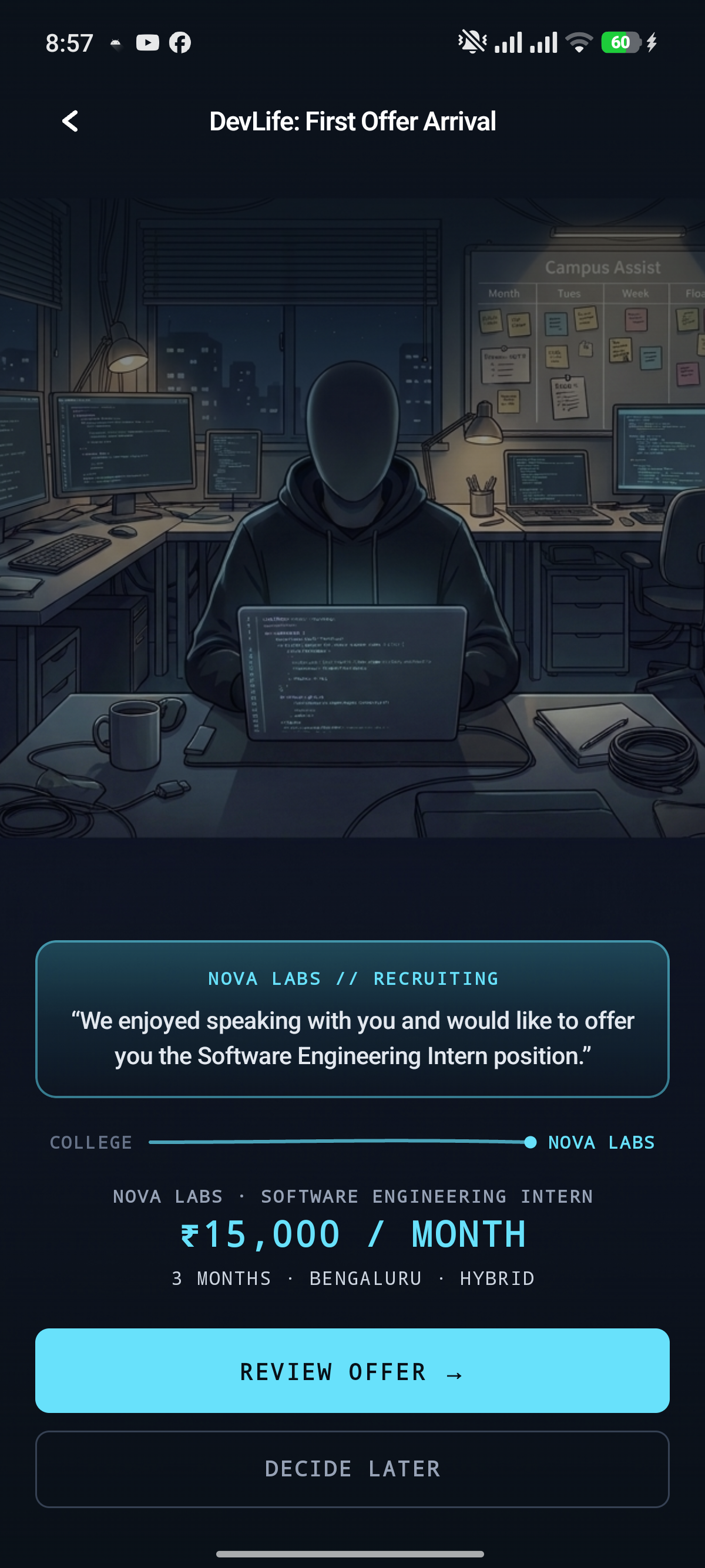
Land Your First Opportunity
-
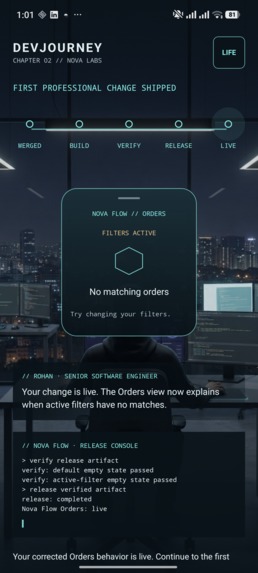
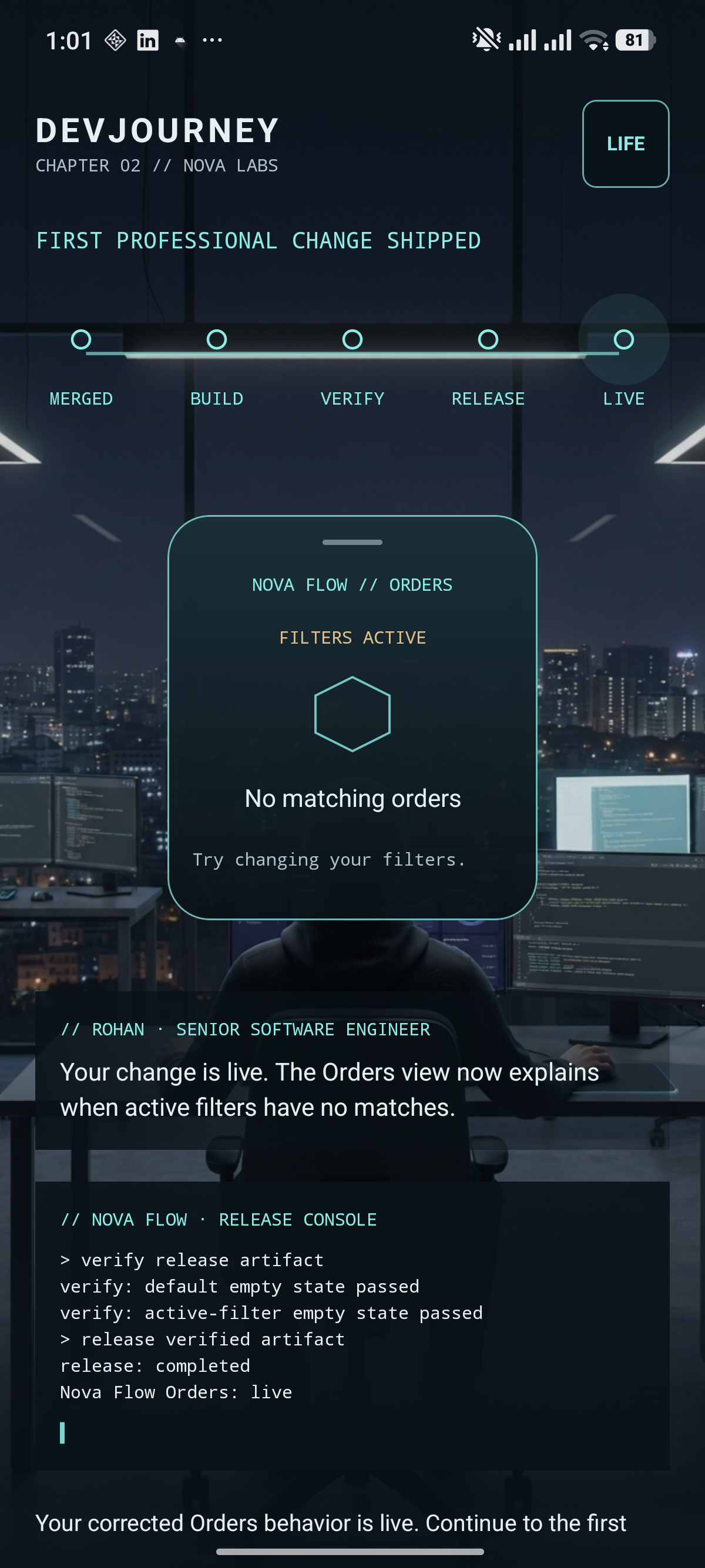
Build. Fix. Ship.
-
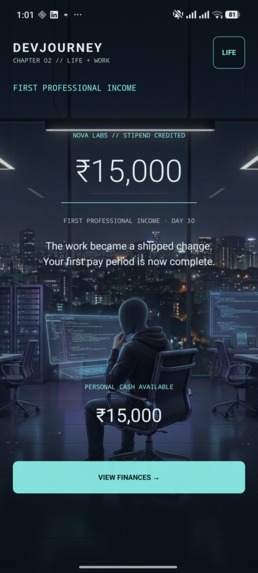
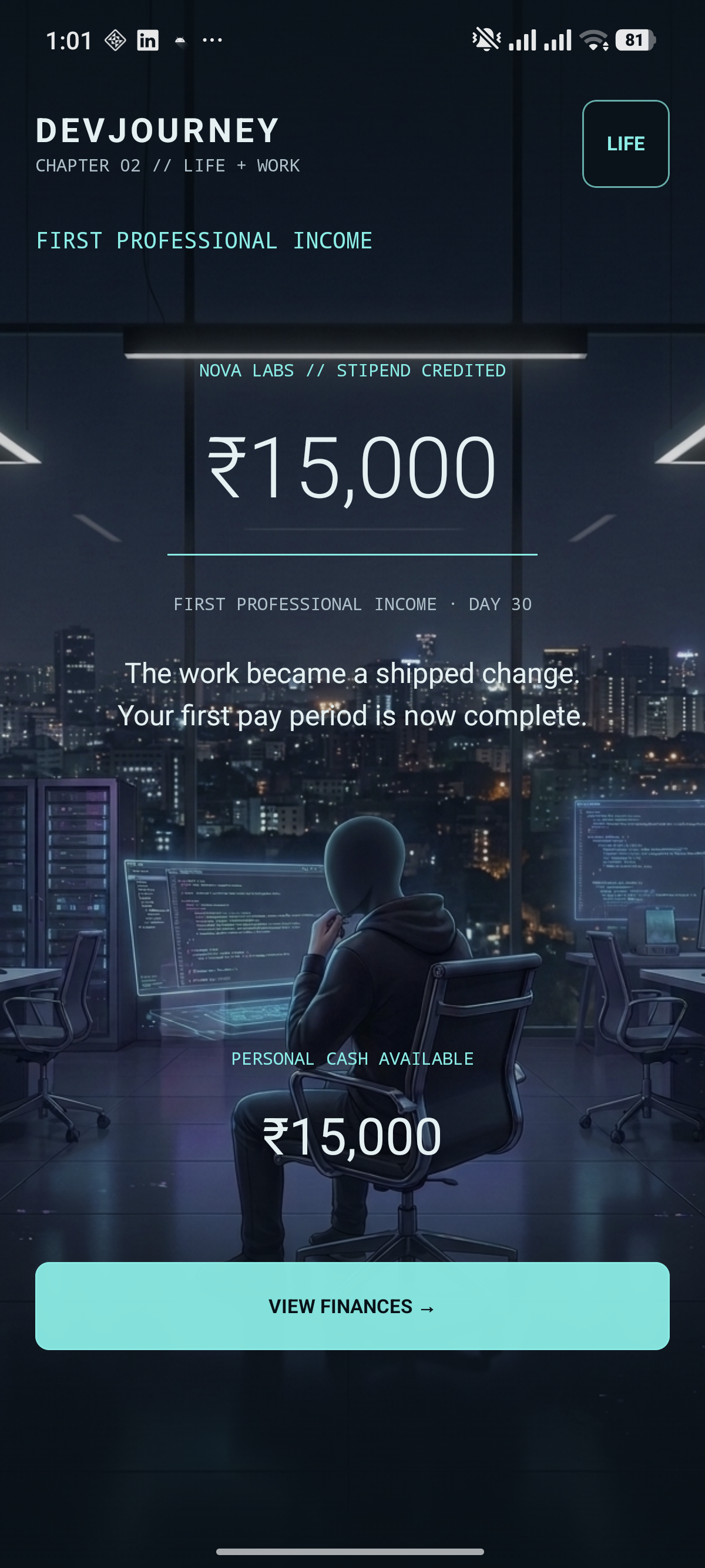
Earn Your First Salary
-
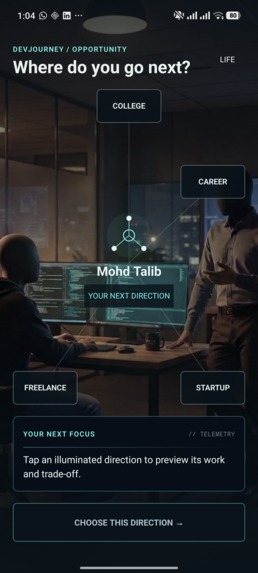
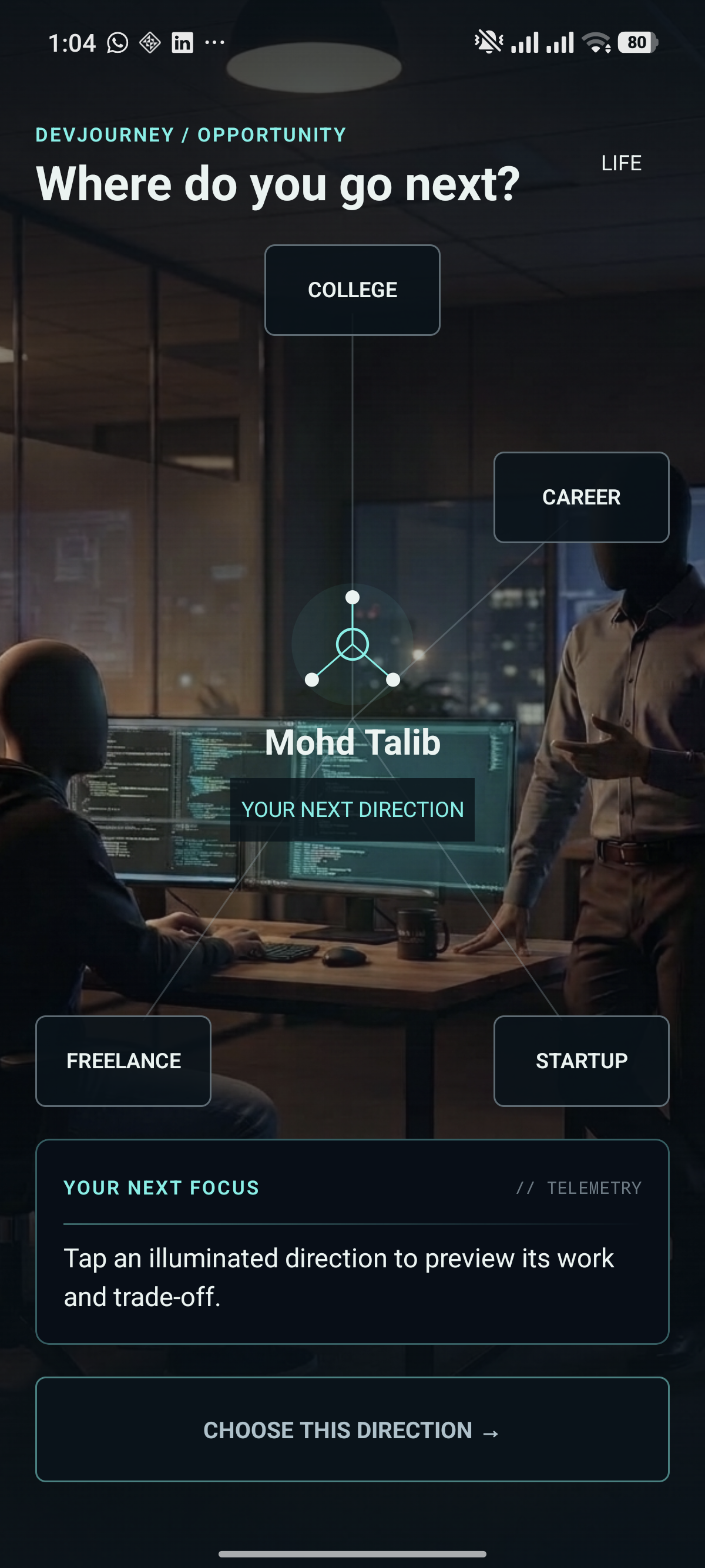
Choose Where Your Career Goes
-
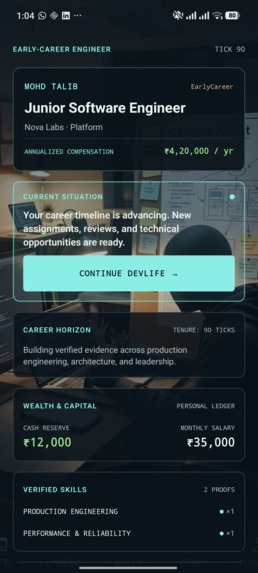
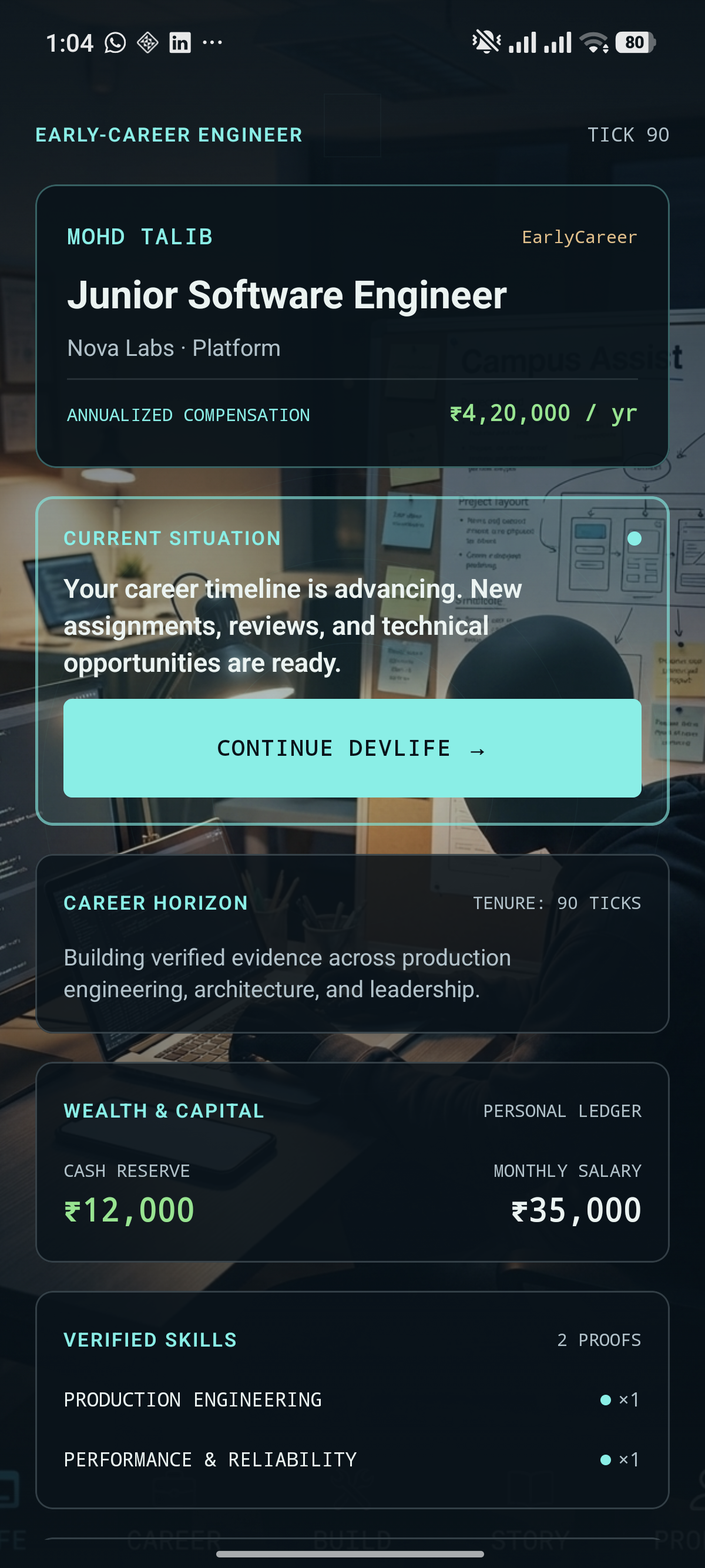
Build Your Career & Wealth
-
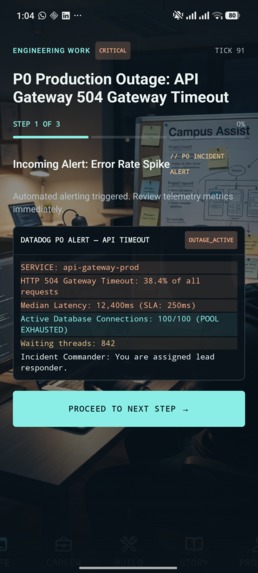
Fix Bugs Like a Real Developer

Inspiration
The idea for DevJourney started with something I personally wanted to play.
As a software developer, I wanted to play a mobile game where I could actually experience the journey of a developer — starting from learning to code, getting a first job, working on real projects, growing through different roles, earning money, building products, and eventually starting a technology company.
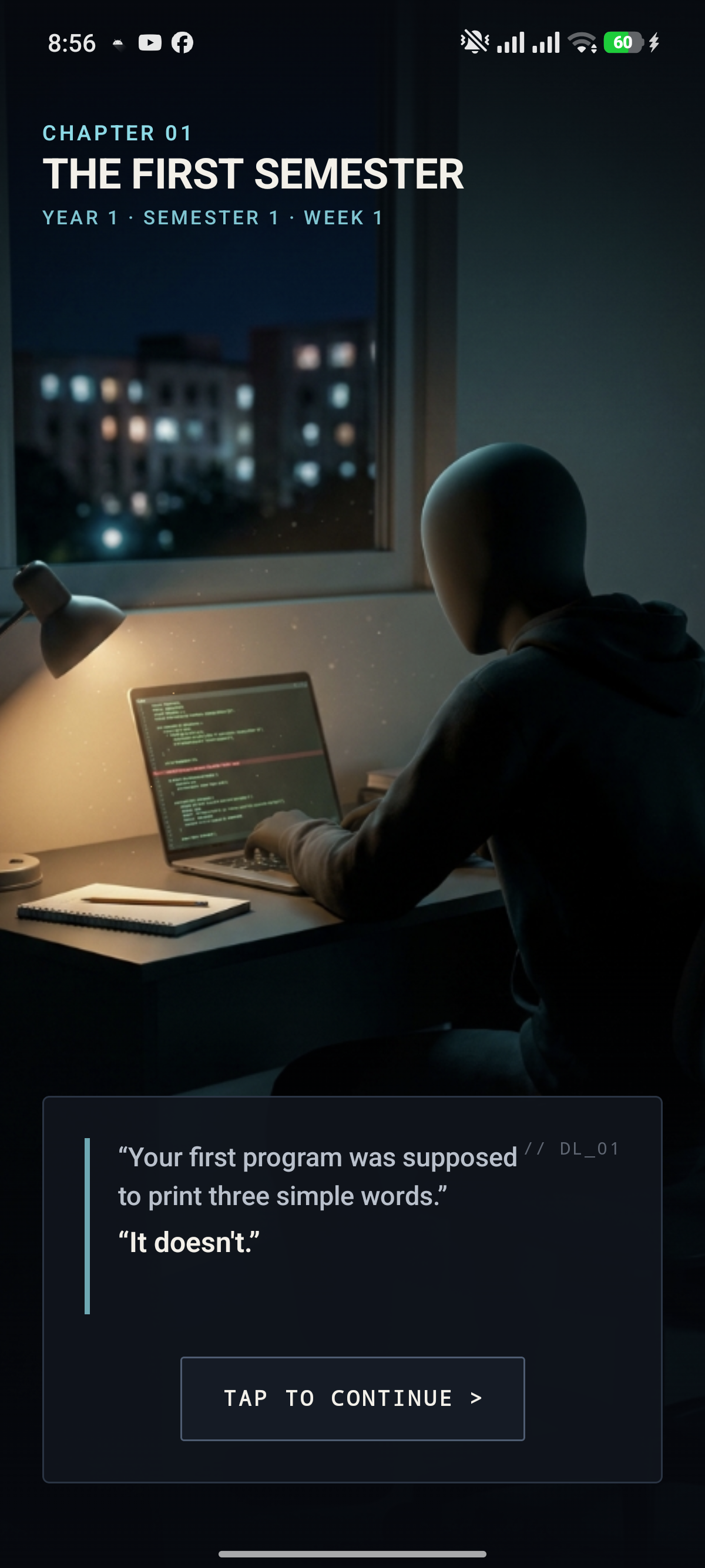
I looked for a game like this on mobile, but I couldn't find one that offered this kind of developer-focused life simulation. Most life and career simulation games felt much more general and relied heavily on menus, text, and simple choices. I wanted something more immersive and cinematic — where building an app, fixing a bug, working on a project, or handling a real developer task actually feels like you're doing it, with visual scenes and animations bringing each moment to life.
So I decided to build the game I wanted to play myself.
What We Built
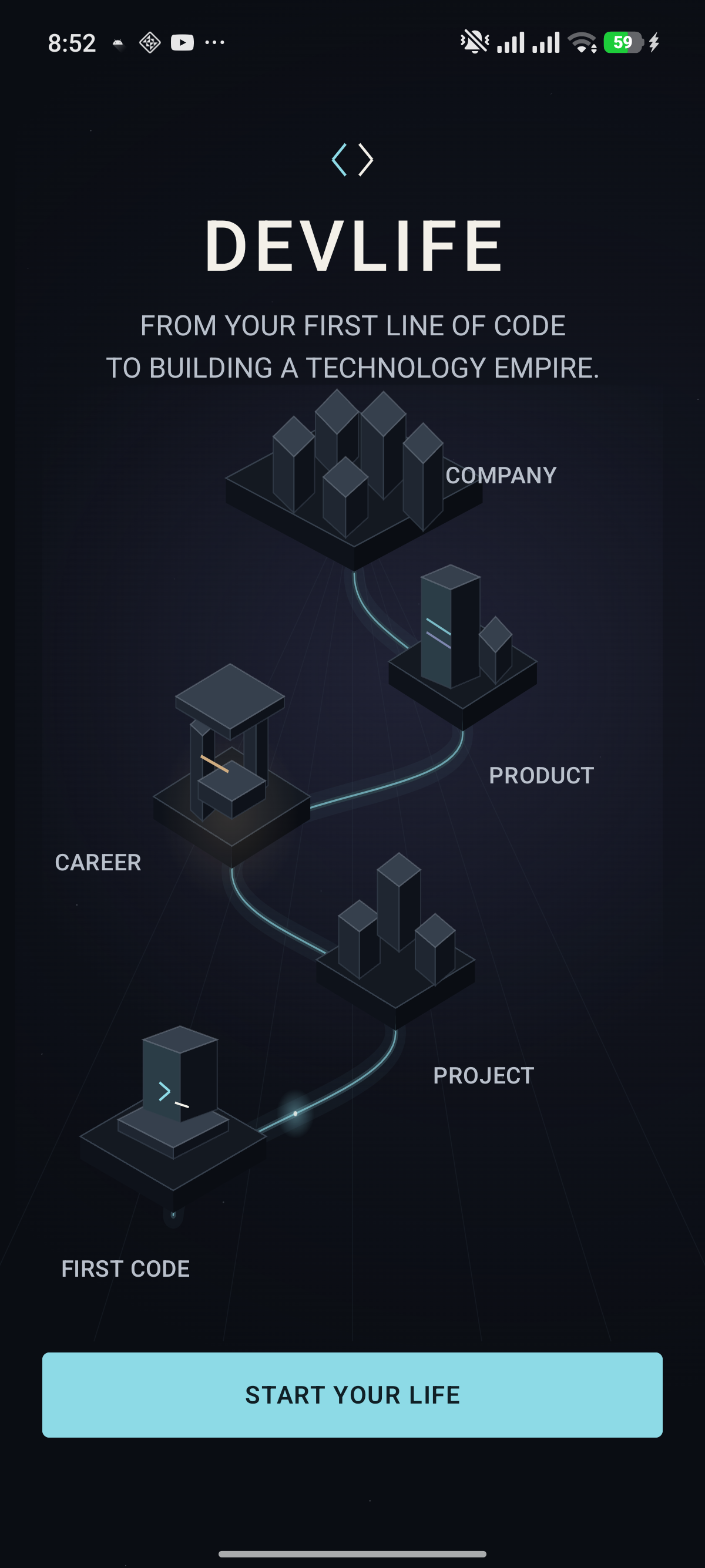
DevJourney is a tech-life simulation game where the player starts as a student writing their first program and gradually builds a career in technology.
Players make career decisions, work on programming tasks, attend interviews, receive job and internship opportunities, build software products, manage their income and wealth, deal with workplace situations, and eventually progress toward senior engineering and leadership roles.
The game combines career progression, interactive story events, decision-making, resource management, and realistic developer tasks into one continuous journey.
How We Built It
The game was built as a native Android application using Kotlin and Jetpack Compose.
We designed the game around a structured simulation system so that player decisions can affect their career, finances, projects, relationships, companies, products, and future opportunities.
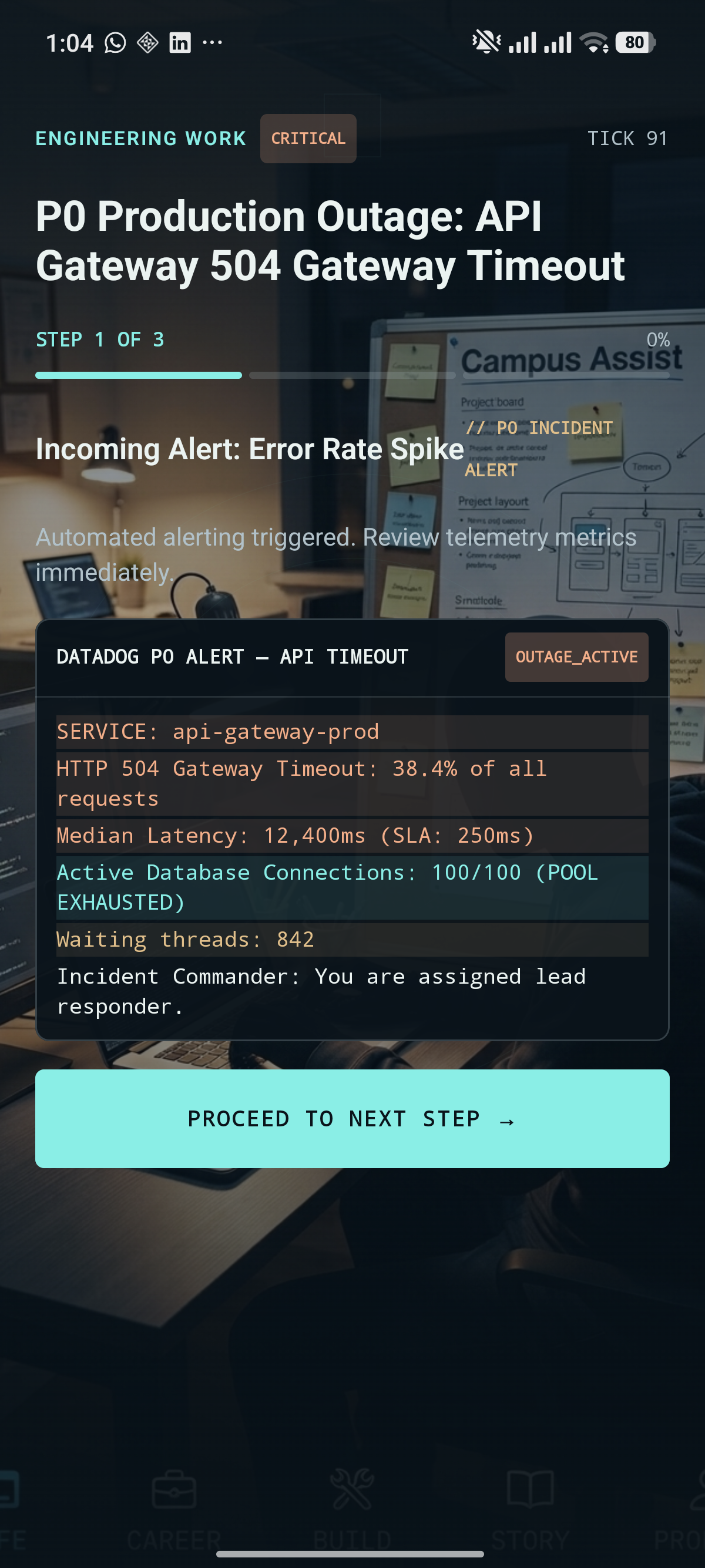
The later stages of the game go beyond simple multiple-choice decisions. Players encounter situations inspired by real software development, such as building applications and websites, fixing bugs, working on projects, handling production problems, making technical decisions, and growing products.
We also built a progression system that tracks the player's career, income, companies, products, achievements, and overall life journey.
For monetization, we integrated Google Play Billing through RevenueCat, supporting both subscriptions and lifetime access.
Challenges
One of the biggest challenges was making a developer career feel like an actual game rather than a collection of menus and questions.
We wanted the player to feel like they were actually living a developer's career. That meant creating a progression system where career decisions, technical work, finances, products, and major life events could all become part of the gameplay.
Another challenge was designing a system that could support a long-running simulation while keeping the player's progress consistent across app restarts and devices.
What We Learned
Building DevJourney taught us how much game design is about creating a feeling of progression.
A developer's career has many small milestones — the first working program, first interview, first job, first major project, first promotion, first product, and eventually building something of your own.
We wanted every one of those milestones to feel meaningful.
DevJourney is our attempt to turn the developer journey we wanted to experience ourselves into a playable mobile game.

Log in or sign up for Devpost to join the conversation.