-
-
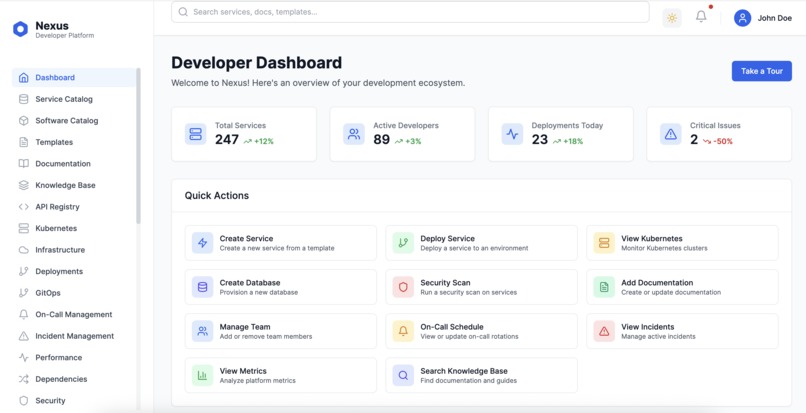
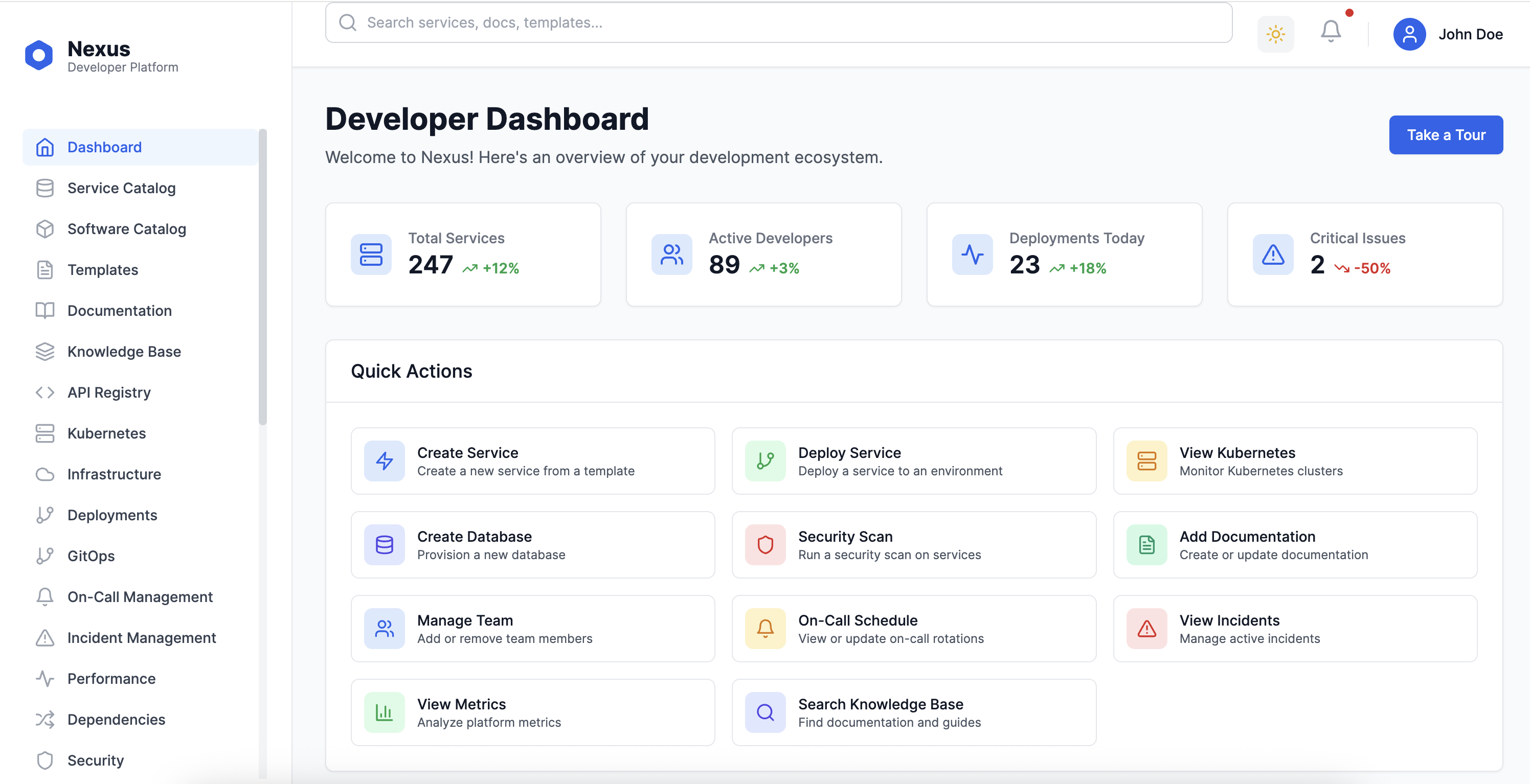
Home-page
-
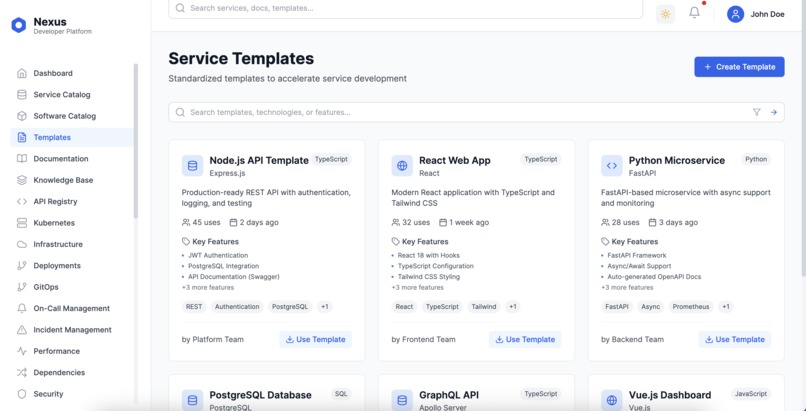
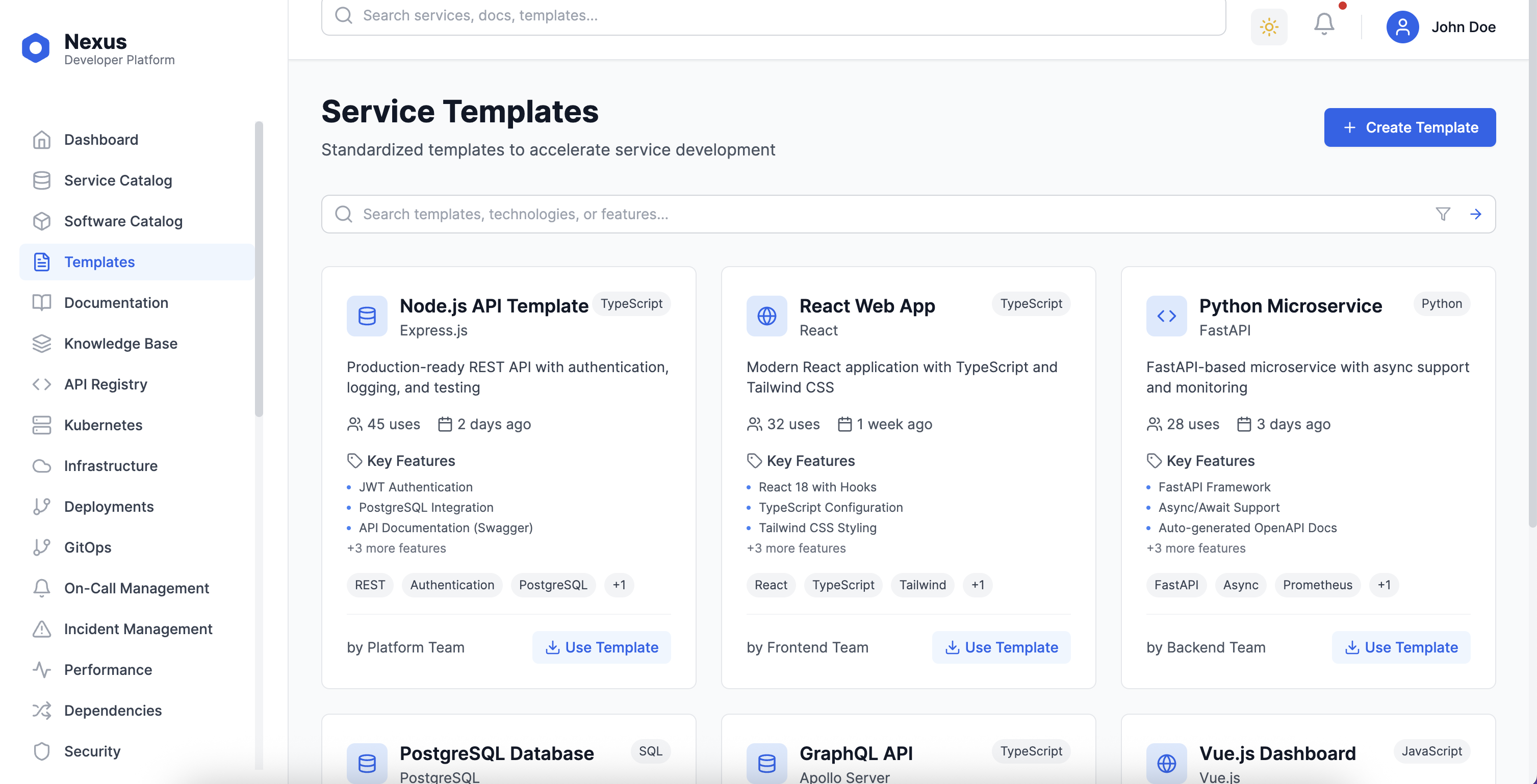
Service Templates
-
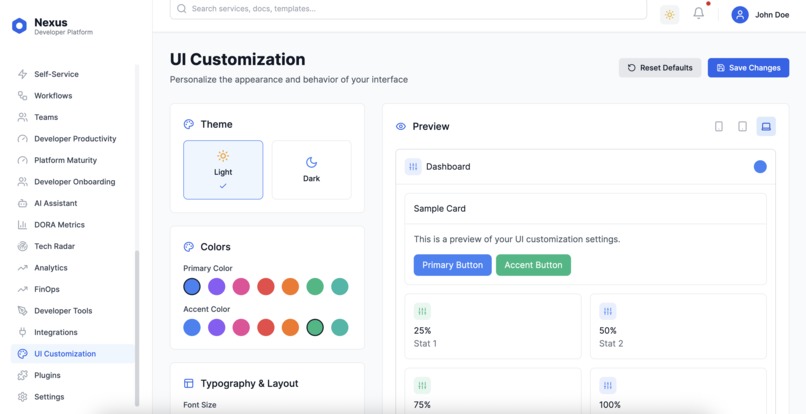
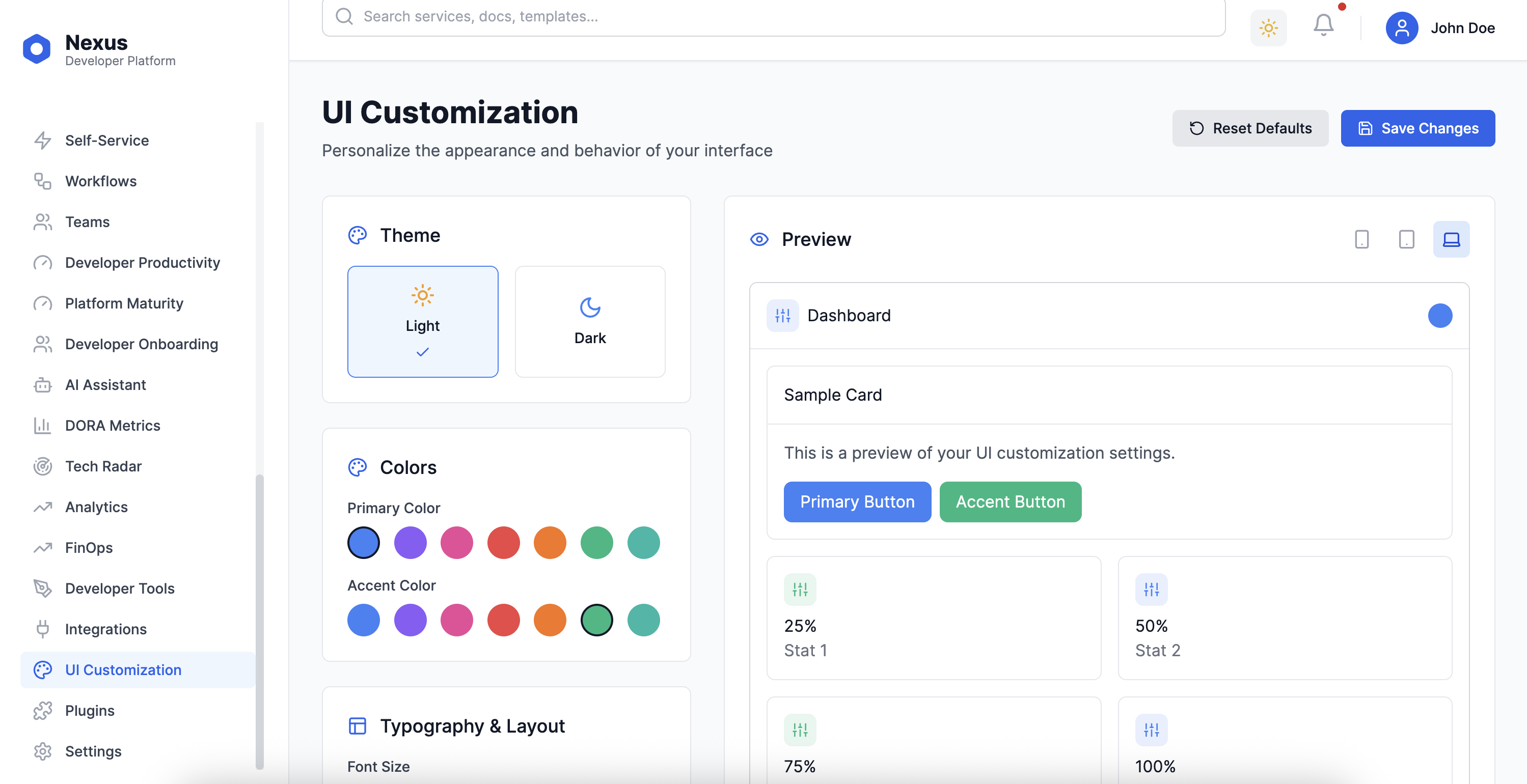
UI Customization
-
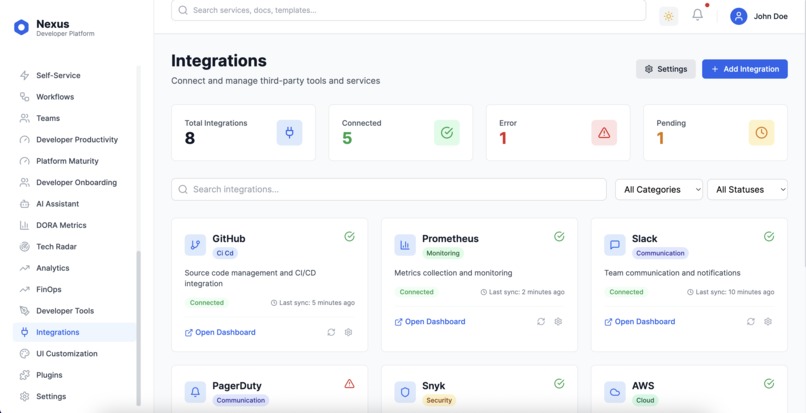
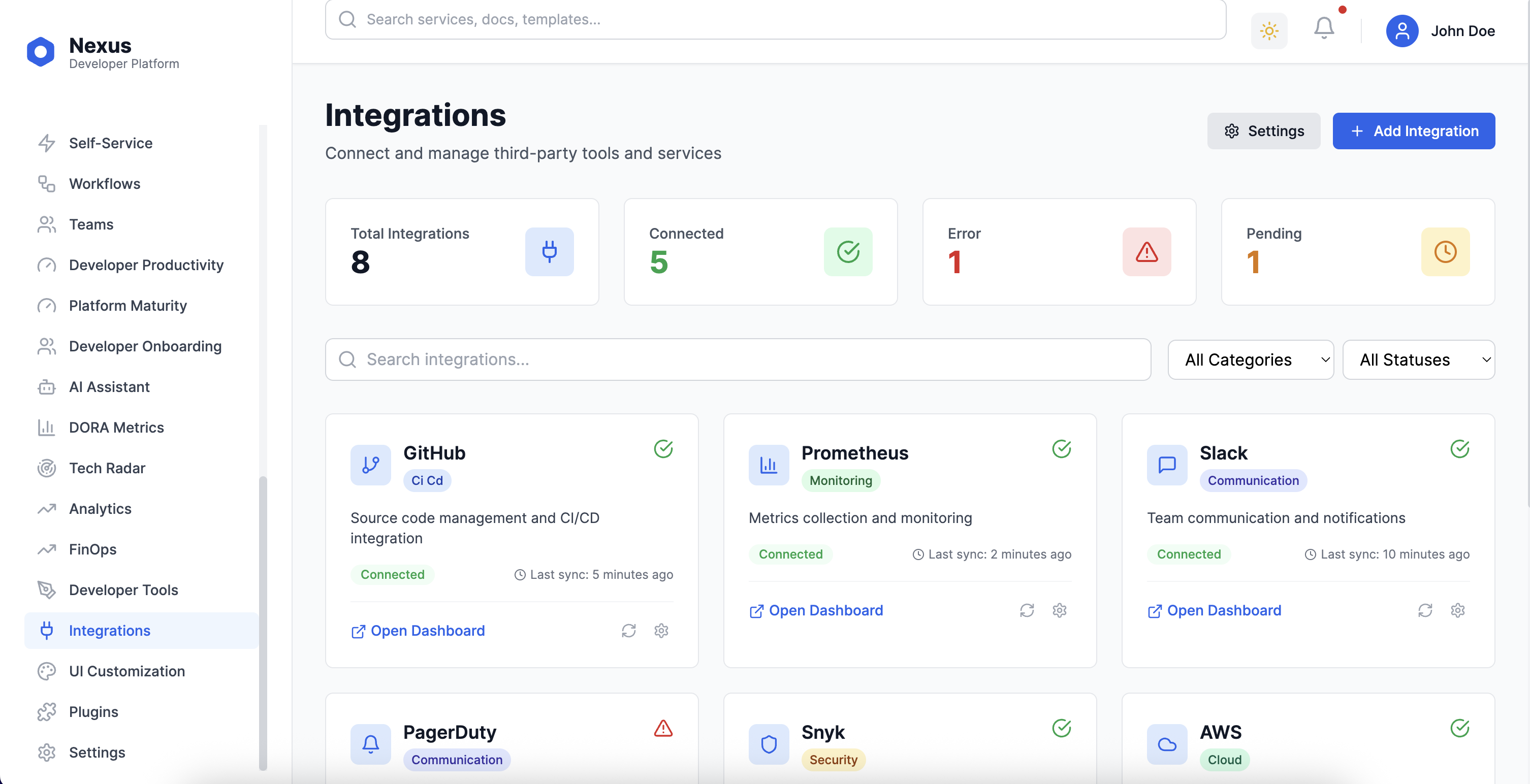
Integrations
-
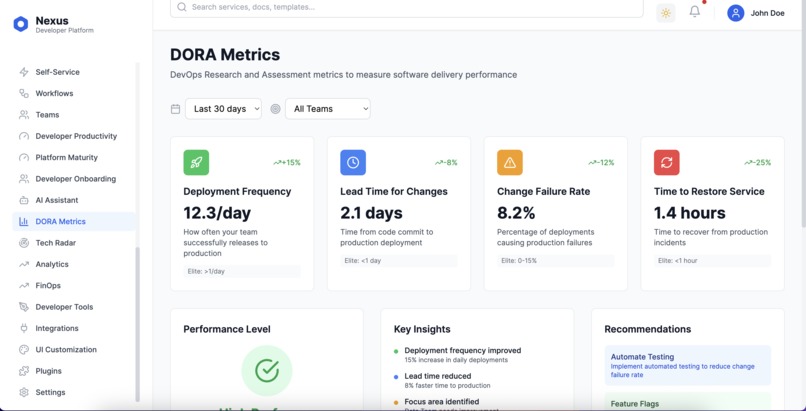
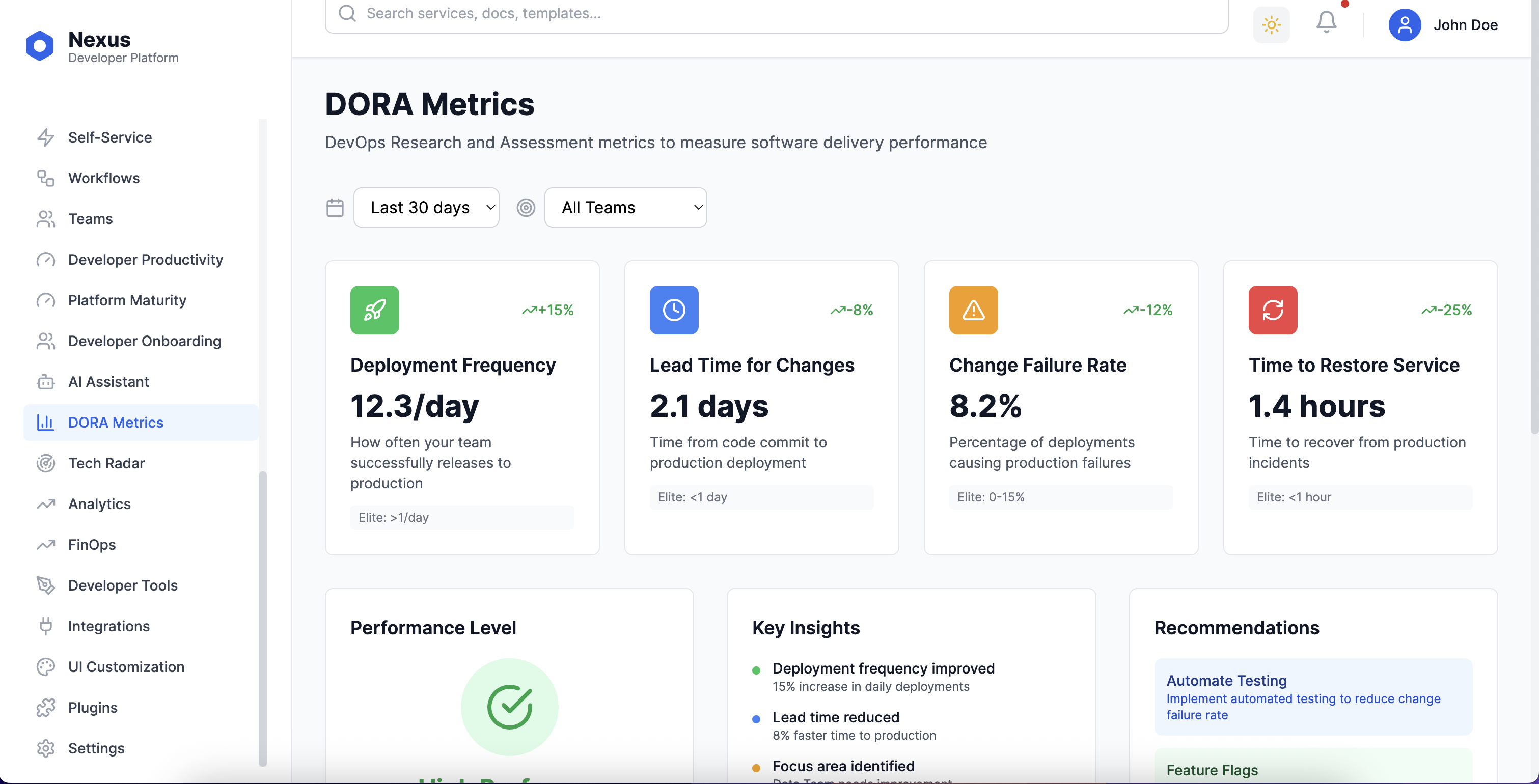
DORA Metrics
Inspiration
The inspiration for Nexus came from witnessing the daily struggles of engineering teams trying to navigate fragmented tooling landscapes.
Developers were spending more time context-switching between tools, waiting for infrastructure, and dealing with operational overhead than actually writing code. We observed how the most innovative companies were developing internal platforms to address these challenges, but these solutions were often inaccessible to smaller organizations without dedicated platform teams.
We were inspired by the concept of "developer experience" becoming a competitive advantage for engineering organizations. By reducing cognitive load and eliminating toil, we believed we could dramatically increase developer productivity and happiness.
The rise of platform engineering as a discipline further validated our vision that a well-designed Internal Developer Platform could transform how software is built.
What it does
Nexus is a comprehensive Internal Developer Platform that serves as the central nervous system for modern engineering organizations. It provides:
- Service Catalog: A centralized registry of all services, their dependencies, and ownership information
- Self-Service Portal: Empowers developers to provision infrastructure, deploy services, and perform operational tasks without waiting for other teams
- Templates & Scaffolding: Standardized templates for creating new services with best practices built-in
- Kubernetes Integration: Simplified management of Kubernetes clusters with cost optimization and observability
- GitOps Workflows: Git-based deployment and configuration management
- Compliance & Security: Automated security scanning and compliance tracking
- Documentation Hub: Centralized knowledge base for architectural decisions, runbooks, and best practices
- Performance Monitoring: Real-time insights into service health and performance
- DORA Metrics: Tracking of key engineering productivity metrics
- AI Assistant: Intelligent assistance for common development tasks
- Team Management: Visibility into team structures, on-call rotations, and incident management
How we built it
We built Nexus as a modern web application with a clear separation between frontend and backend:
Frontend:
- React with TypeScript for type safety and a better developer experience
- Tailwind CSS for responsive, utility-first styling
- Vite for fast development and optimized builds
- Lucide React for consistent iconography
- Custom hooks for state management and API interactions
- Responsive design principles for all device sizes
Backend:
- Node.js with Express for the API layer
- TypeScript for type safety across the stack
- Prisma ORM for database operations with PostgreSQL
- Redis for caching and performance optimization
- JWT-based authentication with refresh tokens
- Comprehensive error handling and logging
- Health checks and monitoring endpoints
Architecture:
- Microservices architecture for scalability and maintainability
- RESTful API design with OpenAPI/Swagger documentation
- Docker containerization for consistent environments
- Kubernetes for orchestration and deployment
- CI/CD pipelines for automated testing and deployment
Challenges we ran into
Building Nexus presented several significant challenges:
Balancing Simplicity and Power: Creating an interface that was simple enough for new developers but powerful enough for platform engineers required careful design decisions and extensive user testing.
Integration Complexity: Connecting to diverse systems (Git providers, CI/CD tools, cloud platforms) while maintaining a consistent user experience proved challenging due to the varying APIs and authentication mechanisms.
Performance at Scale: Ensuring the platform remained responsive when managing thousands of services, deployments, and metrics required optimizing database queries, implementing caching strategies, and carefully tuning frontend performance.
Security Considerations: As a central platform with access to critical infrastructure, implementing robust security measures without compromising usability was a constant challenge.
Visualization Challenges: Creating intuitive visualizations for complex concepts, such as service dependencies, deployment pipelines, and performance metrics, required multiple iterations to achieve the desired results.
Accomplishments that we're proud of
Unified Developer Experience: We successfully created a cohesive experience across previously disconnected tools and workflows, significantly reducing the need for context switching for developers.
Service Visualization: Our service dependency graph offers unparalleled visibility into complex microservice architectures, enabling teams to understand relationships and identify potential impact areas.
Self-Service Automation: We've automated common tasks that previously required tickets and manual intervention, reducing wait times from days to minutes.
Comprehensive Dashboard: Our dashboard provides a single pane of glass for all platform metrics, giving leadership visibility into engineering productivity and system health.
Flexible Template System: Our service templates enable consistent implementation of best practices while remaining flexible enough for diverse use cases.
AI-Powered Assistance: The integration of AI to assist with everyday tasks, troubleshooting, and knowledge discovery has received overwhelmingly positive feedback.
Accessibility and Inclusivity: We've built the platform with accessibility in mind, ensuring it works for all team members regardless of abilities.
What we learned
Platform Engineering is Human-Centered: While technical excellence is important, the success of an internal platform ultimately depends on how well it understands and serves its users' needs.
Golden Path vs. Flexibility: Finding the right balance between providing opinionated "golden paths" and allowing for customization is crucial for adoption.
Incremental Value Delivery: Starting with high-impact, low-effort features and gradually expanding functionality proved more effective than attempting to build a comprehensive solution from the start.
Documentation is a Product: Treating documentation as a first-class product feature rather than an afterthought significantly improved user adoption and satisfaction.
Feedback Loops Matter: Implementing mechanisms to collect and act on user feedback early in the development process led to a more useful and usable platform.
Cross-Functional Collaboration: The most successful features came from close collaboration between developers, designers, and potential users.
What's next for Nexus - Build better, ship faster, scale smarter
Our roadmap for Nexus includes several exciting enhancements:
Enhanced AI Capabilities: Expanding our AI assistant to provide more proactive recommendations, automated troubleshooting, and code generation capabilities.
Advanced Cost Optimization: Implementing deeper cost analysis and automated optimization recommendations for cloud resources.
Cross-Cloud Management: Extending our infrastructure management capabilities to support multi-cloud and hybrid cloud environments.
Developer Productivity Insights: Building more sophisticated analytics to help teams identify and remove bottlenecks in their development process.
Expanded Integrations: Adding support for additional CI/CD systems, cloud providers, and monitoring tools to create a more comprehensive ecosystem.
Platform API: Developing a robust API to allow teams to build custom extensions and integrations on top of Nexus.
Enterprise Features: Implementing advanced governance, compliance, and security features for enterprise customers.
Community Edition: Releasing an open-source community edition to make the platform accessible to smaller teams and individual developers.

Log in or sign up for Devpost to join the conversation.