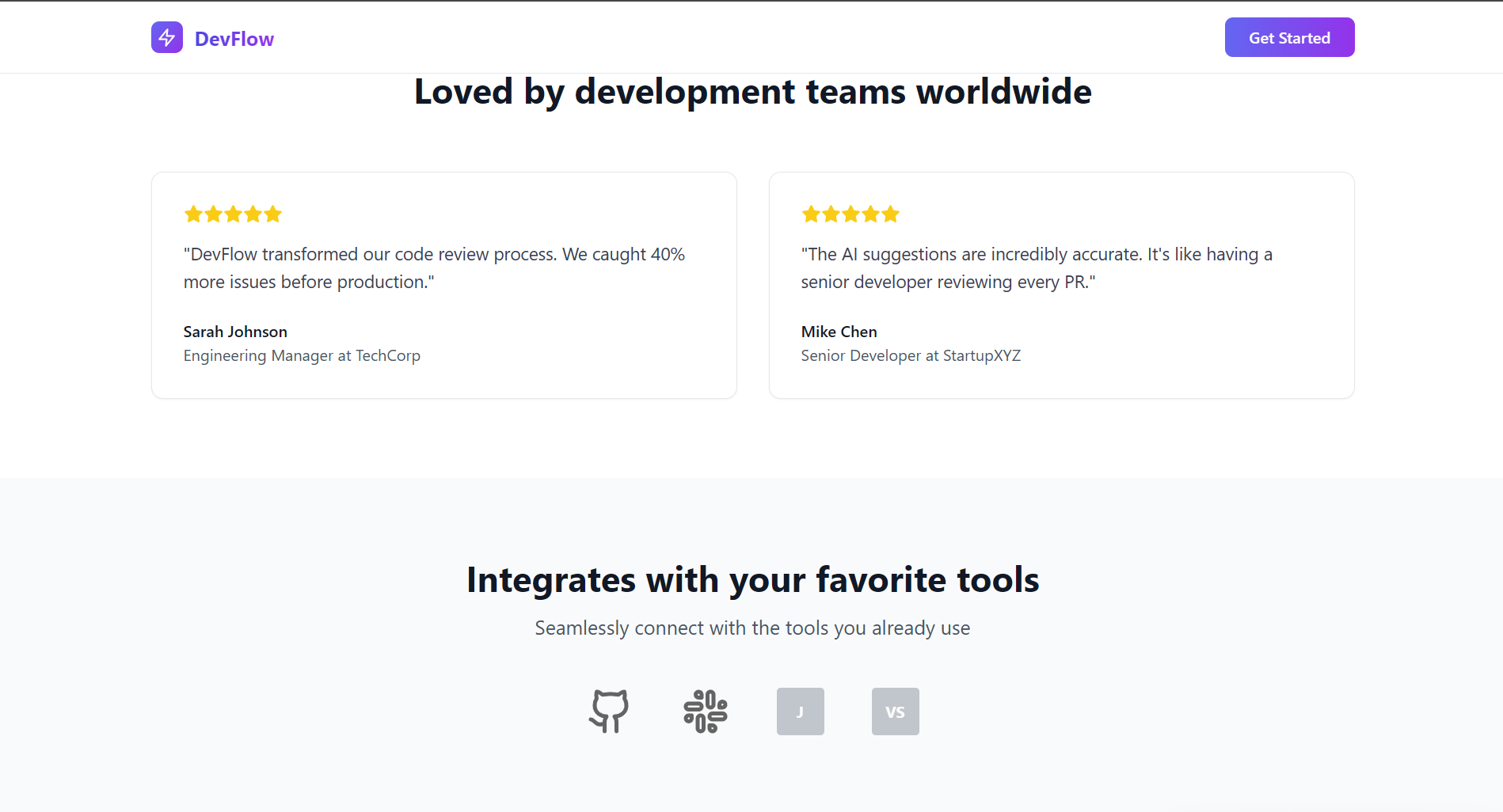
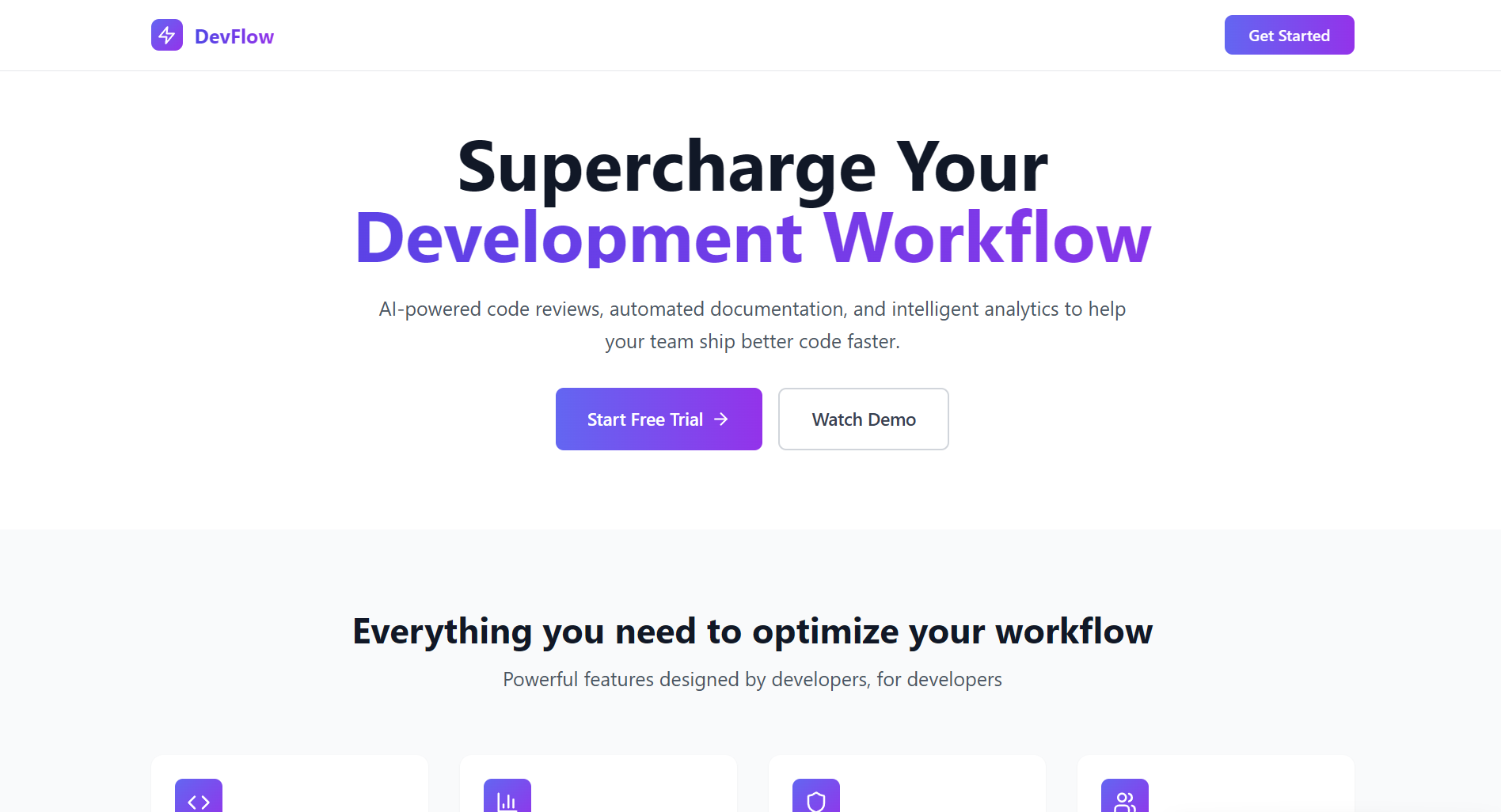
Inspiration: As developers, we often find ourselves overwhelmed by repetitive tasks such as manual code reviews, writing documentation, tracking bugs, and managing workflows across multiple platforms. These pain points inspired us to build DevFlow — an AI-powered development workflow platform designed to streamline and automate the entire development lifecycle in one seamless interface.
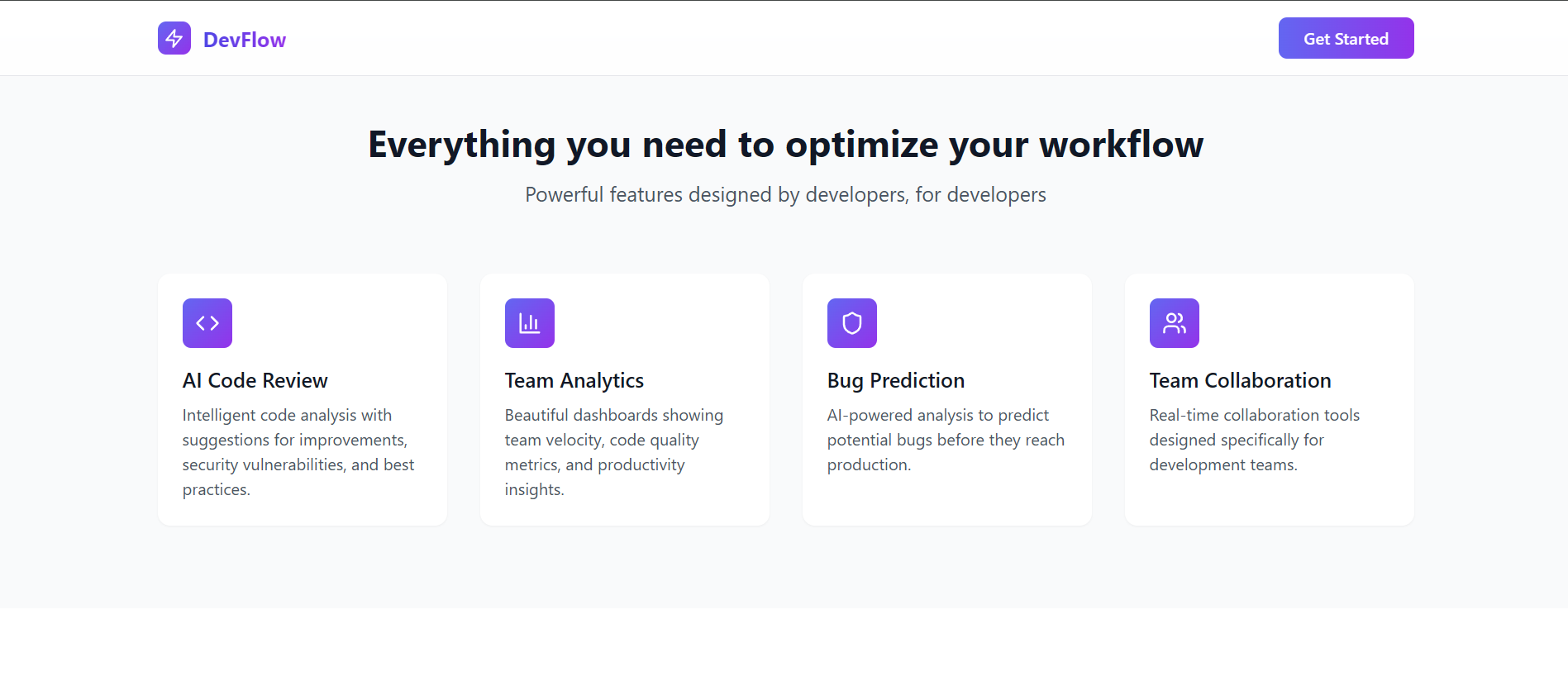
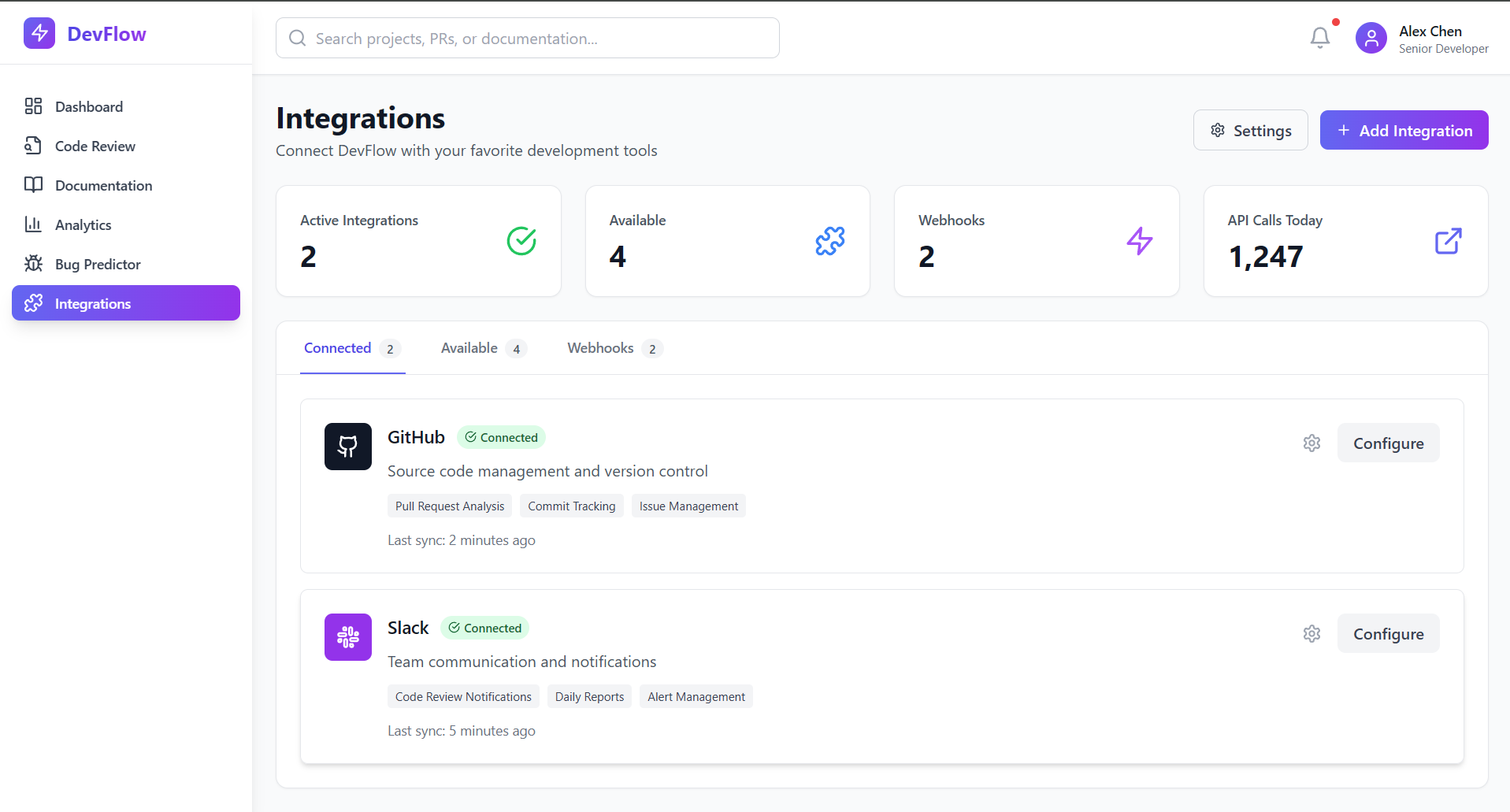
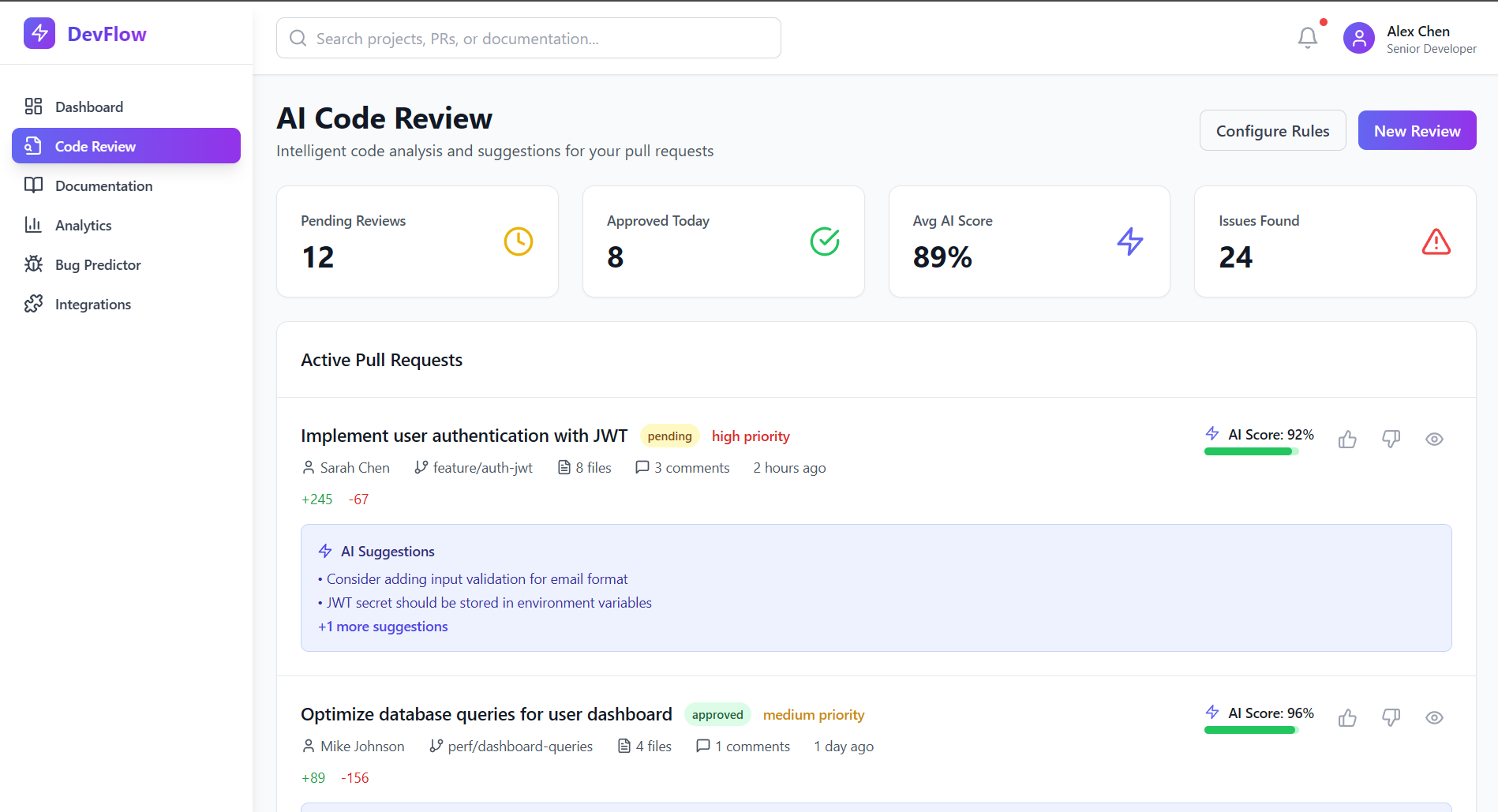
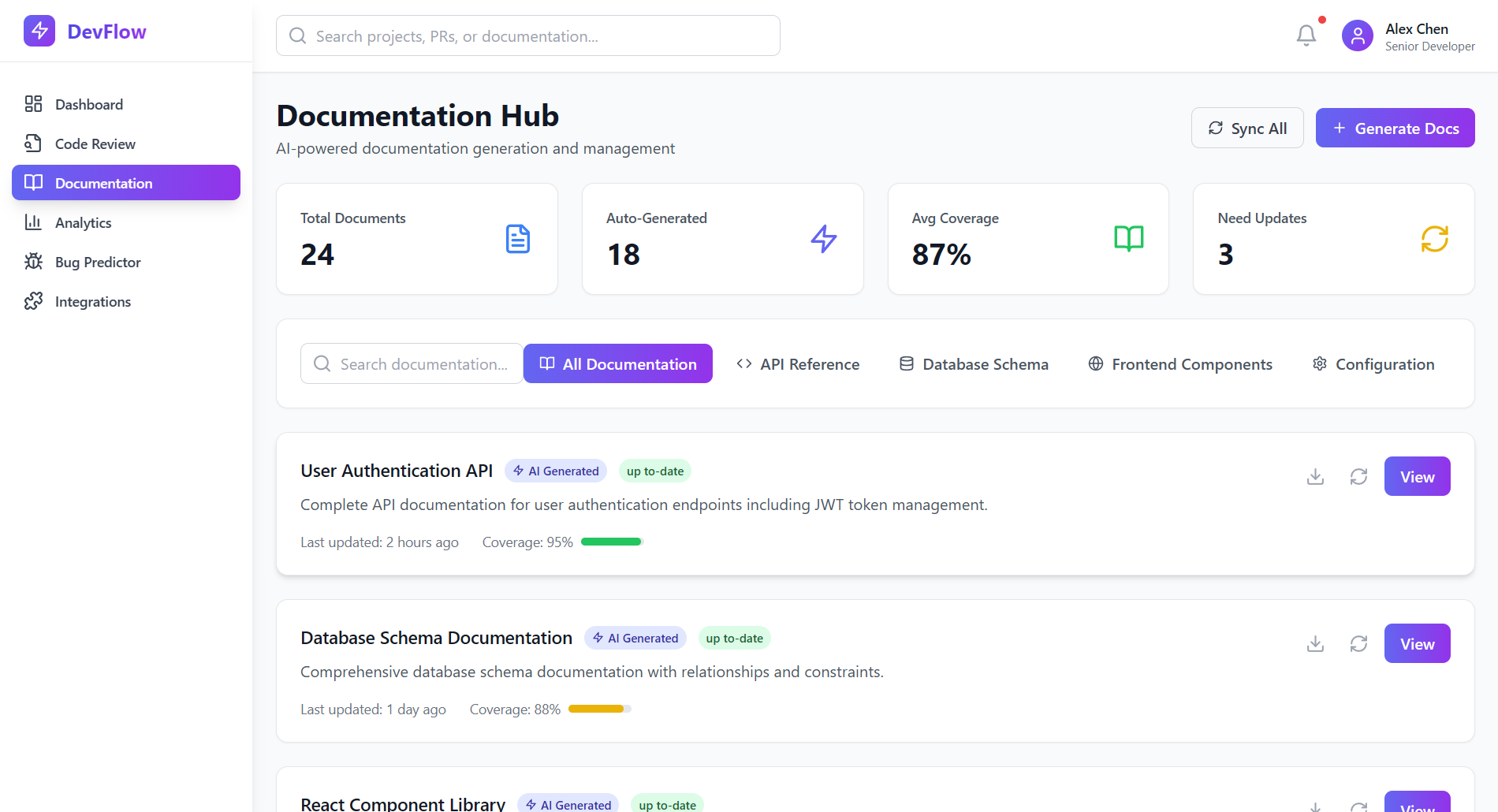
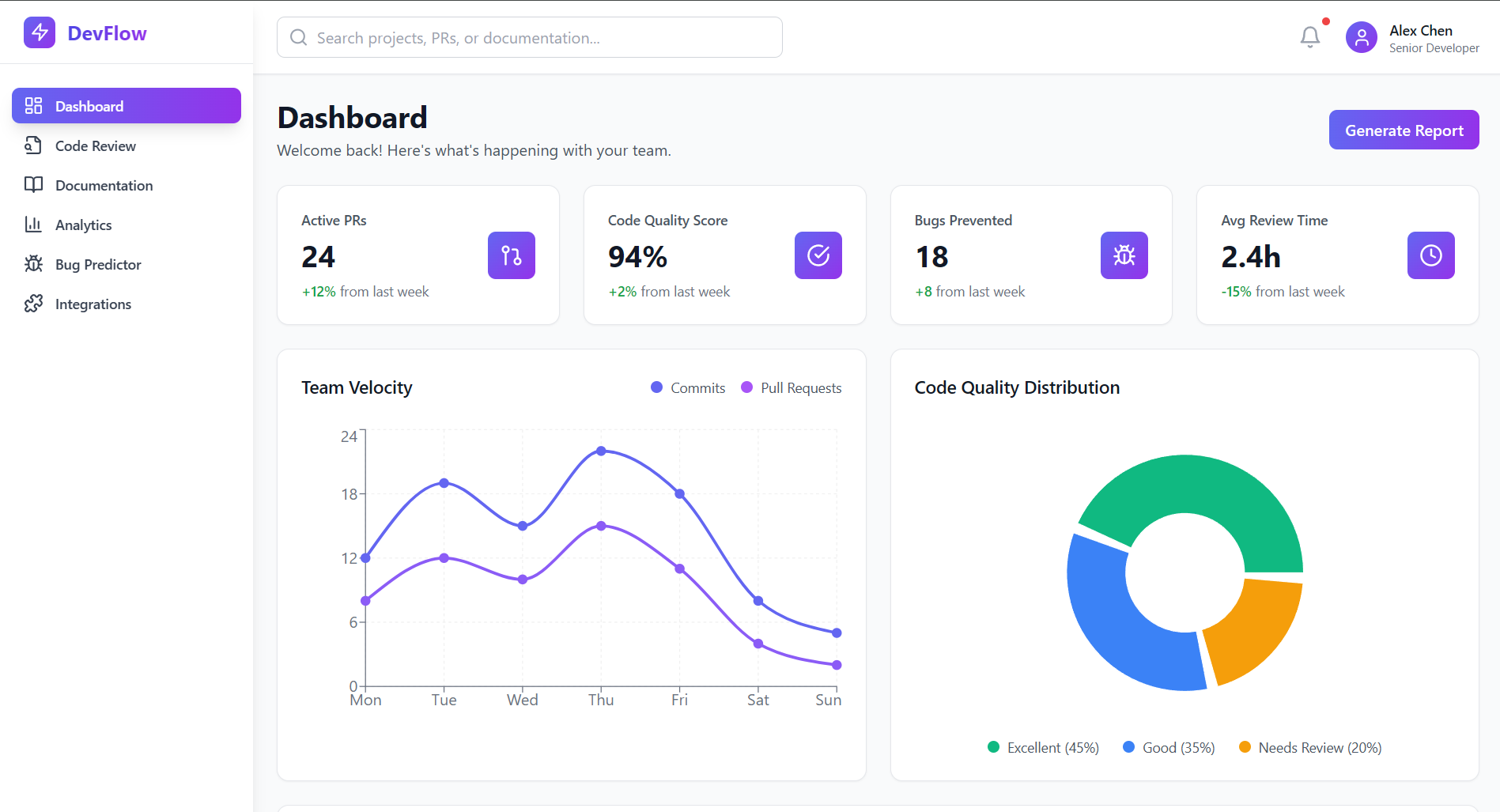
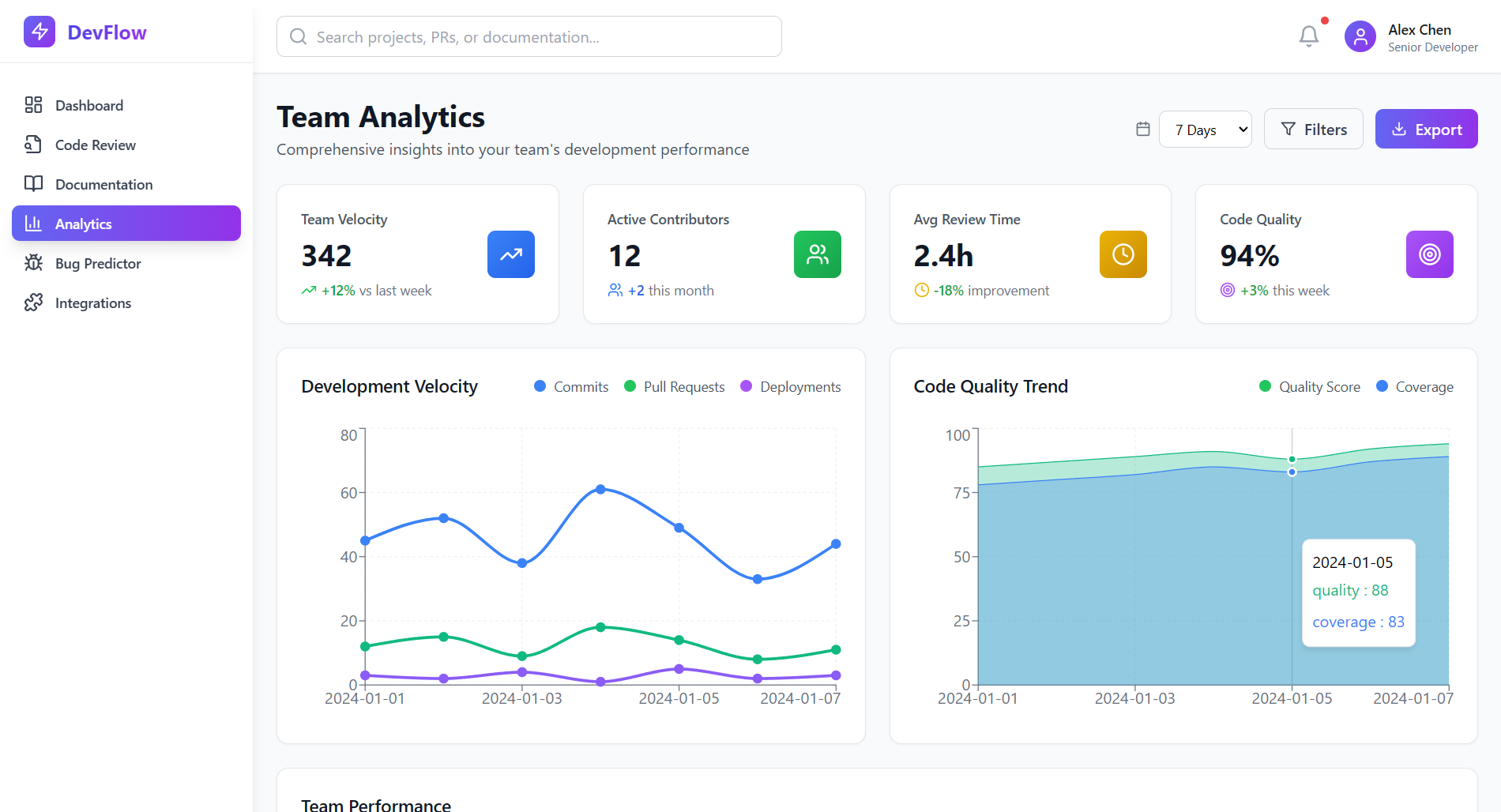
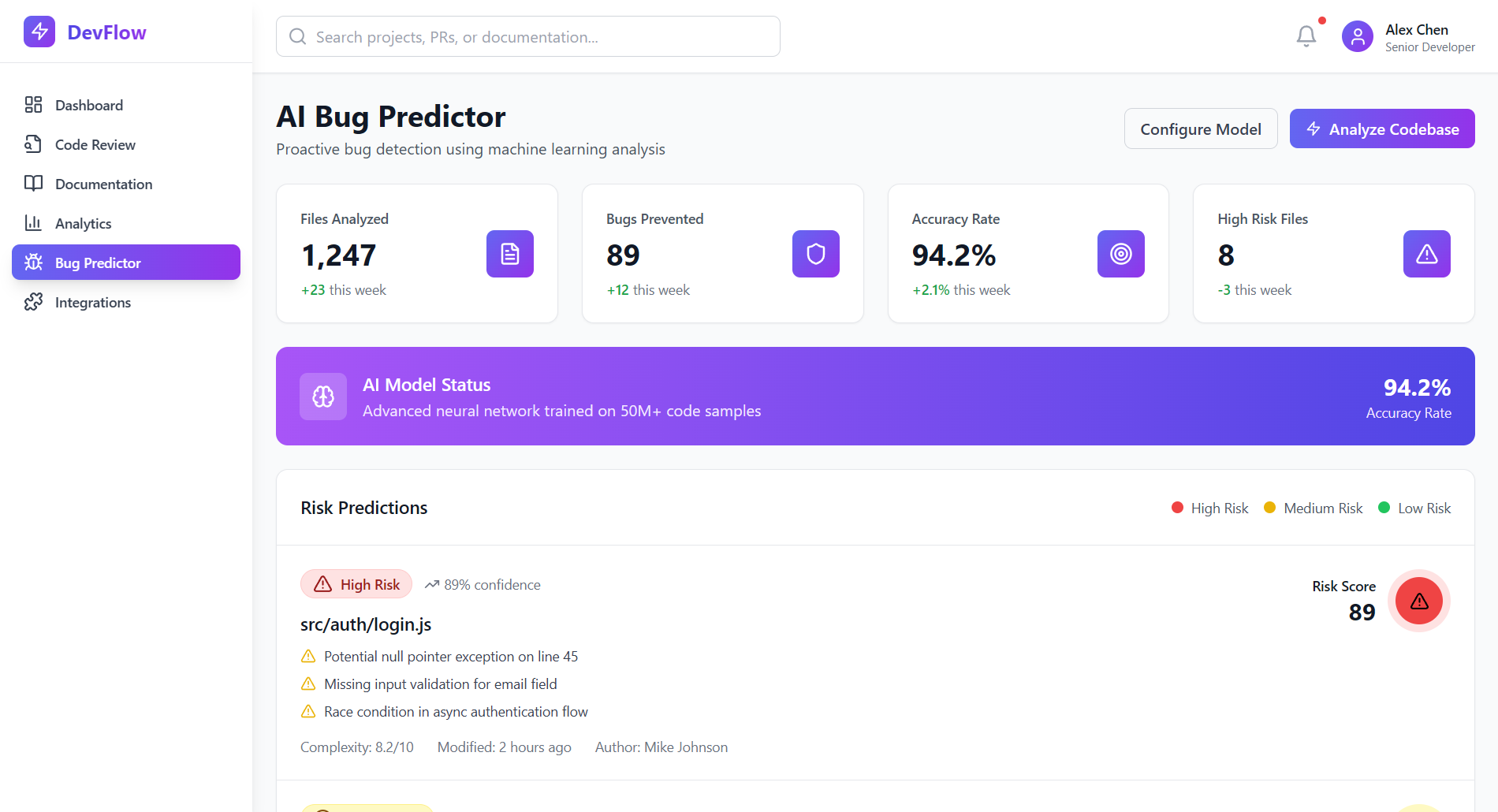
What it does: DevFlow integrates multiple AI-powered tools to enhance developer productivity. It offers smart code reviews with real-time suggestions and risk scoring, auto-generates documentation from code with search and coverage tracking, predicts bugs before they reach production, and visualizes team analytics such as contributor insights and velocity trends. It also includes a marketplace for integrating tools like GitHub, Slack, and CI systems, all housed within a polished, animated dashboard.
How we built it: We developed DevFlow using React, TypeScript, and Tailwind CSS to ensure a clean, responsive front-end. We incorporated Framer Motion for smooth animations and Recharts for intuitive data visualization. The project was structured modularly with components for each page — including Landing, Dashboard, CodeReview, Documentation, Analytics, BugPredictor, and Integrations — and integrated AI models for tasks such as code analysis and documentation generation. The platform runs using npm run dev and supports full component-based routing and state management.
Challenges we ran into: One major challenge was designing a user interface that felt both powerful and lightweight. Integrating real-time AI logic without causing performance issues was also a technical hurdle. Ensuring the bug prediction engine produced accurate and meaningful results, and managing the project’s scope within the hackathon timeframe, required careful planning and iteration.
Accomplishments that we’re proud of: We successfully shipped a complete, polished MVP with six fully functional modules. We seamlessly integrated AI features that solve real problems developers face daily, maintained a smooth and responsive user experience, and built a platform that feels market-ready rather than just a prototype.
What we learned: Through this project, we learned how effectively AI can be applied to real-world development workflows. We gained experience balancing design with performance, sticking to a modular codebase for better scalability, and the importance of integrating with real-world developer tools to maximize adoption and usability.
What’s next for DevFlow: Looking ahead, we plan to add live collaboration features and an in-app AI assistant, enhance the bug prediction engine using historical commit data, integrate CI/CD and deployment tools, launch a public beta for early users, and eventually offer DevFlow as a SaaS product tailored for modern development teams.
Built With
- bolt
- css
- framer
- github
- html
- javascript
- node.js
- npm
- react
- recharts
- typescript
- vite

Log in or sign up for Devpost to join the conversation.