
Inspiration
Modern codebases are becoming increasingly complex, often feeling like impenetrable “black boxes” to new contributors—or even seasoned developers jumping into a new module.
We were inspired by the idea of a “Mind Map for Code”:
a tool that goes beyond raw source files and provides a high-fidelity, interactive intelligence overlay revealing:
- Hidden architecture
- Data relationships
- Team contributers and velocity for any repository.
What It Does
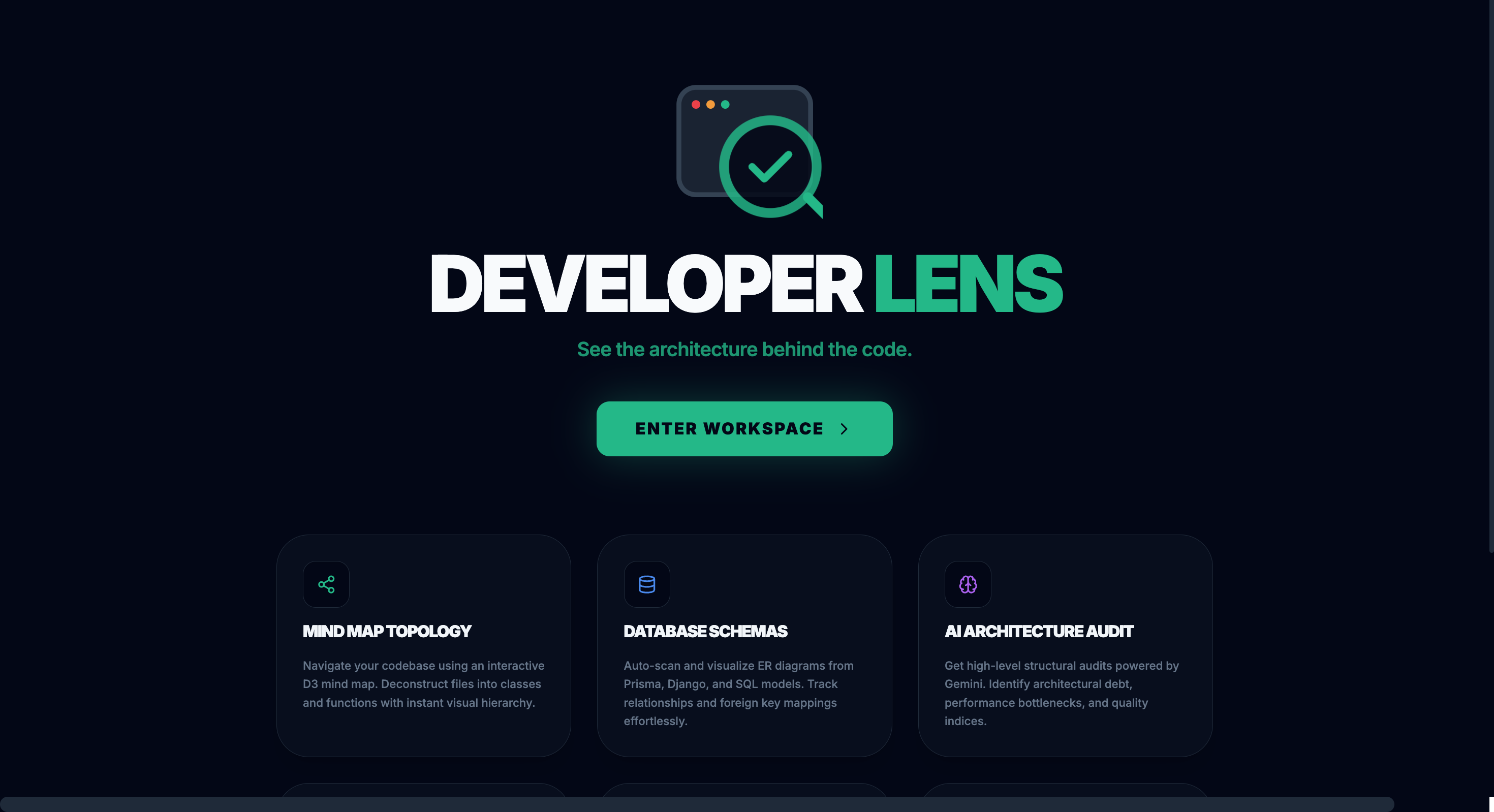
Developer Lens is an AI-powered architectural visualization platform that transforms any GitHub repository into a multi-dimensional mental map through four distinct Lenses:
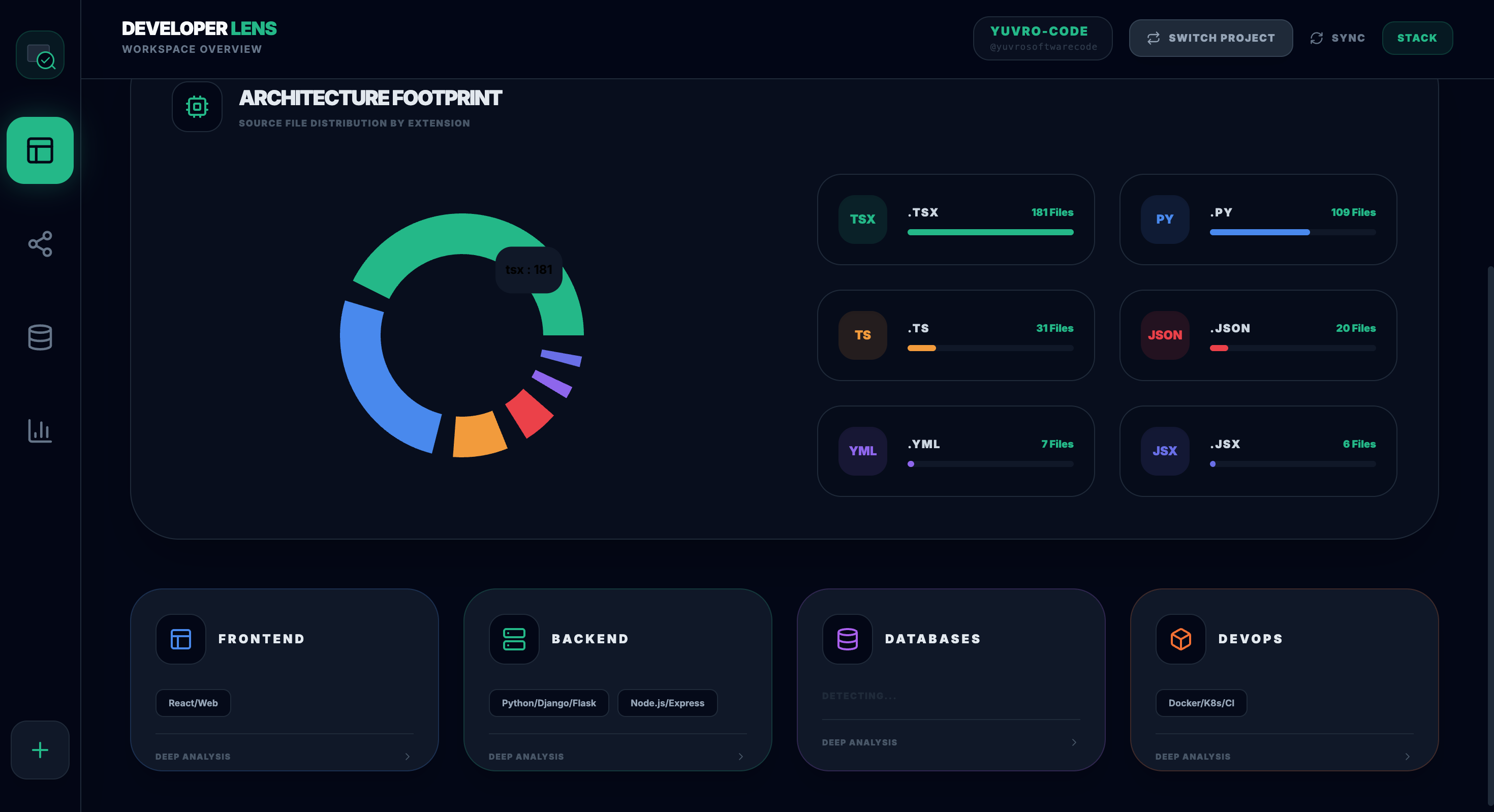
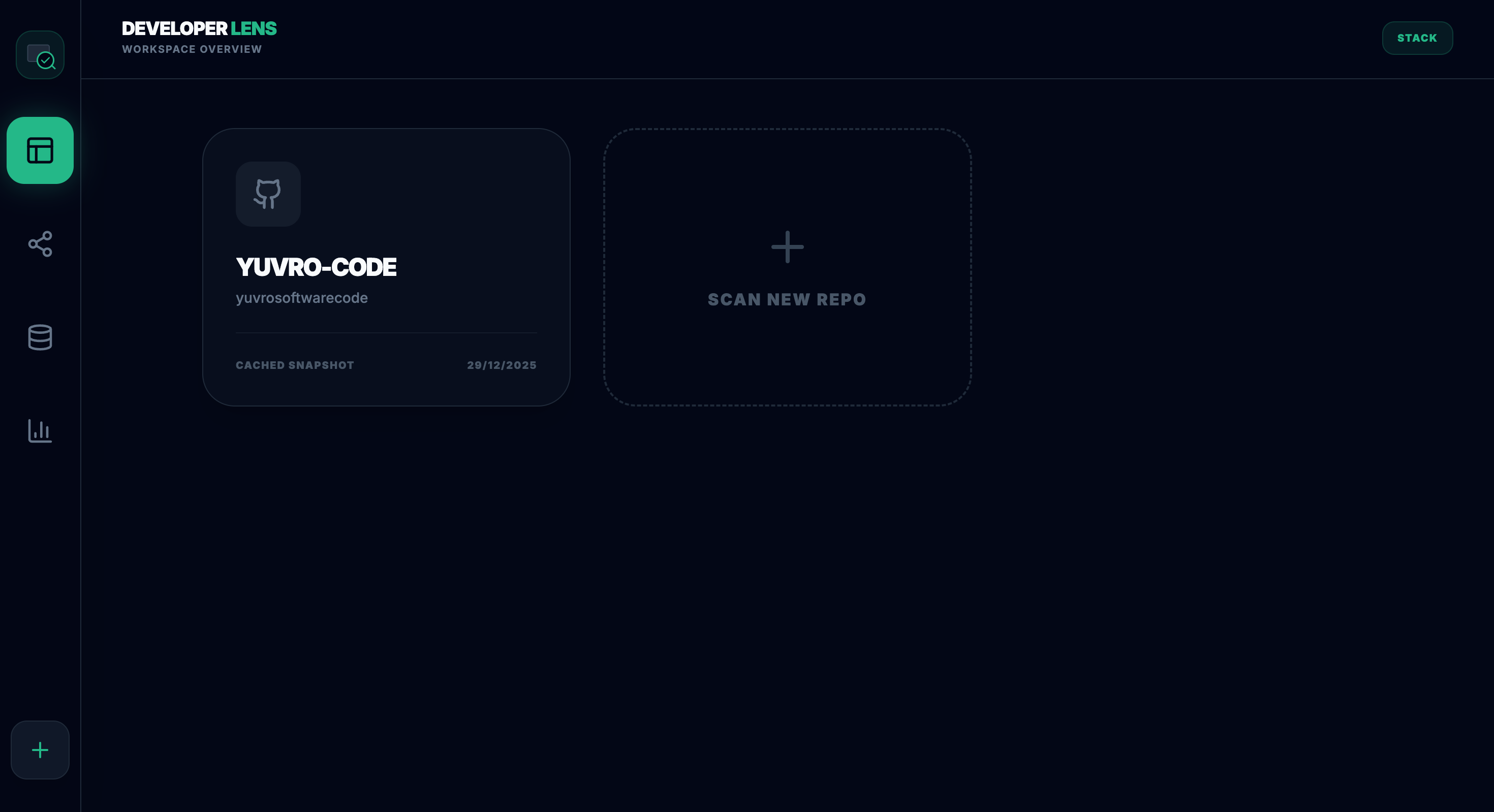
Tech Stack Lens
- AI-driven analysis of:
- Core architecture
- Design patterns
- Frameworks and libraries
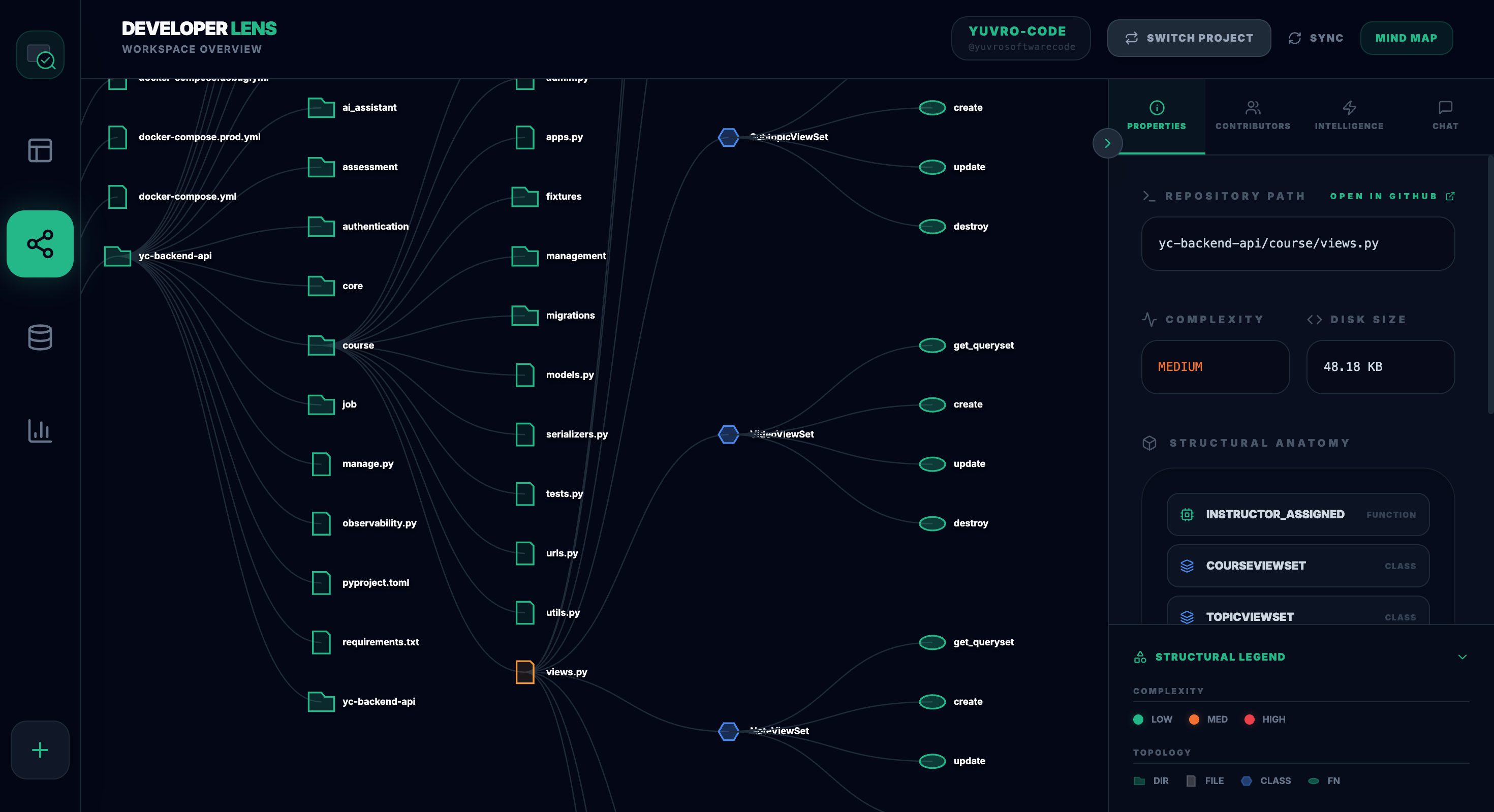
Structural Topology Lens
- Dynamic D3-based Mind Map
- Breaks directories down into:
- Files
- Classes
- Methods
- Functions
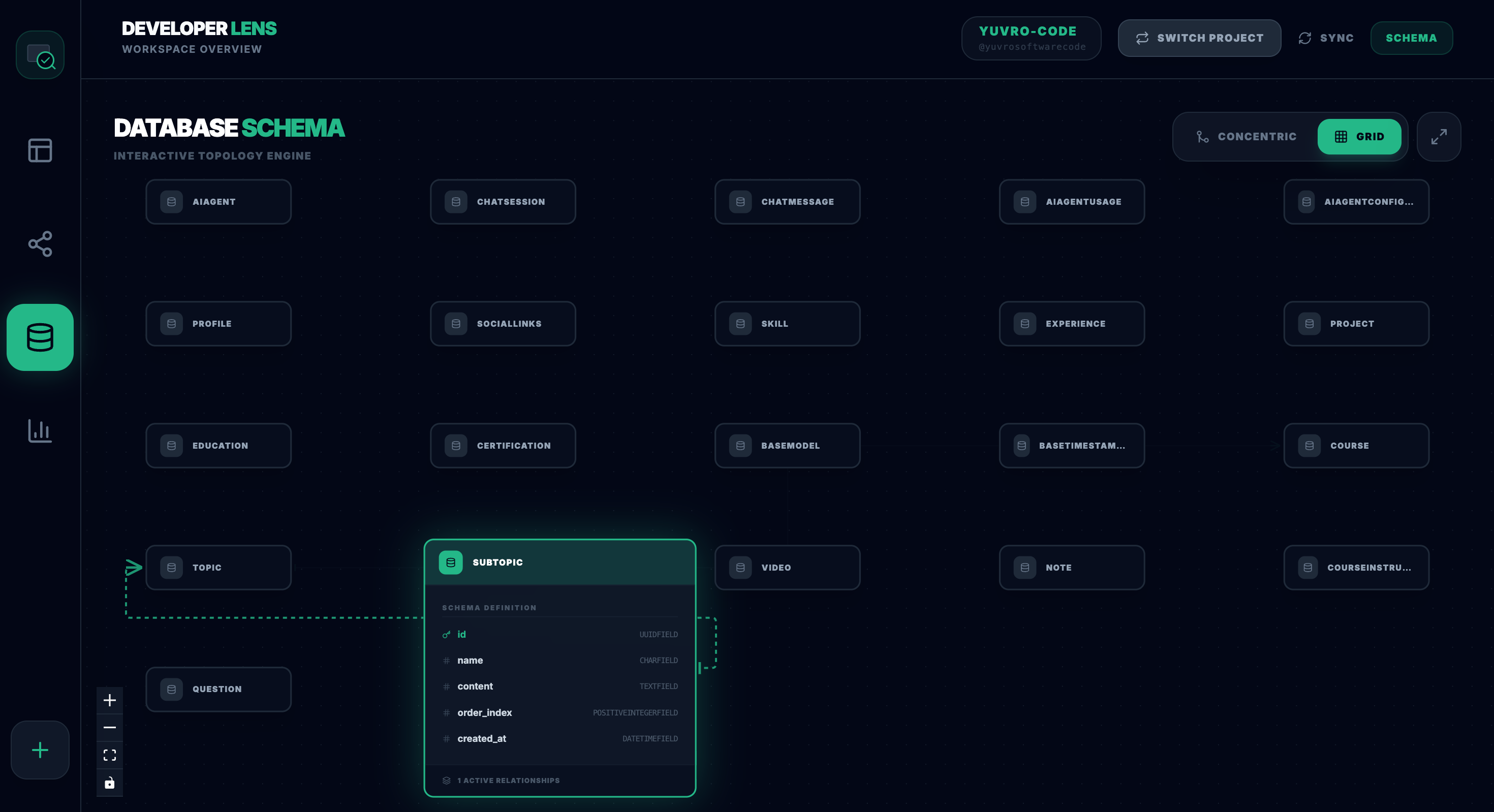
Database Schema Lens
- ReactFlow-powered ER diagrams
- Intelligent layouts:
- Grid
- Concentric
- Automated Crow’s Foot relationship markers
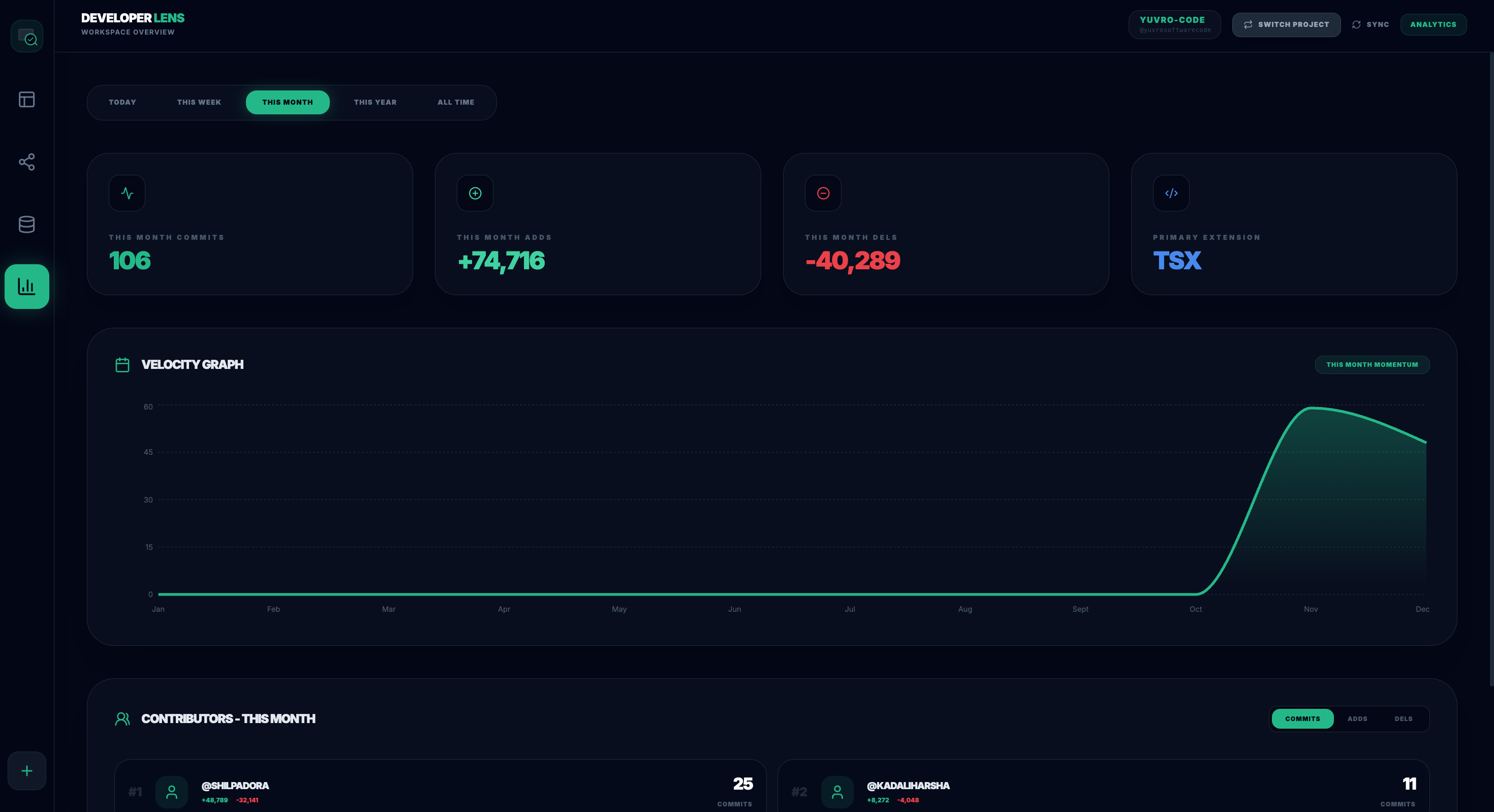
Git Analytics Lens
- Deep insights into:
- Commit velocity
- Contributor impact
- Codebase growth over time
Intelligence Sidecar
- Built-in AI chat
- Lets you “talk” to your codebase to:
- Understand logic flow
- Identify bugs
- Explore architectural decisions
How We Built It
The platform uses a modern, high-performance stack focused on visual excellence and developer experience:
Tools / IDE
- Built using:
- https://aistudio.google.com/
- Antigravity IDE
- Developed using vibe coding
Frontend
- React
- TypeScript
- Vite (for lightning-fast builds)
Topology Engine
- D3.js for hierarchical mind-mapping
- ReactFlow for interactive database modeling
AI Core
- Google Gemini 1.5 Pro
- Integrated via
@google/genaiSDK - Used for:
- Architectural reasoning
- Conversational context
Data Layer
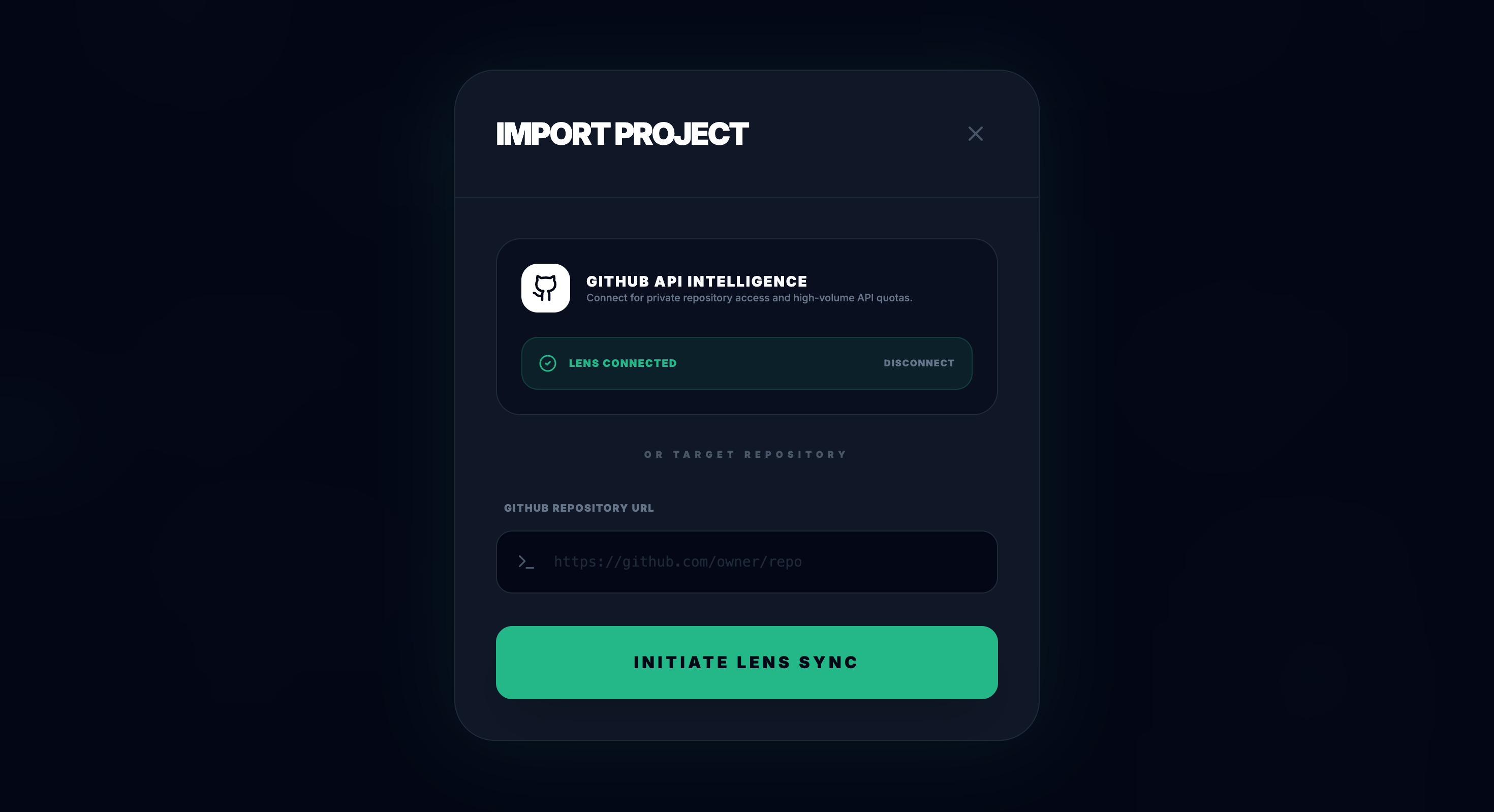
- Direct GitHub API integration
- Real-time repository scanning
- Metadata extraction
Layout Logic
- Dagre engine
- Automated positioning for complex trees and flows
Challenges We Ran Into
Universal Code Parsing
- Extracting meaningful structure across:
- Python
- JavaScript
- TypeScript
- Required building a robust abstract parser
- Needed to distinguish:
- Async methods
- Variables
- Functions
- Classes
Database Relationship Visualization
- Initial approach used manual SVG pathing
- Quickly became unmaintainable
- Migrated mid-project to ReactFlow
- Massive refactor
- Essential for:
- Orthogonal routing
- Clean line-crossing
- Professional-grade diagrams
Accomplishments We’re Proud Of
- Built a language-agnostic parsing system capable of extracting meaningful architectural structure
- Successfully migrated an entire schema visualization system mid-project
- Achieved:
- Clean orthogonal routing
- Scalable ER diagrams
- High-fidelity visual clarity for complex systems
What We Learned
Visual Hierarchy Matters
- Simply rendering nodes is not enough
- Effective visualization requires:
- Interactive highlighting
- Progressive disclosure
- Hiding complexity until requested
AI Grounding Is Critical
- Learned how to feed:
- Directory structures
- Dependency graphs
- Into LLMs to get:
- Accurate architectural explanations
- Actionable insights instead of hallucinations
What’s Next for Developer Lens
Backend Persistence Engine
- Move beyond
localStorage - Node.js / Go + PostgreSQL
- Persistent storage for:
- Project analytics
- AI insights
- Schema history
- Move beyond
Team Collaboration
- Shared workspaces
- Real-time annotations on:
- Mind Maps
- Database Schemas
Multi-Cloud Support
- GitHub (current)
- GitLab
- Bitbucket
- Local directory scanning
Direct-to-Editor Integration
- Click a node → open exact line in:
- VS Code
- JetBrains IDEs
PR Intelligence
- A dedicated Review Lens
- Visualizes:
- Pull Request impact
- Changes to overall system topology


Log in or sign up for Devpost to join the conversation.