Inspiration
Modern engineering teams rely on multiple tools to monitor systems, investigate incidents, communicate with teammates, and resolve production issues. During critical outages, valuable time is often lost switching between dashboards, chat applications, documentation, and monitoring platforms.
We wanted to create a unified environment where teams can collaborate, investigate incidents, and leverage AI agents to accelerate troubleshooting and decision-making.
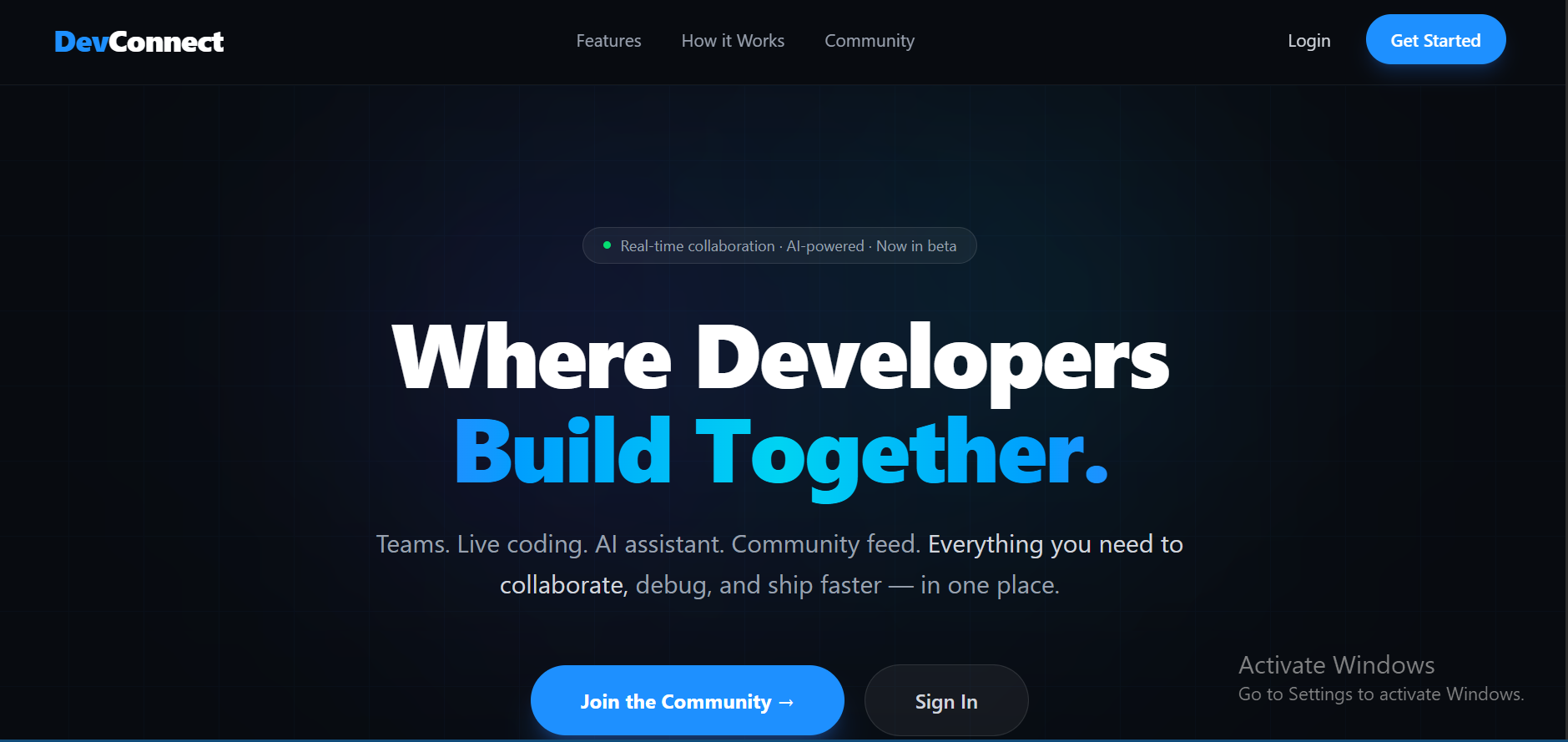
This inspired us to build DevConnect, an AI-powered engineering operations workspace that combines team collaboration, incident management, and Splunk-powered intelligence into a single platform.
What it does
DevConnect helps engineering, DevOps, and security teams respond to incidents faster and more effectively.
Key features include:
Real-time incident response workspaces Team chat and collaboration channels Voice and video communication for war rooms AI-powered incident investigation assistant Splunk log and event analysis integration Automated root cause analysis suggestions AI-generated incident summaries Actionable recommendations based on operational data Shared knowledge and post-incident documentation
When an incident occurs, teams can collaborate in a dedicated workspace while AI agents analyze Splunk data, surface insights, and assist with troubleshooting.
How we built it
We built DevConnect using a modern full-stack architecture focused on real-time collaboration and operational intelligence.
Technology stack:
React for the frontend Node.js backend services Firebase for authentication and data storage WebRTC for voice and video communication Splunk APIs and operational data integration Gemini-powered AI agents for investigation and analysis Real-time messaging infrastructure Role-based access control for secure collaboration
The platform connects operational data from Splunk with AI-driven workflows and team collaboration tools.
Challenges we ran into
One of the biggest challenges was designing an AI workflow that could analyze operational data and provide useful recommendations without overwhelming users.
We also faced challenges with:
Structuring incident investigation workflows Managing real-time collaboration between multiple participants Handling large volumes of operational data Designing AI responses that remain accurate and actionable Creating a seamless integration between Splunk insights and team communication
Balancing automation with human decision-making was a critical design consideration throughout development.
Accomplishments that we're proud of
Built an AI-powered incident response workspace Integrated operational intelligence into team collaboration workflows Created a system that reduces context switching during incidents Designed AI agents that assist with investigation and analysis Combined communication, observability, and troubleshooting into one platform
What we learned
Effective incident response depends heavily on collaboration and communication AI can significantly reduce investigation time when paired with operational data Real-time systems require careful architecture and scalability planning Engineers benefit from receiving insights directly within their workflow Observability becomes more valuable when combined with actionable intelligence
What's next for DevConnect
Future improvements include:
Multi-agent investigation workflows Automated incident triage Predictive anomaly detection AI-generated remediation plans Automated runbook execution Advanced observability dashboards Security incident response workflows Enterprise-scale deployment and integrations
Our vision is to build an intelligent engineering operations platform where teams and AI agents work together to detect, investigate, and resolve incidents faster than ever before.
Built With
- api
- firebase
- gemini
- nextjs
- tailwindcss
- typescript


Log in or sign up for Devpost to join the conversation.