Inspiration
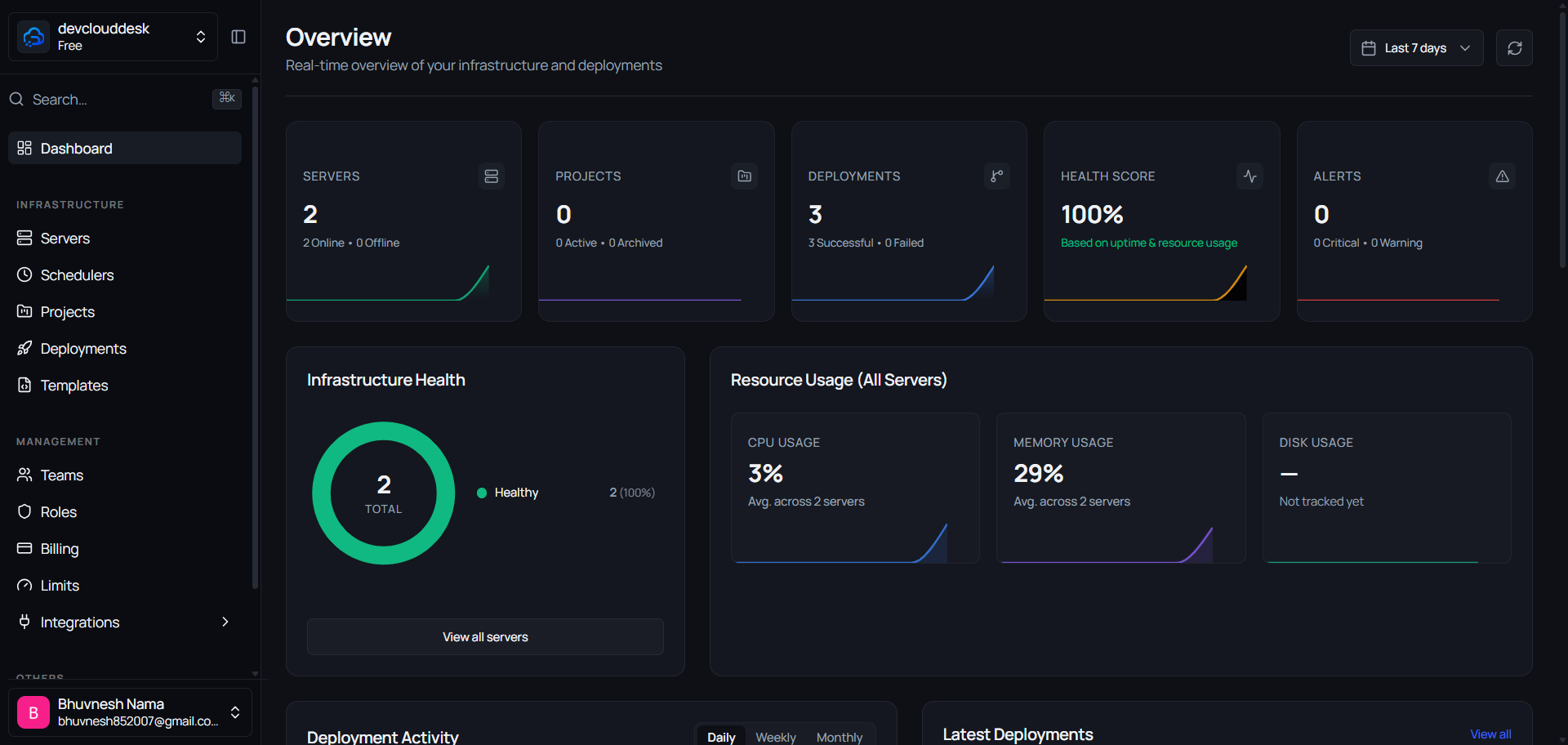
Managing servers often means switching between SSH terminals, file managers, monitoring tools, cron jobs, Docker, service managers, and security tools. I wanted to bring all of these tasks into one place and make server management much simpler.
The idea behind DevCloudDesk is to give developers one control center where they can manage their infrastructure without constantly switching between different tools.
What it does
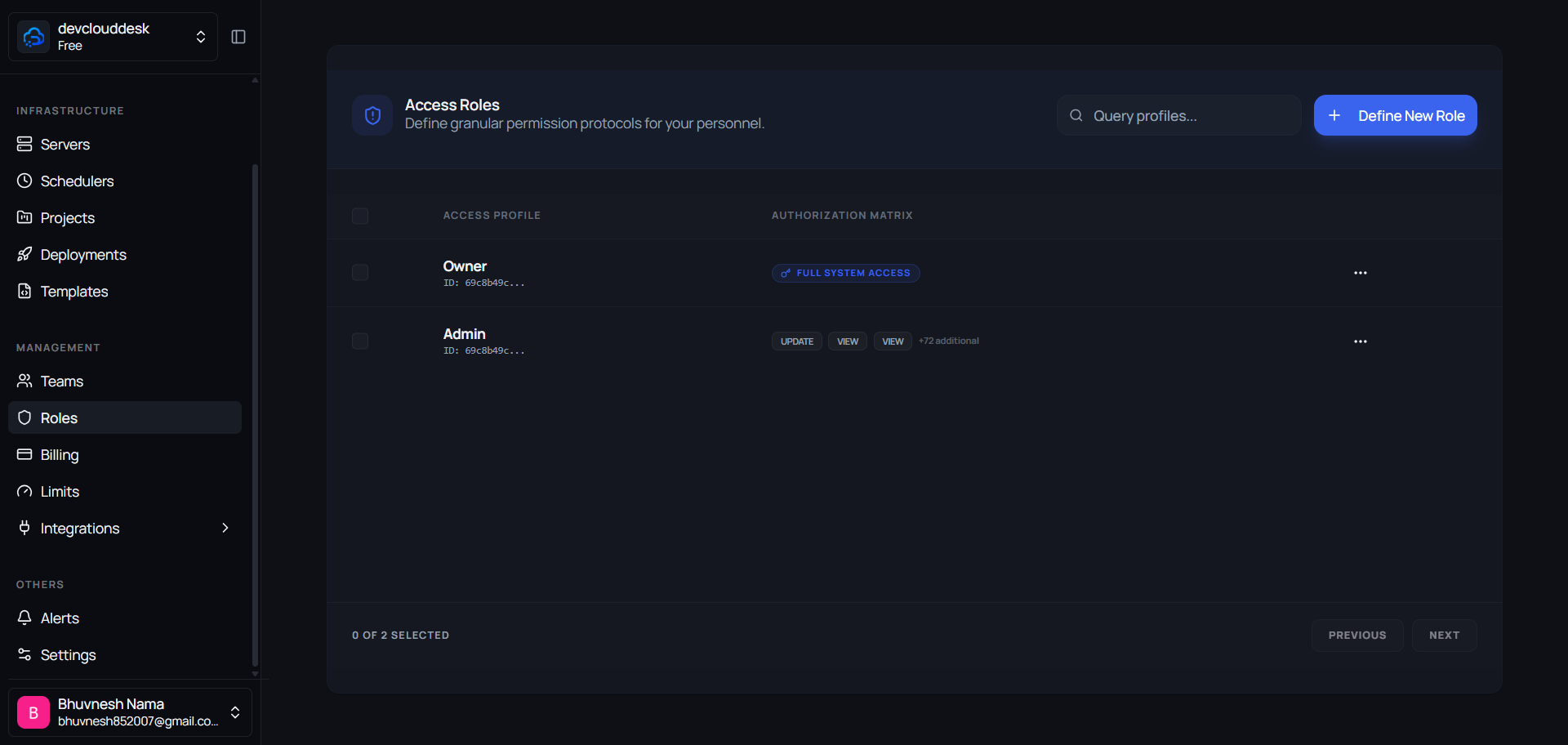
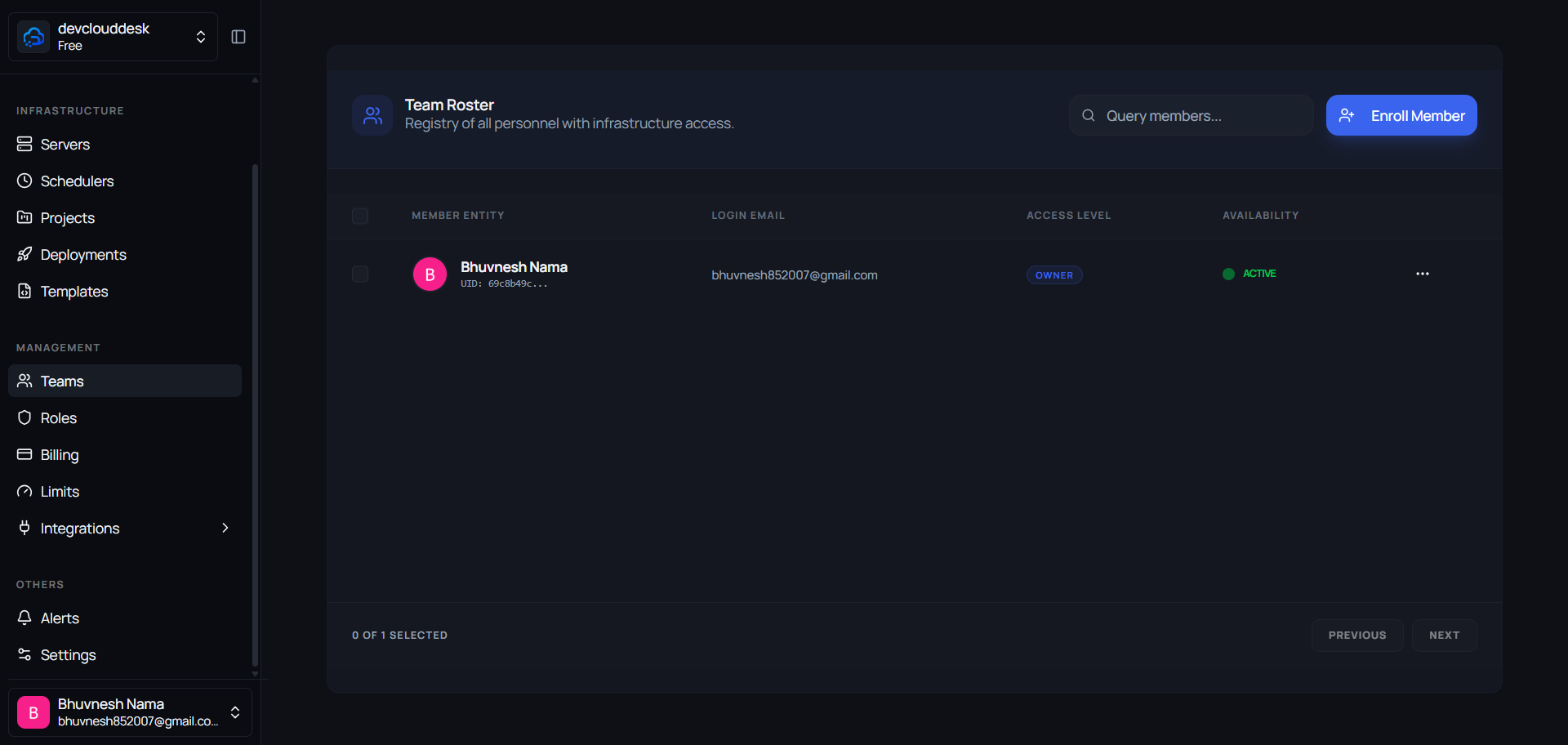
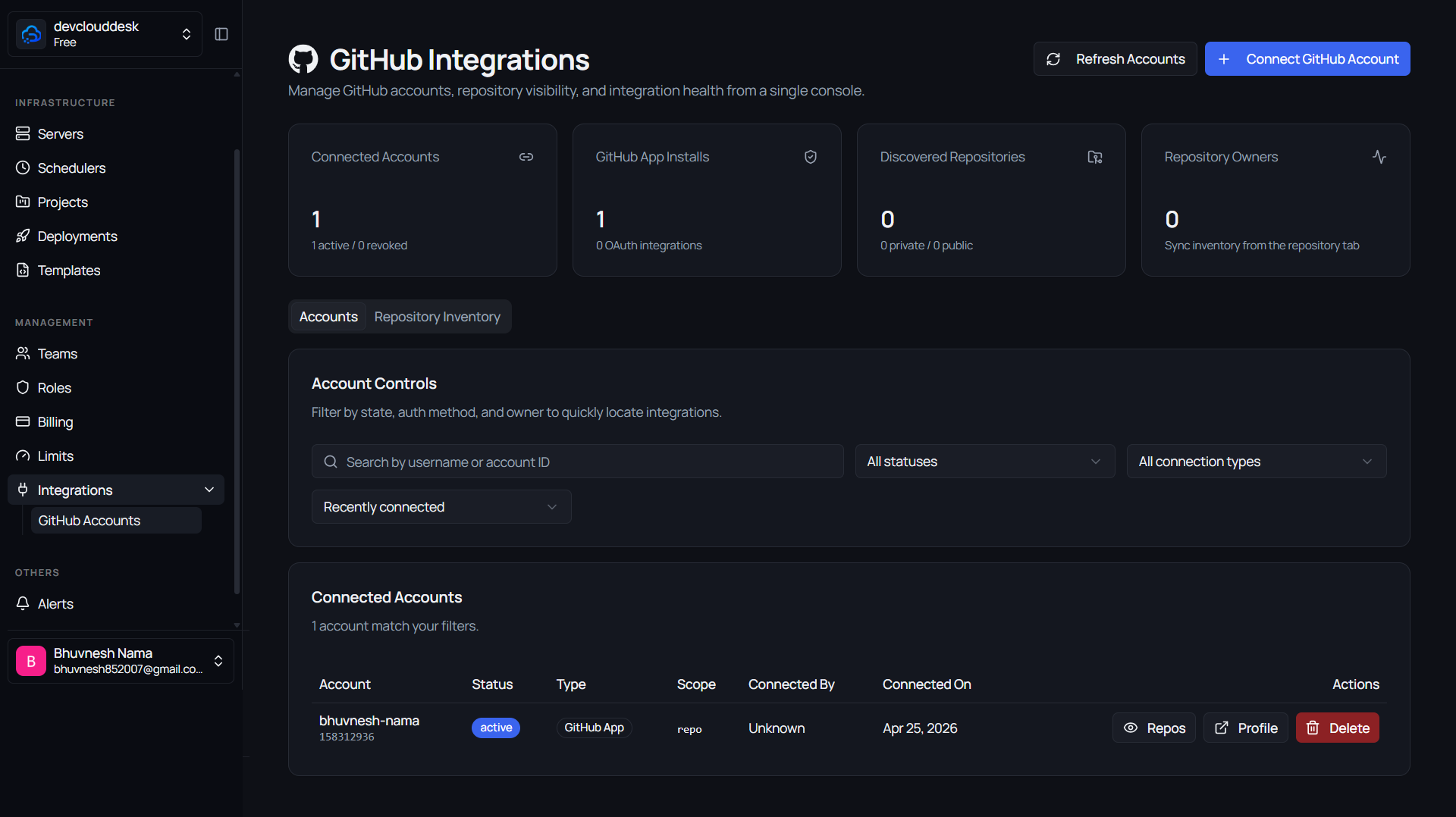
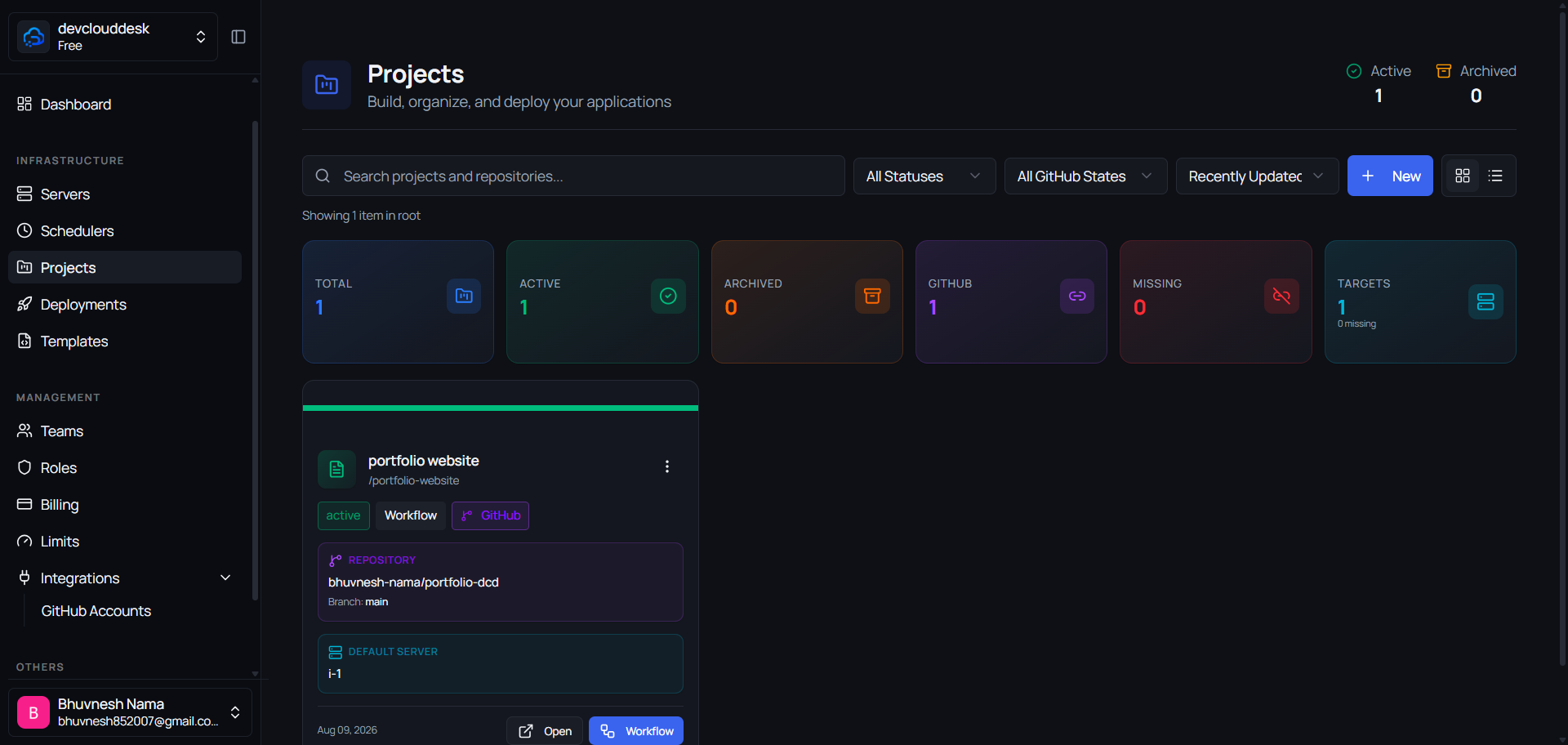
DevCloudDesk is an all-in-one server management platform that provides:
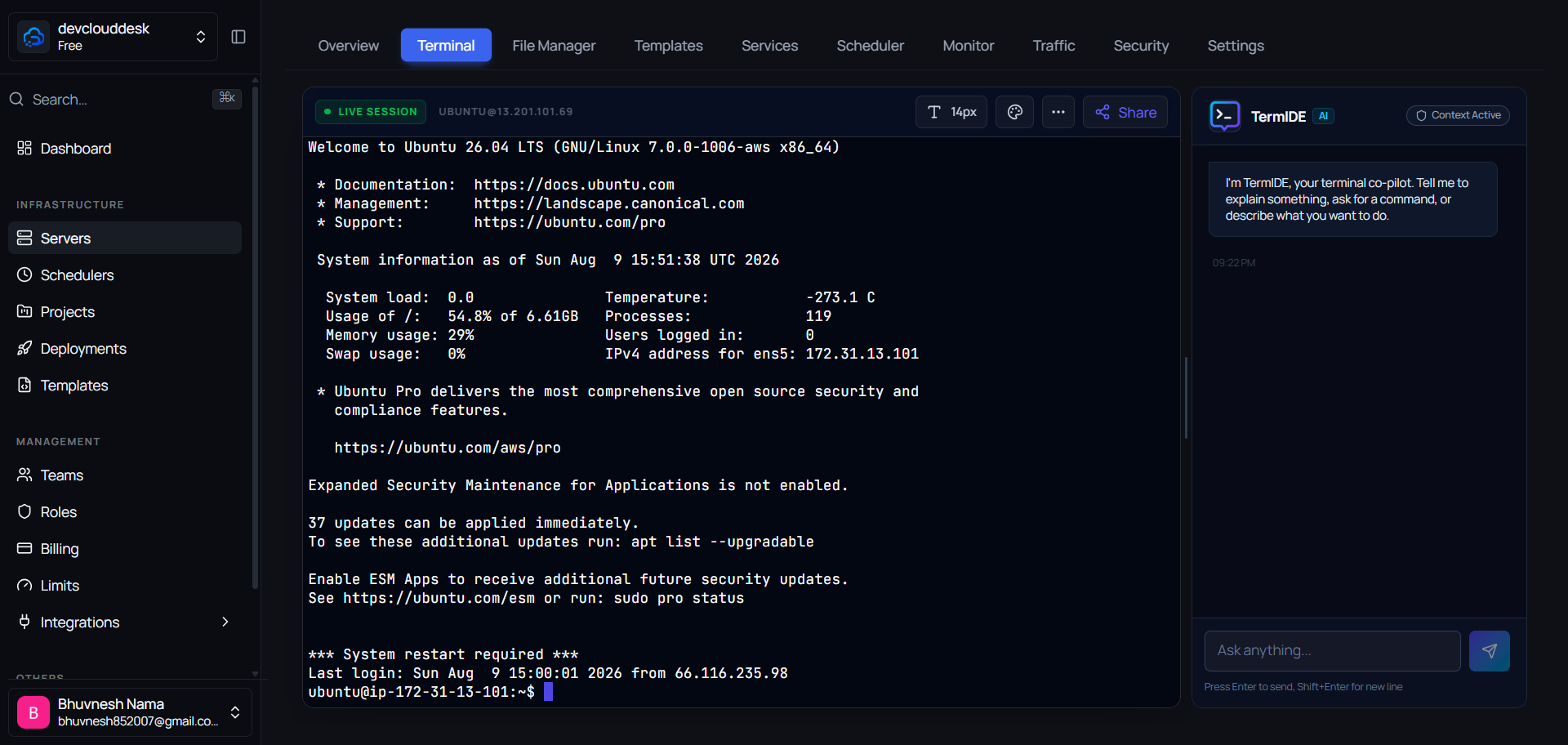
- AI-powered terminal for running and understanding server commands
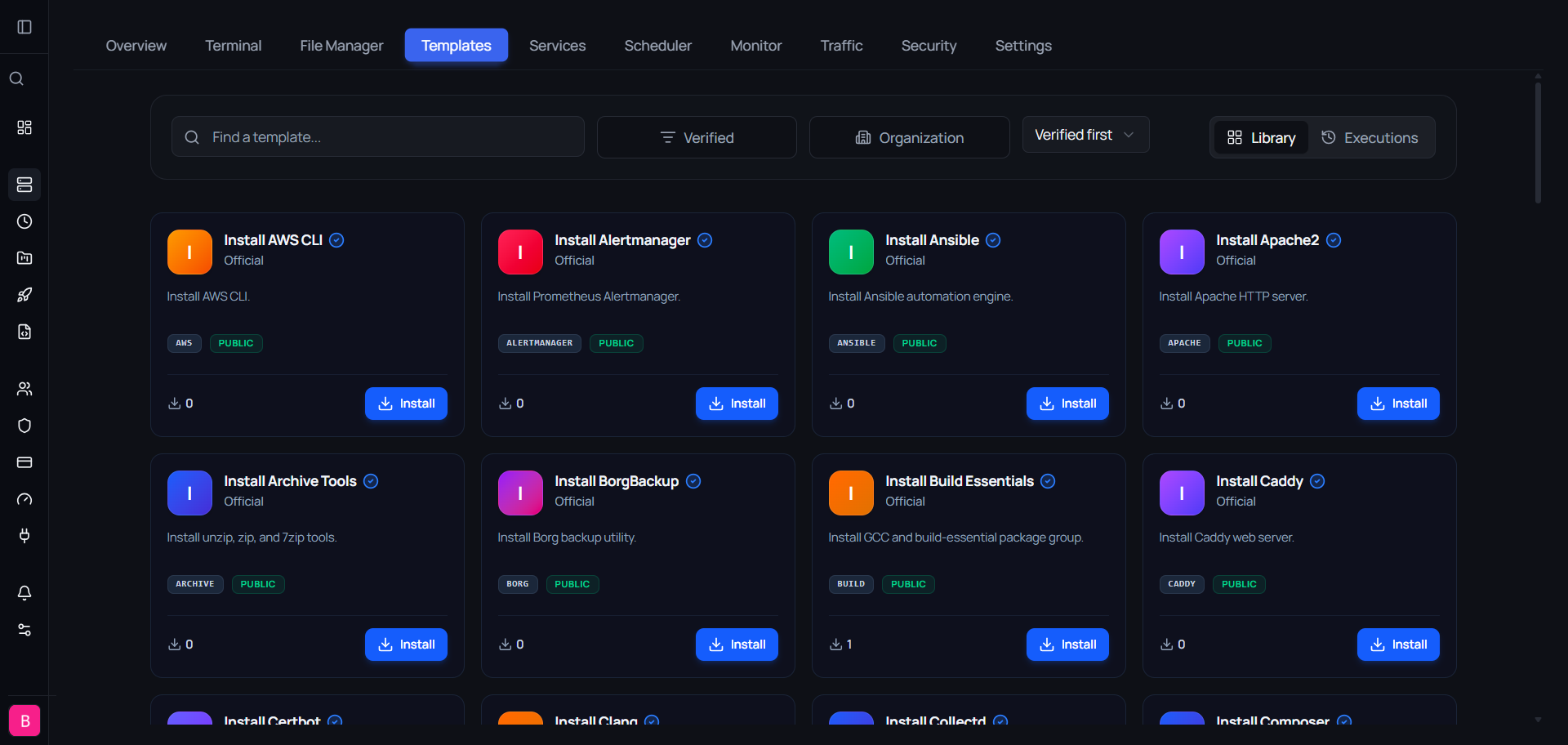
- One-click executions for common server operations
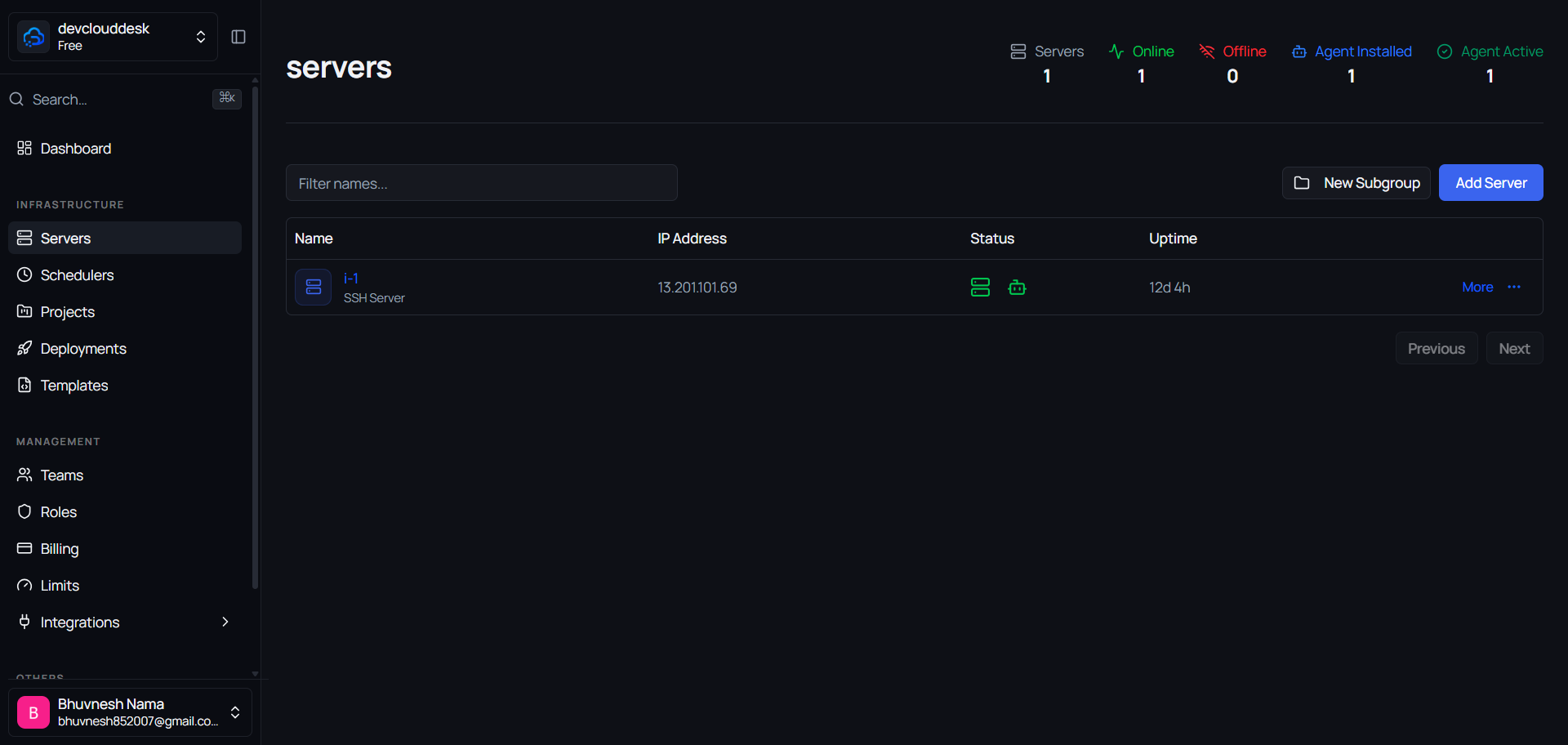
- Server deployment and application management
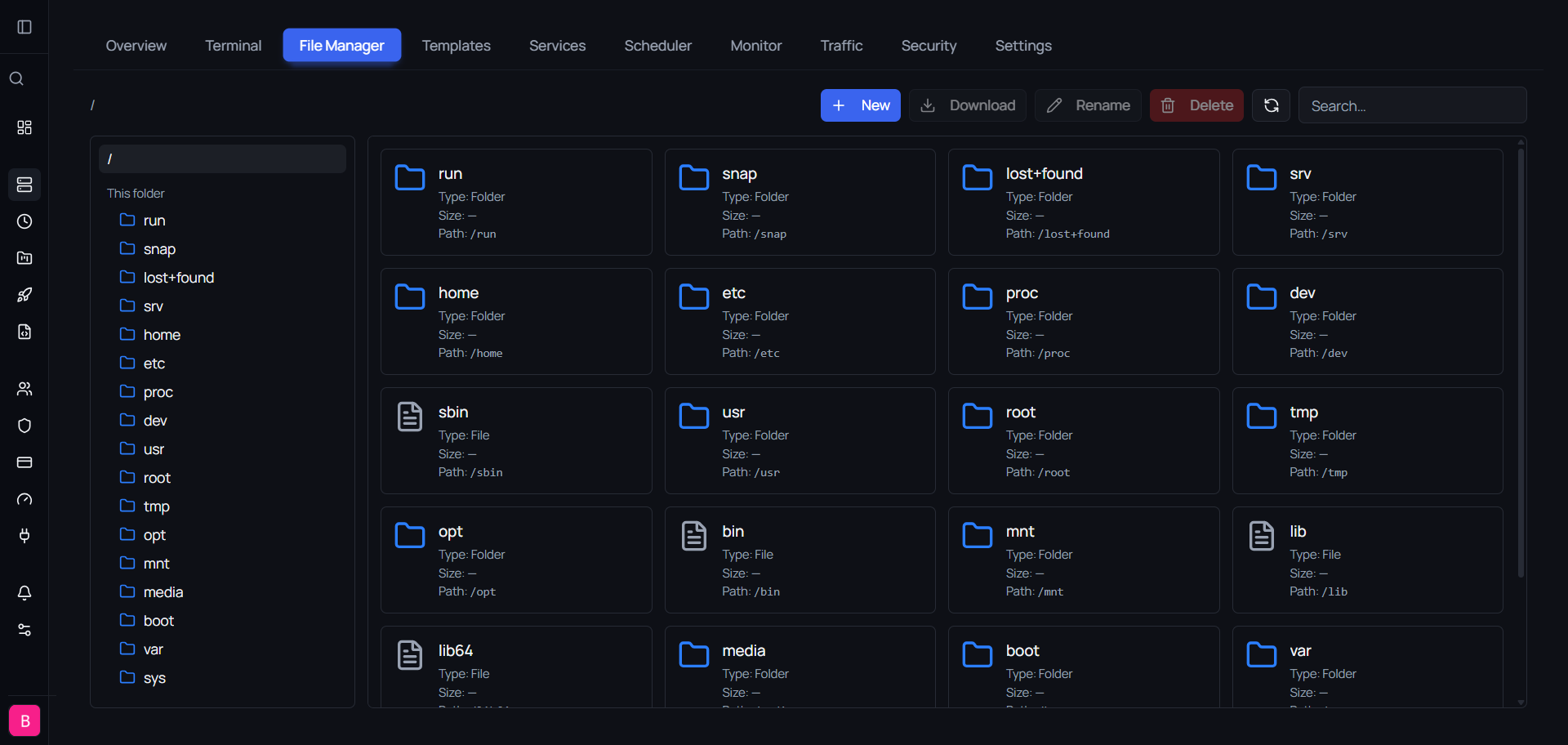
- File manager for browsing and managing server files
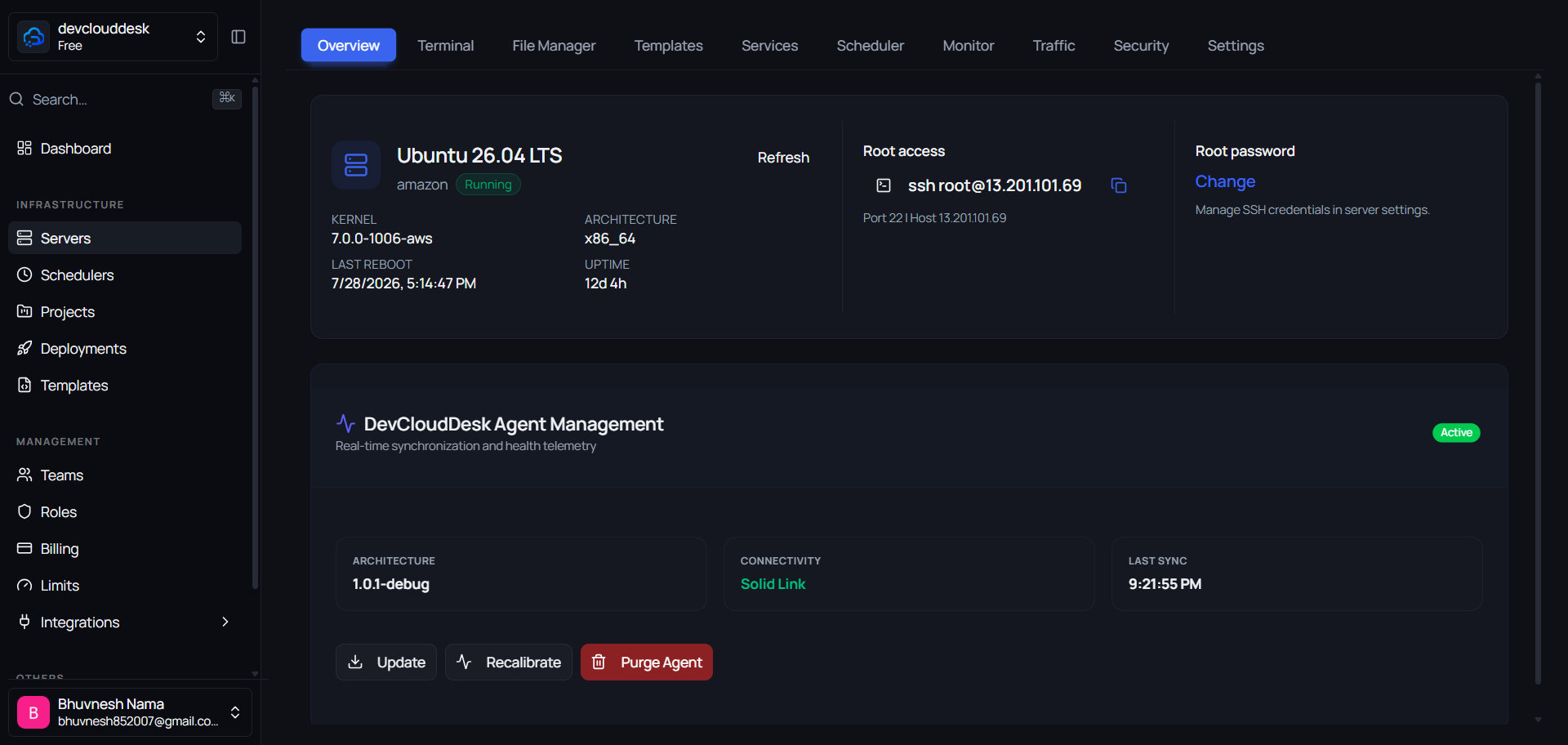
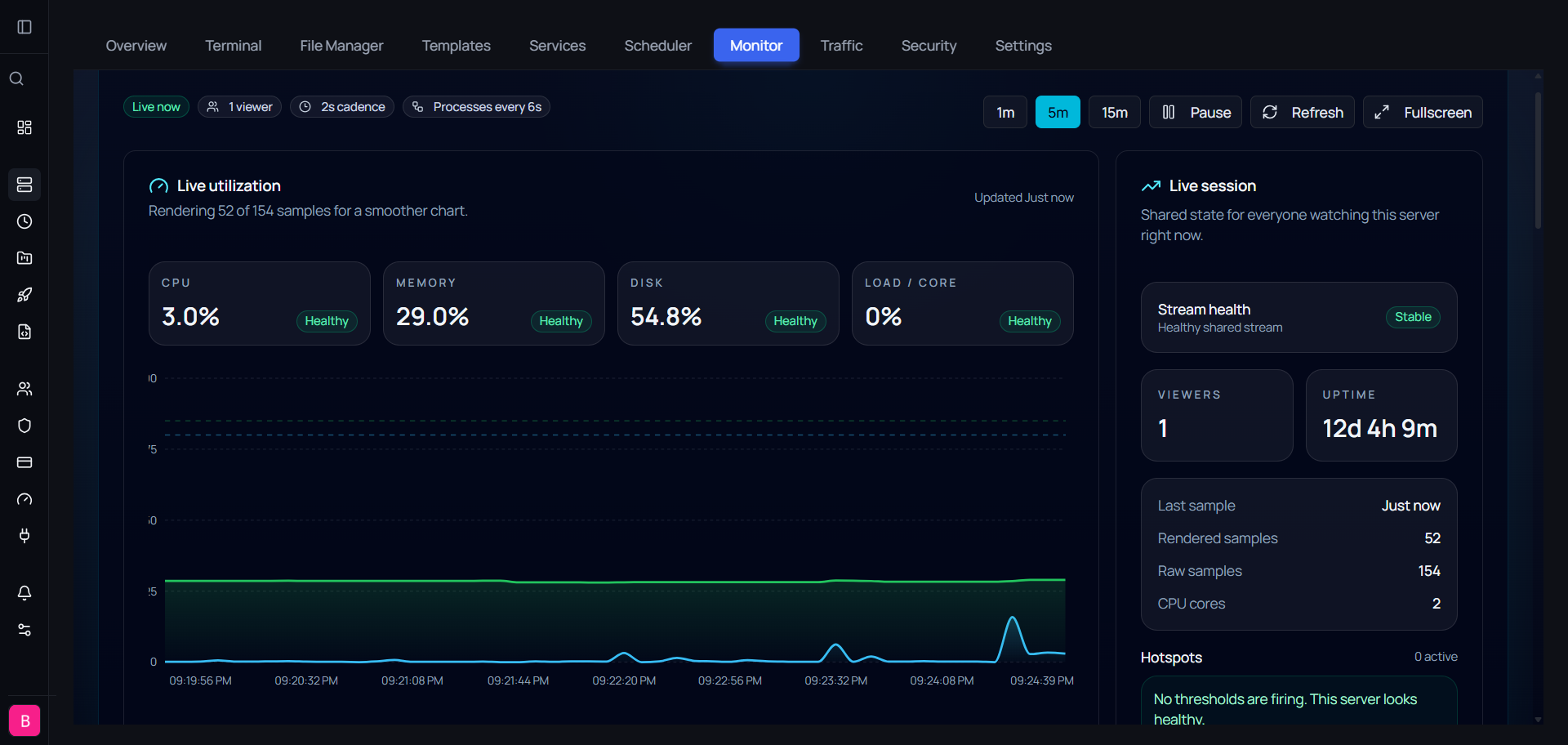
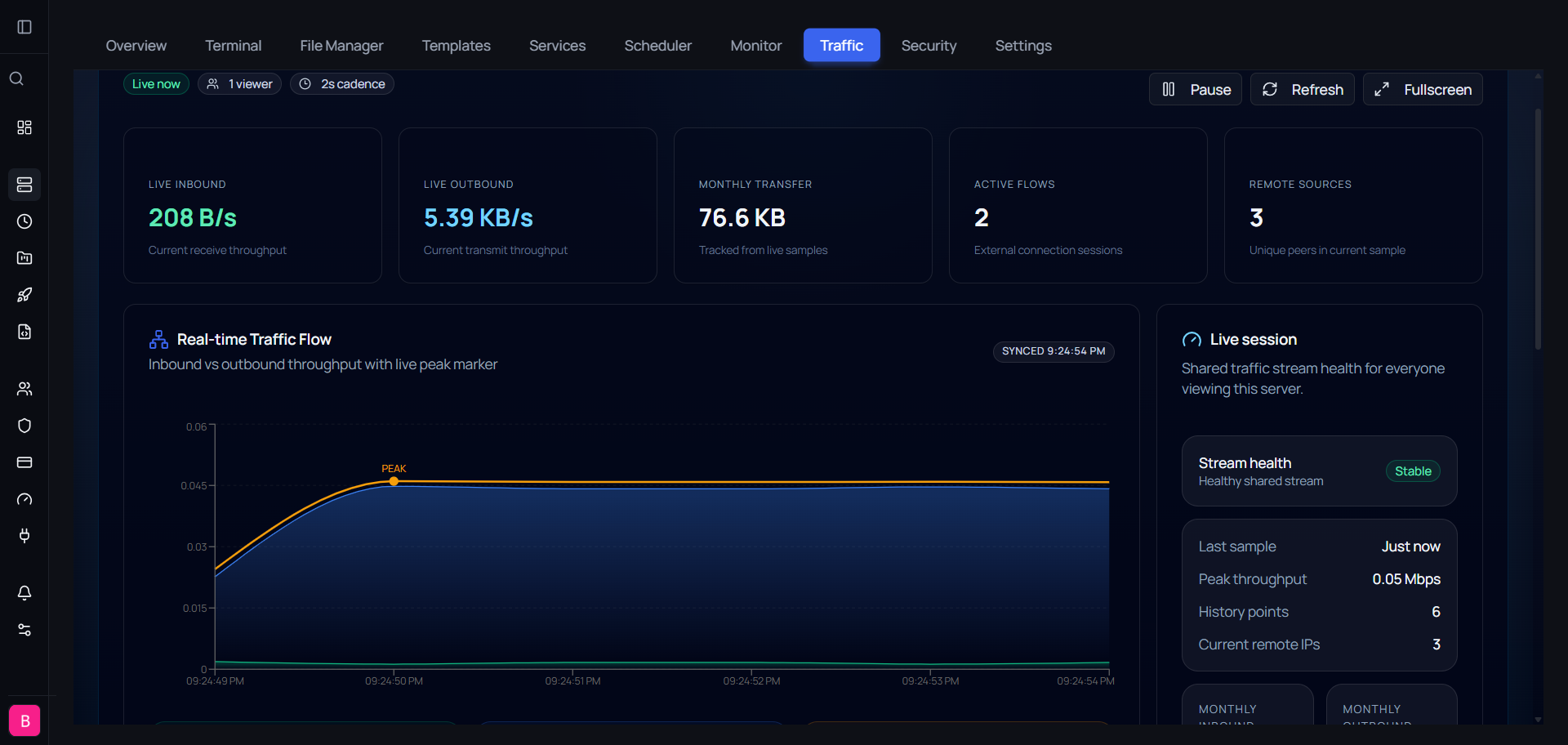
- Real-time server monitoring
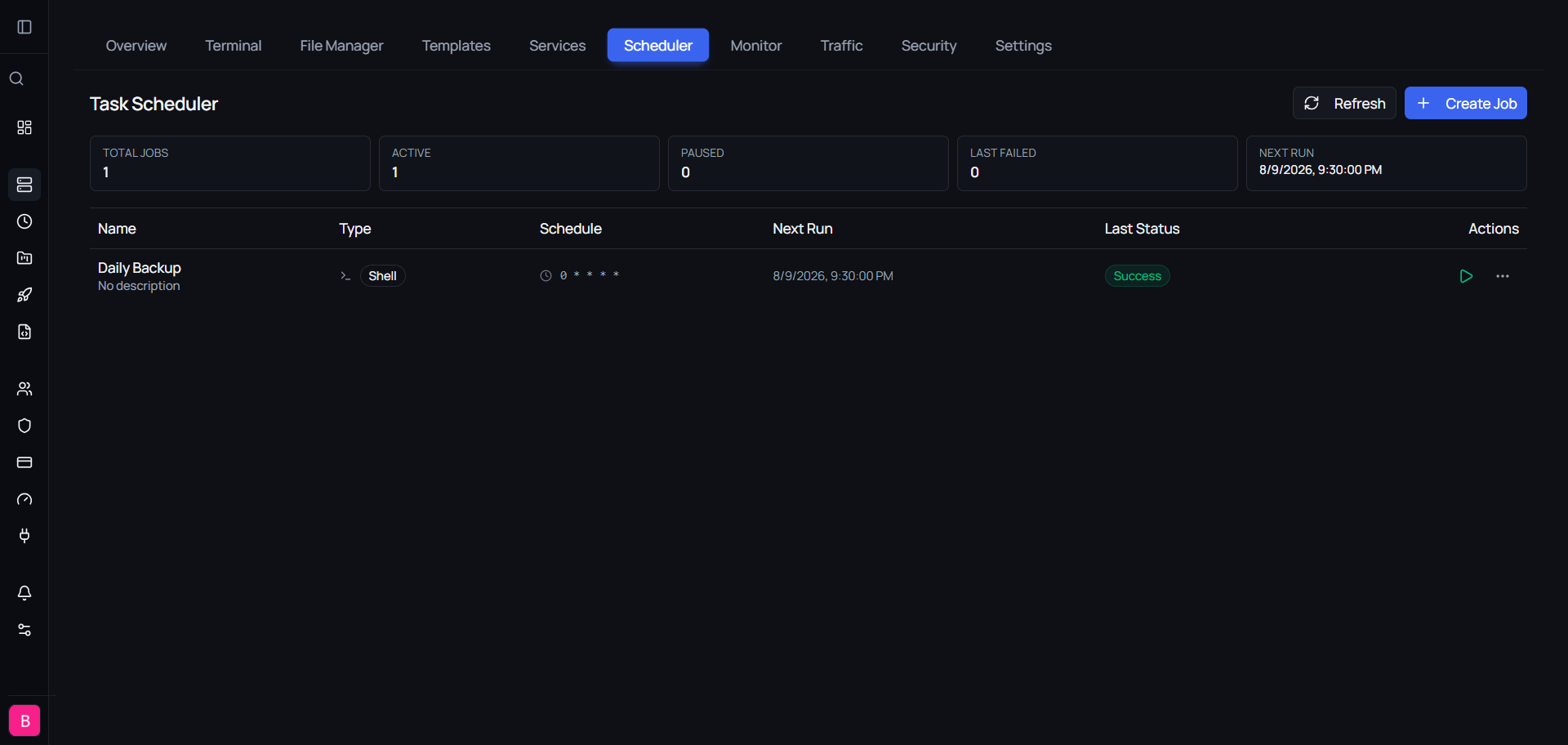
- Cron job and scheduled task management
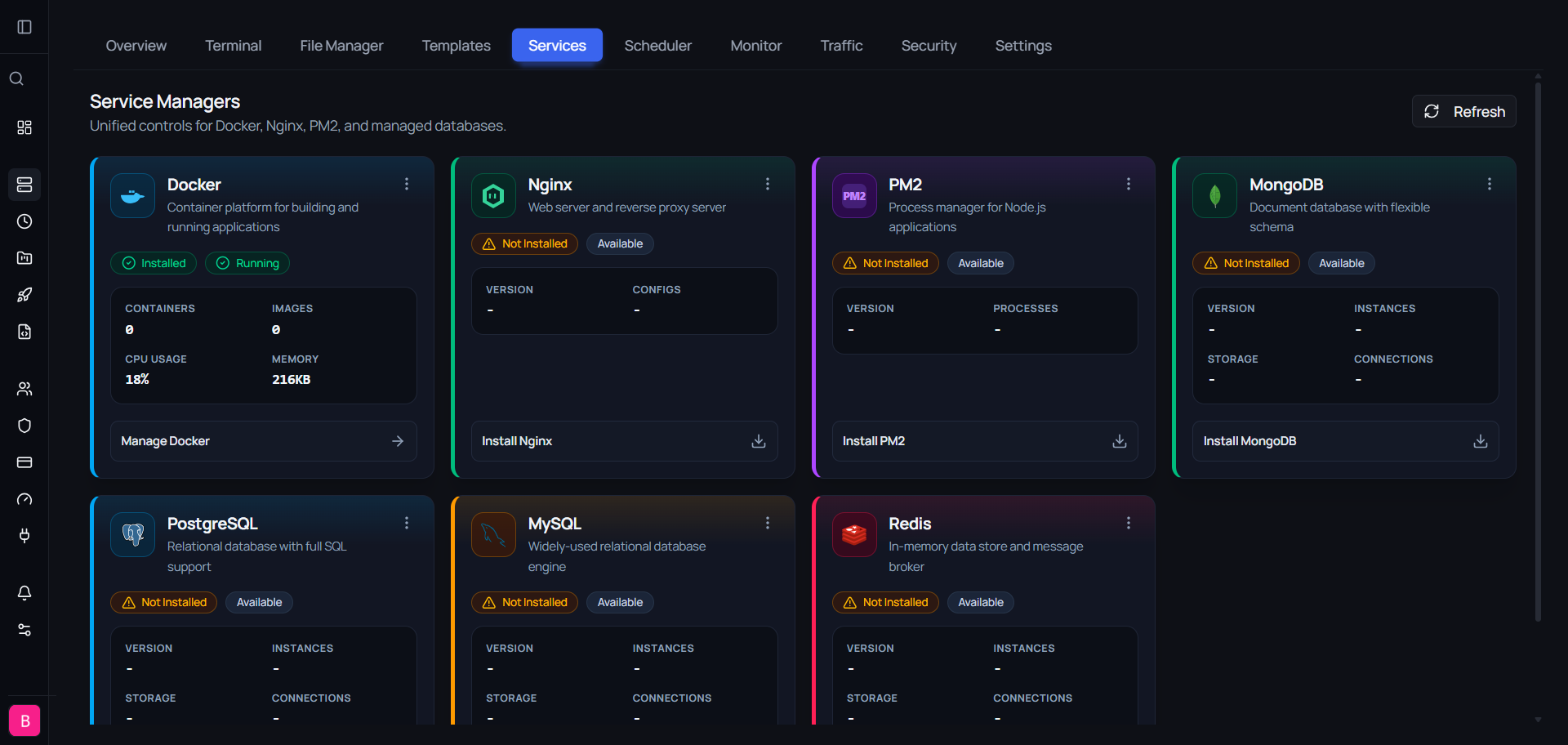
- Service management for starting, stopping, and restarting services
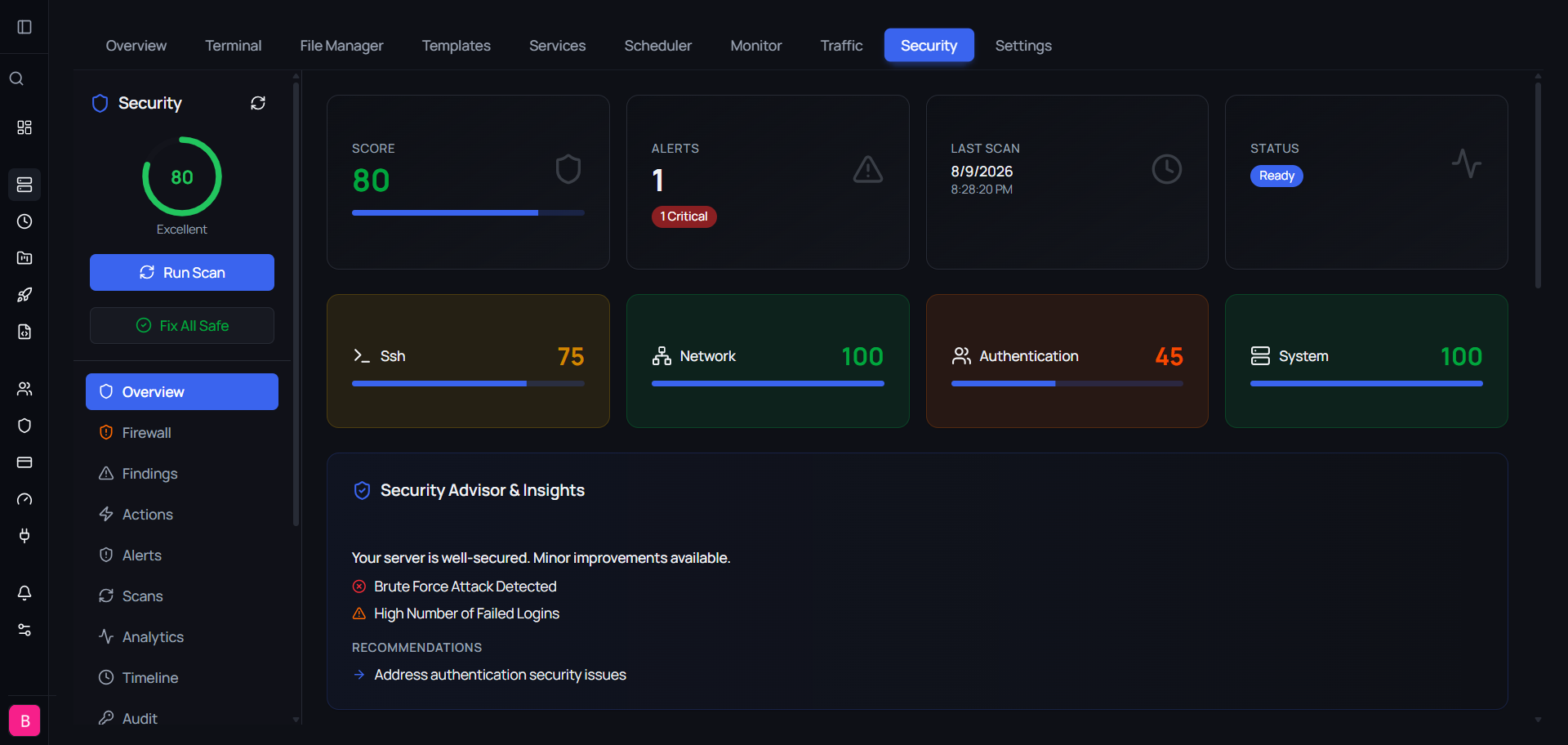
- Server security checks and security actions
- Docker and container management
- Server groups for organizing infrastructure
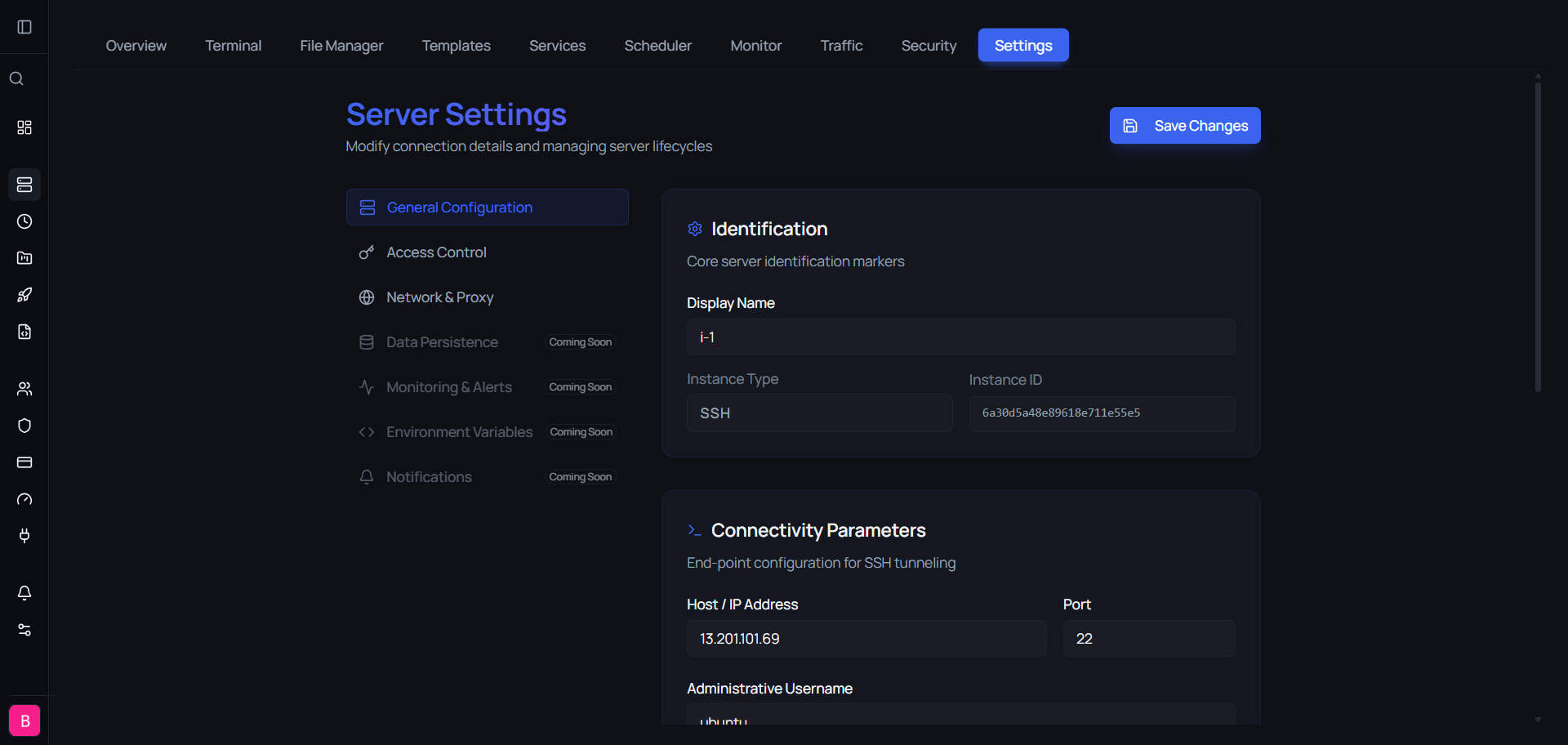
- SSH-based server access
- Templates for reusable scripts and configurations
The goal is to make everyday infrastructure tasks faster and easier from a single dashboard.
How I built it
I built DevCloudDesk as a full-stack application with a modern web interface and a server-side architecture designed to communicate securely with remote Linux servers.
The frontend handles the dashboard, terminal, file manager, monitoring, deployments, and other management interfaces. The backend manages authentication, server connections, commands, automation, monitoring data, and communication with connected servers.
I also implemented real-time communication for features such as the terminal and server monitoring, allowing actions and server information to be reflected in the dashboard without constantly refreshing the page.
Challenges I ran into
One of the biggest challenges was building reliable communication between the dashboard and remote servers. Commands need to execute correctly while their output is streamed back to the user in real time.
Another challenge was handling server operations safely. Features such as restarting services, changing configurations, and applying security actions can directly affect a server, so they need to be handled carefully.
Building the AI terminal was another challenge. I wanted it to be useful for developers while still keeping the user in control of what actually gets executed on the server.
Accomplishments that I'm proud of
I'm proud that DevCloudDesk brings many separate infrastructure tools into one platform instead of requiring developers to use a different tool for every task.
I'm especially proud of combining an AI-powered terminal with traditional server management features such as monitoring, deployments, cron jobs, service management, file management, and security.
I also built the project as a real working platform rather than just a prototype, with the architecture designed to support multiple servers and different infrastructure workflows.
What I learned
Building DevCloudDesk taught me a lot about server infrastructure, SSH, real-time communication, process management, Linux services, monitoring, security, and deployment workflows.
I also learned that infrastructure software requires a different level of reliability than a normal application because a small mistake can directly affect a production server.
Working on the AI terminal also helped me understand how AI can be integrated into developer tools in a practical way instead of simply adding a chatbot to an application.
What's next for DevCloudDesk
The next step is to make DevCloudDesk more powerful for teams managing larger infrastructure.
I plan to add more advanced deployment workflows, better AI-assisted troubleshooting, infrastructure automation, stronger security monitoring, improved Docker and container management, team collaboration, and more integrations with popular cloud and developer tools.
The long-term goal is to make DevCloudDesk a complete control center for managing modern server infrastructure.


Log in or sign up for Devpost to join the conversation.