-
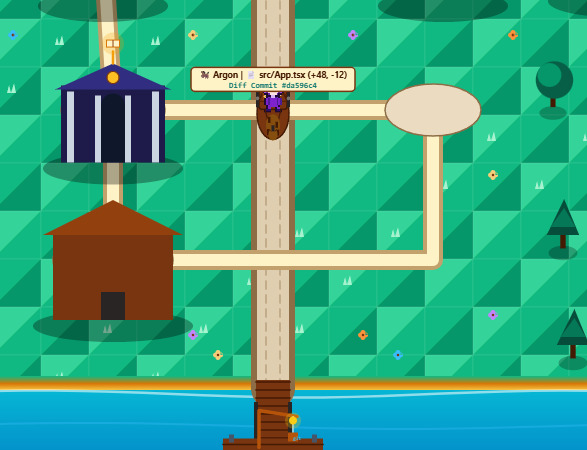
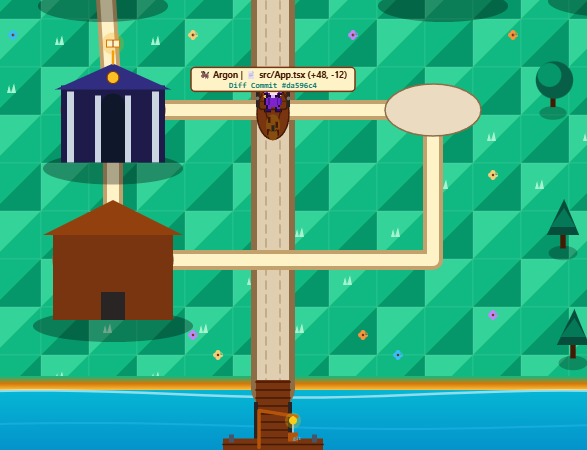
Agent delivering code to the Git Dock
-
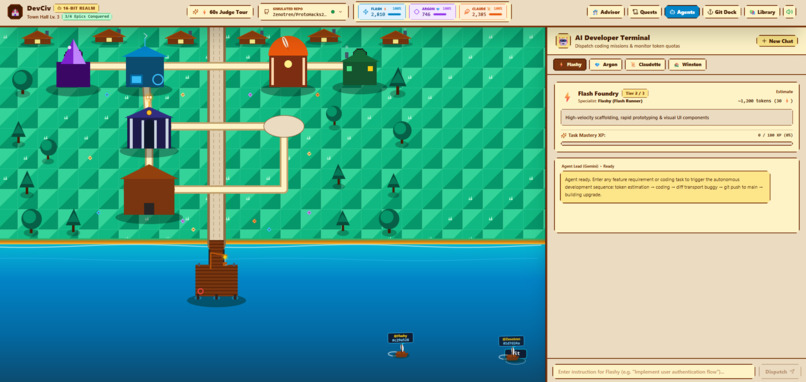
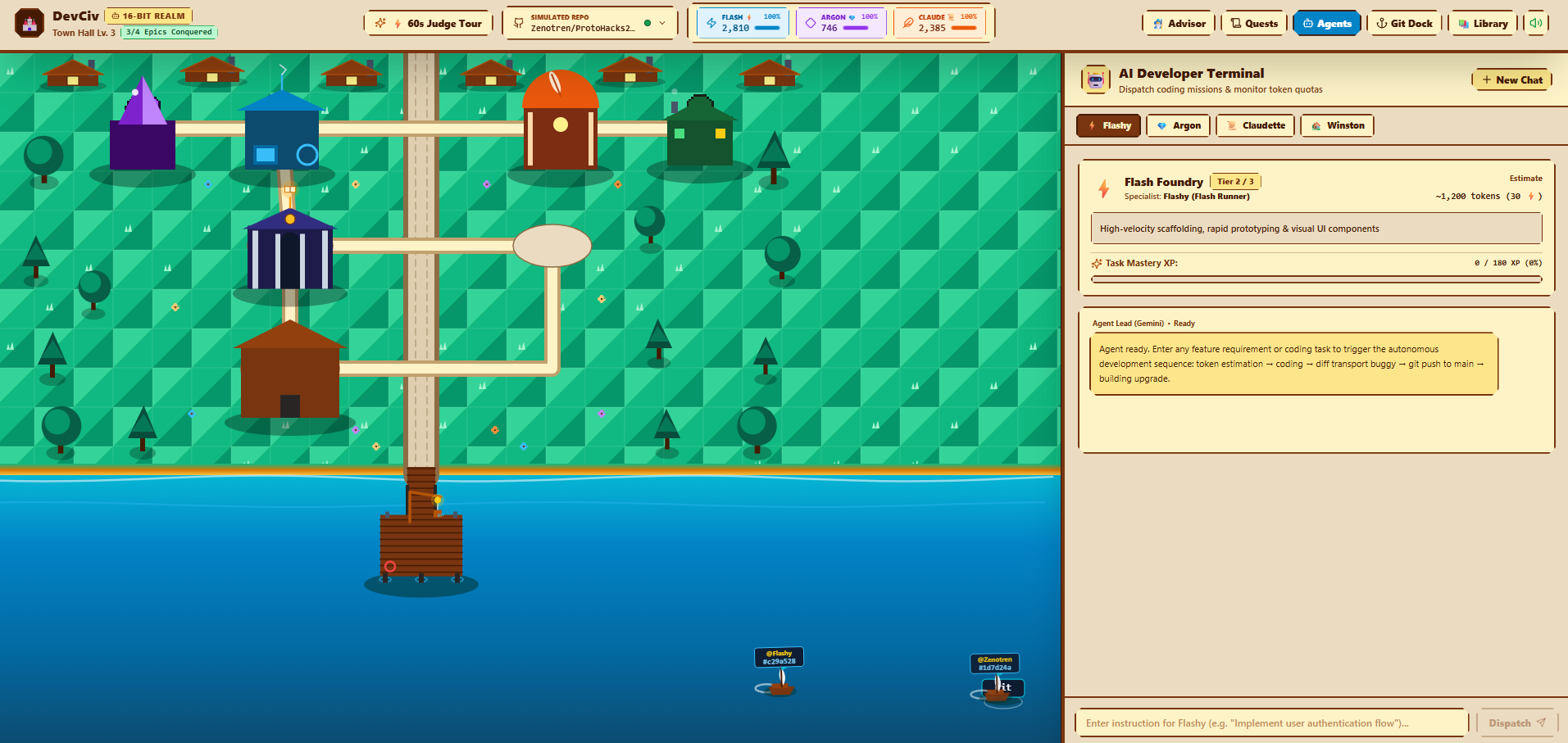
The full screen UI
-
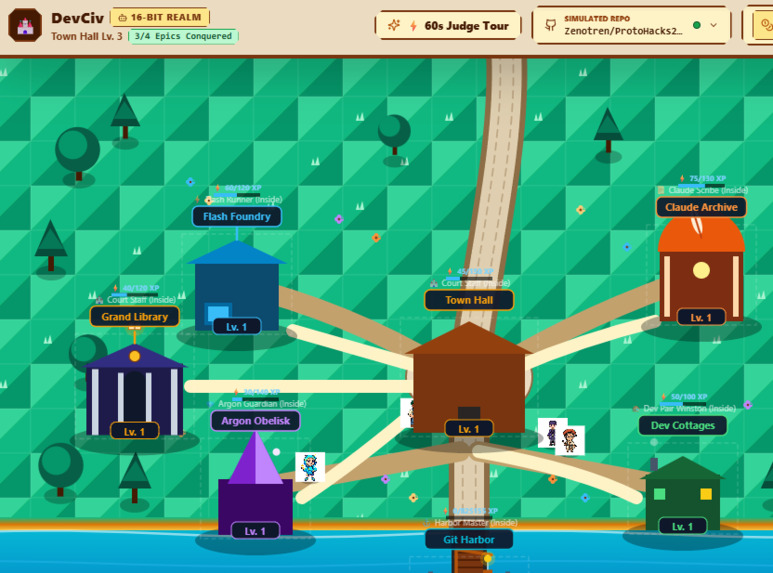
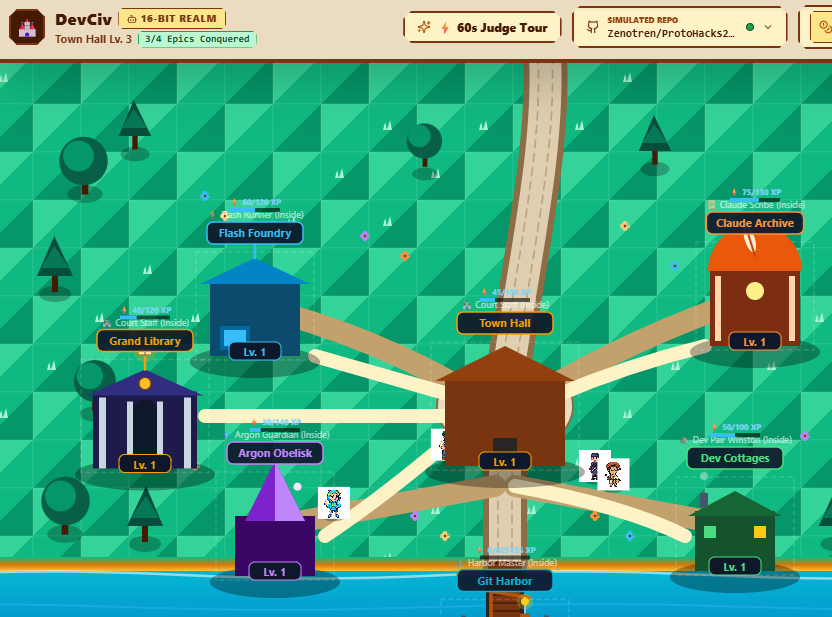
Older format option for city
-
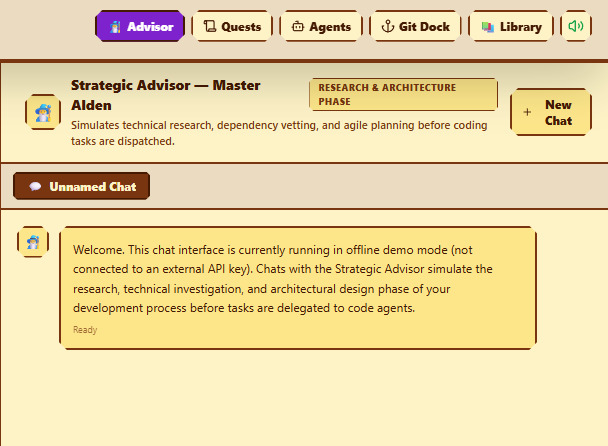
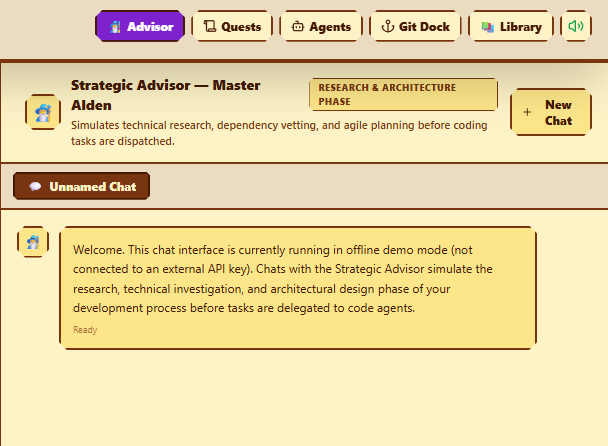
Research advisor agent (For non code tasks)
-
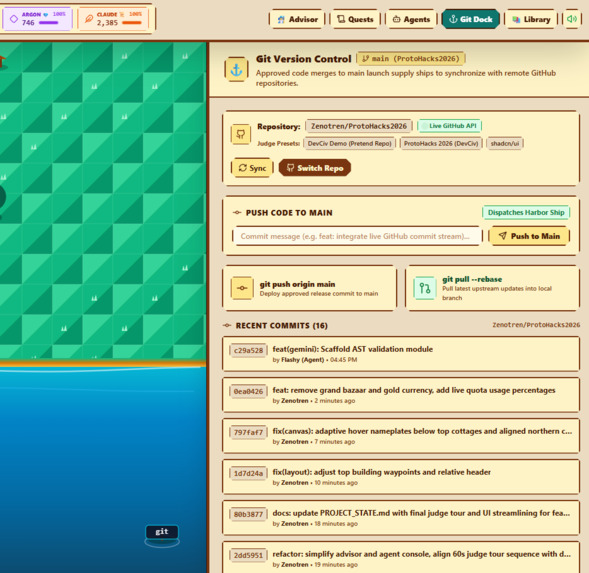
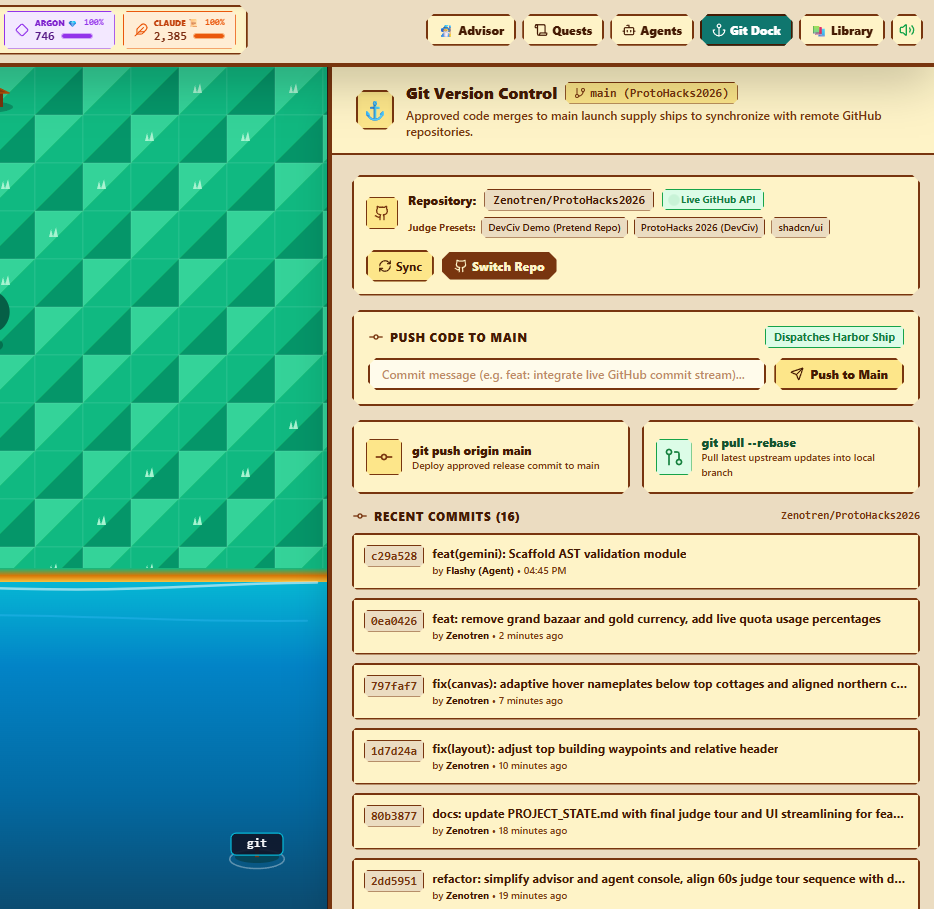
Git dock command center
-
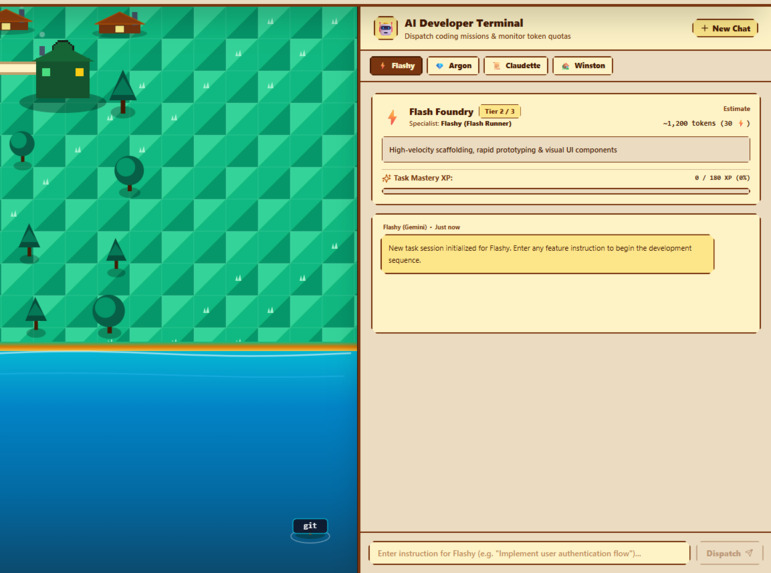
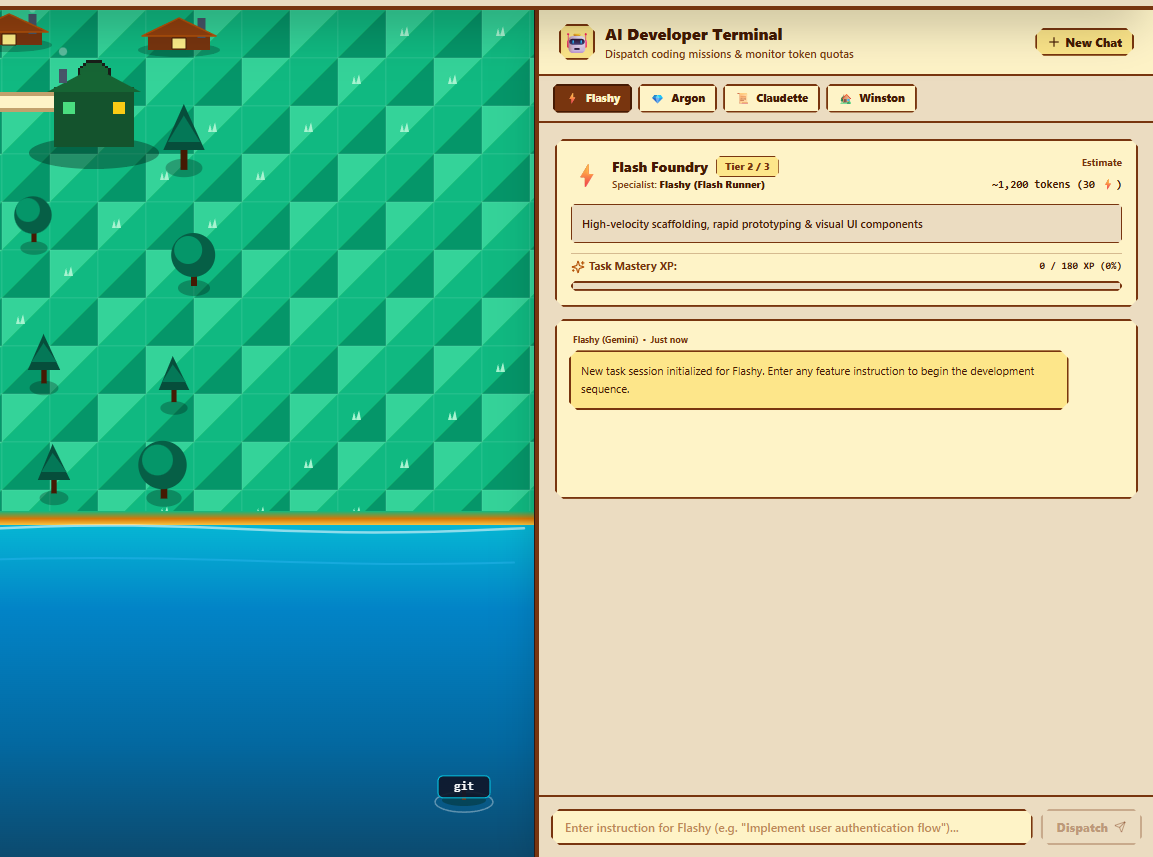
Agent command center
-
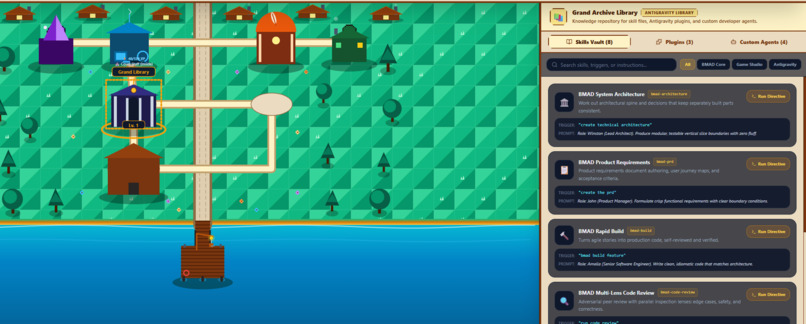
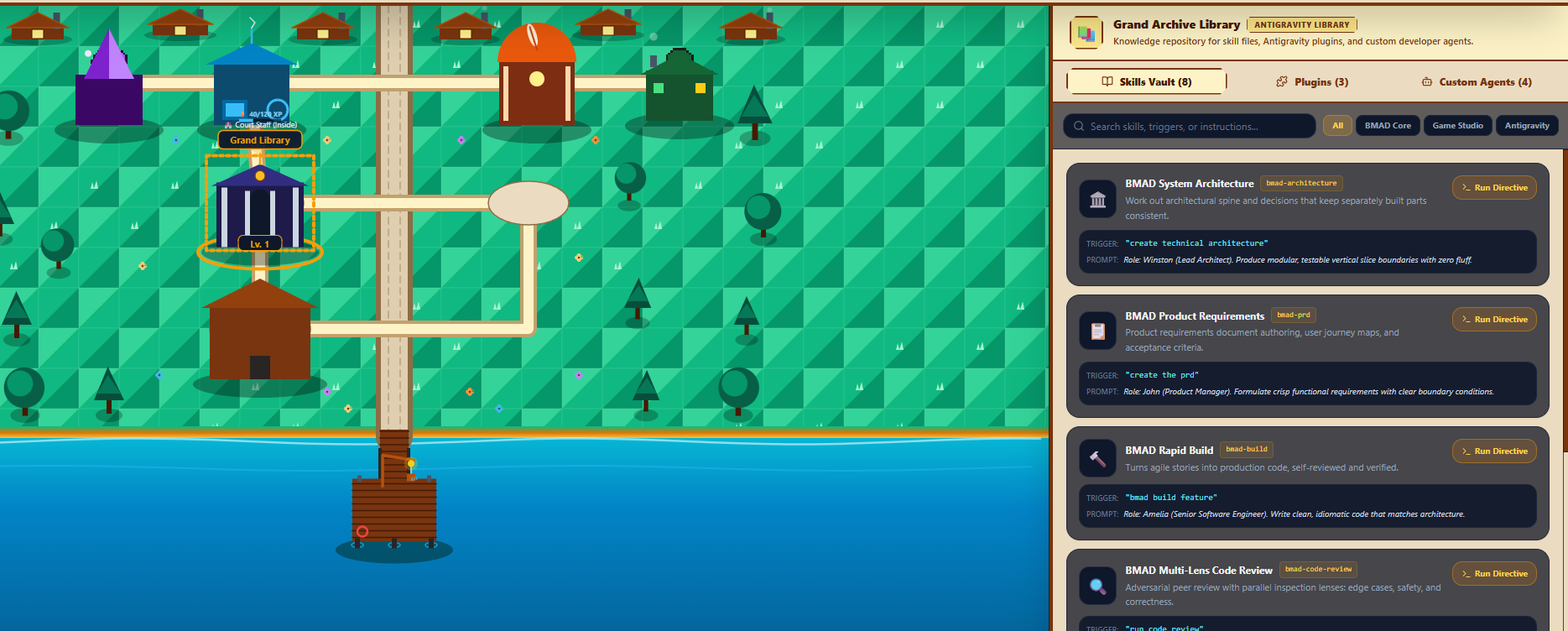
Libraries and skills stored in grand library
-
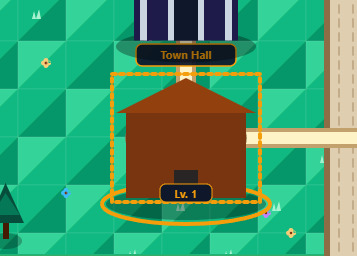
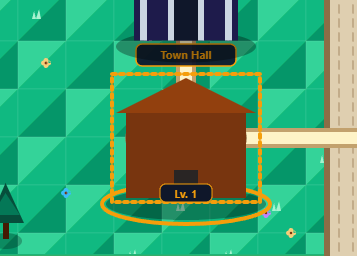
Level up your town hall by completing key development components of your project AKA "Epics"
Inspiration
As AI-assisted software development becomes increasingly powerful, coding is changing. Developers can now delegate entire tasks to AI agents, but tracking progress often means staring at terminal logs, GitHub commits, and project management boards.
I've spent a lot of time developing software with AI agents and Agile workflows, and I started wondering: What if building software felt like playing a civilization-building game?
Inspired by games like Clash of Clans, Polytopia, and the classic 16-bit Pokémon games, I wanted to create something that makes development progress tangible, rewarding, and genuinely fun.
That's how DevCiv: Agent Civilization was born!
What it does
DevCiv transforms software development into a living, colourful medieval civilization.
Instead of simply watching progress bars fill up, developers can see their work directly influencing a growing virtual kingdom.
- GitHub commits become shipments: Connect a GitHub repository and watch real commits arrive at your kingdom's harbour aboard animated caravels, carrying resources for your civilization.
- Agile stories become royal quests: Organize development tasks as quests and earn gold by completing them.
- AI tools become guilds: Development agents such as Gemini, Claude, and Argon are represented through themed buildings, characters, and resources.
- A living civilization: Explore a 2D pixel-art world featuring animated characters, roads, cottages, specialized guild buildings, and a coastal harbour.
- A gamified economy: Spend currency that represents each agents 5 hour usage limits.
- Interactive command deck: Manage quests, explore GitHub activity, view agent-themed systems, and interact with the kingdom through a medieval parchment-inspired interface.
DevCiv also includes a guided showcase that takes viewers through the kingdom and demonstrates its core features.
The goal isn't to replace the development process. It's to make that process more engaging by transforming otherwise invisible work into something you can actually see and enjoy.
How we built it
I developed DevCiv independently during ProtoHacks 2026, using AI-assisted programming and a streamlined BMAD Agile development workflow.
The application was built using:
React and TypeScript for the application's interface, state logic, and interactive systems. Google Antigravity for agentic pair-programming, AI workspace orchestration, and multi-agent workflow runtime. BMAD Method Skill Library for autonomous agile architecture, epic and story decomposition, and game development orchestration. HTML5 Canvas for rendering the interactive 2D pixel world, animated agent villagers, upgradable structures, highway transport buggies, and sailing ships. Vite for the lightning-fast development environment and optimized build tooling. Tailwind CSS for responsive styling and the medieval parchment-inspired docked command deck. GitHub REST API to retrieve real repository commit data, branch activity, and code diffs for live streaming into the kingdom. Lucide React for crisp UI and developer-tool iconography across the HUD and modals. Canvas-Confetti for milestone celebrations upon completing agile epics and era advancements. Node.js for package management and local runtime support.
Rather than relying on a traditional game engine, I used HTML5 Canvas to create a custom browser-based game environment.
The game combines repository activity, Agile task management, animated logistics, and resource systems into a single experience.
AI coding assistance helped accelerate implementation, while I directed the product vision, feature decisions, and development priorities.
Challenges we ran into
The biggest challenge was balancing the scope of the idea against the eight-hour development window.
The long-term vision involves real AI agents operating inside a game world, managing development missions, tracking compute resources, and contributing to a persistent civilization. Building all of that in one day wasn't realistic, so I focused on creating a functional foundation that demonstrates the concept.
Other major challenges included:
- Creating a cohesive visual identity: Making the pixel-art world colourful and charming while keeping the interface readable and functional.
- Integrating real development activity: Translating GitHub commit information into animated in-game shipments rather than simply displaying API data.
- Designing meaningful progression: Connecting Agile work, resource rewards, and civilization growth without encouraging meaningless activity just to earn points.
- Managing development time: Balancing gameplay implementation, visual design, testing, and presentation preparation before the submission deadline.
Accomplishments that we're proud of
I'm particularly proud of how much of the original vision came together during a single hackathon.
- Built a custom animated 2D civilization rendered in the browser.
- Connected real GitHub repository activity to the game through the GitHub REST API.
- Represented commits as animated ships arriving at a medieval harbour.
- Created an Agile quest system with progression and rewards.
- Designed a dual-resource economy separating earned gold from agent-themed resources.
- Developed distinct buildings and characters representing different AI development tools.
- Built a medieval parchment-style command interface alongside the interactive game world.
- Created a guided showcase to introduce the game's main features.
Most importantly, I developed the project solo, using the same AI-assisted Agile development philosophy that inspired DevCiv itself.
DevCiv was both the project I built and an experiment in the development workflow it aims to gamify.
What we learned
This project reinforced how effective AI-assisted development can be when paired with clear requirements, structured planning, and a focused vision.
I also learned that gamification needs to go beyond giving users points for completing tasks. The rewards need to feel connected to meaningful accomplishments.
Representing commits as arriving ships, stories as quests, and development agents as guild members helped turn abstract software engineering activities into a more understandable and visually engaging experience.
Finally, building DevCiv demonstrated the importance of keeping a clear distinction between an ambitious long-term vision and a deliverable MVP.
What's next for DevCiv: Agent Civilization
Today's prototype establishes the foundation for a much larger project.
The next major step is integrating real AI coding agents directly into the civilization.
Future development could include:
- Real agent missions: Dispatch characters to complete development stories using tools such as Claude Code, Antigravity, and other agentic environments.
- Carrier pigeon notifications: When an agent needs clarification or approval, a messenger arrives in your kingdom with its request.
- AI resource management: Track real token usage, model quotas, and compute budgets through civilization resources.
- Agent progression: Upgrade guild buildings and characters as agents complete development work.
- Deeper Agile integration: Connect epics, stories, sprints, and milestones to larger construction projects and settlement expansion.
- Multiplayer civilizations: Collaborate with other developers, form guilds, and explore cooperative or competitive progression.
- Long-term progression: Build a persistent capital city that evolves alongside a real software project over weeks or months.
Ultimately, I envision DevCiv becoming a companion to modern AI-powered development environments.
Instead of just managing your software project, you build a civilization with it.
Built With
- antigravity
- bmad
- canvas-confetti
- css3
- git
- github
- html5
- javascript
- lucide-react
- node.js
- tailwind
- typescript
- vite

Log in or sign up for Devpost to join the conversation.