Generated with HackPilot - AI-powered hackathon project manager
Inspiration
I always hated publishing my code only to find out later that I accidentally released an API key or some other stupid vulnerability, bug, or inefficient code . I thought how that would be avoidable and decided something needed to be made. That's were DevBoost comes in
What it does
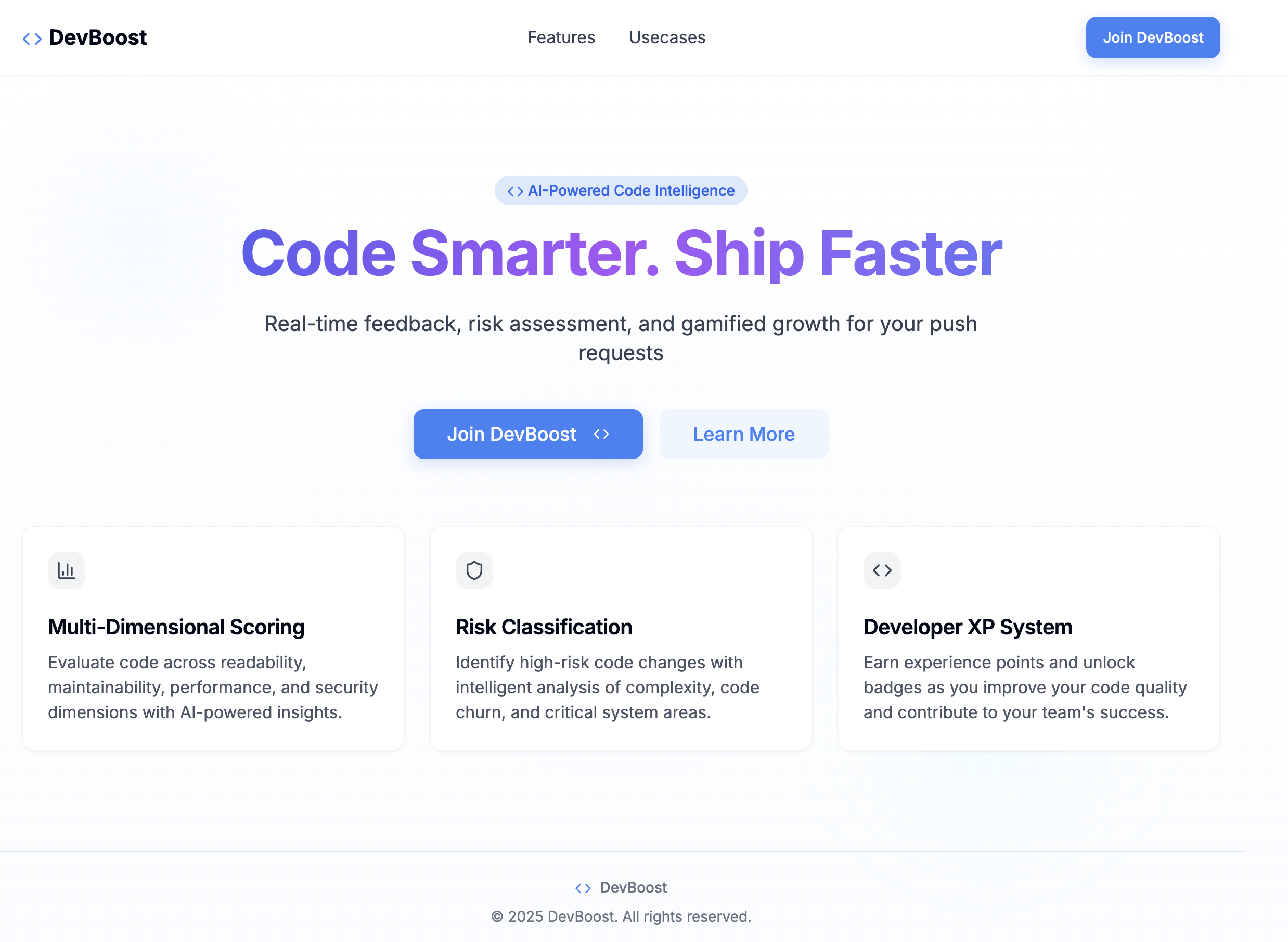
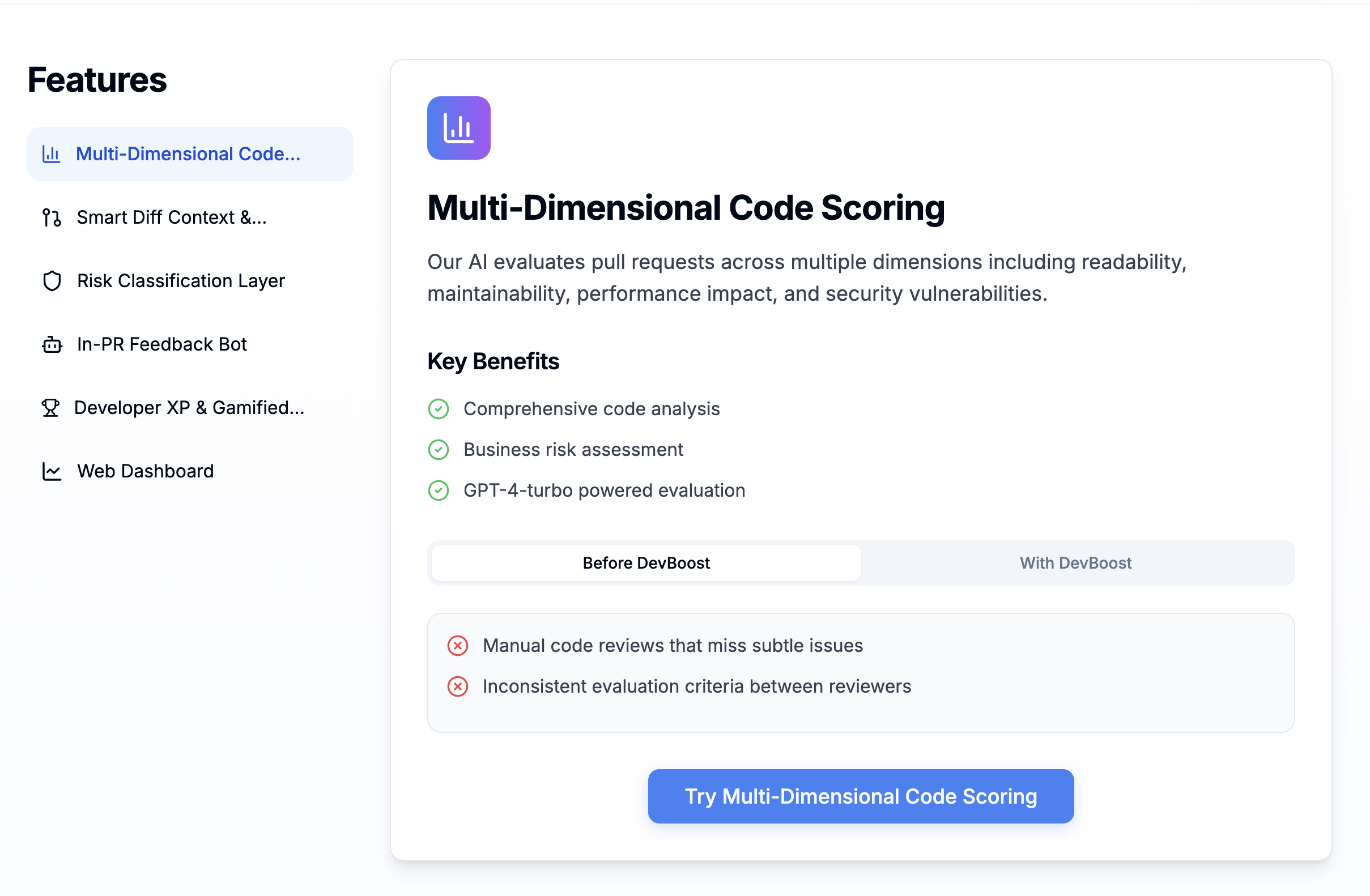
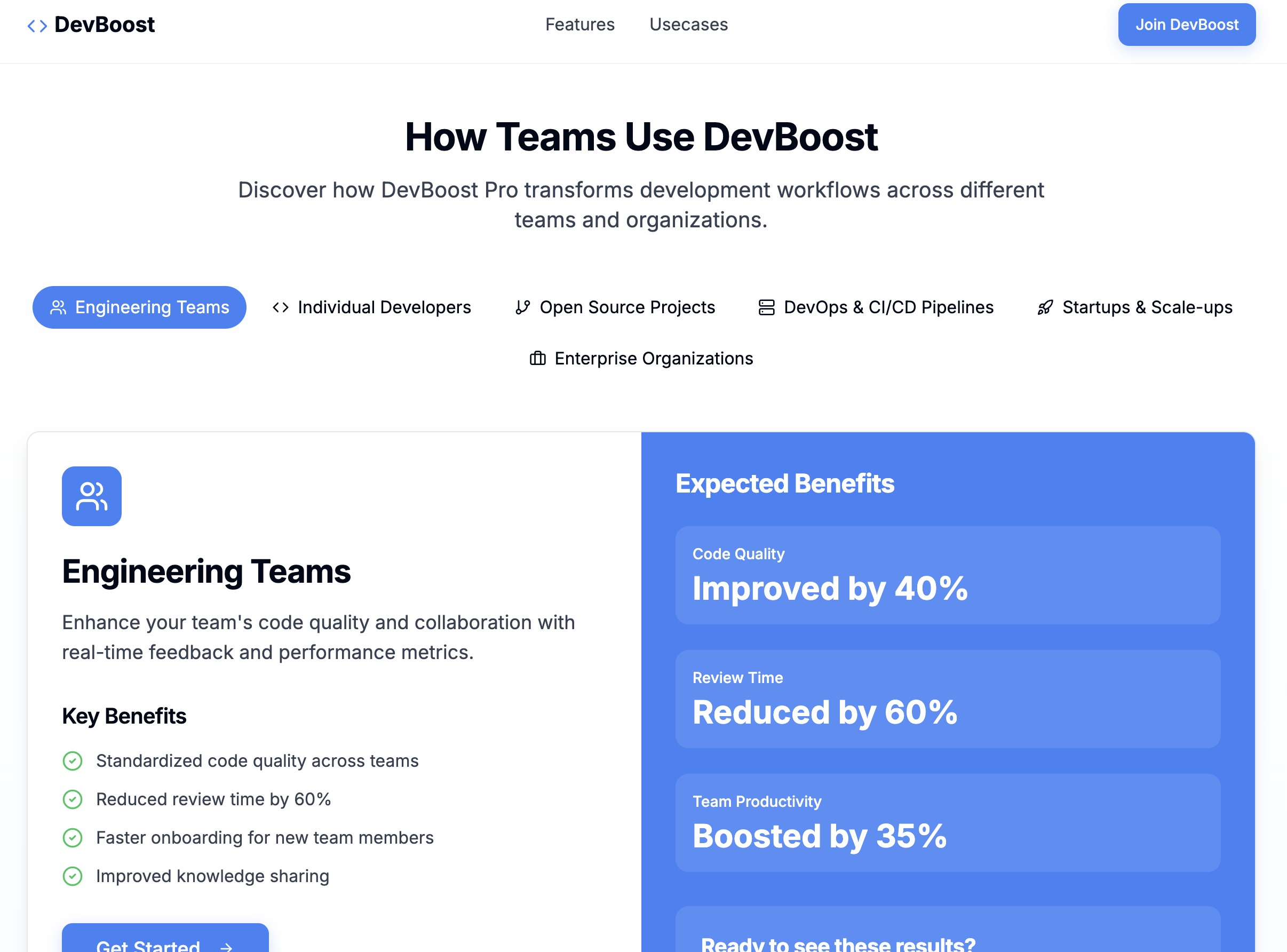
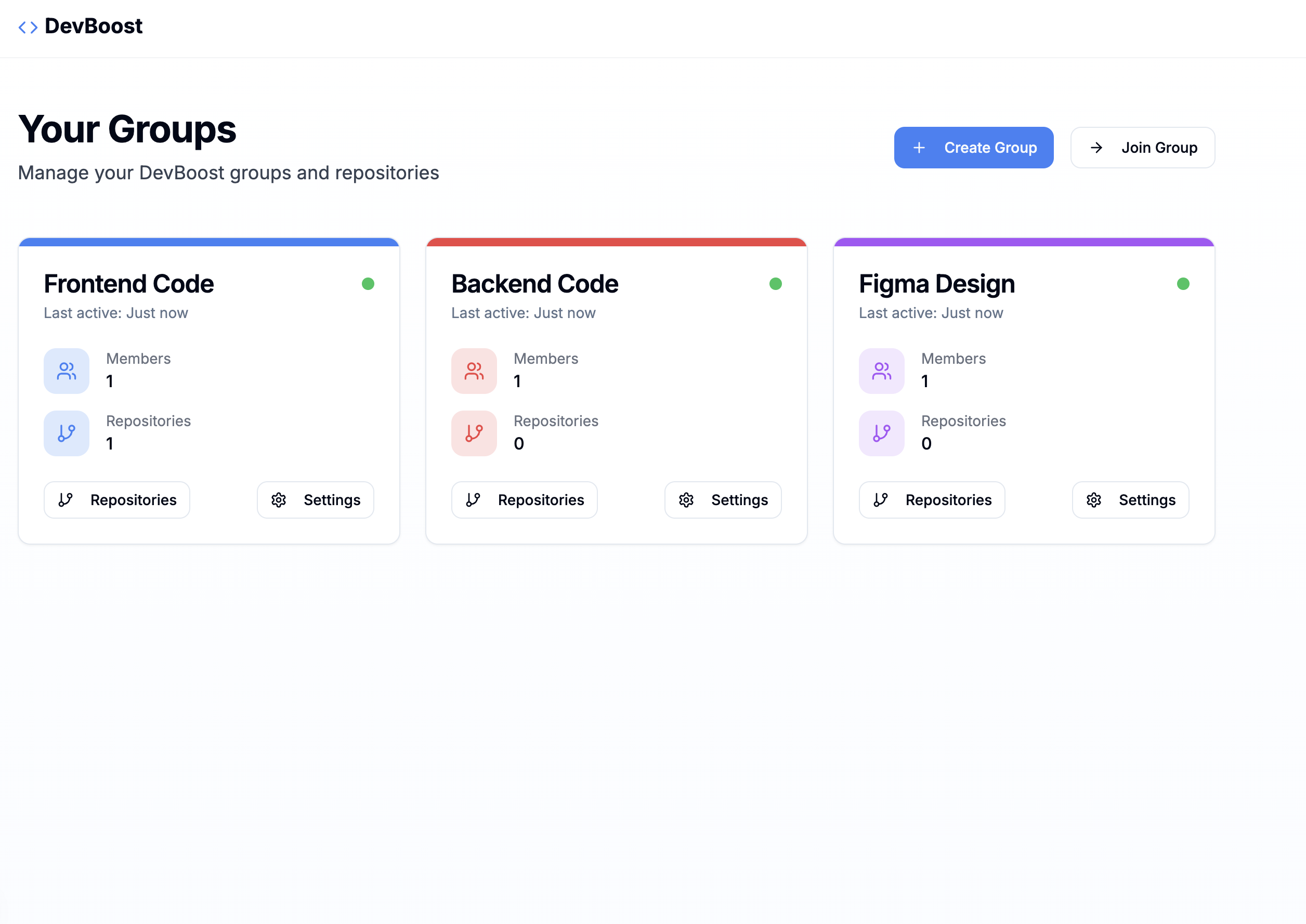
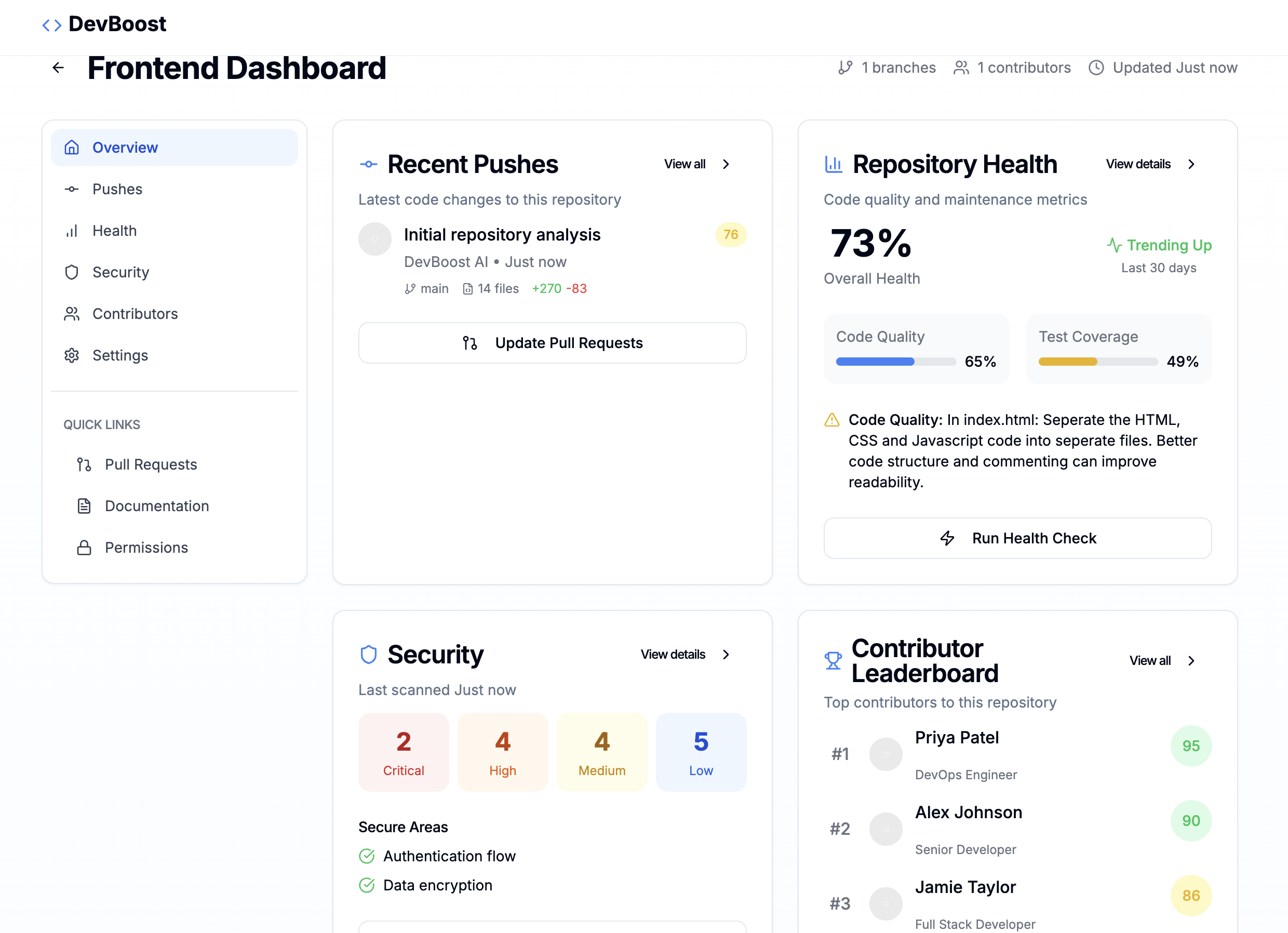
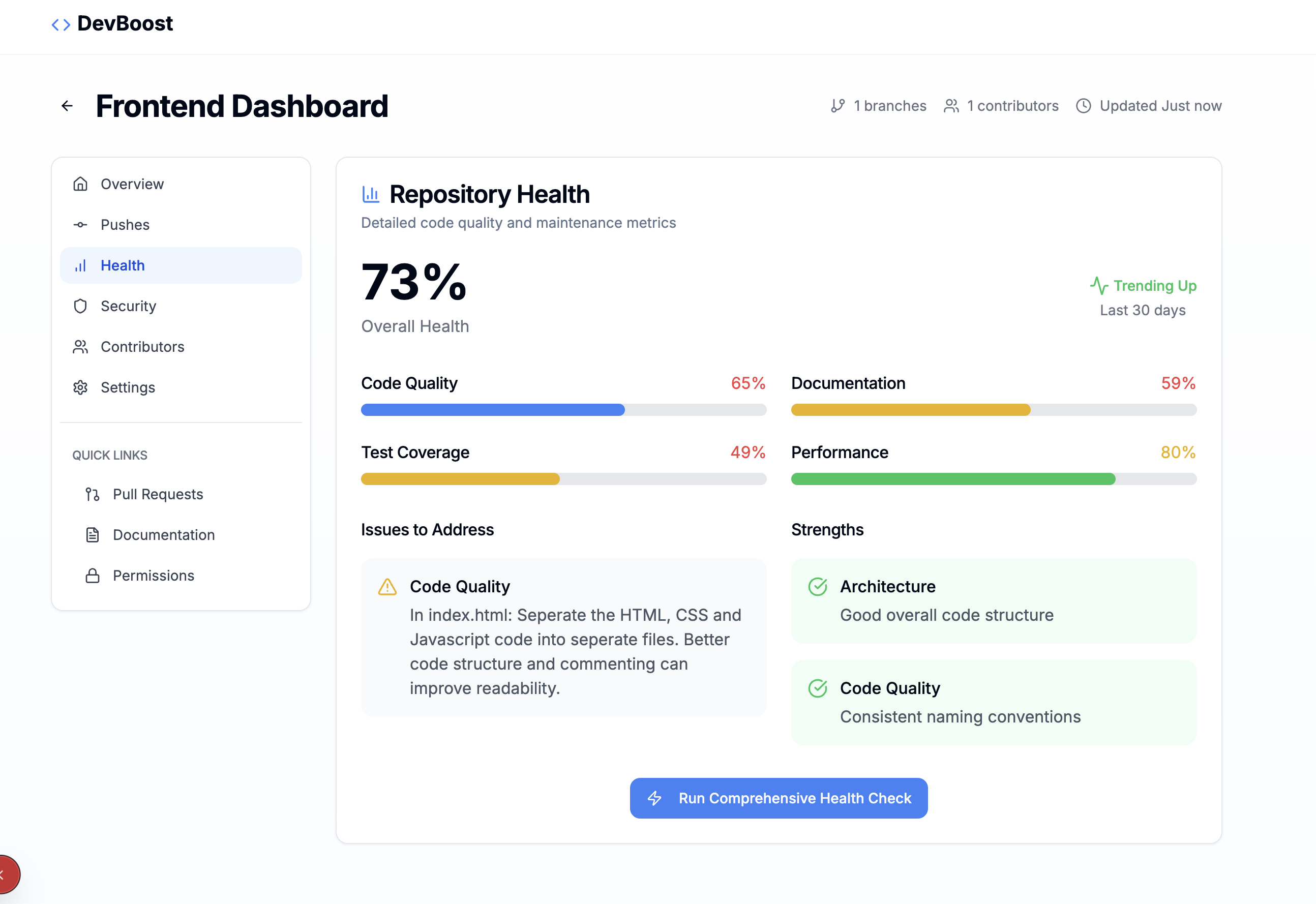
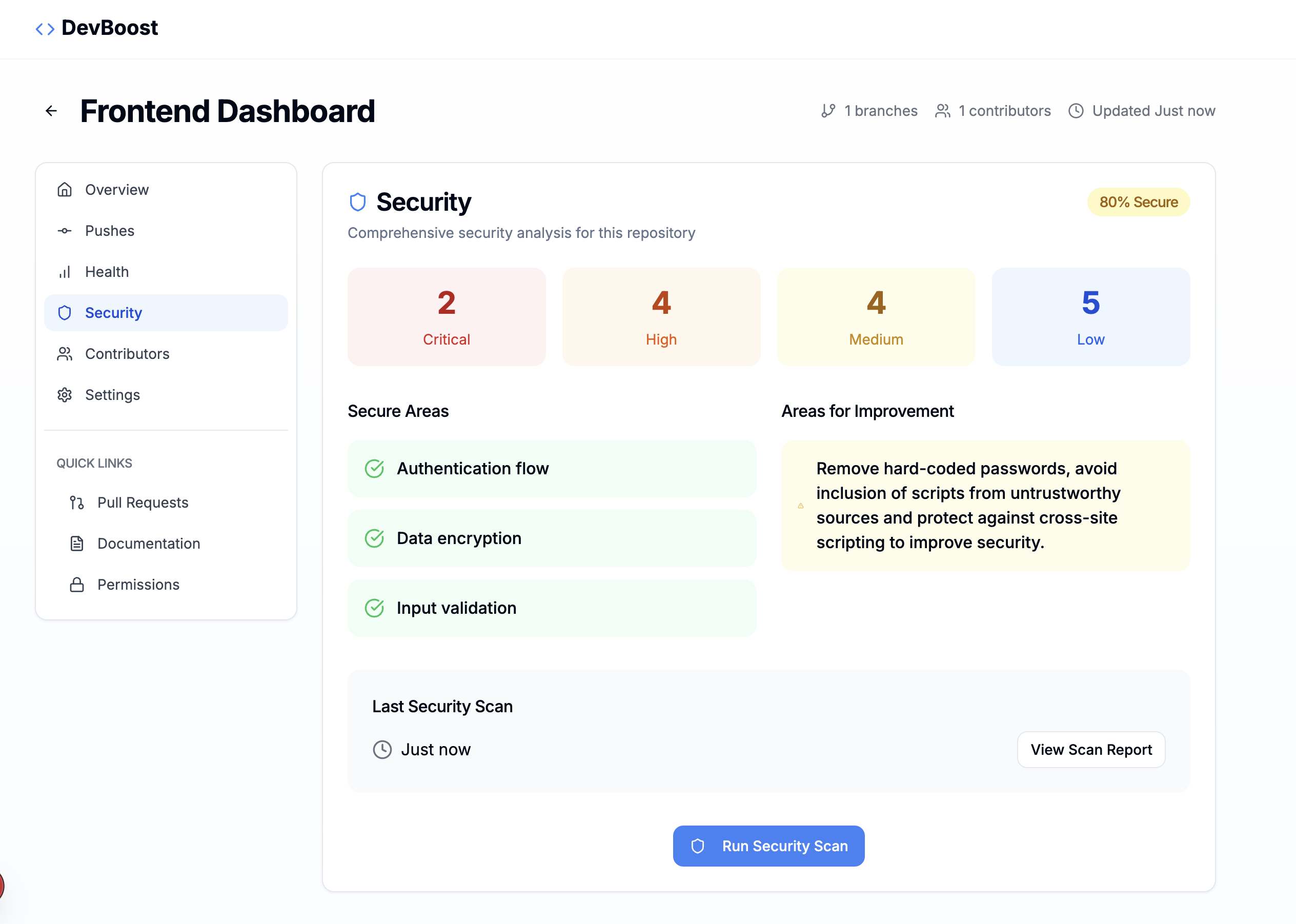
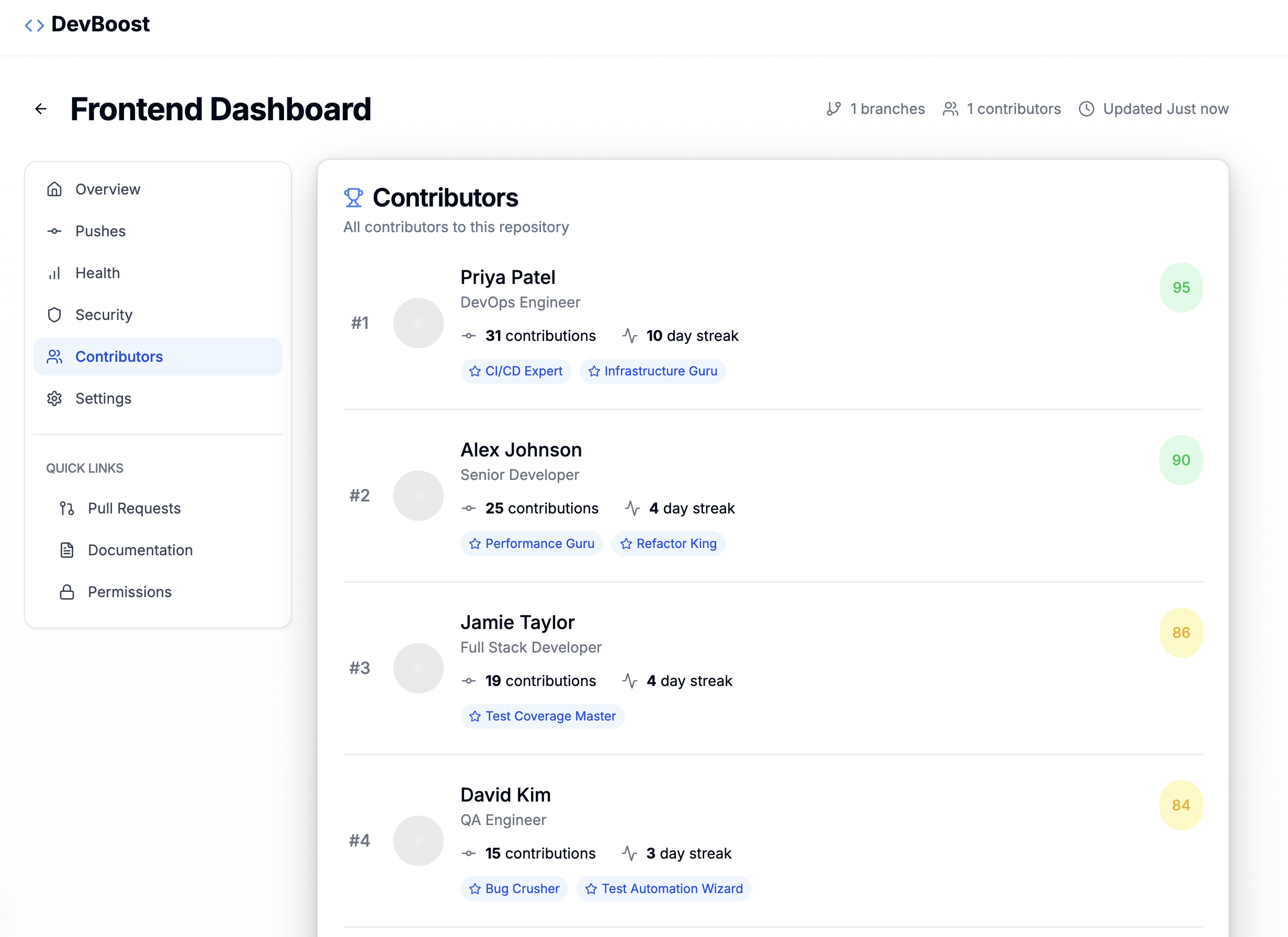
Imagine a QA team in a box. That's basically DevBoost. Have your code scrutinized for errors with Multi-Dimensional Scoring, Risk Classification, and a Developer XP System. DevBoost finds issues in push requests and then give accurate, traceable, and easy to understand suggestions based on your codebase. It ranks you in various dimensions such as Readability, Maintainability, Performance impact, Security vulnerabilities, and Business risk. It also finds security risks and vulnerabilities to protect data leaks. It allows you to collaborate with your team, because you can work with them. We also motivate developers to work harder by having a gamified leaderboard, which encourages people to get on the podium.
How we built it
My tech stack/test stack consisted of: Next.Js, ShadCn-UI, Postman, GitHub API, GPT API, Flask, and Figma. Each of these tools served different purposes that eventually created DevBoost
Challenges we ran into
Connection with frontend and backend was difficult. Also working with Github web hooks is always a challenge. On top of that CORS errors kept occurring, and ensuring model accuracy was also difficult.
Accomplishments that we're proud of
A slick UI, relatively fast generation, and making something so complicated, alone, and within 24 hrs
What we learned
How web hooks work, CORS, Postman, and Risk Classification.
What's next for DevBoost
DevBoost needs to have a more robust system with greater analytics and higher quality models.


Log in or sign up for Devpost to join the conversation.