-
-
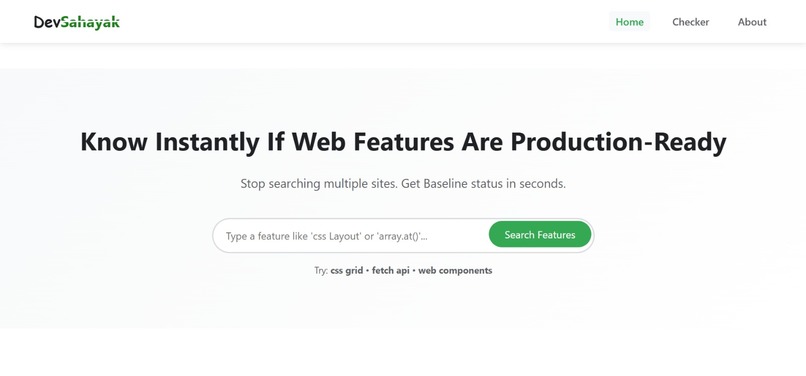
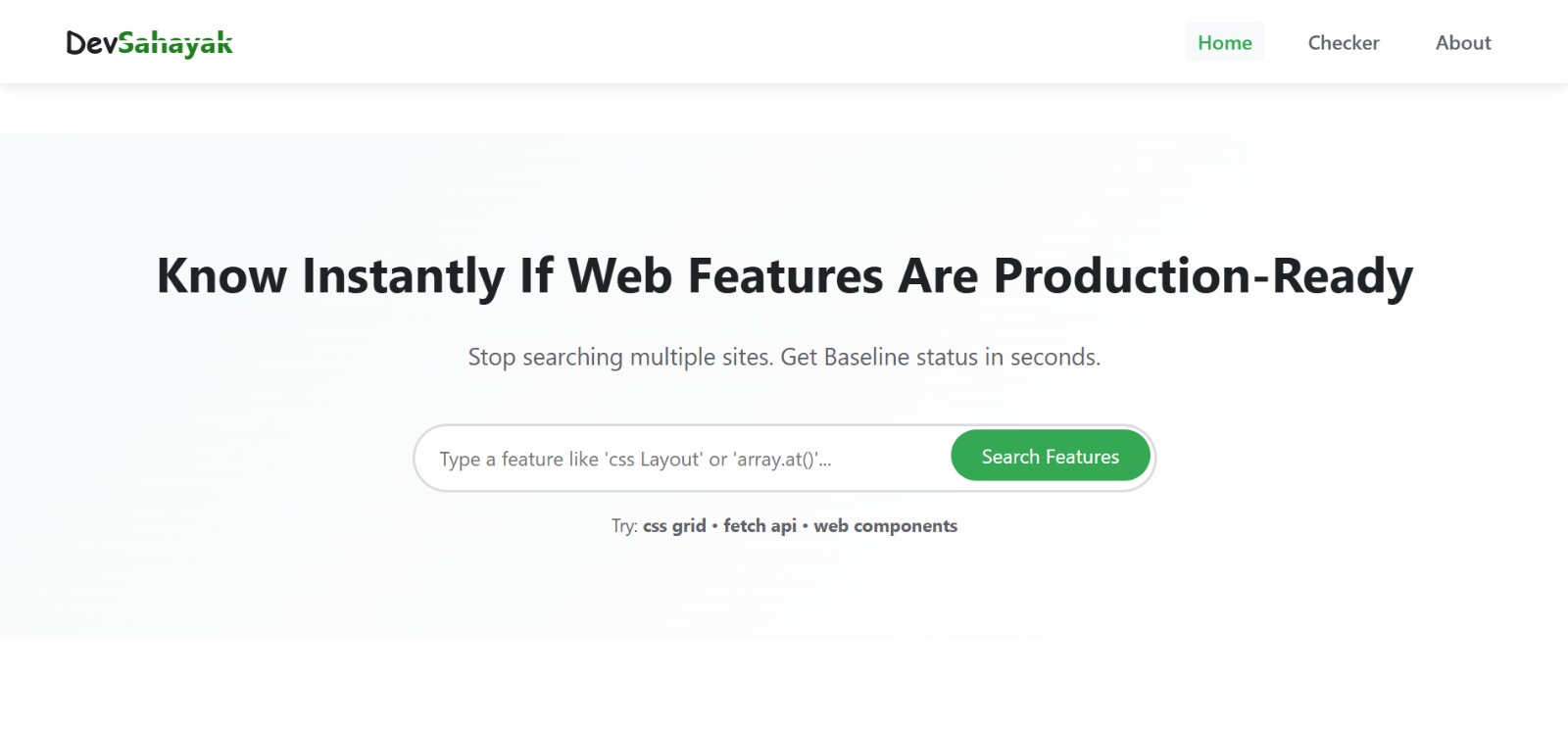
Home Page
-
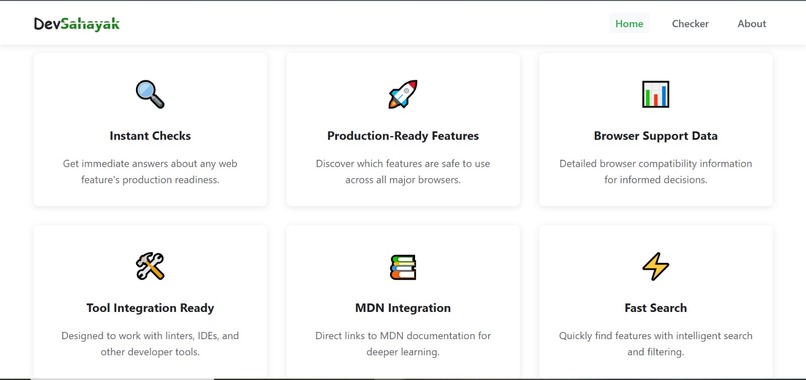
Features We Provide
-
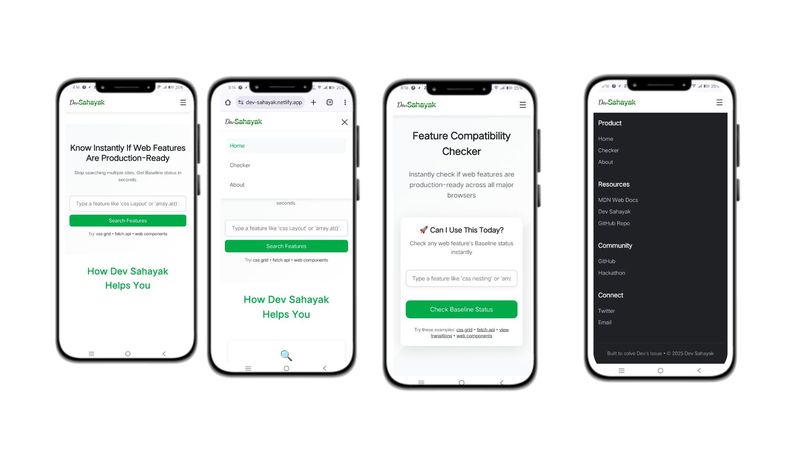
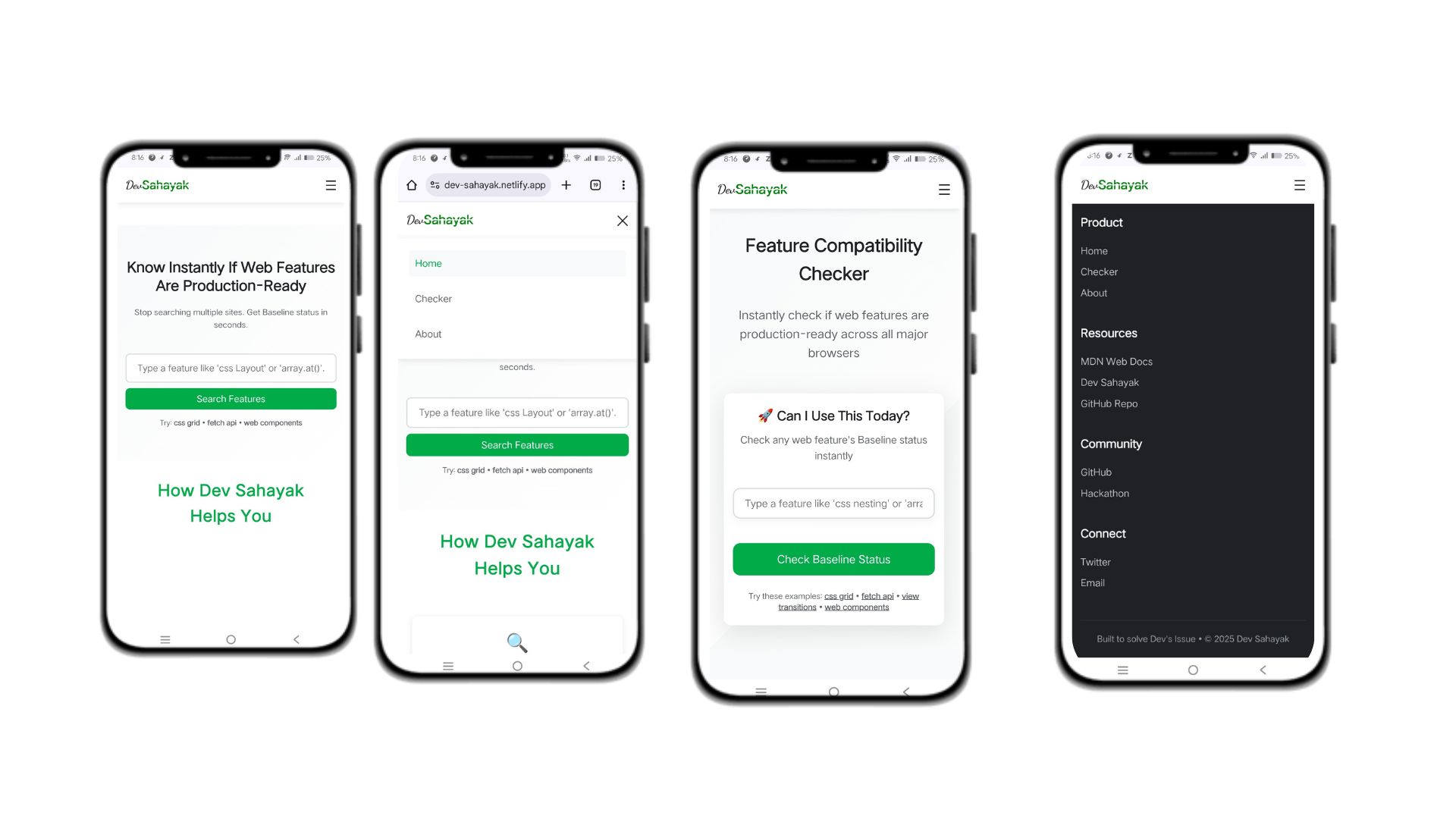
Responsiveness
-
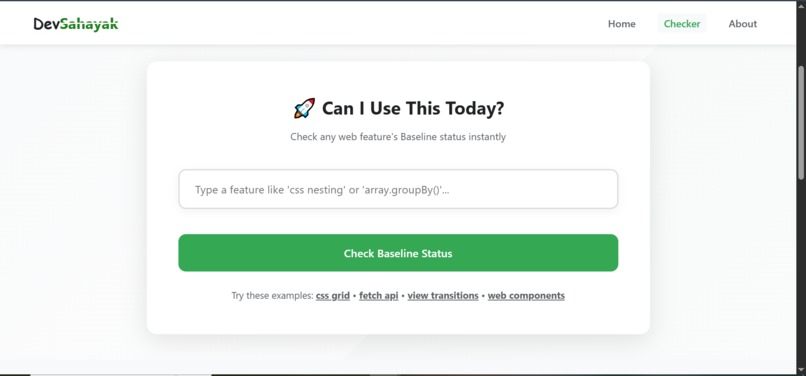
Heart of Dev Sahayak - Feature Cheaker
-
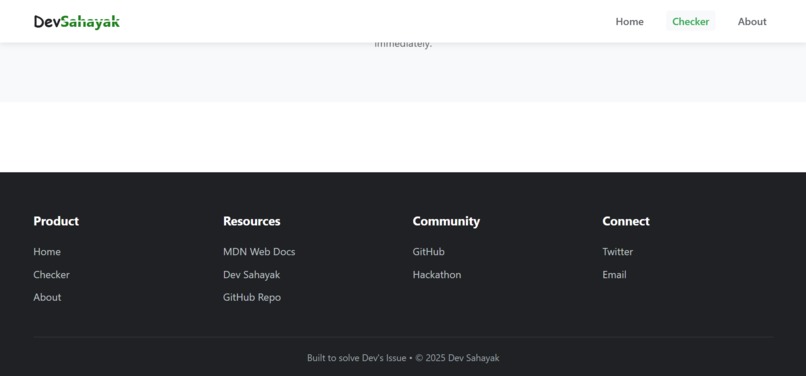
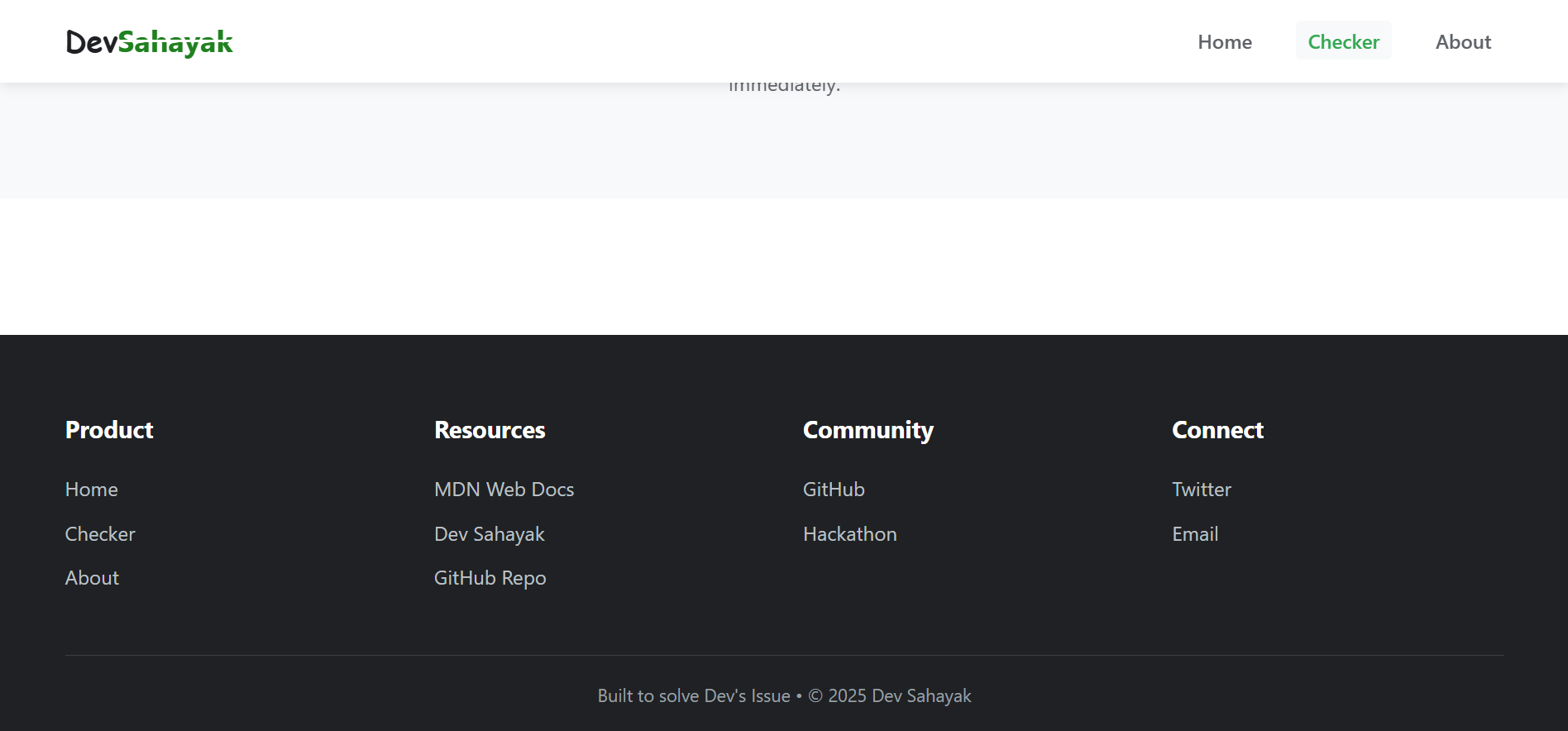
Footer


Inspiration
As web developers, we constantly faced the frustrating reality of spending hours checking browser compatibility across multiple sites like MDN, Can I Use, and Baseline. The constant context switching killed our productivity and created uncertainty about which features were truly production-ready. When we discovered the Baseline initiative, we realized there was an opportunity to bring authoritative compatibility data directly to developers in a fast, search-first interface. We wanted to create the tool we wished existed - one that gives instant, clear answers to "Can I use this today?"
What it does
Dev Sahayak is an instant web feature compatibility checker that helps developers quickly determine if CSS, JavaScript, HTML, and API features are production-ready across all major browsers. With a simple search, developers get clear Baseline status indicators (✅ Widely Available, ⚠️ Limited Support, ❌ Not Supported) along with detailed browser version requirements for Chrome, Firefox, Safari, and Edge. Our smart search handles both specific feature queries and category browsing, displaying either single results or curated feature grids. The platform includes 500+ features, mobile-responsive design, and direct MDN documentation links.
How we built it
We built Dev Sahayak using pure web technologies with zero dependencies for maximum performance and accessibility. The frontend uses semantic HTML5, CSS3 with Grid/Flexbox layouts, and vanilla JavaScript ES6+. We developed a custom JSON database containing 500+ features with structured browser support data. The core architecture features a smart search algorithm with category detection, cross-page navigation using localStorage, and a responsive design system. We deployed via GitHub to Netlify with automatic CI/CD, and implemented comprehensive SEO optimization including Open Graph tags, JSON-LD structured data, XML sitemaps, and social media previews
Challenges we ran into
One major challenge was designing an intuitive search system that handles both exact feature matching and category detection while maintaining fast performance with 500+ entries. We solved this with a multi-layered search algorithm. Another challenge was maintaining data consistency across our extensive feature database - we implemented manual validation protocols and cross-referencing against official sources. Cross-page state management was tricky without frameworks; we created a localStorage bridge that seamlessly transfers search queries between pages. Performance optimization required careful attention to debounced search inputs, efficient filtering algorithms, and minimal DOM manipulation to achieve sub-50ms response times.
Accomplishments that we're proud of
We're incredibly proud of creating a professional-grade web application using only foundational web technologies, proving that complex frameworks aren't always necessary for powerful solutions. Our 500+ feature database represents significant research and validation work. We achieved perfect Lighthouse scores for performance, accessibility, and SEO. The seamless user experience from search to detailed results feels polished and professional. Most importantly, we built something that genuinely solves a problem we experience daily as developers, and we're already using Dev Sahayak in our own workflows.
What we learned
We learned that simplicity often leads to the most elegant solutions - by avoiding complex frameworks, we achieved better performance and maintainability. The project deepened our understanding of vanilla JavaScript patterns, localStorage state management, and cross-browser CSS techniques. We gained valuable experience in data structure design while building our JSON database, and improved our skills in responsive design and mobile-first development. The process taught us that user experience is about more than just aesthetics - it's about reducing cognitive load and delivering value instantly.
What's next for Dev Sahayak
We envision expanding Dev Sahayak into a comprehensive web standards companion. Our roadmap includes developing browser extensions for real-time development workflow integration, creating IDE plugins for VS Code and WebStorm, building CI/CD integrations for automated compatibility checking in pipelines, and expanding our feature database to cover emerging web standards. We're also exploring API access for other tools to leverage our compatibility data, and considering advanced features like project-specific compatibility profiles and team collaboration tools.
Built With
- css3
- html5
- javascript
- json
- netlify

Log in or sign up for Devpost to join the conversation.