-
-
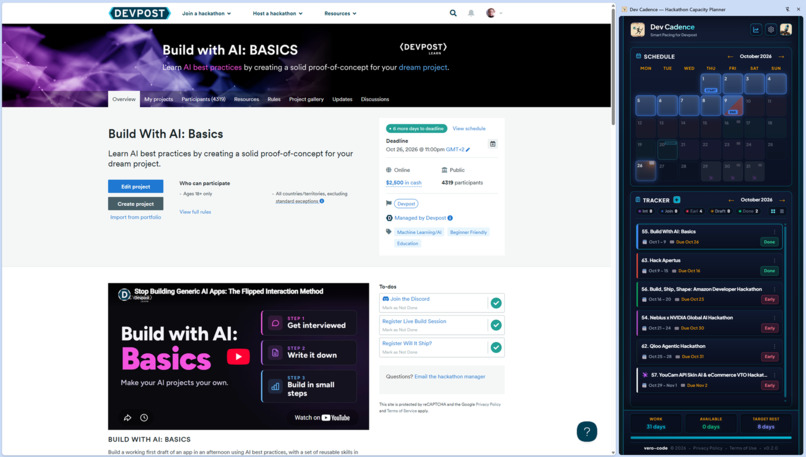
Dev Cadence v0.2.0 (Devpost Classic theme) seamlessly integrated right into the hackathon page.
-
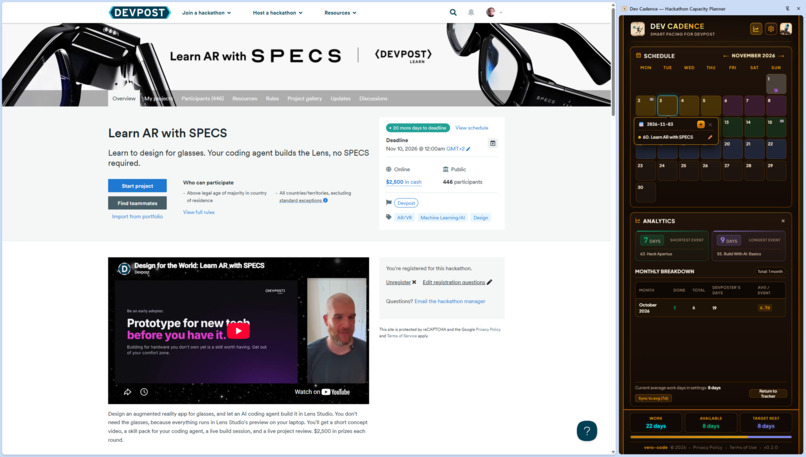
Analytics & capacity planning view in Rich Dark theme — tracking event durations and average work days.
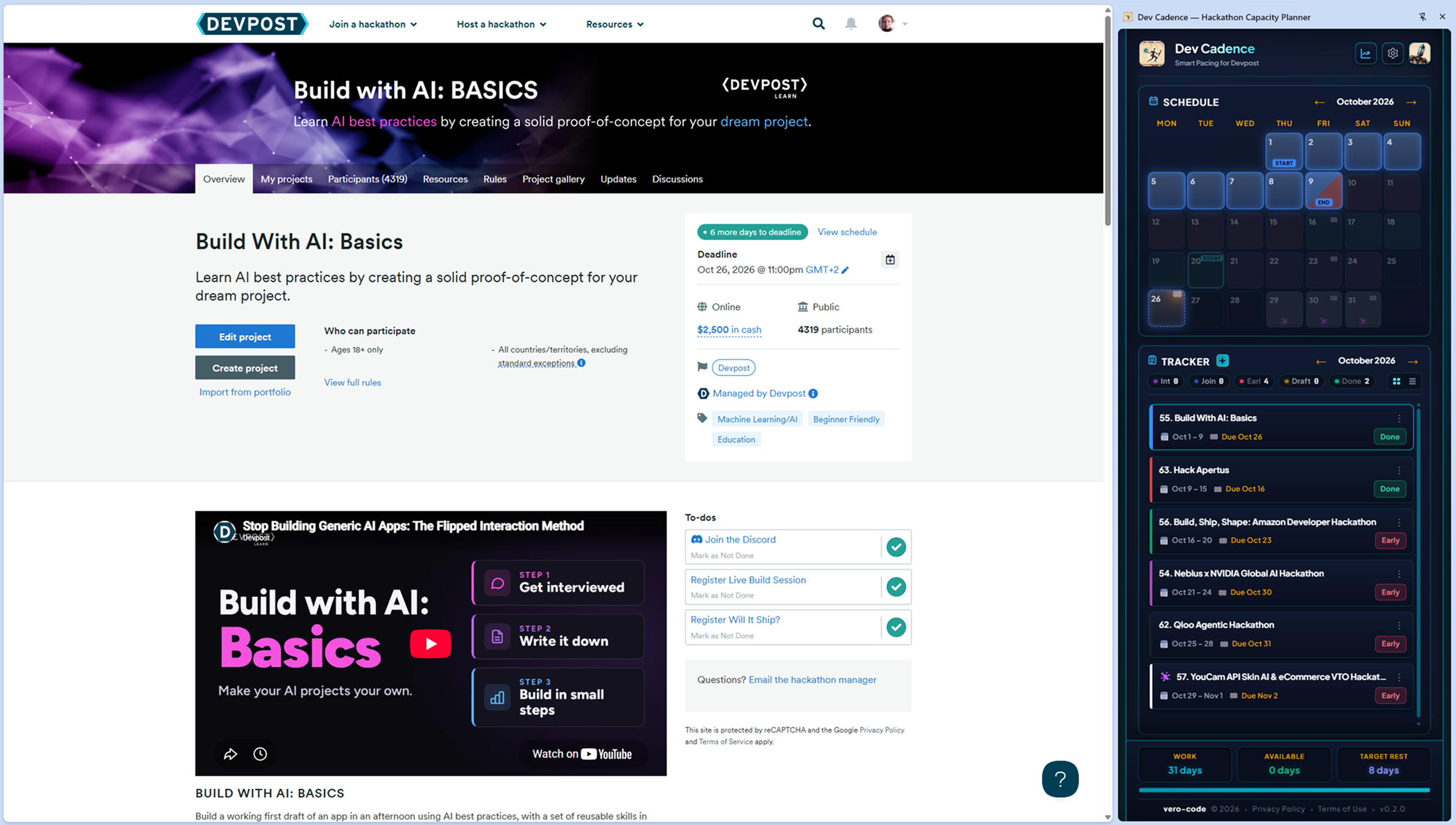
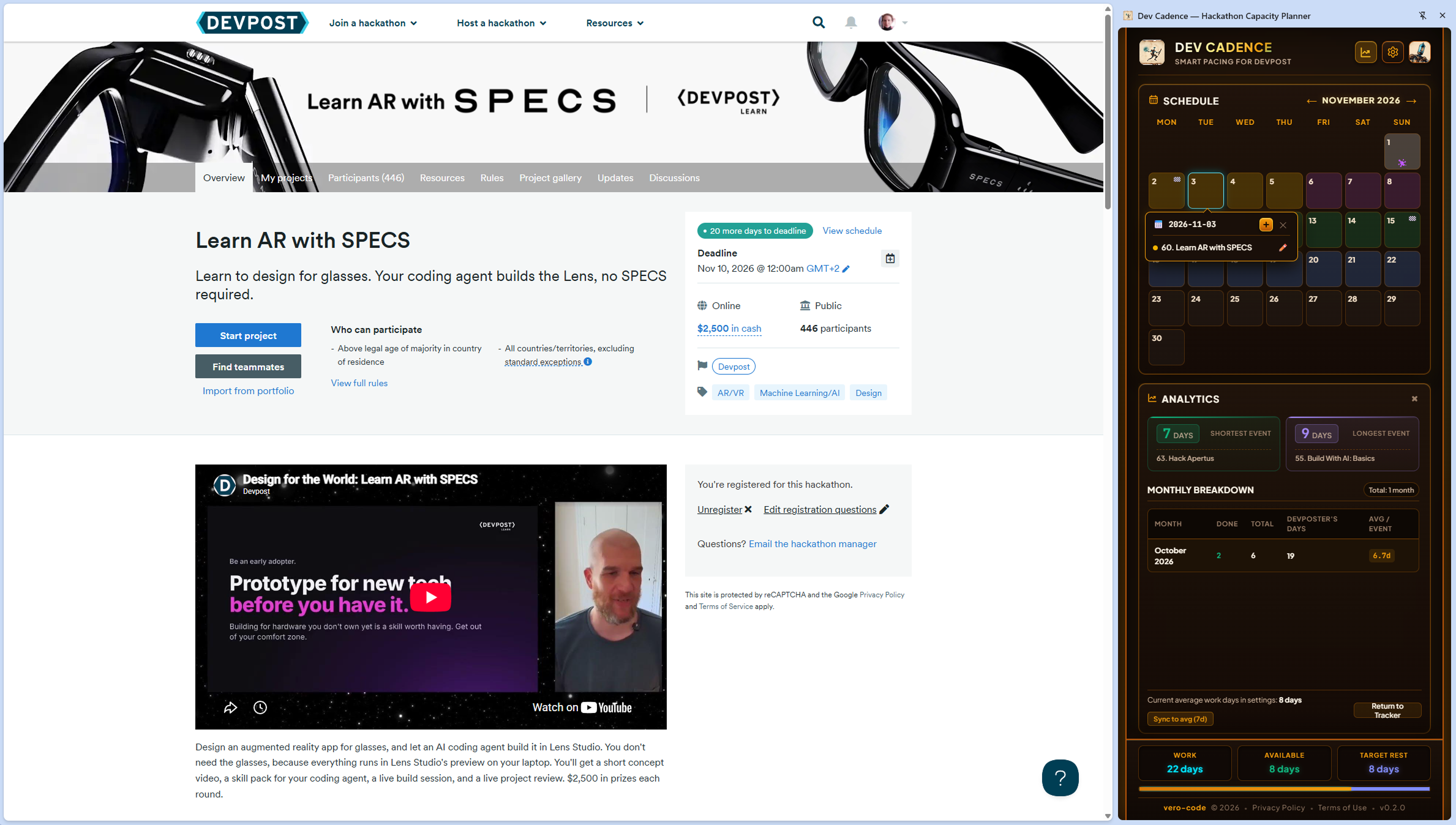
Inspiration / What it does
I hold a Master’s degree in Management and Administration, so I know a thing or two about planning. I’ve noticed a huge discrepancy among participants between the number of hackathons they register for and the number of projects they actually submit. In other words, very few people have a match between the hackathons they join and the projects they complete. It’s a shame, because so many good ideas never see the light of day due to management issues.
One of the reasons is the inability to see the big picture. The solution lies in the background process. People can be taught, but they need to be guided—shown exactly how to plan while they’re right there on the Devpost page.
I was inspired by the Devpost team's mission to improve the hackathon experience, which made me wonder: what tool could I build to help participants actually cross the finish line? That’s how Dev Cadence was born.
How I built it / The Planning Process
After installing the pack, I proceeded to call the skills step-by-step. In Antigravity, this is done using a slash (/). Skills 1 and 2 were easy…
But Skill 3 (PRD) required some serious mental effort. When you build a project without a plan, you don't think about it much; you focus on functionality and make decisions on the fly. Working through the stages, I could feel the gears in my brain grinding into action. The idea started taking real shape. It was great.
Challenges & What I learned
I don't like "vibe coding". There’s too much you can't control, and not being able to touch the code to make a quick tweak drives me crazy.
I didn't get that feeling at all while using the Devpost Learn Skill Pack. It’s the opposite here: you’re right inside Antigravity — code on the left, interaction with the skilled agent on the right. It asks you questions, so everything stays under your control. It’s a pleasant experience.
At the end of Skill 3, the agent and I had a complete set of product requirements. After Skill 4, we received more detailed specifications, and in Skill 5, we moved on to building. I wanted to fully test the Devpost Learn Skill Pack, so I chose "Learn mode"—though I didn't allow it to commit the code.
The agent suggested building in vertical slices—small, end-to-end working steps. That’s how we proceeded: code change – verification – commit…
At Skill 6 ("Ship"), the agent suggested committing everything.
However, since I had been making commits as I went along, it simply checked to ensure everything was committed.
What's next for Dev Cadence
If the application proves popular, I will publish it on the Chrome Web Store. Before doing so, I plan to improve the way user data is stored, integrate Firebase authentication, and implement changes based on feedback from Devpost users.
Thanks to the organizers! I’ll be using this pack at other hackathons as well.
Built With
- antigravity-ide
- chrome
- css
- devpost-learn-skill-pack
- gemini
- javascript
- react
- vite


Log in or sign up for Devpost to join the conversation.