-
-
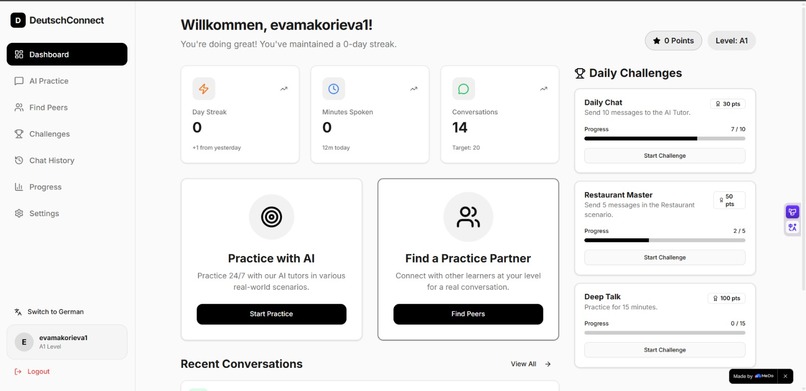
Logged in
-
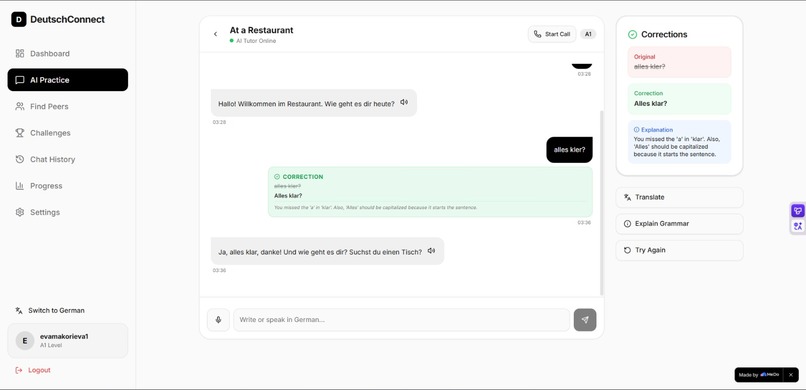
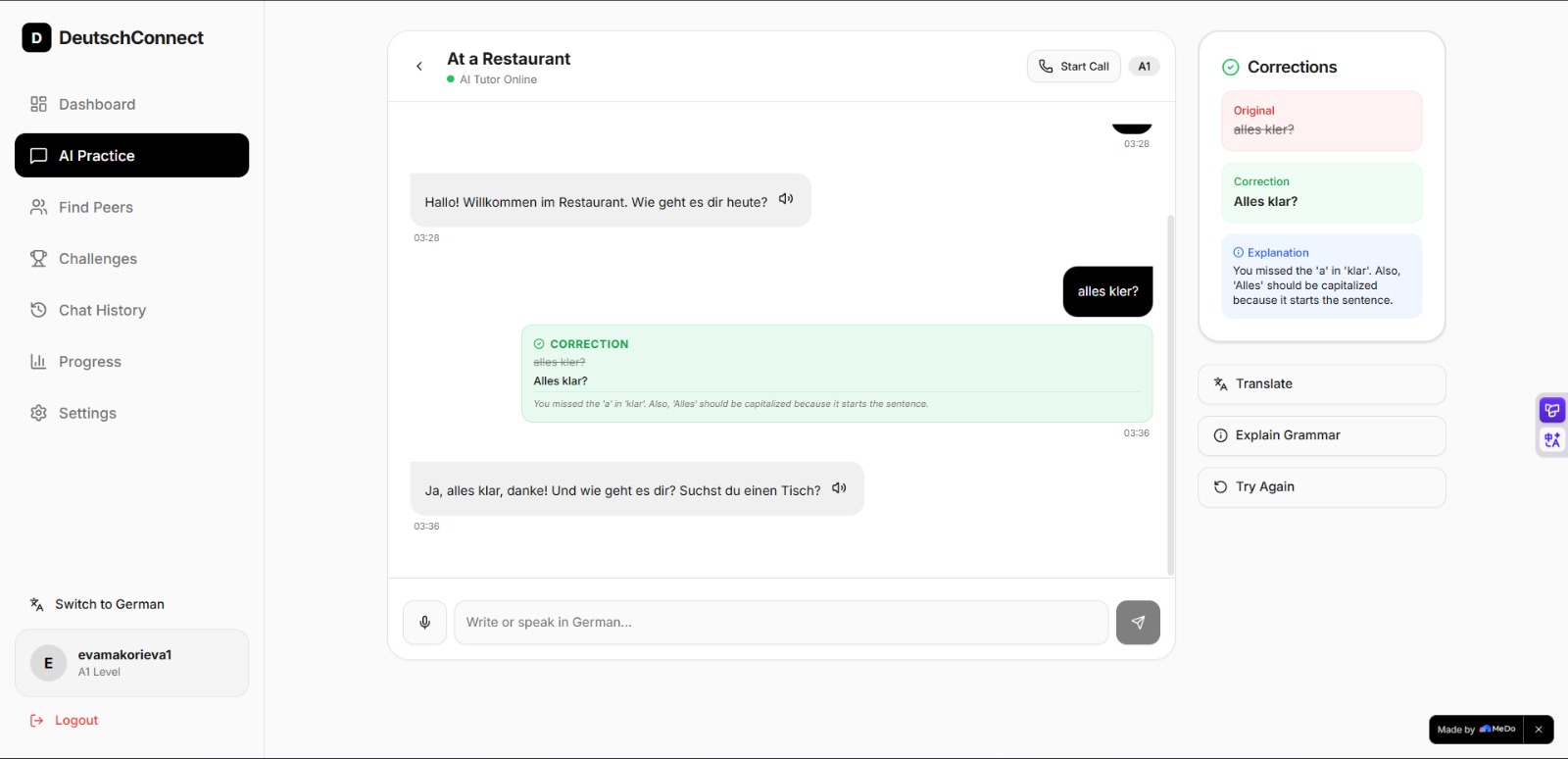
AI Tutor
-
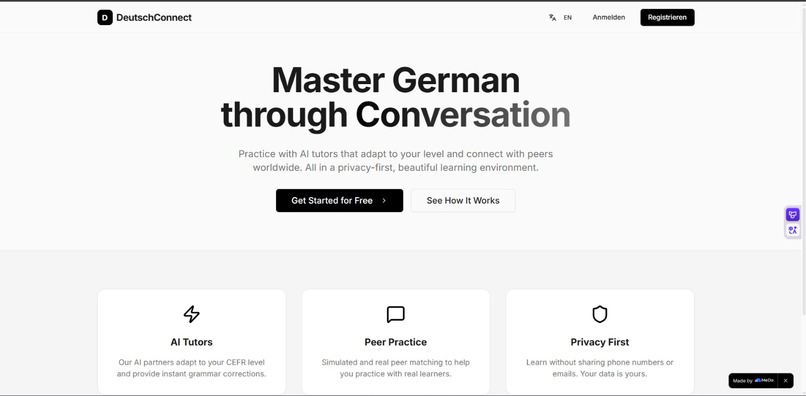
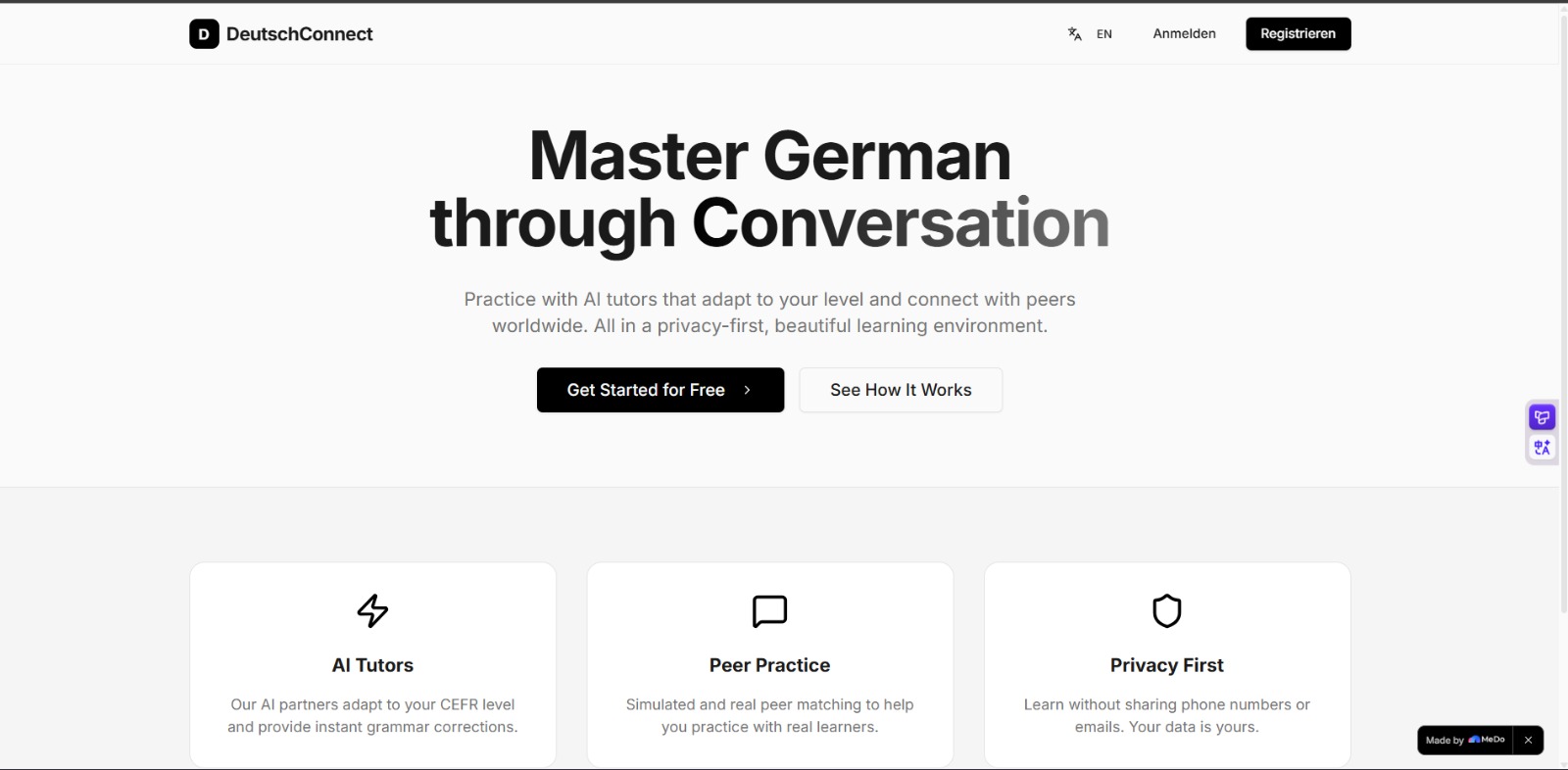
Landing
-
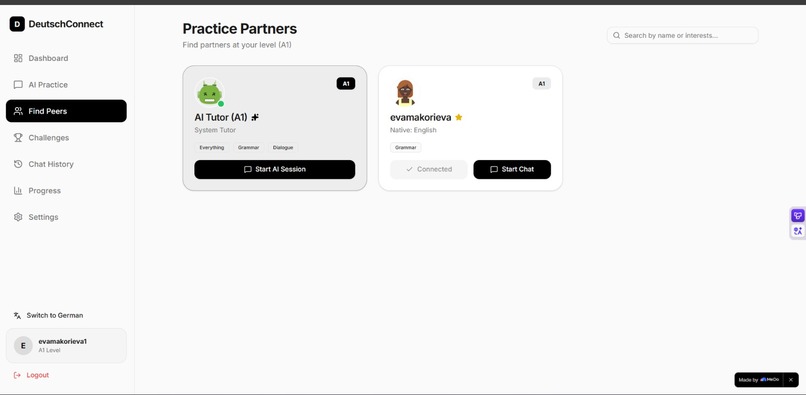
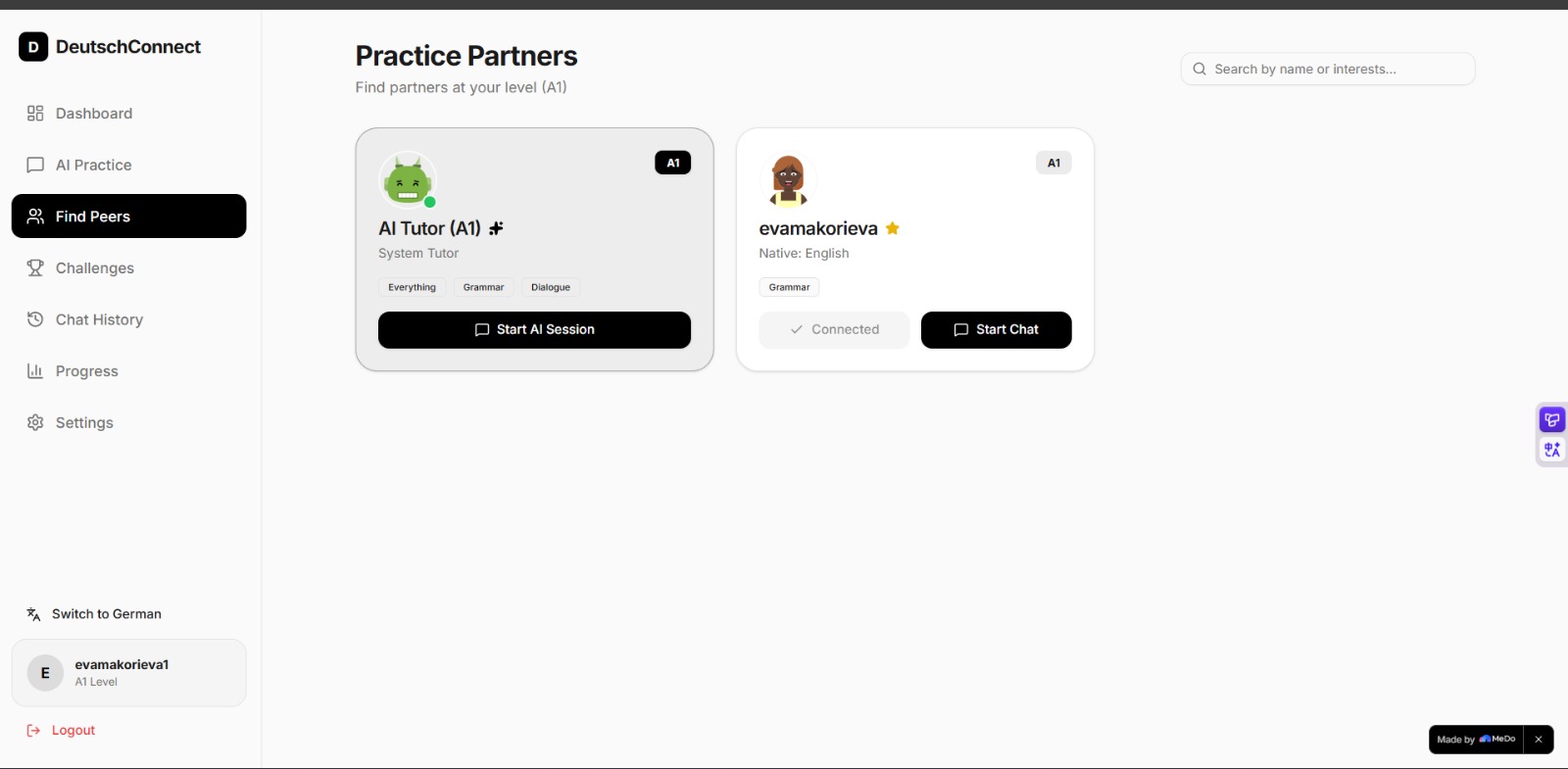
Peers
-
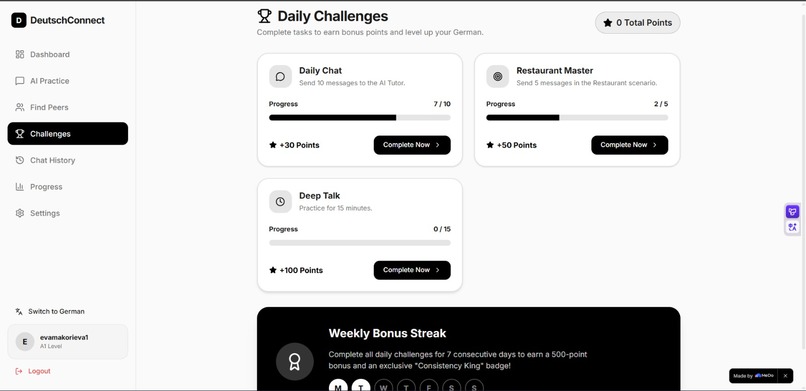
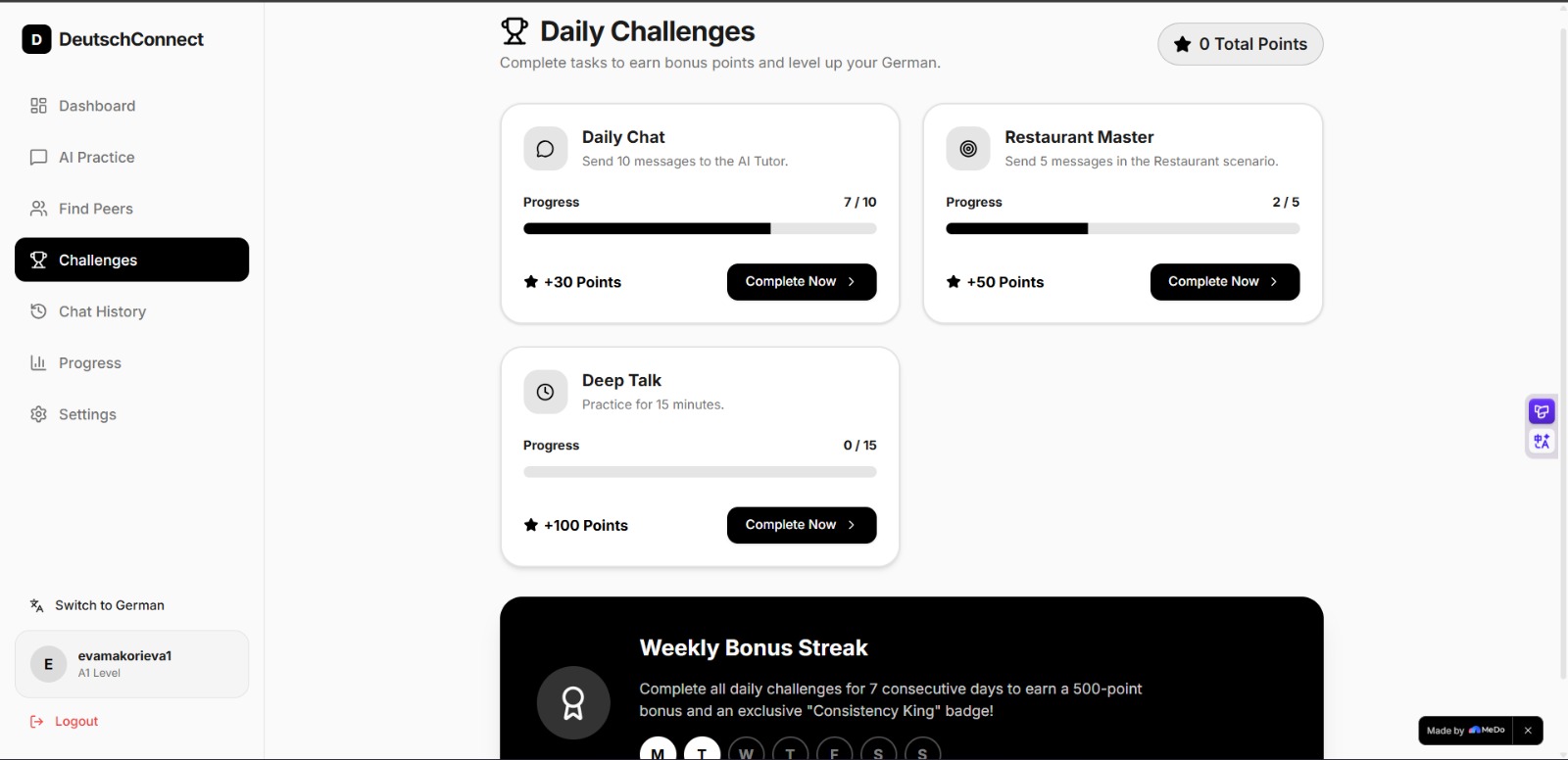
Daily Challenges
Project Story
Inspiration
Learning to speak a new language confidently is one of the hardest parts of language acquisition, especially without consistent speaking partners. German learners often rely on fragmented solutions such as language exchange apps, tutors, or self-study tools, but these rarely combine real conversation, instant feedback, and continuous practice in one place.
We wanted to solve a simple but meaningful problem:
How can learners practice speaking German anytime, without fear, friction, or privacy concerns?
This idea led to DeutschConnect, a platform that combines peer-to-peer language practice with AI-powered tutoring in a safe, always-available environment.
What it does
DeutschConnect is an AI-powered German learning platform that connects learners based on proficiency level (A1–C2) and enables real-time conversational practice.
Users can:
- Match with peers at the same German level
- Practice conversations with an AI tutor when no partner is available
- Receive real-time grammar corrections and vocabulary suggestions
- Switch between English and German interfaces for immersion learning
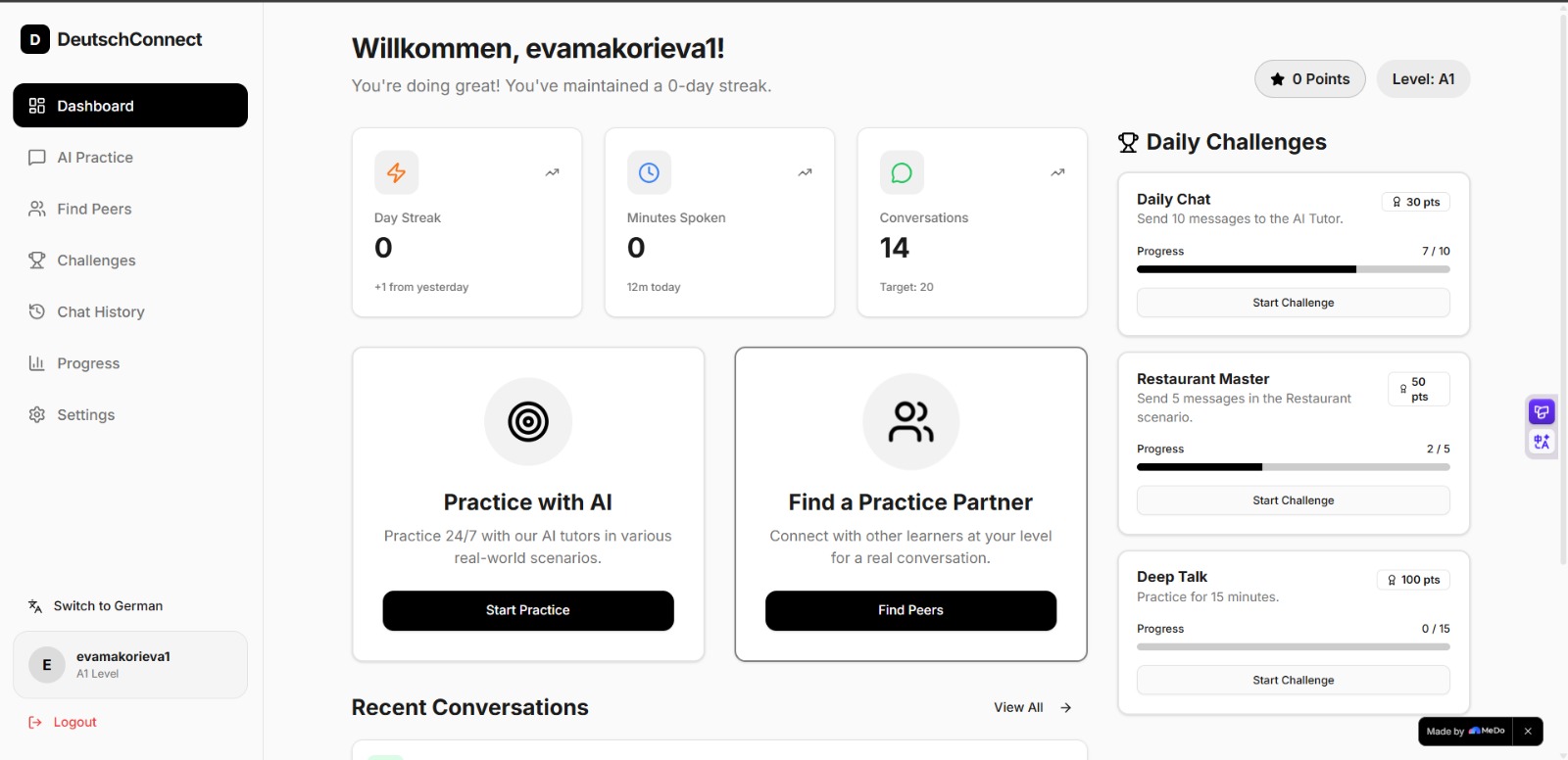
- Track progress through streaks, speaking time, and learning activity
The platform ensures users always have a practice partner — either human or AI.
How we built it
We built DeutschConnect using a low-code AI-assisted development approach powered by MeDo.
The application uses:
- React + Tailwind CSS for the UI
- MeDo AI for conversations and voice decoding.
- Shadcn UI components for a modern design system
- AI-driven conversation and correction flows
- Simulated real-time interactions for peer matching and communication
Instead of building a full backend-heavy system, we focused on:
- Designing realistic conversational flows
- Creating AI-driven tutoring experiences
- Simulating real-time interactions where needed for a stable demo
This allowed us to focus on product experience rather than infrastructure complexity.
Challenges we ran into
One of the main challenges was balancing realism with hackathon constraints.
Building full real-time peer-to-peer communication and scalable matching systems would normally require significant backend infrastructure. To stay within scope, we used simulated real-time interactions that still feel natural and responsive.
Another challenge was ensuring AI responses remain appropriate for different learner levels:
- Simple and encouraging for beginners (A1–A2)
- Natural and fluent for advanced users (B2–C1)
We solved this using adaptive prompt engineering based on CEFR level.
Accomplishments that we're proud of
- Built a full conversational language learning experience without traditional backend complexity
- Designed a hybrid system combining AI tutoring and peer practice
- Used MeDo AI as an AI tutor instead of using OpenAI or other APIs.
- Created a privacy-first platform with no need for external contact sharing
- Delivered a polished, demo-ready product within a hackathon timeframe
- Implemented a bilingual (English/German) immersive learning interface
Most importantly, we created a product that feels like a real-world application rather than a prototype.
What we learned
We learned that modern AI tools drastically reduce the complexity of building interactive learning systems.
Instead of focusing on infrastructure-heavy architecture, we learned to prioritize:
- User experience design
- Interaction flow realism
- Prompt engineering for adaptive AI behaviour
- Rapid prototyping with low-code tools
We also gained insight into how AI can be used for active learning, not just passive question answering, but real-time correction and guidance.
What's next for DeutschConnect
Next, we plan to evolve DeutschConnect into a full-scale language learning platform with:
- Real WebRTC-based voice and video calls
- Speech-to-text powered real-time correction
- Expanded language support beyond German
- Adaptive learning paths based on user progress
- Mobile app for daily conversational practice
Our long-term vision is to make AI-powered language learning accessible, immersive, and socially engaging for learners worldwide.
Built With
- ai
- medo-(no-code-ai-app-builder)
- medoai
- next.js-(conceptual-structure)
- openai-api
- postgresql-(optional/planned)
- prompt
- react
- shadcn/ui
- tailwind-css
- typescript
- vercel-(deployment)
- websockets-(simulated-realtime-interactions)


Log in or sign up for Devpost to join the conversation.