-
-
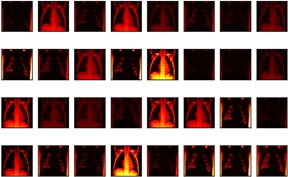
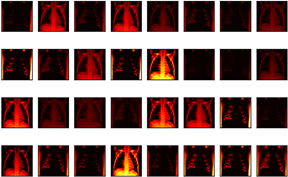
Visualization 1
-
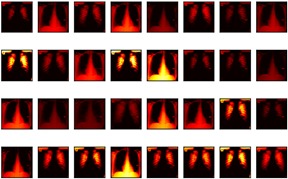
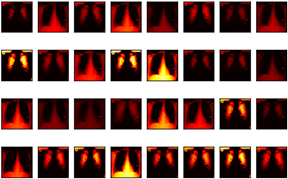
Visualization 2
-
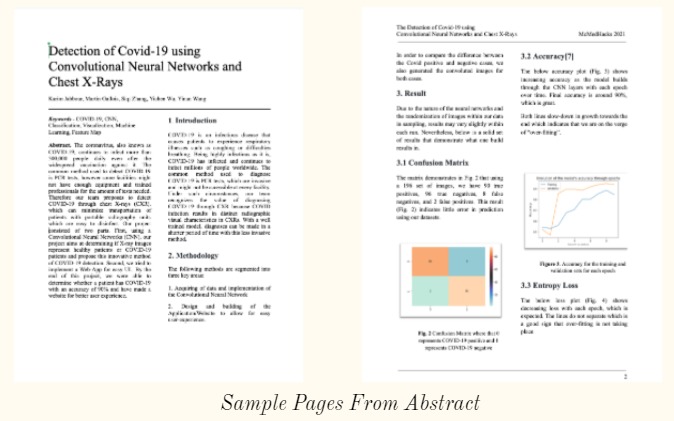
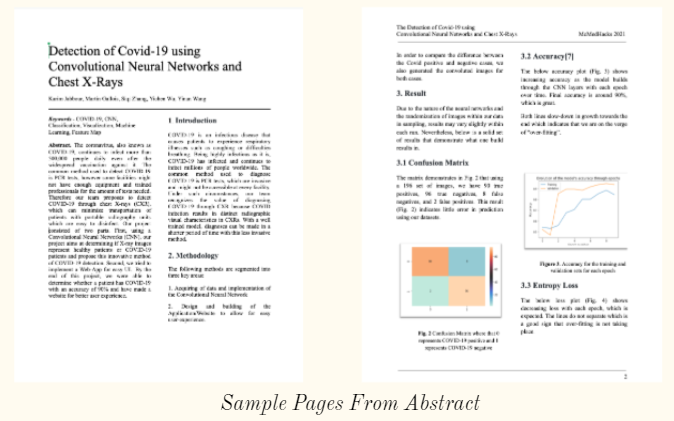
Abstract Samples
-
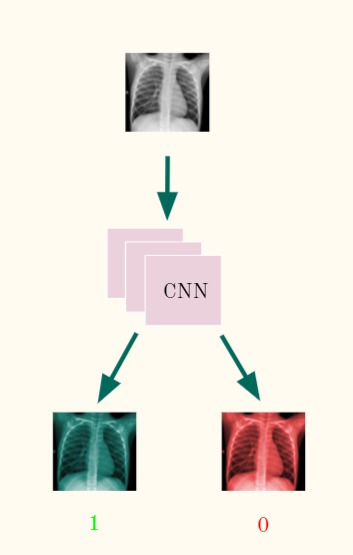
Project Idea
-
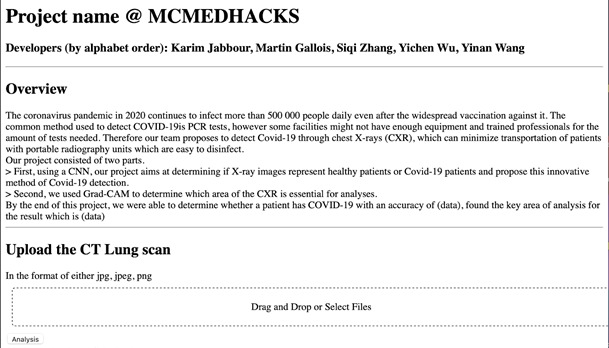
WebApp Design
-
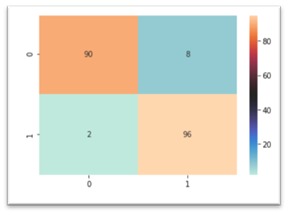
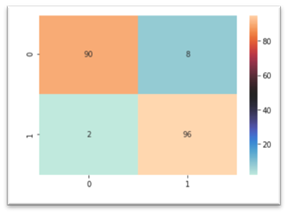
Confusion Matrix
-
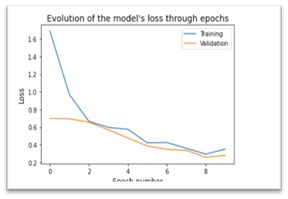
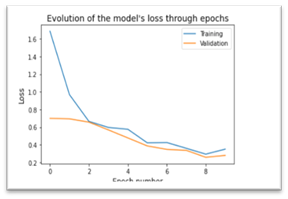
Loss Plot
-
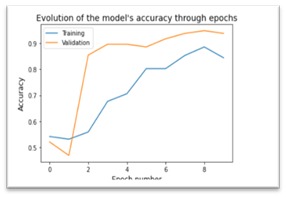
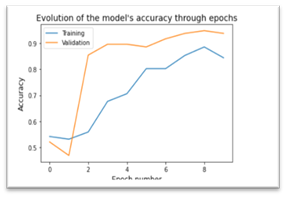
Accuracy Plot
-
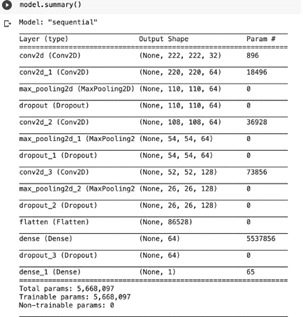
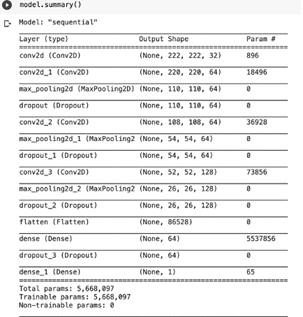
Model Summary
Inspiration
We were inspired by the relevance of the current Covid-19 pandemic and by how the project directly relates to medical imaging and Deep Learning.
What it does
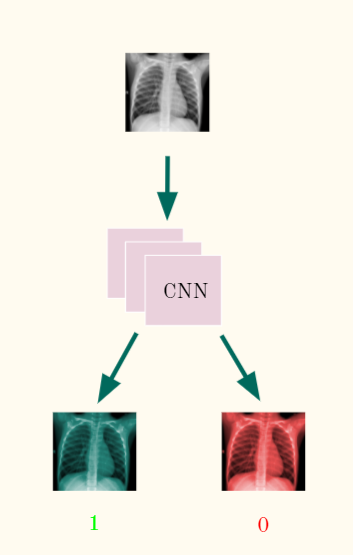
Our model is able to classify Chest X-Rays into either Healthy or Covid +ve. It also visualizes the features which the CNN is extracting.
How we built it
- Extracted data from Kaggle and Git-Hub
- Designed the CNN based on the dataset
- Visualized the features extracted from the CNN
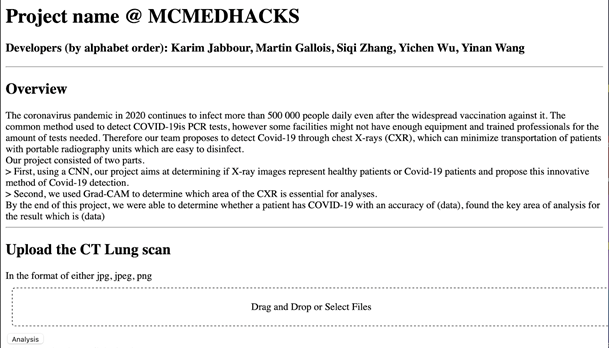
- Designed a WebApp to allow for an easy user experience (in-progress)
Challenges we ran into
- Challenges acquiring the relevant data
- Challenges in learning about and building CNNs
- Challenges in the visualization of CNN features
Accomplishments that we're proud of
We are proud to have a built a working CNN model with 90% accuracy and to have been able to visualize the features extracted from the CNN. We are also proud to have made solid progress in the design of the WebApp (in-progress)
What we learned
Yichen: I definitely gained more experience in CNN even though I am not the person who is mainly concentrating on developing the CNN model. But I learned the idea of ‘deconvolution’, which means the method to understand the feature selection process of a CNN model. Through this event, I got the opportunity to get to know and work with people from different disciplines. I really appreciate this event not only because it links people together during the related self-isolated covid period but also enhances the bridge between the biology field and the comp sci domain.
Yinan: I’ve met many amazing people during the hackathon. I’ve learned how to visualize the feature maps within the neural network. I gained some hands-on experience with medical image analysis. It was a fun weekend for me.
Martin: I’ve learned a lot of the theory on the structure of neural networks as well as some practice in training it. I discovered how far a project could go in 48 hours after meeting new people and choosing a project with no prior knowledge. The hackathon was a brand new experience that also taught me how to better prepare for the next one.
Karim: I personally learned way more than I initially expected I would. On the theory side, I got to read about CNNs and how they are structured ( how to code them, what libraries to use, how to fine-tune parameters.etc). Practically, I also learned a lot of Python skills which I’m lacking in such as : system file manipulation, copying files, cloning data from git-hub, importing Kaggle datasets, filtering out specific items from a dataset, visualizing images, and more. The experience was great overall and I got to meet a very talented group of individuals.
Siqi: This is my first Hackathon and I had a great time and I’m so grateful to meet my teammates who are so kind and hardworking. On the technical side, I learned more about CNN and I’m introduced to new concepts such as Feature Maps. Throughout the event I also gained a better understanding of how machine learning can impact the medical field. Though I did not do much coding, I learned many important skills such as documenting and writing an abstract, which I had no idea how to do before. I’m so impressed by how much can be done in just 48 hours and this event truly encourages me to explore other hackathons.
What's next for Detection of Covid-19 using CNNs and Chest X-Rays
- We would like to implement transfer learning to help distinguish between Covid infected chest X-rays and those with other types of infections.
- We would like to implement Grad-CAM which would allow for a deeper understanding of how the CNN model builds itself.
Built With
- computecanada
- google-translate
- googlecolab
- jupyterlab
- keras
- python


Log in or sign up for Devpost to join the conversation.